Sample Handmade Responses
    to Hale’s Sin and Syntax,
     Chapter 6, Prepositions
   with corresponding citations from the chapter


Angelo State University
English 4361: English Grammar
Dr. Laurence Musgrove
Department of English and Modern Languages
January 31, 2013


                                             www.theillustratedprofessor.com
                                                                 @lemusgro
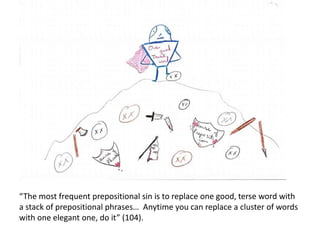
“The most frequent prepositional sin is to replace one good, terse word with
a stack of prepositional phrases… Anytime you can replace a cluster of words
with one elegant one, do it” (104).
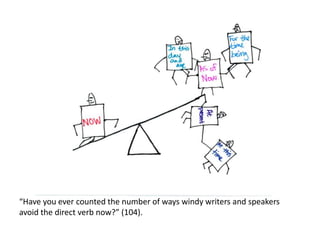
“Have you ever counted the number of ways windy writers and speakers
avoid the direct verb now?” (104).
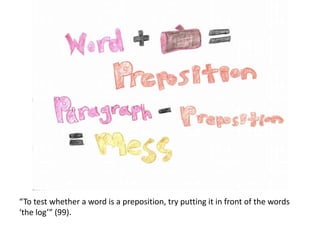
“To test whether a word is a preposition, try putting it in front of the words
‘the log’” (99).
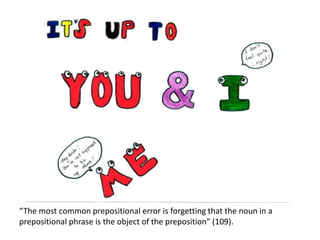
“The most common prepositional error is forgetting that the noun in a
prepositional phrase is the object of the preposition” (109).
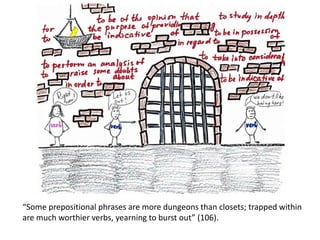
“Some prepositional phrases are more dungeons than closets; trapped within
are much worthier verbs, yearning to burst out” (106).
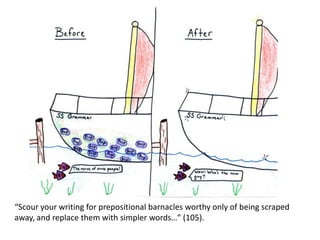
“Scour your writing for prepositional barnacles worthy only of being scraped
away, and replace them with simpler words…” (105).
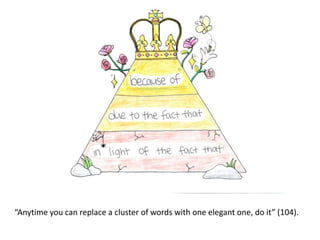
“Anytime you can replace a cluster of words with one elegant one, do it” (104).
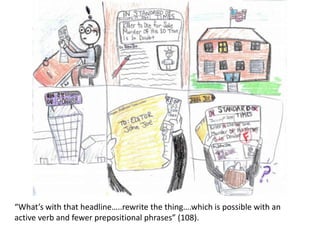
“What’s with that headline…..rewrite the thing….which is possible with an
active verb and fewer prepositional phrases” (108).
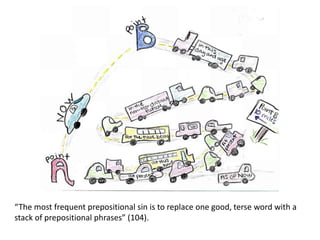
“The most frequent prepositional sin is to replace one good, terse word with a
stack of prepositional phrases” (104).
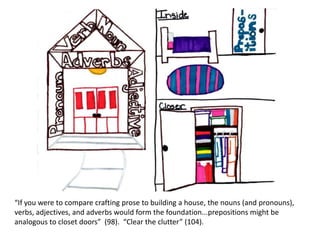
“If you were to compare crafting prose to building a house, the nouns (and pronouns),
verbs, adjectives, and adverbs would form the foundation...prepositions might be
analogous to closet doors” (98). “Clear the clutter” (104).
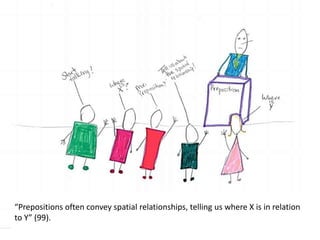
“Prepositions often convey spatial relationships, telling us where X is in relation
to Y” (99).
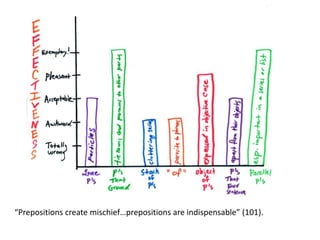
“Prepositions create mischief…prepositions are indispensable” (101).
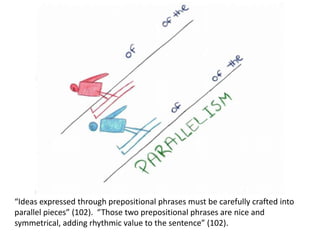
“Ideas expressed through prepositional phrases must be carefully crafted into
parallel pieces” (102). “Those two prepositional phrases are nice and
symmetrical, adding rhythmic value to the sentence” (102).

Prepositions Illustrated

  • 1.
    Sample Handmade Responses to Hale’s Sin and Syntax, Chapter 6, Prepositions with corresponding citations from the chapter Angelo State University English 4361: English Grammar Dr. Laurence Musgrove Department of English and Modern Languages January 31, 2013 www.theillustratedprofessor.com @lemusgro
  • 2.
    “The most frequentprepositional sin is to replace one good, terse word with a stack of prepositional phrases… Anytime you can replace a cluster of words with one elegant one, do it” (104).
  • 3.
    “Have you evercounted the number of ways windy writers and speakers avoid the direct verb now?” (104).
  • 4.
    “To test whethera word is a preposition, try putting it in front of the words ‘the log’” (99).
  • 5.
    “The most commonprepositional error is forgetting that the noun in a prepositional phrase is the object of the preposition” (109).
  • 6.
    “Some prepositional phrasesare more dungeons than closets; trapped within are much worthier verbs, yearning to burst out” (106).
  • 7.
    “Scour your writingfor prepositional barnacles worthy only of being scraped away, and replace them with simpler words…” (105).
  • 8.
    “Anytime you canreplace a cluster of words with one elegant one, do it” (104).
  • 9.
    “What’s with thatheadline…..rewrite the thing….which is possible with an active verb and fewer prepositional phrases” (108).
  • 10.
    “The most frequentprepositional sin is to replace one good, terse word with a stack of prepositional phrases” (104).
  • 11.
    “If you wereto compare crafting prose to building a house, the nouns (and pronouns), verbs, adjectives, and adverbs would form the foundation...prepositions might be analogous to closet doors” (98). “Clear the clutter” (104).
  • 12.
    “Prepositions often conveyspatial relationships, telling us where X is in relation to Y” (99).
  • 13.
  • 14.
    “Ideas expressed throughprepositional phrases must be carefully crafted into parallel pieces” (102). “Those two prepositional phrases are nice and symmetrical, adding rhythmic value to the sentence” (102).