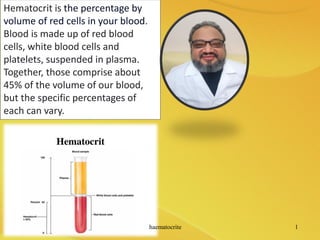
Hematocrit is the percentage by
volume of red cells in your blood.
Blood is made up of red blood
cells, white blood cells and
platelets, suspended in plasma.
Together, those comprise about
45% of the volume of our blood,
but the specific percentages of
each can vary.
haematocrite 1
Hematocrit (Hematocrit) Explained
Hematocrit (also spelled hematocrit in British
English) refers to the percentage of red blood
cells (RBCs) in your total blood volume. It's an
important indicator of your oxygen-carrying
capacity and can help diagnose various health
conditions
haematocrite 2
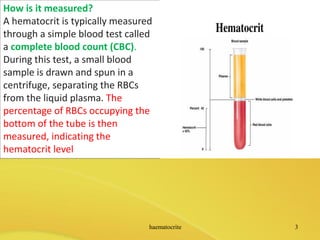
How is it measured?
A hematocrit is typically measured
through a simple blood test called
a complete blood count (CBC).
During this test, a small blood
sample is drawn and spun in a
centrifuge, separating the RBCs
from the liquid plasma. The
percentage of RBCs occupying the
bottom of the tube is then
measured, indicating the
hematocrit level
haematocrite 3
Normal ranges:
•Men: 40-54%
•Women: 36-48%
•Newborns: 42-65% (decreases to
adult range within weeks)
haematocrite 4
Interpreting results:
Deviations from the normal range
can signal potential health issues:
•High hematocrit
(polycythemia): dehydration, certa
in lung diseases, heart
problems, blood disorders like
polycythemia vera.
•Low hematocrit (anemia): iron
deficiency, vitamin B12
deficiency, chronic diseases, blood
loss.
haematocrite 5
Important points:
1. Hematocrit is just one part of a
CBC, and other factors like
hemoglobin level and red blood
cell size are also assessed for a
comprehensive picture.
2. Interpretation of results
should be done by a
doctor considering individual
factors, medical history, and
other test results.
3. Never diagnose or treat
yourself based solely on
hematocrit levels.
haematocrite 6
1. Hematocrit plays a crucial role
in oxygen transport throughout
the body. Low levels can lead to
fatigue, shortness of
breath, and other symptoms.
2. High hematocrit can increase
blood viscosity, potentially
leading to stroke or heart
attack.
3. Maintaining a healthy lifestyle
with a balanced diet and
regular exercise can help
ensure healthy hematocrit
levels
haematocrite 7

haematocrite.pdf

  • 1.
    Hematocrit is thepercentage by volume of red cells in your blood. Blood is made up of red blood cells, white blood cells and platelets, suspended in plasma. Together, those comprise about 45% of the volume of our blood, but the specific percentages of each can vary. haematocrite 1
  • 2.
    Hematocrit (Hematocrit) Explained Hematocrit(also spelled hematocrit in British English) refers to the percentage of red blood cells (RBCs) in your total blood volume. It's an important indicator of your oxygen-carrying capacity and can help diagnose various health conditions haematocrite 2
  • 3.
    How is itmeasured? A hematocrit is typically measured through a simple blood test called a complete blood count (CBC). During this test, a small blood sample is drawn and spun in a centrifuge, separating the RBCs from the liquid plasma. The percentage of RBCs occupying the bottom of the tube is then measured, indicating the hematocrit level haematocrite 3
  • 4.
    Normal ranges: •Men: 40-54% •Women:36-48% •Newborns: 42-65% (decreases to adult range within weeks) haematocrite 4
  • 5.
    Interpreting results: Deviations fromthe normal range can signal potential health issues: •High hematocrit (polycythemia): dehydration, certa in lung diseases, heart problems, blood disorders like polycythemia vera. •Low hematocrit (anemia): iron deficiency, vitamin B12 deficiency, chronic diseases, blood loss. haematocrite 5
  • 6.
    Important points: 1. Hematocritis just one part of a CBC, and other factors like hemoglobin level and red blood cell size are also assessed for a comprehensive picture. 2. Interpretation of results should be done by a doctor considering individual factors, medical history, and other test results. 3. Never diagnose or treat yourself based solely on hematocrit levels. haematocrite 6
  • 7.
    1. Hematocrit playsa crucial role in oxygen transport throughout the body. Low levels can lead to fatigue, shortness of breath, and other symptoms. 2. High hematocrit can increase blood viscosity, potentially leading to stroke or heart attack. 3. Maintaining a healthy lifestyle with a balanced diet and regular exercise can help ensure healthy hematocrit levels haematocrite 7