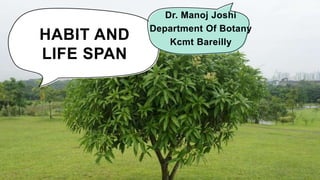
HABIT AND
LIFE SPAN
Dr. Manoj Joshi
Department Of Botany
Kcmt Bareilly
Habit.
Characteristic form or
bodily appearance of an
organism.
(The habit of the plant can
be understood only if the
plant is provided with roots
or seen growing in
nature.)
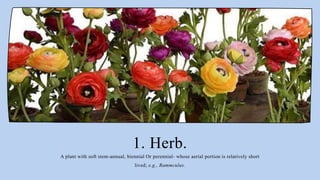
1. Herb.
A plant with soft stem-annual, biennial Or perennial- whose aerial portion is relatively short
lived; e.g., Rammculus.
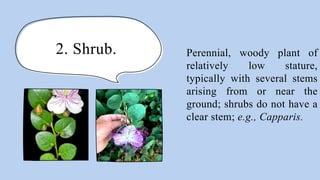
2. Shrub. Perennial, woody plant of
relatively low stature,
typically with several stems
arising from or near the
ground; shrubs do not have a
clear stem; e.g., Capparis.
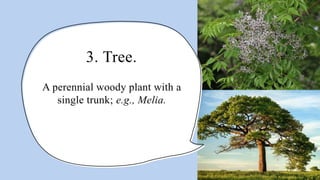
3. Tree.
A perennial woody plant with a
single trunk; e.g., Melia.
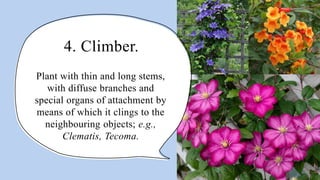
4. Climber.
Plant with thin and long stems,
with diffuse branches and
special organs of attachment by
means of which it clings to the
neighbouring objects; e.g.,
Clematis, Tecoma.
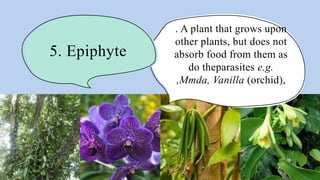
5. Epiphyte
. A plant that grows upon
other plants, but does not
absorb food from them as
do theparasites e.g.
,Mmda, Vanilla (orchid),
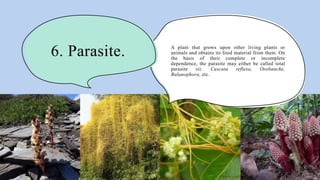
6. Parasite. A plant that grows upon other living plants or
animals and obtains its food material from them. On
the basis of their complete or incomplete
dependence, the parasite may either be called total
parasite viz. Cuscuta reflexa, Orobanche,
Balanophora, etc.
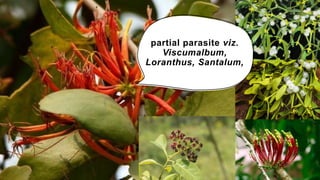
partial parasite viz.
Viscumalbum,
Loranthus, Santalum,
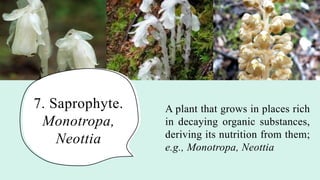
7. Saprophyte.
Monotropa,
Neottia
A plant that grows in places rich
in decaying organic substances,
deriving its nutrition from them;
e.g., Monotropa, Neottia
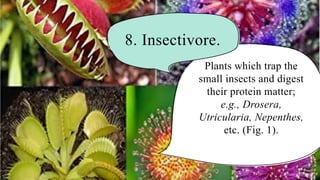
8. Insectivore.
Plants which trap the
small insects and digest
their protein matter;
e.g., Drosera,
Utricularia, Nepenthes,
etc. (Fig. 1).
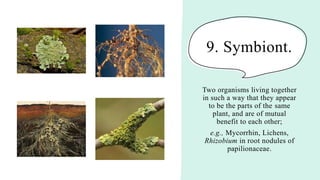
9. Symbiont.
Two organisms living together
in such a way that they appear
to be the parts of the same
plant, and are of mutual
benefit to each other;
e.g., Mycorrhin, Lichens,
Rhizobium in root nodules of
papilionaceae.
HABIT AND LIFE SPAN.pptx

HABIT AND LIFE SPAN.pptx

  • 1.
    HABIT AND LIFE SPAN Dr.Manoj Joshi Department Of Botany Kcmt Bareilly
  • 2.
    Habit. Characteristic form or bodilyappearance of an organism. (The habit of the plant can be understood only if the plant is provided with roots or seen growing in nature.)
  • 3.
    1. Herb. A plantwith soft stem-annual, biennial Or perennial- whose aerial portion is relatively short lived; e.g., Rammculus.
  • 4.
    2. Shrub. Perennial,woody plant of relatively low stature, typically with several stems arising from or near the ground; shrubs do not have a clear stem; e.g., Capparis.
  • 5.
    3. Tree. A perennialwoody plant with a single trunk; e.g., Melia.
  • 6.
    4. Climber. Plant withthin and long stems, with diffuse branches and special organs of attachment by means of which it clings to the neighbouring objects; e.g., Clematis, Tecoma.
  • 7.
    5. Epiphyte . Aplant that grows upon other plants, but does not absorb food from them as do theparasites e.g. ,Mmda, Vanilla (orchid),
  • 8.
    6. Parasite. Aplant that grows upon other living plants or animals and obtains its food material from them. On the basis of their complete or incomplete dependence, the parasite may either be called total parasite viz. Cuscuta reflexa, Orobanche, Balanophora, etc.
  • 9.
  • 10.
    7. Saprophyte. Monotropa, Neottia A plantthat grows in places rich in decaying organic substances, deriving its nutrition from them; e.g., Monotropa, Neottia
  • 11.
    8. Insectivore. Plants whichtrap the small insects and digest their protein matter; e.g., Drosera, Utricularia, Nepenthes, etc. (Fig. 1).
  • 12.
    9. Symbiont. Two organismsliving together in such a way that they appear to be the parts of the same plant, and are of mutual benefit to each other; e.g., Mycorrhin, Lichens, Rhizobium in root nodules of papilionaceae.