TRANSFORMING
ADVERSITY:
STRATEGIES FOR
OVERCOMING FEAR
AND DEPRESSION
Adversity is a universal experience that
can lead to feelings of fear and
depression. Understanding how to
navigate these challenges is crucial for
personal growth. This presentation will
explore e ective strategies for
transforming adversity into a source of
strength and resilience.
INTRODUCTION TO ADVERSITY
UNDERSTANDING FEAR
Fear is a natural response to perceived
threats. It can be debilitating, but
recognizing its role is the first step to
overcoming it. By understanding the
psychological and physiological aspects
of fear, we can learn to manage and
transform it into a motivating force.
RECOGNIZING DEPRESSION
Depression often manifests as a feeling
of hopelessness and lack of motivation.
Recognizing its signs is essential for
seeking help. Acknowledging these
feelings can be the first step towards
recovery and finding e ective coping
mechanisms.
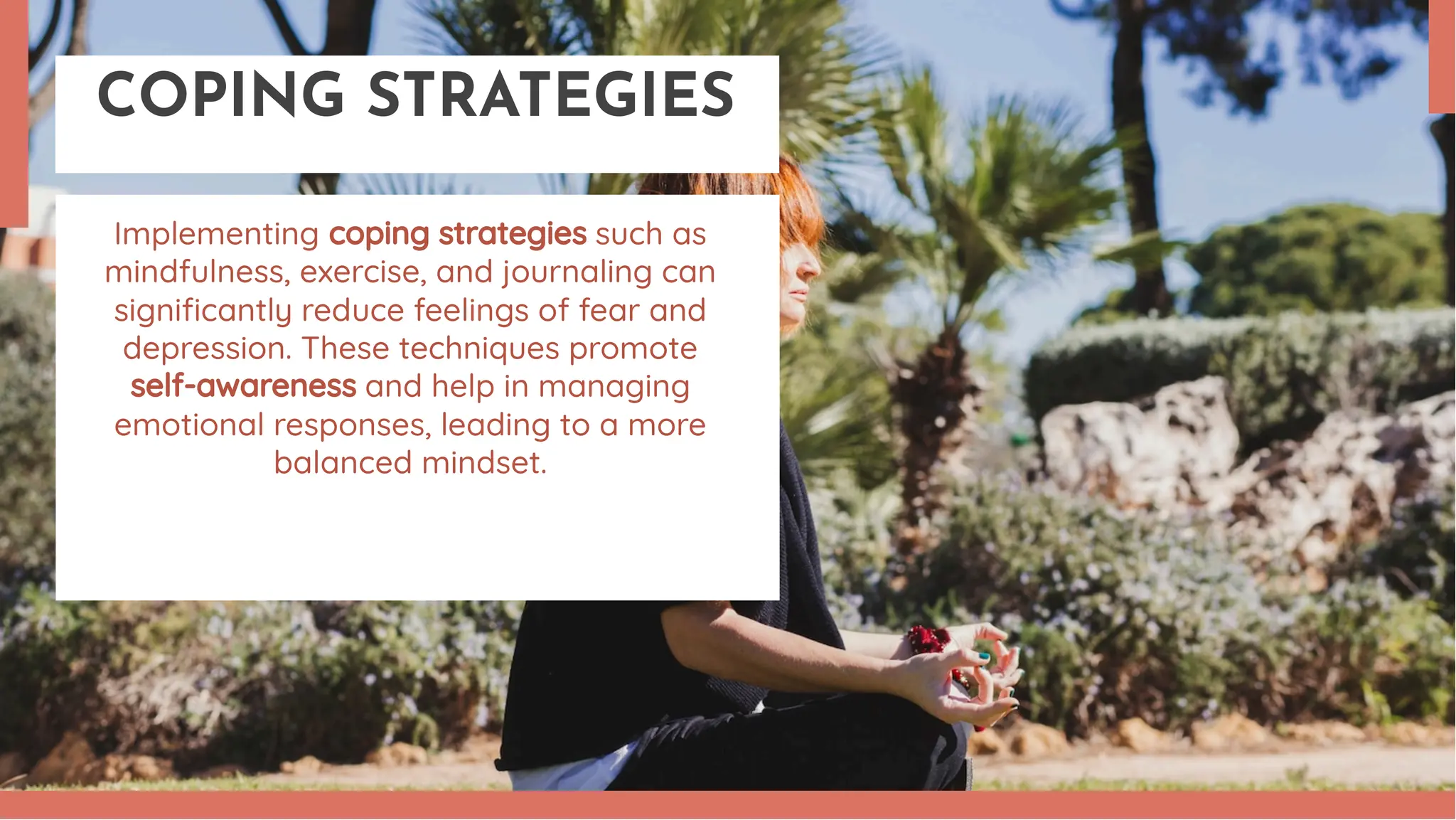
COPING STRATEGIES
Implementing coping strategies such as
mindfulness, exercise, and journaling can
significantly reduce feelings of fear and
depression. These techniques promote
self-awareness and help in managing
emotional responses, leading to a more
balanced mindset.
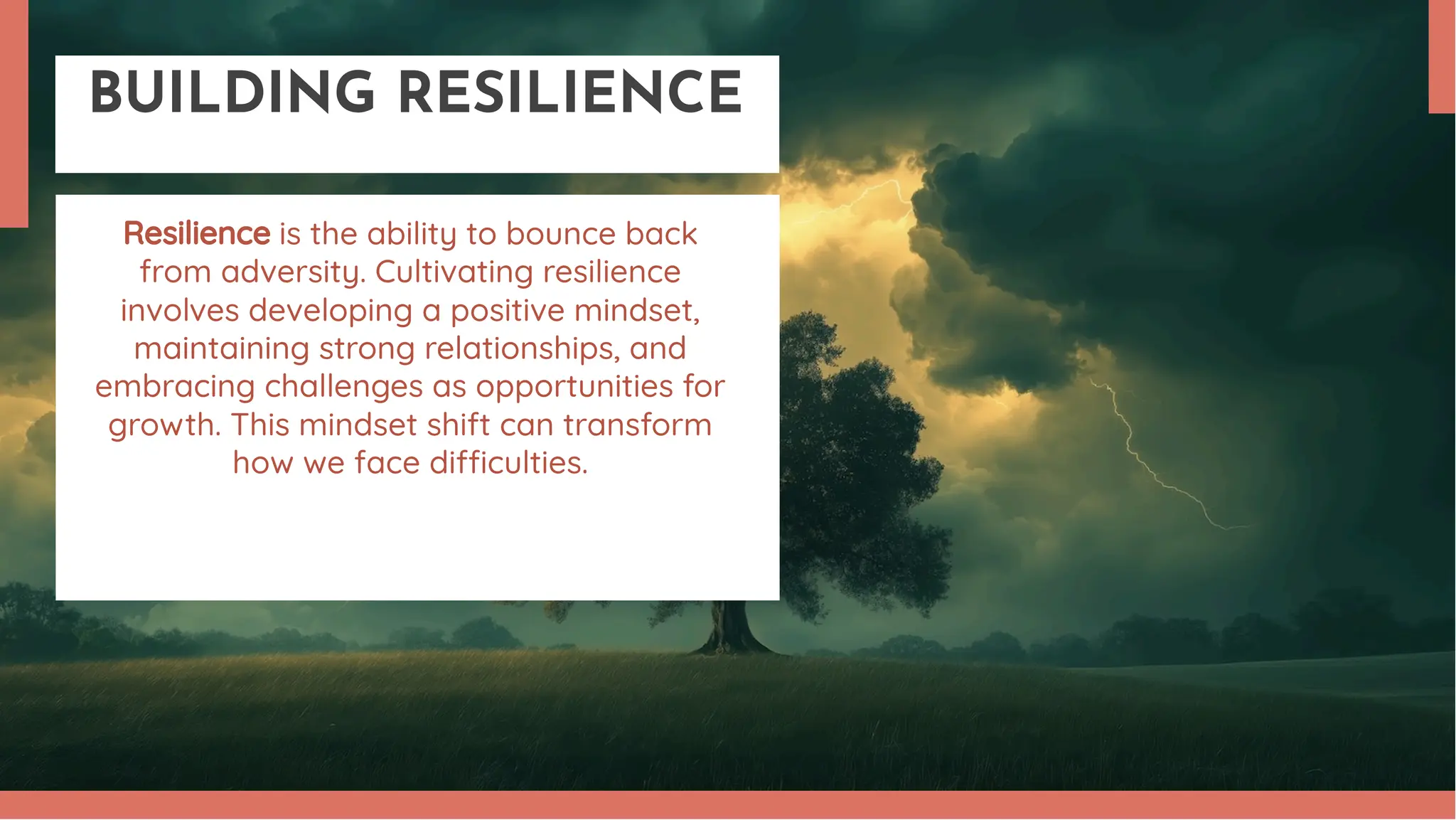
BUILDING RESILIENCE
Resilience is the ability to bounce back
from adversity. Cultivating resilience
involves developing a positive mindset,
maintaining strong relationships, and
embracing challenges as opportunities for
growth. This mindset shift can transform
how we face di culties.
SEEKING SUPPORT
It's important to reach out for support
when facing fear and depression.
Connecting with friends, family, or
professionals can provide the
encouragement needed to overcome
challenges. Remember, seeking help is a
sign of strength, not weakness.
Utilizing practical tools such as goal-
setting, time management, and
relaxation techniques can aid in
overcoming fear and depression. These
tools empower individuals to take
actionable steps towards their well-
being and foster a sense of control over
their lives.
PRACTICAL TOOLS
CONCLUSION: EMBRACING CHANGE
Transforming adversity into strength is a journey that requires
commitment and self-compassion. By implementing the strategies
discussed, individuals can learn to embrace change, overcome
fear and depression, and emerge stronger than ever.
Thanks!
Made by Cantonrahl

Guide on overcoming fear and anxiety-pdf

  • 1.
  • 2.
    Adversity is auniversal experience that can lead to feelings of fear and depression. Understanding how to navigate these challenges is crucial for personal growth. This presentation will explore e ective strategies for transforming adversity into a source of strength and resilience. INTRODUCTION TO ADVERSITY
  • 3.
    UNDERSTANDING FEAR Fear isa natural response to perceived threats. It can be debilitating, but recognizing its role is the first step to overcoming it. By understanding the psychological and physiological aspects of fear, we can learn to manage and transform it into a motivating force.
  • 4.
    RECOGNIZING DEPRESSION Depression oftenmanifests as a feeling of hopelessness and lack of motivation. Recognizing its signs is essential for seeking help. Acknowledging these feelings can be the first step towards recovery and finding e ective coping mechanisms.
  • 5.
    COPING STRATEGIES Implementing copingstrategies such as mindfulness, exercise, and journaling can significantly reduce feelings of fear and depression. These techniques promote self-awareness and help in managing emotional responses, leading to a more balanced mindset.
  • 6.
    BUILDING RESILIENCE Resilience isthe ability to bounce back from adversity. Cultivating resilience involves developing a positive mindset, maintaining strong relationships, and embracing challenges as opportunities for growth. This mindset shift can transform how we face di culties.
  • 7.
    SEEKING SUPPORT It's importantto reach out for support when facing fear and depression. Connecting with friends, family, or professionals can provide the encouragement needed to overcome challenges. Remember, seeking help is a sign of strength, not weakness.
  • 8.
    Utilizing practical toolssuch as goal- setting, time management, and relaxation techniques can aid in overcoming fear and depression. These tools empower individuals to take actionable steps towards their well- being and foster a sense of control over their lives. PRACTICAL TOOLS
  • 9.
    CONCLUSION: EMBRACING CHANGE Transformingadversity into strength is a journey that requires commitment and self-compassion. By implementing the strategies discussed, individuals can learn to embrace change, overcome fear and depression, and emerge stronger than ever.
  • 10.