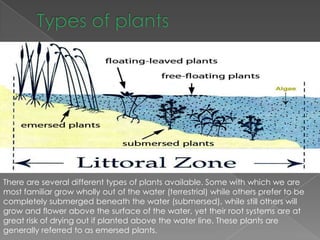
There are several different types of plants available. Some with which we are
most familiar grow wholly out of the water (terrestrial) while others prefer to be
completely submerged beneath the water (submersed), while still others will
grow and flower above the surface of the water, yet their root systems are at
great risk of drying out if planted above the water line. These plants are
generally referred to as emersed plants.
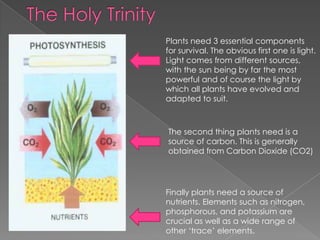
Plants need 3 essential components
for survival. The obvious first one is light.
Light comes from different sources,
with the sun being by far the most
powerful and of course the light by
which all plants have evolved and
adapted to suit.


The second thing plants need is a
source of carbon. This is generally
obtained from Carbon Dioxide (CO2)


Finally plants need a source of
nutrients. Elements such as nitrogen,
phosphorous, and potassium are
crucial as well as a wide range of
other ‘trace’ elements.
Did you know? The sun’s
    output is approximately 527
    watts of infra-red, 445 watts of
    visible light and about 32 watts
    of U.V. light at it’s peak… for
    every square metre of ground
    on earth!


    There are many factors to consider when lighting your
     planted aquarium. Light is not all created equally. For
     our aquatic plant needs, let’s discuss some of the
     basic requirements for tank lighting and good
     underwater plant growth. Our aim is to reproduce
     the sun’s natural light output as faithfully as possible.
   What in the world are we talking about? And what the hell do
       all those letters mean? And why are you talking about
     temperature. The only light I know of are light bulbs and the
            sun and they are only one temperature – HOT!

     P.A.R. – Photosynthetically Active Radiation is a measure of the spectral
     range of the sun’s radiation which is able to be utilized by plants. Any
     photons of light outside this range will not trigger photosynthesis within the
     plant due to incorrect wavelengths.


     C.R.I. – Colour Rendering Index is the light sources ability to faithfully
     reproduce colours within the correct spectrums for optimum plant growth
     and function. Plants use predominantly red and blue light for
     photosynthesis.
     Colour Temperature is usually measured in Kelvin and will appear on
     most light packaging that you buy for your aquarium. For all intents and
     purposes it is worth noting that the higher the colour temperature
     (Kelvin), the more blue the light will appear to the human eye and the
     lower the temperature, the more red it will appear (useful for making
     red plants SHINE!)
   It can be a daunting thing to walk into your local fish
    shop and stare at the rack filled with umpteen
    different tubes in various sizes, shapes and colours.
    Take note of the size and type of tube that your light
    fitting will take before shopping. The most commonly
    available lights available in the industry today are:-

       Fluorescent

       Compact Fluorescent

       High output and Very high output

       Metal Halide

       LED
   For most people growing a few plants is enough. In
    freshwater aquariums most local fish stores will carry a
    range of fluorescent tubes known as grow tubes. On the
    side of the box the tube comes in there is often a few key
    bits of information. As discussed earlier there will probably
    be a Kelvin rating which will dictate how blue/red your light
    appears.

    There will also sometimes be a CRI index graph that will show
    you specifically where that particular light ‘spikes’ in the
    colour spectrum. Ideally you should be looking for spikes in
    the blue and red part of the spectrum to cover all your plants
    requirements.
    Finally, ensure that your light is the correct length and
    wattage for the unit you intend on installing it in. As a very
    basic measurement, the total amount of light your tank will
    need can be considered using this equation. 1W of
    aquarium light for every 4 litres will be sufficient for most low
    tech plant setups.

Growing aquatic plants

  • 2.
    There are severaldifferent types of plants available. Some with which we are most familiar grow wholly out of the water (terrestrial) while others prefer to be completely submerged beneath the water (submersed), while still others will grow and flower above the surface of the water, yet their root systems are at great risk of drying out if planted above the water line. These plants are generally referred to as emersed plants.
  • 3.
    Plants need 3essential components for survival. The obvious first one is light. Light comes from different sources, with the sun being by far the most powerful and of course the light by which all plants have evolved and adapted to suit. The second thing plants need is a source of carbon. This is generally obtained from Carbon Dioxide (CO2) Finally plants need a source of nutrients. Elements such as nitrogen, phosphorous, and potassium are crucial as well as a wide range of other ‘trace’ elements.
  • 4.
    Did you know?The sun’s output is approximately 527 watts of infra-red, 445 watts of visible light and about 32 watts of U.V. light at it’s peak… for every square metre of ground on earth!  There are many factors to consider when lighting your planted aquarium. Light is not all created equally. For our aquatic plant needs, let’s discuss some of the basic requirements for tank lighting and good underwater plant growth. Our aim is to reproduce the sun’s natural light output as faithfully as possible.
  • 5.
    What in the world are we talking about? And what the hell do all those letters mean? And why are you talking about temperature. The only light I know of are light bulbs and the sun and they are only one temperature – HOT! P.A.R. – Photosynthetically Active Radiation is a measure of the spectral range of the sun’s radiation which is able to be utilized by plants. Any photons of light outside this range will not trigger photosynthesis within the plant due to incorrect wavelengths. C.R.I. – Colour Rendering Index is the light sources ability to faithfully reproduce colours within the correct spectrums for optimum plant growth and function. Plants use predominantly red and blue light for photosynthesis. Colour Temperature is usually measured in Kelvin and will appear on most light packaging that you buy for your aquarium. For all intents and purposes it is worth noting that the higher the colour temperature (Kelvin), the more blue the light will appear to the human eye and the lower the temperature, the more red it will appear (useful for making red plants SHINE!)
  • 6.
    It can be a daunting thing to walk into your local fish shop and stare at the rack filled with umpteen different tubes in various sizes, shapes and colours. Take note of the size and type of tube that your light fitting will take before shopping. The most commonly available lights available in the industry today are:- Fluorescent Compact Fluorescent High output and Very high output Metal Halide LED
  • 7.
    For most people growing a few plants is enough. In freshwater aquariums most local fish stores will carry a range of fluorescent tubes known as grow tubes. On the side of the box the tube comes in there is often a few key bits of information. As discussed earlier there will probably be a Kelvin rating which will dictate how blue/red your light appears. There will also sometimes be a CRI index graph that will show you specifically where that particular light ‘spikes’ in the colour spectrum. Ideally you should be looking for spikes in the blue and red part of the spectrum to cover all your plants requirements. Finally, ensure that your light is the correct length and wattage for the unit you intend on installing it in. As a very basic measurement, the total amount of light your tank will need can be considered using this equation. 1W of aquarium light for every 4 litres will be sufficient for most low tech plant setups.