
Greenhouse Effect -Stand-up version

Editor's Notes

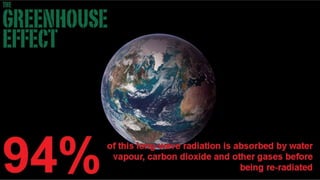
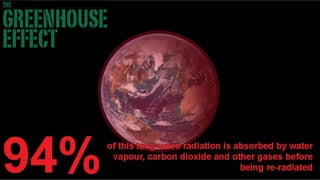
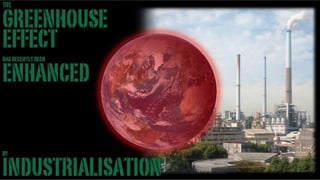
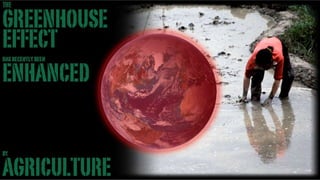
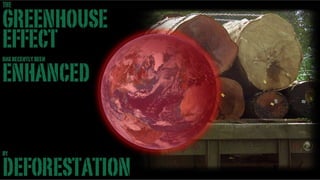
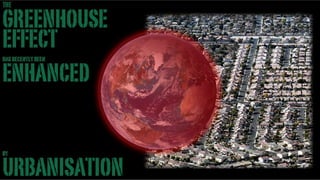
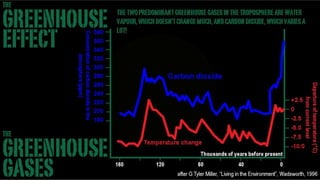
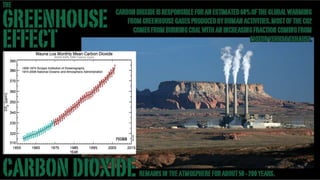
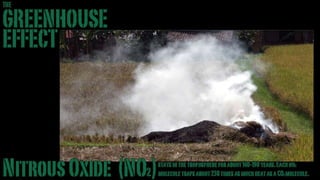
  • #3 The greenhouse effect is the rise in temperature that the Earth experiences because certain gases in the atmosphere (water vapour, carbon dioxide, nitrous oxide, and methane, for example) trap energy from the sun. Without these gases, heat would escape back into space and the Earth’s average temperature would be about 33ºC (60ºF) colder. Because of how they warm our world, these gases are referred to as greenhouse gases.
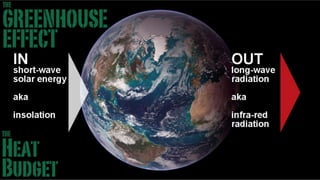
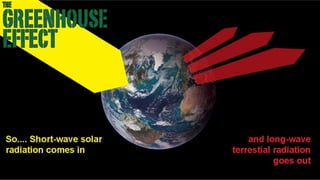
  • #4 Our planet’s atmospheric system involves inputs and outputs. Incoming solar energy is balanced by outgoing terrestial (Earth based) energy. The balance between input and output is referred to as the heat budget.
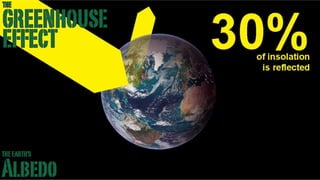
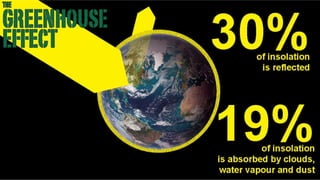
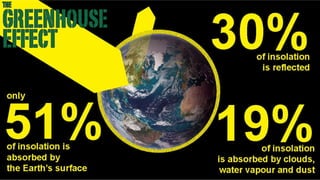
  • #5 30% of insolation is reflected. How? Clouds? The surface of our planet? Dust particles in the air?This effect is called the Earth’s albedo – the reflectiveness of our Earth’s surface. It varies from place to place. Where will it be highest and lowest? Why?
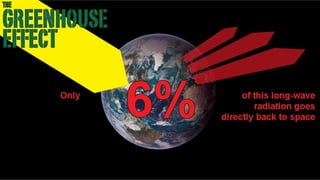
  • #11 Long waves are radiated because the Earth’s surface is not so hot as the sun. Eventually all the long-wave energy is returned to space… but the “greenhouse” effect slows the process down.