Yvette D. Medrano
TRANSGENIC POTENTIAL
Transgene
- A gene which is artificially introduced into the genome of another organism (Oxford Dictionary)
- Is an exogenous gene that has been introduced into the genome of another organism; a
transgenic species is one whose genome has been genetically altered (ScienceDirect)
- These transgenes may include genes from the same organism or novel genes from a
completely different organism. The organism I said to be transformed. In other cases,
introduction of transgenic DNA has been used to add new functions to an organism, such
as the expression of a protein normally not present in that organism.
- The added gene is called transgene. The transgene inserts itself into a chromosome and is
passed to the progeny as a new component of the genome. The resulting organism
carrying a transgene is called a transgenic organism or a genetically modified organism
(GMO) (Britannica).
A Crop Biotechnology
1. Higher crop yields
2. Reduced farm costs
3. Increased farm profit
4. Safer environment
5. More nutritious food
According to the ISAAA.org, in the developed world, there is clear evidence that
the use of transgenic or GM crops has resulted in significant benefits which include:
The “first generation” crops with traits such as insect resistance and herbicide tolerance
have proven their ability to lower farm-level production costs.
The “second generation” GM crops feature increased nutritional and/or industrial traits.
These crops have more direct benefits to consumers. Examples of commercialized second-
generation crops include (ISAAA GM Approval Database):
1. Non-browning apples
2. Non-bruising and low acrylamide potatoes
3. Maize varieties with low phytic acid and increased essential amino acids
4. Healthier oils from soybean and canola
Non-browning apples
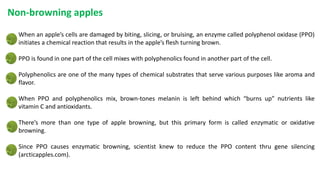
When an apple’s cells are damaged by biting, slicing, or bruising, an enzyme called polyphenol oxidase (PPO)
initiates a chemical reaction that results in the apple’s flesh turning brown.
PPO is found in one part of the cell mixes with polyphenolics found in another part of the cell.
Polyphenolics are one of the many types of chemical substrates that serve various purposes like aroma and
flavor.
When PPO and polyphenolics mix, brown-tones melanin is left behind which “burns up” nutrients like
vitamin C and antioxidants.
There’s more than one type of apple browning, but this primary form is called enzymatic or oxidative
browning.
Since PPO causes enzymatic browning, scientist knew to reduce the PPO content thru gene silencing
(arcticapples.com).
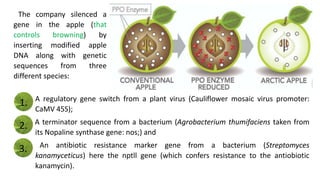
The company silenced a
gene in the apple (that
controls browning) by
inserting modified apple
DNA along with genetic
sequences from three
different species:
1. A regulatory gene switch from a plant virus (Cauliflower mosaic virus promoter:
CaMV 45S);
2. A terminator sequence from a bacterium (Agrobacterium thumifaciens taken from
its Nopaline synthase gene: nos;) and
3. An antibiotic resistance marker gene from a bacterium (Streptomyces
kanamyceticus) here the nptll gene (which confers resistance to the antiobiotic
kanamycin).
1.
2.
3.
According to Rupp from nationalgeographic.com, GM food plants are often transgenic –
that is, they contain inserted gene sequences from wildly unrelated organisms, among
them bacteria, jellyfish, rats, mice, and more.
The potato however, was developed and being marketed under Simplot Innate brand
lead by Dr. Caius Rommens in 2015 (most commonly found under the trademark White
Russet – livingnongmo.org) using a technique called gene silencing or RNA interference,
a natural process used by everybody’s cells to regulate gene expression.
To understand RNA interference, livingnongmo.org added that messenger RNA carries
genetic instructions from the cell nucleus out to other parts of a cell.
RNAi begins when a different type of RNA (dsRNA) is placed inside a cell.
The dsRNA cut up by enzyme, paired up with proteins, and then ends up binding to a
specific target where it fits on the mRNA.
This can prevent the mRNA from delivering all of its instructions, effectively “silencing”
the desired gene.
Biochemically, this is the equivalent of flipping a switch from ON and OFF – in the case
of potato, shutting down the manufacture of pair of enzymes: polyphenol oxidase, the
causative agent of browning in potatoes, avocadoes and apples, and asparagine
synthetase, essential for making asparagine, the precursor for acrylamide.
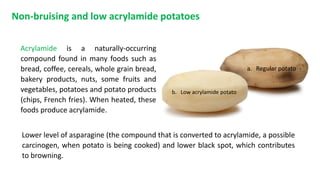
Non-bruising and low acrylamide potatoes
Acrylamide is a naturally-occurring
compound found in many foods such as
bread, coffee, cereals, whole grain bread,
bakery products, nuts, some fruits and
vegetables, potatoes and potato products
(chips, French fries). When heated, these
foods produce acrylamide.
a. Regular potato
b. Low acrylamide potato
Lower level of asparagine (the compound that is converted to acrylamide, a possible
carcinogen, when potato is being cooked) and lower black spot, which contributes
to browning.
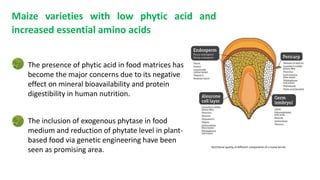
Maize varieties with low phytic acid and
increased essential amino acids
Nutritional quality of different components of a maize kernel
The presence of phytic acid in food matrices has
become the major concerns due to its negative
effect on mineral bioavailability and protein
digestibility in human nutrition.
The inclusion of exogenous phytase in food
medium and reduction of phytate level in plant-
based food via genetic engineering have been
seen as promising area.
Phytic acid is an antioxidant compound found abundantly in seeds and in bran of
grains, that is the principal storage form of phosphorous in plants.
It is a strong chelator of Ca, Zn and other minerals, and diets based on foods high
in phytic acid, such as unrefined flour, can cause mineral deficiencies unless it is
broken down by sprouting or by fermentation (yourdictionary.com;
meriamdictionary.com).
Availability of Zn in maize grains is only 20% in the human gut as cited by Prasanna
et al. (2020) from frontiers.org. The major impediment of low availability of Zn has
been the presence of phytic acid/phytate that constitutes nearly 75-80% of total
Phosphorous maize grains. Maize kernels generally contains ~3.2 mg day-1 of
phytic acid with a range of 2.4 to 4.1 mg day-1. Phytate being negatively charges
has a strong tendency to chelate positively charged metal ions such as Zn, thereby
resulting in high insoluble salts with poor bioavailability of the nutrient. Bringing
down phytate in maize could be an important strategy for Zn biofortification.
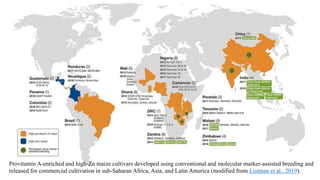
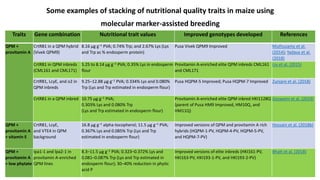
Provitamin A-enriched and high-Zn maize cultivars developed using conventional and molecular marker-assisted breeding and
released for commercial cultivation in sub-Saharan Africa, Asia, and Latin America (modified from Listman et al., 2019).
Traits Gene combination Nutritional trait values Improved genotypes developed References
QPM +
provitamin A
CrtRB1 in a QPM hybrid
(Vivek QPM9)
8.16 µg g−1 PVA; 0.74% Trp; and 2.67% Lys (Lys
and Trp as % endosperm protein)
Pusa Vivek QPM9 Improved Muthusamy et al.
(2014); Yadava et al.
(2018)
CrtRB1 in QPM inbreds
(CML161 and CML171)
5.25 to 8.14 µg g−1 PVA; 0.35% Lys in endosperm
flour
Provitamin A-enriched elite QPM inbreds CML161
and CML171
Liu et al. (2015)
CrtRB1, LcyE, and o2 in
QPM inbreds
9.25–12.88 µg g−1 PVA; 0.334% Lys and 0.080%
Trp (Lys and Trp estimated in endosperm flour)
Pusa HQPM-5 Improved; Pusa HQPM-7 Improved Zunjare et al. (2018)
CrtRB1 in a QPM inbred 10.75 µg g−1 PVA;
0.303% Lys and 0.080% Trp
(Lys and Trp estimated in endosperm flour)
Provitamin A-enriched elite QPM inbred HKI1128Q
(parent of Pusa HM9 Improved, HM10Q, and
HM11Q)
Goswami et al. (2019)
QPM +
provitamin A
+ vitamin E
CrtRB1, LcyE,
and VTE4 in QPM
background
16.8 µg g−1 alpha-tocopherol; 11.5 µg g−1 PVA;
0.367% Lys and 0.085% Trp (Lys and Trp
estimated in endosperm flour)
Improved versions of QPM and provitamin A rich
hybrids (HQPM-1-PV, HQPM-4-PV, HQPM-5-PV,
and HQPM-7-PV)
Hossain et al. (2018b)
QPM +
provitamin A
+ low phytate
lpa1-1 and lpa2-1 in
provitamin A-enriched
QPM lines
8.3–11.5 µg g−1 PVA; 0.323–0.372% Lys and
0.081–0.087% Trp (Lys and Trp estimated in
endosperm flour); 30–40% reduction in phytic
acid P
Improved versions of elite inbreds (HKI161-PV,
HKI163-PV, HKI193-1-PV, and HKI193-2-PV)
Bhatt et al. (2018)
Some examples of stacking of nutritional quality traits in maize using
molecular marker-assisted breeding
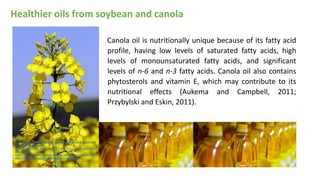
Canola oil is nutritionally unique because of its fatty acid
profile, having low levels of saturated fatty acids, high
levels of monounsaturated fatty acids, and significant
levels of n-6 and n-3 fatty acids. Canola oil also contains
phytosterols and vitamin E, which may contribute to its
nutritional effects (Aukema and Campbell, 2011;
Przybylski and Eskin, 2011).
Healthier oils from soybean and canola
https://www.google.com/search?q=canola+plant&tbm=isch&source=iu&ic
tx=1&fir=EWyGq9r7wcSN-
M%253A%252Cj1DNX_Wcj6A5MM%252C%252Fm%252F01g2vp&vet=1&u
sg=AI4_-kRjW-
rVJ2PC7HVd8mNTIDHvm_JOMg&sa=X&ved=2ahUKEwilvqnbhMLoAhUHrZ
QKHfnRA8MQ_B0wEnoECAsQAw#imgrc=EWyGq9r7wcSN-M
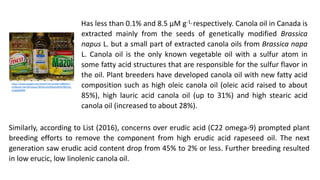
Has less than 0.1% and 8.5 µM g-1, respectively. Canola oil in Canada is
extracted mainly from the seeds of genetically modified Brassica
napus L. but a small part of extracted canola oils from Brassica napa
L. Canola oil is the only known vegetable oil with a sulfur atom in
some fatty acid structures that are responsible for the sulfur flavor in
the oil. Plant breeders have developed canola oil with new fatty acid
composition such as high oleic canola oil (oleic acid raised to about
85%), high lauric acid canola oil (up to 31%) and high stearic acid
canola oil (increased to about 28%).
https://www.google.com/search?q=canola+oil&tbm=i
sch&ved=2ahUKEwjapo78hMLoAhWBw4sBHbYfBjYQ2-
cCegQIABAA
Similarly, according to List (2016), concerns over erudic acid (C22 omega-9) prompted plant
breeding efforts to remove the component from high erudic acid rapeseed oil. The next
generation saw erudic acid content drop from 45% to 2% or less. Further breeding resulted
in low erucic, low linolenic canola oil.
https://www.google.com/search?q=soybean+plant&tbm=isch&source=iu
&ictx=1&fir=98hU-
iL5mb8ZdM%253A%252C2B2eDjE1OfxP2M%252C%252Fm%252F0gyv9&v
et=1&usg=AI4_-kR8SGKMOjd-
lzsAXMmRbKrpTi3uiw&sa=X&ved=2ahUKEwjd5bDHhsLoAhXvy4sBHYrEDM
wQ_B0wHHoECAsQAw#imgrc=98hU-iL5mb8ZdM:
https://www.google.com/search?q=soybean+oil&tbm=isch&source=iu&i
ctx=1&fir=BjkcTQqR_hnv_M%253A%252C13y7G_KCbWnyjM%252C_&ve
t=1&usg=AI4_-
kSSedaNKO1dh0CBP0Wkim6D63pMqw&sa=X&ved=2ahUKEwjS9NCLh8L
oAhVMHaYKHZ8oBAEQ9QEwEXoECAoQNQ#imgrc=BjkcTQqR_hnv_M:
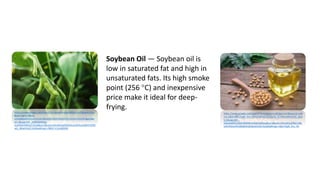
Soybean Oil — Soybean oil is
low in saturated fat and high in
unsaturated fats. Its high smoke
point (256 °C) and inexpensive
price make it ideal for deep-
frying.
https://www.google.com/search?q=soybean+plant&tbm=isch&source=iu
&ictx=1&fir=98hU-
iL5mb8ZdM%253A%252C2B2eDjE1OfxP2M%252C%252Fm%252F0gyv9&v
et=1&usg=AI4_-kR8SGKMOjd-
lzsAXMmRbKrpTi3uiw&sa=X&ved=2ahUKEwjd5bDHhsLoAhXvy4sBHYrEDM
wQ_B0wHHoECAsQAw#imgrc=98hU-iL5mb8ZdM:
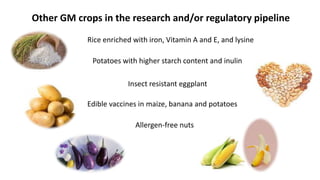
Other GM crops in the research and/or regulatory pipeline
Rice enriched with iron, Vitamin A and E, and lysine
Insect resistant eggplant
Edible vaccines in maize, banana and potatoes
Allergen-free nuts
Potatoes with higher starch content and inulin
In natural products novel emphasizes the integrity & unusualness for a class or some
structural uniqueness or isolated as different chemical entity from a natural resource.
The word "NOVEL" as something unique or "NEW". Arnab Chatterjee (2017)
Novel compounds are those which have not yet been discovered by either isolation
and characterization. New compounds are those which have been discovered and
then tested out with the current or existing compounds to find out whether they have
similar properties. Ivan Kahwa (2019)
A novel substance is a chemical substance or compound which may include plant
growth regulators. Plant growth regulators (M. Mohamed Amananullah, 2010). Plant
growth regulators are chemical substances and when applied in minute amount, they
bring rapid changes in the phenotype of plants and influence the plant;s growth and
development.
Production of Novel Substances
B Animal Biotechnology
Transgenic animals are those that, as a consequence of experimental DNA transfer
application, have exogenous DNA integrated in their germ line. The integrated DNA may
or may not derive from the same species as the host genome; it may or may not encode
for a functional gene; and it may or may not be targeted to an intended site of
incorporation in the genome.
The term ‘transgenic animal’ fully represents all such cases, more specific terms such as
‘knockout animals’ or ‘mutant animals’ are used to notify the targeted disruption
or mutagenesis of selected endogenous gene sequences in the germ line of animals.
Most of what we know of transgenesis in animal species comes from experimental work
on the mouse but transgenic technology has been also successfully applied in several
types of animals
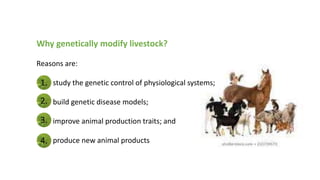
Why genetically modify livestock?
Reasons are:
study the genetic control of physiological systems;
build genetic disease models;
improve animal production traits; and
produce new animal products
1.
2.
3.
4.
Food Sources
Transgenic animals engineered for food sources are created in an effort to produce food
more quickly and effectively. These new food sources will create easier and more
accessible food which will prove especially important for people in developing nations.
Superpig was the first animal created in this transgenic group, having the goal of
producing more meat from each pig. In 1989, scientists injected pigs with genes encoding
both human growth hormone and bovine growth hormone to rapidly increase their size.
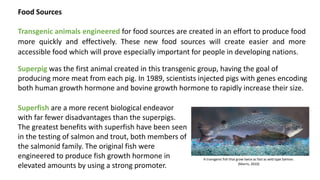
Superfish are a more recent biological endeavor
with far fewer disadvantages than the superpigs.
The greatest benefits with superfish have been seen
in the testing of salmon and trout, both members of
the salmonid family. The original fish were
engineered to produce fish growth hormone in
elevated amounts by using a strong promoter.
A transgenic fish that grow twice as fast as wild type Salmon.
(Marris, 2010)
Agricultural Importance of Transgenic Animals
Breeding
Disease Resistance
Quality
Two scientists of Canada have successfully inserted spider genes into goats
which are lactating.
Now it is possible that along with the milk production, goats will also produce
silk which is a light flexible material used to make army uniforms, tennis
rackets and medical microsutures.
For the safety of chemicals, scientists have produced toxicity sensitive
transgenic animals. Many proteins have produced by using transgenic animals
which in turn convert into enzymes to perform different functions in the body.
Industrial Importance of Transgenic Animals
A gene knockout (abbreviation: KO) is a genetic technique in which one of
an organism's genes is made inoperative ("knocked out" of the organism).
An organism in which a single gene of choice or interest is either inactivated or
knockout in a manner that leaves all other genes unaffected and the best way to
delineate the function of gene by homologous recombination method.
A gene knockout (KO) is a genetic technique in which an organism is engineered to
carry genes that have been made inoperative.
Gene Knock-out Technology
Knockout is accomplished through a combination of techniques, beginning in the
test tube with a plasmid, bacterial artificial cliromosomcs (BACs) or other DNA
construct;
Often, the goal is to create a transgenic animal that has the altered gene.
For embryonic stem cells (ES cells) arc genetically transformed and inserted into
early embryos; Resulting animals with the genetic change in the germ line cells can
then often pass the gene knockout to future generations.
Procedure Used for Gene Knockout Technology
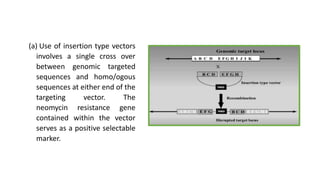
(a) Use of insertion type vectors
involves a single cross over
between genomic targeted
sequences and homo/ogous
sequences at either end of the
targeting vector. The
neomycin resistance gene
contained within the vector
serves as a positive selectable
marker.
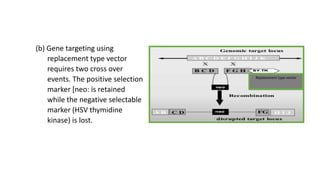
(b) Gene targeting using
replacement type vector
requires two cross over
events. The positive selection
marker [neo: is retained
while the negative selectable
marker (HSV thymidine
kinase) is lost.
Replacement type vector
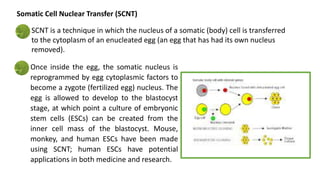
SCNT is a technique in which the nucleus of a somatic (body) cell is transferred
to the cytoplasm of an enucleated egg (an egg that has had its own nucleus
removed).
Once inside the egg, the somatic nucleus is
reprogrammed by egg cytoplasmic factors to
become a zygote (fertilized egg) nucleus. The
egg is allowed to develop to the blastocyst
stage, at which point a culture of embryonic
stem cells (ESCs) can be created from the
inner cell mass of the blastocyst. Mouse,
monkey, and human ESCs have been made
using SCNT; human ESCs have potential
applications in both medicine and research.
Somatic Cell Nuclear Transfer (SCNT)
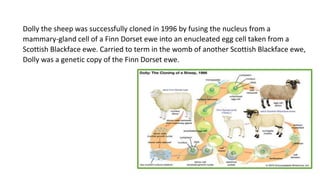
Dolly the sheep was successfully cloned in 1996 by fusing the nucleus from a
mammary-gland cell of a Finn Dorset ewe into an enucleated egg cell taken from a
Scottish Blackface ewe. Carried to term in the womb of another Scottish Blackface ewe,
Dolly was a genetic copy of the Finn Dorset ewe.
Applications of SCNT
Somatic Cells Nuclear Transfer ensures the rapid production of genetically modified
animals or elite lines with desirable traits. It also allows genetic conservation of local
breeds with unique tolerance for regional diseases or local climates. SCNT allows spread
of release resistance faster than traditional techniques.
Arguments
Use of SCNT in medically based circumstances, provided that the safety of the procedure
can be established. In another perspective, SCNT differs only in degree from other
assisted reproductive technologies, and it is ethically defensible for specific groups as
such, for agricultural and test animals.
Thank you for listening.

Green-Biotech.pptx

  • 1.
  • 2.
    TRANSGENIC POTENTIAL Transgene - Agene which is artificially introduced into the genome of another organism (Oxford Dictionary) - Is an exogenous gene that has been introduced into the genome of another organism; a transgenic species is one whose genome has been genetically altered (ScienceDirect) - These transgenes may include genes from the same organism or novel genes from a completely different organism. The organism I said to be transformed. In other cases, introduction of transgenic DNA has been used to add new functions to an organism, such as the expression of a protein normally not present in that organism. - The added gene is called transgene. The transgene inserts itself into a chromosome and is passed to the progeny as a new component of the genome. The resulting organism carrying a transgene is called a transgenic organism or a genetically modified organism (GMO) (Britannica).
  • 3.
    A Crop Biotechnology 1.Higher crop yields 2. Reduced farm costs 3. Increased farm profit 4. Safer environment 5. More nutritious food According to the ISAAA.org, in the developed world, there is clear evidence that the use of transgenic or GM crops has resulted in significant benefits which include:
  • 4.
    The “first generation”crops with traits such as insect resistance and herbicide tolerance have proven their ability to lower farm-level production costs. The “second generation” GM crops feature increased nutritional and/or industrial traits. These crops have more direct benefits to consumers. Examples of commercialized second- generation crops include (ISAAA GM Approval Database): 1. Non-browning apples 2. Non-bruising and low acrylamide potatoes 3. Maize varieties with low phytic acid and increased essential amino acids 4. Healthier oils from soybean and canola
  • 5.
    Non-browning apples When anapple’s cells are damaged by biting, slicing, or bruising, an enzyme called polyphenol oxidase (PPO) initiates a chemical reaction that results in the apple’s flesh turning brown. PPO is found in one part of the cell mixes with polyphenolics found in another part of the cell. Polyphenolics are one of the many types of chemical substrates that serve various purposes like aroma and flavor. When PPO and polyphenolics mix, brown-tones melanin is left behind which “burns up” nutrients like vitamin C and antioxidants. There’s more than one type of apple browning, but this primary form is called enzymatic or oxidative browning. Since PPO causes enzymatic browning, scientist knew to reduce the PPO content thru gene silencing (arcticapples.com).
  • 6.
    The company silenceda gene in the apple (that controls browning) by inserting modified apple DNA along with genetic sequences from three different species: 1. A regulatory gene switch from a plant virus (Cauliflower mosaic virus promoter: CaMV 45S); 2. A terminator sequence from a bacterium (Agrobacterium thumifaciens taken from its Nopaline synthase gene: nos;) and 3. An antibiotic resistance marker gene from a bacterium (Streptomyces kanamyceticus) here the nptll gene (which confers resistance to the antiobiotic kanamycin). 1. 2. 3.
  • 7.
    According to Ruppfrom nationalgeographic.com, GM food plants are often transgenic – that is, they contain inserted gene sequences from wildly unrelated organisms, among them bacteria, jellyfish, rats, mice, and more. The potato however, was developed and being marketed under Simplot Innate brand lead by Dr. Caius Rommens in 2015 (most commonly found under the trademark White Russet – livingnongmo.org) using a technique called gene silencing or RNA interference, a natural process used by everybody’s cells to regulate gene expression. To understand RNA interference, livingnongmo.org added that messenger RNA carries genetic instructions from the cell nucleus out to other parts of a cell.
  • 8.
    RNAi begins whena different type of RNA (dsRNA) is placed inside a cell. The dsRNA cut up by enzyme, paired up with proteins, and then ends up binding to a specific target where it fits on the mRNA. This can prevent the mRNA from delivering all of its instructions, effectively “silencing” the desired gene. Biochemically, this is the equivalent of flipping a switch from ON and OFF – in the case of potato, shutting down the manufacture of pair of enzymes: polyphenol oxidase, the causative agent of browning in potatoes, avocadoes and apples, and asparagine synthetase, essential for making asparagine, the precursor for acrylamide.
  • 9.
    Non-bruising and lowacrylamide potatoes Acrylamide is a naturally-occurring compound found in many foods such as bread, coffee, cereals, whole grain bread, bakery products, nuts, some fruits and vegetables, potatoes and potato products (chips, French fries). When heated, these foods produce acrylamide. a. Regular potato b. Low acrylamide potato Lower level of asparagine (the compound that is converted to acrylamide, a possible carcinogen, when potato is being cooked) and lower black spot, which contributes to browning.
  • 10.
    Maize varieties withlow phytic acid and increased essential amino acids Nutritional quality of different components of a maize kernel The presence of phytic acid in food matrices has become the major concerns due to its negative effect on mineral bioavailability and protein digestibility in human nutrition. The inclusion of exogenous phytase in food medium and reduction of phytate level in plant- based food via genetic engineering have been seen as promising area.
  • 11.
    Phytic acid isan antioxidant compound found abundantly in seeds and in bran of grains, that is the principal storage form of phosphorous in plants. It is a strong chelator of Ca, Zn and other minerals, and diets based on foods high in phytic acid, such as unrefined flour, can cause mineral deficiencies unless it is broken down by sprouting or by fermentation (yourdictionary.com; meriamdictionary.com). Availability of Zn in maize grains is only 20% in the human gut as cited by Prasanna et al. (2020) from frontiers.org. The major impediment of low availability of Zn has been the presence of phytic acid/phytate that constitutes nearly 75-80% of total Phosphorous maize grains. Maize kernels generally contains ~3.2 mg day-1 of phytic acid with a range of 2.4 to 4.1 mg day-1. Phytate being negatively charges has a strong tendency to chelate positively charged metal ions such as Zn, thereby resulting in high insoluble salts with poor bioavailability of the nutrient. Bringing down phytate in maize could be an important strategy for Zn biofortification.
  • 12.
    Provitamin A-enriched andhigh-Zn maize cultivars developed using conventional and molecular marker-assisted breeding and released for commercial cultivation in sub-Saharan Africa, Asia, and Latin America (modified from Listman et al., 2019).
  • 13.
    Traits Gene combinationNutritional trait values Improved genotypes developed References QPM + provitamin A CrtRB1 in a QPM hybrid (Vivek QPM9) 8.16 µg g−1 PVA; 0.74% Trp; and 2.67% Lys (Lys and Trp as % endosperm protein) Pusa Vivek QPM9 Improved Muthusamy et al. (2014); Yadava et al. (2018) CrtRB1 in QPM inbreds (CML161 and CML171) 5.25 to 8.14 µg g−1 PVA; 0.35% Lys in endosperm flour Provitamin A-enriched elite QPM inbreds CML161 and CML171 Liu et al. (2015) CrtRB1, LcyE, and o2 in QPM inbreds 9.25–12.88 µg g−1 PVA; 0.334% Lys and 0.080% Trp (Lys and Trp estimated in endosperm flour) Pusa HQPM-5 Improved; Pusa HQPM-7 Improved Zunjare et al. (2018) CrtRB1 in a QPM inbred 10.75 µg g−1 PVA; 0.303% Lys and 0.080% Trp (Lys and Trp estimated in endosperm flour) Provitamin A-enriched elite QPM inbred HKI1128Q (parent of Pusa HM9 Improved, HM10Q, and HM11Q) Goswami et al. (2019) QPM + provitamin A + vitamin E CrtRB1, LcyE, and VTE4 in QPM background 16.8 µg g−1 alpha-tocopherol; 11.5 µg g−1 PVA; 0.367% Lys and 0.085% Trp (Lys and Trp estimated in endosperm flour) Improved versions of QPM and provitamin A rich hybrids (HQPM-1-PV, HQPM-4-PV, HQPM-5-PV, and HQPM-7-PV) Hossain et al. (2018b) QPM + provitamin A + low phytate lpa1-1 and lpa2-1 in provitamin A-enriched QPM lines 8.3–11.5 µg g−1 PVA; 0.323–0.372% Lys and 0.081–0.087% Trp (Lys and Trp estimated in endosperm flour); 30–40% reduction in phytic acid P Improved versions of elite inbreds (HKI161-PV, HKI163-PV, HKI193-1-PV, and HKI193-2-PV) Bhatt et al. (2018) Some examples of stacking of nutritional quality traits in maize using molecular marker-assisted breeding
  • 14.
    Canola oil isnutritionally unique because of its fatty acid profile, having low levels of saturated fatty acids, high levels of monounsaturated fatty acids, and significant levels of n-6 and n-3 fatty acids. Canola oil also contains phytosterols and vitamin E, which may contribute to its nutritional effects (Aukema and Campbell, 2011; Przybylski and Eskin, 2011). Healthier oils from soybean and canola https://www.google.com/search?q=canola+plant&tbm=isch&source=iu&ic tx=1&fir=EWyGq9r7wcSN- M%253A%252Cj1DNX_Wcj6A5MM%252C%252Fm%252F01g2vp&vet=1&u sg=AI4_-kRjW- rVJ2PC7HVd8mNTIDHvm_JOMg&sa=X&ved=2ahUKEwilvqnbhMLoAhUHrZ QKHfnRA8MQ_B0wEnoECAsQAw#imgrc=EWyGq9r7wcSN-M
  • 15.
    Has less than0.1% and 8.5 µM g-1, respectively. Canola oil in Canada is extracted mainly from the seeds of genetically modified Brassica napus L. but a small part of extracted canola oils from Brassica napa L. Canola oil is the only known vegetable oil with a sulfur atom in some fatty acid structures that are responsible for the sulfur flavor in the oil. Plant breeders have developed canola oil with new fatty acid composition such as high oleic canola oil (oleic acid raised to about 85%), high lauric acid canola oil (up to 31%) and high stearic acid canola oil (increased to about 28%). https://www.google.com/search?q=canola+oil&tbm=i sch&ved=2ahUKEwjapo78hMLoAhWBw4sBHbYfBjYQ2- cCegQIABAA Similarly, according to List (2016), concerns over erudic acid (C22 omega-9) prompted plant breeding efforts to remove the component from high erudic acid rapeseed oil. The next generation saw erudic acid content drop from 45% to 2% or less. Further breeding resulted in low erucic, low linolenic canola oil.
  • 16.
    https://www.google.com/search?q=soybean+plant&tbm=isch&source=iu &ictx=1&fir=98hU- iL5mb8ZdM%253A%252C2B2eDjE1OfxP2M%252C%252Fm%252F0gyv9&v et=1&usg=AI4_-kR8SGKMOjd- lzsAXMmRbKrpTi3uiw&sa=X&ved=2ahUKEwjd5bDHhsLoAhXvy4sBHYrEDM wQ_B0wHHoECAsQAw#imgrc=98hU-iL5mb8ZdM: https://www.google.com/search?q=soybean+oil&tbm=isch&source=iu&i ctx=1&fir=BjkcTQqR_hnv_M%253A%252C13y7G_KCbWnyjM%252C_&ve t=1&usg=AI4_- kSSedaNKO1dh0CBP0Wkim6D63pMqw&sa=X&ved=2ahUKEwjS9NCLh8L oAhVMHaYKHZ8oBAEQ9QEwEXoECAoQNQ#imgrc=BjkcTQqR_hnv_M: Soybean Oil —Soybean oil is low in saturated fat and high in unsaturated fats. Its high smoke point (256 °C) and inexpensive price make it ideal for deep- frying. https://www.google.com/search?q=soybean+plant&tbm=isch&source=iu &ictx=1&fir=98hU- iL5mb8ZdM%253A%252C2B2eDjE1OfxP2M%252C%252Fm%252F0gyv9&v et=1&usg=AI4_-kR8SGKMOjd- lzsAXMmRbKrpTi3uiw&sa=X&ved=2ahUKEwjd5bDHhsLoAhXvy4sBHYrEDM wQ_B0wHHoECAsQAw#imgrc=98hU-iL5mb8ZdM:
  • 17.
    Other GM cropsin the research and/or regulatory pipeline Rice enriched with iron, Vitamin A and E, and lysine Insect resistant eggplant Edible vaccines in maize, banana and potatoes Allergen-free nuts Potatoes with higher starch content and inulin
  • 18.
    In natural productsnovel emphasizes the integrity & unusualness for a class or some structural uniqueness or isolated as different chemical entity from a natural resource. The word "NOVEL" as something unique or "NEW". Arnab Chatterjee (2017) Novel compounds are those which have not yet been discovered by either isolation and characterization. New compounds are those which have been discovered and then tested out with the current or existing compounds to find out whether they have similar properties. Ivan Kahwa (2019) A novel substance is a chemical substance or compound which may include plant growth regulators. Plant growth regulators (M. Mohamed Amananullah, 2010). Plant growth regulators are chemical substances and when applied in minute amount, they bring rapid changes in the phenotype of plants and influence the plant;s growth and development. Production of Novel Substances
  • 19.
    B Animal Biotechnology Transgenicanimals are those that, as a consequence of experimental DNA transfer application, have exogenous DNA integrated in their germ line. The integrated DNA may or may not derive from the same species as the host genome; it may or may not encode for a functional gene; and it may or may not be targeted to an intended site of incorporation in the genome. The term ‘transgenic animal’ fully represents all such cases, more specific terms such as ‘knockout animals’ or ‘mutant animals’ are used to notify the targeted disruption or mutagenesis of selected endogenous gene sequences in the germ line of animals. Most of what we know of transgenesis in animal species comes from experimental work on the mouse but transgenic technology has been also successfully applied in several types of animals
  • 20.
    Why genetically modifylivestock? Reasons are: study the genetic control of physiological systems; build genetic disease models; improve animal production traits; and produce new animal products 1. 2. 3. 4.
  • 21.
    Food Sources Transgenic animalsengineered for food sources are created in an effort to produce food more quickly and effectively. These new food sources will create easier and more accessible food which will prove especially important for people in developing nations. Superpig was the first animal created in this transgenic group, having the goal of producing more meat from each pig. In 1989, scientists injected pigs with genes encoding both human growth hormone and bovine growth hormone to rapidly increase their size. Superfish are a more recent biological endeavor with far fewer disadvantages than the superpigs. The greatest benefits with superfish have been seen in the testing of salmon and trout, both members of the salmonid family. The original fish were engineered to produce fish growth hormone in elevated amounts by using a strong promoter. A transgenic fish that grow twice as fast as wild type Salmon. (Marris, 2010)
  • 22.
    Agricultural Importance ofTransgenic Animals Breeding Disease Resistance Quality
  • 23.
    Two scientists ofCanada have successfully inserted spider genes into goats which are lactating. Now it is possible that along with the milk production, goats will also produce silk which is a light flexible material used to make army uniforms, tennis rackets and medical microsutures. For the safety of chemicals, scientists have produced toxicity sensitive transgenic animals. Many proteins have produced by using transgenic animals which in turn convert into enzymes to perform different functions in the body. Industrial Importance of Transgenic Animals
  • 24.
    A gene knockout(abbreviation: KO) is a genetic technique in which one of an organism's genes is made inoperative ("knocked out" of the organism). An organism in which a single gene of choice or interest is either inactivated or knockout in a manner that leaves all other genes unaffected and the best way to delineate the function of gene by homologous recombination method. A gene knockout (KO) is a genetic technique in which an organism is engineered to carry genes that have been made inoperative. Gene Knock-out Technology
  • 25.
    Knockout is accomplishedthrough a combination of techniques, beginning in the test tube with a plasmid, bacterial artificial cliromosomcs (BACs) or other DNA construct; Often, the goal is to create a transgenic animal that has the altered gene. For embryonic stem cells (ES cells) arc genetically transformed and inserted into early embryos; Resulting animals with the genetic change in the germ line cells can then often pass the gene knockout to future generations. Procedure Used for Gene Knockout Technology
  • 26.
    (a) Use ofinsertion type vectors involves a single cross over between genomic targeted sequences and homo/ogous sequences at either end of the targeting vector. The neomycin resistance gene contained within the vector serves as a positive selectable marker.
  • 27.
    (b) Gene targetingusing replacement type vector requires two cross over events. The positive selection marker [neo: is retained while the negative selectable marker (HSV thymidine kinase) is lost. Replacement type vector
  • 28.
    SCNT is atechnique in which the nucleus of a somatic (body) cell is transferred to the cytoplasm of an enucleated egg (an egg that has had its own nucleus removed). Once inside the egg, the somatic nucleus is reprogrammed by egg cytoplasmic factors to become a zygote (fertilized egg) nucleus. The egg is allowed to develop to the blastocyst stage, at which point a culture of embryonic stem cells (ESCs) can be created from the inner cell mass of the blastocyst. Mouse, monkey, and human ESCs have been made using SCNT; human ESCs have potential applications in both medicine and research. Somatic Cell Nuclear Transfer (SCNT)
  • 29.
    Dolly the sheepwas successfully cloned in 1996 by fusing the nucleus from a mammary-gland cell of a Finn Dorset ewe into an enucleated egg cell taken from a Scottish Blackface ewe. Carried to term in the womb of another Scottish Blackface ewe, Dolly was a genetic copy of the Finn Dorset ewe.
  • 30.
    Applications of SCNT SomaticCells Nuclear Transfer ensures the rapid production of genetically modified animals or elite lines with desirable traits. It also allows genetic conservation of local breeds with unique tolerance for regional diseases or local climates. SCNT allows spread of release resistance faster than traditional techniques. Arguments Use of SCNT in medically based circumstances, provided that the safety of the procedure can be established. In another perspective, SCNT differs only in degree from other assisted reproductive technologies, and it is ethically defensible for specific groups as such, for agricultural and test animals.
  • 31.
    Thank you forlistening.

Editor's Notes

  • #3 Potential - Having or showing the capacity to become or develop into something in the future success or usefulness
  • #7 This technology was developed in Australia and lisenced by Okanagan Specialty Fruits and sold under the brand name Arctic Apples approved by the USDA in 2015. (Canadian Biotechnology Action Network (CBAN))
  • #11 Application of phytase in food business seems to be a gifted approach in nutritionally and economically. However, it is not an easy task to simply assign any commercially available phytase to food application as many tests yet to be conducted to approve its effectiveness.
  • #25 However, KO can also refer to the gene that is knocked out or the organism that carries the gene knockout. Knockout organisms or simply knockouts are used to study gene function, usually by investigating the effect of gene loss. Researchers draw inferences from the difference between the knockout organism and normal individuals. Those organisms carrying such genes are known as Knockout organisms or simple knockouts, they are used in assigning function to specific gene having unknown function that has been sequenced. This technique is the opposite of Gene knock in. Knocking out two genes simultaneously in an organism is known as double knockout (DKO). Similarly, the terms triple knockouts (TKO) and quadruple knockouts (QKO) are used to describe 3 or 4 knockout genes respectively.