By:
Abhay Ohri
Graphology is the
analysis of the
physical
characteristics
and
patterns of
handwriting
claiming
to be able to
identify the
Graphology, also known as
graphoanalysis, is a process that
is used by some to attempt to determine
personality traits and details about a
person based on their handwriting. It
began in 1871 by
Jean-HippolyteMIchon,
and it is still popular in Europe,
especially France
What is Graphology
used for ?
Based on what is explained
above, graphology isn't
100% accurate.
Professionals experience
with graphology has
turned out to be over 90%
accurate. There remains a
possibility that a malicious person may
just
learn a few of the handwriting traits and
start writing in not his-natural way to
fool
It is generally considered
a pseudoscience. While
some experts believe that
handwriting analyses are
legitimate evidence, many
more call it “junk science,” and subjective. However, new
technology such as FISH (Forensic Information System for
Handwriting) has, in prosecutors' opinions, elevating
handwriting analysis from a junk science to actual science.
The answer is yes. Computer tests
prove
handwriting analysis is legitimate
and no
one is more surprised than the
computer
scientist who produced the first
scientific
evidence that handwriting is
Let’s
have
a look
into some
basics of
Handwriting
analysis
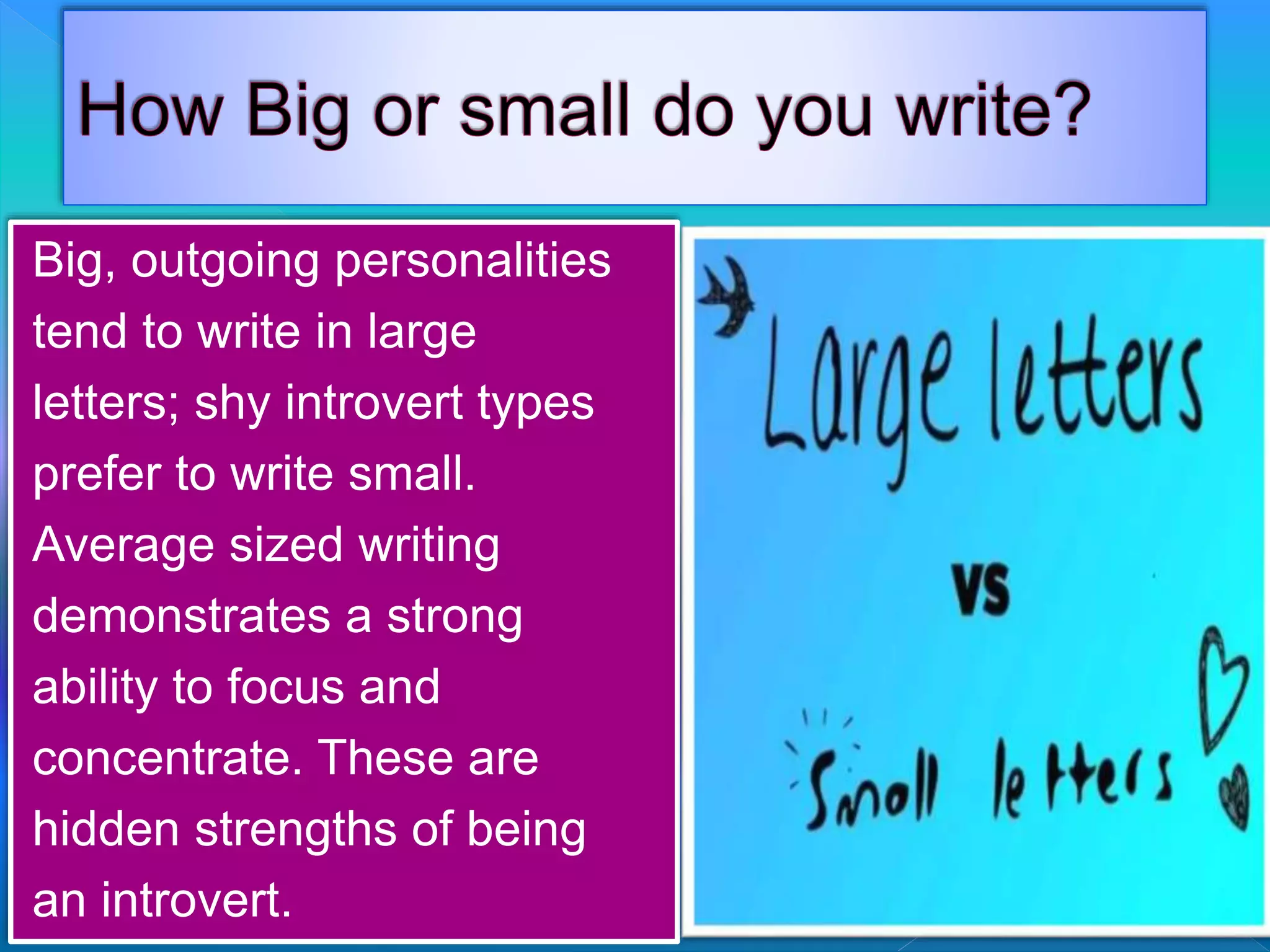
Big, outgoing personalities
tend to write in large
letters; shy introvert types
prefer to write small.
Average sized writing
demonstrates a strong
ability to focus and
concentrate. These are
hidden strengths of being
an introvert.
People who leave large
space between their words
enjoy freedom and
independence, while those
who squeeze their words
together tend to like the
company of others. If words
are totally jammed together
they might be intrusive or
have the tendency to
crowd people.
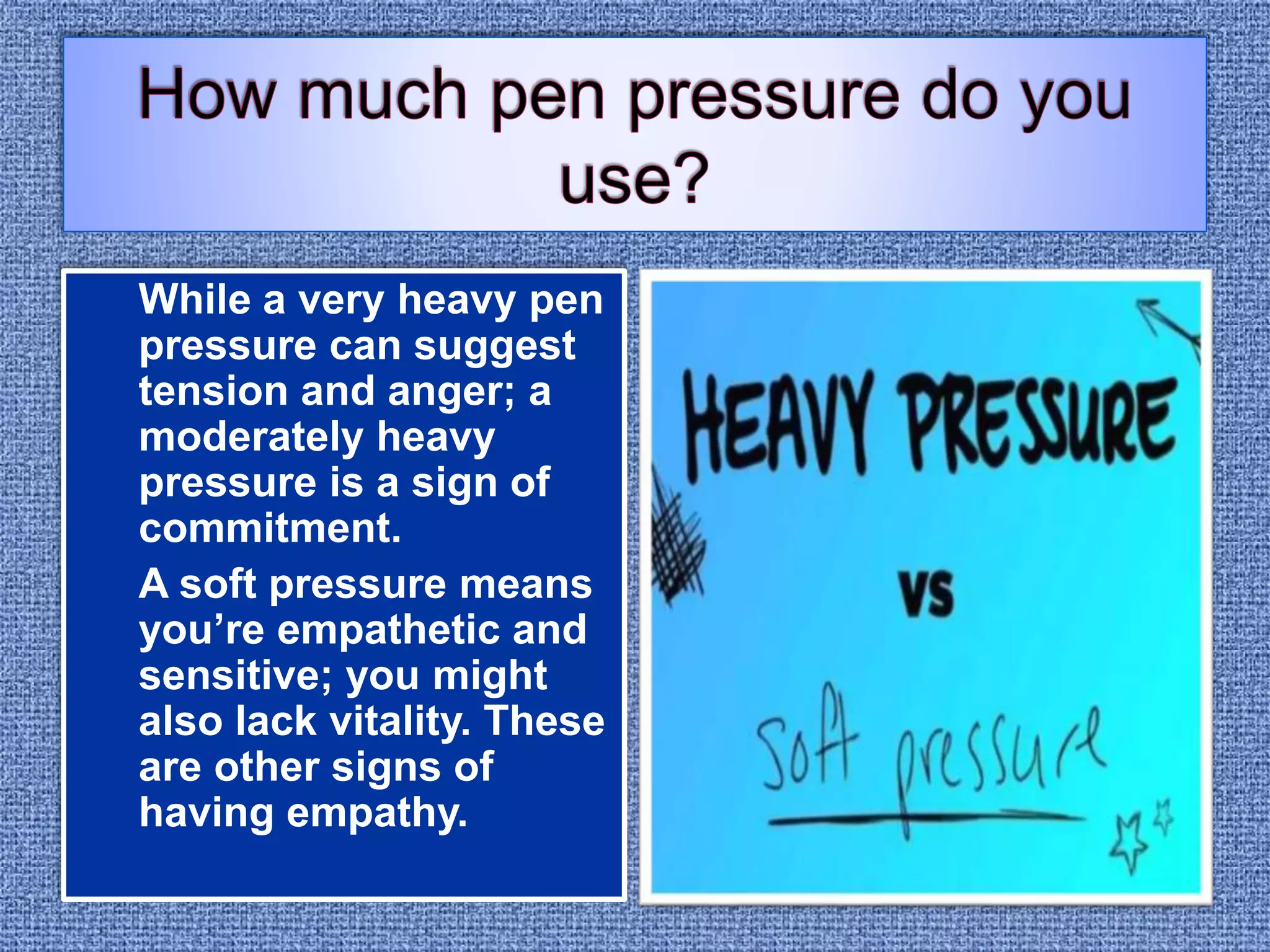
While a very heavy pen
pressure can suggest
tension and anger; a
moderately heavy
pressure is a sign of
commitment.
A soft pressure means
you’re empathetic and
sensitive; you might
also lack vitality. These
are other signs of
having empathy.
If you dot your I’s high
on the page you likely
have an active
imagination. A closely
doted ‘i’ is the mark of
an organized and detail-
oriented mind. If you dot
your I’s to the left, you
might be a
procrastinator. If you dot
your I’s with a circle, you
likely have playful and
childlike qualities.
A legible signature
is a sign of
confidence and
comfort in one’s
own skin, while an
illegible signature is
the mark of a private
or hard to read
person. So sign
accordingly.
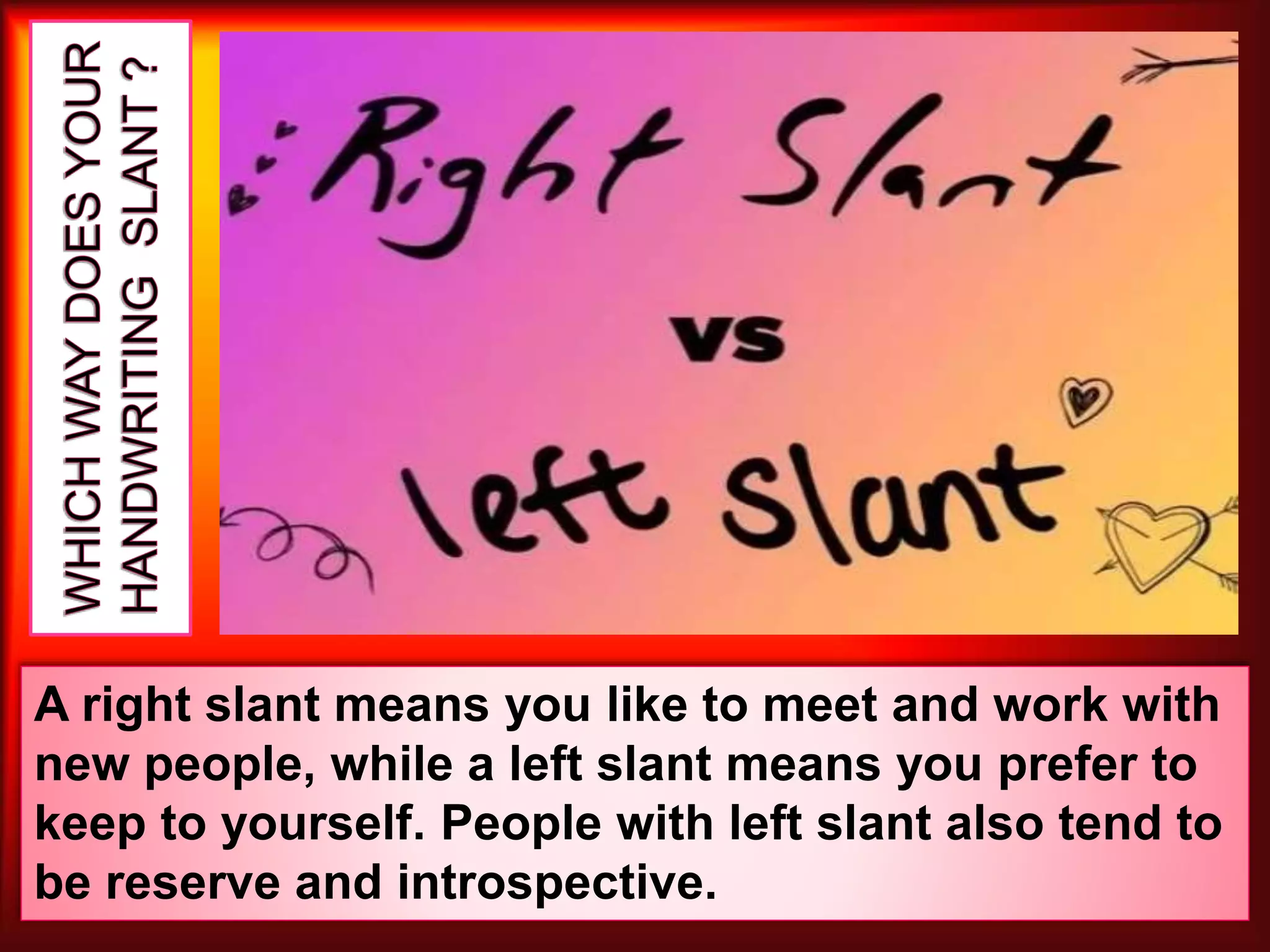
A right slant means you like to meet and work with
new people, while a left slant means you prefer to
keep to yourself. People with left slant also tend to
be reserve and introspective.
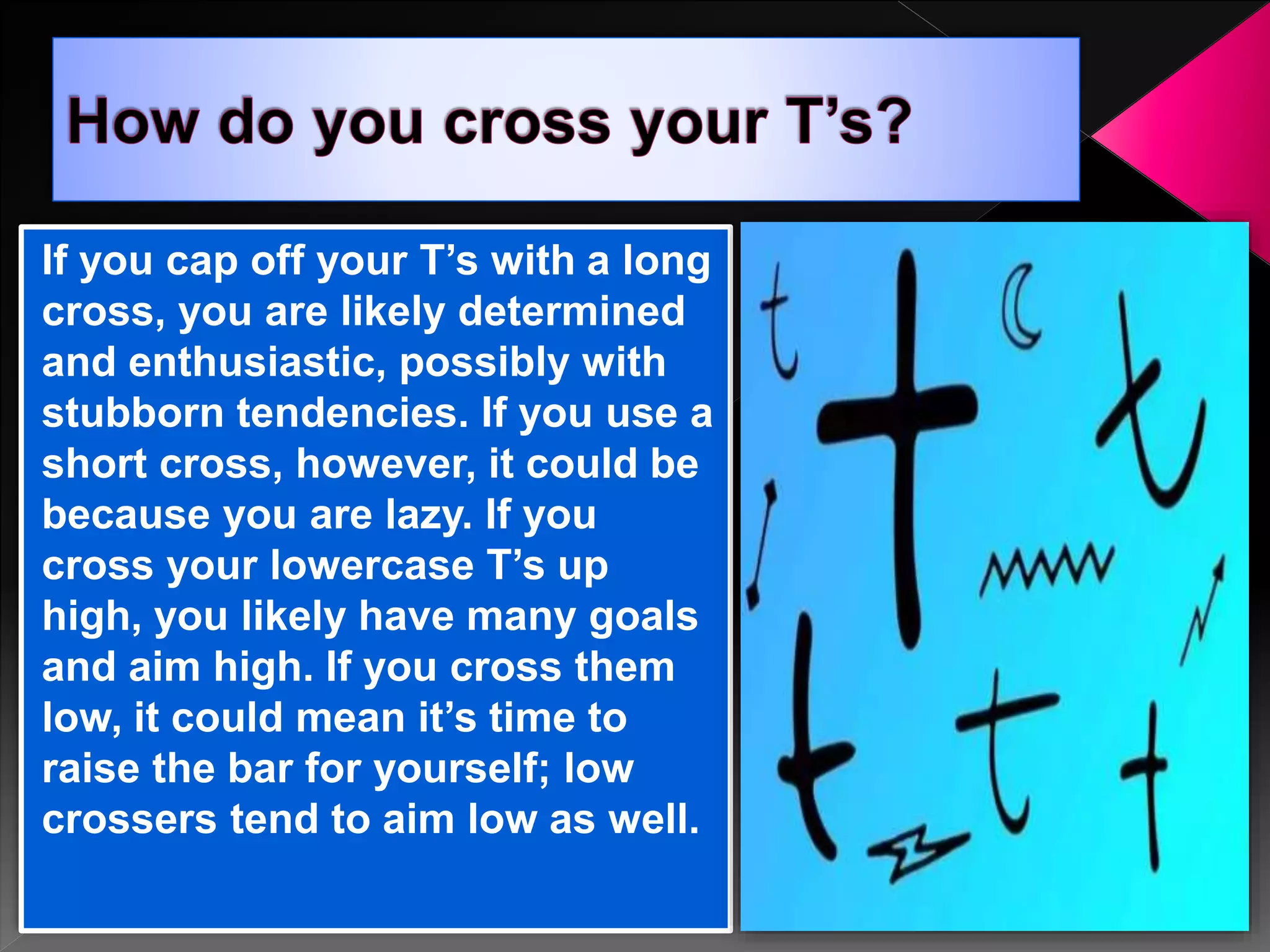
If you cap off your T’s with a long
cross, you are likely determined
and enthusiastic, possibly with
stubborn tendencies. If you use a
short cross, however, it could be
because you are lazy. If you
cross your lowercase T’s up
high, you likely have many goals
and aim high. If you cross them
low, it could mean it’s time to
raise the bar for yourself; low
crossers tend to aim low as well.
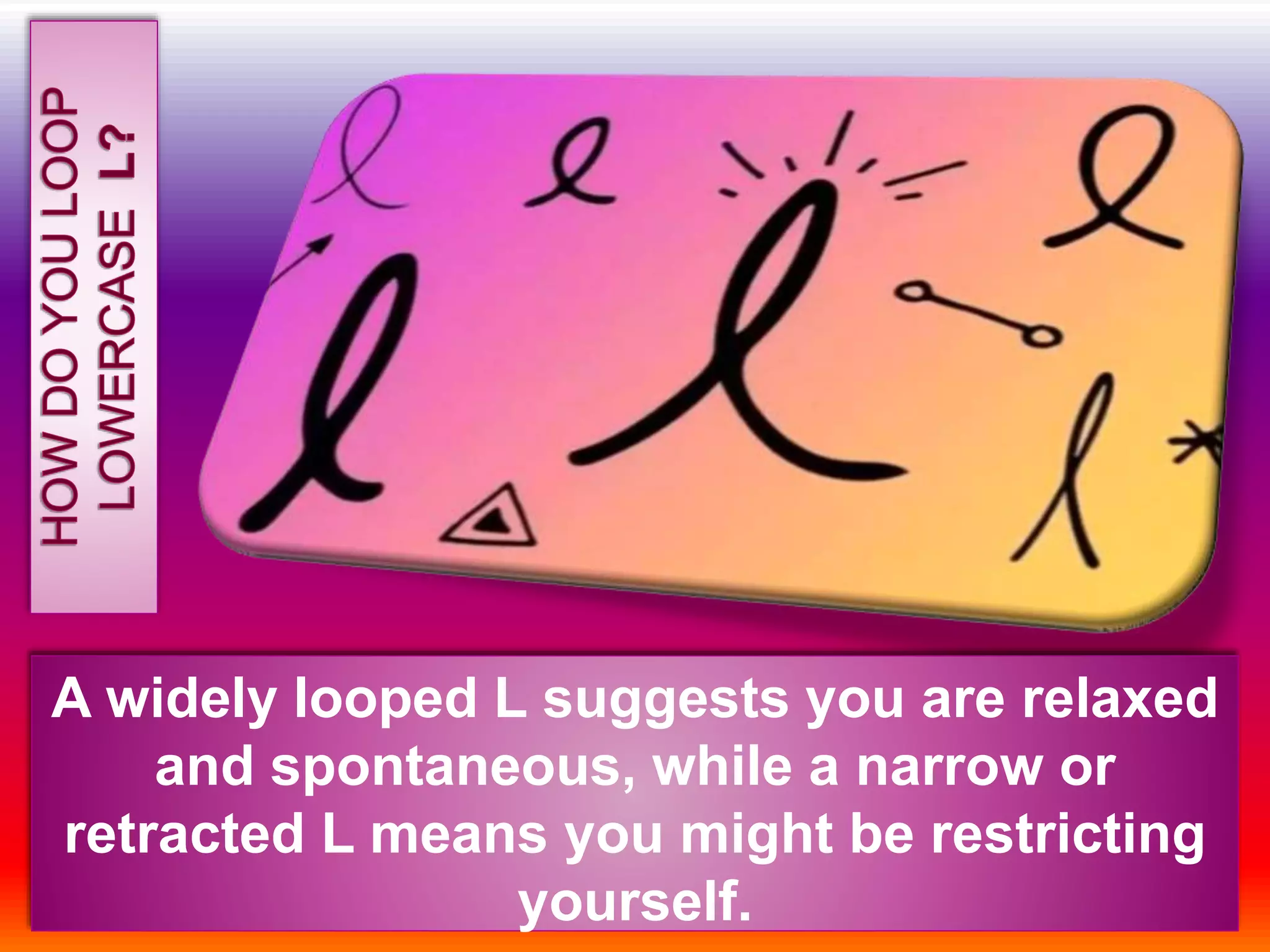
A widely looped L suggests you are relaxed
and spontaneous, while a narrow or
retracted L means you might be restricting
yourself.
The hook on your lowercase y is a huge indicator of your
personality. A broad loop means you have a large circle of
friends, while a slender loop means you are more selective
with whom you allow close to you. A short hook means you
are a homebody, while a long hook could be a signal of
wanderlust.
Pointed letters
are a sign of an
intelligent
person who
might be holding
back
aggression.
Rounded letters
signal creativity
and artistic
ability. These are
science-backed
ways to boost
creative writing.
If you write
quickly, it’s
highly likely
that you are
impatient
and dislike
wasting time.
If you take
your time
getting
words down,
you are self
reliant and
methodical.
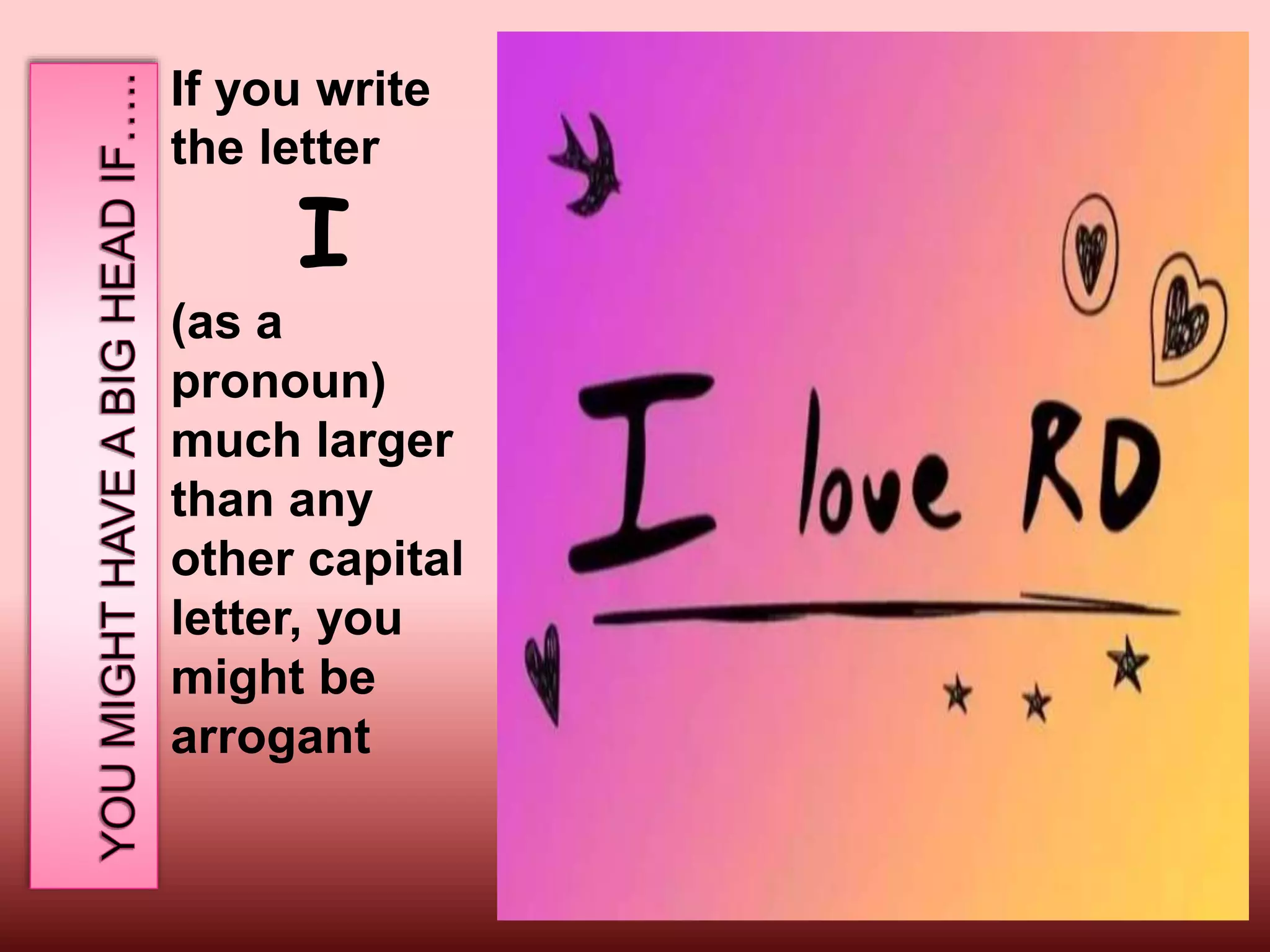
If you write
the letter
I
(as a
pronoun)
much larger
than any
other capital
letter, you
might be
arrogant
If the slant or any other feature of your
handwriting changes dramatically over the course
of a piece of writing, there is a good chance you
are lying.
Caught Ya!
Handwriting
as an
indicator
of your
character
Analysis errors have occurred in history
when the standard documents that
experts used in their comparisons turned
out to be forgeries as well. Another
limitation is the effects of mood , age,
drugs fatigue, and illness on a person’s
handwriting.

Graphology

  • 1.
  • 2.
    Graphology is the analysisof the physical characteristics and patterns of handwriting claiming to be able to identify the
  • 3.
    Graphology, also knownas graphoanalysis, is a process that is used by some to attempt to determine personality traits and details about a person based on their handwriting. It began in 1871 by Jean-HippolyteMIchon, and it is still popular in Europe, especially France What is Graphology used for ?
  • 4.
    Based on whatis explained above, graphology isn't 100% accurate. Professionals experience with graphology has turned out to be over 90% accurate. There remains a possibility that a malicious person may just learn a few of the handwriting traits and start writing in not his-natural way to fool
  • 5.
    It is generallyconsidered a pseudoscience. While some experts believe that handwriting analyses are legitimate evidence, many more call it “junk science,” and subjective. However, new technology such as FISH (Forensic Information System for Handwriting) has, in prosecutors' opinions, elevating handwriting analysis from a junk science to actual science.
  • 6.
    The answer isyes. Computer tests prove handwriting analysis is legitimate and no one is more surprised than the computer scientist who produced the first scientific evidence that handwriting is
  • 7.
    Let’s have a look into some basicsof Handwriting analysis
  • 8.
    Big, outgoing personalities tendto write in large letters; shy introvert types prefer to write small. Average sized writing demonstrates a strong ability to focus and concentrate. These are hidden strengths of being an introvert.
  • 9.
    People who leavelarge space between their words enjoy freedom and independence, while those who squeeze their words together tend to like the company of others. If words are totally jammed together they might be intrusive or have the tendency to crowd people.
  • 10.
    While a veryheavy pen pressure can suggest tension and anger; a moderately heavy pressure is a sign of commitment. A soft pressure means you’re empathetic and sensitive; you might also lack vitality. These are other signs of having empathy.
  • 11.
    If you dotyour I’s high on the page you likely have an active imagination. A closely doted ‘i’ is the mark of an organized and detail- oriented mind. If you dot your I’s to the left, you might be a procrastinator. If you dot your I’s with a circle, you likely have playful and childlike qualities.
  • 12.
    A legible signature isa sign of confidence and comfort in one’s own skin, while an illegible signature is the mark of a private or hard to read person. So sign accordingly.
  • 13.
    A right slantmeans you like to meet and work with new people, while a left slant means you prefer to keep to yourself. People with left slant also tend to be reserve and introspective.
  • 14.
    If you capoff your T’s with a long cross, you are likely determined and enthusiastic, possibly with stubborn tendencies. If you use a short cross, however, it could be because you are lazy. If you cross your lowercase T’s up high, you likely have many goals and aim high. If you cross them low, it could mean it’s time to raise the bar for yourself; low crossers tend to aim low as well.
  • 15.
    A widely loopedL suggests you are relaxed and spontaneous, while a narrow or retracted L means you might be restricting yourself.
  • 16.
    The hook onyour lowercase y is a huge indicator of your personality. A broad loop means you have a large circle of friends, while a slender loop means you are more selective with whom you allow close to you. A short hook means you are a homebody, while a long hook could be a signal of wanderlust.
  • 17.
    Pointed letters are asign of an intelligent person who might be holding back aggression. Rounded letters signal creativity and artistic ability. These are science-backed ways to boost creative writing.
  • 18.
    If you write quickly,it’s highly likely that you are impatient and dislike wasting time. If you take your time getting words down, you are self reliant and methodical.
  • 19.
    If you write theletter I (as a pronoun) much larger than any other capital letter, you might be arrogant
  • 20.
    If the slantor any other feature of your handwriting changes dramatically over the course of a piece of writing, there is a good chance you are lying. Caught Ya!
  • 21.
  • 29.
    Analysis errors haveoccurred in history when the standard documents that experts used in their comparisons turned out to be forgeries as well. Another limitation is the effects of mood , age, drugs fatigue, and illness on a person’s handwriting.