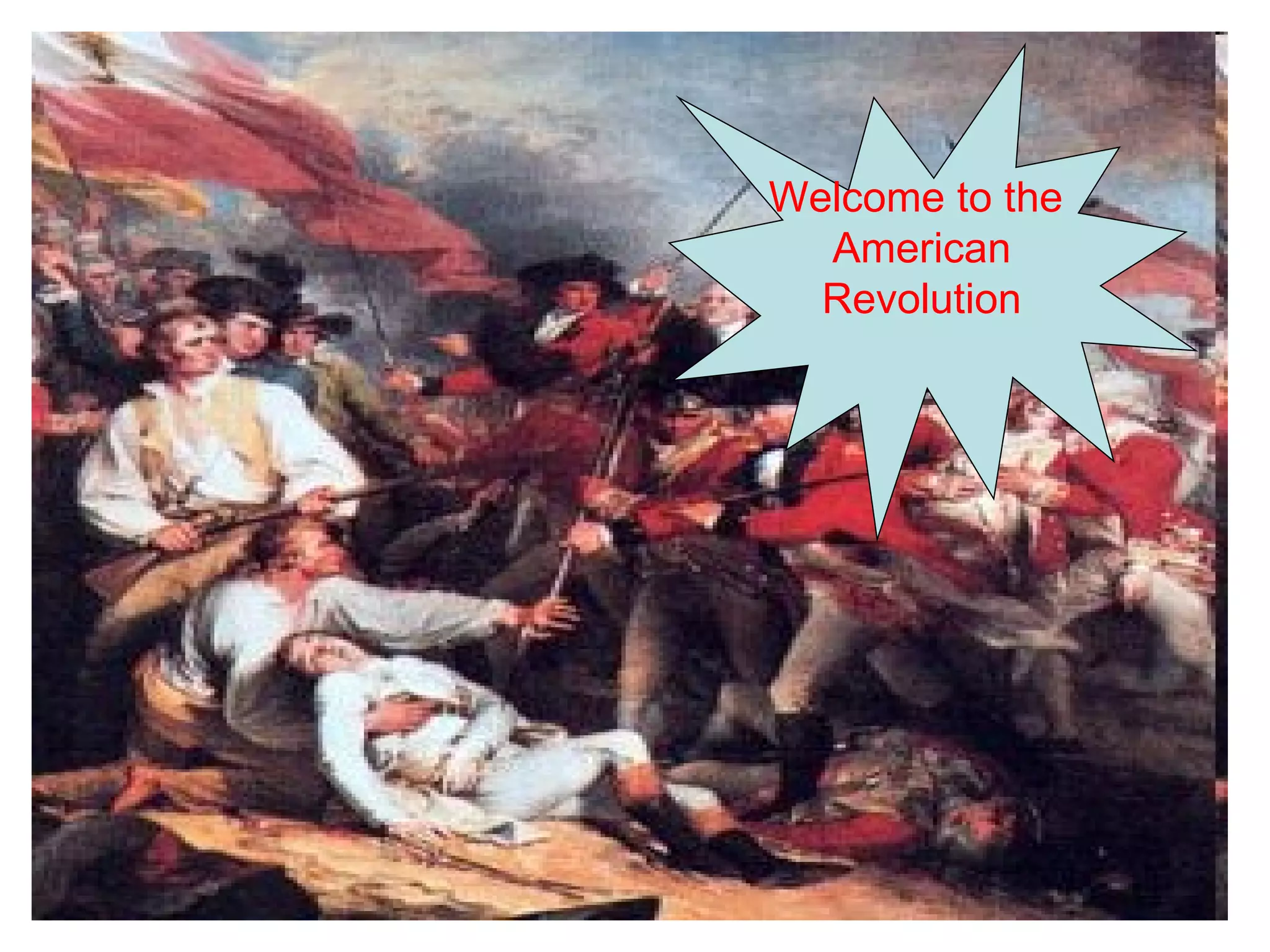
Welcome to the  American Revolution
From England; Called British
King George III  (Fancy)
KING  GEORGE III
Loyalists  (colonists) I LOVE MY KING! HE’S SO COOL I LOVE MY KING
Neutral  (colonists) OHHHH,  I CAN’T MAKE  UP MY MIND!!!!
PATRIOTS (colonists who want independence from England
patriots
PATRIOTS FIGHT  TO  WIN FREEDOM We hate the King!!!
Proclam ation of  1763 The proclamation, in effect, closed off the frontier to colonial expansion.  The King and his council wanted to calm the fears of the Indians, who felt that the colonists would drive them from their lands as they expanded westward.  Many in the colonies felt that the object was to pen them in along the Atlantic seaboard where they would be easier to regulate.  However the colonists could not help but feel a strong resentment when what they perceived to be their prize was snatched away from them. The proclamation provided that all lands west of the heads of all rivers which flowed into the Atlantic Ocean from the west or northwest were off-limits to the colonists. This excluded the rich Ohio Valley and all territory from the Ohio to the Mississippi rivers from settlement.
 
$$$$$ $$$ $$$$$$$$$$$$$$$$$$$ I NEED MONEY!!! HEY COLONISTS…  SEND MORE MONEY
THE QUARTERING ACT 1765 Colonists had to give  food, housing and transportation  to the British soldiers British said colonists needed them to protect colonists from French Colonists  Colonists VERY Angry
Quartering Act Yo, soldiers:  GO AWAY Ha, ha, King says to give us food, housing and transportation
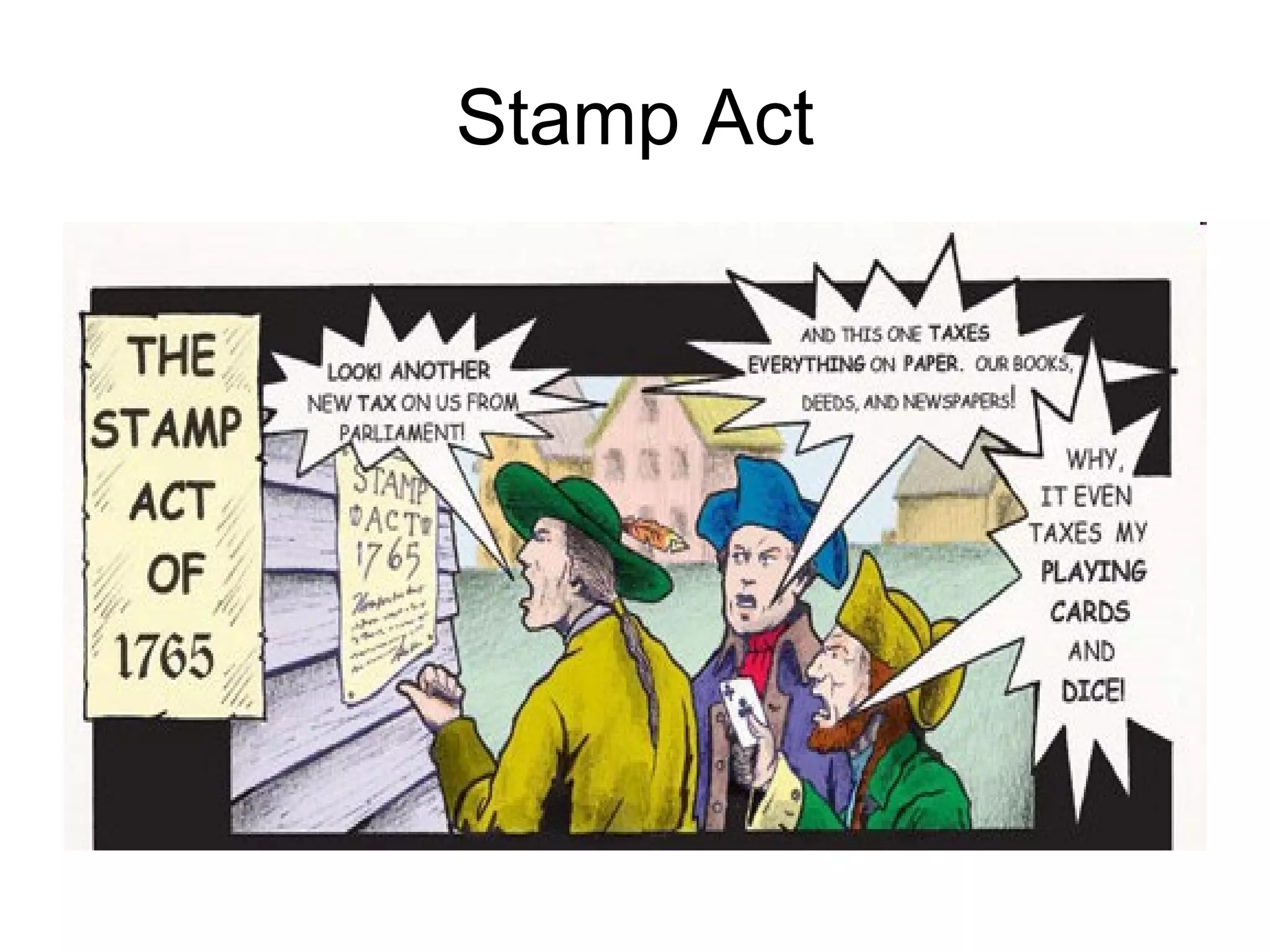
Stamp  Act 1765 King wanted more money to pay for troops Everything printed was taxed, and needed a stamp  EVERYTHING means things like newspapers, almanacs, dice, playing cards, legal documents American colonists mad because it costs money, AND they had no one to represent them in England
Stamp Act Stamp
Stamp Act
NO TAXATION WITHOUT REPRESENTATION
Boston  Massacre 1770 English soldiers didn’t like colonists Colonists didn’t like soldiers The Boston Massacre began when a young apprentice shouted an insult at a British officer.  A soldier on duty in front  of the customs house  gave the apprentice a knock on the ear with the butt of his rifle. The boy cried for help, and an crowd gathered. Someone rang the bells in a nearby  church. This action drew more people into the street. The English guard found himself confronting an angry  mob.  He stood his ground and called for the main guard. Six men, led by a corporal, responded. They  were joined by the officer on duty, Captain John Preston.  The crowd soon swelled to almost 400 men. They began pelting the soldiers with snowballs and chunks of ice. Led Crispus Attucks, a freed slave, the colonist surged to within inches of the fixed bayonets and dared the soldiers to fire. Finally, the squad fired into the unruly crowd, killing five men. As the gun smoke cleared,  Crispus Attucks and four others lay dead or dying. Six more men were wounded.
Boston Massacre
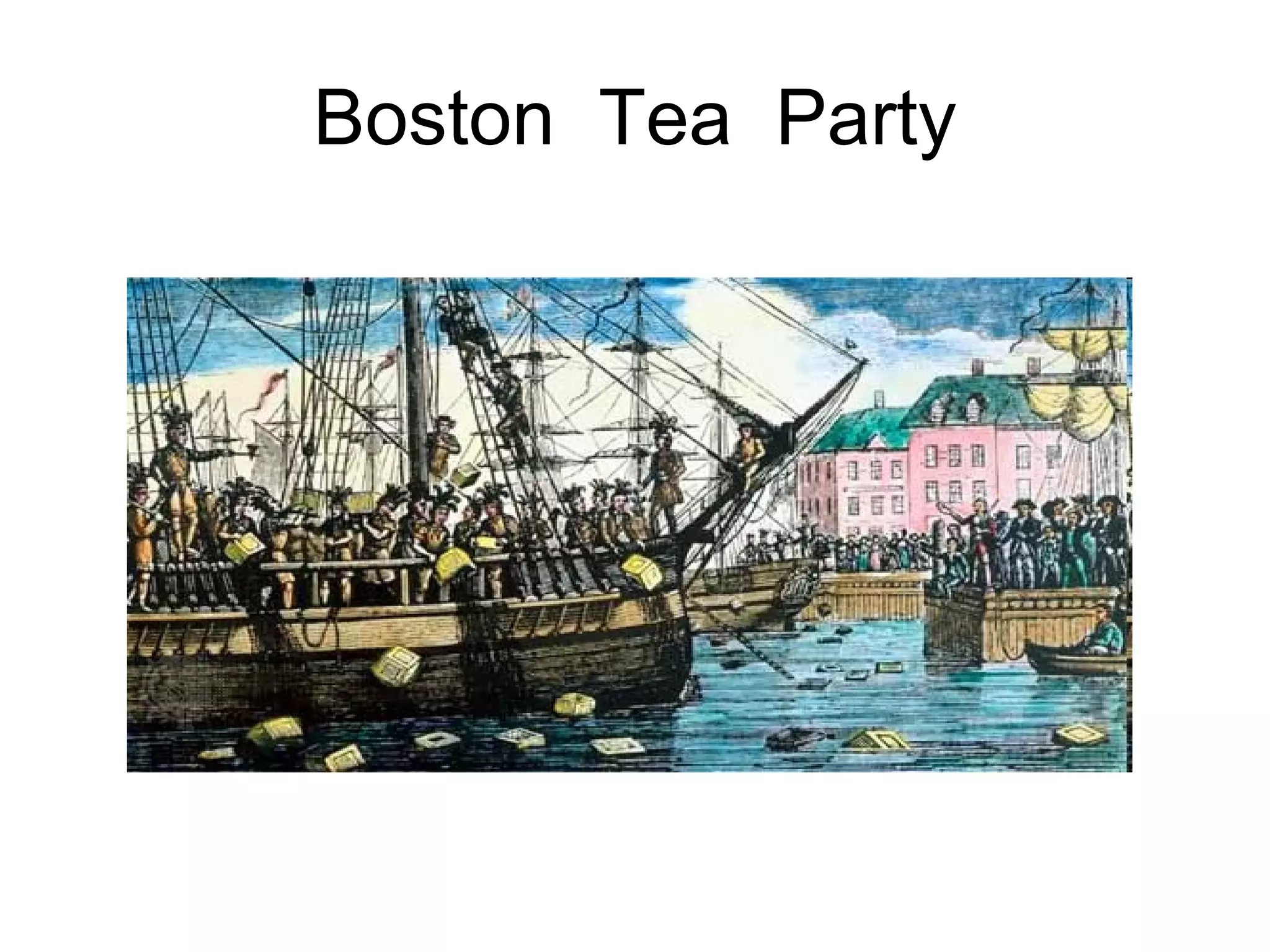
Tea  Tax 1773 British love their tea Colonists love their tea Colonists FURIOUS that King taxed their tea December 16th , a crowd of several thousand persons shouted encouragement to about 60 men disguised as Mohawk Indians, who boarded the three ships.  With the aid of the ships' crew,  they tossed 342 chests of tea, valued at £18,000 into Boston Bay.   
Boston  Tea  Party
Intolerable Act Britain responded to the Boston Tea Party in 1774 by passing several laws that became known in America as the Intolerable Acts.   One law  closed Boston Harbor  until Bostonians paid for the destroyed tea.   Another law  restricted the activities of the Massachusetts legislature  and gave added powers to the post of governor of Massachusetts.  Those powers in effect made him a dictator.  The American colonists were very angered by these forceful acts.   In response to these actions and laws, the colonist banded together to fight back.  Several committees of colonists called for a convention of delegates from the colonies to organize resistance to the Intolerable Acts.  The convention was later to be called the Continental Congress.
Intolerable Acts
Intolerable Acts
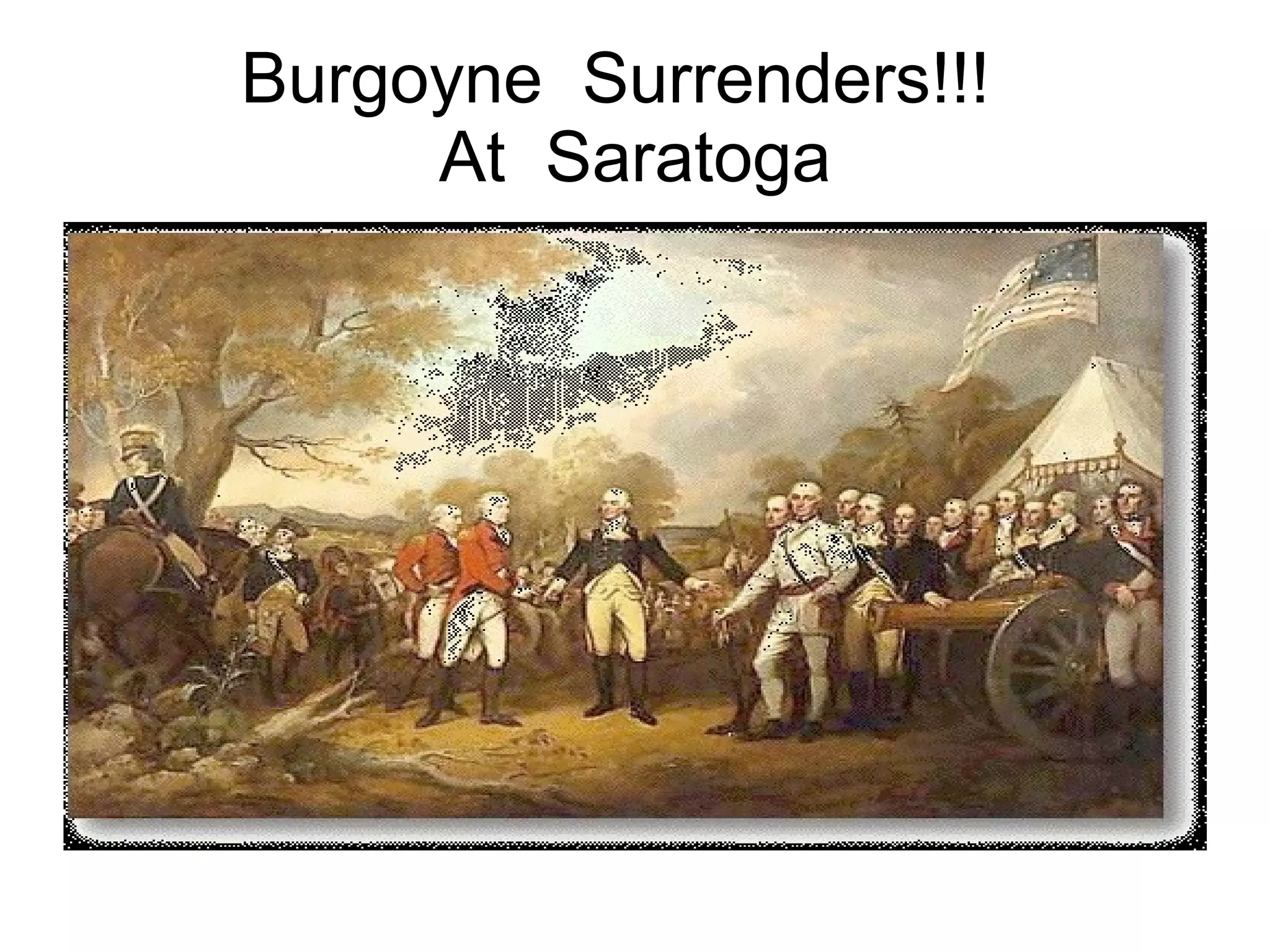
Battle at Saratoga Turning point of the war:  the British know they are in trouble: Colonists could actually win
Burgoyne  Surrenders!!!  At  Saratoga
Battle of Saratoga
Iroquois and the American Revolution The American Revolution divided the Iroquois Confederation and brought destruction into the heart of that union. The Iroquois (or Haudenonsaunee--meaning "people of the light") are an alliance of the Cayuga, Oneida, Mohawk, Onondaga, Seneca, and Tuscarora nations now located in upstate New York and Ontario, Canada. The Iroquois Confederation was neutral. As a league, the confederation could not enter into a state of war without the consent of the entire council. The council was divided at Albany and therefore the Iroquois Confederation declared itself neutral.  Created the first division with the Iroquois in over 200 years.  By 1778, four nations (Mohawk, Onondaga, Cayuga, and Seneca) would side with the British while the remaining two (Oneida and Tuscarora) would support the American rebels.  The consequences of these separate paths would be a civil war among the Iroquois and a brutal invasion at the hands of the Continental Army.
Iroquois Nation
Iroquois and the American Revolution The Iroquois Confederation was ruined when different tribes choose different sides
The  End

Grade 5 social studies revolutionary war for wiki

  • 1.
    Welcome to the American Revolution
  • 2.
  • 3.
  • 4.
  • 5.
    Loyalists (colonists)I LOVE MY KING! HE’S SO COOL I LOVE MY KING
  • 6.
    Neutral (colonists)OHHHH, I CAN’T MAKE UP MY MIND!!!!
  • 7.
    PATRIOTS (colonists whowant independence from England
  • 8.
  • 9.
    PATRIOTS FIGHT TO WIN FREEDOM We hate the King!!!
  • 10.
    Proclam ation of 1763 The proclamation, in effect, closed off the frontier to colonial expansion. The King and his council wanted to calm the fears of the Indians, who felt that the colonists would drive them from their lands as they expanded westward. Many in the colonies felt that the object was to pen them in along the Atlantic seaboard where they would be easier to regulate. However the colonists could not help but feel a strong resentment when what they perceived to be their prize was snatched away from them. The proclamation provided that all lands west of the heads of all rivers which flowed into the Atlantic Ocean from the west or northwest were off-limits to the colonists. This excluded the rich Ohio Valley and all territory from the Ohio to the Mississippi rivers from settlement.
  • 11.
  • 12.
    $$$$$ $$$ $$$$$$$$$$$$$$$$$$$I NEED MONEY!!! HEY COLONISTS… SEND MORE MONEY
  • 13.
    THE QUARTERING ACT1765 Colonists had to give food, housing and transportation to the British soldiers British said colonists needed them to protect colonists from French Colonists Colonists VERY Angry
  • 14.
    Quartering Act Yo,soldiers: GO AWAY Ha, ha, King says to give us food, housing and transportation
  • 15.
    Stamp Act1765 King wanted more money to pay for troops Everything printed was taxed, and needed a stamp EVERYTHING means things like newspapers, almanacs, dice, playing cards, legal documents American colonists mad because it costs money, AND they had no one to represent them in England
  • 16.
  • 17.
  • 18.
    NO TAXATION WITHOUTREPRESENTATION
  • 19.
    Boston Massacre1770 English soldiers didn’t like colonists Colonists didn’t like soldiers The Boston Massacre began when a young apprentice shouted an insult at a British officer. A soldier on duty in front  of the customs house  gave the apprentice a knock on the ear with the butt of his rifle. The boy cried for help, and an crowd gathered. Someone rang the bells in a nearby  church. This action drew more people into the street. The English guard found himself confronting an angry  mob.  He stood his ground and called for the main guard. Six men, led by a corporal, responded. They  were joined by the officer on duty, Captain John Preston. The crowd soon swelled to almost 400 men. They began pelting the soldiers with snowballs and chunks of ice. Led Crispus Attucks, a freed slave, the colonist surged to within inches of the fixed bayonets and dared the soldiers to fire. Finally, the squad fired into the unruly crowd, killing five men. As the gun smoke cleared, Crispus Attucks and four others lay dead or dying. Six more men were wounded.
  • 20.
  • 21.
    Tea Tax1773 British love their tea Colonists love their tea Colonists FURIOUS that King taxed their tea December 16th , a crowd of several thousand persons shouted encouragement to about 60 men disguised as Mohawk Indians, who boarded the three ships.  With the aid of the ships' crew, they tossed 342 chests of tea, valued at £18,000 into Boston Bay.  
  • 22.
    Boston Tea Party
  • 23.
    Intolerable Act Britainresponded to the Boston Tea Party in 1774 by passing several laws that became known in America as the Intolerable Acts.  One law closed Boston Harbor until Bostonians paid for the destroyed tea.  Another law restricted the activities of the Massachusetts legislature and gave added powers to the post of governor of Massachusetts.  Those powers in effect made him a dictator.  The American colonists were very angered by these forceful acts.   In response to these actions and laws, the colonist banded together to fight back.  Several committees of colonists called for a convention of delegates from the colonies to organize resistance to the Intolerable Acts.  The convention was later to be called the Continental Congress.
  • 24.
  • 25.
  • 26.
    Battle at SaratogaTurning point of the war: the British know they are in trouble: Colonists could actually win
  • 27.
  • 28.
  • 29.
    Iroquois and theAmerican Revolution The American Revolution divided the Iroquois Confederation and brought destruction into the heart of that union. The Iroquois (or Haudenonsaunee--meaning "people of the light") are an alliance of the Cayuga, Oneida, Mohawk, Onondaga, Seneca, and Tuscarora nations now located in upstate New York and Ontario, Canada. The Iroquois Confederation was neutral. As a league, the confederation could not enter into a state of war without the consent of the entire council. The council was divided at Albany and therefore the Iroquois Confederation declared itself neutral. Created the first division with the Iroquois in over 200 years. By 1778, four nations (Mohawk, Onondaga, Cayuga, and Seneca) would side with the British while the remaining two (Oneida and Tuscarora) would support the American rebels. The consequences of these separate paths would be a civil war among the Iroquois and a brutal invasion at the hands of the Continental Army.
  • 30.
  • 31.
    Iroquois and theAmerican Revolution The Iroquois Confederation was ruined when different tribes choose different sides
  • 32.