Other Dance Forms
(Cheerdance and
Contemporary Dance)
Physical Education 10
Quarter 4 – Week No. 5 – 8
Objectives
1. identify the hand movements and
positions in cheer dance;
2. create a cheer dance routine;
3. engages in moderate to vigorous physical
activities for at least 60 minutes a day, in and
out of school;
4. assesses physical activities, exercises and
eating habits;
Other Dance Forms
(Cheerdance and Contemporary Dance)
Cheerdance - is coined from the words, cheer
and dance. To cheer is to shout outwords or
phrases that may help motivate and boost the
morale of a playing team and perform better
during a game. Dance, on the other hand, is a
physical activity where one expresses emotions or
gestures while performing bodily movements
usually in time with rhythm.
Cheerdancing
-rooted from cheerleading. Cheerleading is the
performance of a routine, usually dominated by
gymnastic skills such as jumps, tumbling skills, lifts
and tosses combined with shouting of cheers
and yells to lead the crowd to cheer for a
certain team during a game or sport. It
originated in the United States.
Brief History of Cheerdance
 Cheerleading originated in the USA. In the 1980s at Princeton
University, Thomas Peebles together with other students supported
a local American football team with cheers. In 1884, he moved to
the University of Minnesota, where he quickly popularized the idea
of cheering on football players. On 2 November 1898, standing in
front of a crowd of sport fans, Johnny Campbell, a medical
student, started conducting the cheer on the spur of the moment.
He was so effective that the team won and he made history as
the first cheerleader. And thus the current sport discipline was
born. Subsequent years saw the growth of cheerleading not only
at universities, but also in secondary education circles. Cheering
groups were equipped with flags, drums, megaphones and other
props meant to create an atmosphere of excitement during
sporting events.
Cheerleading not only for men!
Although it might be hard to believe today, at
first cheerleading was mainly performed by men.
It was not until World War II that women
dominated this activity. Since then, nearly 90 per
cent of competitors have been girls. The
discipline thrived, to the point where the
National Cheerleaders Association was
established in the USA only a few years after the
war.
The founder, Laurence “Herkie” Hurkimer,
greatly contributed towards development of
new skills and advanced techniques in
cheerleading, as well as growth of its
popularity.
The Baltimore Colts cheerleading group, formed
in 1960, was the first professional team. Five years
later, Fred Gasoff invented the modern pom-
poms, which remain an attribute of cheerleaders
to this day. From the 1970s on, the popularity of
cheerleading continued to rise, and the female
dancers acted as supporters not only for
American football or basketball teams, but also
swimming and track-and-field competitors.
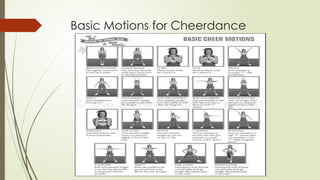
Basic Motions for Cheerdance

Grade-10-PE-Q4.ppt that will you boost your knowledge

  • 1.
    Other Dance Forms (Cheerdanceand Contemporary Dance) Physical Education 10 Quarter 4 – Week No. 5 – 8
  • 2.
    Objectives 1. identify thehand movements and positions in cheer dance; 2. create a cheer dance routine; 3. engages in moderate to vigorous physical activities for at least 60 minutes a day, in and out of school; 4. assesses physical activities, exercises and eating habits;
  • 3.
    Other Dance Forms (Cheerdanceand Contemporary Dance) Cheerdance - is coined from the words, cheer and dance. To cheer is to shout outwords or phrases that may help motivate and boost the morale of a playing team and perform better during a game. Dance, on the other hand, is a physical activity where one expresses emotions or gestures while performing bodily movements usually in time with rhythm.
  • 4.
    Cheerdancing -rooted from cheerleading.Cheerleading is the performance of a routine, usually dominated by gymnastic skills such as jumps, tumbling skills, lifts and tosses combined with shouting of cheers and yells to lead the crowd to cheer for a certain team during a game or sport. It originated in the United States.
  • 6.
    Brief History ofCheerdance  Cheerleading originated in the USA. In the 1980s at Princeton University, Thomas Peebles together with other students supported a local American football team with cheers. In 1884, he moved to the University of Minnesota, where he quickly popularized the idea of cheering on football players. On 2 November 1898, standing in front of a crowd of sport fans, Johnny Campbell, a medical student, started conducting the cheer on the spur of the moment. He was so effective that the team won and he made history as the first cheerleader. And thus the current sport discipline was born. Subsequent years saw the growth of cheerleading not only at universities, but also in secondary education circles. Cheering groups were equipped with flags, drums, megaphones and other props meant to create an atmosphere of excitement during sporting events.
  • 7.
    Cheerleading not onlyfor men! Although it might be hard to believe today, at first cheerleading was mainly performed by men. It was not until World War II that women dominated this activity. Since then, nearly 90 per cent of competitors have been girls. The discipline thrived, to the point where the National Cheerleaders Association was established in the USA only a few years after the war.
  • 8.
    The founder, Laurence“Herkie” Hurkimer, greatly contributed towards development of new skills and advanced techniques in cheerleading, as well as growth of its popularity.
  • 9.
    The Baltimore Coltscheerleading group, formed in 1960, was the first professional team. Five years later, Fred Gasoff invented the modern pom- poms, which remain an attribute of cheerleaders to this day. From the 1970s on, the popularity of cheerleading continued to rise, and the female dancers acted as supporters not only for American football or basketball teams, but also swimming and track-and-field competitors.
  • 10.