LESSONS LEARNED:
GLOBAL WEBSITES &
APPLICATIONS
by
Austin Govella
www.thinkingandmaking.com
@austingovella

Slides available on slideshare: http://www.slideshare.net/austingove"a/globalwebsitesapplications


                             From “Lessons Learned: Global Websites & Applications” by Austin Govella, Nov 15, 2012
Two definitions:
1. Multi-lingual means something is available in
   multiple languages.
2. Localized means content changes based on
   where the user is located.


              From “Lessons Learned: Global Websites & Applications” by Austin Govella, Nov 15, 2012
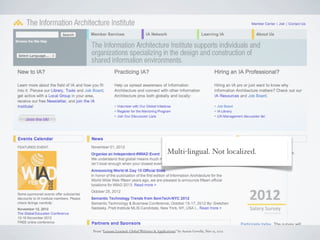
Multi-lingual. Not localized.


From “Lessons Learned: Global Websites & Applications” by Austin Govella, Nov 15, 2012
Multi-lingual. Not localized.


From “Lessons Learned: Global Websites & Applications” by Austin Govella, Nov 15, 2012
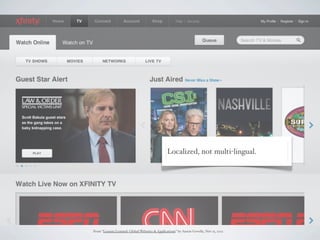
Localized, not multi-lingual.


From “Lessons Learned: Global Websites & Applications” by Austin Govella, Nov 15, 2012
Multi-lingual. Not localized.


From “Lessons Learned: Global Websites & Applications” by Austin Govella, Nov 15, 2012
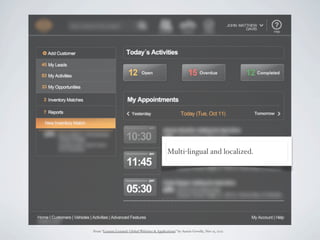
Multi-lingual and localized.


From “Lessons Learned: Global Websites & Applications” by Austin Govella, Nov 15, 2012
Multi-lingual and localized.


From “Lessons Learned: Global Websites & Applications” by Austin Govella, Nov 15, 2012
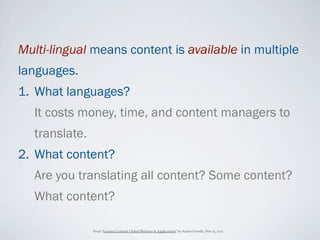
Multi-lingual means content is available in multiple
languages.
1. What languages?
   It costs money, time, and content managers to
   translate.
2. What content?
   Are you translating all content? Some content?
   What content?

                From “Lessons Learned: Global Websites & Applications” by Austin Govella, Nov 15, 2012
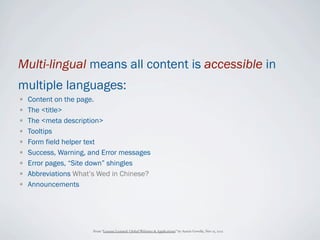
Multi-lingual means all content is accessible in
multiple languages:
•   Content on the page.
•   The <title>
•   The <meta description>
•   Tooltips
•   Form field helper text
•   Success, Warning, and Error messages
•   Error pages, “Site down” shingles
•   Abbreviations What’s Wed in Chinese?
•   Announcements


                       From “Lessons Learned: Global Websites & Applications” by Austin Govella, Nov 15, 2012
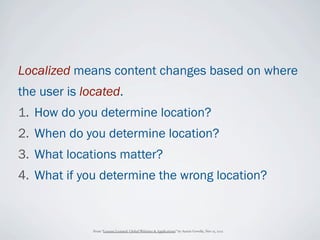
Localized means content changes based on where
the user is located.
1. How do you determine location?
2. When do you determine location?
3. What locations matter?
4. What if you determine the wrong location?


              From “Lessons Learned: Global Websites & Applications” by Austin Govella, Nov 15, 2012
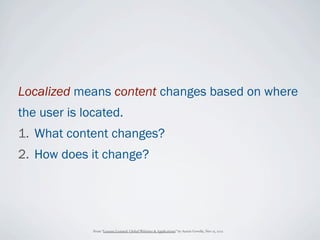
Localized means content changes based on where
the user is located.
1. What content changes?
2. How does it change?


              From “Lessons Learned: Global Websites & Applications” by Austin Govella, Nov 15, 2012
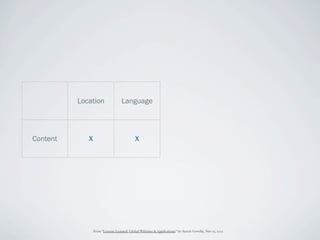
Location                 Language


Content      X                              X


                 From “Lessons Learned: Global Websites & Applications” by Austin Govella, Nov 15, 2012
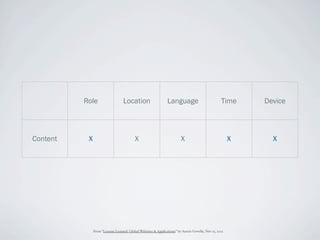
Role                    Location                      Language                           Time     Device


Content    X                              X                              X                              X     X


               From “Lessons Learned: Global Websites & Applications” by Austin Govella, Nov 15, 2012

Lessons Learned: Global Websites and Applications

  • 1.
    LESSONS LEARNED: GLOBAL WEBSITES& APPLICATIONS by Austin Govella www.thinkingandmaking.com @austingovella Slides available on slideshare: http://www.slideshare.net/austingove"a/globalwebsitesapplications From “Lessons Learned: Global Websites & Applications” by Austin Govella, Nov 15, 2012
  • 2.
    Two definitions: 1. Multi-lingualmeans something is available in multiple languages. 2. Localized means content changes based on where the user is located. From “Lessons Learned: Global Websites & Applications” by Austin Govella, Nov 15, 2012
  • 3.
    Multi-lingual. Not localized. From“Lessons Learned: Global Websites & Applications” by Austin Govella, Nov 15, 2012
  • 4.
    Multi-lingual. Not localized. From“Lessons Learned: Global Websites & Applications” by Austin Govella, Nov 15, 2012
  • 5.
    Localized, not multi-lingual. From“Lessons Learned: Global Websites & Applications” by Austin Govella, Nov 15, 2012
  • 6.
    Multi-lingual. Not localized. From“Lessons Learned: Global Websites & Applications” by Austin Govella, Nov 15, 2012
  • 7.
    Multi-lingual and localized. From“Lessons Learned: Global Websites & Applications” by Austin Govella, Nov 15, 2012
  • 8.
    Multi-lingual and localized. From“Lessons Learned: Global Websites & Applications” by Austin Govella, Nov 15, 2012
  • 9.
    Multi-lingual means contentis available in multiple languages. 1. What languages? It costs money, time, and content managers to translate. 2. What content? Are you translating all content? Some content? What content? From “Lessons Learned: Global Websites & Applications” by Austin Govella, Nov 15, 2012
  • 10.
    Multi-lingual means allcontent is accessible in multiple languages: • Content on the page. • The <title> • The <meta description> • Tooltips • Form field helper text • Success, Warning, and Error messages • Error pages, “Site down” shingles • Abbreviations What’s Wed in Chinese? • Announcements From “Lessons Learned: Global Websites & Applications” by Austin Govella, Nov 15, 2012
  • 11.
    Localized means contentchanges based on where the user is located. 1. How do you determine location? 2. When do you determine location? 3. What locations matter? 4. What if you determine the wrong location? From “Lessons Learned: Global Websites & Applications” by Austin Govella, Nov 15, 2012
  • 12.
    Localized means contentchanges based on where the user is located. 1. What content changes? 2. How does it change? From “Lessons Learned: Global Websites & Applications” by Austin Govella, Nov 15, 2012
  • 13.
    Location Language Content X X From “Lessons Learned: Global Websites & Applications” by Austin Govella, Nov 15, 2012
  • 14.
    Role Location Language Time Device Content X X X X X From “Lessons Learned: Global Websites & Applications” by Austin Govella, Nov 15, 2012

Editor's Notes