CHAPTER 1
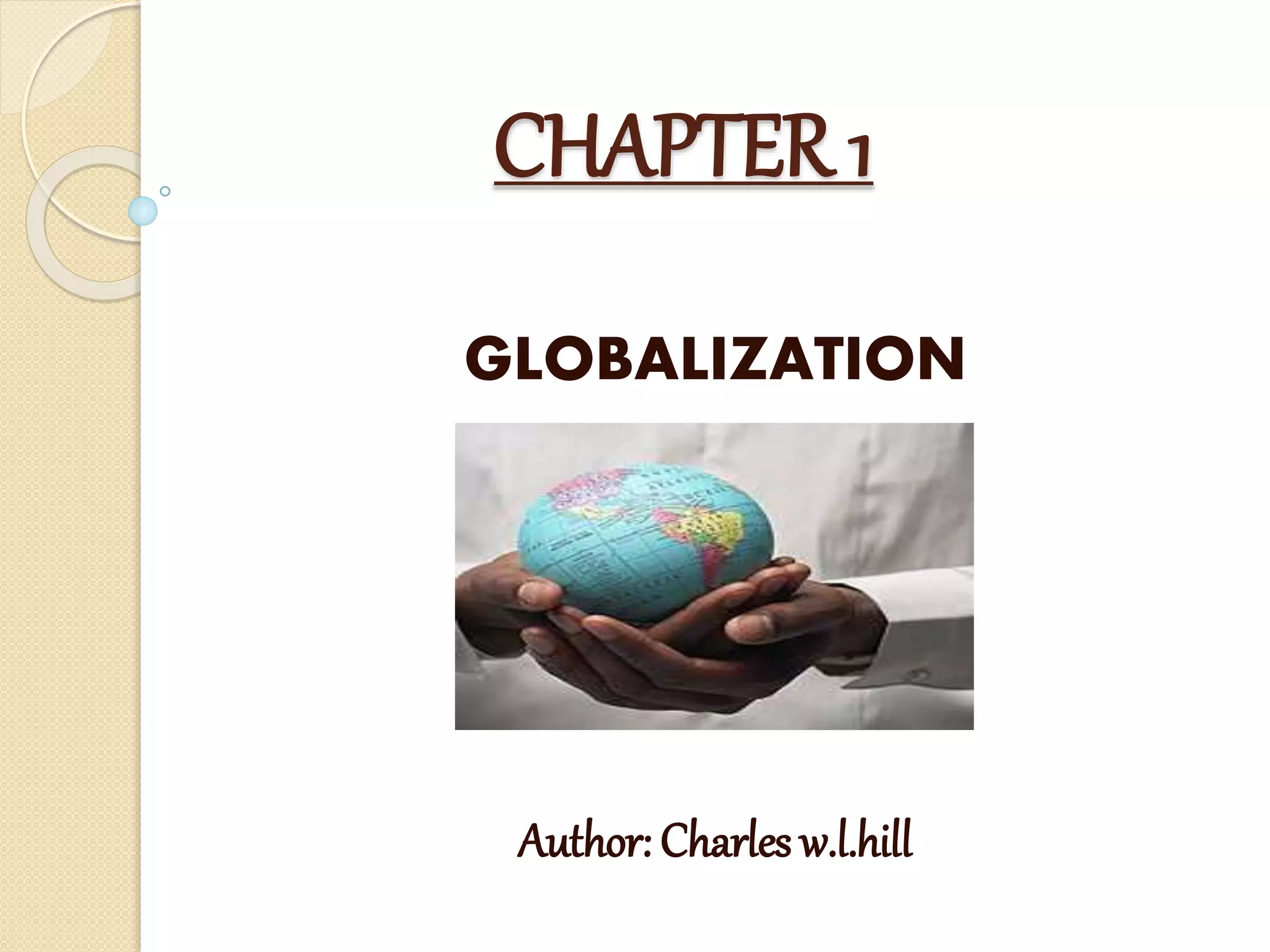
GLOBALIZATION
Author: Charles w.l.hill
International Business
Any level activity that is carried
across border to earn profit..
Y to do International Business?
(Benefits)
Increase in Profits
Employment opportunities
Foreign Exchange
Split Risk across different Markets
Improvement in Technology
Taxation
Innovations
Cont’d….
Technology
Better utilization of Resources
Political Relations
Hurdles in International
Business
Nationalities of Parties
Law & regulations of different
countries
Political conditions
Risk
Differences in Cultures
Competition
Terrorism etc.
What is Globalization???
Interdependence and interrelation of
world economy is basically termed
as “Globalization”
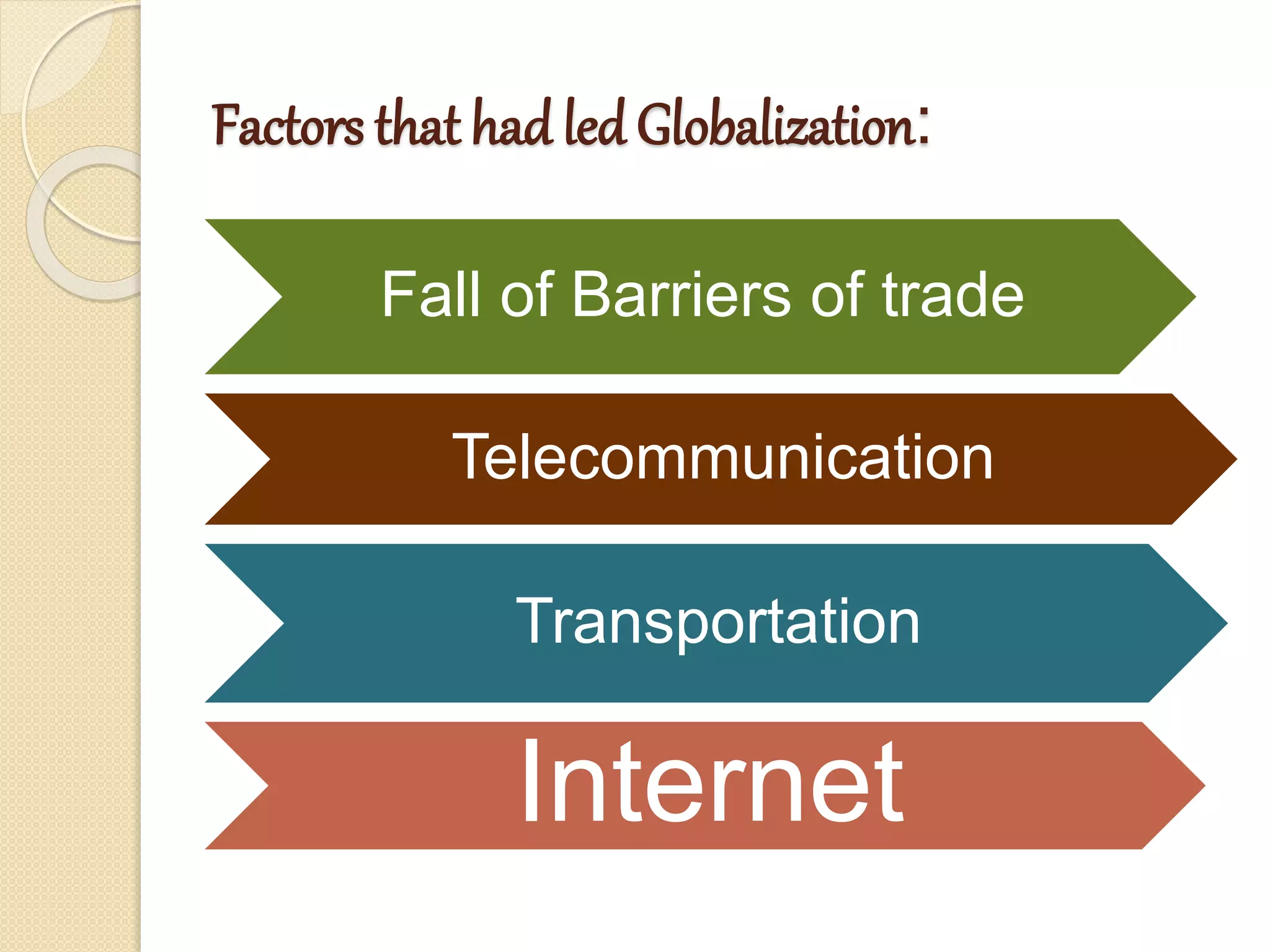
Factors that had led Globalization:
Fall of Barriers of trade
Telecommunication
Transportation
Internet
Globalization Of Markets
• Merging of Historically Distinct National
Markets
• Convergence of Consumer taste and
Preferences
• Example: Starbucks, KFC, Pepsi
Globalization of Production
• Sourcing of Goods around Globe to take
advantage o National Differences in factor of
productions.
• Example: Boeing Jet airliner
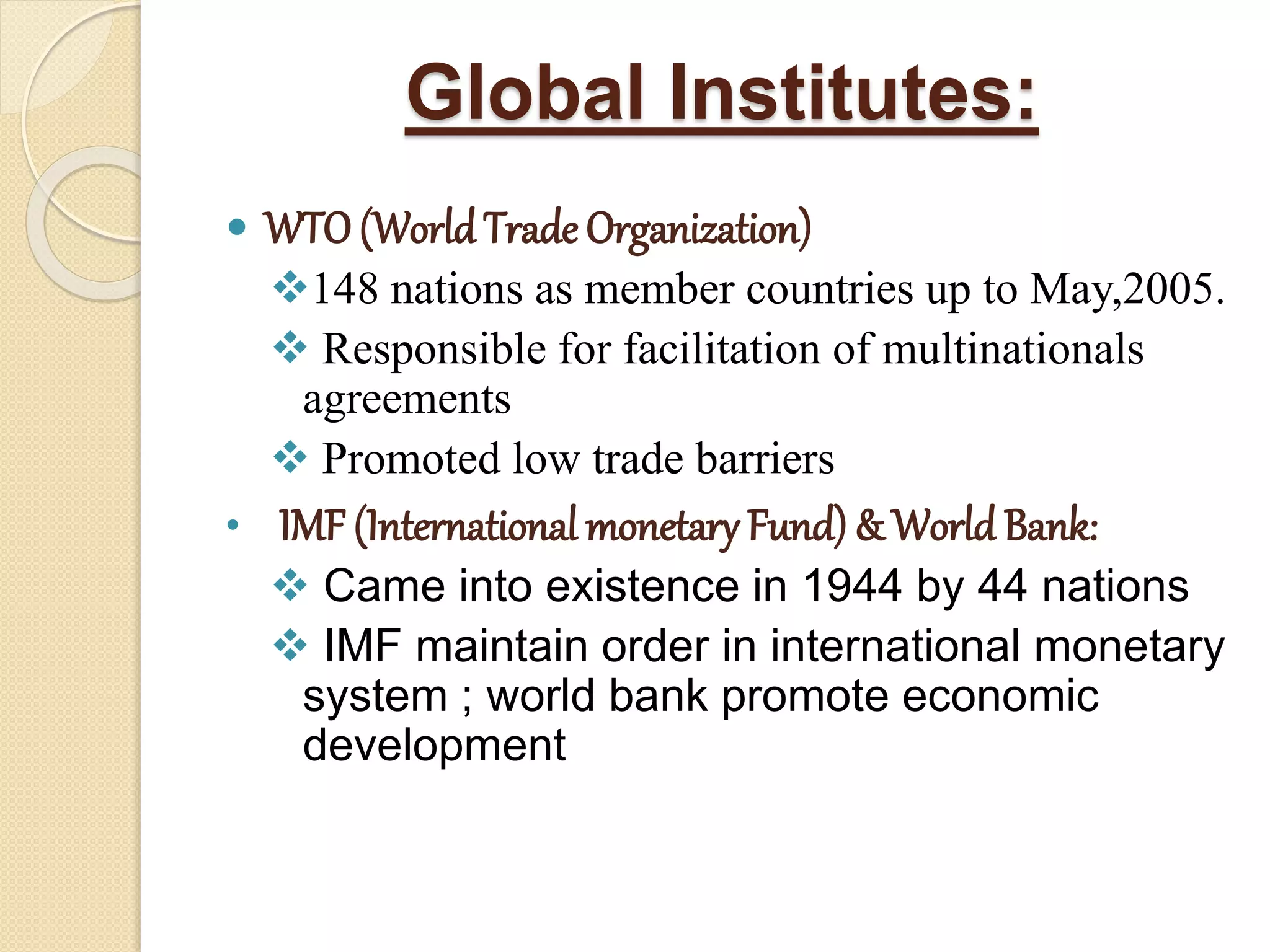
Global Institutes:
 WTO(WorldTrade Organization)
148 nations as member countries up to May,2005.
 Responsible for facilitation of multinationals
agreements
 Promoted low trade barriers
• IMF (International monetary Fund) & World Bank:
 Came into existence in 1944 by 44 nations
 IMF maintain order in international monetary
system ; world bank promote economic
development
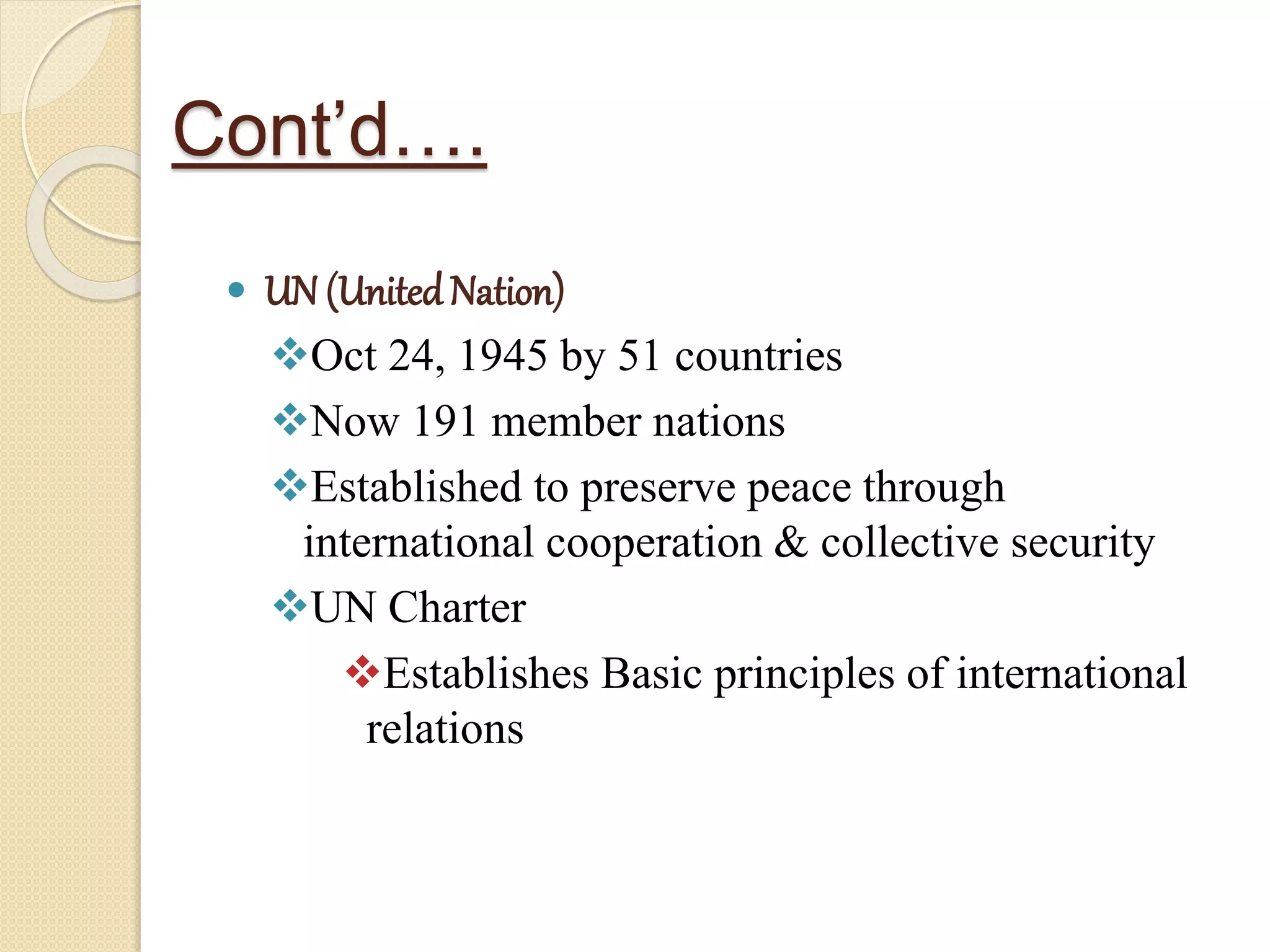
Cont’d….
 UN (UnitedNation)
Oct 24, 1945 by 51 countries
Now 191 member nations
Established to preserve peace through
international cooperation & collective security
UN Charter
Establishes Basic principles of international
relations
Cont’d….
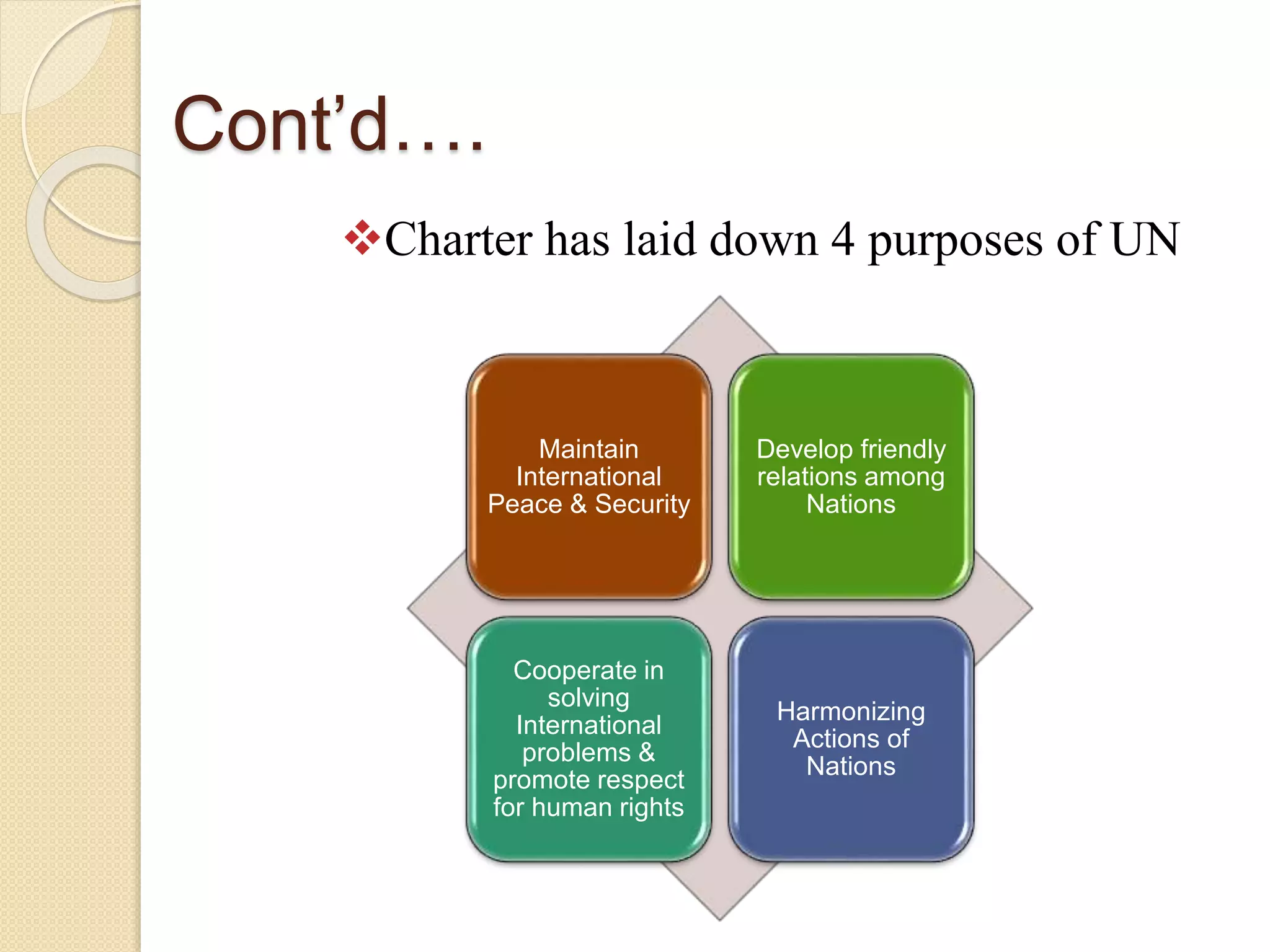
Charter has laid down 4 purposes of UN
Maintain
International
Peace & Security
Develop friendly
relations among
Nations
Cooperate in
solving
International
problems &
promote respect
for human rights
Harmonizing
Actions of
Nations
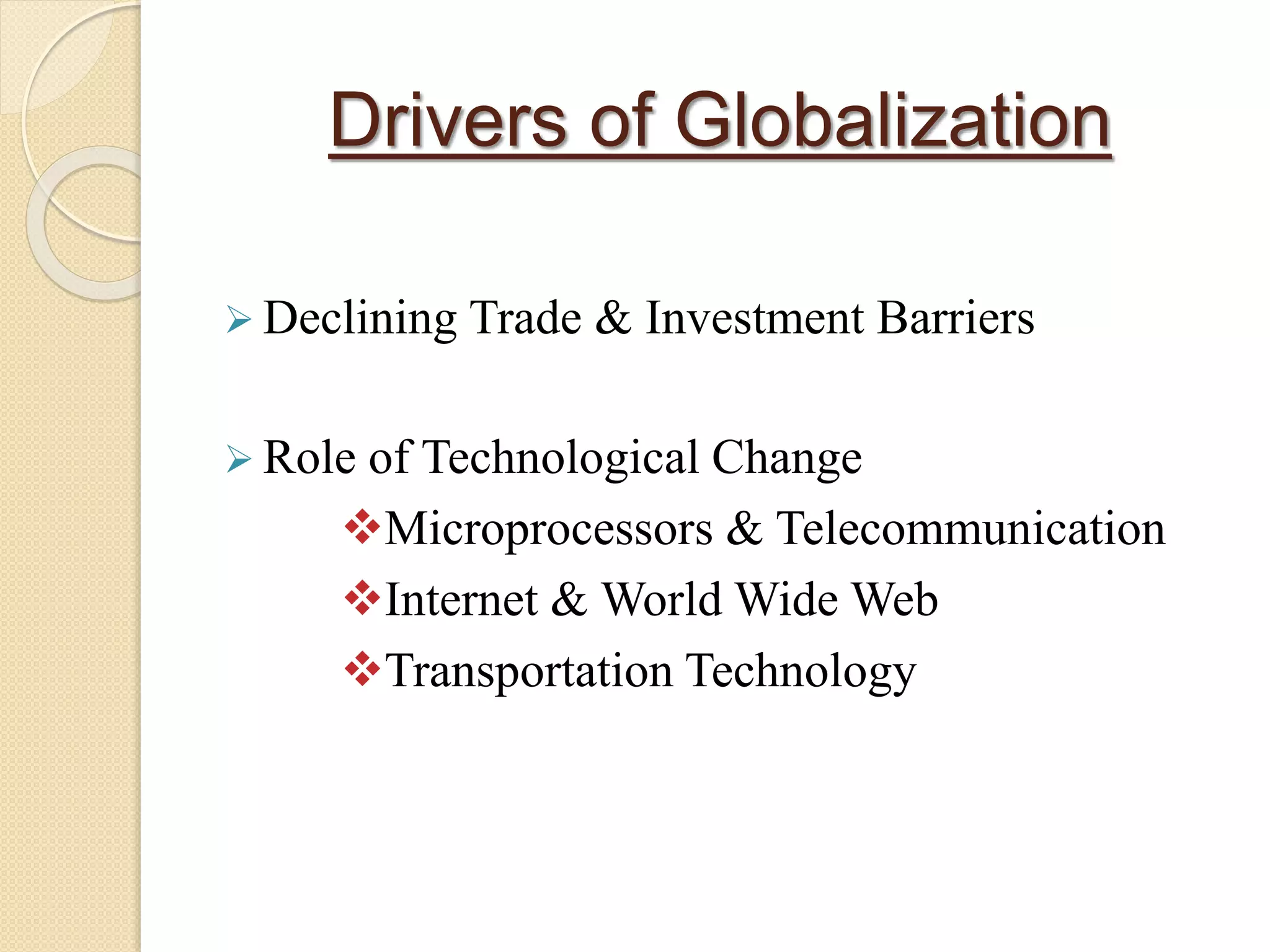
Drivers of Globalization
 Declining Trade & Investment Barriers
 Role of Technological Change
Microprocessors & Telecommunication
Internet & World Wide Web
Transportation Technology
Global Economy of 21st
Century
 Barriers have reduced
 Volume of Trade has increased
 Investment is growing more than Global output
 Privatization, Deregulation, Open Markets etc.
 Globalization is not inevitable
Example: Russia
 Globalization also brings risk with it
Example: Recession
Globalization Debate
 Greater Prosperity
 Lower Prices of Goods and Services
 Stimulate Economic Growth
 Employment opportunities
 Raise Income of Consumers
 Globalization has its critics also:
 Anti-Globalization Protest
Globalization, Jobs and Income
Labor Policies and Environment
National Sovereignty
World’s Poor
Managing in Global
Marketplace
 Countries are Different
 Range of problems are wider & more Complex
 Government Intervention
 Currency Exchange Rates

GLOBALIZATION CHAPTER 1 INTERNATIONAL BUSSINES BBA 5TH UOG

  • 1.
  • 2.
    International Business Any levelactivity that is carried across border to earn profit..
  • 3.
    Y to doInternational Business? (Benefits) Increase in Profits Employment opportunities Foreign Exchange Split Risk across different Markets Improvement in Technology Taxation Innovations
  • 4.
  • 5.
    Hurdles in International Business Nationalitiesof Parties Law & regulations of different countries Political conditions Risk Differences in Cultures Competition Terrorism etc.
  • 6.
    What is Globalization??? Interdependenceand interrelation of world economy is basically termed as “Globalization”
  • 7.
    Factors that hadled Globalization: Fall of Barriers of trade Telecommunication Transportation Internet
  • 8.
    Globalization Of Markets •Merging of Historically Distinct National Markets • Convergence of Consumer taste and Preferences • Example: Starbucks, KFC, Pepsi Globalization of Production • Sourcing of Goods around Globe to take advantage o National Differences in factor of productions. • Example: Boeing Jet airliner
  • 9.
    Global Institutes:  WTO(WorldTradeOrganization) 148 nations as member countries up to May,2005.  Responsible for facilitation of multinationals agreements  Promoted low trade barriers • IMF (International monetary Fund) & World Bank:  Came into existence in 1944 by 44 nations  IMF maintain order in international monetary system ; world bank promote economic development
  • 10.
    Cont’d….  UN (UnitedNation) Oct24, 1945 by 51 countries Now 191 member nations Established to preserve peace through international cooperation & collective security UN Charter Establishes Basic principles of international relations
  • 11.
    Cont’d…. Charter has laiddown 4 purposes of UN Maintain International Peace & Security Develop friendly relations among Nations Cooperate in solving International problems & promote respect for human rights Harmonizing Actions of Nations
  • 12.
    Drivers of Globalization Declining Trade & Investment Barriers  Role of Technological Change Microprocessors & Telecommunication Internet & World Wide Web Transportation Technology
  • 13.
    Global Economy of21st Century  Barriers have reduced  Volume of Trade has increased  Investment is growing more than Global output  Privatization, Deregulation, Open Markets etc.  Globalization is not inevitable Example: Russia  Globalization also brings risk with it Example: Recession
  • 14.
    Globalization Debate  GreaterProsperity  Lower Prices of Goods and Services  Stimulate Economic Growth  Employment opportunities  Raise Income of Consumers  Globalization has its critics also:  Anti-Globalization Protest Globalization, Jobs and Income Labor Policies and Environment National Sovereignty World’s Poor
  • 15.
    Managing in Global Marketplace Countries are Different  Range of problems are wider & more Complex  Government Intervention  Currency Exchange Rates