TRADITION, CULTURE
AND IDENTITY
GLOBAL PERSPECTIVES
CAMBRIDGE IGCSE P18
TRADITION, CULTURE, IDENTITY
• A tradition is a belief or behaviour passed down within a group or
society with symbolic meaning or special significance with origins in the
past. Common examples include holidays or impractical but socially
meaningful clothes (like lawyers' wigs or military officers' spurs), but the
idea has also been applied to social norms such as greetings.
https://en.wikipedia.org/wiki/Tradition
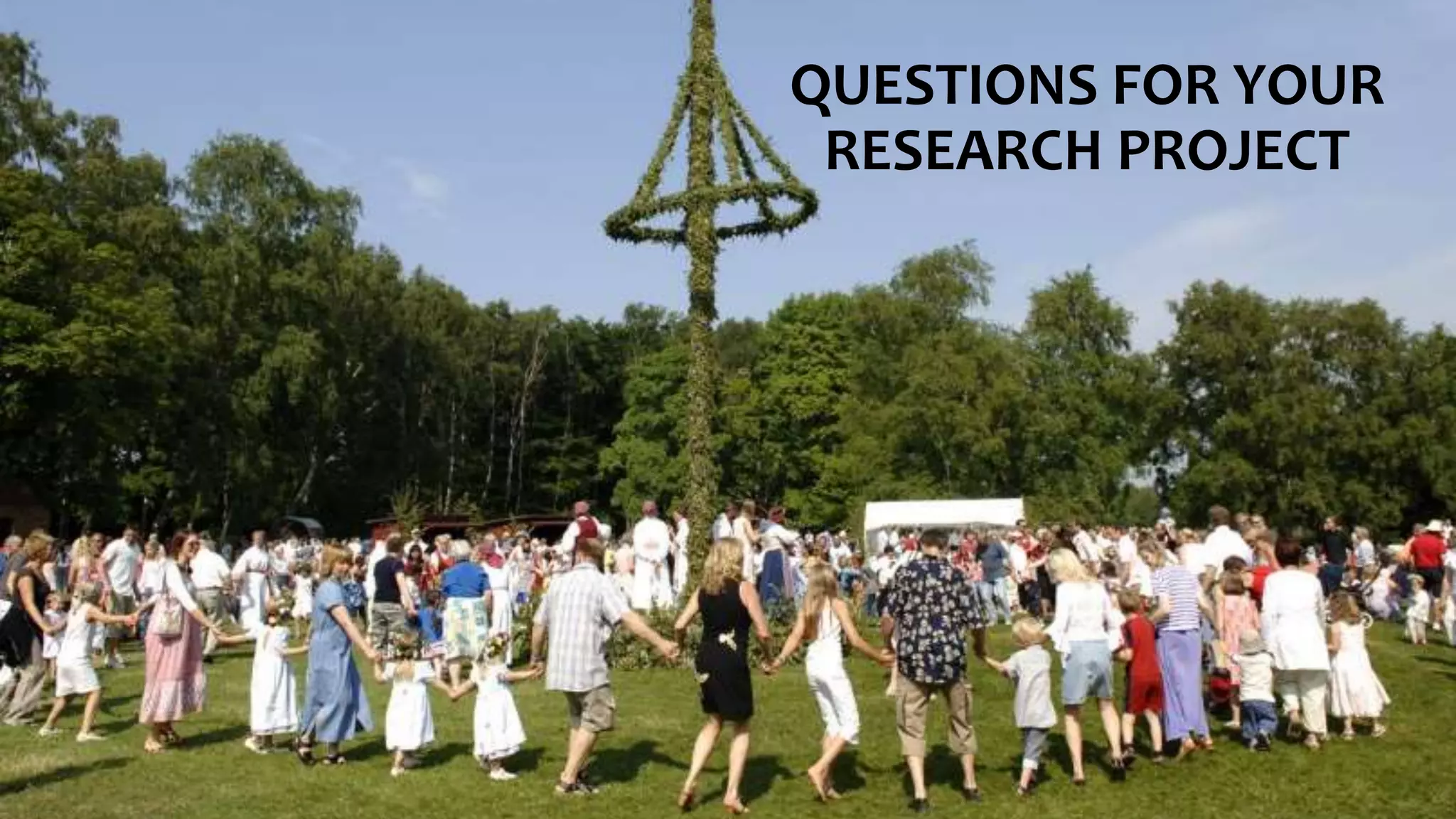
QUESTIONS FOR YOUR
RESEARCH PROJECT
GLOBAL/INTERNATIONAL PERSPECTIVES
• Why do people value tradition?
• Why do people divide into nations?
• Why do some people move from one country to another?
• How does this affect their lives?
• If we have ‘European citizens’, should we aim eventually for all people
to be ‘world citizens’?
LOCAL/NATIONAL PERSPECTIVES
• What traditions give my country a sense of national identity?
• What role does culture play in the values of my society?
• How are people from my country identified when they are abroad?
FAMILY/PERSONAL PERSPECTIVES
• What makes me proud of my country?
• What traditions does my family have?
• What does national identity mean to me and my friends?
• What cultural traditions have I inherited?
WEBSITES
www.unicef.org
www.diversityanddialogue.org.uk An organisation that aims to build
relationships between different communities in the UK.
www.movinghere.org.uk Stories of journeys to Britain in the last 200
years.
issues.tigweb.org/culture - Discussions about culture.
www.lessonplanspage.com/SSLAOCICountriesandCulturesIdeas18.htm
Ideas for teaching about traditions and culture.
wilderdom.com/games/MulticulturalExperientialActivities.html
Multicultural, Cross-cultural and Intercultural games & activities.
www.rafi.ki/gemin-iplus/ Rafiki project on Celebrations.
www.rafi.ki/gemin-iplus/ Rafiki project on diversity: Diverse Links.

GLOBAL PERSPECTIVE CAMBRIDGE IGCSE: TRADITION, CULTURE AND IDENTITY

  • 1.
    TRADITION, CULTURE AND IDENTITY GLOBALPERSPECTIVES CAMBRIDGE IGCSE P18
  • 2.
    TRADITION, CULTURE, IDENTITY •A tradition is a belief or behaviour passed down within a group or society with symbolic meaning or special significance with origins in the past. Common examples include holidays or impractical but socially meaningful clothes (like lawyers' wigs or military officers' spurs), but the idea has also been applied to social norms such as greetings. https://en.wikipedia.org/wiki/Tradition
  • 3.
  • 4.
    GLOBAL/INTERNATIONAL PERSPECTIVES • Whydo people value tradition? • Why do people divide into nations? • Why do some people move from one country to another? • How does this affect their lives? • If we have ‘European citizens’, should we aim eventually for all people to be ‘world citizens’?
  • 5.
    LOCAL/NATIONAL PERSPECTIVES • Whattraditions give my country a sense of national identity? • What role does culture play in the values of my society? • How are people from my country identified when they are abroad?
  • 6.
    FAMILY/PERSONAL PERSPECTIVES • Whatmakes me proud of my country? • What traditions does my family have? • What does national identity mean to me and my friends? • What cultural traditions have I inherited?
  • 7.
    WEBSITES www.unicef.org www.diversityanddialogue.org.uk An organisationthat aims to build relationships between different communities in the UK. www.movinghere.org.uk Stories of journeys to Britain in the last 200 years. issues.tigweb.org/culture - Discussions about culture. www.lessonplanspage.com/SSLAOCICountriesandCulturesIdeas18.htm Ideas for teaching about traditions and culture. wilderdom.com/games/MulticulturalExperientialActivities.html Multicultural, Cross-cultural and Intercultural games & activities. www.rafi.ki/gemin-iplus/ Rafiki project on Celebrations. www.rafi.ki/gemin-iplus/ Rafiki project on diversity: Diverse Links.