"Let's wash our hands and keep ourselves healthy!"
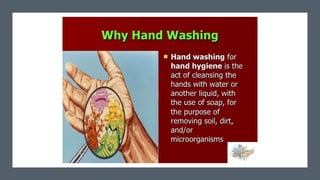
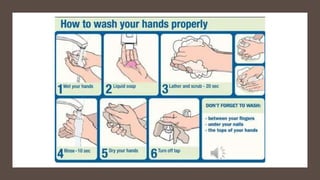
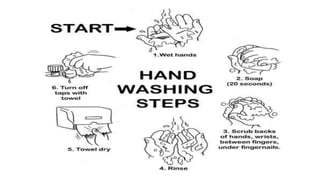
Global Handwashing Day is a campaign to motivate
and mobilize people around the world to improve their
handwashing habits. Washing hands at critical points
during the day and washing with soap are both
important. Global Handwashing Day occurs on 15
October of each year.
Inequalities in handwashing facilities and effective
handwashing promotion programs can put individuals at
higher risk for diseases that impact their health, education,
and economic outcomes.
Ignaz Semmelweis, a Hungarian doctor working in Vienna General Hospital, is known as the
father of hand hygiene.
In 1846, he noticed that, the women giving birth in the medical student doctor-run
maternity ward in his hospital, were much more likely to develop a fever and die.
compared to the women, giving birth in the adjacent midwife-run maternity ward.
He noticed that, the doctors and medical students, often visited the maternity ward directly
after performing an Operation, have cadaverous particles on their hands.
Midwives did not conduct surgery, so they were not exposed to these particles have no
deaths.
As a result, Semmelweis imposed a new rule, mandating handwashing with chlorine for
doctors. The rates of death in his maternity ward fell dramatically. This was the first proof
that cleansing hands could prevent infection.
later in Scutari, Florence Nightingale, implemented handwashing and other hygiene
practices, in the war hospital in which she worked.
In India, diarrhea, is a major killer with about 1,000 children below the age of five,
dying every day due to diarrhoea alone.
Thesgora is a small Village in Chhindwara District of Madhya Pradesh State, India,
known for the highest cases of diarrhea recorded.
over 40% of infant deaths in India, occur during the first 28 days of life from this
village only.
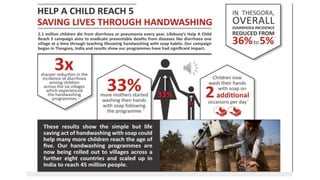
Lifebuoy campaign to Thesgora “Help Children Reach 5” program with great
creativity and flare. children in Thesgora now, wash their hands on two additional
occasions per day, and 33% more mothers have started, washing their hands with
soap more often. Diarrhoeal rates have also fallen significantly.
“Help a Child Reach 5” is a winning social responsibility program. It has already
reached more than 250 million people and is on target to reach a billion people by
2020.
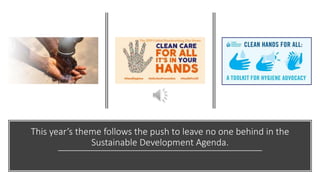
This year’s theme follows the push to leave no one behind in the
Sustainable Development Agenda.
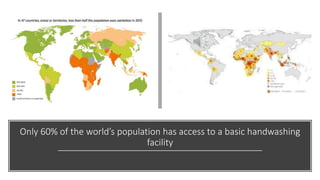
Only 60% of the world’s population has access to a basic handwashing
facility
GLOBAL Hands washing DAY

GLOBAL Hands washing DAY

  • 1.
    "Let's wash ourhands and keep ourselves healthy!"
  • 2.
    Global Handwashing Dayis a campaign to motivate and mobilize people around the world to improve their handwashing habits. Washing hands at critical points during the day and washing with soap are both important. Global Handwashing Day occurs on 15 October of each year. Inequalities in handwashing facilities and effective handwashing promotion programs can put individuals at higher risk for diseases that impact their health, education, and economic outcomes.
  • 3.
    Ignaz Semmelweis, aHungarian doctor working in Vienna General Hospital, is known as the father of hand hygiene. In 1846, he noticed that, the women giving birth in the medical student doctor-run maternity ward in his hospital, were much more likely to develop a fever and die. compared to the women, giving birth in the adjacent midwife-run maternity ward. He noticed that, the doctors and medical students, often visited the maternity ward directly after performing an Operation, have cadaverous particles on their hands. Midwives did not conduct surgery, so they were not exposed to these particles have no deaths. As a result, Semmelweis imposed a new rule, mandating handwashing with chlorine for doctors. The rates of death in his maternity ward fell dramatically. This was the first proof that cleansing hands could prevent infection. later in Scutari, Florence Nightingale, implemented handwashing and other hygiene practices, in the war hospital in which she worked.
  • 4.
    In India, diarrhea,is a major killer with about 1,000 children below the age of five, dying every day due to diarrhoea alone. Thesgora is a small Village in Chhindwara District of Madhya Pradesh State, India, known for the highest cases of diarrhea recorded. over 40% of infant deaths in India, occur during the first 28 days of life from this village only. Lifebuoy campaign to Thesgora “Help Children Reach 5” program with great creativity and flare. children in Thesgora now, wash their hands on two additional occasions per day, and 33% more mothers have started, washing their hands with soap more often. Diarrhoeal rates have also fallen significantly. “Help a Child Reach 5” is a winning social responsibility program. It has already reached more than 250 million people and is on target to reach a billion people by 2020.
  • 5.
    This year’s themefollows the push to leave no one behind in the Sustainable Development Agenda.
  • 6.
    Only 60% ofthe world’s population has access to a basic handwashing facility