Selling and Networking
Contents  The selling process  Selling online Selling overseas Customer care  Networking  Tendering  Sales law
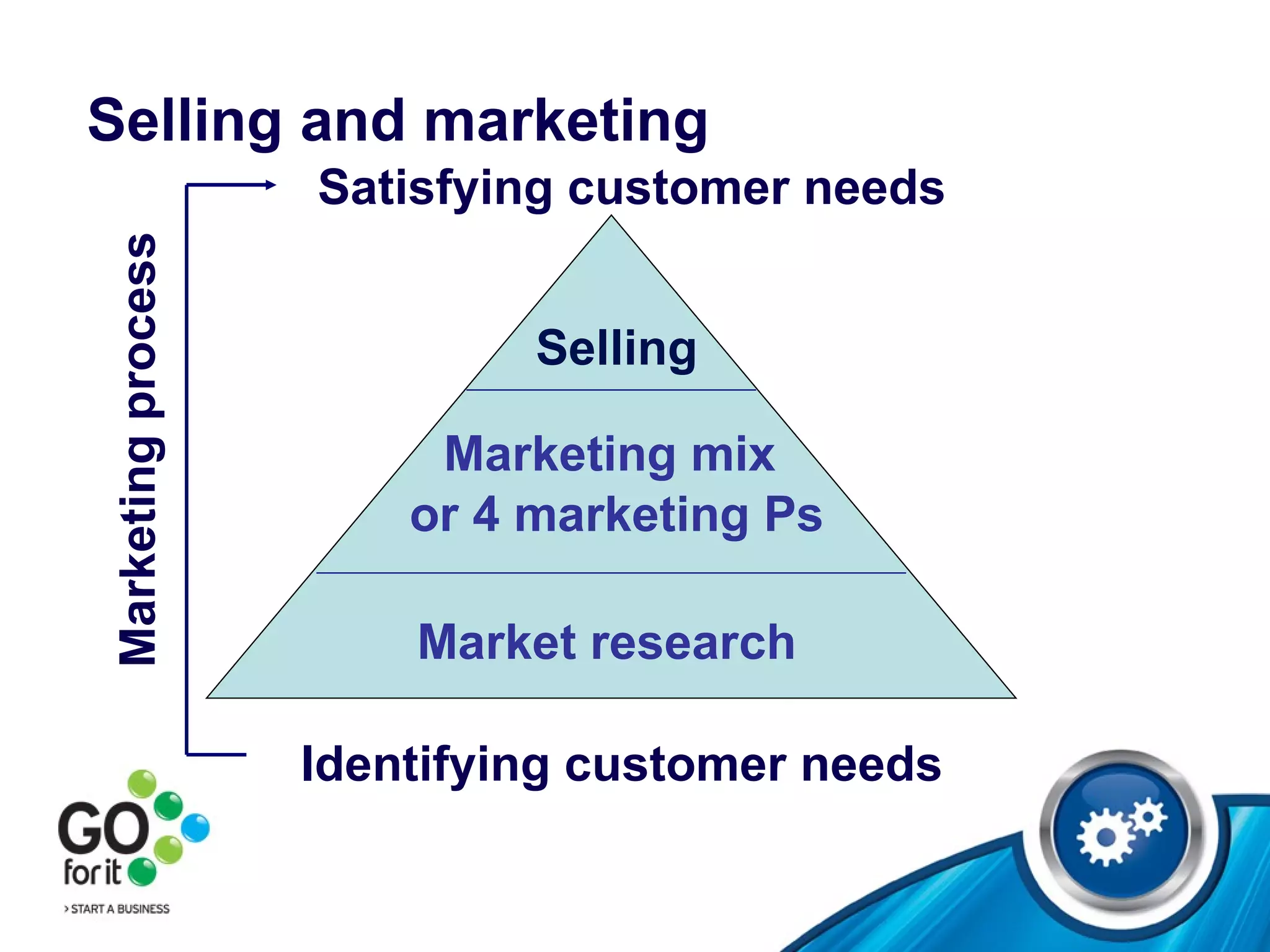
Selling and marketing Identifying customer needs Marketing process Market research Marketing mix  or 4 marketing Ps Selling Satisfying customer needs
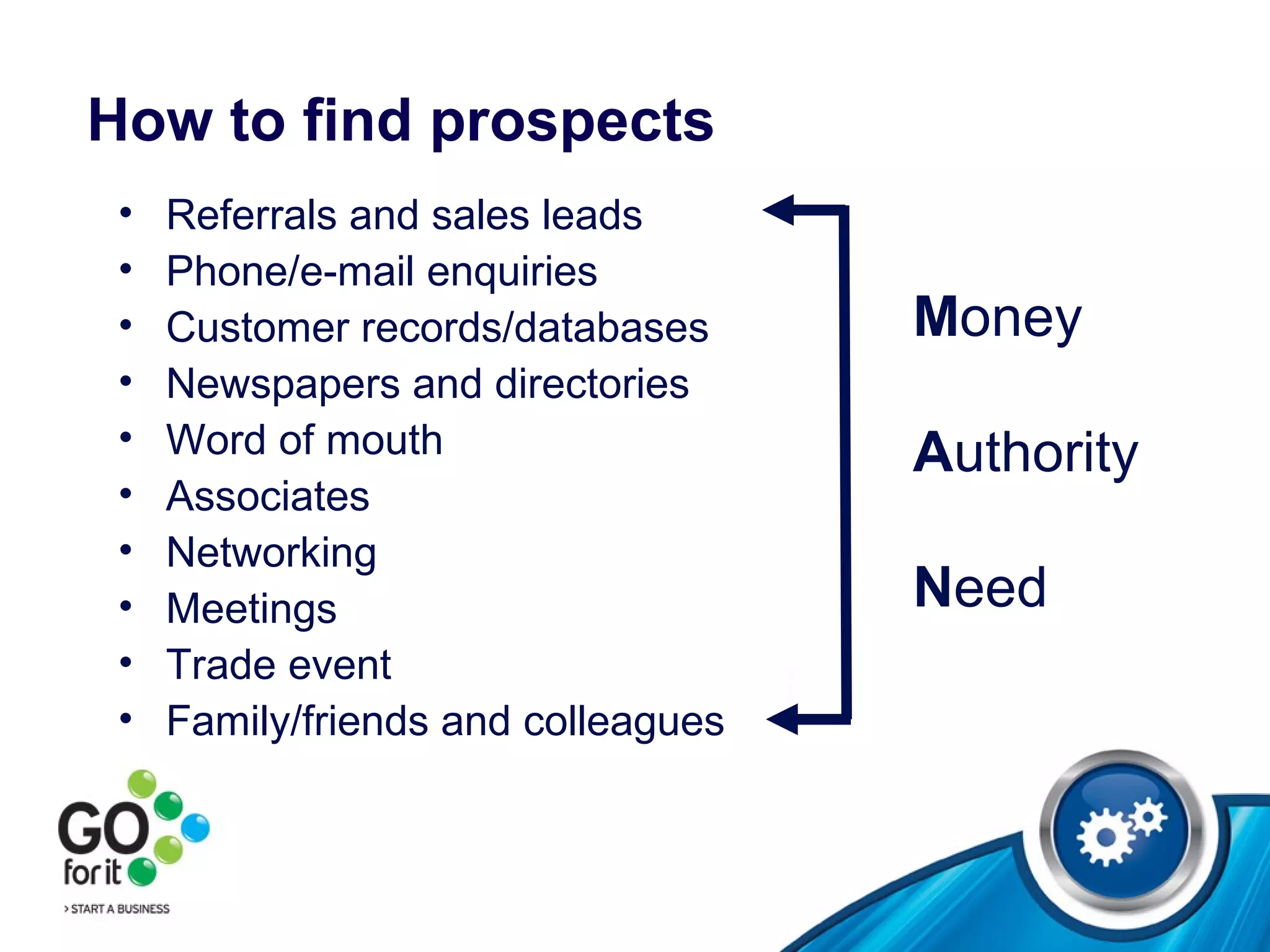
How to find prospects Referrals and sales leads Phone/e-mail enquiries  Customer records/databases  Newspapers and directories  Word of mouth  Associates Networking  Meetings  Trade event Family/friends and colleagues M oney A uthority N eed
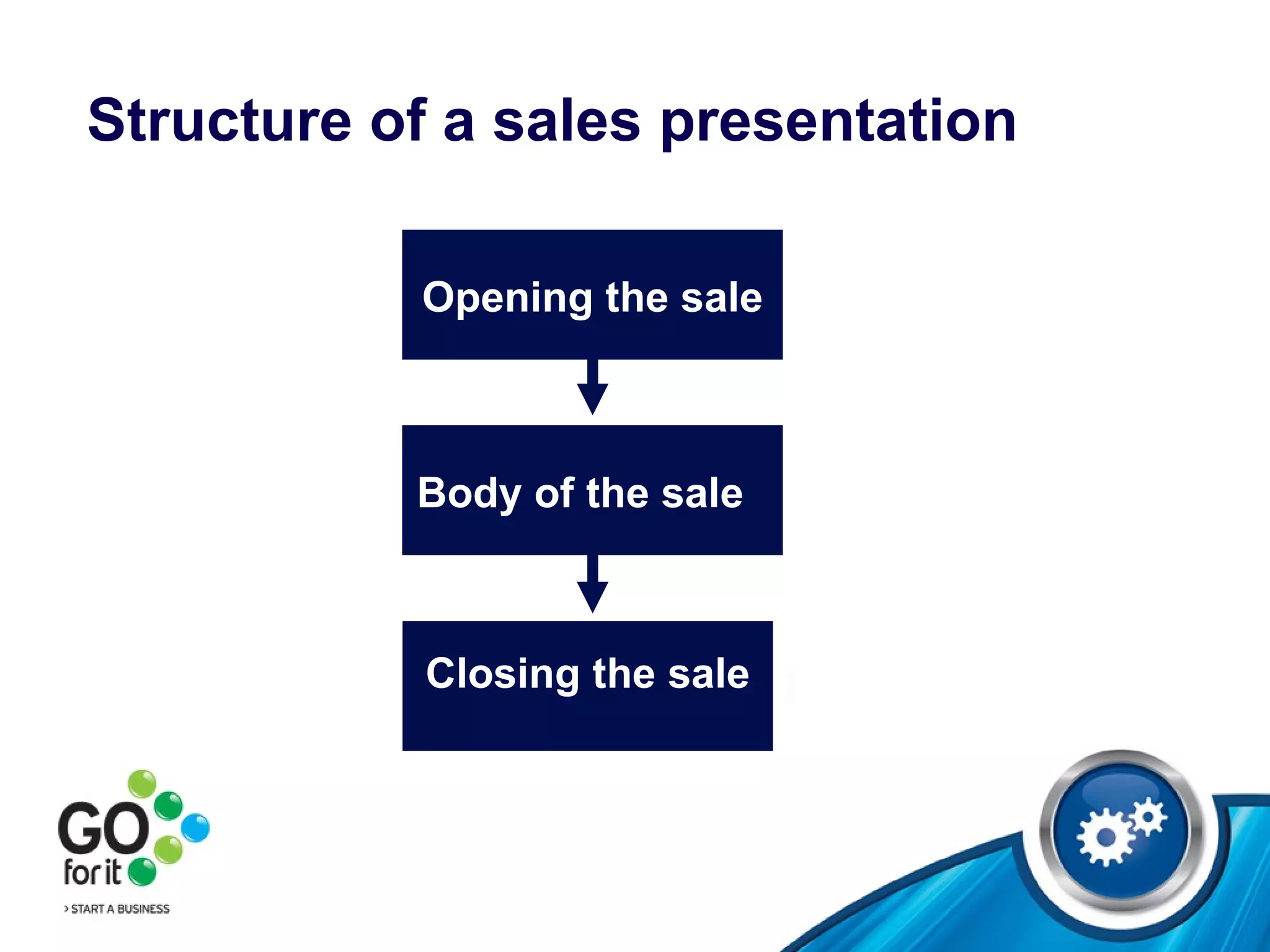
Structure of a sales presentation Opening the sale Body of the sale   Closing the sale
Opening a sale Purpose Gain the prospect’s attention and arouse interest in the product or service How to open a sale Give a good introduction Ask a qualifying question Highlight a key feature and benefit Briefly state how the product or service meets  the customer’s needs
The body of a sale Provide information on the business Provide information on the product/service Relate to the buyer’s needs/wants Highlight features and sell the benefits  Emphasise unique selling points or  propositions (USPs) Gain customer confidence in a product or service Answer questions and provide clarification Deal with customer objections
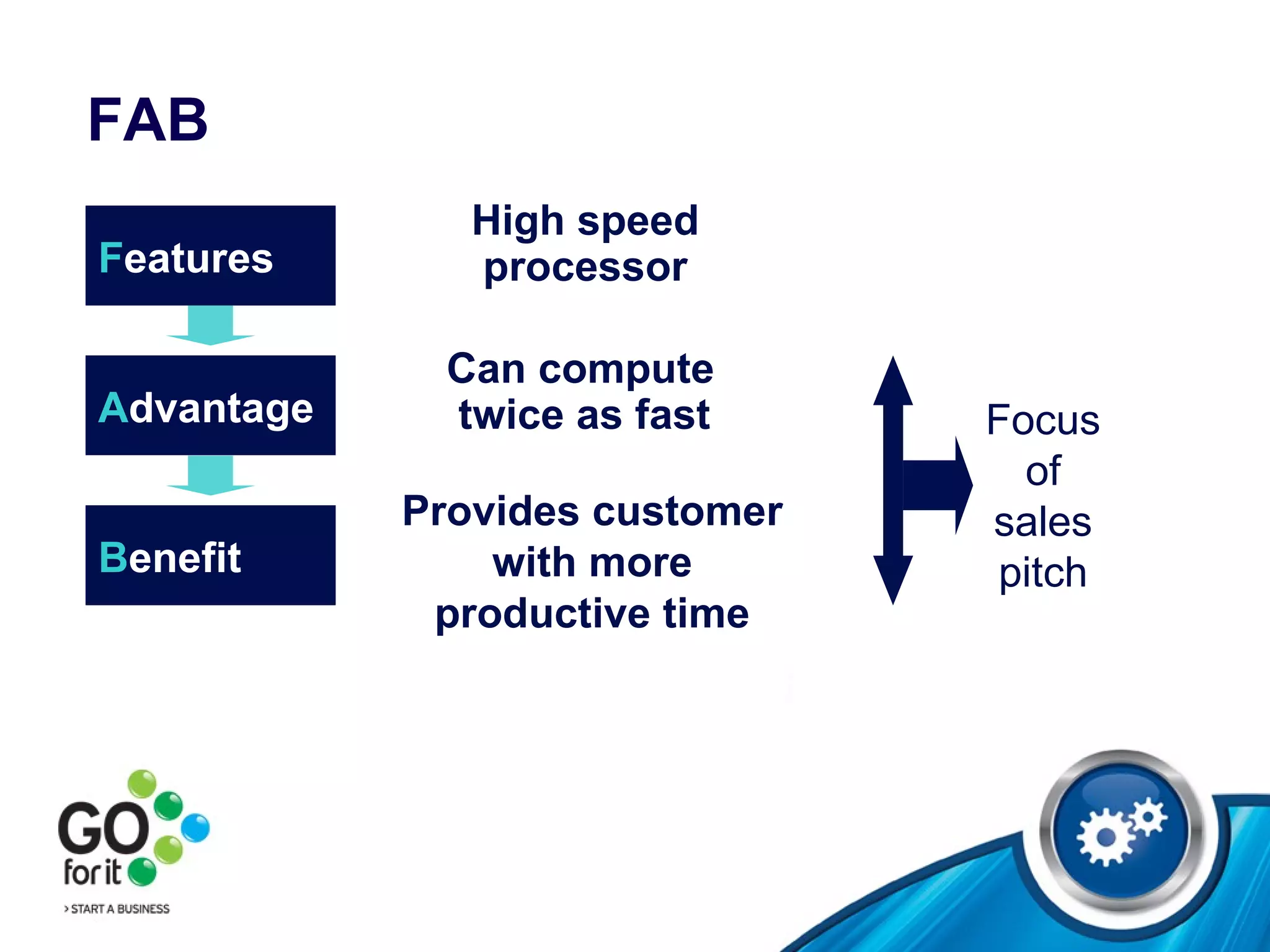
FAB F eatures High speed processor A dvantage B enefit Can compute twice as fast Provides customer with more productive time Focus of sales pitch
Types of objections   •  Money/budget Disbelief Satisfaction with an existing supplier Previous negative experience Misunderstanding Handling objections   Prepare responses in advance Listen to the objection Check you have understood the objection Answer the objection Advance the sale
Closing methods Assumptive close Alternative choice close  Direct request close Fear close Small decision close Minor-point close
Negotiating the deal Find out customer needs/wants Provide a range of options/scenarios  for the customer Allow for ‘room’ in the deal  Accept that the negotiation process will be uncomfortable Don’t come across as desperate for the sale Don’t show emotions or frustrations Don’t take rejection personally  Adopt a ‘win-win’ approach
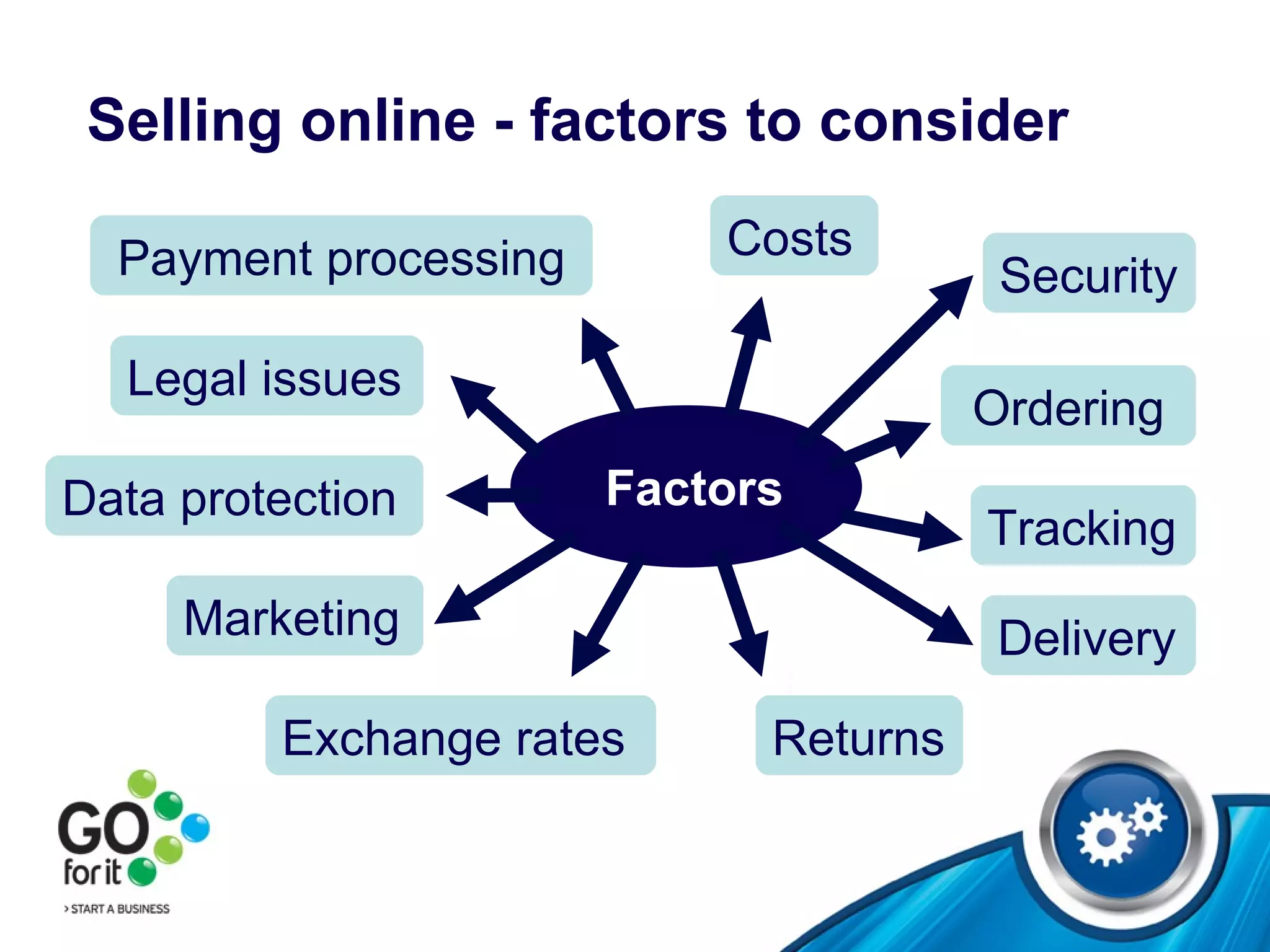
Selling online - factors to consider Factors Payment processing Ordering Security Tracking Costs Delivery Exchange rates Legal issues Data protection Returns Marketing
Selling overseas - issues to consider Culture ,  language and politics Legislation Currency and exchange rates  Economic conditions Business practices  Logistics Time zones After sales approach Legal issues e.g. distance selling legislation and e-commerce regulations
Customer care - the benefits Satisfied customers will recommend you to others  Encourages repeat sales  Customer loyalty Dissatisfied customers will complain on average to 10 other people Demonstrates professionalism  Improves reputation  Increases sales and profits
Customer care tactics After sales follow up calls Customer feedback forms Keep in regular contact with customers e.g. Telephone calls Promotional mail shots Newsletters/ e-zines User registration section on a website Loyalty schemes and incentives Special offers Customer complaints policy and confidentiality policy
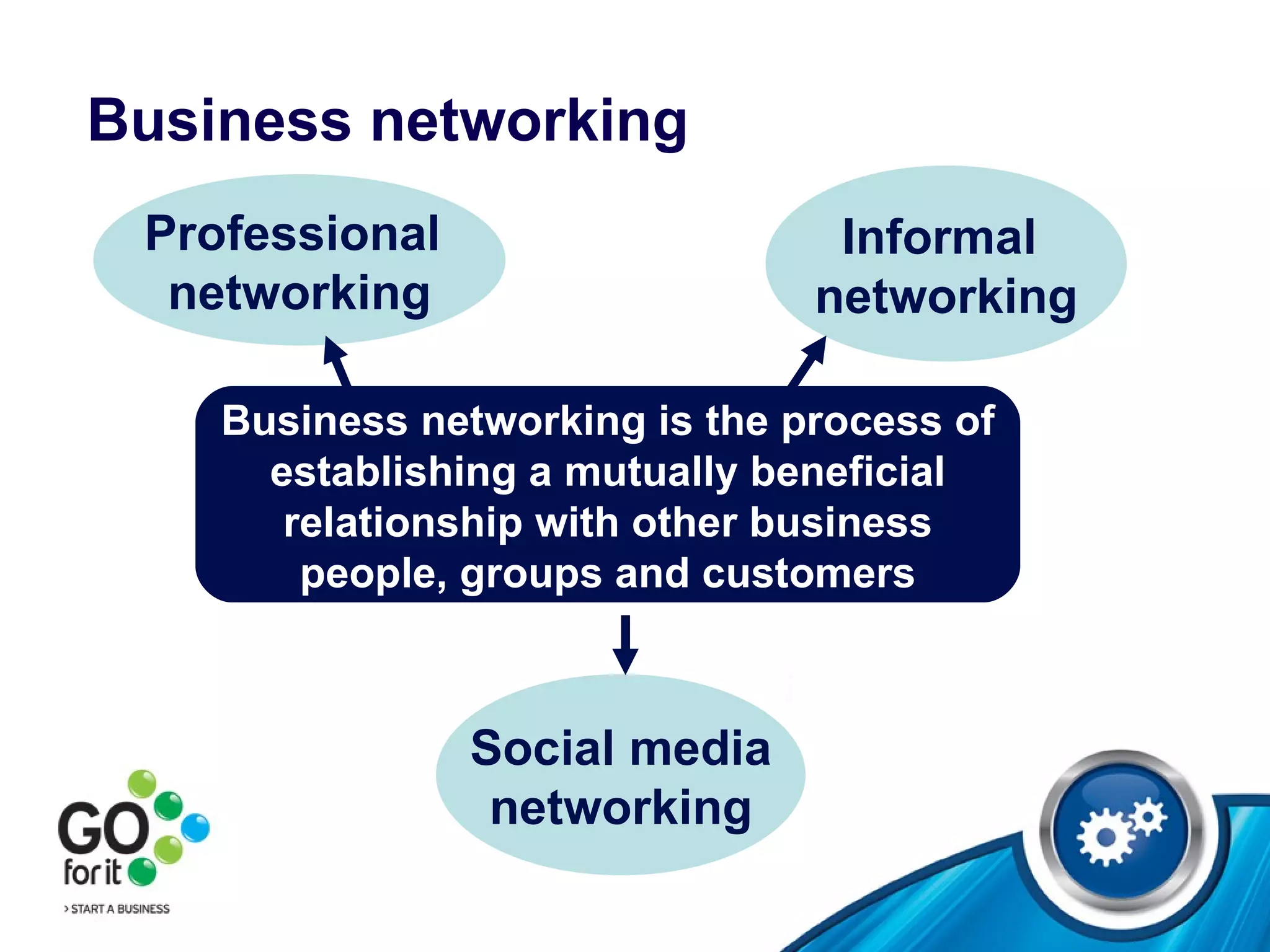
Business networking Informal  networking Professional  networking Social media networking Business networking is the process of establishing a mutually beneficial relationship with other business people, groups and customers
Types of networking Professional networking  Exhibitions and tradeshows Trade events Conferences  Business networking groups e.g. Chamber of commerce Special interest events and networking Speed networking Seminars or workshops Social media networking  Facebook/Twitter/Linked In Online forums  Blogs Informal networking  Social events Sporting events  Whilst travelling
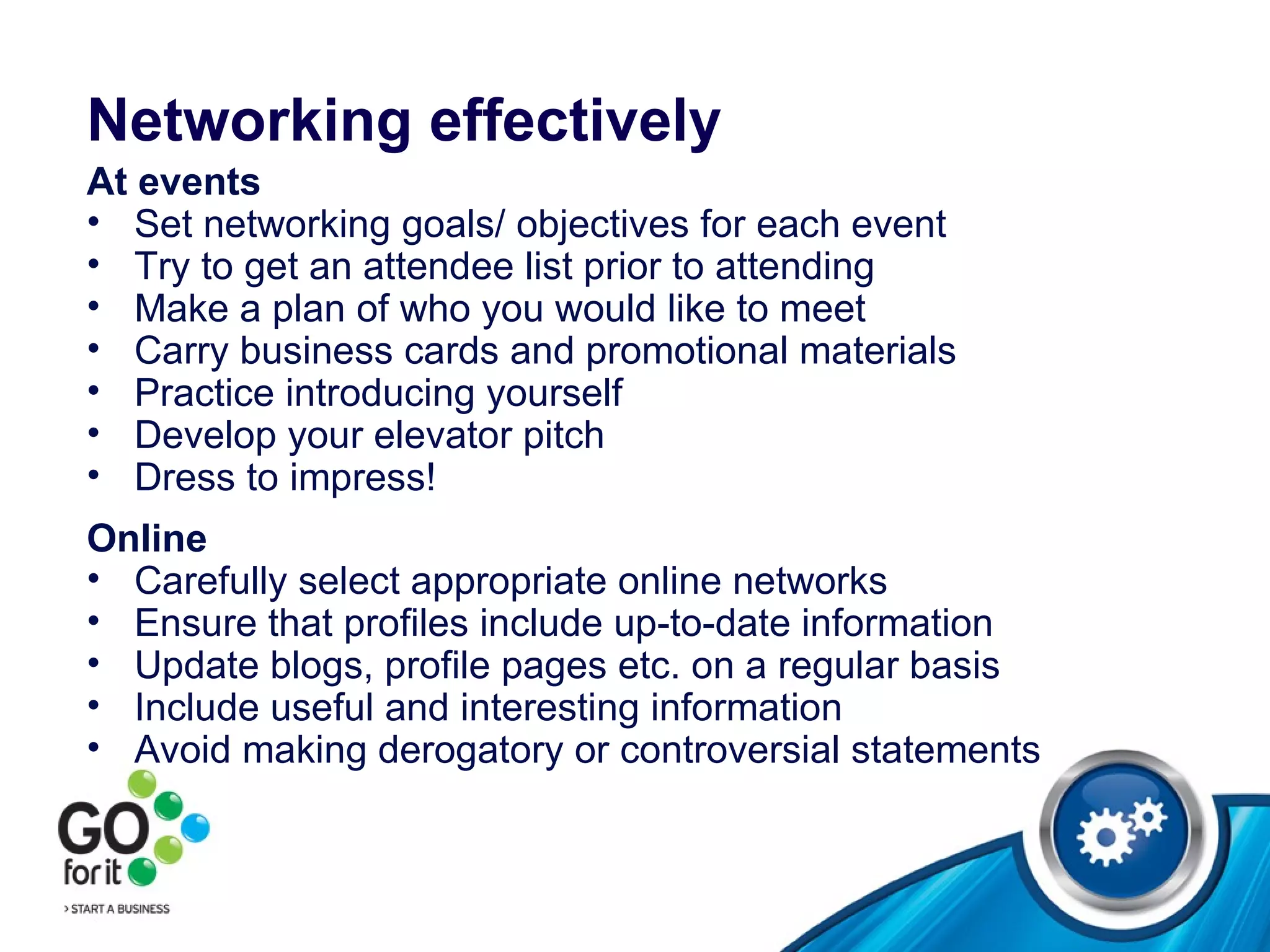
Networking effectively At events Set networking goals/ objectives for each event Try to get an attendee list prior to attending Make a plan of who you would like to meet  Carry business cards and promotional materials  Practice introducing yourself Develop your elevator pitch Dress to impress! Online Carefully select appropriate online networks Ensure that profiles include up-to-date information Update blogs, profile pages etc. on a regular basis Include useful and interesting information Avoid making derogatory or controversial statements
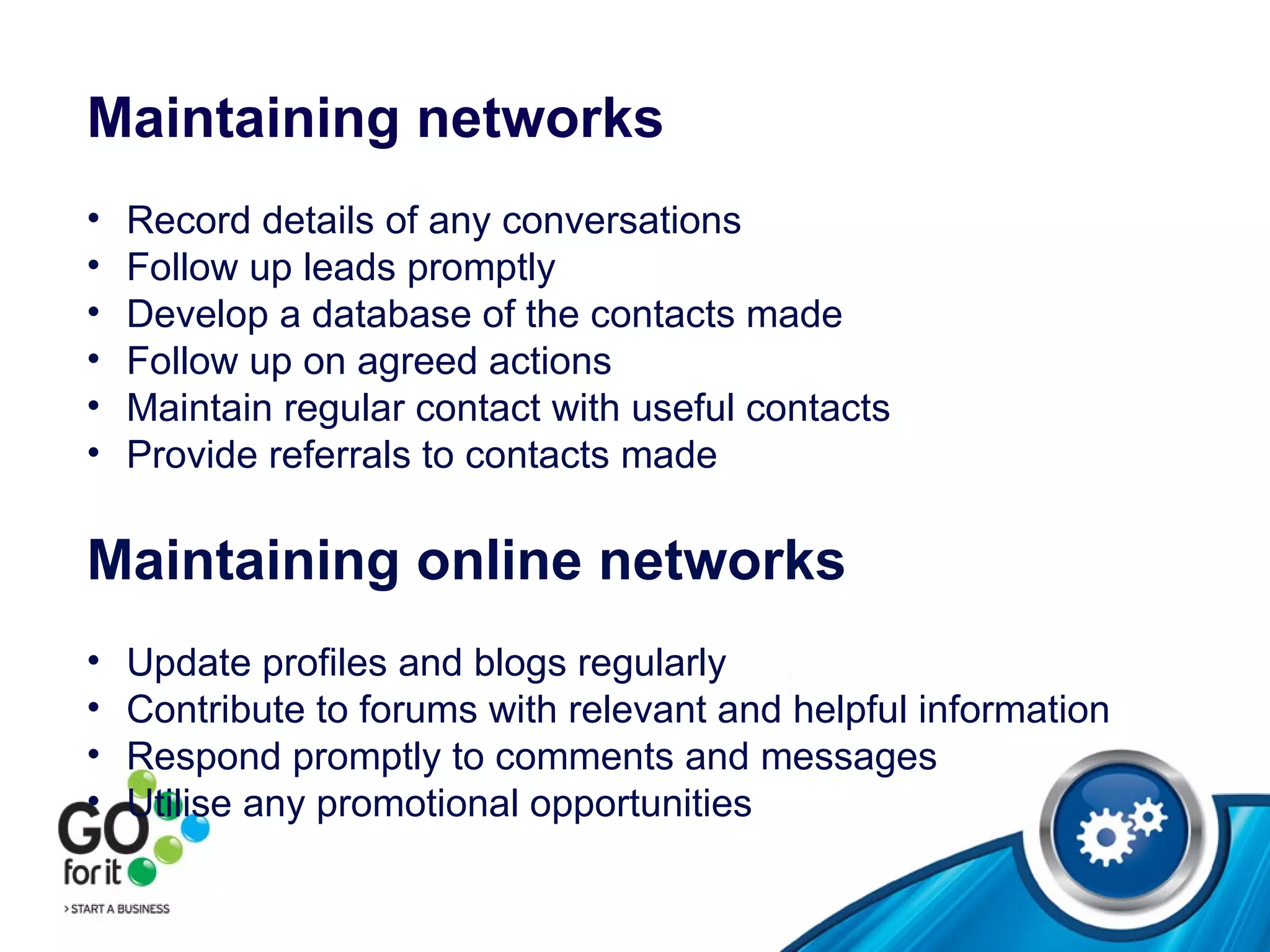
Maintaining networks Record details of any conversations Follow up leads promptly Develop a database of the contacts made Follow up on agreed actions Maintain regular contact with useful contacts Provide referrals to contacts made Maintaining online networks Update profiles and blogs regularly  Contribute to forums with relevant and helpful information Respond promptly to comments and messages Utilise any promotional opportunities
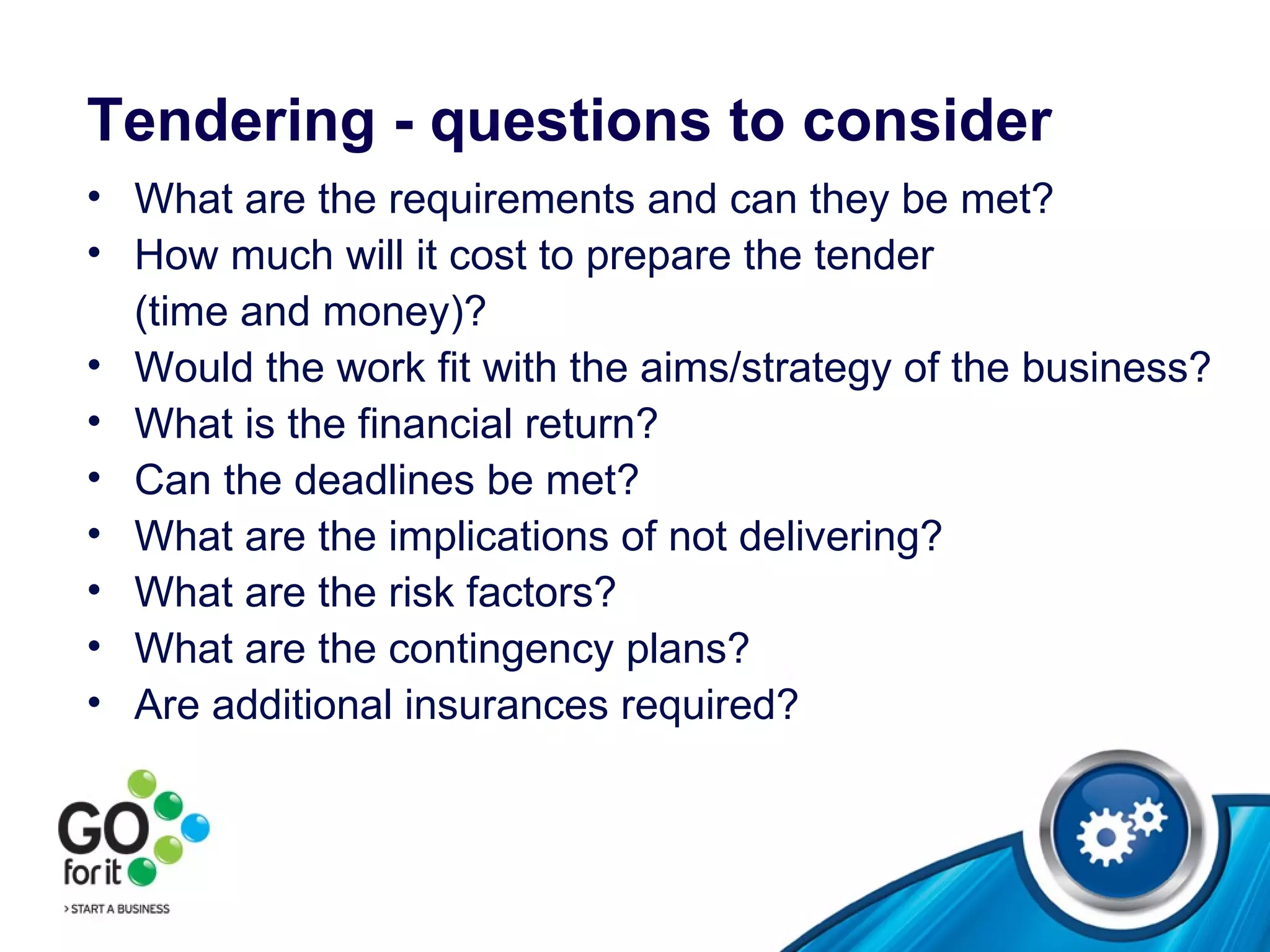
Tendering - questions to consider What are the requirements and can they be met? How much will it cost to prepare the tender  (time and money)? Would the work fit with the aims/strategy of the business? What is the financial return? Can the deadlines be met? What are the implications of not delivering? What are the risk factors? What are the contingency plans? Are additional insurances required?
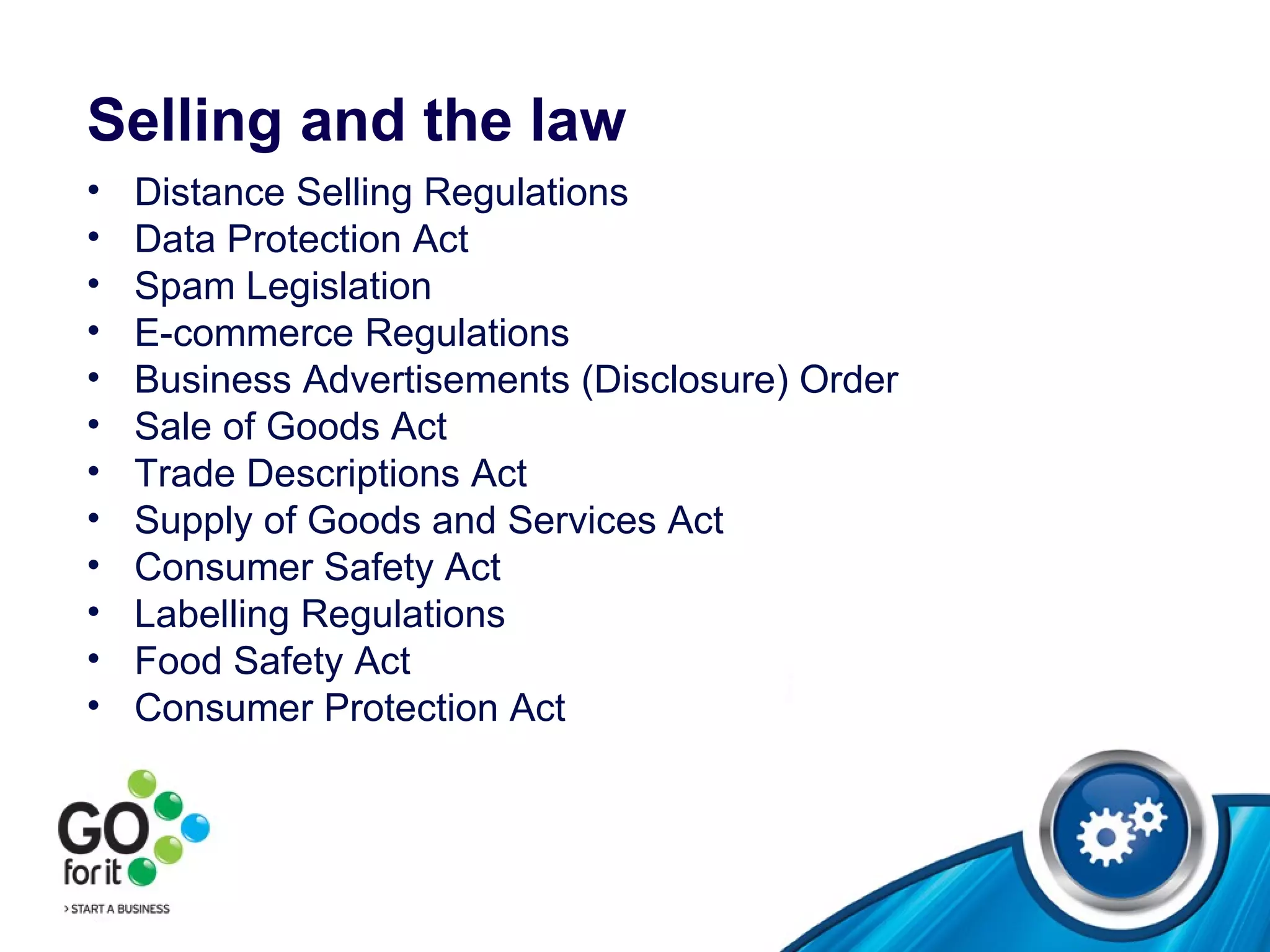
Selling and the law Distance Selling Regulations Data Protection Act Spam Legislation E-commerce Regulations Business Advertisements (Disclosure) Order Sale of Goods Act Trade Descriptions Act Supply of Goods and Services Act Consumer Safety Act Labelling Regulations Food Safety Act Consumer Protection Act

Gfi selling & networking

  • 1.
  • 2.
    Contents Theselling process Selling online Selling overseas Customer care Networking Tendering Sales law
  • 3.
    Selling and marketingIdentifying customer needs Marketing process Market research Marketing mix or 4 marketing Ps Selling Satisfying customer needs
  • 4.
    How to findprospects Referrals and sales leads Phone/e-mail enquiries Customer records/databases Newspapers and directories Word of mouth Associates Networking Meetings Trade event Family/friends and colleagues M oney A uthority N eed
  • 5.
    Structure of asales presentation Opening the sale Body of the sale Closing the sale
  • 6.
    Opening a salePurpose Gain the prospect’s attention and arouse interest in the product or service How to open a sale Give a good introduction Ask a qualifying question Highlight a key feature and benefit Briefly state how the product or service meets the customer’s needs
  • 7.
    The body ofa sale Provide information on the business Provide information on the product/service Relate to the buyer’s needs/wants Highlight features and sell the benefits Emphasise unique selling points or propositions (USPs) Gain customer confidence in a product or service Answer questions and provide clarification Deal with customer objections
  • 8.
    FAB F eaturesHigh speed processor A dvantage B enefit Can compute twice as fast Provides customer with more productive time Focus of sales pitch
  • 9.
    Types of objections • Money/budget Disbelief Satisfaction with an existing supplier Previous negative experience Misunderstanding Handling objections Prepare responses in advance Listen to the objection Check you have understood the objection Answer the objection Advance the sale
  • 10.
    Closing methods Assumptiveclose Alternative choice close Direct request close Fear close Small decision close Minor-point close
  • 11.
    Negotiating the dealFind out customer needs/wants Provide a range of options/scenarios for the customer Allow for ‘room’ in the deal Accept that the negotiation process will be uncomfortable Don’t come across as desperate for the sale Don’t show emotions or frustrations Don’t take rejection personally Adopt a ‘win-win’ approach
  • 12.
    Selling online -factors to consider Factors Payment processing Ordering Security Tracking Costs Delivery Exchange rates Legal issues Data protection Returns Marketing
  • 13.
    Selling overseas -issues to consider Culture , language and politics Legislation Currency and exchange rates Economic conditions Business practices Logistics Time zones After sales approach Legal issues e.g. distance selling legislation and e-commerce regulations
  • 14.
    Customer care -the benefits Satisfied customers will recommend you to others Encourages repeat sales Customer loyalty Dissatisfied customers will complain on average to 10 other people Demonstrates professionalism Improves reputation Increases sales and profits
  • 15.
    Customer care tacticsAfter sales follow up calls Customer feedback forms Keep in regular contact with customers e.g. Telephone calls Promotional mail shots Newsletters/ e-zines User registration section on a website Loyalty schemes and incentives Special offers Customer complaints policy and confidentiality policy
  • 16.
    Business networking Informal networking Professional networking Social media networking Business networking is the process of establishing a mutually beneficial relationship with other business people, groups and customers
  • 17.
    Types of networkingProfessional networking Exhibitions and tradeshows Trade events Conferences Business networking groups e.g. Chamber of commerce Special interest events and networking Speed networking Seminars or workshops Social media networking Facebook/Twitter/Linked In Online forums Blogs Informal networking Social events Sporting events Whilst travelling
  • 18.
    Networking effectively Atevents Set networking goals/ objectives for each event Try to get an attendee list prior to attending Make a plan of who you would like to meet Carry business cards and promotional materials Practice introducing yourself Develop your elevator pitch Dress to impress! Online Carefully select appropriate online networks Ensure that profiles include up-to-date information Update blogs, profile pages etc. on a regular basis Include useful and interesting information Avoid making derogatory or controversial statements
  • 19.
    Maintaining networks Recorddetails of any conversations Follow up leads promptly Develop a database of the contacts made Follow up on agreed actions Maintain regular contact with useful contacts Provide referrals to contacts made Maintaining online networks Update profiles and blogs regularly Contribute to forums with relevant and helpful information Respond promptly to comments and messages Utilise any promotional opportunities
  • 20.
    Tendering - questionsto consider What are the requirements and can they be met? How much will it cost to prepare the tender (time and money)? Would the work fit with the aims/strategy of the business? What is the financial return? Can the deadlines be met? What are the implications of not delivering? What are the risk factors? What are the contingency plans? Are additional insurances required?
  • 21.
    Selling and thelaw Distance Selling Regulations Data Protection Act Spam Legislation E-commerce Regulations Business Advertisements (Disclosure) Order Sale of Goods Act Trade Descriptions Act Supply of Goods and Services Act Consumer Safety Act Labelling Regulations Food Safety Act Consumer Protection Act