Biblical Hebrew

Getting to Know ‫ פֻּעַל‬Verbs


                     by Chris Heard
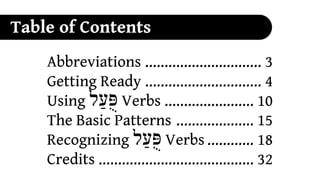
Table of Contents
    Abbreviations .............................. 3
    Getting Ready .............................. 4
    Using ‫ פֻּעַל‬Verbs ....................... 10
    The Basic Patterns .................... 15
    Recognizing ‫ פֻּעַל‬Verbs ............ 18
    Credits ........................................ 32
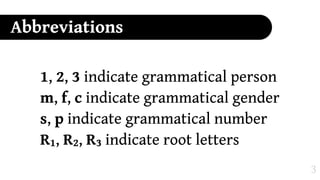
Abbreviations

   1, 2, 3 indicate grammatical person
   m, f, c indicate grammatical gender
   s, p indicate grammatical number
   R1, R2, R3 indicate root letters
                                         3
Getting Ready


    Before we start getting to
    know the ‫ ,פֻּעַל בִּנ)י'ן‬let’s run
    a few preflight checks.

                                        4
Do you remember how a Hebrew
verb changes to form the various
combinations of person, gender,
and number, as well as perfect
and imperfect?
                                   5
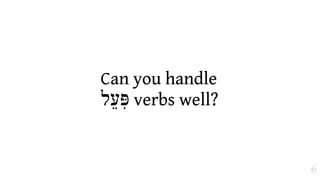
Can you handle
‫ פִּעֵל‬verbs well?

                    6
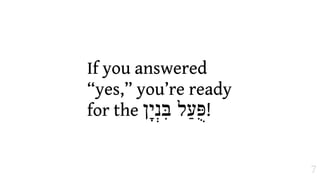
If you answered
“yes,” you’re ready
for the ‫!פֻּעַל בִּנ)י'ן‬


                         7
Remember that certain patterns
can create predictable variations.
This slideshow focuses on core
patterns. It does not illustrate every
possible variation.
                                         8
Furthermore, this slideshow
is intended to supplement,
not replace, classroom
instruction and practice.

                              9
Using ‫ פֻּעַל‬Verbs


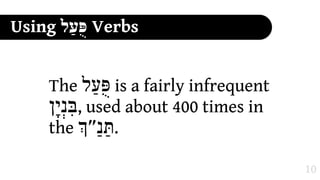
     The ‫ פֻּעַל‬is a fairly infrequent
     ‫ ,בִּנ)י'ן‬used about 400 times in
     the /‫.תַּנ1״‬

                                        10
You can think of the ‫ פֻּעַל‬as the
passive version of the ‫ .פִּעֵל‬In
other words, the subject of a ‫פֻּעַל‬
verb receives the verb’s action.

                                      11
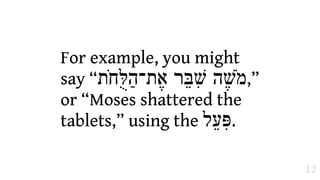
For example, you might
say “‫”,מֹשֶׁה שִׁבֵּר אֶת–הַלֻּחֹת‬
or “Moses shattered the
tablets,” using the ‫.פִּעֵל‬

                                 12
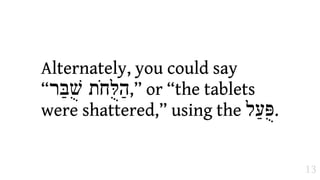
Alternately, you could say
“‫ ”,הַלֻּחֹת שֻׁבַּר‬or “the tablets
were shattered,” using the ‫.פֻּעַל‬


                                    13
(In case you’re wondering, Exod
32:19 actually uses the ‫ ,פִּעֵל‬in
the past narrative conjugation:
“‫)”.ו1יִּשַׁבֵּר ]מֹשֶׁה[ אֹת>ם‬

                                    14
The Basic Patterns


    Memorize the following basic
    patterns first, and then we’ll
    go through the specifics.

                                     15
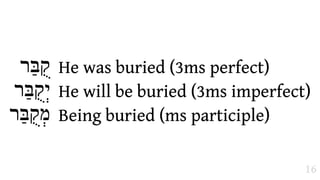
‫בַּר‬A   He was buried (3ms perfect)
‫בַּר‬A)‫י‬   He will be buried (3ms imperfect)
‫בַּר‬Aְ‫מ‬   Being buried (ms participle)

                                         16
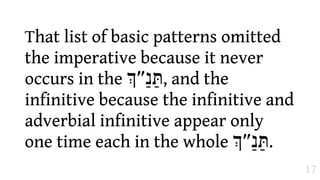
That list of basic patterns omitted
the imperative because it never
occurs in the /‫ ,תַּנ1״‬and the
infinitive because the infinitive and
adverbial infinitive appear only
one time each in the whole /‫.תַּנ1״‬
                                        17
Recognizing ‫ פֻּעַל‬Verbs


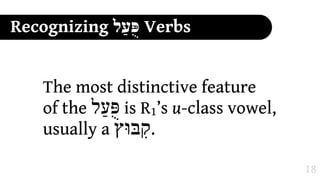
    The most distinctive feature
    of the ‫ פֻּעַל‬is R1’s u-class vowel,
    usually a ‫בּוּץ‬E.

                                          18
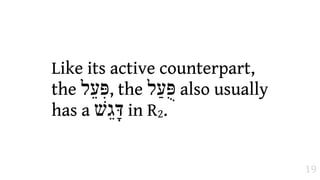
Like its active counterpart,
the ‫ ,פִּעֵל‬the ‫ פֻּעַל‬also usually
has a ‫ דָּגֵשׁ‬in R2.


                                    19
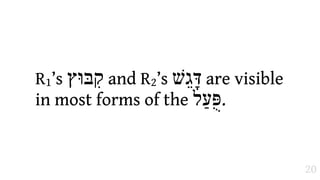
R1’s ‫בּוּץ‬E and R2’s ‫ דָּגֵשׁ‬are visible
in most forms of the ‫.פֻּעַל‬


                                       20
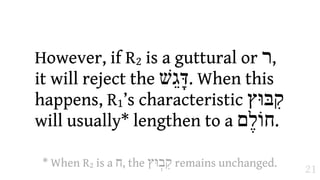
However, if R2 is a guttural or ‫,ר‬
it will reject the ‫ .דָּגֵשׁ‬When this
happens, R1’s characteristic ‫בּוּץ‬E
will usually* lengthen to a ‫.חוֹלֶם‬

 * When R2 is a ‫ ,ח‬the ‫בְוּץ‬E remains unchanged.
                                                  21
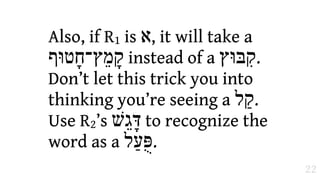
Also, if R1 is ‫ ,א‬it will take a
‫מֵץ–חָטוּף‬M instead of a ‫בּוּץ‬E.
Don’t let this trick you into
thinking you’re seeing a ‫ל‬N.
Use R2’s ‫ דָּגֵשׁ‬to recognize the
word as a ‫.פֻּעַל‬
                                   22
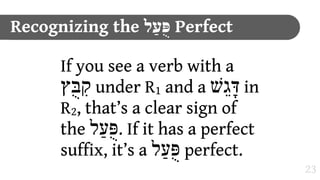
Recognizing the ‫ פֻּעַל‬Perfect

      If you see a verb with a
      ‫בֻּץ‬E under R1 and a ‫ דָּגֵשׁ‬in
      R2, that’s a clear sign of
      the ‫ .פֻּעַל‬If it has a perfect
      suffix, it’s a ‫ פֻּעַל‬perfect.
                                       23
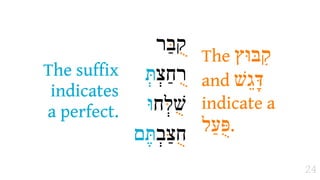
‫ קבַר‬The ‫בּוּץ‬E
                      ּ ֻ
                         
The suffix     ְ‫ רחַצְתּ‬and ‫דָּגֵשׁ‬
                            ֻ  
 indicates
a perfect.      ‫ שׁ  ְחוּ‬indicate a
                   ּ‫  ל‬ ֻ
             ‫חצ ַּ בְתֶּם‬  ֻ     ‫.פֻּעַל‬
                                         24
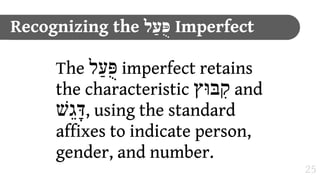
Recognizing the ‫ פֻּעַל‬Imperfect

     The ‫ פֻּעַל‬imperfect retains
     the characteristic ‫בּוּץ‬E and
     ‫ ,דָּגֵשׁ‬using the standard
     affixes to indicate person,
     gender, and number.
                                   25
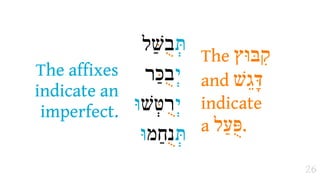
‫תְּבשַׁל‬
                 ּ ֻ
                           The ‫בּוּץ‬E
The affixes     ‫י)בכַר‬
                  ֻּ
                           and ‫דָּגֵשׁ‬
indicate an
 imperfect.   ‫י)רטְשׁוּ‬
                  ּ ֻ
                           indicate
                           a ‫.פֻּעַל‬
               ‫תְּ  חַמוּ‬
                      ֻ‫נ‬
                                       26
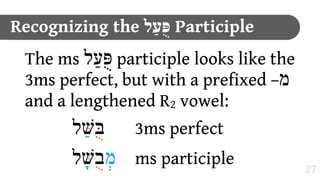
Recognizing the ‫ פֻּעַל‬Participle
 The ms ‫ פֻּעַל‬participle looks like the
 3ms perfect, but with a prefixed –‫מ‬
 and a lengthened R2 vowel:
        ‫בּשׁל‬
         ַּ ֻ
                3ms perfect
        ‫מְבשׁל‬
         ָּ ֻ
                ms participle             27
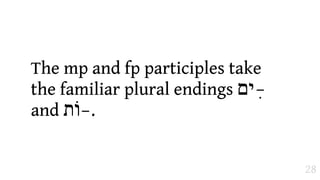
The mp and fp participles take
the familiar plural endings ‫  ים‬
                               ִ–
and ‫. –וֹת‬


                                    28
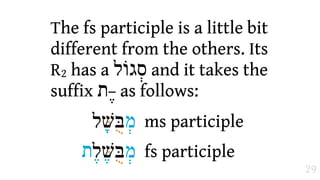
The fs participle is a little bit
different from the others. Its
R2 has a ‫ סְגוֹל‬and it takes the
suffix ‫  ת‬as follows:
        ֶ–
         
     ‫מְבּשׁל‬
        ָּ ֻ
               ms participle
    ‫מְבּשׁלת‬
     ֶ ֶּ ֻ
               fs participle
                                    29
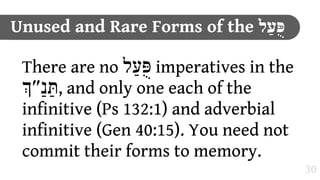
Unused and Rare Forms of the ‫פֻּעַל‬

 There are no ‫ פֻּעַל‬imperatives in the
 /‫ ,תַּנ1״‬and only one each of the
 infinitive (Ps 132:1) and adverbial
 infinitive (Gen 40:15). You need not
 commit their forms to memory.
                                         30
Summary


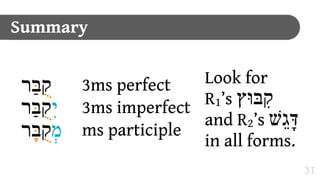
‫קבַר‬
  ּ ֻ
           3ms perfect   Look for
                         R1’s ‫בּוּץ‬E
‫קבַר‬T‫י‬
   ּ ֻ
           3ms imperfect
                         and R2’s ‫דָּגֵשׁ‬
    ָּ ֻ
‫מְקבר‬      ms participle
                         in all forms.
                                          31
Credits
   Dead Sea photo by Wikimedia Commons contributor
   Xta11. Used under a CC-SA license.

   All other content by Dr. Chris Heard, Associate
   Professor of Religion, Pepperdine University.
   Released under a CC-BY license.

   Grammatical terminology used in this presentation
   follows J. Cook and R. Holmstedt, Beginning Biblical
   Hebrew (Grand Rapids: Baker, 2013).

Getting to Know פֻּעַל Verbs

  • 1.
    Biblical Hebrew Getting toKnow ‫ פֻּעַל‬Verbs by Chris Heard
  • 2.
    Table of Contents Abbreviations .............................. 3 Getting Ready .............................. 4 Using ‫ פֻּעַל‬Verbs ....................... 10 The Basic Patterns .................... 15 Recognizing ‫ פֻּעַל‬Verbs ............ 18 Credits ........................................ 32
  • 3.
    Abbreviations 1, 2, 3 indicate grammatical person m, f, c indicate grammatical gender s, p indicate grammatical number R1, R2, R3 indicate root letters 3
  • 4.
    Getting Ready Before we start getting to know the ‫ ,פֻּעַל בִּנ)י'ן‬let’s run a few preflight checks. 4
  • 5.
    Do you rememberhow a Hebrew verb changes to form the various combinations of person, gender, and number, as well as perfect and imperfect? 5
  • 6.
    Can you handle ‫פִּעֵל‬verbs well? 6
  • 7.
    If you answered “yes,” you’reready for the ‫!פֻּעַל בִּנ)י'ן‬ 7
  • 8.
    Remember that certainpatterns can create predictable variations. This slideshow focuses on core patterns. It does not illustrate every possible variation. 8
  • 9.
    Furthermore, this slideshow isintended to supplement, not replace, classroom instruction and practice. 9
  • 10.
    Using ‫ פֻּעַל‬Verbs The ‫ פֻּעַל‬is a fairly infrequent ‫ ,בִּנ)י'ן‬used about 400 times in the /‫.תַּנ1״‬ 10
  • 11.
    You can thinkof the ‫ פֻּעַל‬as the passive version of the ‫ .פִּעֵל‬In other words, the subject of a ‫פֻּעַל‬ verb receives the verb’s action. 11
  • 12.
    For example, youmight say “‫”,מֹשֶׁה שִׁבֵּר אֶת–הַלֻּחֹת‬ or “Moses shattered the tablets,” using the ‫.פִּעֵל‬ 12
  • 13.
    Alternately, you couldsay “‫ ”,הַלֻּחֹת שֻׁבַּר‬or “the tablets were shattered,” using the ‫.פֻּעַל‬ 13
  • 14.
    (In case you’rewondering, Exod 32:19 actually uses the ‫ ,פִּעֵל‬in the past narrative conjugation: “‫)”.ו1יִּשַׁבֵּר ]מֹשֶׁה[ אֹת>ם‬ 14
  • 15.
    The Basic Patterns Memorize the following basic patterns first, and then we’ll go through the specifics. 15
  • 16.
    ‫בַּר‬A He was buried (3ms perfect) ‫בַּר‬A)‫י‬ He will be buried (3ms imperfect) ‫בַּר‬Aְ‫מ‬ Being buried (ms participle) 16
  • 17.
    That list ofbasic patterns omitted the imperative because it never occurs in the /‫ ,תַּנ1״‬and the infinitive because the infinitive and adverbial infinitive appear only one time each in the whole /‫.תַּנ1״‬ 17
  • 18.
    Recognizing ‫ פֻּעַל‬Verbs The most distinctive feature of the ‫ פֻּעַל‬is R1’s u-class vowel, usually a ‫בּוּץ‬E. 18
  • 19.
    Like its activecounterpart, the ‫ ,פִּעֵל‬the ‫ פֻּעַל‬also usually has a ‫ דָּגֵשׁ‬in R2. 19
  • 20.
    R1’s ‫בּוּץ‬E andR2’s ‫ דָּגֵשׁ‬are visible in most forms of the ‫.פֻּעַל‬ 20
  • 21.
    However, if R2is a guttural or ‫,ר‬ it will reject the ‫ .דָּגֵשׁ‬When this happens, R1’s characteristic ‫בּוּץ‬E will usually* lengthen to a ‫.חוֹלֶם‬ * When R2 is a ‫ ,ח‬the ‫בְוּץ‬E remains unchanged. 21
  • 22.
    Also, if R1is ‫ ,א‬it will take a ‫מֵץ–חָטוּף‬M instead of a ‫בּוּץ‬E. Don’t let this trick you into thinking you’re seeing a ‫ל‬N. Use R2’s ‫ דָּגֵשׁ‬to recognize the word as a ‫.פֻּעַל‬ 22
  • 23.
    Recognizing the ‫פֻּעַל‬Perfect If you see a verb with a ‫בֻּץ‬E under R1 and a ‫ דָּגֵשׁ‬in R2, that’s a clear sign of the ‫ .פֻּעַל‬If it has a perfect suffix, it’s a ‫ פֻּעַל‬perfect. 23
  • 24.
    ‫ קבַר‬The ‫בּוּץ‬E ּ ֻ    The suffix ְ‫ רחַצְתּ‬and ‫דָּגֵשׁ‬ ֻ   indicates a perfect. ‫ שׁ  ְחוּ‬indicate a ּ‫  ל‬ ֻ ‫חצ ַּ בְתֶּם‬ ֻ   ‫.פֻּעַל‬ 24
  • 25.
    Recognizing the ‫פֻּעַל‬Imperfect The ‫ פֻּעַל‬imperfect retains the characteristic ‫בּוּץ‬E and ‫ ,דָּגֵשׁ‬using the standard affixes to indicate person, gender, and number. 25
  • 26.
    ‫תְּבשַׁל‬ ּ ֻ    The ‫בּוּץ‬E The affixes ‫י)בכַר‬ ֻּ    and ‫דָּגֵשׁ‬ indicate an imperfect. ‫י)רטְשׁוּ‬ ּ ֻ    indicate a ‫.פֻּעַל‬ ‫תְּ  חַמוּ‬ ֻ‫נ‬ 26
  • 27.
    Recognizing the ‫פֻּעַל‬Participle The ms ‫ פֻּעַל‬participle looks like the 3ms perfect, but with a prefixed –‫מ‬ and a lengthened R2 vowel: ‫בּשׁל‬ ַּ ֻ      3ms perfect ‫מְבשׁל‬ ָּ ֻ      ms participle 27
  • 28.
    The mp andfp participles take the familiar plural endings ‫  ים‬ ִ– and ‫. –וֹת‬ 28
  • 29.
    The fs participleis a little bit different from the others. Its R2 has a ‫ סְגוֹל‬and it takes the suffix ‫  ת‬as follows: ֶ–   ‫מְבּשׁל‬ ָּ ֻ      ms participle ‫מְבּשׁלת‬ ֶ ֶּ ֻ        fs participle 29
  • 30.
    Unused and RareForms of the ‫פֻּעַל‬ There are no ‫ פֻּעַל‬imperatives in the /‫ ,תַּנ1״‬and only one each of the infinitive (Ps 132:1) and adverbial infinitive (Gen 40:15). You need not commit their forms to memory. 30
  • 31.
    Summary ‫קבַר‬ ֻּ    3ms perfect Look for R1’s ‫בּוּץ‬E ‫קבַר‬T‫י‬ ּ ֻ    3ms imperfect and R2’s ‫דָּגֵשׁ‬ ָּ ֻ ‫מְקבר‬    ms participle in all forms. 31
  • 32.
    Credits Dead Sea photo by Wikimedia Commons contributor Xta11. Used under a CC-SA license. All other content by Dr. Chris Heard, Associate Professor of Religion, Pepperdine University. Released under a CC-BY license. Grammatical terminology used in this presentation follows J. Cook and R. Holmstedt, Beginning Biblical Hebrew (Grand Rapids: Baker, 2013).