Getting the Best out 
of WebRTC 
Tim Panton - Protocol Droid - Westhawk Ltd 
Dan Jenkins - Chief Ape - nimblea.pe & Respoke
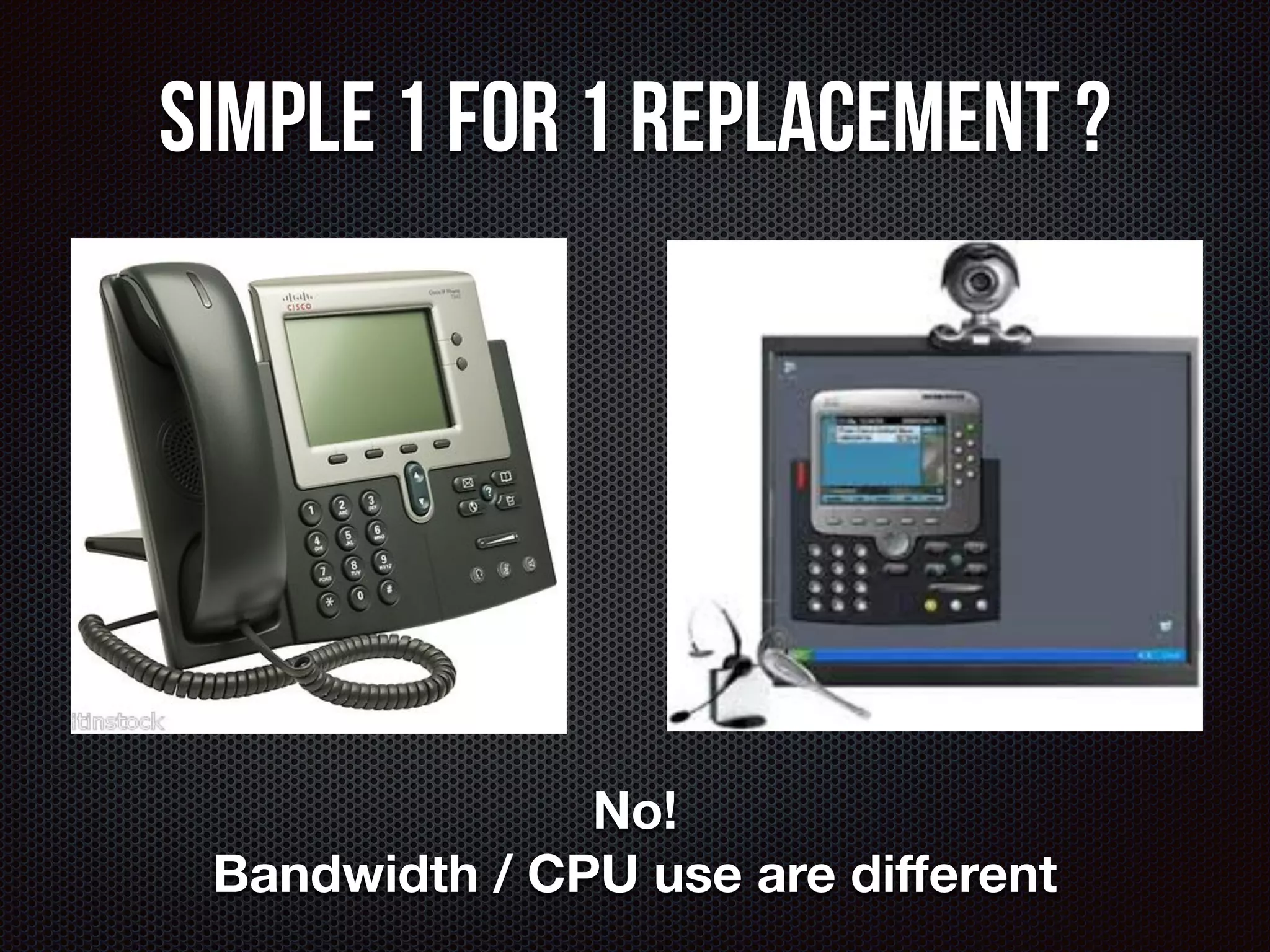
Simple 1 for 1 replacement ? 
No! 
Bandwidth / CPU use are different
How to plan a deployment 
A talk in two parts
Architecture and Choices
Practical numbers and graphs
Assumptions 
If you are here you are probably 
Doing this commercially - Quality matters 
Using Asterisk - Hybrid model with some PSTN 
Have Asymmetric calls - agents and users 
Are on a tight bandwidth and CPU budget 
Video not top priority (yet) 
Have a clue
WebRTC Topologies
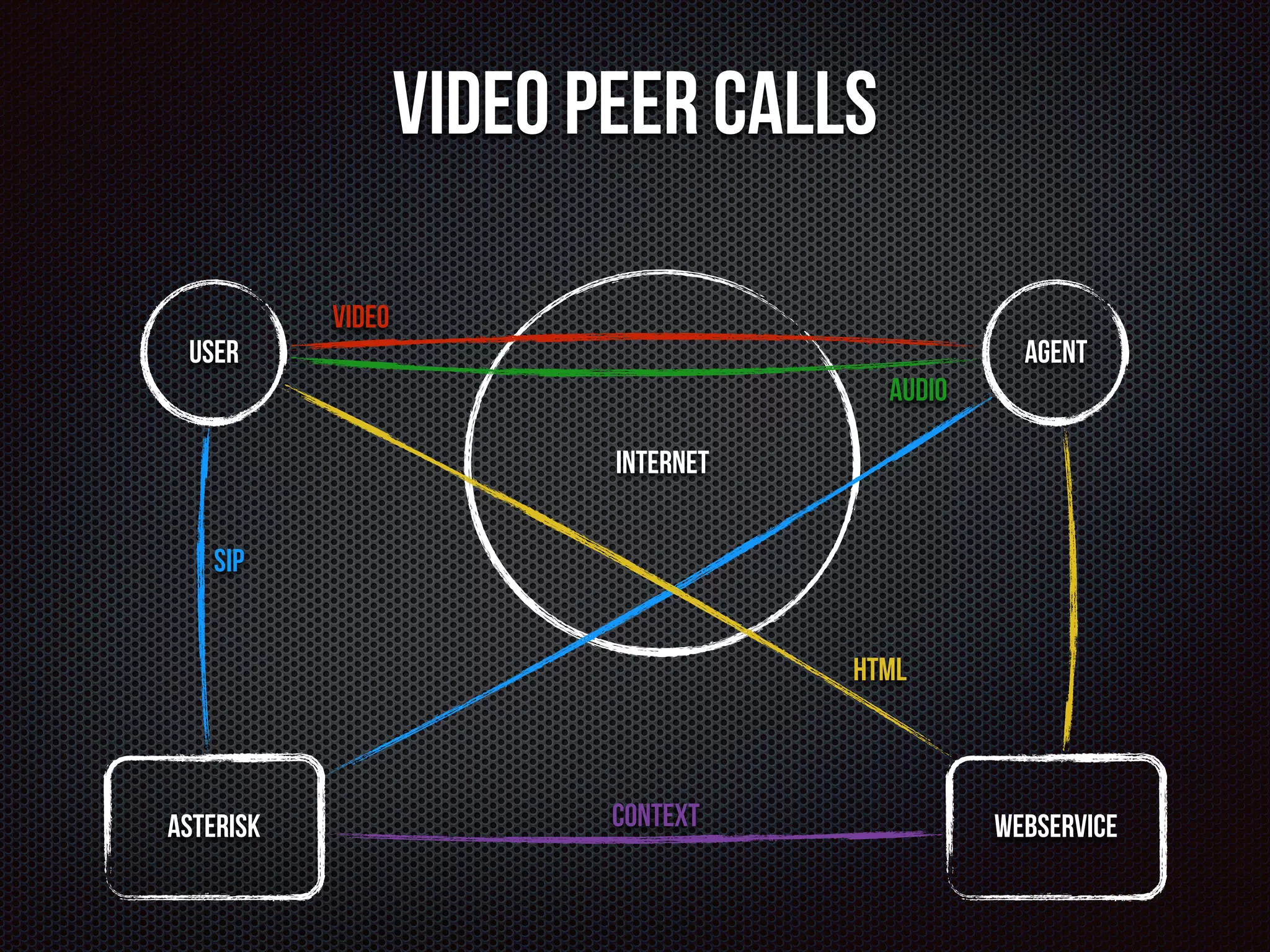
Video Peer Calls 
Video 
User Agent 
Internet 
SIP 
Audio 
HTML 
Context 
Asterisk Webservice
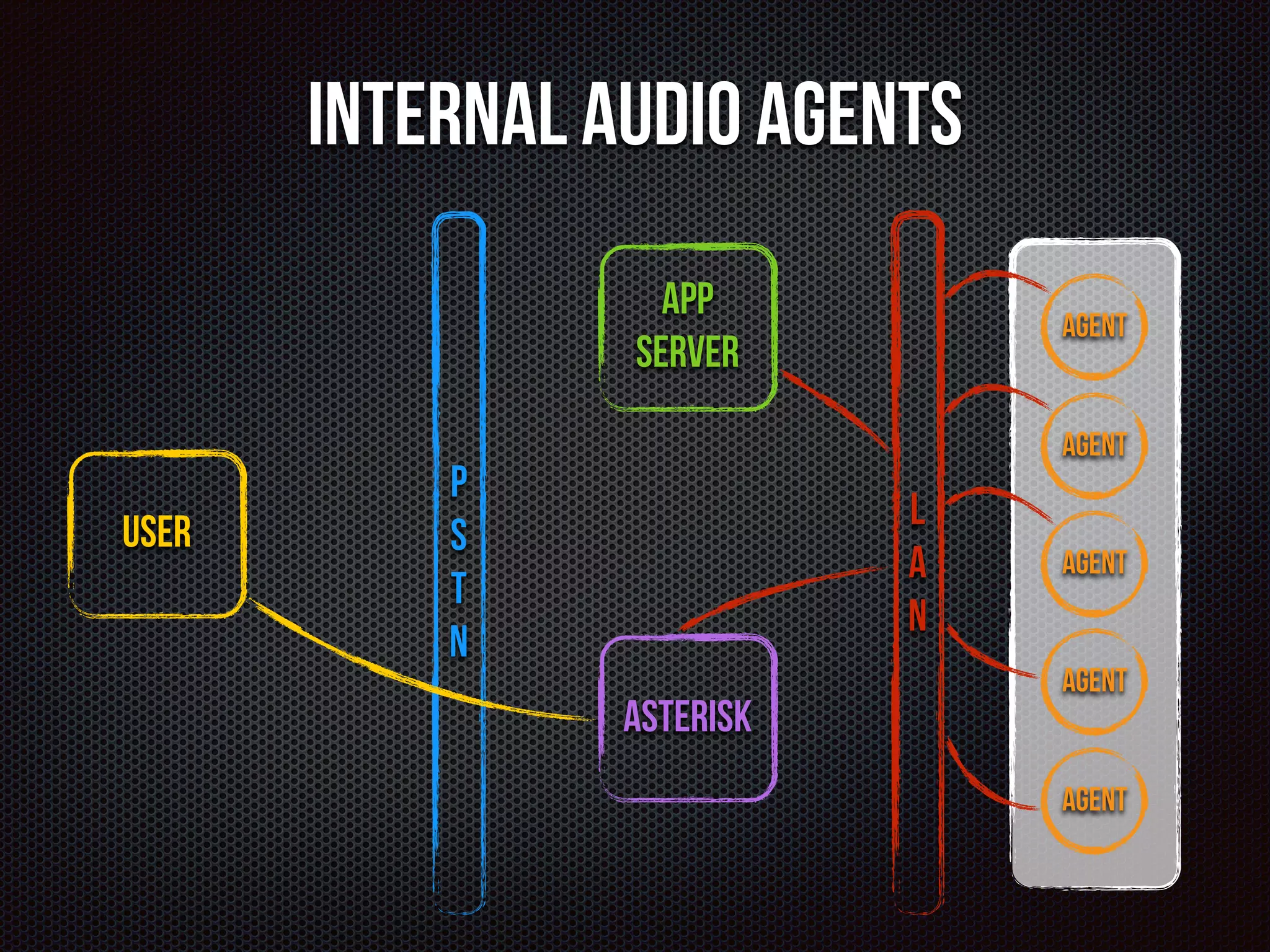
Internal Audio Agents 
Asterisk 
L 
A 
N 
App 
Server 
User 
P 
S 
T 
N 
Agent 
Agent 
Agent 
Agent 
Agent
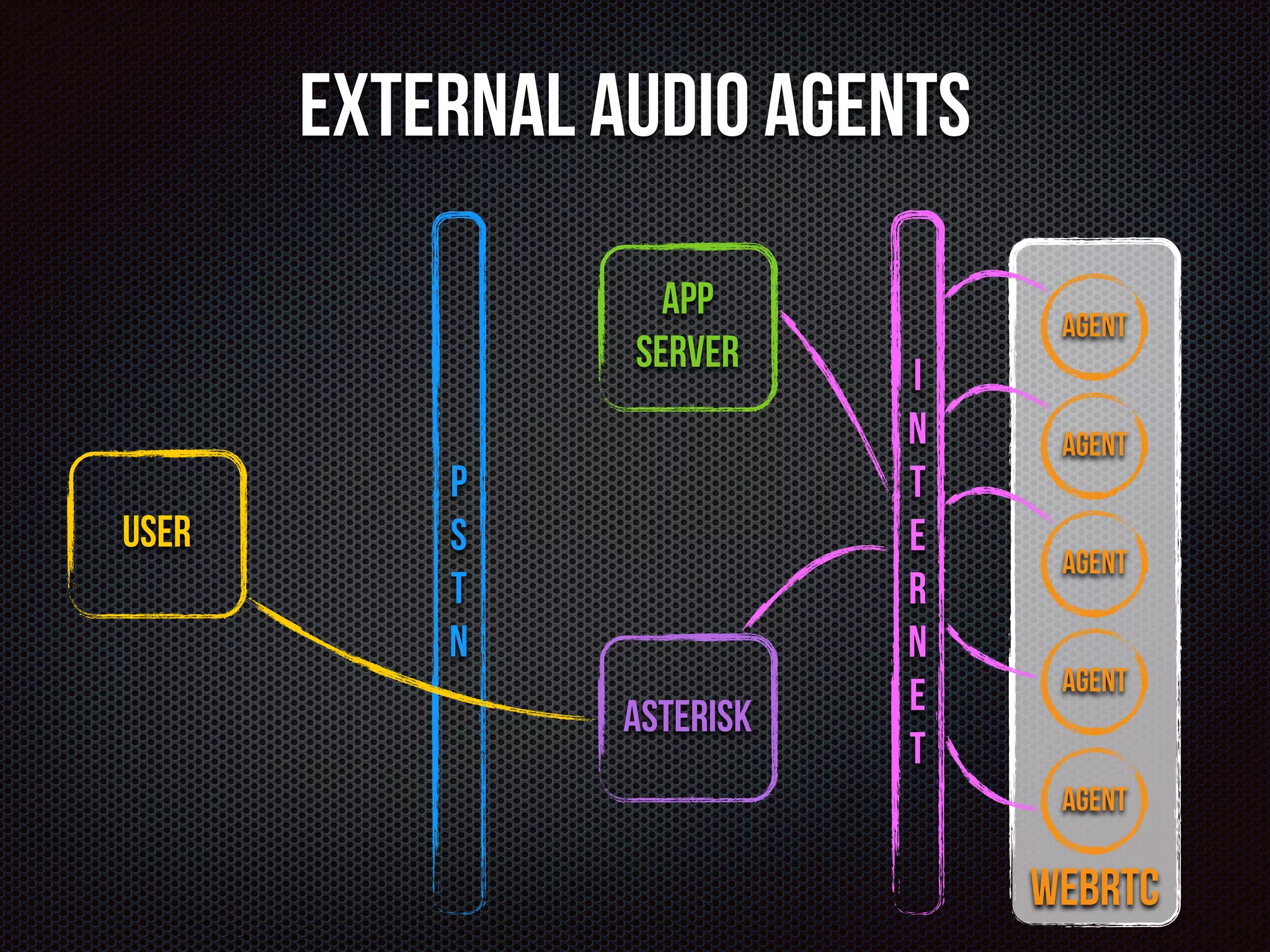
External Audio Agents 
I 
N 
T 
E 
R 
N 
E 
T 
User 
P 
S 
T 
N 
Agent 
Agent 
Agent 
Agent 
Agent 
WebRTC 
App 
Server 
Asterisk
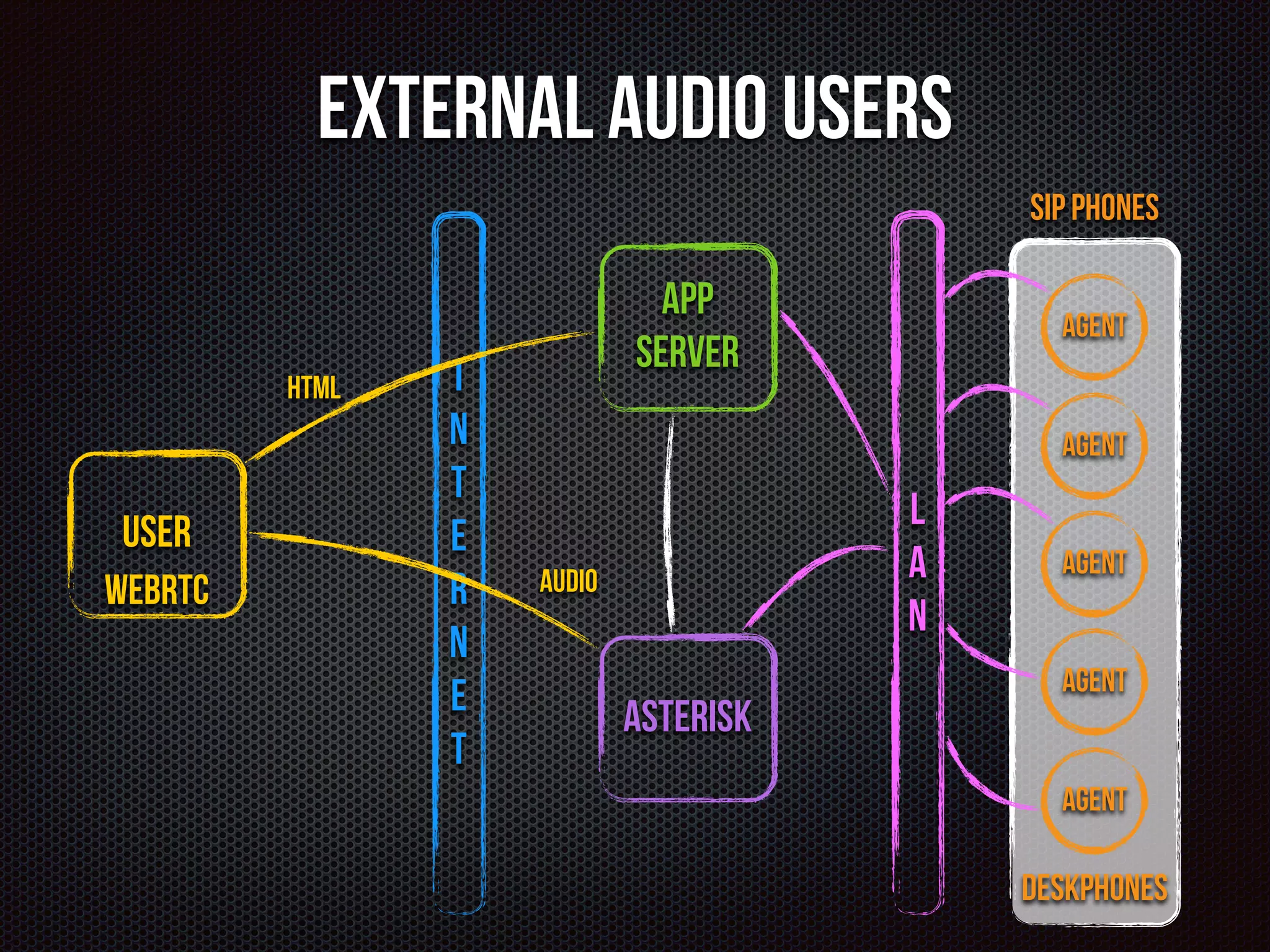
External Audio Users 
L 
A 
N 
User 
I 
N 
T 
E 
R 
N 
E 
T 
Agent 
Agent 
Agent 
Agent 
Agent 
DeskPhones 
HTML 
WebRTC Audio 
App 
Server 
Asterisk 
SIP Phones
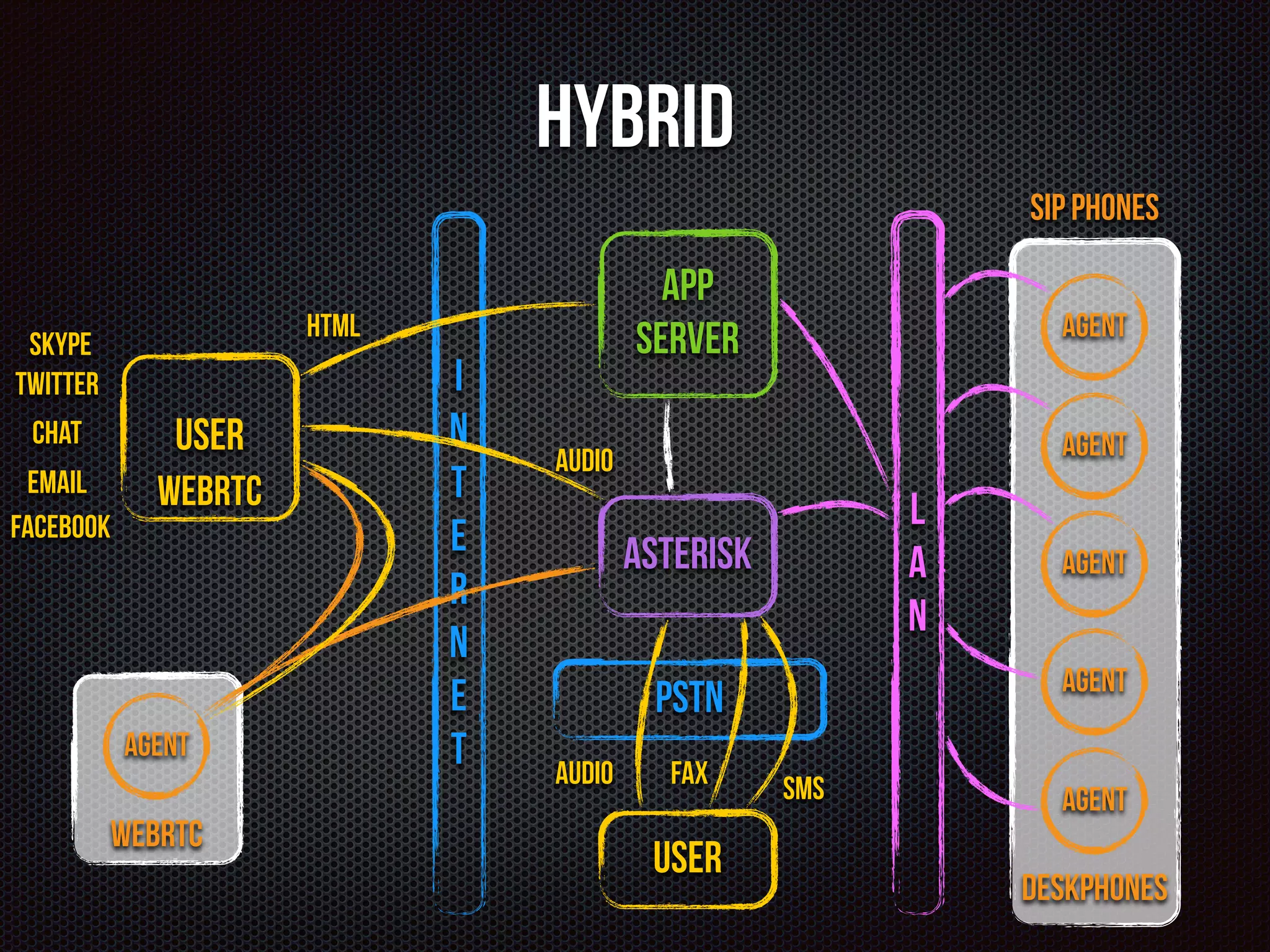
Hybrid 
L 
A 
N 
User 
I 
N 
T 
E 
R 
N 
E 
T 
Agent 
Agent 
Agent 
Agent 
Agent 
DeskPhones 
WebRTC 
Audio 
HTML 
App 
Server 
Asterisk 
Agent 
WebRTC 
SIP Phones 
PSTN 
Audio FAX SMS 
User 
Skype 
Twitter 
Chat 
Email 
Facebook
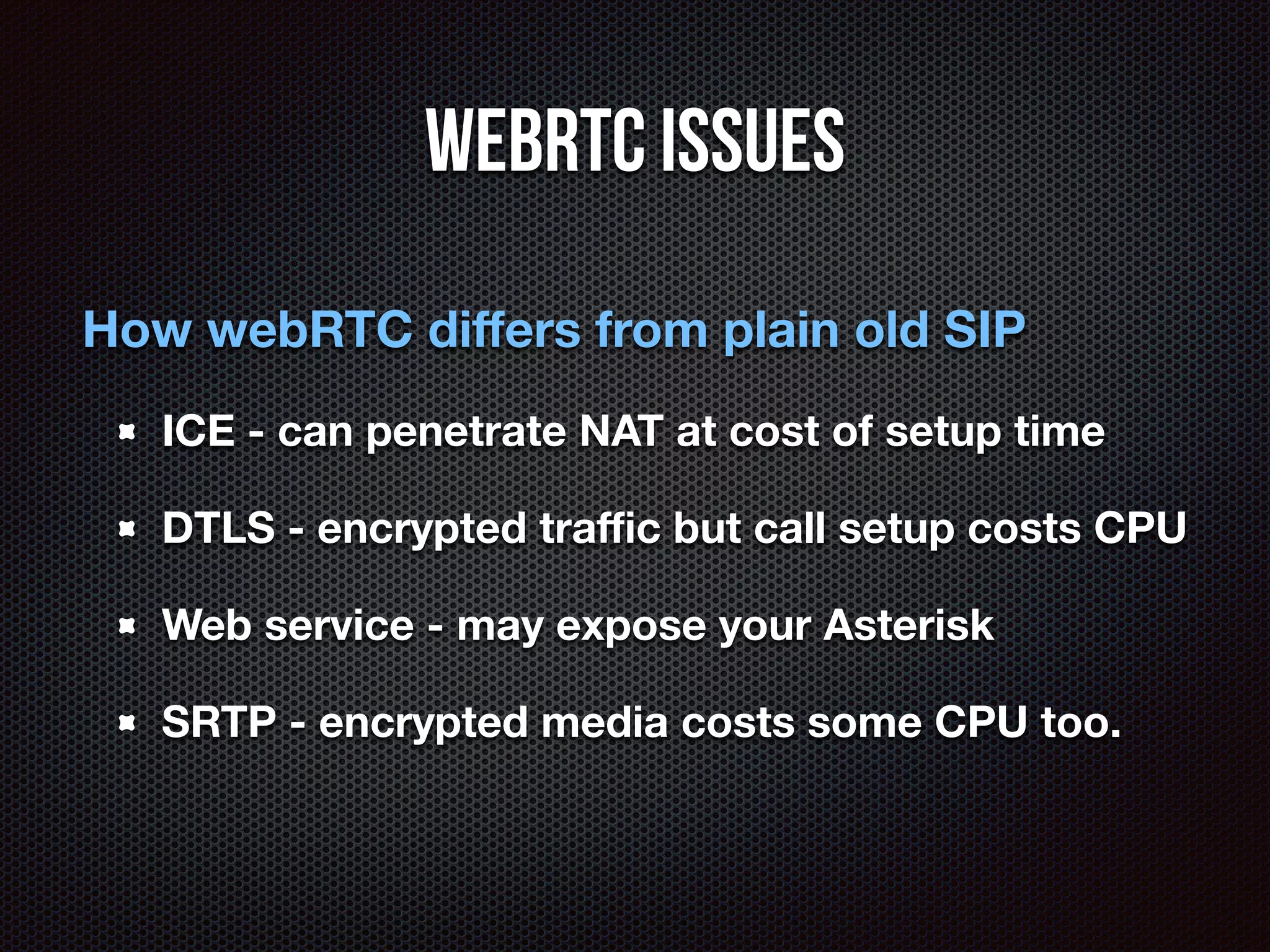
WebRTC issues 
How webRTC differs from plain old SIP 
ICE - can penetrate NAT at cost of setup time 
DTLS - encrypted traffic but call setup costs CPU 
Web service - may expose your Asterisk 
SRTP - encrypted media costs some CPU too.
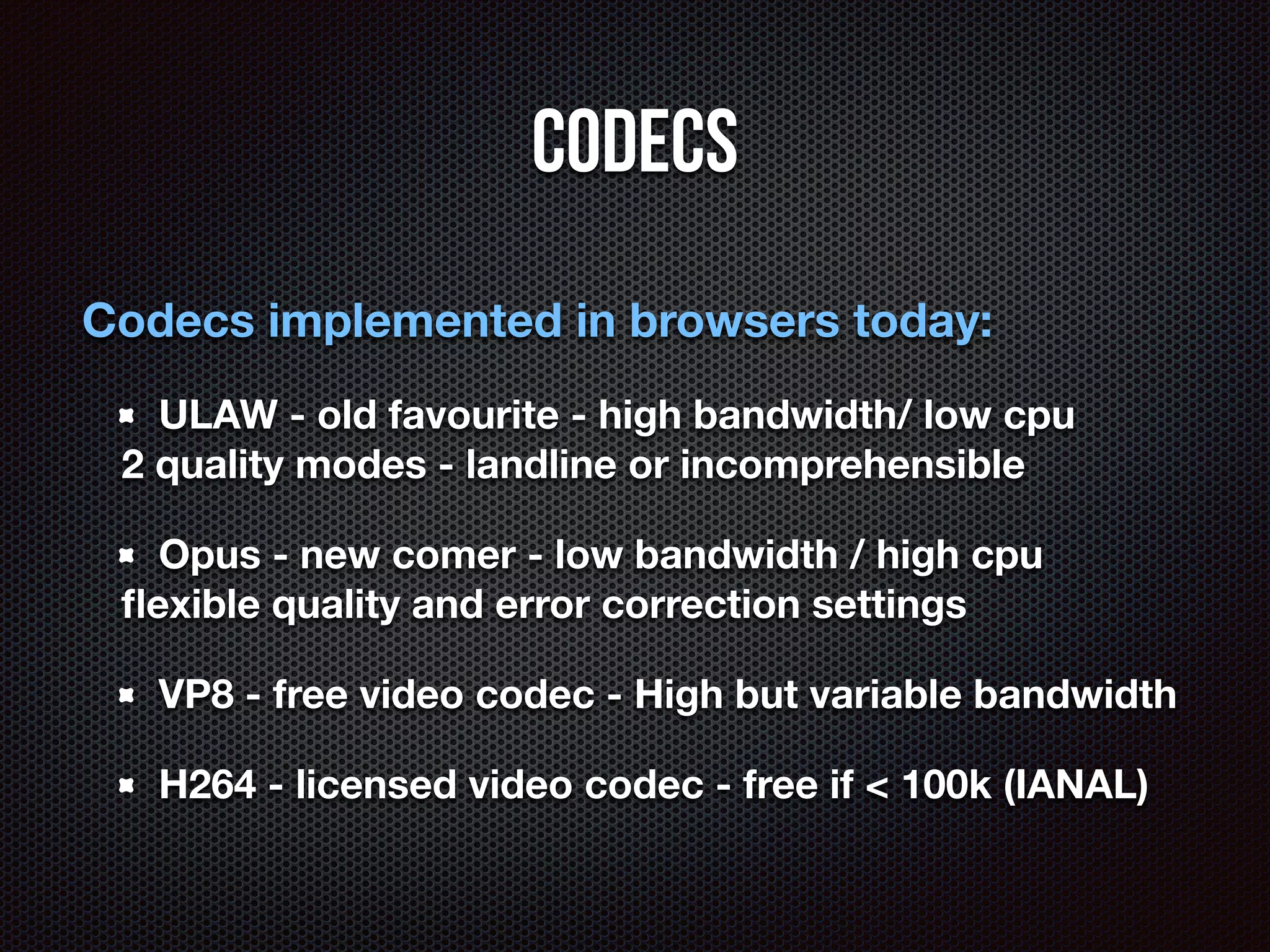
Codecs 
Codecs implemented in browsers today: 
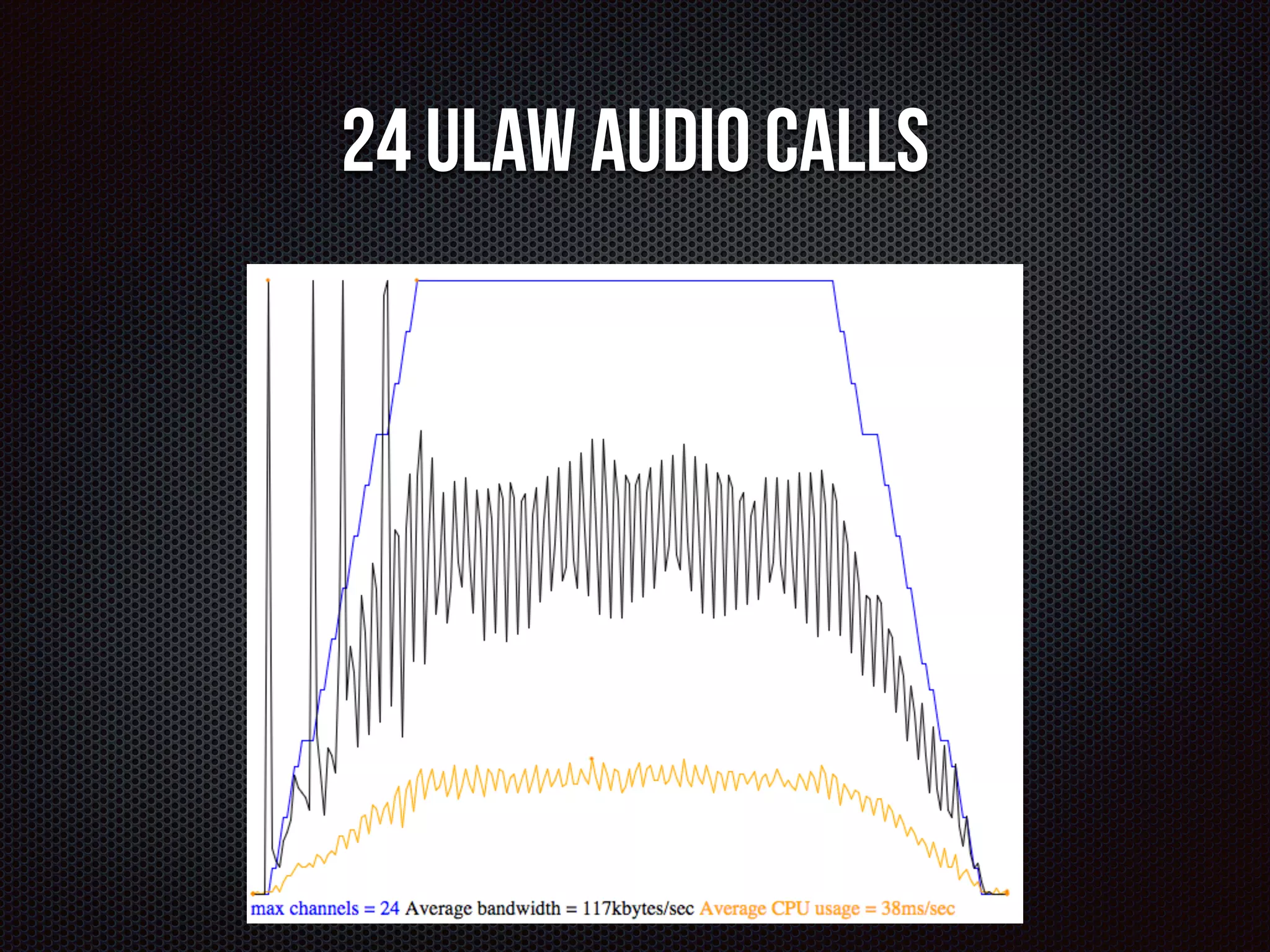
ULAW - old favourite - high bandwidth/ low cpu 
2 quality modes - landline or incomprehensible 
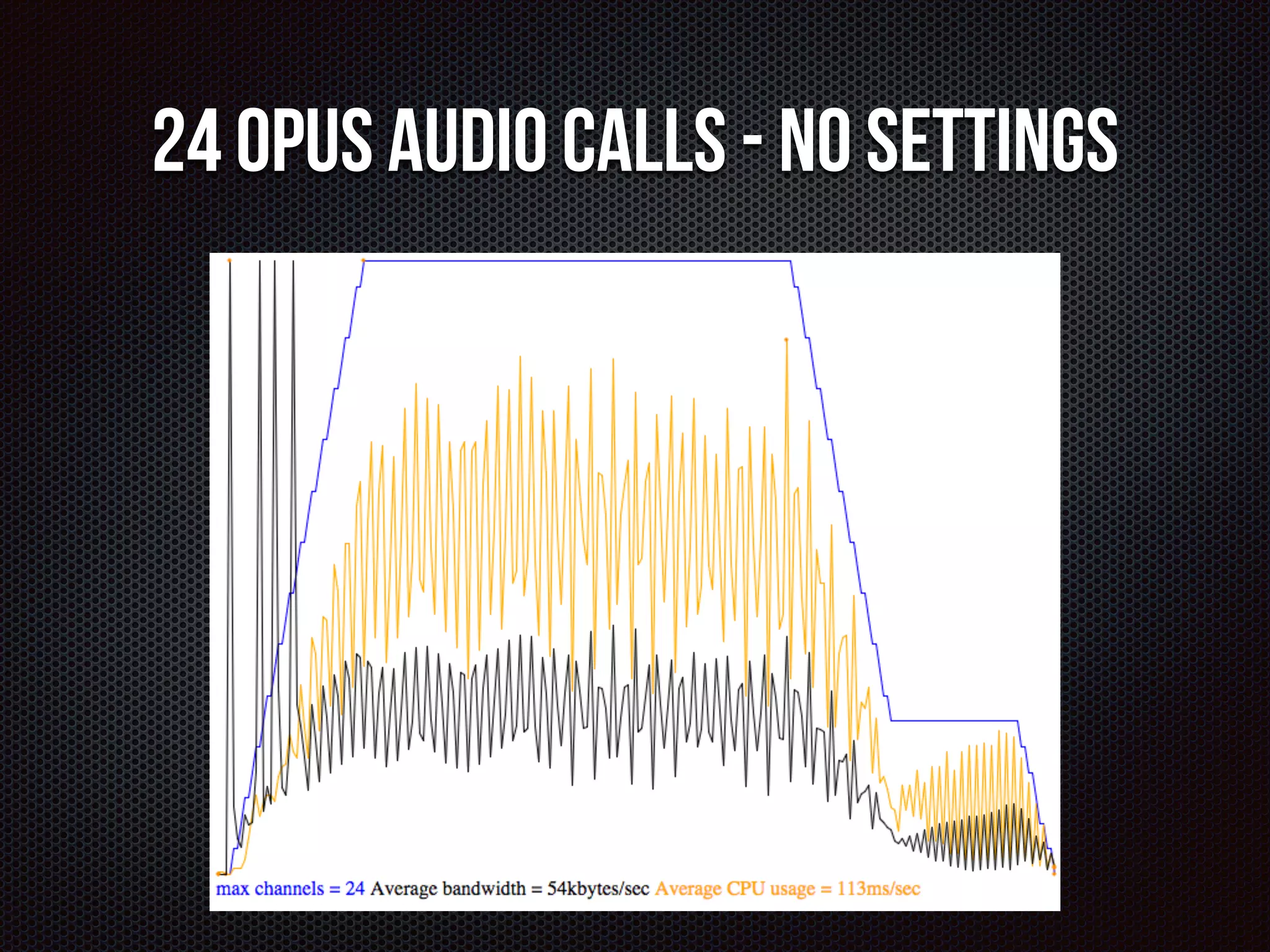
Opus - new comer - low bandwidth / high cpu 
flexible quality and error correction settings 
VP8 - free video codec - High but variable bandwidth 
H264 - licensed video codec - free if < 100k (IANAL)
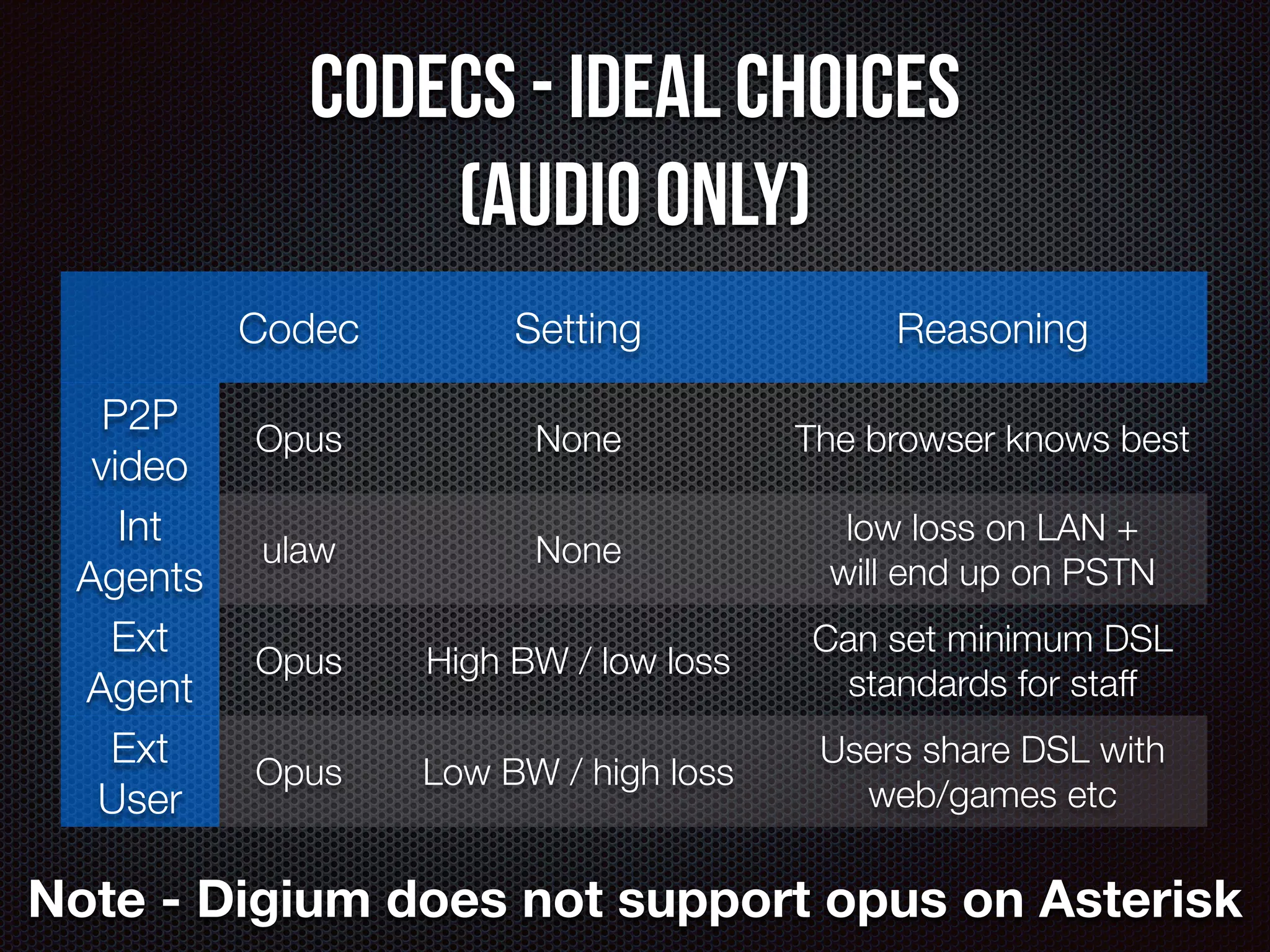
Codecs - ideal choices 
(audio only) 
Codec Setting Reasoning 
P2P 
video Opus None The browser knows best 
Int 
Agents ulaw None low loss on LAN + 
will end up on PSTN 
Ext 
Agent Opus High BW / low loss Can set minimum DSL 
standards for staff 
Ext 
User Opus Low BW / high loss Users share DSL with 
web/games etc 
Note - Digium does not support opus on Asterisk
DTLS - crypto selection
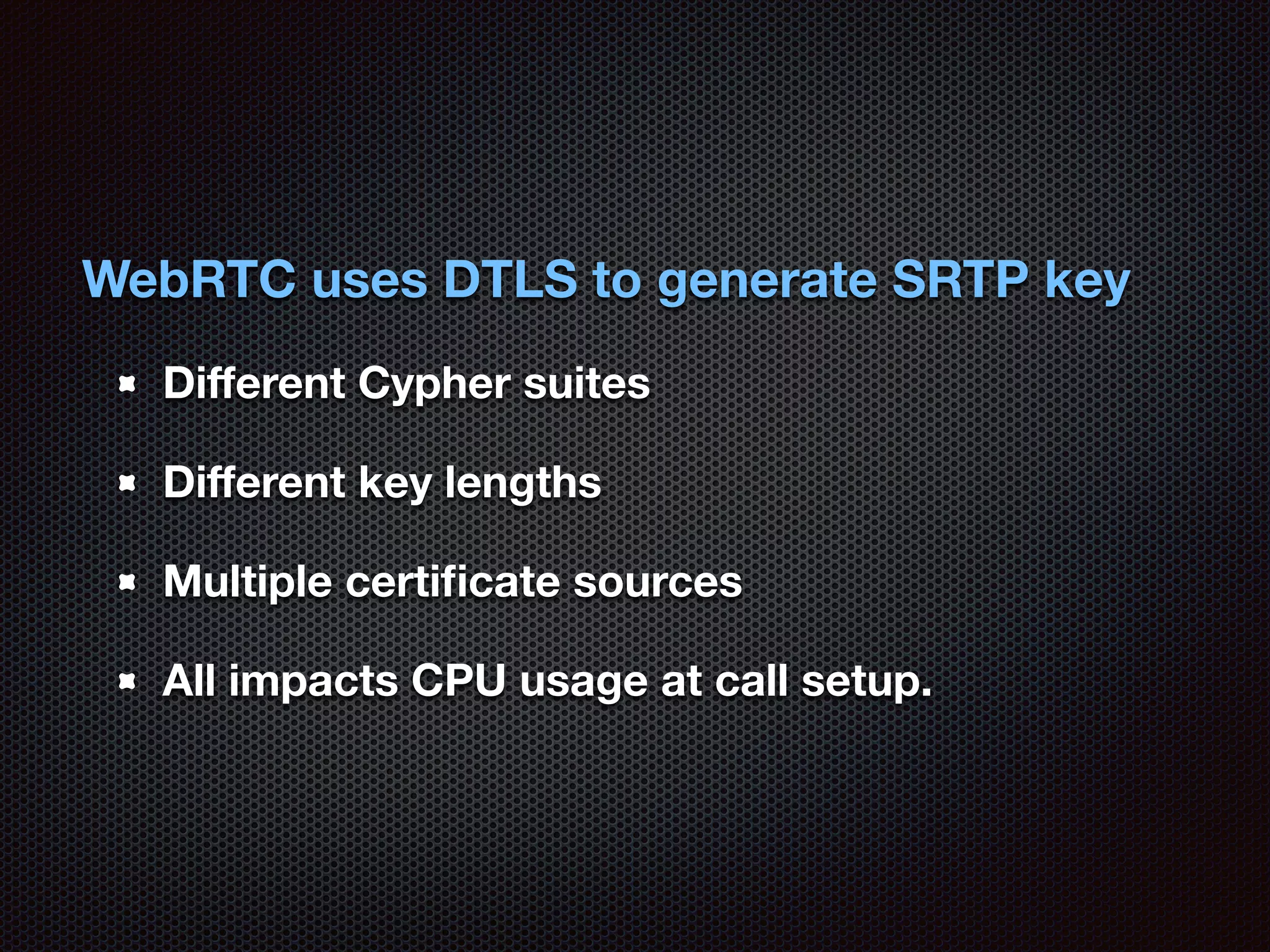
WebRTC uses DTLS to generate SRTP key 
Different Cypher suites 
Different key lengths 
Multiple certificate sources 
All impacts CPU usage at call setup.
ICE - Tricks
Assume your asterisk has a public IP 
Probably don’t need a TURN server 
Avoid offering candidates for internal IPs 
Don’t offer VPN candidates 
Can probably get away with setting ice-lite
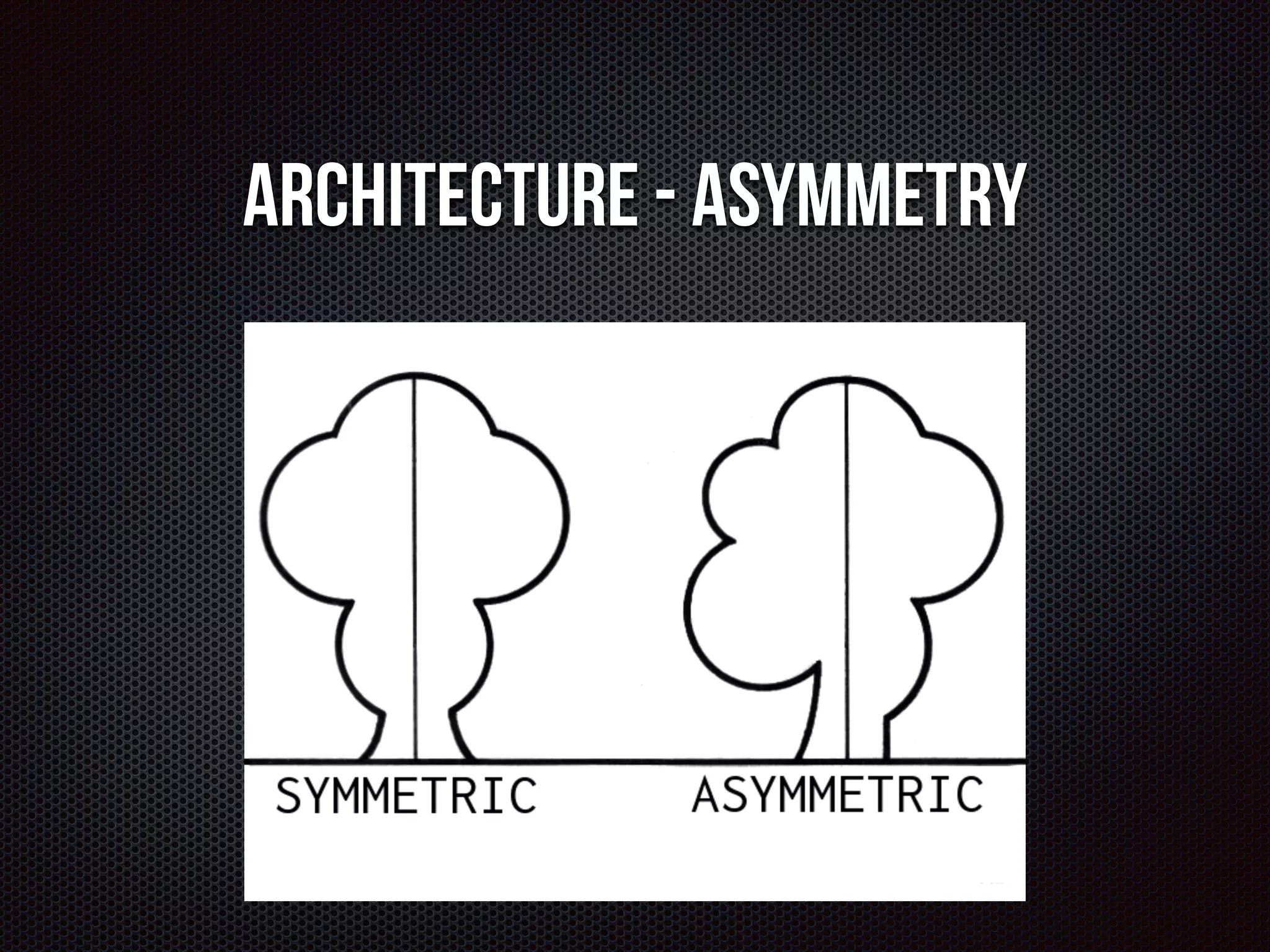
Architecture - Asymmetry
In future we expect more asymmetric cases 
Mayday - they see your screen not you 
Baby monitor - 1 way video but 2 way audio ? 
Security cameras
What does that all mean in practice 
Probably: 
Higher CPU use (especially with Opus) 
Longer call setup times 
Very high bandwidth with Video (if enabled)
Tools to monitor 
Probably: 
WebRTC stats (Respoke Stats) 
www.npmjs.org/package/getstats 
chrome://webrtc-internals 
CollectD / Graphite
Some Numbers 
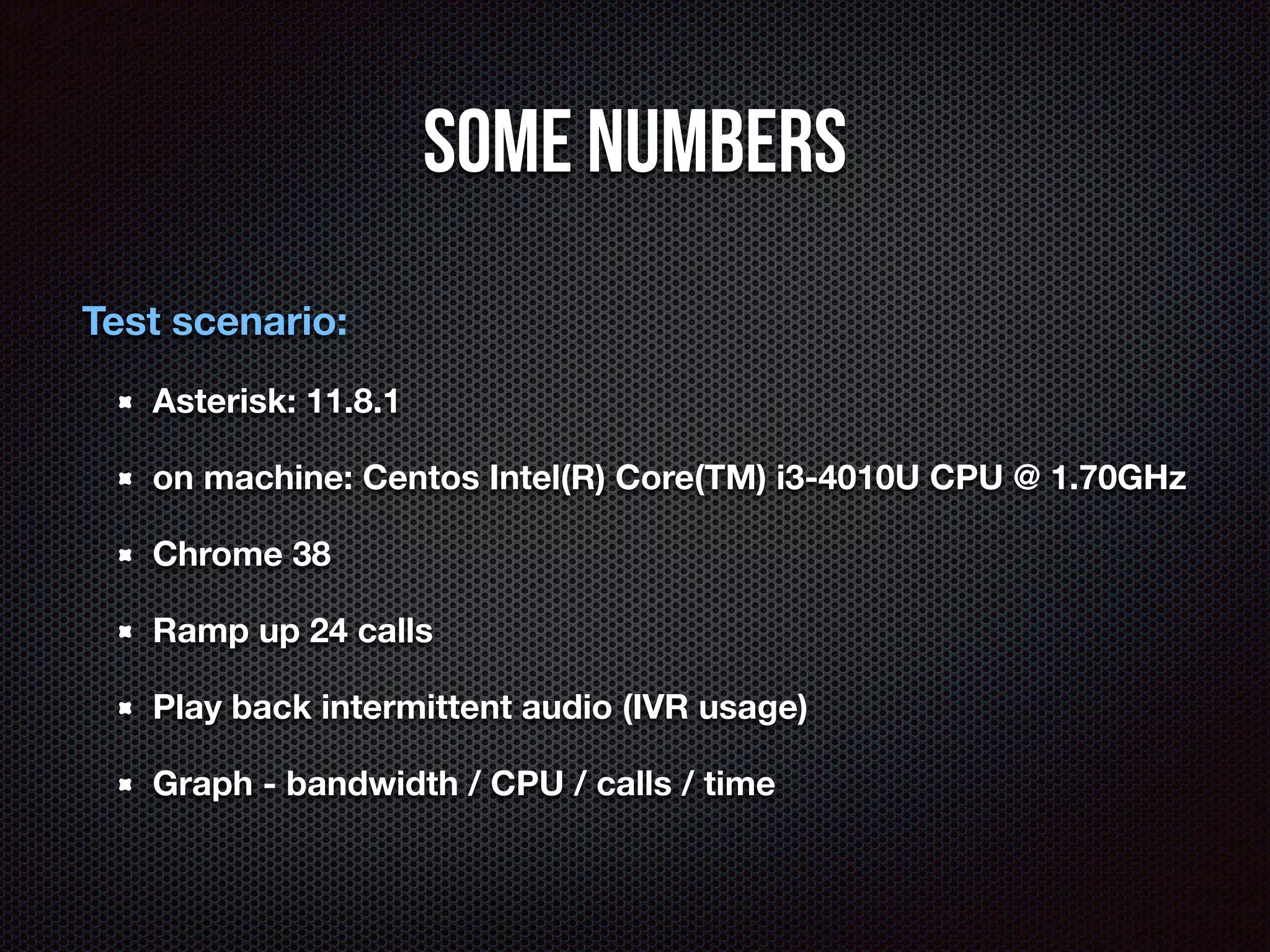
Test scenario: 
Asterisk: 11.8.1 
on machine: Centos Intel(R) Core(TM) i3-4010U CPU @ 1.70GHz 
Chrome 38 
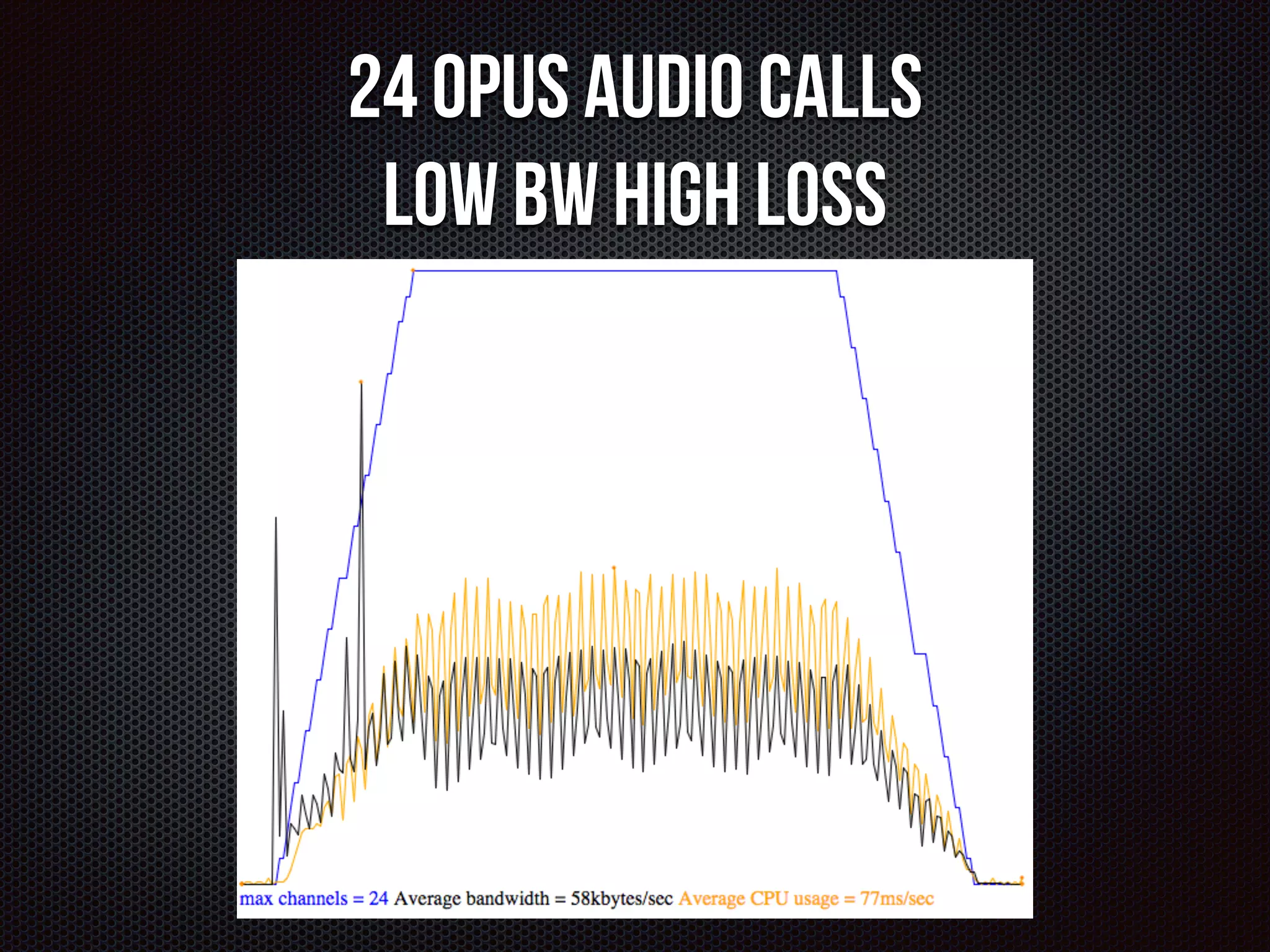
Ramp up 24 calls 
Play back intermittent audio (IVR usage) 
Graph - bandwidth / CPU / calls / time
24 ulaw audio calls 
Graph
24 opus audio calls - No settings 
Graph
24 opus audio calls 
Low BW high loss 
Graph
Some MORE “Numbers” 
Test scenario: 
Digital Ocean 
Medium Droplet 
San Francisco
1 P2P video call - LAN/WAN 
http://bit.ly/dt-demo
1 P2P video call - WAN 
http://bit.ly/dt-demo
Live demo using respoke 
Chrome (android too) browse here! 
URL: 
http://bit.ly/dt-asterisk
Thank you! 
Questions? 
More info at: 
github.com/danjenkins/web-examples 
@dan_jenkins 
@steely_glint 
www.respoke.io
Images Used 
http://upload.wikimedia.org/wikipedia/commons/c/ca/Padlock_2010.JPG 
http://upload.wikimedia.org/wikipedia/commons/8/8e/ 
Ice_road_in_the_Northwest_Territories_-a.jpg 
http://upload.wikimedia.org/wikipedia/commons/4/41/Asymmetric_%28PSF 
%29.png

Getting the Best Out Of WebRTC - Astricon 2014

  • 1.
    Getting the Bestout of WebRTC Tim Panton - Protocol Droid - Westhawk Ltd Dan Jenkins - Chief Ape - nimblea.pe & Respoke
  • 2.
    Simple 1 for1 replacement ? No! Bandwidth / CPU use are different
  • 3.
    How to plana deployment A talk in two parts
  • 4.
  • 5.
  • 6.
    Assumptions If youare here you are probably Doing this commercially - Quality matters Using Asterisk - Hybrid model with some PSTN Have Asymmetric calls - agents and users Are on a tight bandwidth and CPU budget Video not top priority (yet) Have a clue
  • 7.
  • 8.
    Video Peer Calls Video User Agent Internet SIP Audio HTML Context Asterisk Webservice
  • 9.
    Internal Audio Agents Asterisk L A N App Server User P S T N Agent Agent Agent Agent Agent
  • 10.
    External Audio Agents I N T E R N E T User P S T N Agent Agent Agent Agent Agent WebRTC App Server Asterisk
  • 11.
    External Audio Users L A N User I N T E R N E T Agent Agent Agent Agent Agent DeskPhones HTML WebRTC Audio App Server Asterisk SIP Phones
  • 12.
    Hybrid L A N User I N T E R N E T Agent Agent Agent Agent Agent DeskPhones WebRTC Audio HTML App Server Asterisk Agent WebRTC SIP Phones PSTN Audio FAX SMS User Skype Twitter Chat Email Facebook
  • 13.
    WebRTC issues HowwebRTC differs from plain old SIP ICE - can penetrate NAT at cost of setup time DTLS - encrypted traffic but call setup costs CPU Web service - may expose your Asterisk SRTP - encrypted media costs some CPU too.
  • 14.
    Codecs Codecs implementedin browsers today: ULAW - old favourite - high bandwidth/ low cpu 2 quality modes - landline or incomprehensible Opus - new comer - low bandwidth / high cpu flexible quality and error correction settings VP8 - free video codec - High but variable bandwidth H264 - licensed video codec - free if < 100k (IANAL)
  • 15.
    Codecs - idealchoices (audio only) Codec Setting Reasoning P2P video Opus None The browser knows best Int Agents ulaw None low loss on LAN + will end up on PSTN Ext Agent Opus High BW / low loss Can set minimum DSL standards for staff Ext User Opus Low BW / high loss Users share DSL with web/games etc Note - Digium does not support opus on Asterisk
  • 16.
    DTLS - cryptoselection
  • 17.
    WebRTC uses DTLSto generate SRTP key Different Cypher suites Different key lengths Multiple certificate sources All impacts CPU usage at call setup.
  • 18.
  • 19.
    Assume your asteriskhas a public IP Probably don’t need a TURN server Avoid offering candidates for internal IPs Don’t offer VPN candidates Can probably get away with setting ice-lite
  • 20.
  • 21.
    In future weexpect more asymmetric cases Mayday - they see your screen not you Baby monitor - 1 way video but 2 way audio ? Security cameras
  • 22.
    What does thatall mean in practice Probably: Higher CPU use (especially with Opus) Longer call setup times Very high bandwidth with Video (if enabled)
  • 23.
    Tools to monitor Probably: WebRTC stats (Respoke Stats) www.npmjs.org/package/getstats chrome://webrtc-internals CollectD / Graphite
  • 24.
    Some Numbers Testscenario: Asterisk: 11.8.1 on machine: Centos Intel(R) Core(TM) i3-4010U CPU @ 1.70GHz Chrome 38 Ramp up 24 calls Play back intermittent audio (IVR usage) Graph - bandwidth / CPU / calls / time
  • 25.
    24 ulaw audiocalls Graph
  • 26.
    24 opus audiocalls - No settings Graph
  • 27.
    24 opus audiocalls Low BW high loss Graph
  • 28.
    Some MORE “Numbers” Test scenario: Digital Ocean Medium Droplet San Francisco
  • 29.
    1 P2P videocall - LAN/WAN http://bit.ly/dt-demo
  • 30.
    1 P2P videocall - WAN http://bit.ly/dt-demo
  • 31.
    Live demo usingrespoke Chrome (android too) browse here! URL: http://bit.ly/dt-asterisk
  • 32.
    Thank you! Questions? More info at: github.com/danjenkins/web-examples @dan_jenkins @steely_glint www.respoke.io
  • 33.
    Images Used http://upload.wikimedia.org/wikipedia/commons/c/ca/Padlock_2010.JPG http://upload.wikimedia.org/wikipedia/commons/8/8e/ Ice_road_in_the_Northwest_Territories_-a.jpg http://upload.wikimedia.org/wikipedia/commons/4/41/Asymmetric_%28PSF %29.png