By: Maria fe Mendez k. Alexandra Gonzales S. and Azra 
Ezpinosa V.
Germany is located in 
western Europe, 
bordering the North 
Sea between France 
and Poland. 
Germany shares limits with Denmark 
and the Baltic Sea (north), Poland and 
the Czech Republic (east), Austria 
(southeast), Switzerland (south), 
France (southwest), Luxembourg, 
Belgium, and the Netherlands (west), 
and the North Sea (northwest)
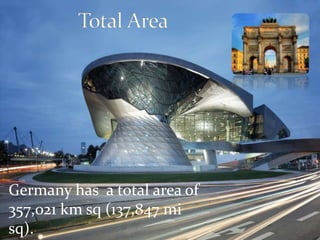
Germany has a total area of 
357,021 km sq (137,847 mi 
sq).
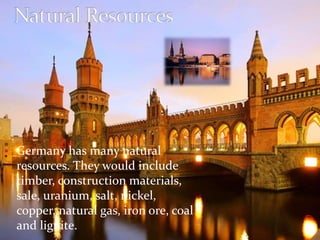
Germany has many natural 
resources. They would include 
timber, construction materials, 
sale, uranium, salt, nickel, 
copper, natural gas, iron ore, coal 
and lignite.
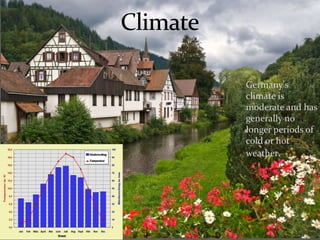
Germany's 
climate is 
moderate and has 
generally no 
longer periods of 
cold or hot 
weather.
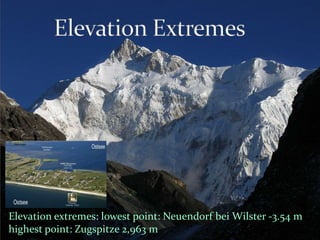
Elevation extremes: lowest point: Neuendorf bei Wilster -3.54 m 
highest point: Zugspitze 2,963 m
Germany ended 2013 with a 
population of 80,621,788 
people, which represents a 
decrease of 1,398,790 people 
compared to 2012
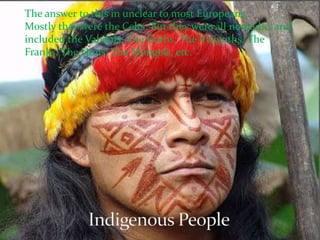
The answer to this in unclear to most Europeans. 
Mostly they were the Celts. But they were all nomadic, and 
included the Vandals, The Goths, The Visigoths, The 
Franks, The Huns, The Mongols, etc.
Christianity is the largest 
religion in Germany with 62% 
of the total population
The primary language in Germany is 
German. Or Deutch
Government type: federal republic
• In the 19th century, Germany was 
not a unified country, what made 
the country have much conflicts 
and have lot of poverty. 
• Adolf Hitler was a German 
dictator, who led the Reichstag 
elections. 
He led the German army to erase 
the Jews from the earth surface. 
He killed more than 27 million 
soldiers and 23 million civilians. 
17 million Jews were killed, 8 
million Poles, 1.5 million political 
dissidents. 500,000 Gypsies, 300,000 
disabled and 2,000 Jehovah's 
Witnesses died by Nazi troops.
The sports in Germany are like in any other 
countries, but they have a great football 
team, so good they won the world cup many 
times like 2014.
The Alpine Ibex is a species of wild goat that lives in 
the mountains of the European Alps. Ibexes are 
strictly herbivorous and survive on a diet of grass, 
moss, flowers, leaves and twigs. If leaves and shoots 
are out of reach, Ibexes often stand on their rear 
legs to reach this food.
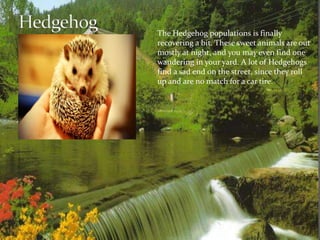
The Hedgehog populations is finally 
recovering a bit. These sweet animals are out 
mostly at night, and you may even find one 
wandering in your yard. A lot of Hedgehogs 
find a sad end on the street, since they roll 
up and are no match for a car tire.
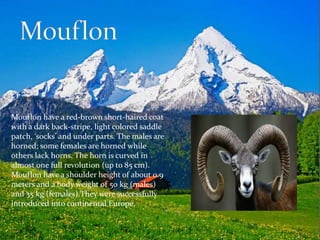
Mouflon have a red-brown short-haired coat 
with a dark back-stripe, light colored saddle 
patch, ‘socks’ and under parts. The males are 
horned; some females are horned while 
others lack horns. The horn is curved in 
almost one full revolution (up to 85 cm). 
Mouflon have a shoulder height of about 0.9 
meters and a body weight of 50 kg (males) 
and 35 kg (females).They were successfully 
introduced into continental Europe.
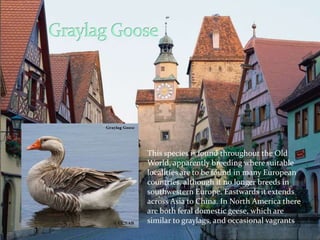
This species is found throughout the Old 
World, apparently breeding where suitable 
localities are to be found in many European 
countries, although it no longer breeds in 
southwestern Europe. Eastwards it extends 
across Asia to China. In North America there 
are both feral domestic geese, which are 
similar to graylags, and occasional vagrants
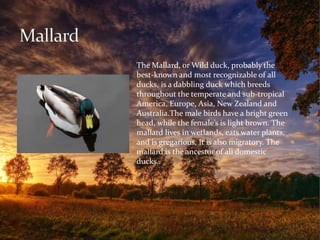
The Mallard, or Wild duck, probably the 
best-known and most recognizable of all 
ducks, is a dabbling duck which breeds 
throughout the temperate and sub-tropical 
America, Europe, Asia, New Zealand and 
Australia.The male birds have a bright green 
head, while the female’s is light brown. The 
mallard lives in wetlands, eats water plants, 
and is gregarious. It is also migratory. The 
mallard is the ancestor of all domestic 
ducks..
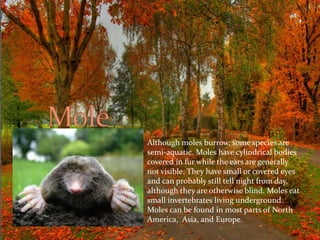
Although moles burrow, some species are 
semi-aquatic. Moles have cylindrical bodies 
covered in fur while the ears are generally 
not visible. They have small or covered eyes 
and can probably still tell night from day, 
although they are otherwise blind. Moles eat 
small invertebrates living underground. 
Moles can be found in most parts of North 
America, Asia, and Europe.
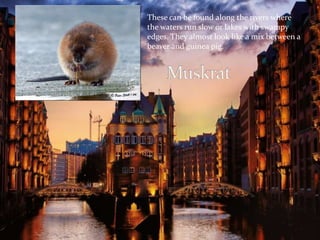
These can be found along the rivers where 
the waters run slow or lakes with swampy 
edges. They almost look like a mix between a 
beaver and guinea pig.
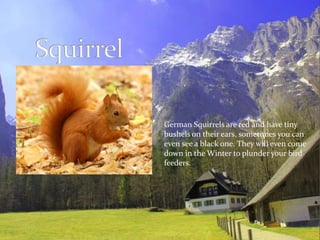
German Squirrels are red and have tiny 
bushels on their ears, sometimes you can 
even see a black one. They will even come 
down in the Winter to plunder your bird 
feeders.
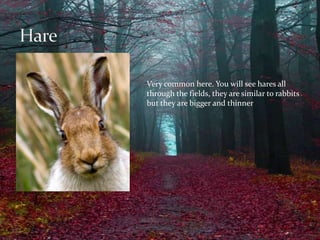
Very common here. You will see hares all 
through the fields, they are similar to rabbits 
but they are bigger and thinner
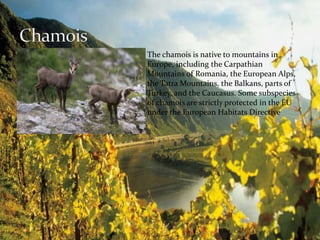
The chamois is native to mountains in 
Europe, including the Carpathian 
Mountains of Romania, the European Alps, 
the TatraMountains, the Balkans, parts of 
Turkey, and the Caucasus. Some subspecies 
of chamois are strictly protected in the EU 
under the European Habitats Directive

Germany

  • 1.
    By: Maria feMendez k. Alexandra Gonzales S. and Azra Ezpinosa V.
  • 3.
    Germany is locatedin western Europe, bordering the North Sea between France and Poland. Germany shares limits with Denmark and the Baltic Sea (north), Poland and the Czech Republic (east), Austria (southeast), Switzerland (south), France (southwest), Luxembourg, Belgium, and the Netherlands (west), and the North Sea (northwest)
  • 4.
    Germany has atotal area of 357,021 km sq (137,847 mi sq).
  • 5.
    Germany has manynatural resources. They would include timber, construction materials, sale, uranium, salt, nickel, copper, natural gas, iron ore, coal and lignite.
  • 6.
    Germany's climate is moderate and has generally no longer periods of cold or hot weather.
  • 7.
    Elevation extremes: lowestpoint: Neuendorf bei Wilster -3.54 m highest point: Zugspitze 2,963 m
  • 9.
    Germany ended 2013with a population of 80,621,788 people, which represents a decrease of 1,398,790 people compared to 2012
  • 10.
    The answer tothis in unclear to most Europeans. Mostly they were the Celts. But they were all nomadic, and included the Vandals, The Goths, The Visigoths, The Franks, The Huns, The Mongols, etc.
  • 11.
    Christianity is thelargest religion in Germany with 62% of the total population
  • 12.
    The primary languagein Germany is German. Or Deutch
  • 14.
  • 17.
    • In the19th century, Germany was not a unified country, what made the country have much conflicts and have lot of poverty. • Adolf Hitler was a German dictator, who led the Reichstag elections. He led the German army to erase the Jews from the earth surface. He killed more than 27 million soldiers and 23 million civilians. 17 million Jews were killed, 8 million Poles, 1.5 million political dissidents. 500,000 Gypsies, 300,000 disabled and 2,000 Jehovah's Witnesses died by Nazi troops.
  • 18.
    The sports inGermany are like in any other countries, but they have a great football team, so good they won the world cup many times like 2014.
  • 20.
    The Alpine Ibexis a species of wild goat that lives in the mountains of the European Alps. Ibexes are strictly herbivorous and survive on a diet of grass, moss, flowers, leaves and twigs. If leaves and shoots are out of reach, Ibexes often stand on their rear legs to reach this food.
  • 21.
    The Hedgehog populationsis finally recovering a bit. These sweet animals are out mostly at night, and you may even find one wandering in your yard. A lot of Hedgehogs find a sad end on the street, since they roll up and are no match for a car tire.
  • 22.
    Mouflon have ared-brown short-haired coat with a dark back-stripe, light colored saddle patch, ‘socks’ and under parts. The males are horned; some females are horned while others lack horns. The horn is curved in almost one full revolution (up to 85 cm). Mouflon have a shoulder height of about 0.9 meters and a body weight of 50 kg (males) and 35 kg (females).They were successfully introduced into continental Europe.
  • 23.
    This species isfound throughout the Old World, apparently breeding where suitable localities are to be found in many European countries, although it no longer breeds in southwestern Europe. Eastwards it extends across Asia to China. In North America there are both feral domestic geese, which are similar to graylags, and occasional vagrants
  • 24.
    The Mallard, orWild duck, probably the best-known and most recognizable of all ducks, is a dabbling duck which breeds throughout the temperate and sub-tropical America, Europe, Asia, New Zealand and Australia.The male birds have a bright green head, while the female’s is light brown. The mallard lives in wetlands, eats water plants, and is gregarious. It is also migratory. The mallard is the ancestor of all domestic ducks..
  • 25.
    Although moles burrow,some species are semi-aquatic. Moles have cylindrical bodies covered in fur while the ears are generally not visible. They have small or covered eyes and can probably still tell night from day, although they are otherwise blind. Moles eat small invertebrates living underground. Moles can be found in most parts of North America, Asia, and Europe.
  • 26.
    These can befound along the rivers where the waters run slow or lakes with swampy edges. They almost look like a mix between a beaver and guinea pig.
  • 27.
    German Squirrels arered and have tiny bushels on their ears, sometimes you can even see a black one. They will even come down in the Winter to plunder your bird feeders.
  • 28.
    Very common here.You will see hares all through the fields, they are similar to rabbits but they are bigger and thinner
  • 29.
    The chamois isnative to mountains in Europe, including the Carpathian Mountains of Romania, the European Alps, the TatraMountains, the Balkans, parts of Turkey, and the Caucasus. Some subspecies of chamois are strictly protected in the EU under the European Habitats Directive