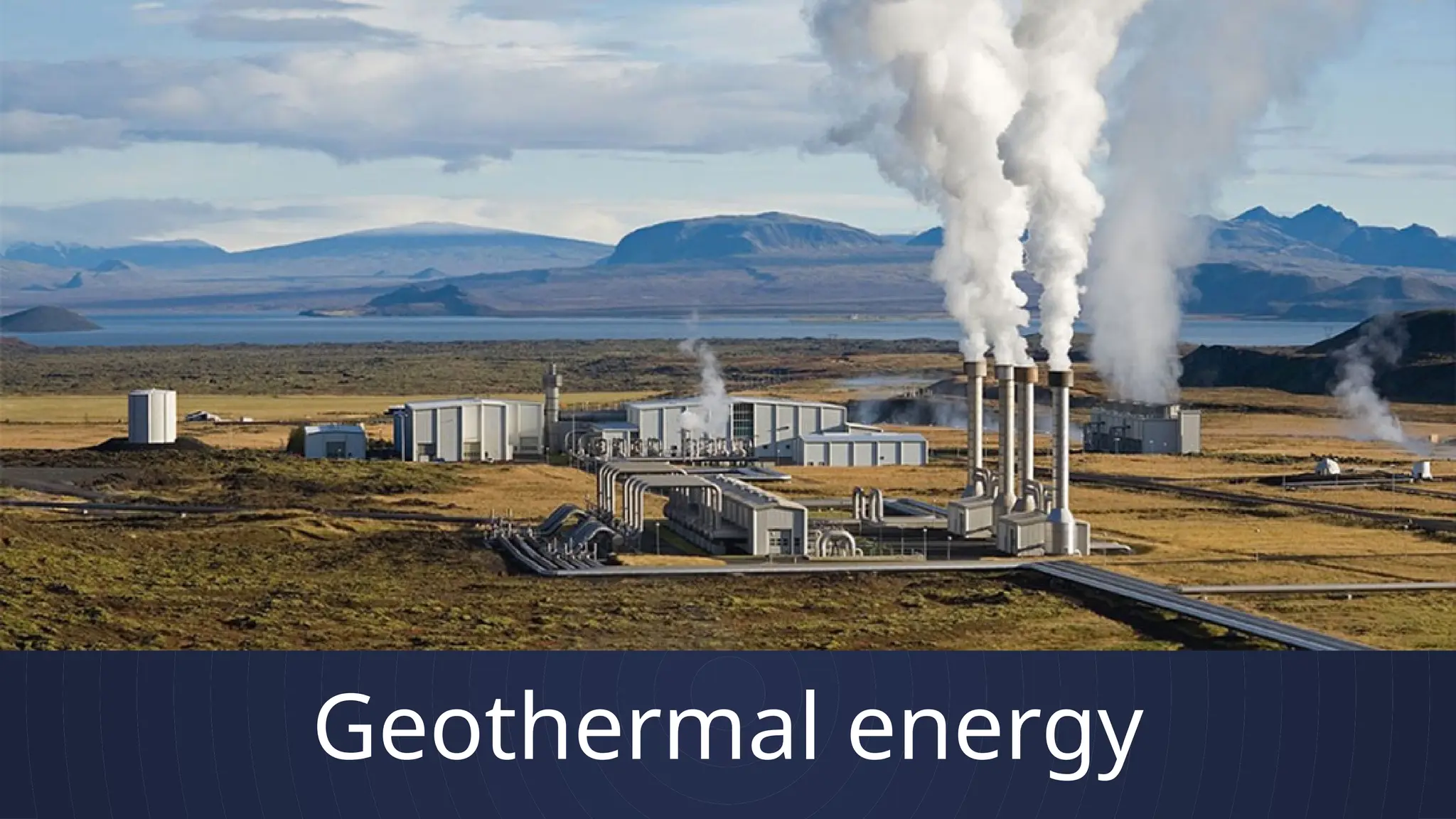
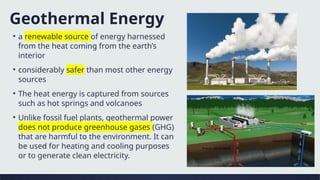
Geothermal Energy
▪ arenewable source of energy harnessed
from the heat coming from the earth’s
interior
▪ considerably safer than most other energy
sources
▪ The heat energy is captured from sources
such as hot springs and volcanoes
▪ Unlike fossil fuel plants, geothermal power
does not produce greenhouse gases (GHG)
that are harmful to the environment. It can
be used for heating and cooling purposes
or to generate clean electricity.
3.
▪ Wind energy-windmills
▪ Solar energy- solar collectors
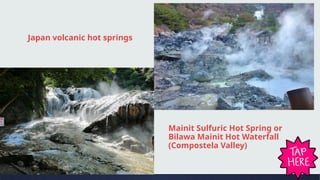
▪ Geothermal energy- hot springs and volcanoes
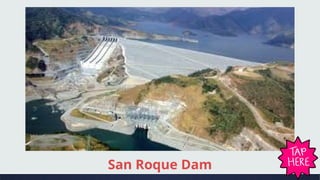
▪ Hydropower- dams and reservoirs
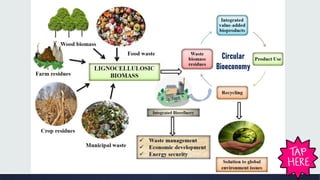
▪ Biomass energy- lignocellulosic biomass
Examples of Renewable Energy
6.
Mainit Sulfuric HotSpring or
Bilawa Mainit Hot Waterfall
(Compostela Valley)
Japan volcanic hot springs
Philippines currently hasseven geothermal
fields which supply about 12 percent of the
nation’s energy, with a long-term plan to nearly
double capacity by 2040.
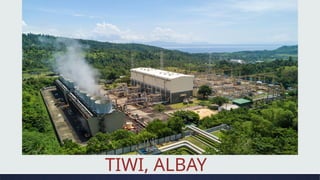
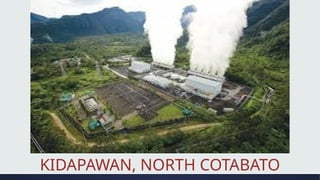
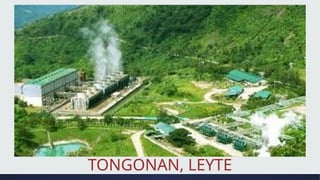
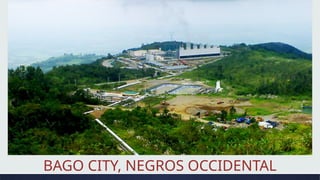
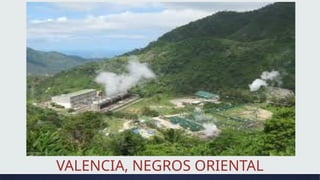
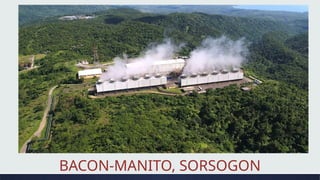
Geothermal power plants are used to generate
electricity in Tiwi (Albay), Kidapawan (North
Cotabato), Calaca (Laguna), Tongonan (Leyte),
Bago City (Negros Occidental), Valencia (Negros
Oriental), and Bacon (Sorsogon).
Is renewable energythe same as clean or green
energy?
The terms ‘green energy’, ‘clean energy’ and ‘renewable energy’ are often used
interchangeably, but there is a key difference between them.
Clean energy produces electricity without emissions. However, its manufacture
or maintenance can sometimes have a ‘carbon cost’. For example, natural
environments have to be cleared to create hydroelectric plants with a dam, and
the work to construct them often creates carbon emissions.
Green energy comes from totally natural sources, which have low or no
environmental impact in their creation or use.
They can both be renewable, which essentially means that they come from a
source that can’t be depleted.
22.
PROS AND CONSOF GEOTHERMAL ENERGY
There are many advantages of geothermal energy. It can be extracted
without burning a fossil fuel such as coal, gas, or oil. Geothermal
fields produce only about one-sixth of the carbon dioxide that a
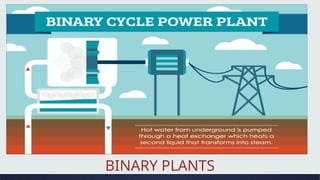
relatively clean natural-gas-fueled power plant produces. Binary
plants release essentially no emissions. Unlike solar and wind
energy, geothermal energy is always available, 365 days a year. It’s
also relatively inexpensive; savings from direct use can be as much
as 80 percent over fossil fuels.
But it has some environmental problems. The main concern is the
release of hydrogen sulfide, a gas that smells like rotten egg at low
concentrations. Another concern is the disposal of some geothermal
fluids, which may contain low levels of toxic materials. Although
geothermal sites are capable of providing heat for many decades,
eventually specific locations may cool down.










![Polymer [ बहुलक ] Chemistry Notes PDF - Irfanullah Mehar - JJ Sir Chemistry.pdf](https://cdn.slidesharecdn.com/ss_thumbnails/polymerchemistrynotespdf-irfanullahmehar-jjsirchemistry-260210172118-3f9b37f7-thumbnail.jpg?width=640&height=640&fit=bounds)


