
Getting Harsh Climate Schools to Near Net Zero in Colorado
Colorado?
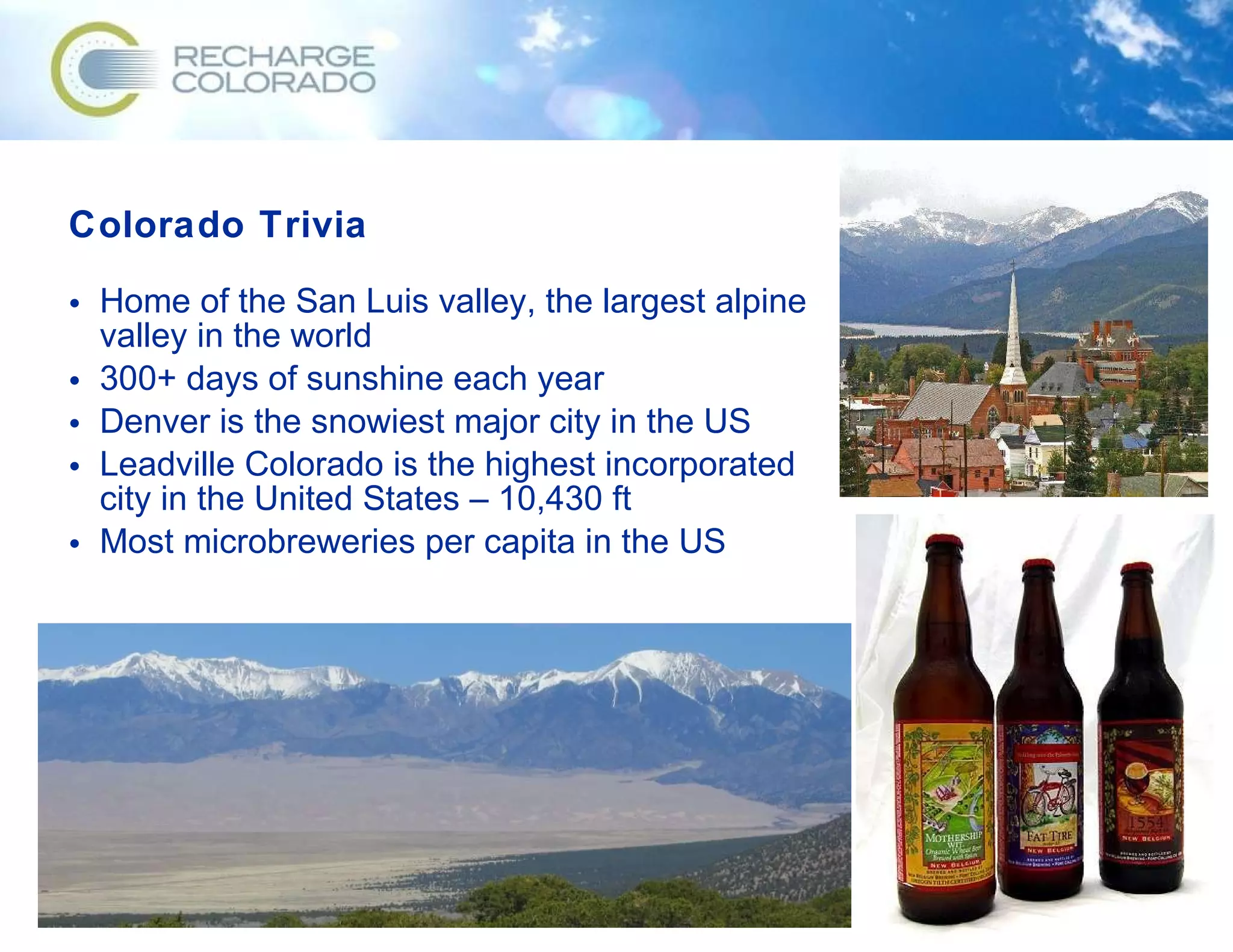
Colorado Trivia Home of the San Luis valley, the largest alpine valley in the world 300+ days of sunshine each year Denver is the snowiest major city in the US Leadville Colorado is the highest incorporated city in the United States – 10,430 ft Most microbreweries per capita in the US
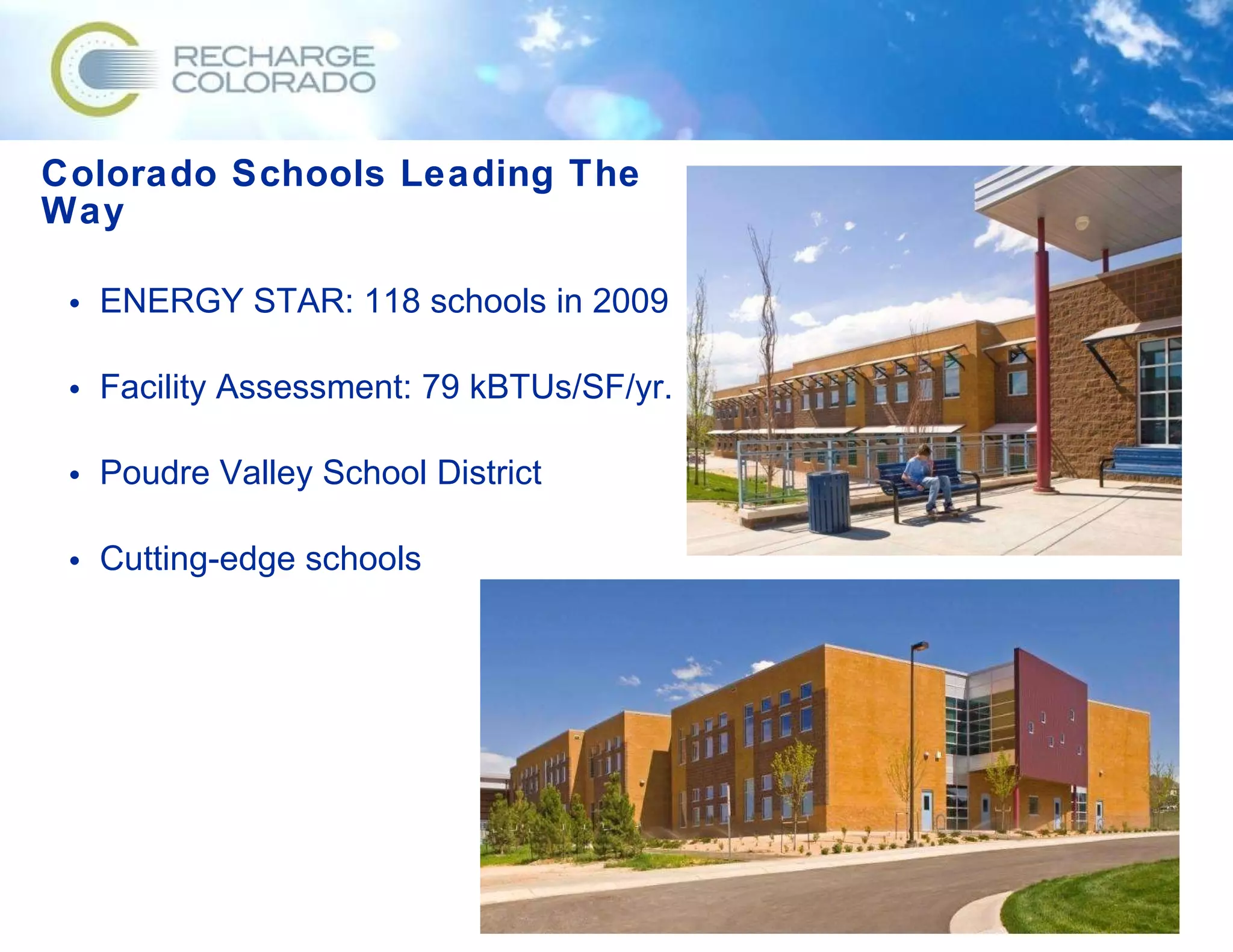
Colorado Schools Leading The Way ENERGY STAR: 118 schools in 2009 Facility Assessment: 79 kBTUs/SF/yr. Poudre Valley School District Cutting-edge schools
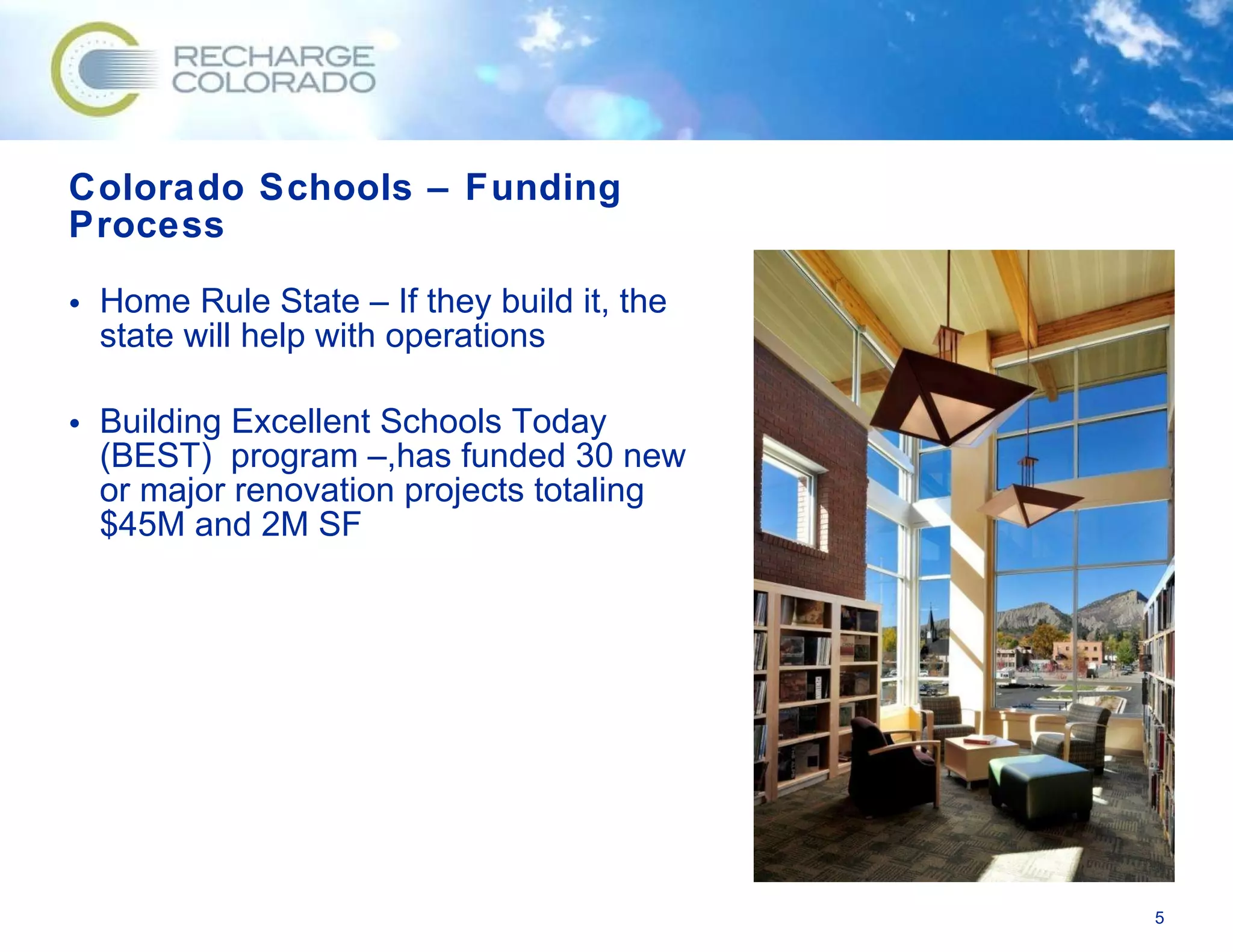
Colorado Schools – Funding Process  Home Rule State – If they build it, the state will help with operations Building Excellent Schools Today (BEST)  program –,has funded 30 new or major renovation projects totaling $45M and 2M SF
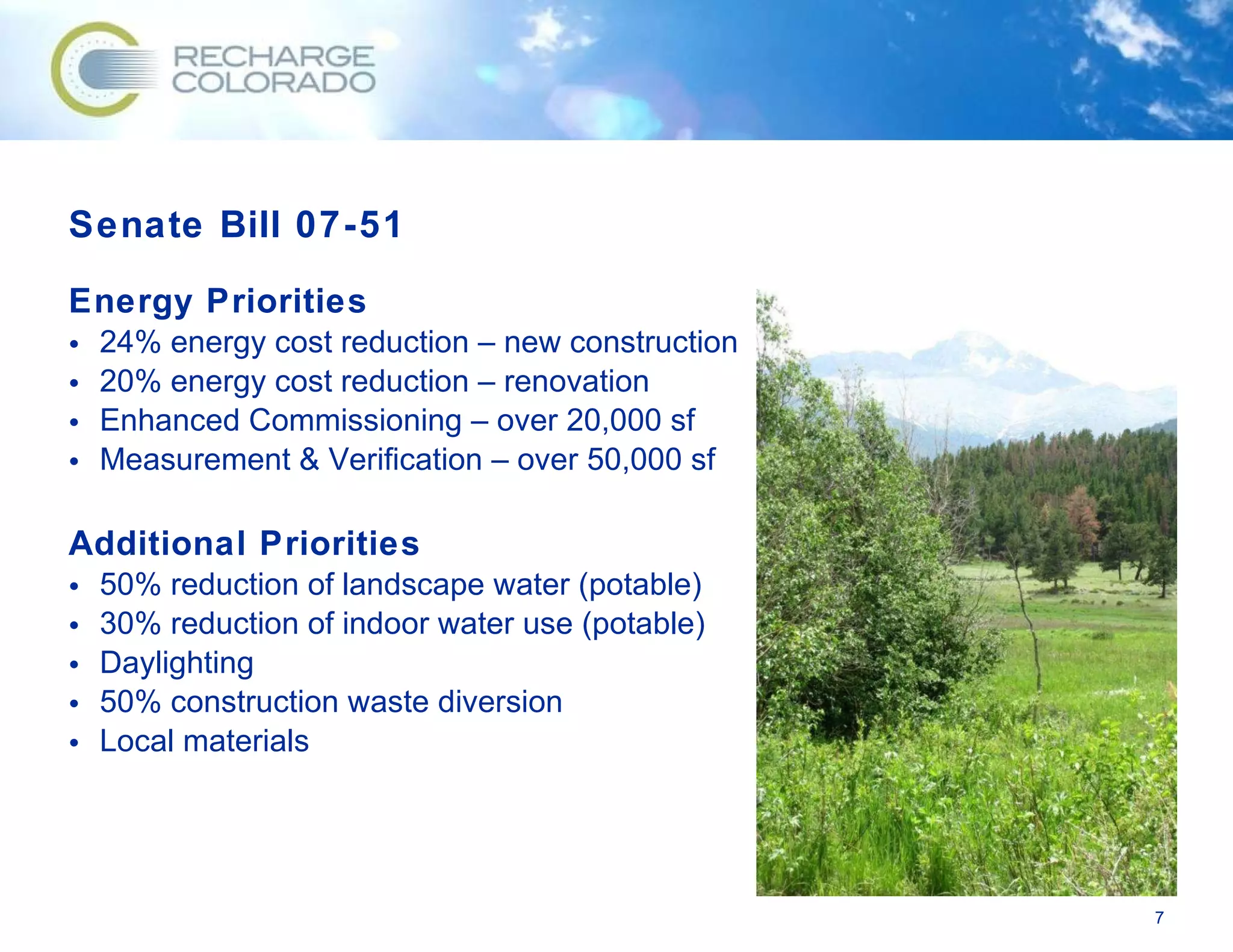
Colorado’s High Performance Certification Program (HPCP) Senate Bill 07-51 Developed Sept. 2007, updated Feb. 2010 Applies to Buildings 25% “State-Assisted” Over 5,000 square feet HVAC system Renovation exceeds 25% of current value Building Requirements Achieve LEED Gold or CO-CHPS Verified Leader Target Sustainable Priorities
Senate Bill 07-51 Energy Priorities 24% energy cost reduction – new construction 20% energy cost reduction – renovation Enhanced Commissioning – over 20,000 sf Measurement & Verification – over 50,000 sf Additional Priorities 50% reduction of landscape water (potable) 30% reduction of indoor water use (potable) Daylighting 50% construction waste diversion Local materials
CO-CHPS Colorado Collaborative for High Performance Schools Aligned with State minimum requirements Focus on commitment to operational cost savings Prerequisite: 25% energy cost savings compared to ASHRAE 90.1-2007 Prerequisite: Enhanced Commissioning
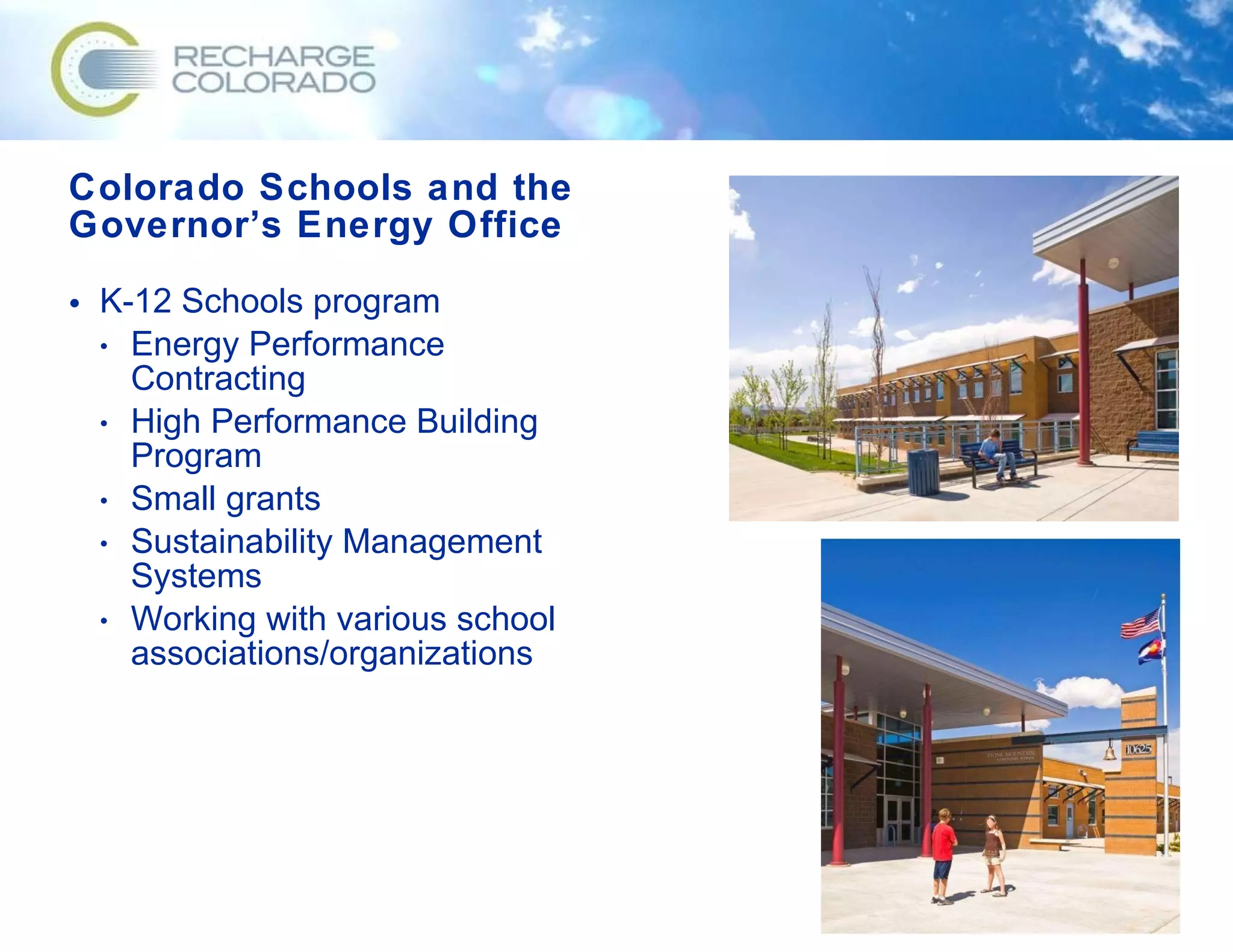
Colorado Schools and the Governor’s Energy Office K-12 Schools program Energy Performance Contracting High Performance Building Program Small grants Sustainability Management Systems  Working with various school associations/organizations
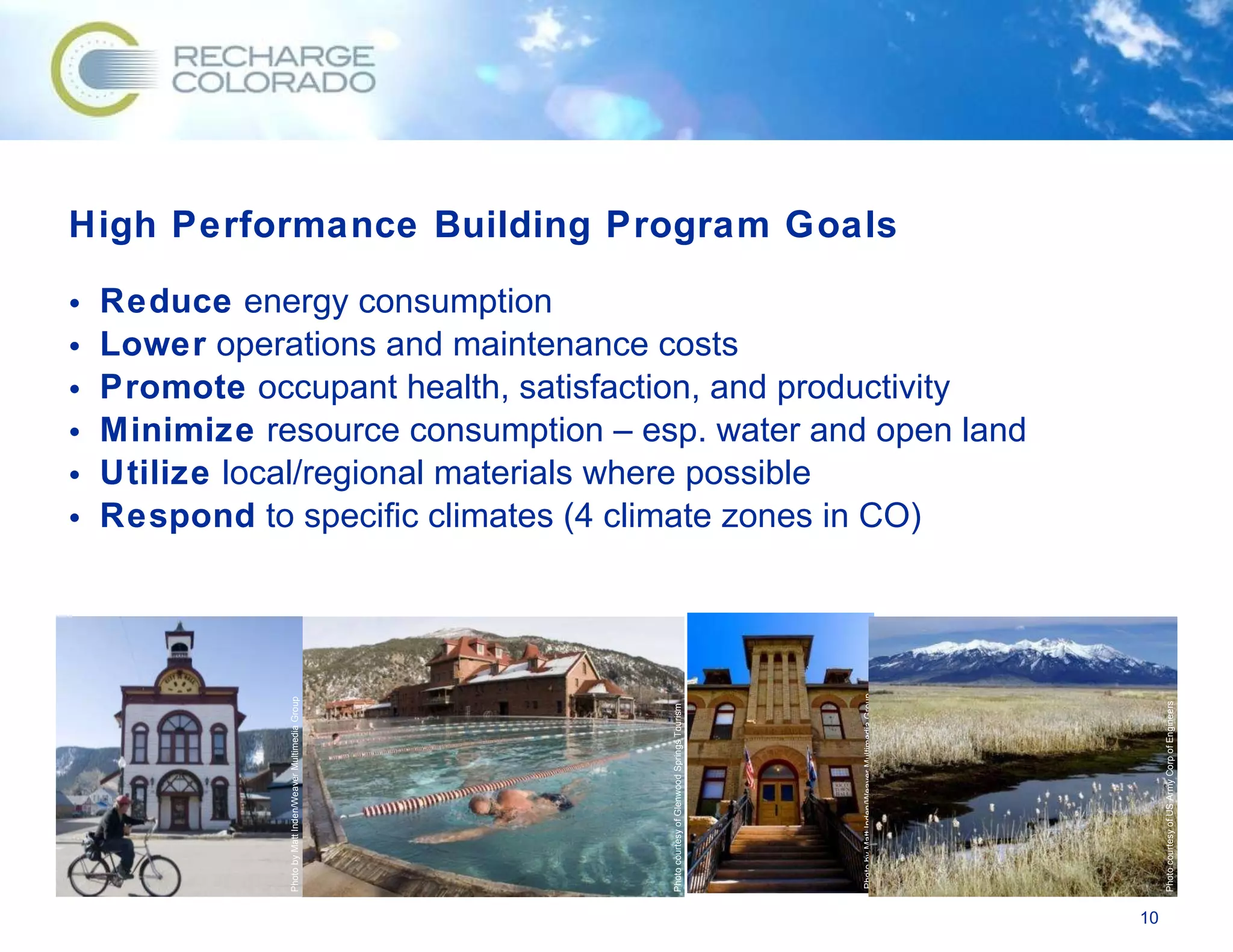
High Performance Building Program Goals Reduce  energy consumption Lower  operations and maintenance costs Promote  occupant health, satisfaction, and productivity Minimize  resource consumption – esp. water and open land Utilize  local/regional materials where possible Respond  to specific climates (4 climate zones in CO) Photo courtesy of Glenwood Springs Tourism Photo by Matt Inden/Weaver Multimedia Group Photo by Matt Inden/Weaver Multimedia Group Photo courtesy of US Army Corp of Engineers
High Performance Building Program Services Training & Education Webinars Workshops Tools Case Studies Partner Program Technical Assistance Set high performance design goals Identify funding sources Champion Energy Efficiency Review Plans and Models Comply with State Requirements
GEO_Net_Zero_Schools

GEO_Net_Zero_Schools

  • 1.
    Getting Harsh ClimateSchools to Near Net Zero in Colorado
  • 2.
  • 3.
    Colorado Trivia Homeof the San Luis valley, the largest alpine valley in the world 300+ days of sunshine each year Denver is the snowiest major city in the US Leadville Colorado is the highest incorporated city in the United States – 10,430 ft Most microbreweries per capita in the US
  • 4.
    Colorado Schools LeadingThe Way ENERGY STAR: 118 schools in 2009 Facility Assessment: 79 kBTUs/SF/yr. Poudre Valley School District Cutting-edge schools
  • 5.
    Colorado Schools –Funding Process Home Rule State – If they build it, the state will help with operations Building Excellent Schools Today (BEST) program –,has funded 30 new or major renovation projects totaling $45M and 2M SF
  • 6.
    Colorado’s High PerformanceCertification Program (HPCP) Senate Bill 07-51 Developed Sept. 2007, updated Feb. 2010 Applies to Buildings 25% “State-Assisted” Over 5,000 square feet HVAC system Renovation exceeds 25% of current value Building Requirements Achieve LEED Gold or CO-CHPS Verified Leader Target Sustainable Priorities
  • 7.
    Senate Bill 07-51Energy Priorities 24% energy cost reduction – new construction 20% energy cost reduction – renovation Enhanced Commissioning – over 20,000 sf Measurement & Verification – over 50,000 sf Additional Priorities 50% reduction of landscape water (potable) 30% reduction of indoor water use (potable) Daylighting 50% construction waste diversion Local materials
  • 8.
    CO-CHPS Colorado Collaborativefor High Performance Schools Aligned with State minimum requirements Focus on commitment to operational cost savings Prerequisite: 25% energy cost savings compared to ASHRAE 90.1-2007 Prerequisite: Enhanced Commissioning
  • 9.
    Colorado Schools andthe Governor’s Energy Office K-12 Schools program Energy Performance Contracting High Performance Building Program Small grants Sustainability Management Systems Working with various school associations/organizations
  • 10.
    High Performance BuildingProgram Goals Reduce energy consumption Lower operations and maintenance costs Promote occupant health, satisfaction, and productivity Minimize resource consumption – esp. water and open land Utilize local/regional materials where possible Respond to specific climates (4 climate zones in CO) Photo courtesy of Glenwood Springs Tourism Photo by Matt Inden/Weaver Multimedia Group Photo by Matt Inden/Weaver Multimedia Group Photo courtesy of US Army Corp of Engineers
  • 11.
    High Performance BuildingProgram Services Training & Education Webinars Workshops Tools Case Studies Partner Program Technical Assistance Set high performance design goals Identify funding sources Champion Energy Efficiency Review Plans and Models Comply with State Requirements

Editor's Notes

  • #2 Thank host, guest speakers, etc This is workshop #x of the HPBP This is a general overview of high performance building concepts, the geo hpb program, and high performance funding options. Additional general workshops will be held across the state. More specific technical workshops will be created and offered in addition to the general core knowledge and informational workshops such as this. Workshop is meant to be interactive. We know there are many people in Colorado who have already made great achievements in high performance building. We're here to share those successes, learn from the lessons learned and challenges within the room, and share our presentation. What you get out of it is what you put in. So, ask questions, interrupt, share your stories, etc.
  • #3 Why are we presenting about Colorado in a New York Conference called Urban Green? Colorado is emblematic of rugged beauty, and as you can see from our state flora and fauna we pride ourselves on thriving in extreme environments. We’re also a testing ground for new ideas, and the extreme environments we live in have forced us to some up with innovative solutions.
  • #4 Denver 60.3 inches/yr New York 28.8
  • #6 BEST L
  • #9 Colorado-Specific
  • #10 K-12: working with over 100 of 178 state school districts school districts Energy savings ES: 1. Michigan(135) 2. Colorado 3. New York (105)
  • #11 The unofficial goals of our High Performance Building Program are: reduce energy consumption, lower operations and maintenance costs, promote occupant health and satisfaction, minimize overall resource consumption, utilize local resources, respond to specific climates.
  • #12 Would You Like to be a Program Partner? Eligibility Building ownership by public entity Project in Schematic Design (SD) phase or Planning Support & Assist: • Office of State Architect (OSA) • CDE Building Excellent Schools Today (BEST) • Department of Local Affairs (DOLA) Technical Assistance to Public Projects Training & Education Workshop Topics: • Energy Efficient Design in K-12, Offices • Green Building • Low Energy Envelope Construction • Energy Efficient Mechanical System Design • Building Operators Training Technical Assistance Provided by the HPBP Set High Performance Design Goals Develop the Owners Project Requirements Identify Funding Sources Evaluate Options Champion Energy Efficiency Review Energy Modeling Reports Review Cost Estimates Confirm Meeting HPCP Requirements
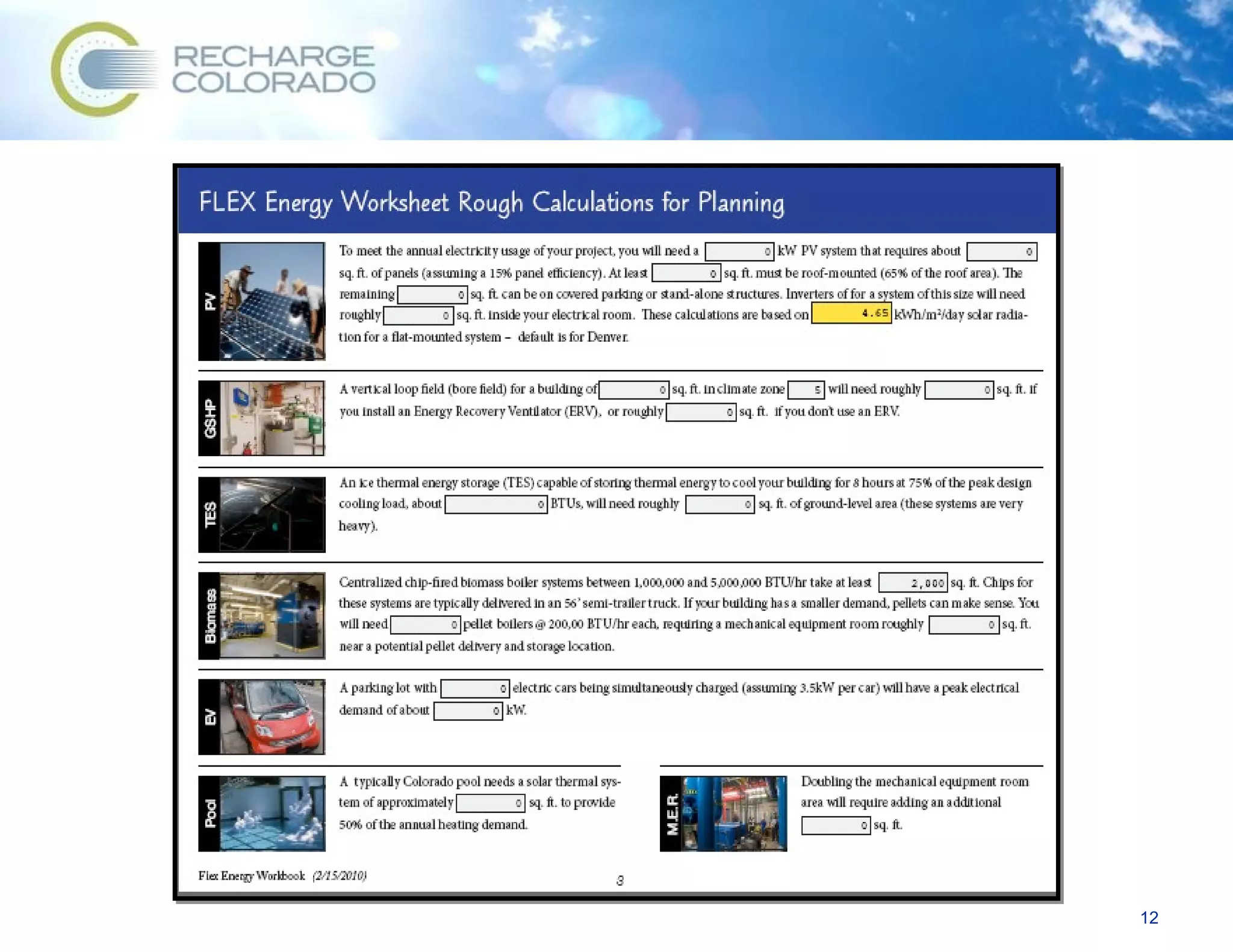
  • #13 Future energy sources Biomass Photovoltaics Ground source heat pump New and to be developed Plan for future equipment Locate future equipment Size structure for future dead loads Understand trade-offs Adaptability Be able to embrace new technology easily Upgrade equipment as funding becomes available Energy costs expected rise Benefits of on site generation Reduction of transmission losses Health Peak demand Synergies with alternate fuel vehicles Use of regionally available fuel sources