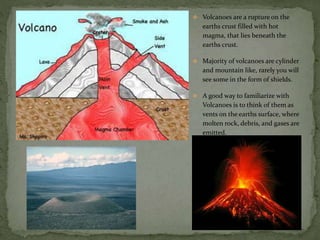
 Volcanoes are a rupture on the
earths crust filled with hot
magma, that lies beneath the
earths crust.
 Majority of volcanoes are cylinder
and mountain like, rarely you will
see some in the form of shields.
 A good way to familiarize with
Volcanoes is to think of them as
vents on the earths surface, where
molten rock, debris, and gases are
emitted.
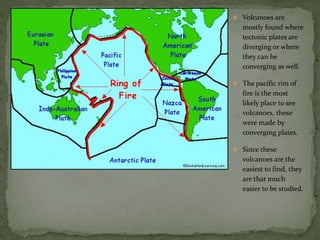
 Volcanoes are
mostly found where
tectonic plates are
diverging or where
they can be
converging as well.
 The pacific rim of
fire is the most
likely place to see
volcanoes, these
were made by
converging plates.
 Since these
volcanoes are the
easiest to find, they
are that much
easier to be studied.
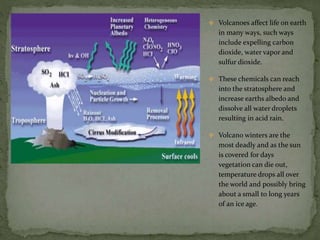
 Volcanoes affect life on earth
in many ways, such ways
include expelling carbon
dioxide, water vapor and
sulfur dioxide.
 These chemicals can reach
into the stratosphere and
increase earths albedo and
dissolve all water droplets
resulting in acid rain.
 Volcano winters are the
most deadly and as the sun
is covered for days
vegetation can die out,
temperature drops all over
the world and possibly bring
about a small to long years
of an ice age.
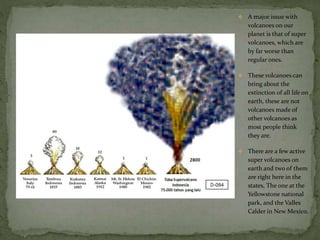
 A major issue with
volcanoes on our
planet is that of super
volcanoes, which are
by far worse than
regular ones.
 These volcanoes can
bring about the
extinction of all life on
earth, these are not
volcanoes made of
other volcanoes as
most people think
they are.
 There are a few active
super volcanoes on
earth and two of them
are right here in the
states, The one at the
Yellowstone national
park, and the Valles
Calder in New Mexico.
 There really is no
solution to
volcanoes as some
are not all bad, some
small volcanoes
actually help the
earth.
 Certain volcanoes
when erupted can
leave the lands
fertile and easier to
harvest and grow
certain crops.
 One big benefit is
that of lava pouring
into the ocean and
hardening to form
new islands.

Geo101 volcanoe project

  • 2.
     Volcanoes area rupture on the earths crust filled with hot magma, that lies beneath the earths crust.  Majority of volcanoes are cylinder and mountain like, rarely you will see some in the form of shields.  A good way to familiarize with Volcanoes is to think of them as vents on the earths surface, where molten rock, debris, and gases are emitted.
  • 3.
     Volcanoes are mostlyfound where tectonic plates are diverging or where they can be converging as well.  The pacific rim of fire is the most likely place to see volcanoes, these were made by converging plates.  Since these volcanoes are the easiest to find, they are that much easier to be studied.
  • 4.
     Volcanoes affectlife on earth in many ways, such ways include expelling carbon dioxide, water vapor and sulfur dioxide.  These chemicals can reach into the stratosphere and increase earths albedo and dissolve all water droplets resulting in acid rain.  Volcano winters are the most deadly and as the sun is covered for days vegetation can die out, temperature drops all over the world and possibly bring about a small to long years of an ice age.
  • 5.
     A majorissue with volcanoes on our planet is that of super volcanoes, which are by far worse than regular ones.  These volcanoes can bring about the extinction of all life on earth, these are not volcanoes made of other volcanoes as most people think they are.  There are a few active super volcanoes on earth and two of them are right here in the states, The one at the Yellowstone national park, and the Valles Calder in New Mexico.
  • 6.
     There reallyis no solution to volcanoes as some are not all bad, some small volcanoes actually help the earth.  Certain volcanoes when erupted can leave the lands fertile and easier to harvest and grow certain crops.  One big benefit is that of lava pouring into the ocean and hardening to form new islands.