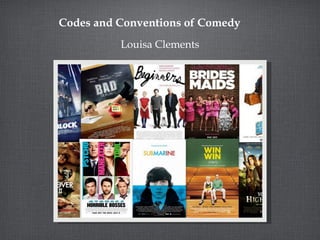
Codes and Conventions of Comedy
          Louisa Clements
Comedy

“Comedy films are supposed to make the audience
laugh.”

    Effect can range from a “wry smile” to shrieks of
    laughter

    Different audiences laugh at different types of
    comedy

    Stereotypes play a big role in comedies
Codes and Conventions

Two general formats: comedian-led and situation-
comedies

Very fluid genre

Hybrids exist - musical-comedy, comedy-thriller

Subgenres: romantic comedy, teen/coming of age
comedy.

Slapstick, deadpan, verbal comedy, screwball, dark
comedy, parody/spoof
Comedy effect


The comedy effect is produced by two types of
performance skills:

1. Delivering the “joke” or “gag”

2. Acting out a social drama or “situation” of some
kind
Gags
Can be verbal or visual (sight
gag)

Usually the performance of
the gag that makes it funny -
not the story itself (timing)

Found often in slapstick
comedies such as Charlie
Chaplin

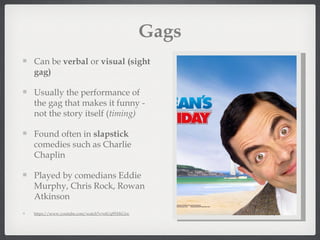
Played by comedians Eddie
Murphy, Chris Rock, Rowan
Atkinson
https://www.youtube.com/watch?v=etUq95XKGiw
Gag-related genres

Slapstick - very physical comedy developed during the
silent film era

Gross-out - Modern comedy. Gags are meant to “break
taboos” American Pie or There’s Something About Mary

Screwball - Developed in the 30s. Central relationship is
disruptive and creates a breakdown of law and order.

Farce - Often involves mistaken identity and sexual
infidelity - opening/closing doors, hiding under beds,
wearing disguises etc.
Situational COmedies

Character placed in a strange situation or there is a mistaken identity
situation

   Boy invited to girlfriend’s house to meet her parents

Performance emphasizes realism rather than the display of the “gag”

Played by actors - Julia Roberts, George Clooney, Bill Murray

Observational comedies - humour coming from the odd things people do

Character comedy - humour is the general interaction of characters - The
Office
Situational genres

Social comedy - Confusions caused by clash of
cultures and classes (often found in British film or
TV)

Comedy of manners - Jane Austen novels Sense and
Sensibility or modern Four Weddings and a Funeral

Romantic Comedy - How To Lose a Guy in 10 Days

Teen Comedy - Defined by its audience, Clueless or
Ten Things I Hate About You

Genre presentation

  • 1.
    Codes and Conventionsof Comedy Louisa Clements
  • 2.
    Comedy “Comedy films aresupposed to make the audience laugh.” Effect can range from a “wry smile” to shrieks of laughter Different audiences laugh at different types of comedy Stereotypes play a big role in comedies
  • 3.
    Codes and Conventions Twogeneral formats: comedian-led and situation- comedies Very fluid genre Hybrids exist - musical-comedy, comedy-thriller Subgenres: romantic comedy, teen/coming of age comedy. Slapstick, deadpan, verbal comedy, screwball, dark comedy, parody/spoof
  • 4.
    Comedy effect The comedyeffect is produced by two types of performance skills: 1. Delivering the “joke” or “gag” 2. Acting out a social drama or “situation” of some kind
  • 5.
    Gags Can be verbalor visual (sight gag) Usually the performance of the gag that makes it funny - not the story itself (timing) Found often in slapstick comedies such as Charlie Chaplin Played by comedians Eddie Murphy, Chris Rock, Rowan Atkinson https://www.youtube.com/watch?v=etUq95XKGiw
  • 6.
    Gag-related genres Slapstick -very physical comedy developed during the silent film era Gross-out - Modern comedy. Gags are meant to “break taboos” American Pie or There’s Something About Mary Screwball - Developed in the 30s. Central relationship is disruptive and creates a breakdown of law and order. Farce - Often involves mistaken identity and sexual infidelity - opening/closing doors, hiding under beds, wearing disguises etc.
  • 7.
    Situational COmedies Character placedin a strange situation or there is a mistaken identity situation Boy invited to girlfriend’s house to meet her parents Performance emphasizes realism rather than the display of the “gag” Played by actors - Julia Roberts, George Clooney, Bill Murray Observational comedies - humour coming from the odd things people do Character comedy - humour is the general interaction of characters - The Office
  • 8.
    Situational genres Social comedy- Confusions caused by clash of cultures and classes (often found in British film or TV) Comedy of manners - Jane Austen novels Sense and Sensibility or modern Four Weddings and a Funeral Romantic Comedy - How To Lose a Guy in 10 Days Teen Comedy - Defined by its audience, Clueless or Ten Things I Hate About You