GENODERMATOSES- DNA
REPAIR DEFECTS
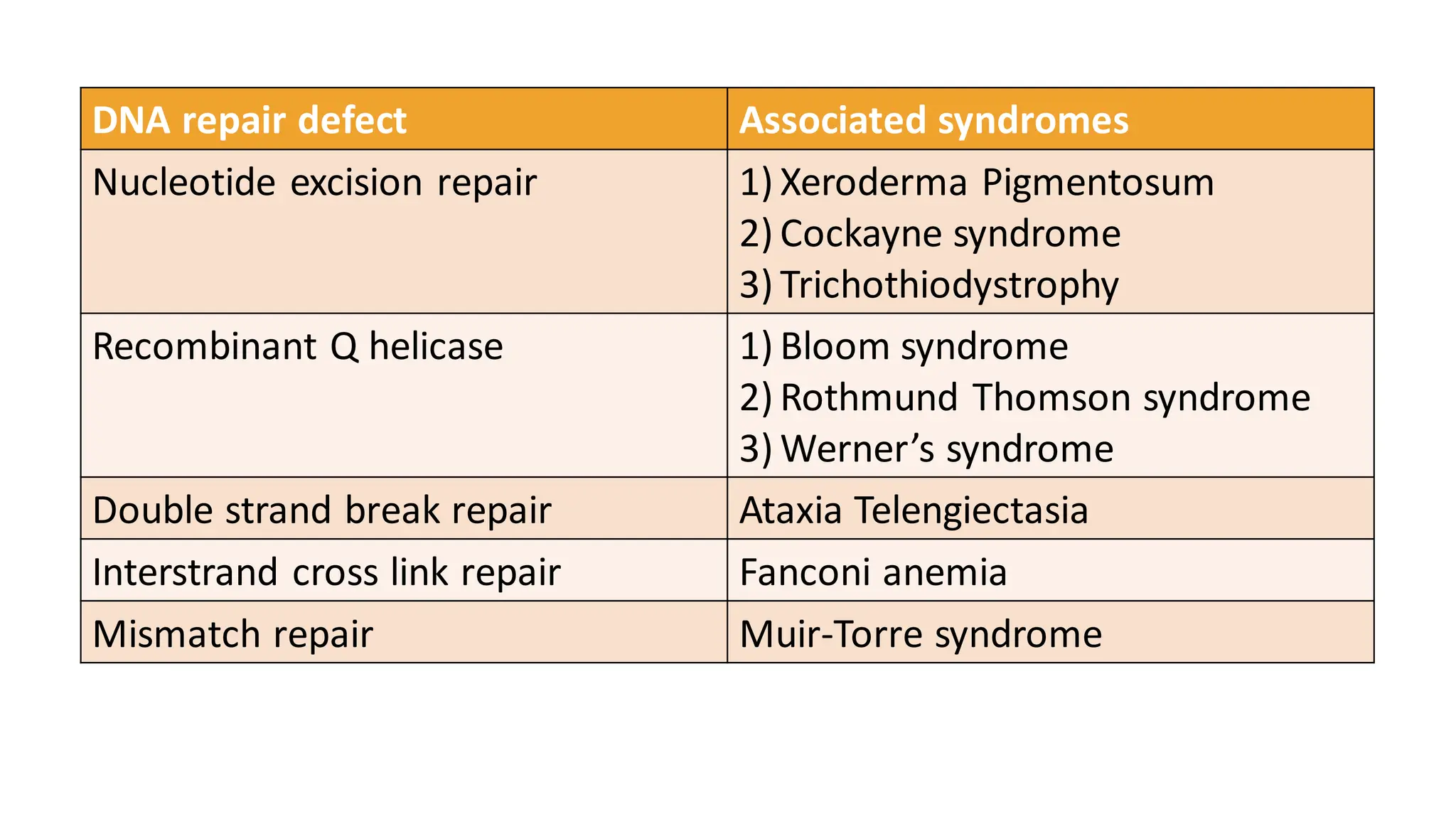
DNA repair defect Associated syndromes
Nucleotide excision repair 1) Xeroderma Pigmentosum
2) Cockayne syndrome
3) Trichothiodystrophy
Recombinant Q helicase 1) Bloom syndrome
2) Rothmund Thomson syndrome
3) Werner’s syndrome
Double strand break repair Ataxia Telengiectasia
Interstrand cross link repair Fanconi anemia
Mismatch repair Muir-Torre syndrome
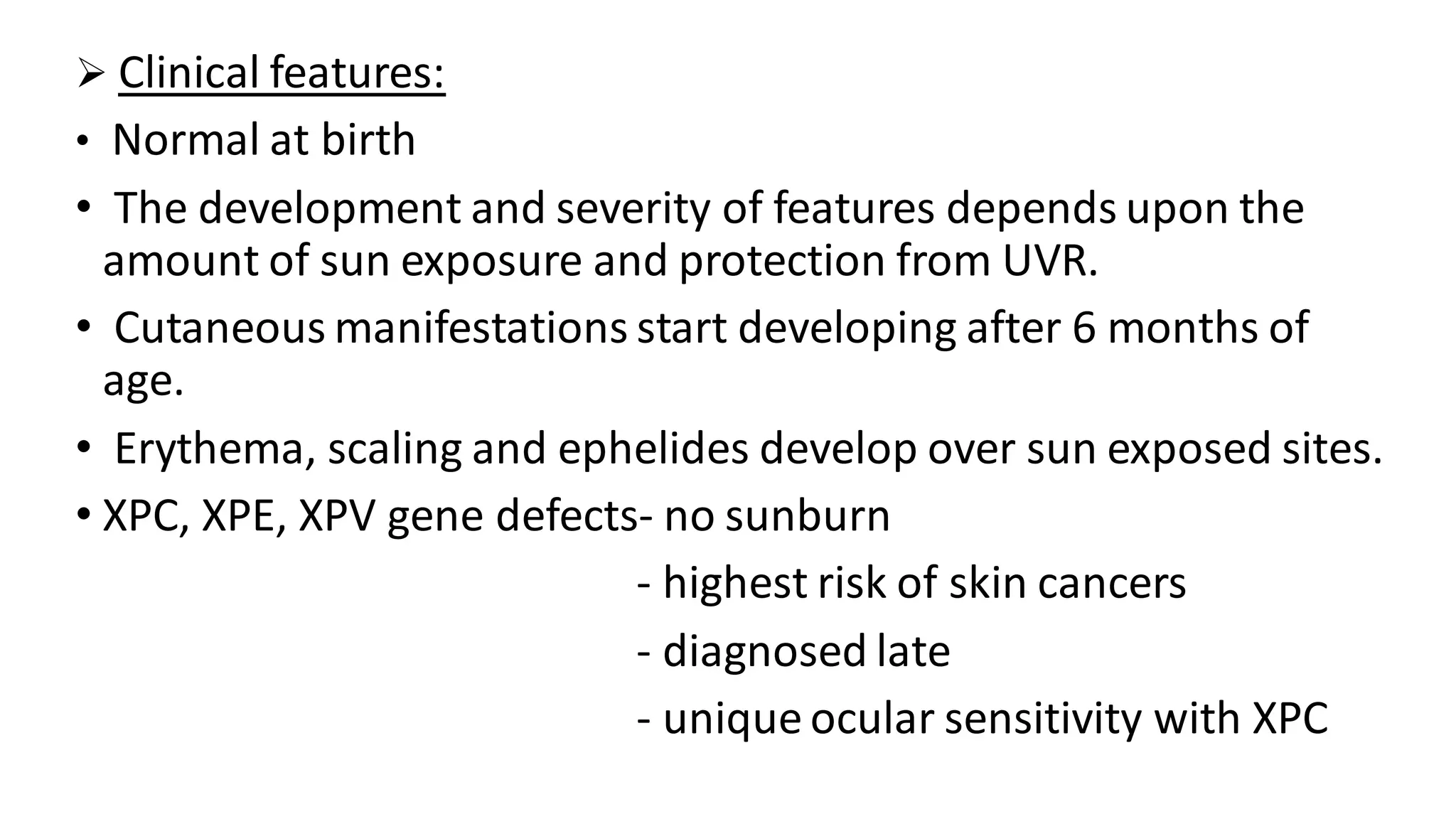
XERODERMA PIGMENTOSUM
• Dry, pigmented skin
• AR
• 1 in 10,000-30,000
• Genes involved- XPA-XPG and XPV variant (8 subtypes of XP).
• Defect is in NER
• GG-NER pathway involves XPC, XPE
• TC-NER pathway involves CSA, CSB
• Core NER pathway involves XPA, B, D, F, G genes
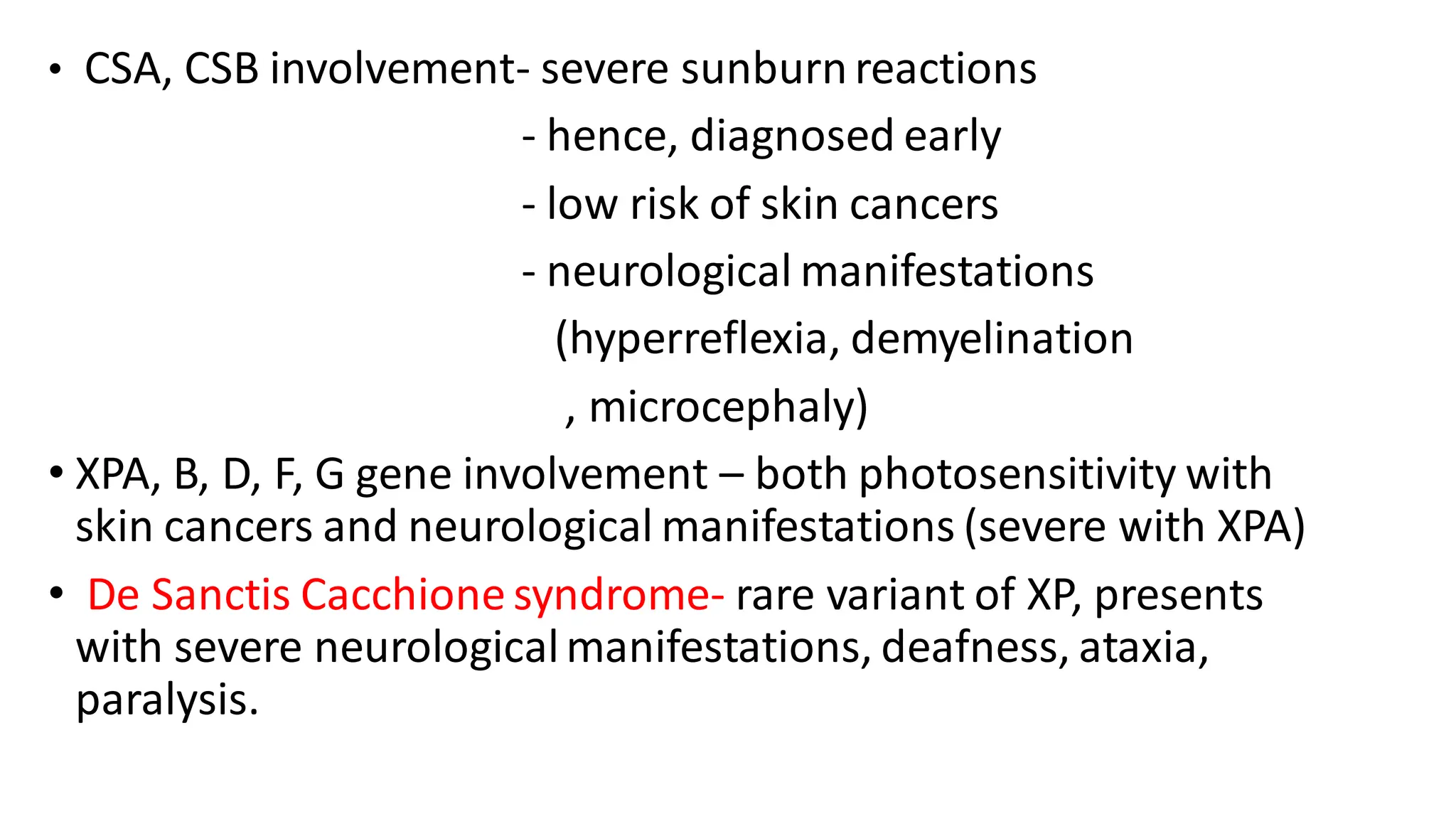
➢ Clinical features:
• Normal at birth
• The development and severity of features depends upon the
amount of sun exposure and protection from UVR.
• Cutaneous manifestations start developing after 6 months of
age.
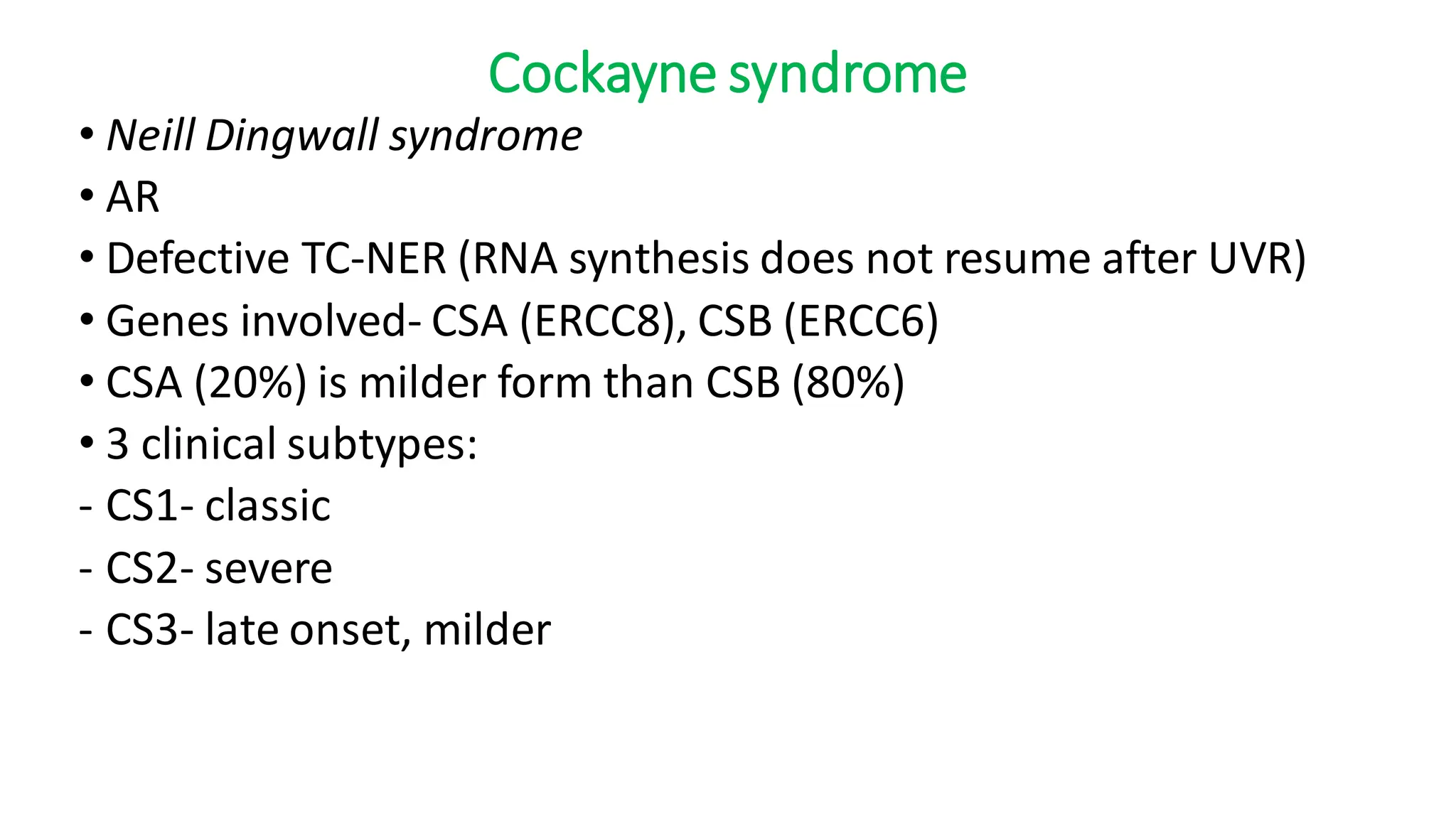
• Erythema, scaling and ephelides develop over sun exposed sites.
• XPC, XPE, XPV gene defects- no sunburn
- highest risk of skin cancers
- diagnosed late
- unique ocular sensitivity with XPC
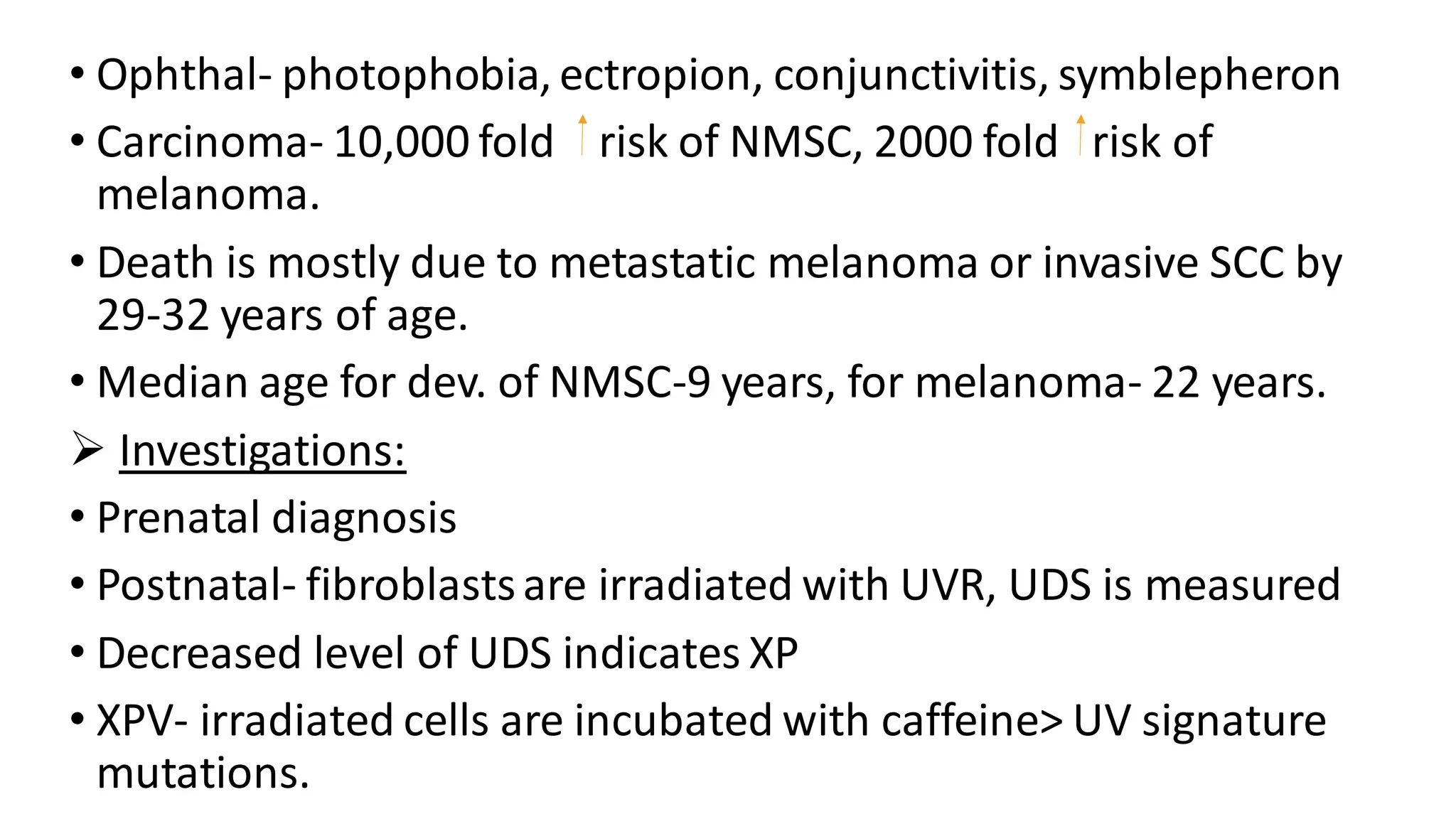
• CSA, CSB involvement- severe sunburnreactions
- hence, diagnosed early
- low risk of skin cancers
- neurological manifestations
(hyperreflexia, demyelination
, microcephaly)
• XPA, B, D, F, G gene involvement – both photosensitivity with
skin cancers and neurological manifestations (severe with XPA)
• De Sanctis Cacchione syndrome- rare variant of XP, presents
with severe neurologicalmanifestations, deafness, ataxia,
paralysis.
• Ophthal- photophobia, ectropion, conjunctivitis, symblepheron
• Carcinoma- 10,000 fold risk of NMSC, 2000 fold risk of
melanoma.
• Death is mostly due to metastatic melanoma or invasive SCC by
29-32 years of age.
• Median age for dev. of NMSC-9 years, for melanoma- 22 years.
➢ Investigations:
• Prenatal diagnosis
• Postnatal- fibroblastsare irradiated with UVR, UDS is measured
• Decreased level of UDS indicates XP
• XPV- irradiated cells are incubated with caffeine> UV signature
mutations.
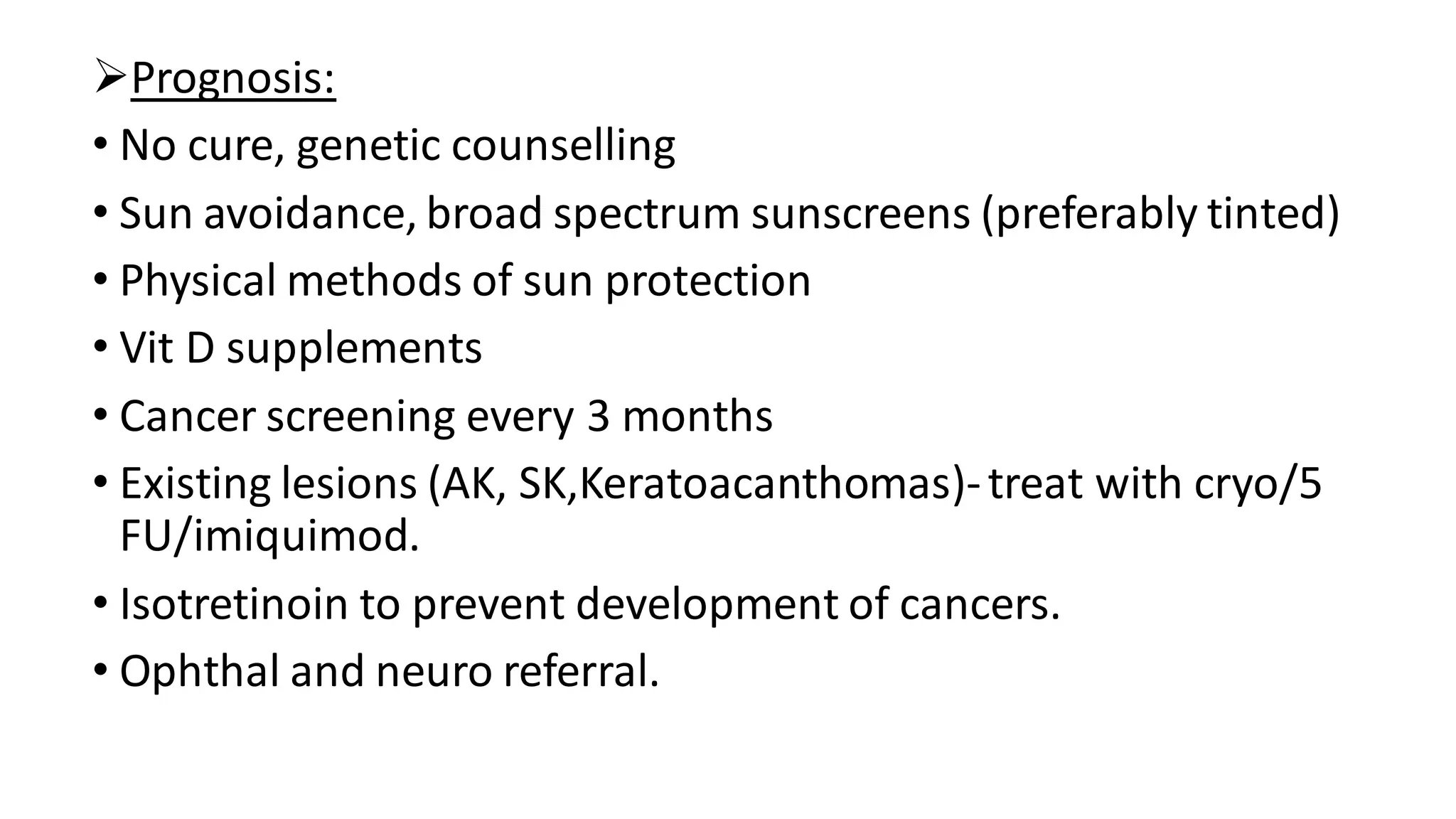
➢Prognosis:
• No cure, genetic counselling
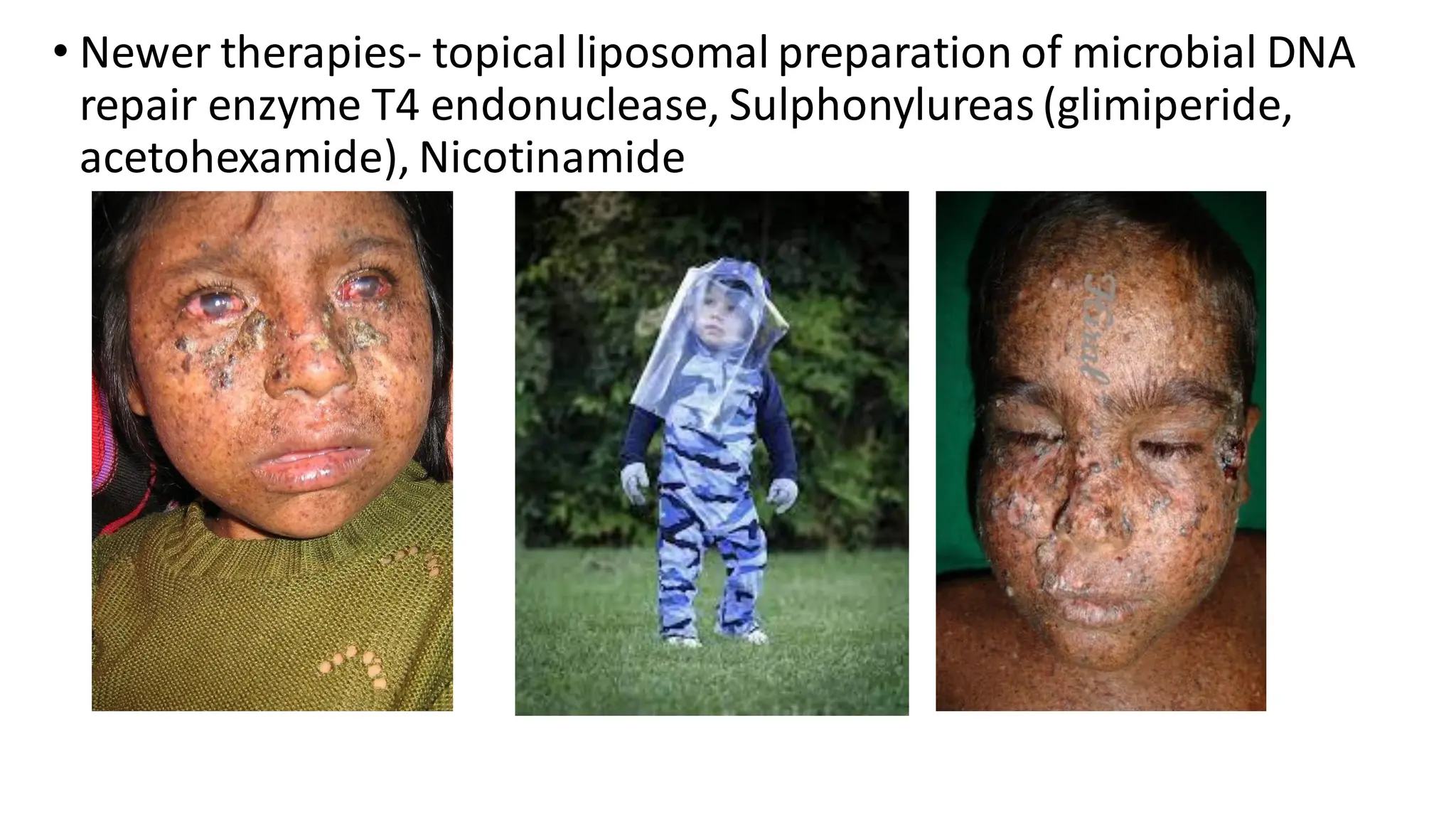
• Sun avoidance, broad spectrum sunscreens (preferably tinted)
• Physical methods of sun protection
• Vit D supplements
• Cancer screening every 3 months
• Existing lesions (AK, SK,Keratoacanthomas)-treat with cryo/5
FU/imiquimod.
• Isotretinoin to prevent development of cancers.
• Ophthal and neuro referral.
• Newer therapies- topical liposomal preparation of microbial DNA
repair enzyme T4 endonuclease, Sulphonylureas (glimiperide,
acetohexamide), Nicotinamide
Cockayne syndrome
• Neill Dingwall syndrome
• AR
• Defective TC-NER (RNA synthesis does not resume after UVR)
• Genes involved- CSA (ERCC8), CSB (ERCC6)
• CSA (20%) is milder form than CSB (80%)
• 3 clinical subtypes:
- CS1- classic
- CS2- severe
- CS3- late onset, milder
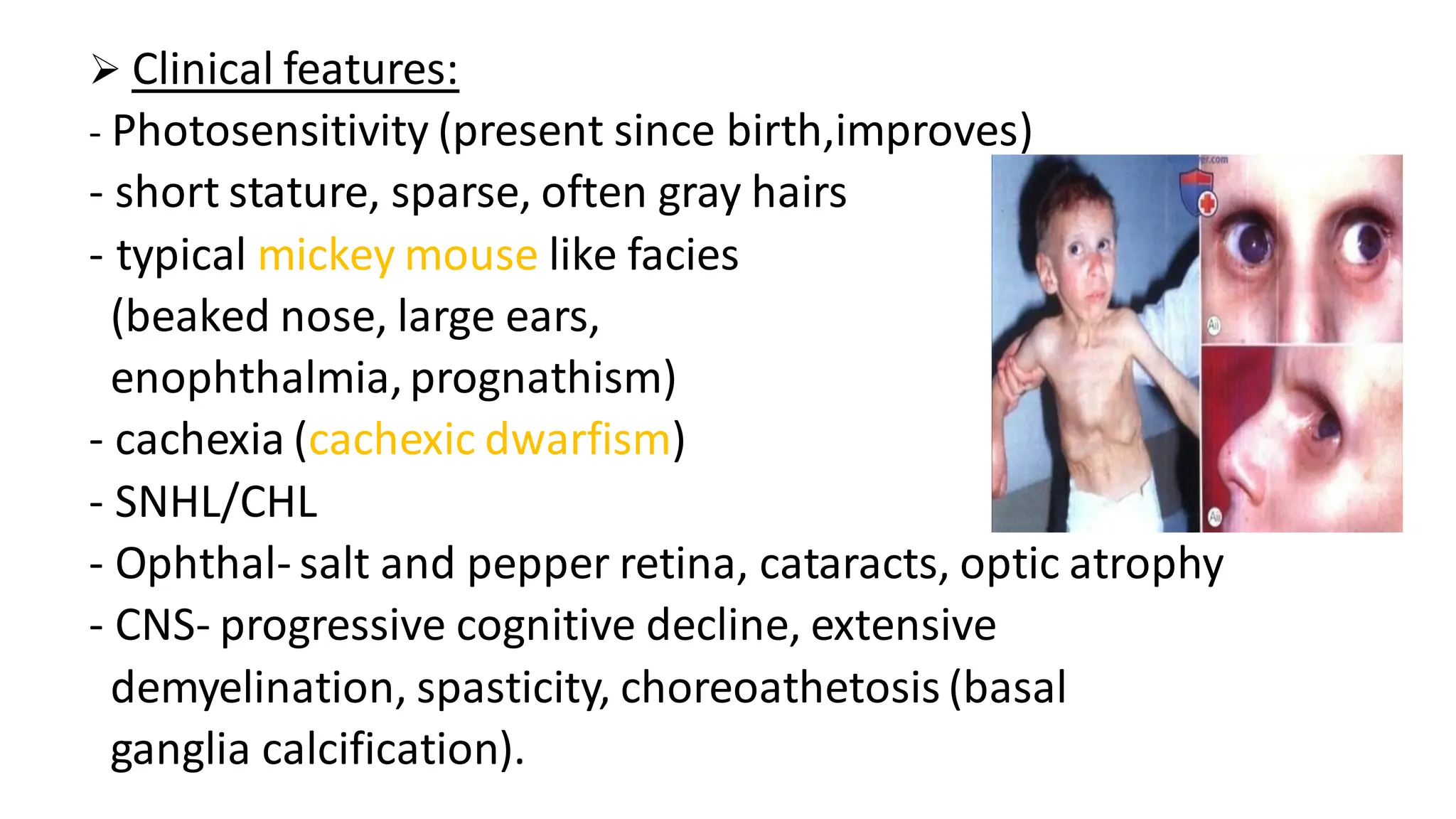
➢ Clinical features:
- Photosensitivity (present since birth,improves)
- short stature, sparse, often gray hairs
- typical mickey mouse like facies
(beaked nose, large ears,
enophthalmia,prognathism)
- cachexia (cachexic dwarfism)
- SNHL/CHL
- Ophthal- salt and pepper retina, cataracts, optic atrophy
- CNS- progressive cognitive decline, extensive
demyelination, spasticity, choreoathetosis (basal
ganglia calcification).
• No increased risk of skin cancers.
• Dental caries (86%)
• Patients die by 4th decade due to neurological complications.
• XP/CS overlap- XPB, D, F, G genes are involved.
• Variants- COFS, UV sensitivity syndrome
➢ Diagnosis:
• CT/MRI brain- loss of white matter and ventricular dilatation are
the earliest findings, tigroid leukodystrophy
• Prenatal diagnosis by amniocentesis and CVS to look for defective
gene
• Postnatal- UV irradiated fibroblasts obtained from skin biopsy are
cultured for 24 hrs, no RNA synthesis and normal UDS provides
diagnosis.
TRICHOTHIODYSTROPHY
• Tay syndrome
• AR
• Defect in DNA repair (NER) as well as transcription.
• 2 types :
1) TTD-P (photosensitive):genes involved- ERCC2 (XPD),
ERCC3 (XPB) and GTF2H5 (TTDA), involved in transcription
repair protein IIH complex.
2) TTD-N (non-photosensitive):10-20%, gene involved-
MPLKIP
➢ Clinical features:
• Photosensitivity, no risk of skin ca.
• Icthyosis (TTD-P), often resembles CIE.
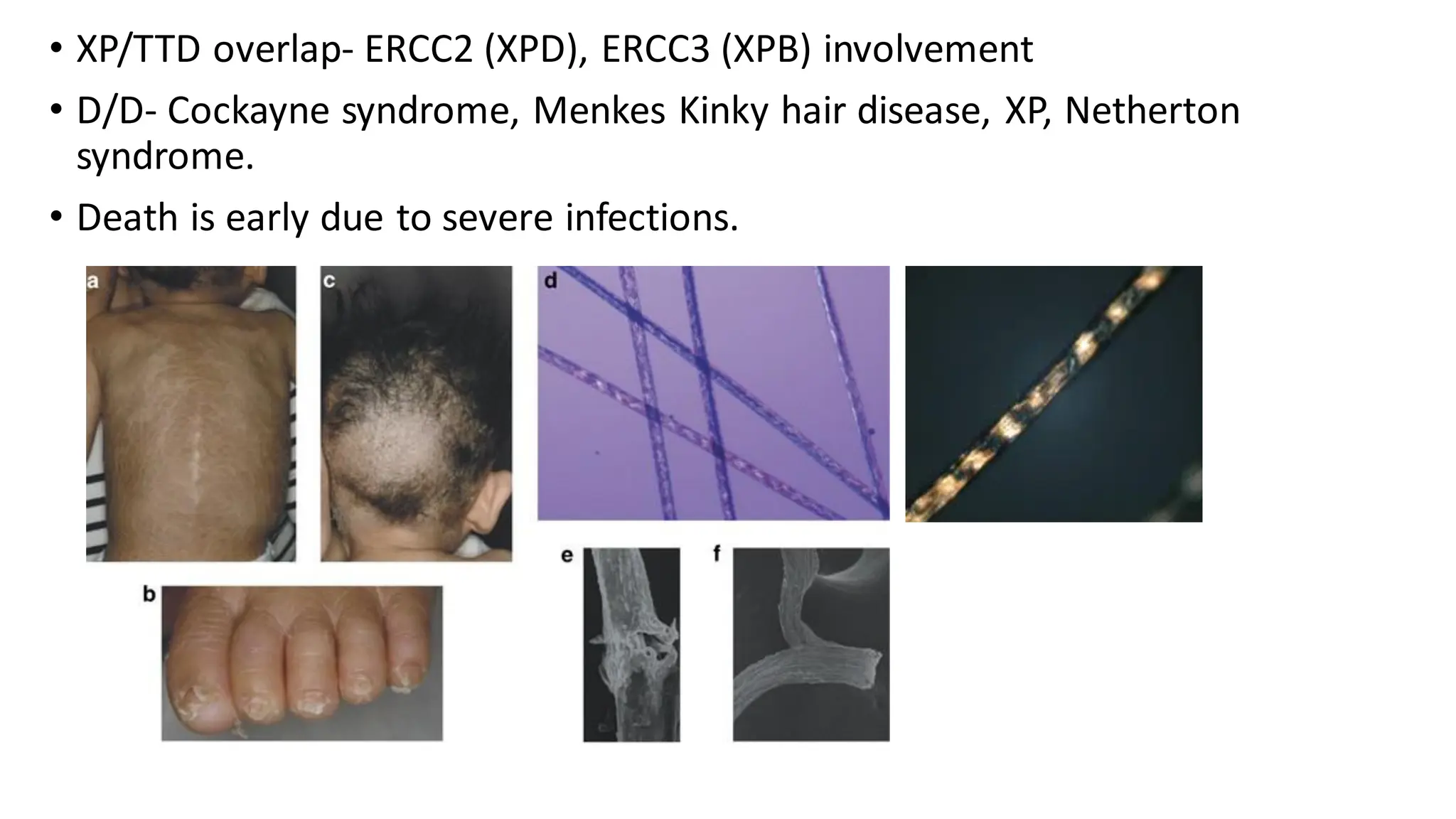
• Hair – short, sparse hairs with ‘tiger tail abnormality’ in hair
shafts under polarized microscopy (due to decrease sulphates
in hair), alopecias
• Nails- dystrophic
• CNS- intellectual disability, ataxia
• Hypogonadism, decreased fertility
• Others- abnormal facies (micrognathia, large ears), PPK, KP,
cataracts, osteosclerosis,hypogammaglobulinemia with
recurrent infections.
• XP/TTD overlap- ERCC2 (XPD), ERCC3 (XPB) involvement
• D/D- Cockayne syndrome, Menkes Kinky hair disease, XP, Netherton
syndrome.
• Death is early due to severe infections.
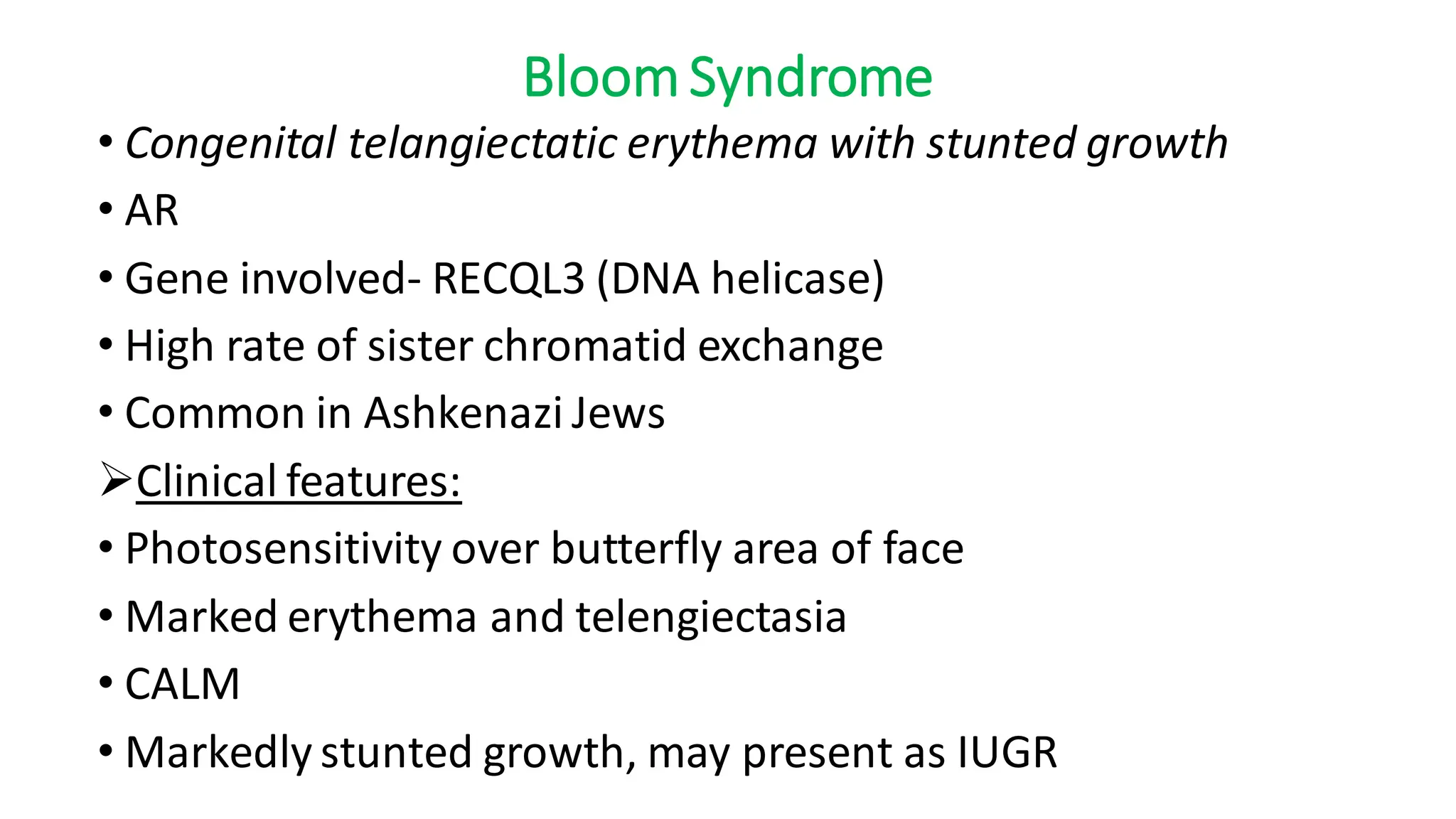
Rothmund- Thompson Syndrome
• Poikiloderma congenitale
• AR
• Gene involved- RECQL4 (recombinant DNA helicase)
• DNA repair + replication are defective
➢ Clinical features:
• Photosensitivity (earliest manifestation), presents as
persistent erythema and edema of V area of neck, face and
extremities.
• Erythema resolves> mottled pigmentation, atrophy and
telangiectasia (poikiloderma)develops, also over covered
parts.
• Growth retardation in seen.
• Abnormal bird like facies with sparse or absent hair over scalp,
eyelashes, eyebrows.
• Intelligence is normal
• Ophthal- Bilateral, early onset (within 3-7 years), anterior
subcapsularcataracts, bilateral glaucoma, keratoconus,retinal
coloboma
• Skeletal- thumb hypoplasia/absence,absent radii, brachydactyly,
clinodactyly, syndactyly, osteoporosis
• Malignancies- M/C is multicentric osteosarcomas,others
include SCC, BCC, Bowen’s disease, AML, Hodgkin’s lymphoma
• D/D- DKC, Werner, Kindler, Bloom, XP, Cockayne
• Treatment- Photoprotection, removal of hyperkeratotic
lesions (cryo, 5FU)
Vascular pulsed laser for poikiloderma, regular follow up for
cataracts cutaneous and systemic malignancies.
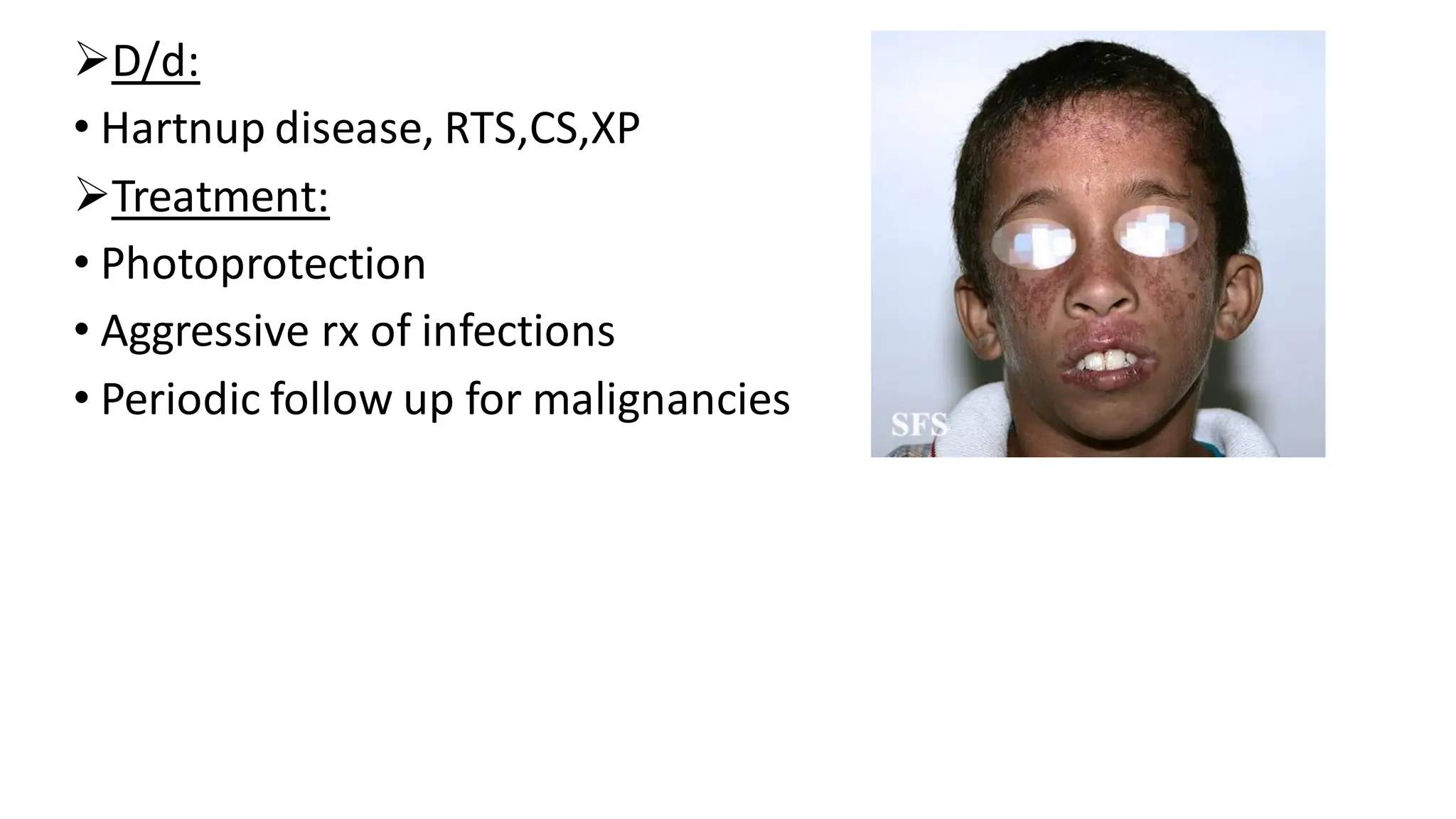
Bloom Syndrome
• Congenital telangiectatic erythema with stunted growth
• AR
• Gene involved- RECQL3 (DNA helicase)
• High rate of sister chromatid exchange
• Common in Ashkenazi Jews
➢Clinical features:
• Photosensitivity over butterfly area of face
• Marked erythema and telengiectasia
• CALM
• Markedly stunted growth, may present as IUGR
• Abnormal facies- dolicocephaly, keel shaped face, low set ears,
sharp nose
• Shrill voice
• Intelligence- subnormal
• Immunodeficiency ( IgM,IgA,IgG) associated recurrent,
chronic diarrhea, respiratory infections (often fatal)
• Malignancies- cutaneous as well as systemic (lymphoreticular
are common, visceral malignancies, SCC, BCC, Bowen’s
disease)
• Ocular- conjunctivitis, telengiectasias
➢D/d:
• Hartnup disease, RTS,CS,XP
➢Treatment:
• Photoprotection
• Aggressive rx of infections
• Periodic follow up for malignancies
Ataxia Telangiectasia
• AR
• Gene involved- ATM (Ataxia telengiectasia mutated) gene
➢ Clinical features:
• Ataxia and eye movement abnormalities appear in toddler or
school going age
• Movement abnormalities- inability to sit or stand straight,
swaying, ataxic gait
• Defective hand eye co-ordination- difficulty in writing, eating
• Nystagmus is primary and lateral gaze.
• Neurological abnormalities are non progressive beyond 12-
15 years of age
• Dystonia, choreoathetosis, myoclonic jerks may be present
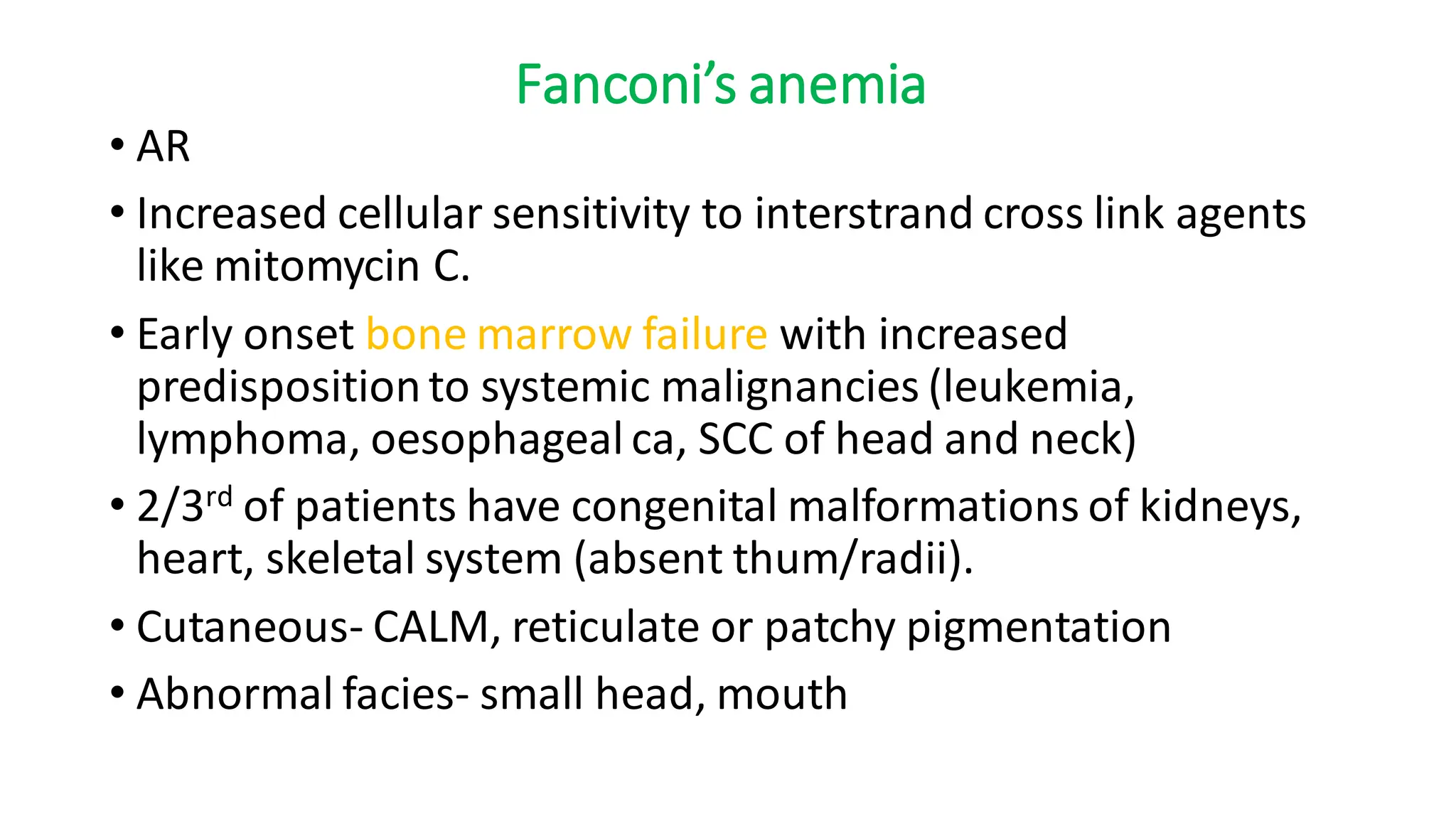
• Telengiectasias appear at 5-8 years of age
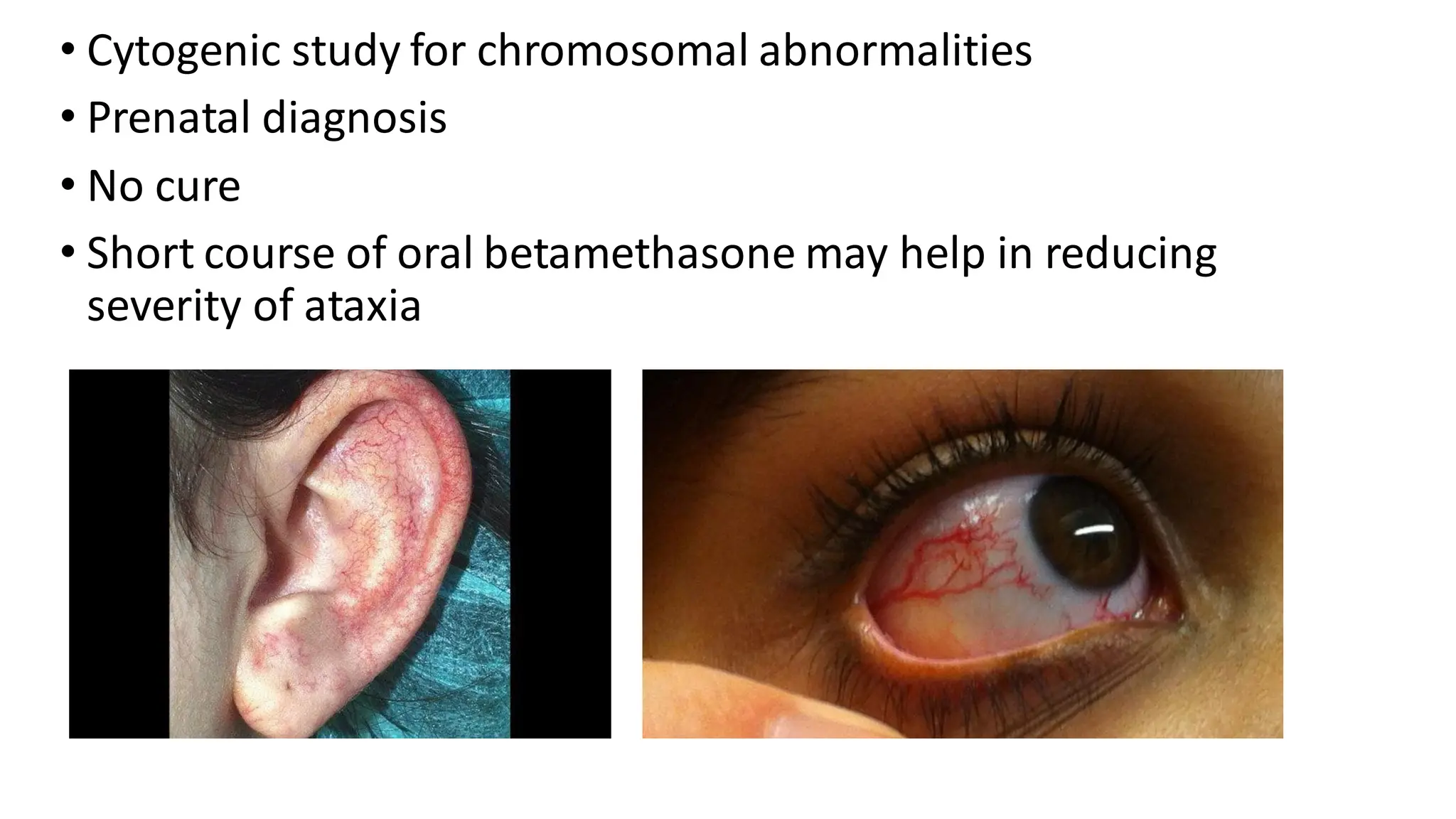
• Oculo-muco cutaneous, most obvious in bulbar conjunctiva
• Accentuation on sun exposure
• Immunodeficiency- recurrent sino-pulmonaryinfections
➢ Investigations:
• Raised CEA, alpha-fetoprotein in all patients (may help in
diagnosis after 2 years of age)
• Decreased IgM, IgA, IgG
• MRI brain and spinal cord- cerebellar degeneration
• Cytogenic study for chromosomal abnormalities
• Prenatal diagnosis
• No cure
• Short course of oral betamethasone may help in reducing
severity of ataxia
Fanconi’s anemia
• AR
• Increased cellular sensitivity to interstrand cross link agents
like mitomycin C.
• Early onset bone marrow failure with increased
predispositionto systemic malignancies (leukemia,
lymphoma, oesophageal ca, SCC of head and neck)
• 2/3rd of patients have congenital malformations of kidneys,
heart, skeletal system (absent thum/radii).
• Cutaneous- CALM, reticulate or patchy pigmentation
• Abnormal facies- small head, mouth
Muir-Torre Syndrome
• AD
• Defect in DNA mismatch repair (MSH2 gene)
• Phenotypic variant of hereditary non polyposis colorectal cancer (Lynch
syndrome)
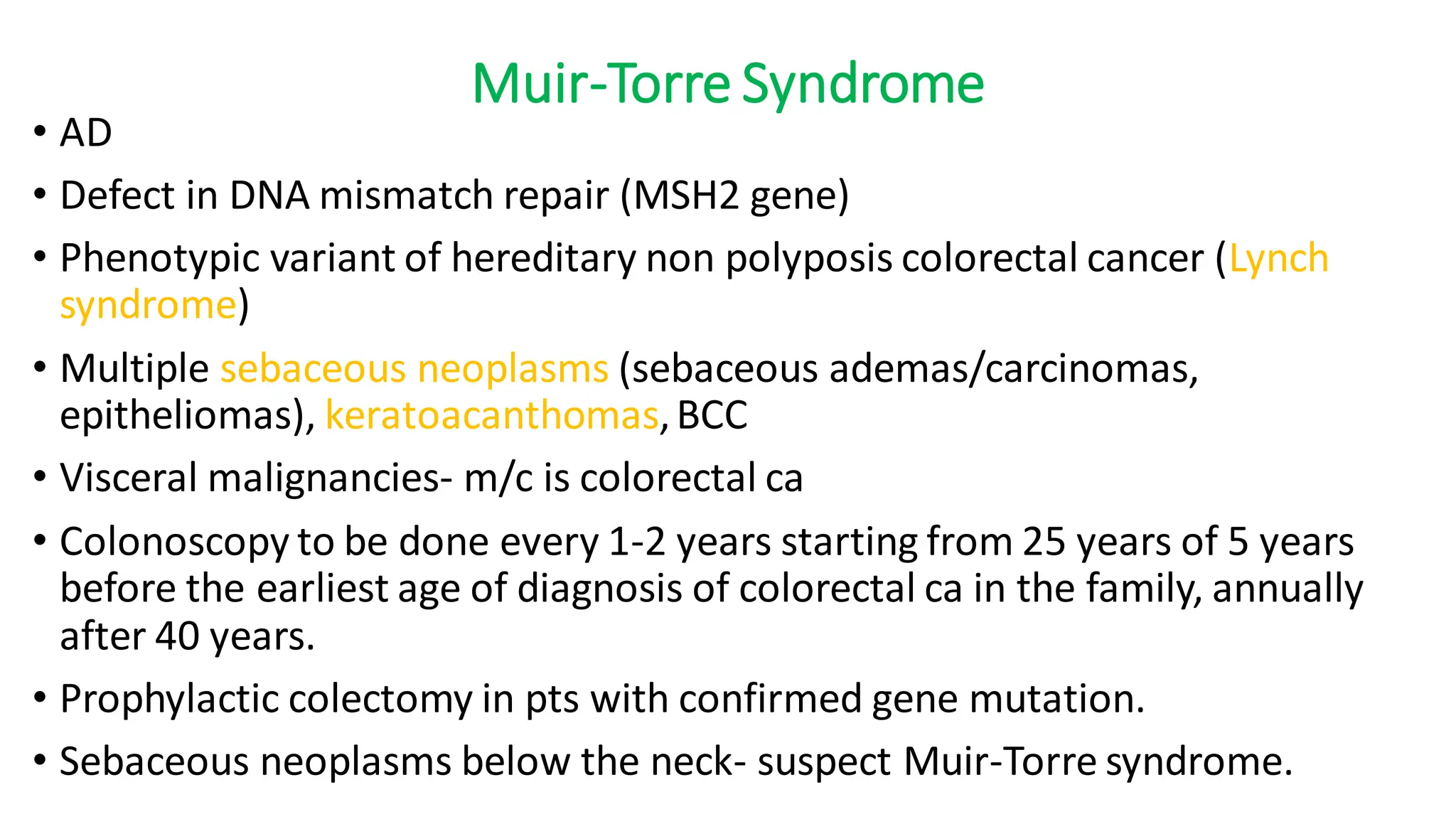
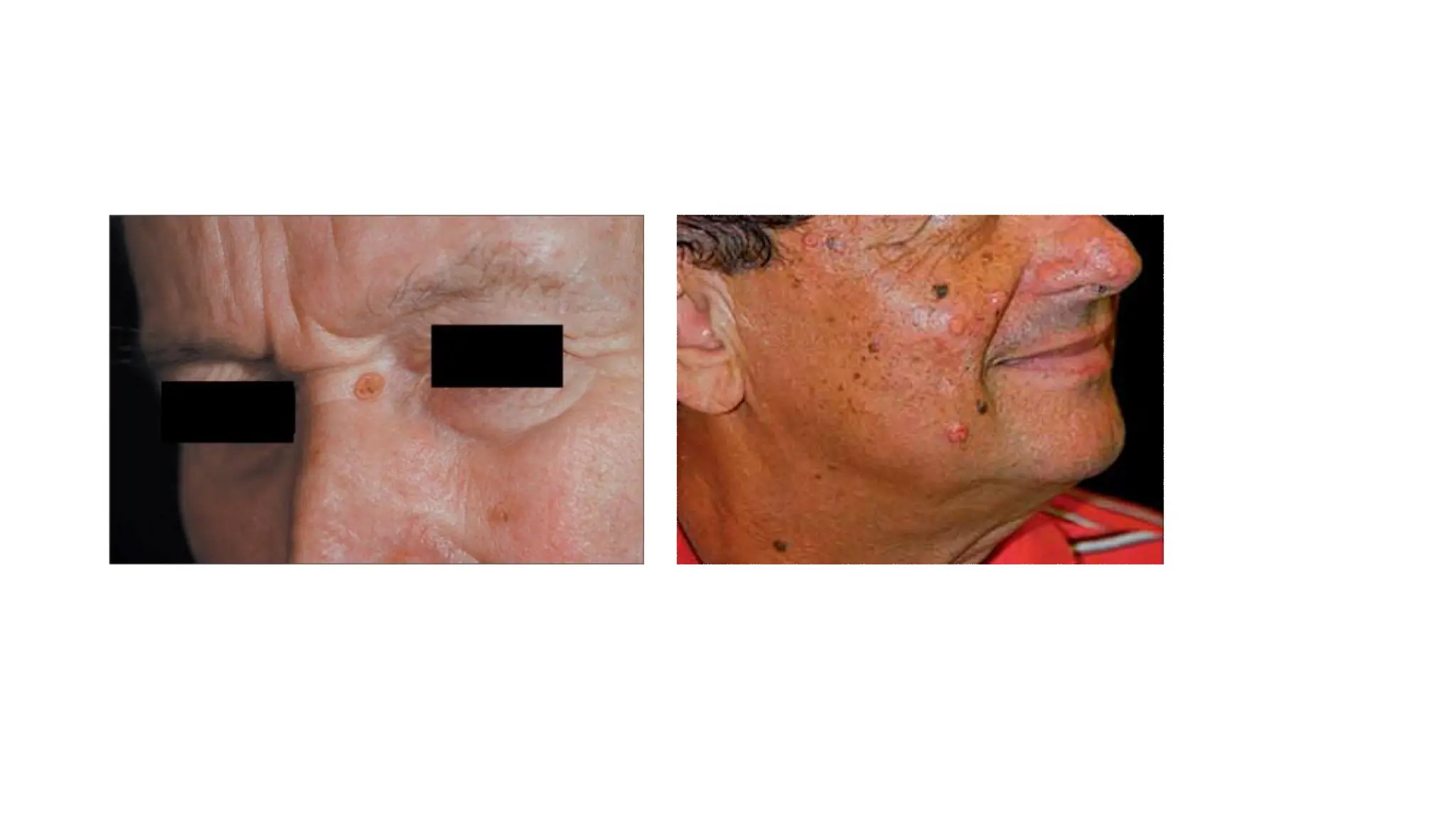
• Multiple sebaceous neoplasms (sebaceous ademas/carcinomas,
epitheliomas), keratoacanthomas,BCC
• Visceral malignancies- m/c is colorectal ca
• Colonoscopy to be done every 1-2 years starting from 25 years of 5 years
before the earliest age of diagnosis of colorectal ca in the family, annually
after 40 years.
• Prophylactic colectomy in pts with confirmed gene mutation.
• Sebaceous neoplasms below the neck- suspect Muir-Torre syndrome.
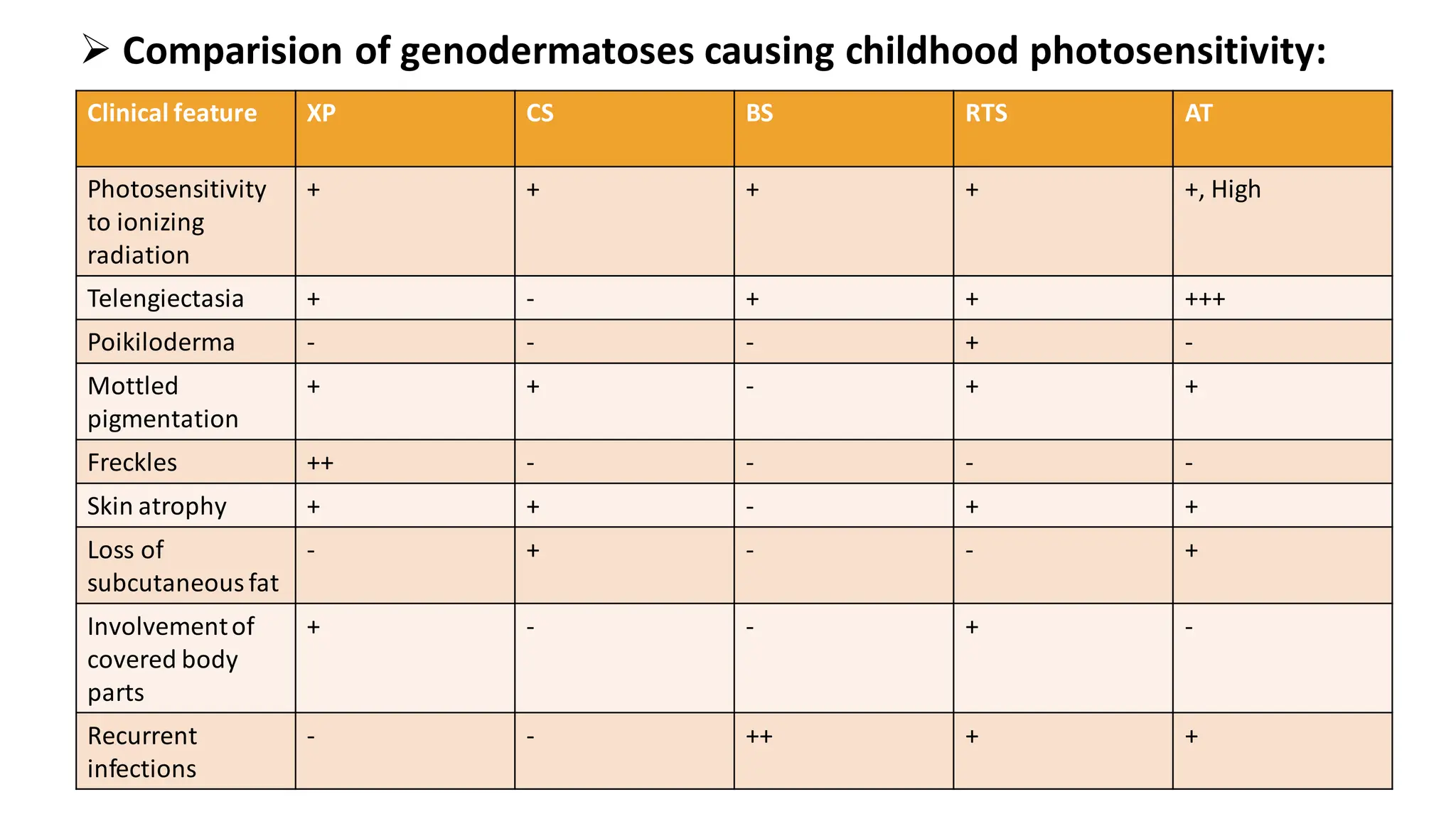
➢ Comparision of genodermatoses causing childhood photosensitivity:
Clinical feature XP CS BS RTS AT
Photosensitivity
to ionizing
radiation
+ + + + +, High
Telengiectasia + - + + +++
Poikiloderma - - - + -
Mottled
pigmentation
+ + - + +
Freckles ++ - - - -
Skin atrophy + + - + +
Loss of
subcutaneousfat
- + - - +
Involvementof
covered body
parts
+ - - + -
Recurrent
infections
- - ++ + +
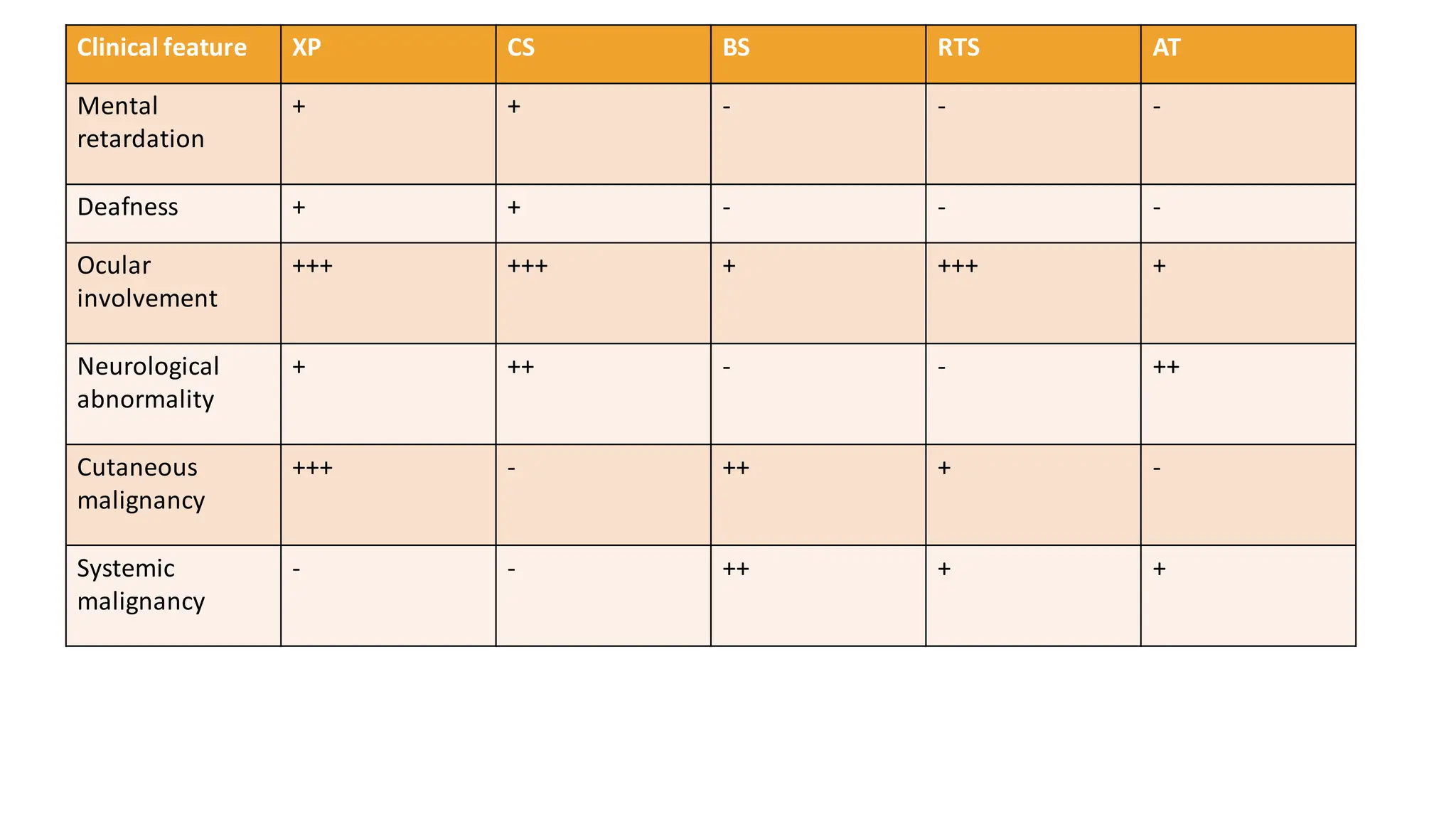
Clinical feature XP CS BS RTS AT
Mental
retardation
+ + - - -
Deafness + + - - -
Ocular
involvement
+++ +++ + +++ +
Neurological
abnormality
+ ++ - - ++
Cutaneous
malignancy
+++ - ++ + -
Systemic
malignancy
- - ++ + +

GENODERMATOSES- DNA REPAIR DEFECTS-1.pdf

  • 1.
  • 2.
    DNA repair defectAssociated syndromes Nucleotide excision repair 1) Xeroderma Pigmentosum 2) Cockayne syndrome 3) Trichothiodystrophy Recombinant Q helicase 1) Bloom syndrome 2) Rothmund Thomson syndrome 3) Werner’s syndrome Double strand break repair Ataxia Telengiectasia Interstrand cross link repair Fanconi anemia Mismatch repair Muir-Torre syndrome
  • 3.
    XERODERMA PIGMENTOSUM • Dry,pigmented skin • AR • 1 in 10,000-30,000 • Genes involved- XPA-XPG and XPV variant (8 subtypes of XP). • Defect is in NER • GG-NER pathway involves XPC, XPE • TC-NER pathway involves CSA, CSB • Core NER pathway involves XPA, B, D, F, G genes
  • 4.
    ➢ Clinical features: •Normal at birth • The development and severity of features depends upon the amount of sun exposure and protection from UVR. • Cutaneous manifestations start developing after 6 months of age. • Erythema, scaling and ephelides develop over sun exposed sites. • XPC, XPE, XPV gene defects- no sunburn - highest risk of skin cancers - diagnosed late - unique ocular sensitivity with XPC
  • 5.
    • CSA, CSBinvolvement- severe sunburnreactions - hence, diagnosed early - low risk of skin cancers - neurological manifestations (hyperreflexia, demyelination , microcephaly) • XPA, B, D, F, G gene involvement – both photosensitivity with skin cancers and neurological manifestations (severe with XPA) • De Sanctis Cacchione syndrome- rare variant of XP, presents with severe neurologicalmanifestations, deafness, ataxia, paralysis.
  • 6.
    • Ophthal- photophobia,ectropion, conjunctivitis, symblepheron • Carcinoma- 10,000 fold risk of NMSC, 2000 fold risk of melanoma. • Death is mostly due to metastatic melanoma or invasive SCC by 29-32 years of age. • Median age for dev. of NMSC-9 years, for melanoma- 22 years. ➢ Investigations: • Prenatal diagnosis • Postnatal- fibroblastsare irradiated with UVR, UDS is measured • Decreased level of UDS indicates XP • XPV- irradiated cells are incubated with caffeine> UV signature mutations.
  • 7.
    ➢Prognosis: • No cure,genetic counselling • Sun avoidance, broad spectrum sunscreens (preferably tinted) • Physical methods of sun protection • Vit D supplements • Cancer screening every 3 months • Existing lesions (AK, SK,Keratoacanthomas)-treat with cryo/5 FU/imiquimod. • Isotretinoin to prevent development of cancers. • Ophthal and neuro referral.
  • 8.
    • Newer therapies-topical liposomal preparation of microbial DNA repair enzyme T4 endonuclease, Sulphonylureas (glimiperide, acetohexamide), Nicotinamide
  • 9.
    Cockayne syndrome • NeillDingwall syndrome • AR • Defective TC-NER (RNA synthesis does not resume after UVR) • Genes involved- CSA (ERCC8), CSB (ERCC6) • CSA (20%) is milder form than CSB (80%) • 3 clinical subtypes: - CS1- classic - CS2- severe - CS3- late onset, milder
  • 10.
    ➢ Clinical features: -Photosensitivity (present since birth,improves) - short stature, sparse, often gray hairs - typical mickey mouse like facies (beaked nose, large ears, enophthalmia,prognathism) - cachexia (cachexic dwarfism) - SNHL/CHL - Ophthal- salt and pepper retina, cataracts, optic atrophy - CNS- progressive cognitive decline, extensive demyelination, spasticity, choreoathetosis (basal ganglia calcification).
  • 11.
    • No increasedrisk of skin cancers. • Dental caries (86%) • Patients die by 4th decade due to neurological complications. • XP/CS overlap- XPB, D, F, G genes are involved. • Variants- COFS, UV sensitivity syndrome ➢ Diagnosis: • CT/MRI brain- loss of white matter and ventricular dilatation are the earliest findings, tigroid leukodystrophy • Prenatal diagnosis by amniocentesis and CVS to look for defective gene • Postnatal- UV irradiated fibroblasts obtained from skin biopsy are cultured for 24 hrs, no RNA synthesis and normal UDS provides diagnosis.
  • 12.
    TRICHOTHIODYSTROPHY • Tay syndrome •AR • Defect in DNA repair (NER) as well as transcription. • 2 types : 1) TTD-P (photosensitive):genes involved- ERCC2 (XPD), ERCC3 (XPB) and GTF2H5 (TTDA), involved in transcription repair protein IIH complex. 2) TTD-N (non-photosensitive):10-20%, gene involved- MPLKIP
  • 13.
    ➢ Clinical features: •Photosensitivity, no risk of skin ca. • Icthyosis (TTD-P), often resembles CIE. • Hair – short, sparse hairs with ‘tiger tail abnormality’ in hair shafts under polarized microscopy (due to decrease sulphates in hair), alopecias • Nails- dystrophic • CNS- intellectual disability, ataxia • Hypogonadism, decreased fertility • Others- abnormal facies (micrognathia, large ears), PPK, KP, cataracts, osteosclerosis,hypogammaglobulinemia with recurrent infections.
  • 14.
    • XP/TTD overlap-ERCC2 (XPD), ERCC3 (XPB) involvement • D/D- Cockayne syndrome, Menkes Kinky hair disease, XP, Netherton syndrome. • Death is early due to severe infections.
  • 15.
    Rothmund- Thompson Syndrome •Poikiloderma congenitale • AR • Gene involved- RECQL4 (recombinant DNA helicase) • DNA repair + replication are defective ➢ Clinical features: • Photosensitivity (earliest manifestation), presents as persistent erythema and edema of V area of neck, face and extremities. • Erythema resolves> mottled pigmentation, atrophy and telangiectasia (poikiloderma)develops, also over covered parts.
  • 16.
    • Growth retardationin seen. • Abnormal bird like facies with sparse or absent hair over scalp, eyelashes, eyebrows. • Intelligence is normal • Ophthal- Bilateral, early onset (within 3-7 years), anterior subcapsularcataracts, bilateral glaucoma, keratoconus,retinal coloboma • Skeletal- thumb hypoplasia/absence,absent radii, brachydactyly, clinodactyly, syndactyly, osteoporosis
  • 17.
    • Malignancies- M/Cis multicentric osteosarcomas,others include SCC, BCC, Bowen’s disease, AML, Hodgkin’s lymphoma • D/D- DKC, Werner, Kindler, Bloom, XP, Cockayne • Treatment- Photoprotection, removal of hyperkeratotic lesions (cryo, 5FU) Vascular pulsed laser for poikiloderma, regular follow up for cataracts cutaneous and systemic malignancies.
  • 18.
    Bloom Syndrome • Congenitaltelangiectatic erythema with stunted growth • AR • Gene involved- RECQL3 (DNA helicase) • High rate of sister chromatid exchange • Common in Ashkenazi Jews ➢Clinical features: • Photosensitivity over butterfly area of face • Marked erythema and telengiectasia • CALM • Markedly stunted growth, may present as IUGR
  • 19.
    • Abnormal facies-dolicocephaly, keel shaped face, low set ears, sharp nose • Shrill voice • Intelligence- subnormal • Immunodeficiency ( IgM,IgA,IgG) associated recurrent, chronic diarrhea, respiratory infections (often fatal) • Malignancies- cutaneous as well as systemic (lymphoreticular are common, visceral malignancies, SCC, BCC, Bowen’s disease) • Ocular- conjunctivitis, telengiectasias
  • 20.
    ➢D/d: • Hartnup disease,RTS,CS,XP ➢Treatment: • Photoprotection • Aggressive rx of infections • Periodic follow up for malignancies
  • 21.
    Ataxia Telangiectasia • AR •Gene involved- ATM (Ataxia telengiectasia mutated) gene ➢ Clinical features: • Ataxia and eye movement abnormalities appear in toddler or school going age • Movement abnormalities- inability to sit or stand straight, swaying, ataxic gait • Defective hand eye co-ordination- difficulty in writing, eating • Nystagmus is primary and lateral gaze. • Neurological abnormalities are non progressive beyond 12- 15 years of age
  • 22.
    • Dystonia, choreoathetosis,myoclonic jerks may be present • Telengiectasias appear at 5-8 years of age • Oculo-muco cutaneous, most obvious in bulbar conjunctiva • Accentuation on sun exposure • Immunodeficiency- recurrent sino-pulmonaryinfections ➢ Investigations: • Raised CEA, alpha-fetoprotein in all patients (may help in diagnosis after 2 years of age) • Decreased IgM, IgA, IgG • MRI brain and spinal cord- cerebellar degeneration
  • 23.
    • Cytogenic studyfor chromosomal abnormalities • Prenatal diagnosis • No cure • Short course of oral betamethasone may help in reducing severity of ataxia
  • 24.
    Fanconi’s anemia • AR •Increased cellular sensitivity to interstrand cross link agents like mitomycin C. • Early onset bone marrow failure with increased predispositionto systemic malignancies (leukemia, lymphoma, oesophageal ca, SCC of head and neck) • 2/3rd of patients have congenital malformations of kidneys, heart, skeletal system (absent thum/radii). • Cutaneous- CALM, reticulate or patchy pigmentation • Abnormal facies- small head, mouth
  • 25.
    Muir-Torre Syndrome • AD •Defect in DNA mismatch repair (MSH2 gene) • Phenotypic variant of hereditary non polyposis colorectal cancer (Lynch syndrome) • Multiple sebaceous neoplasms (sebaceous ademas/carcinomas, epitheliomas), keratoacanthomas,BCC • Visceral malignancies- m/c is colorectal ca • Colonoscopy to be done every 1-2 years starting from 25 years of 5 years before the earliest age of diagnosis of colorectal ca in the family, annually after 40 years. • Prophylactic colectomy in pts with confirmed gene mutation. • Sebaceous neoplasms below the neck- suspect Muir-Torre syndrome.
  • 27.
    ➢ Comparision ofgenodermatoses causing childhood photosensitivity: Clinical feature XP CS BS RTS AT Photosensitivity to ionizing radiation + + + + +, High Telengiectasia + - + + +++ Poikiloderma - - - + - Mottled pigmentation + + - + + Freckles ++ - - - - Skin atrophy + + - + + Loss of subcutaneousfat - + - - + Involvementof covered body parts + - - + - Recurrent infections - - ++ + +
  • 28.
    Clinical feature XPCS BS RTS AT Mental retardation + + - - - Deafness + + - - - Ocular involvement +++ +++ + +++ + Neurological abnormality + ++ - - ++ Cutaneous malignancy +++ - ++ + - Systemic malignancy - - ++ + +