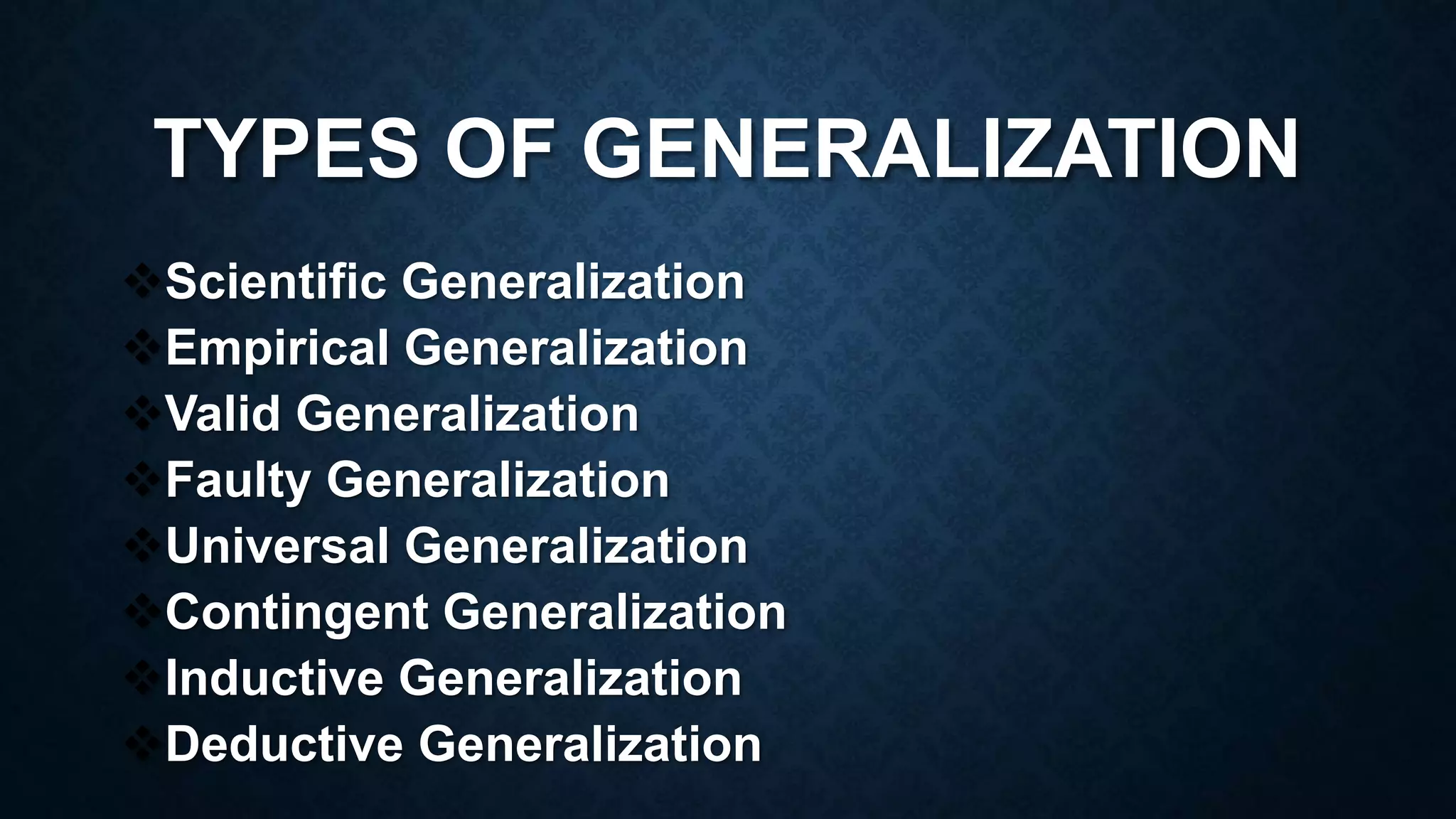
This document defines and provides examples of different types of generalizations:
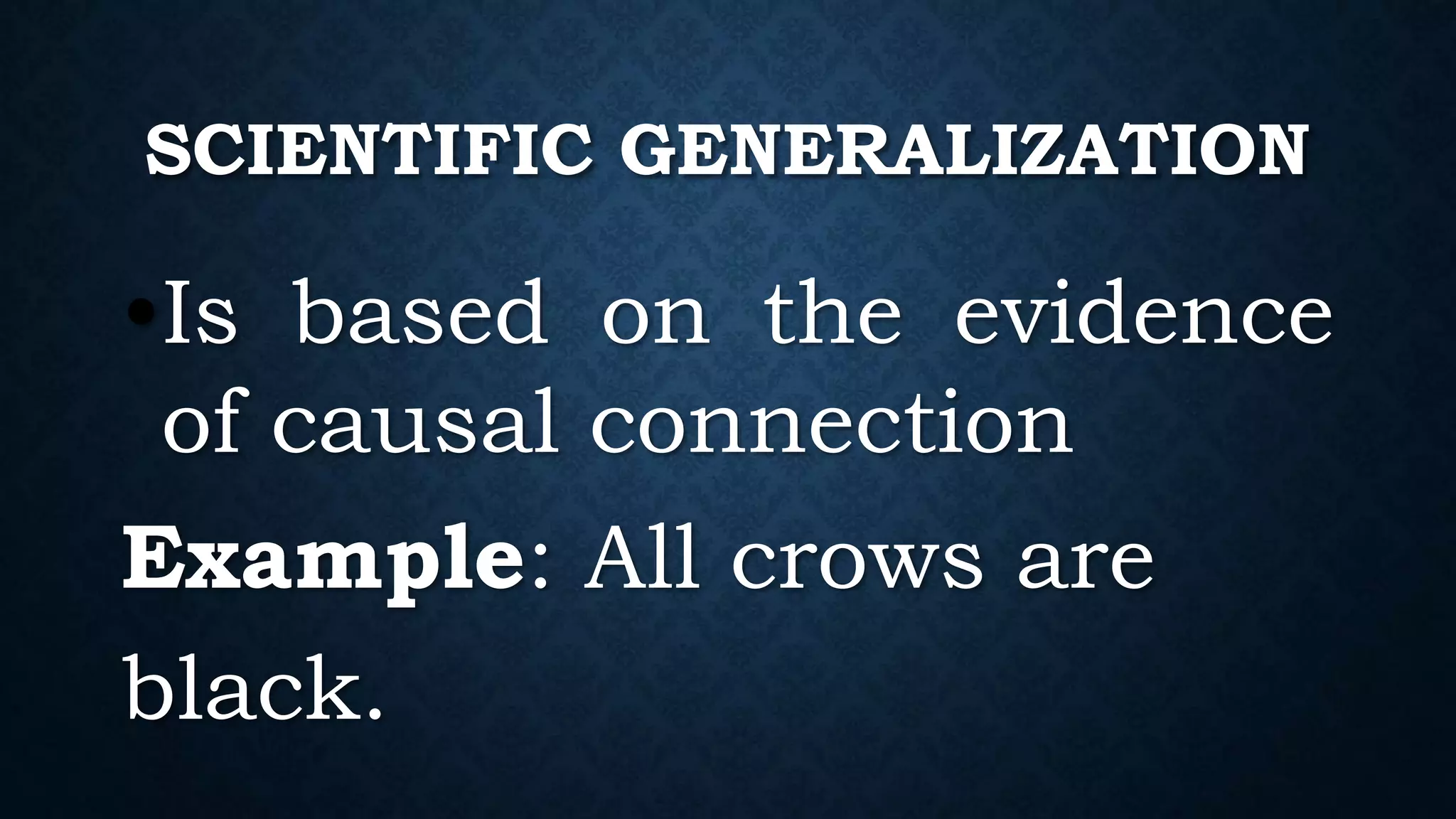
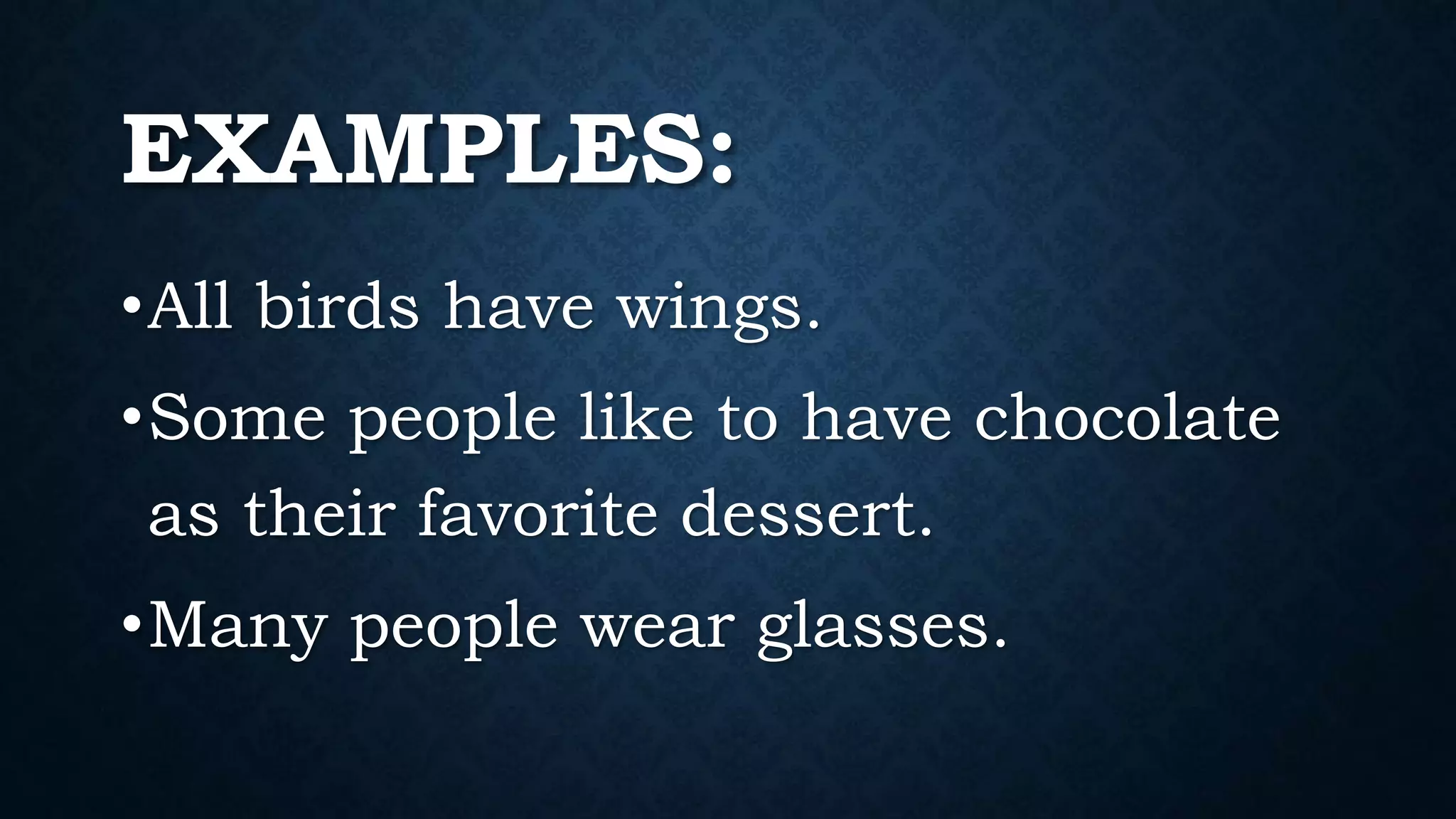
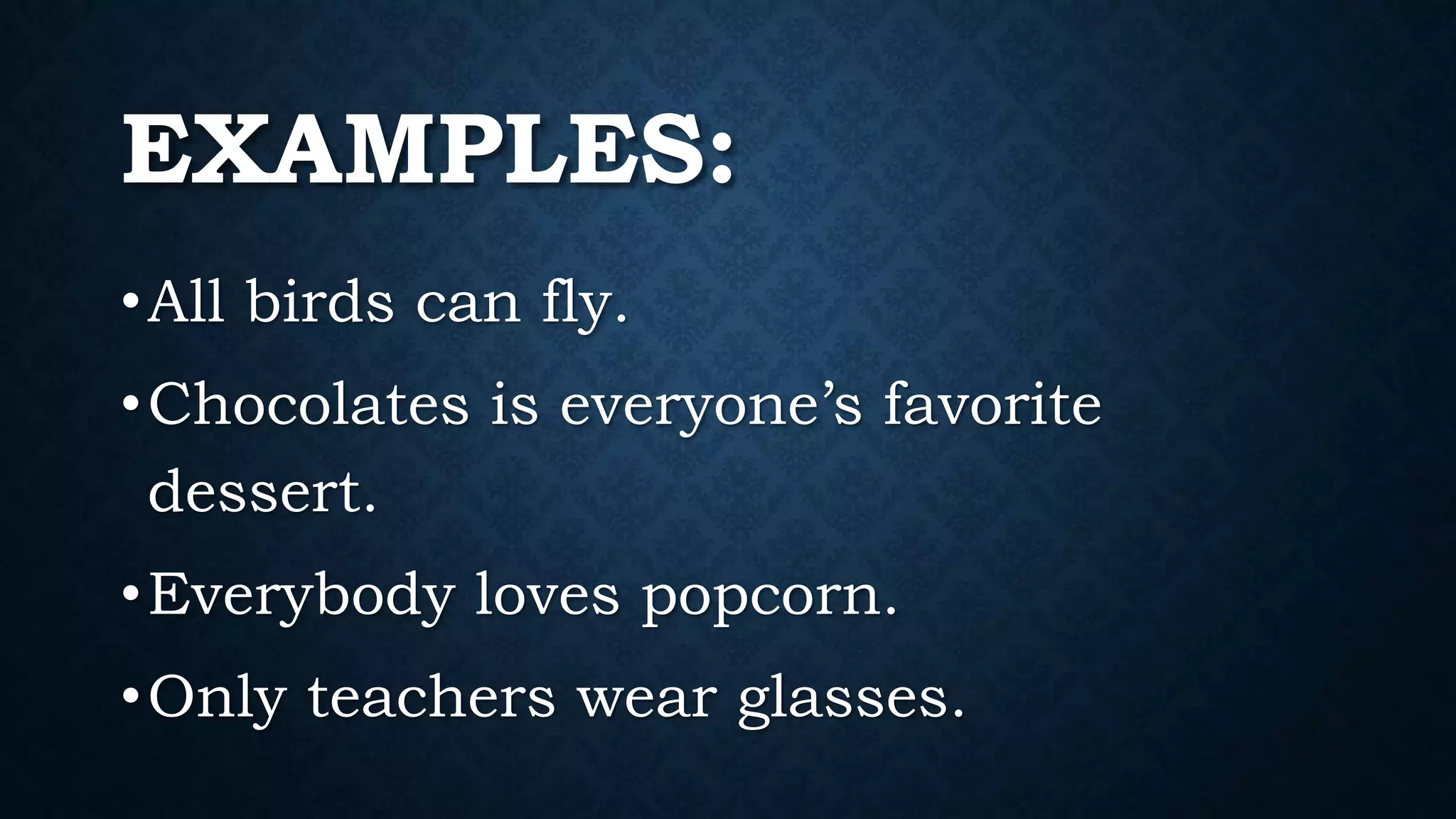
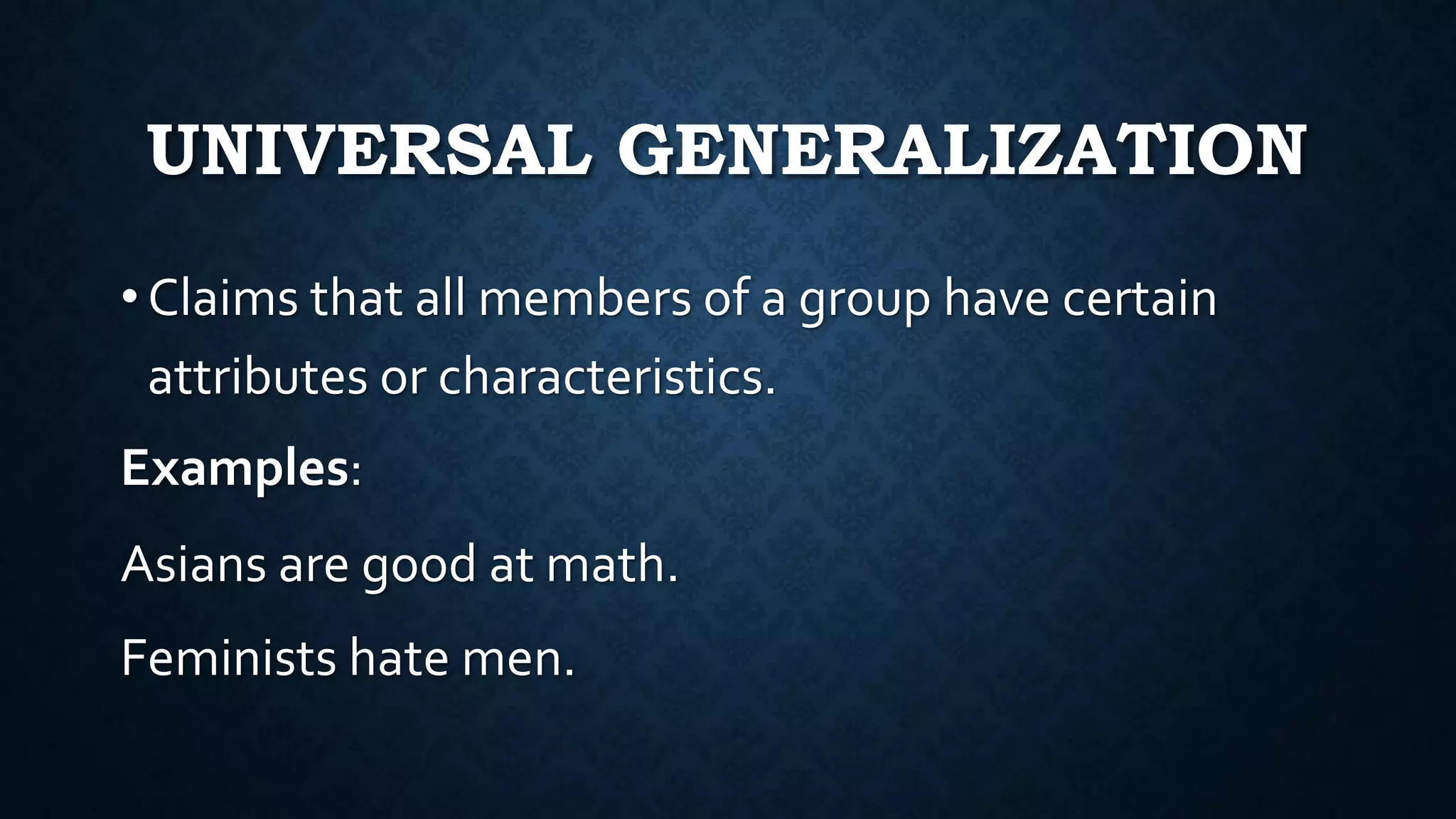
Scientific and empirical generalizations are based on evidence and observations, while valid generalizations are supported by facts and logic. Faulty and universal generalizations overgeneralize and may not apply to all cases. Contingent generalizations are more likely to be true if limited to specific contexts, while inductive generalizations infer broader patterns from examples and deductive generalizations apply general rules to specific cases.