General Physical
Examination
Presented by
Dr. Poorvi Pratap Singh
Specific Learning Objectives
1. To obtain the history of subject illness.
2. To perform the general physical examination.
3. Should be able to elicit different signs during
general examination
4. List the common causes of abnormalities of
the signs.
Pre-Requisites for Clinical Examination
• Proper Day lights .
• Subject should be relax and reassure
• Female attendant should be present for a female
patient
• Area to be examined should be properly exposed
• Always stand on the right side of the patient
Patient Personal
Details
Age
Occupation
Education
Gender Financial Condition
Address
Name
History
Taking
Patient past
illness
Patient present
illness Family History
Personal
Habits
History of Present
illness
Present Chief
complaints
Onset
Duration
Progression
History of Past illness
 History of illness similar to the present condition.
 History of all major illness.
 History of operation in past.
 History of venereal disease when relevant.
Other History
Family and Social
History
Personal History
Development
History
Menstrual History
• Diet
• Smoking
• Alchohol
• Allery
History of parents
and Sibling
Developmental
milestone
Gynae and Obs
history
General Physical Examination
Observation
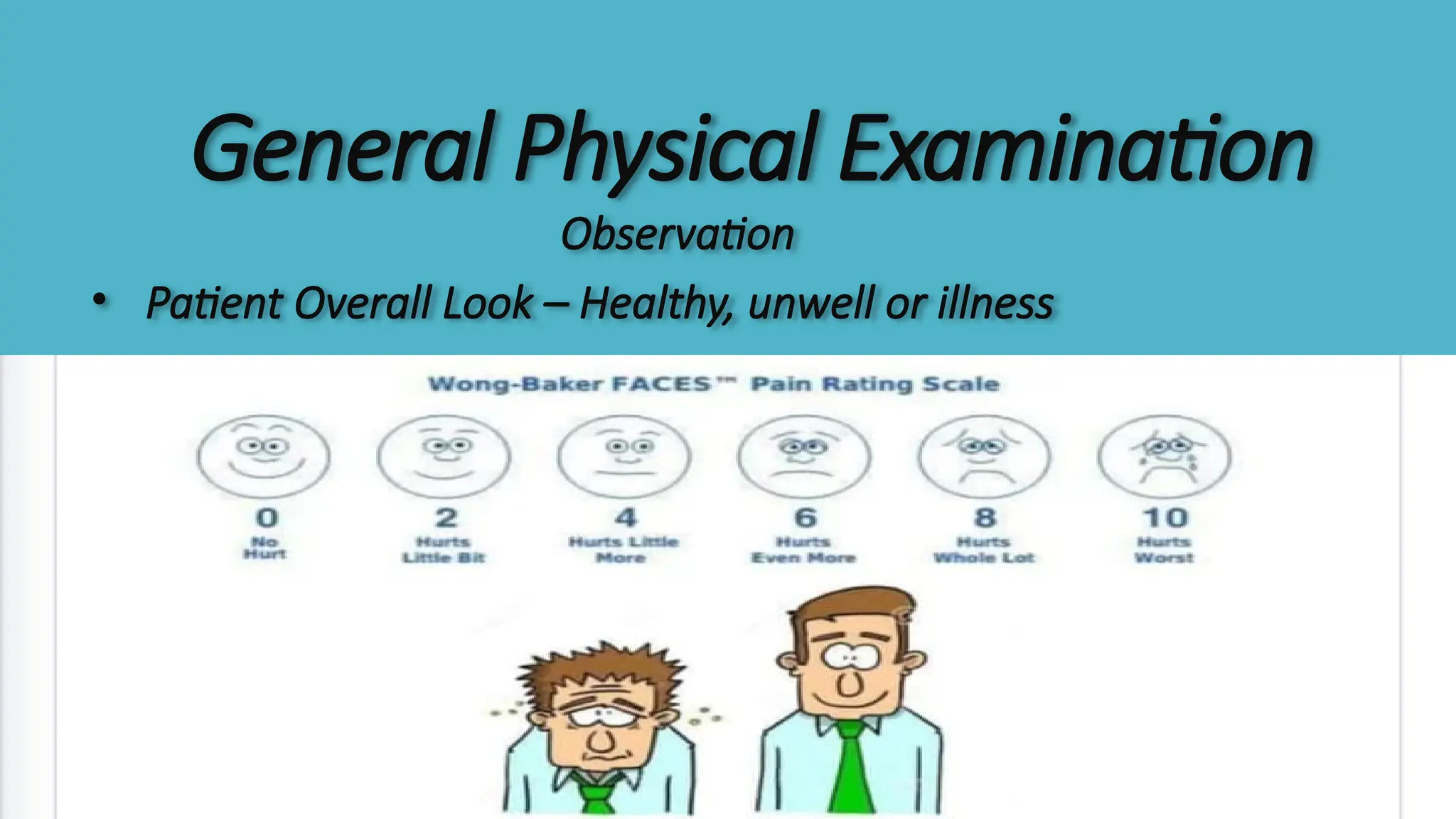
• Patient Overall Look – Healthy, unwell or illness
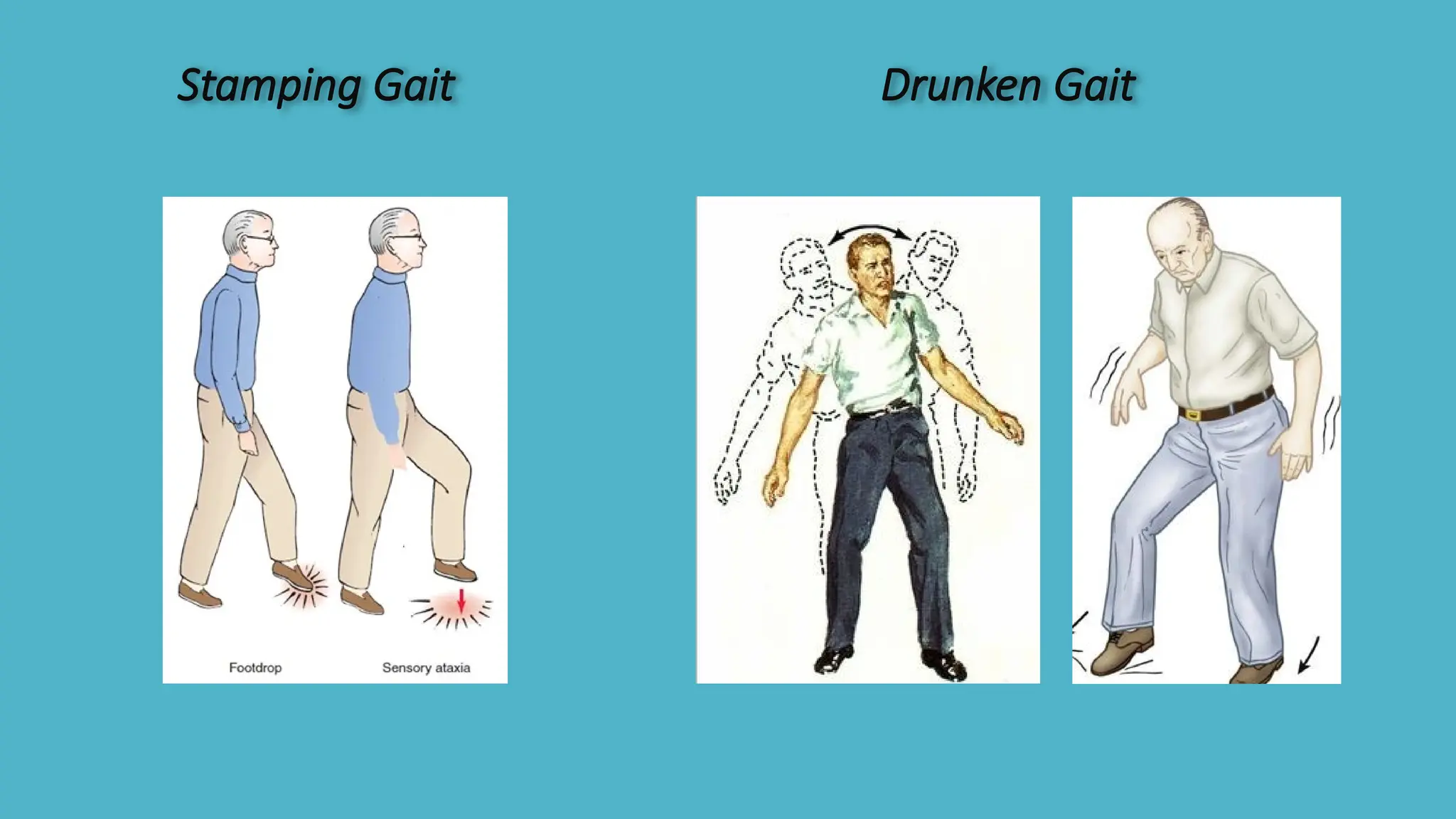
Types of gait and their observation
1. Spastic Gait – Difficulty in
bending knees and drag his
feet on floor
Ex- Multiple Sclerosis
Gait- Manner of
Walking
Stamping Gait Drunken Gait
Waddling Gait – Trendelenburg Gait
Walk with short steps
Hip dislocation Congenital Hip Disorder
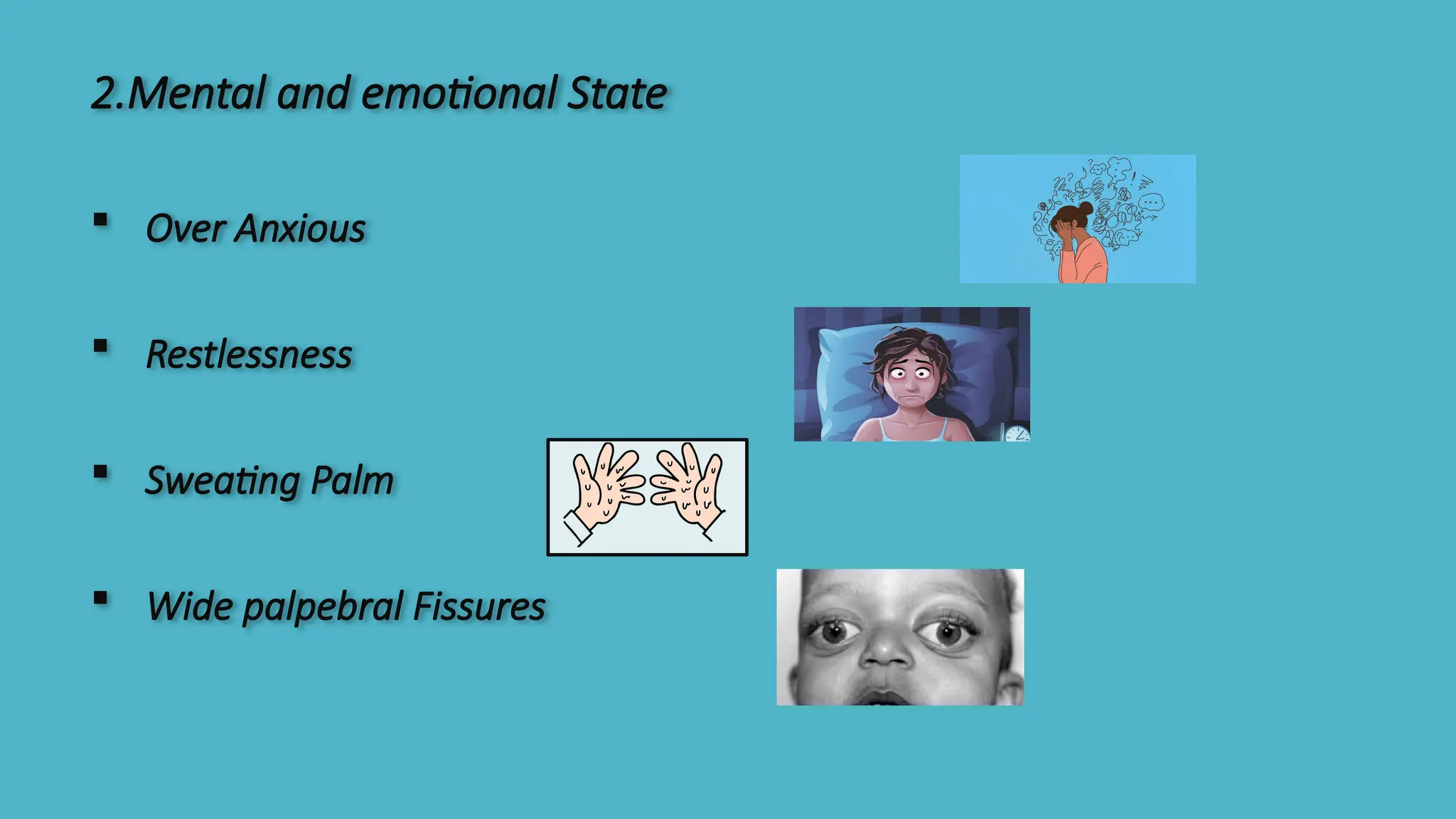
2.Mental and emotional State
 Over Anxious
 Restlessness
 Sweating Palm
 Wide palpebral Fissures
Decubitus – Position adopted by
patient in bed
• Orthopneic Decubitus
• In Cardiac Failure
• Opisthotonus of tetanus
Physical and Build
Nutrition
Hair
Poliosis
Protein deficiency
Face
Exophthalmos Ptosis eye
Wrinkles of forehead
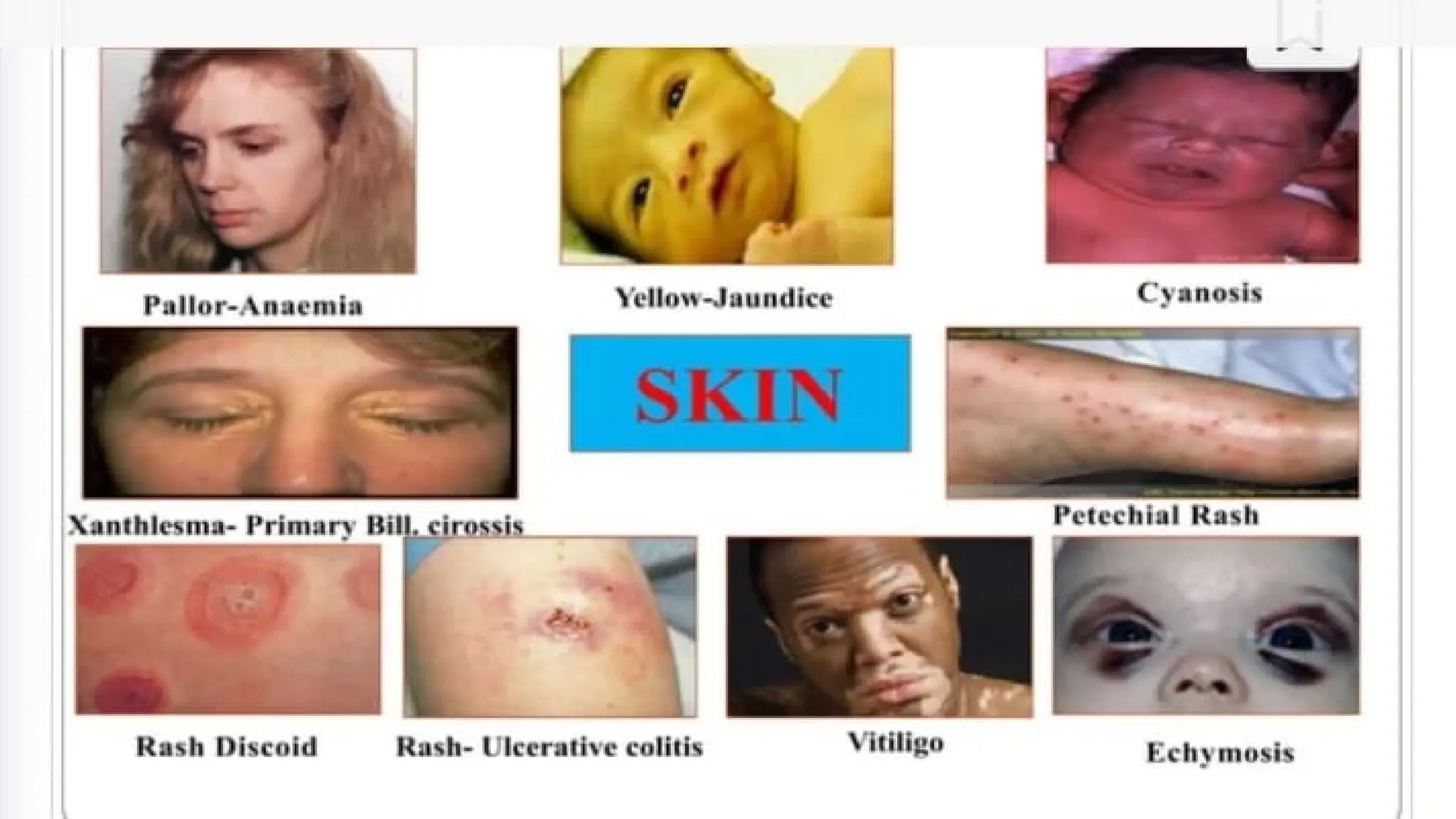
Jaundice
Its is a yellowish discolouration of patient’s skin
and sclerae
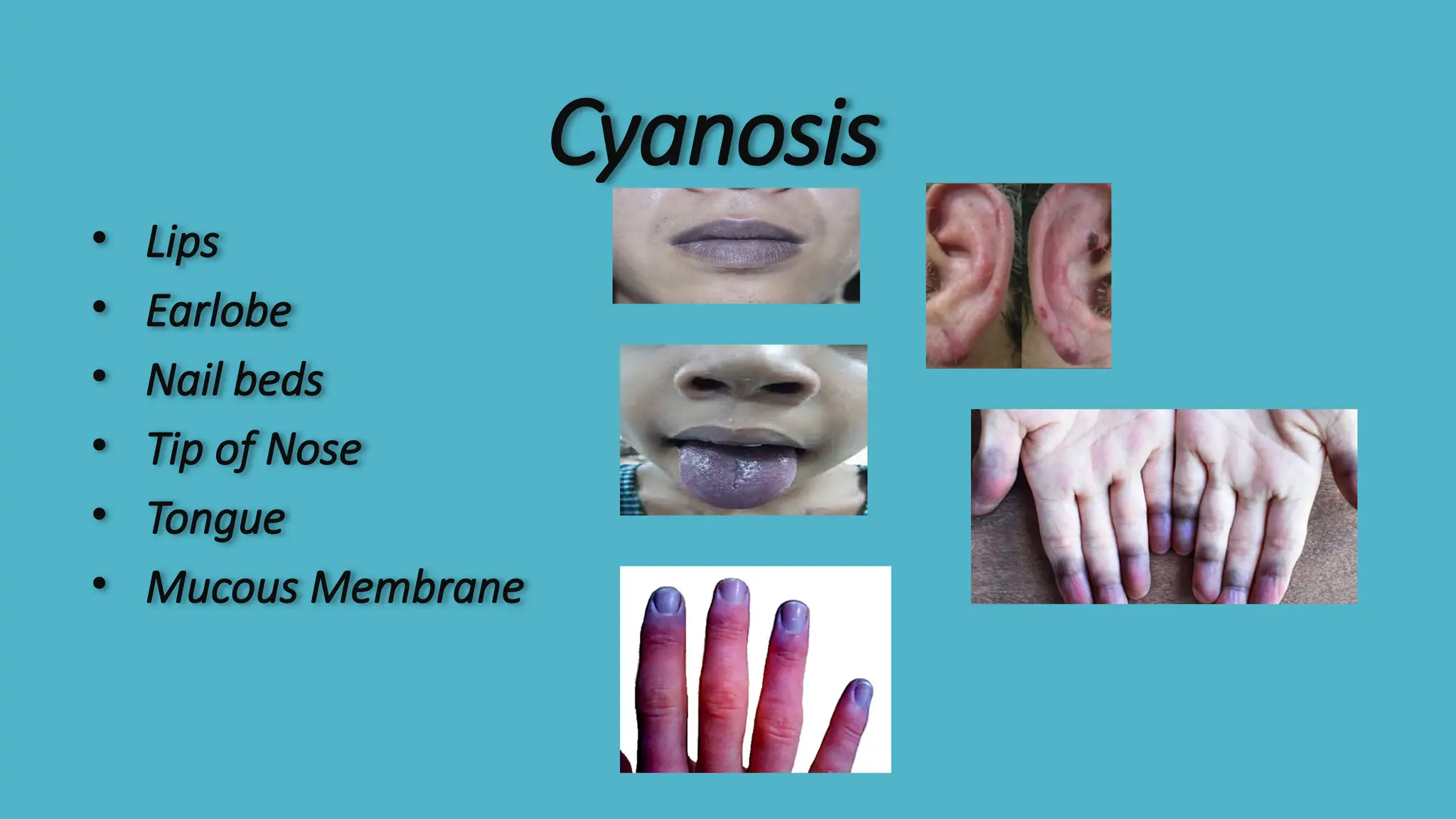
Cyanosis
• Lips
• Earlobe
• Nail beds
• Tip of Nose
• Tongue
• Mucous Membrane
Clubbing
Causes of Clubbing
C- congenital Cyanotic Heart disease
L- lung disease like emphysema
U-ulcerative Colitis
B-biliary cirrhosis
B-bronchiectasis
I-infective endochitis
N-normal people
G-gastric tumor
Bulbous enlargement of soft parts of
the terminal phalanges with over
curving of nails both transversely
and longitudinally
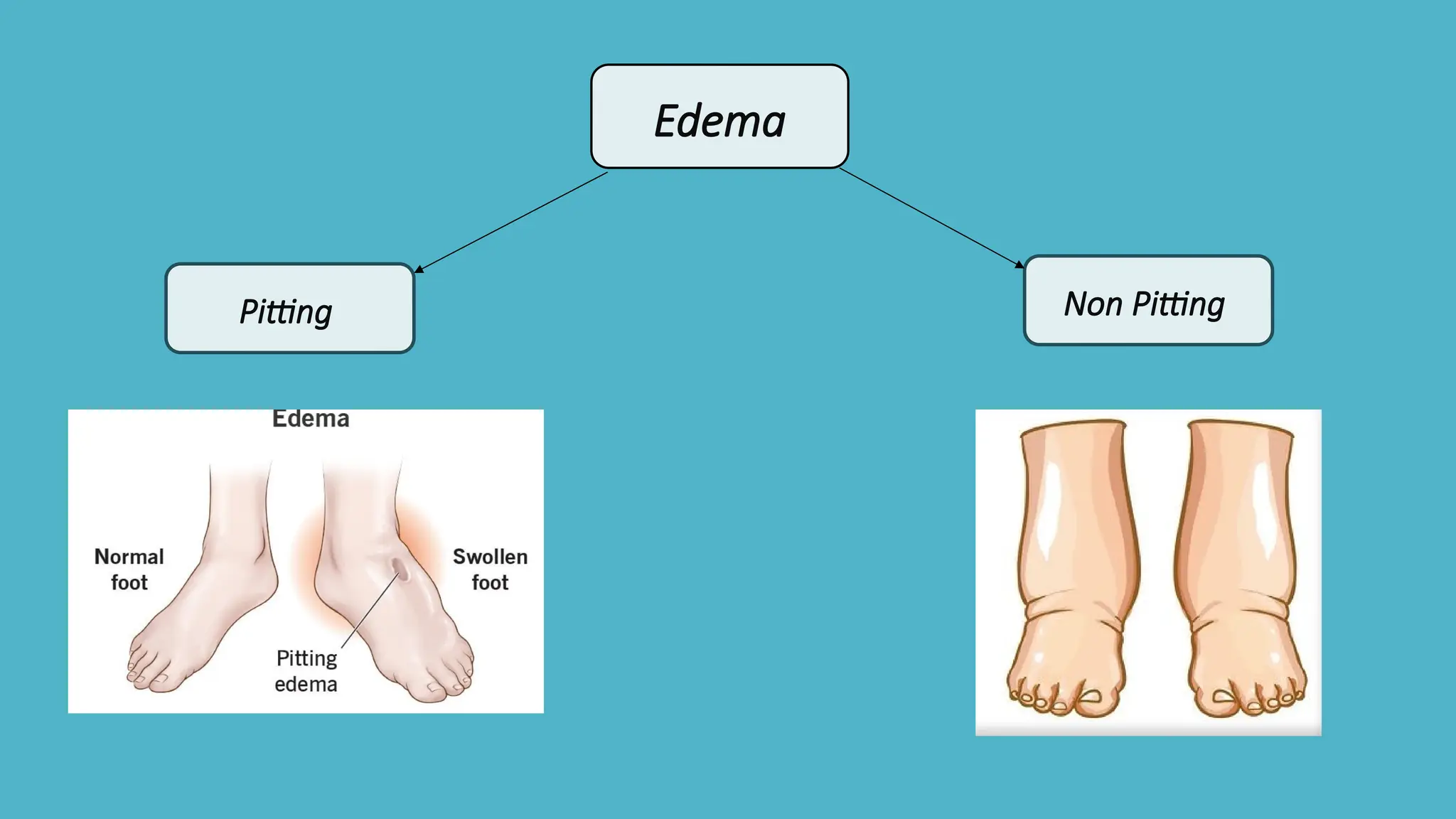
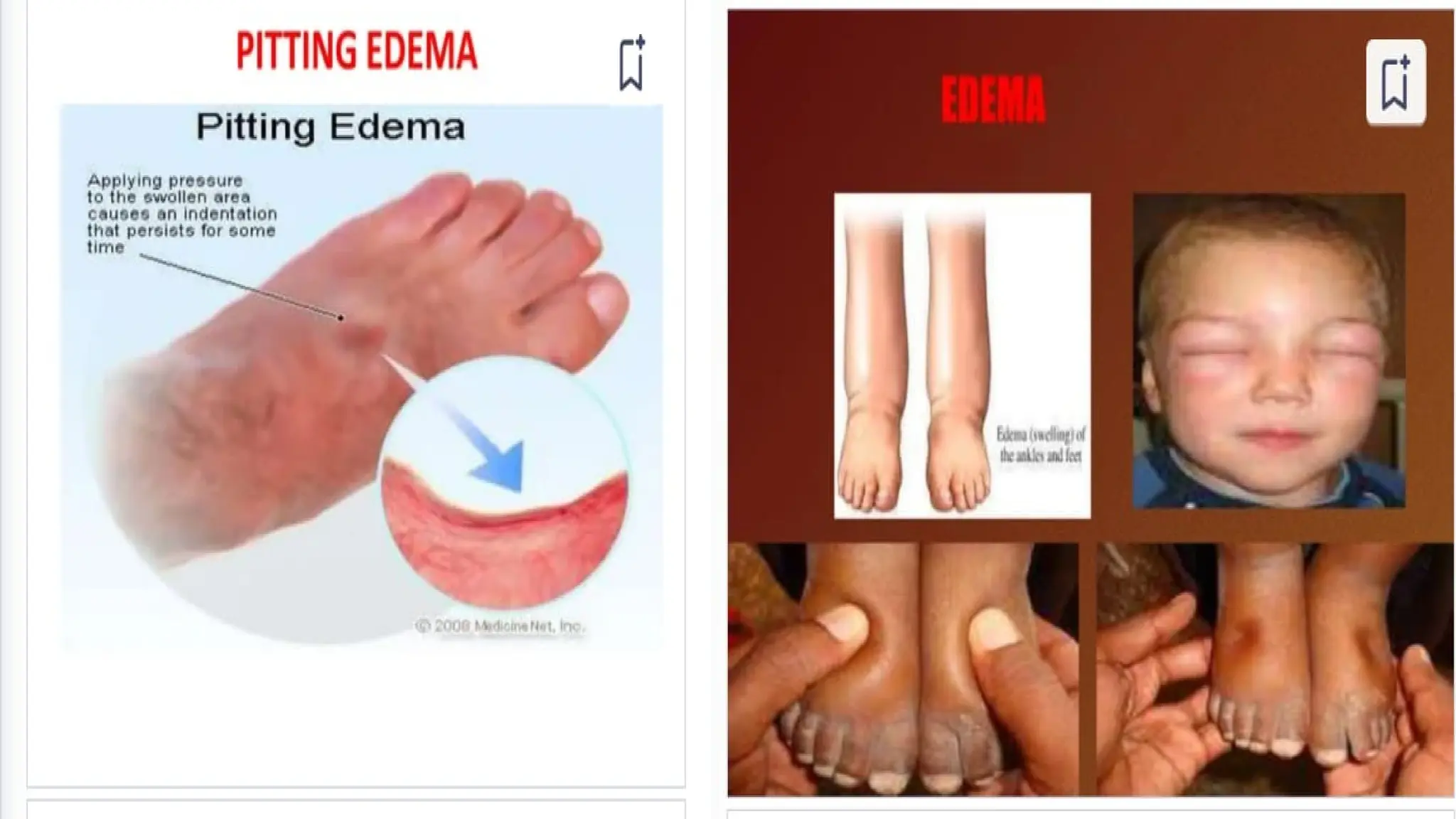
Edema
Pitting Non Pitting
Pulse Blood Pressure
60 to 100 Beat / min
<120/<80mmHg
as per WHO
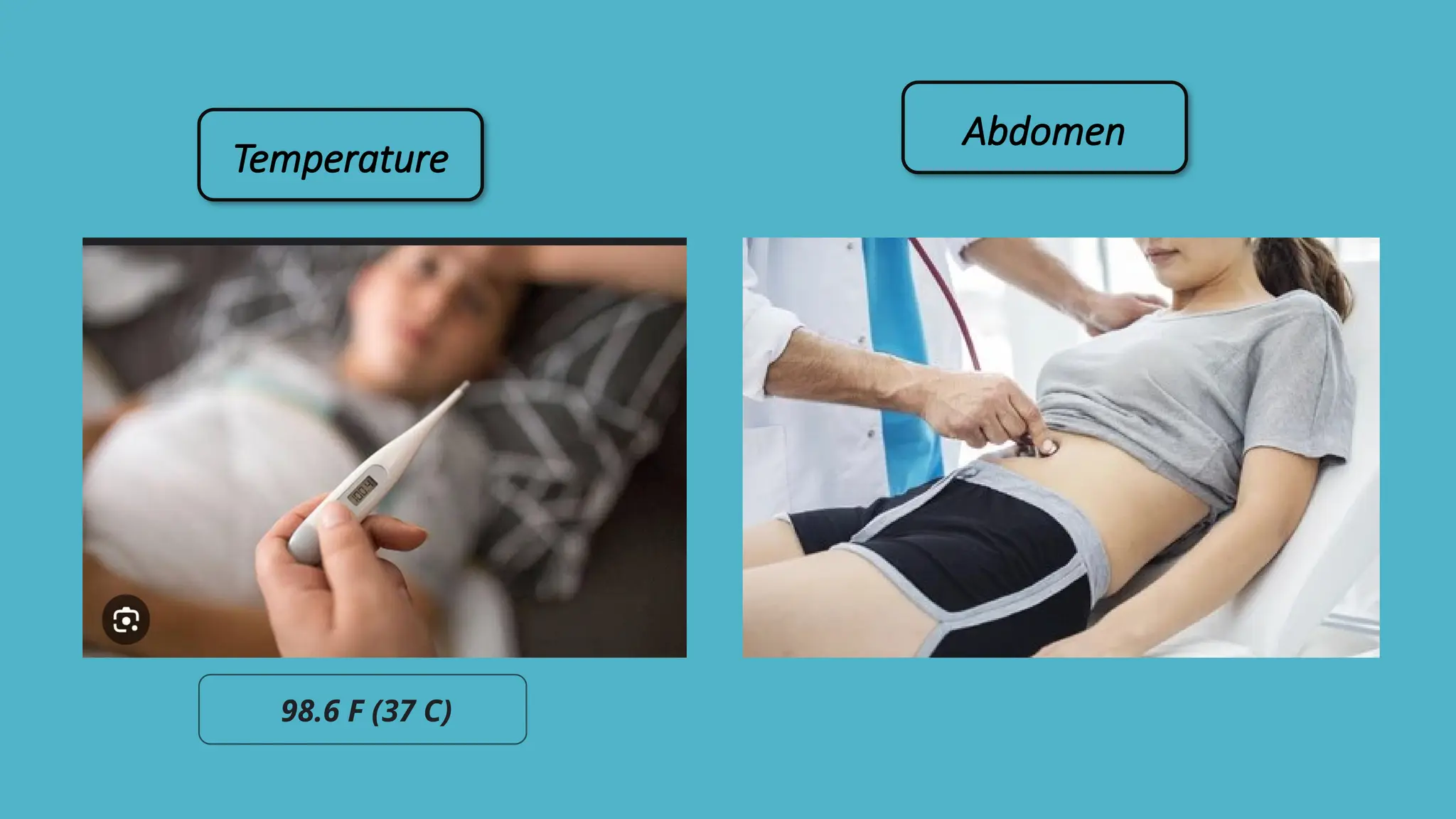
Temperature
Abdomen
98.6 F (37 C)

General Physical Examination of human body