COFISA: Foresight
    for Provincial Innovation


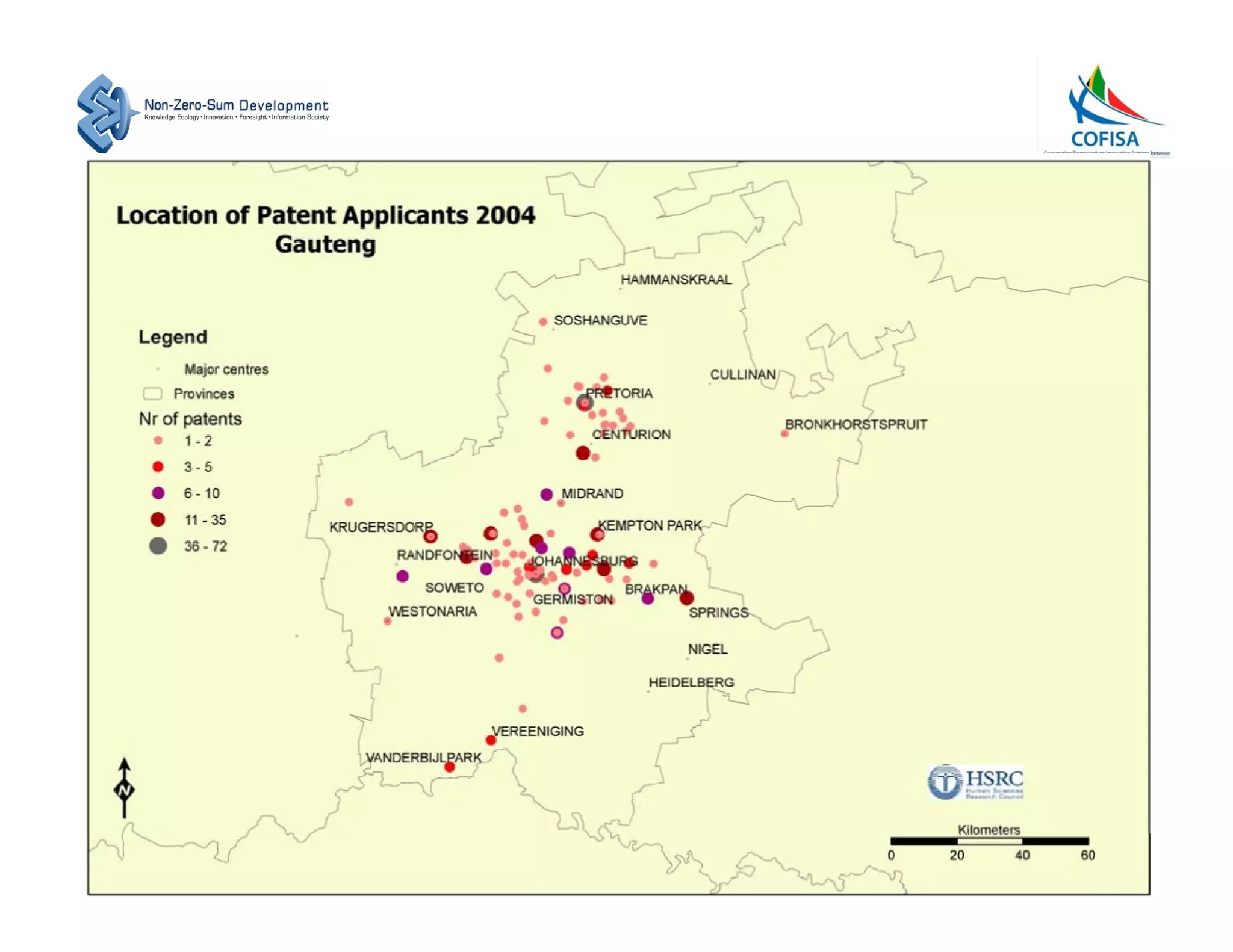
            Gauteng
    A Baseline Data Snapshot
Eskom Convention Centre, Midrand, 15th November 2007
           Peter Greenwood & Bob Day
           Non-Zero-Sum Development
Data sources
• COFISA baseline data study
  – In progress for E Cape, W Cape and Gauteng (IsambuloAMI)
  – Meta-data for ~800 datasets, at different degrees of
    disaggregation
  – CeSTII innovation data disaggregated to provincial level by
    December

• Gauteng baseline data
  – Only ~180 datasets currently (freely) available with data that
    is disaggregated down to the province or finer
  – Our sources for Gauteng:
     • Human Sciences Research Council
     • Statistics South Africa
     • Gauteng Provincial Government
Topics

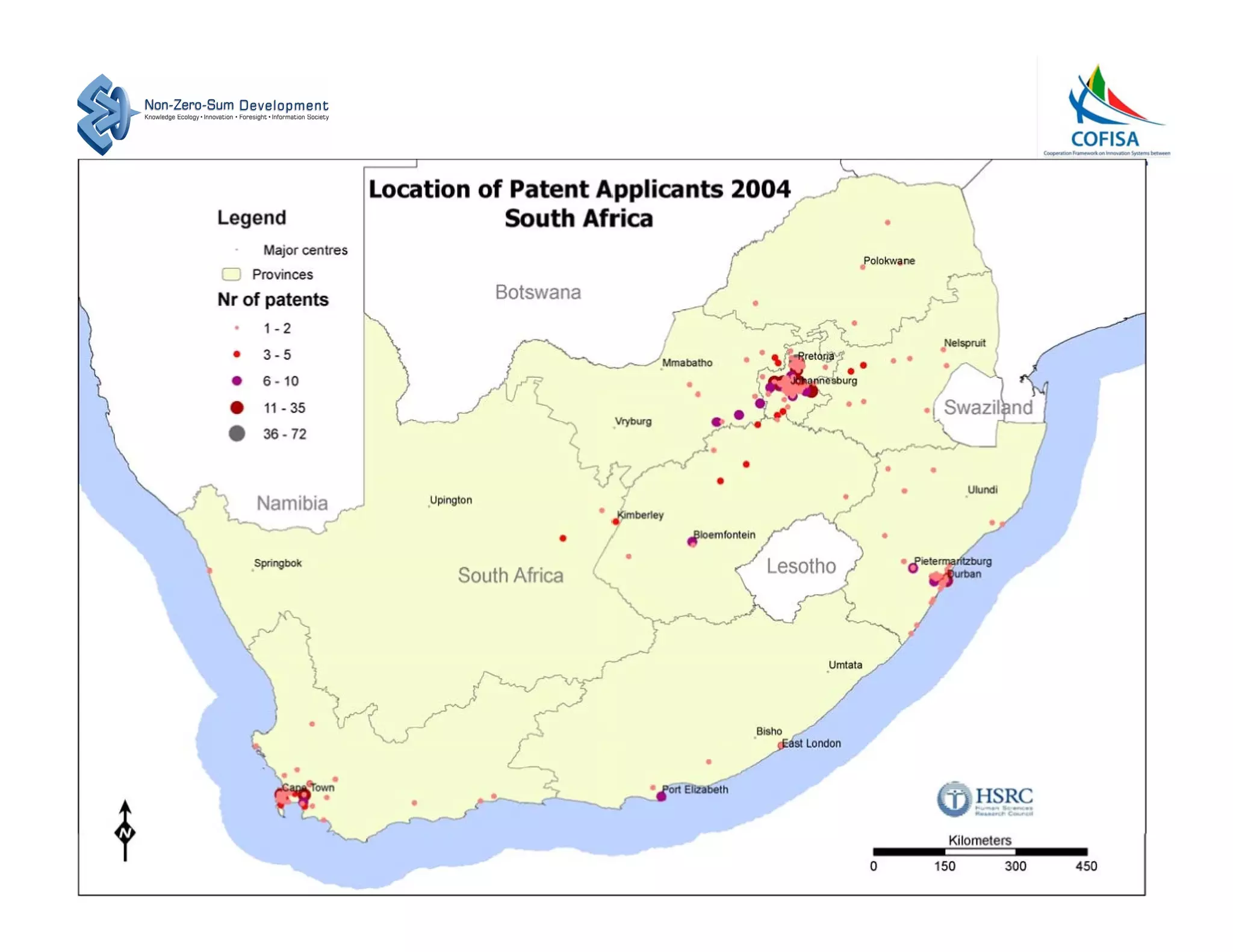
•   Population, Poverty and Basic Services
•   Education
•   Gauteng PGDS
•   Industry
•   Research and Development
Population, Poverty
and Basic Services
Gauteng
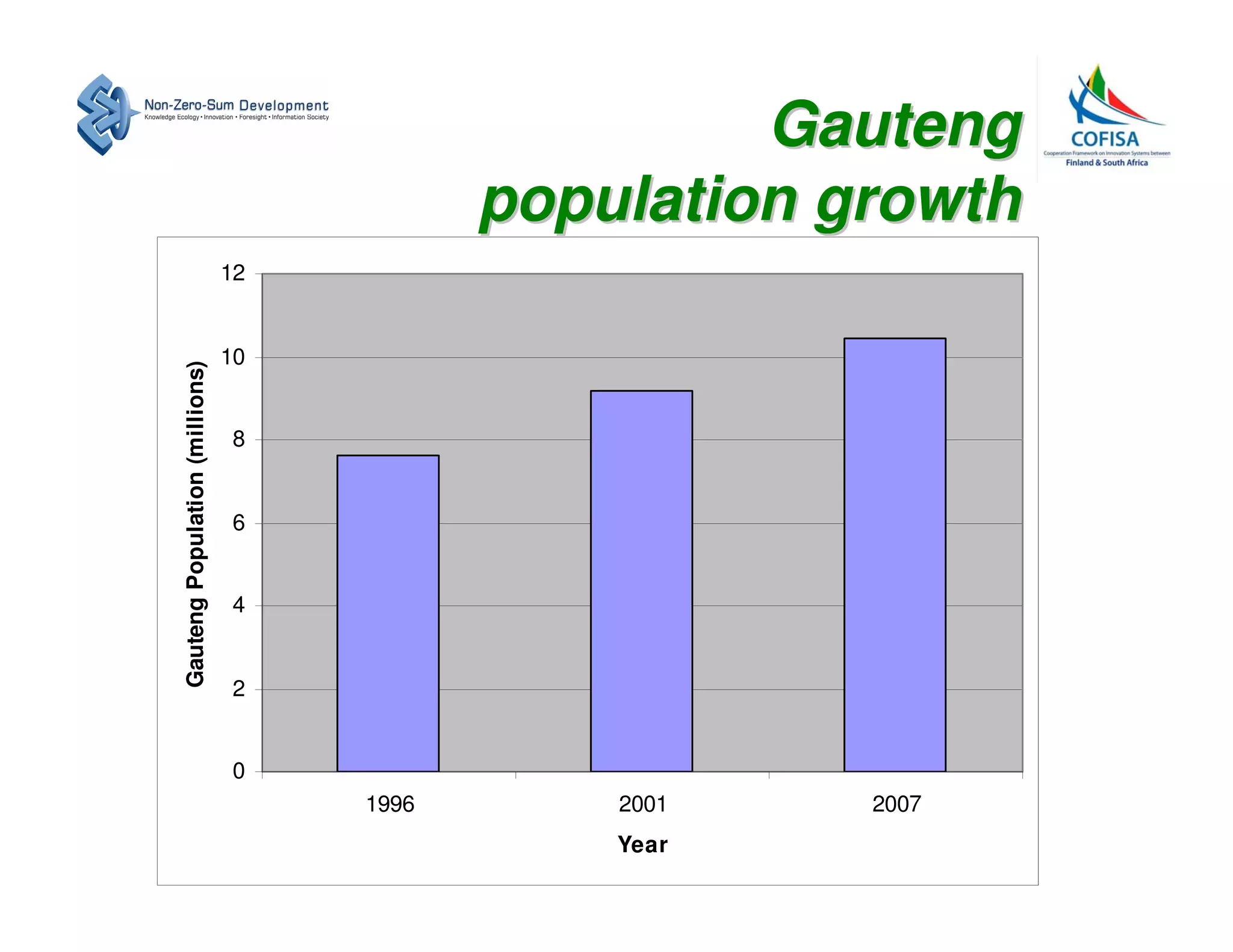
                                            population growth
                                12


                                10
Gauteng Population (millions)


                                8


                                6


                                4


                                2


                                0
                                     1996       2001    2007
                                                Year
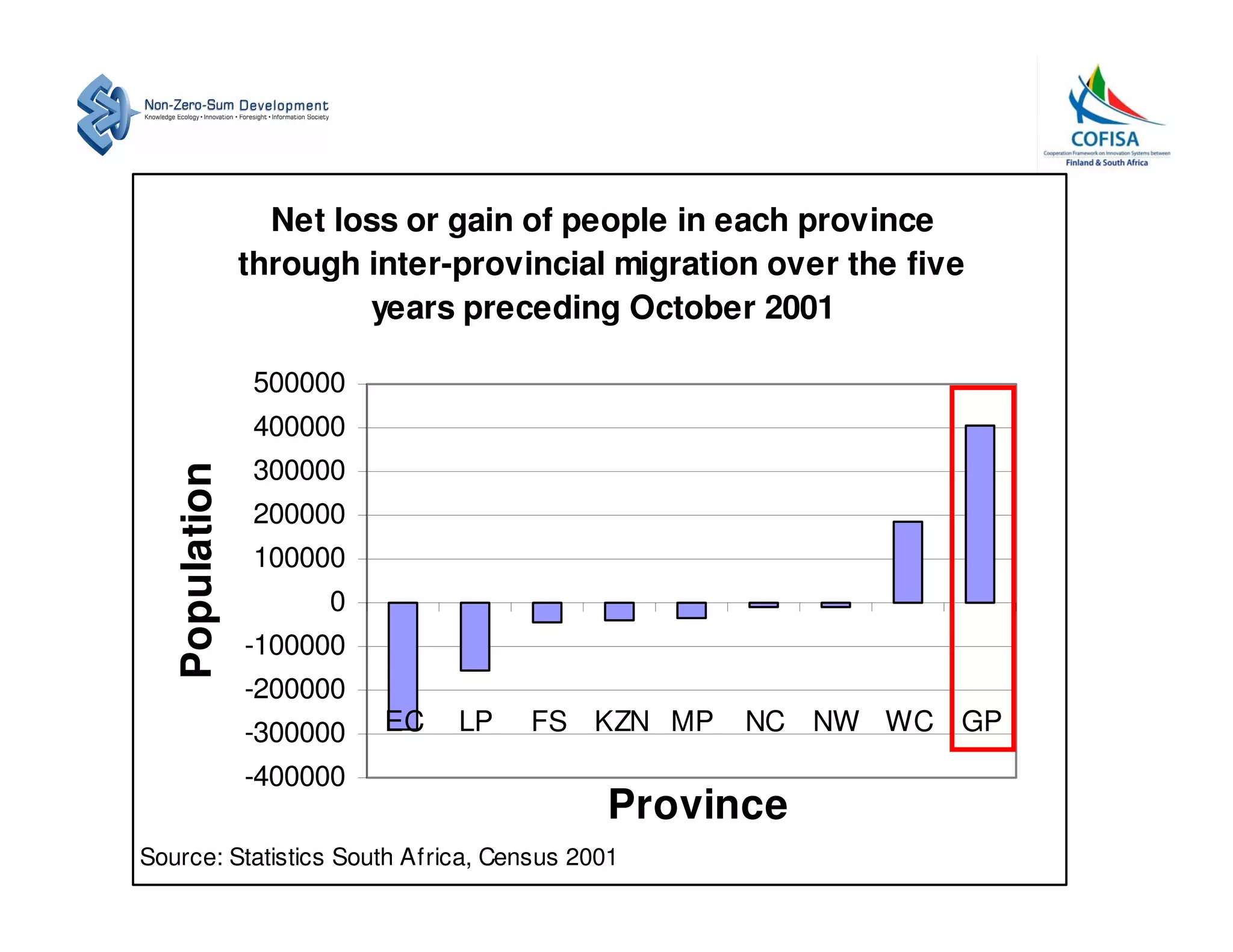
Net loss or gain of people in each province
                through inter-provincial migration over the five
                         years preceding October 2001

                 500000
                 400000
                 300000
   Population


                 200000
                 100000
                      0
                -100000
                -200000
                -300000   EC   LP   FS KZN MP    NC NW WC GP
                -400000
                                          Province
Source: Statistics South Africa, Census 2001
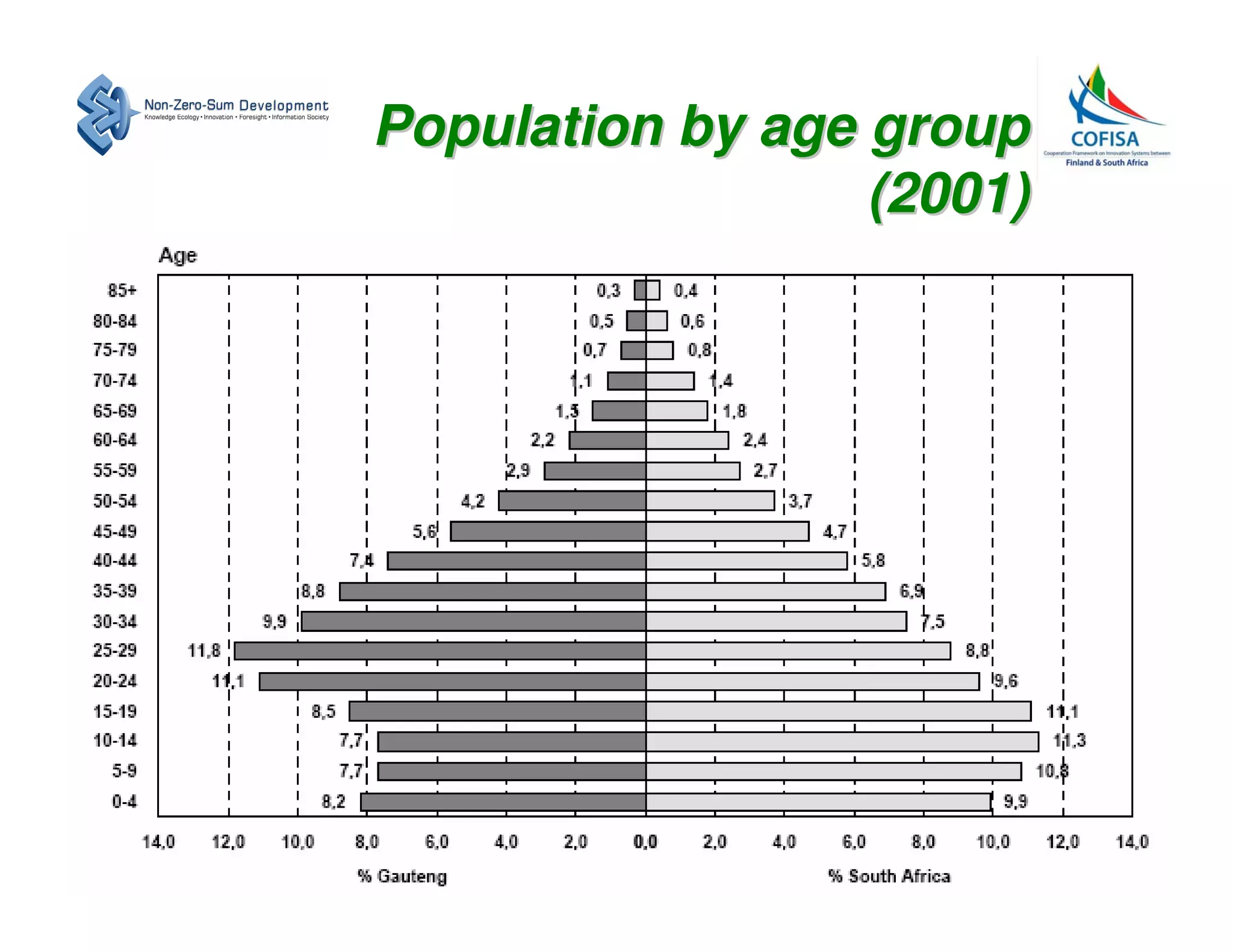
Population by age group
                  (2001)
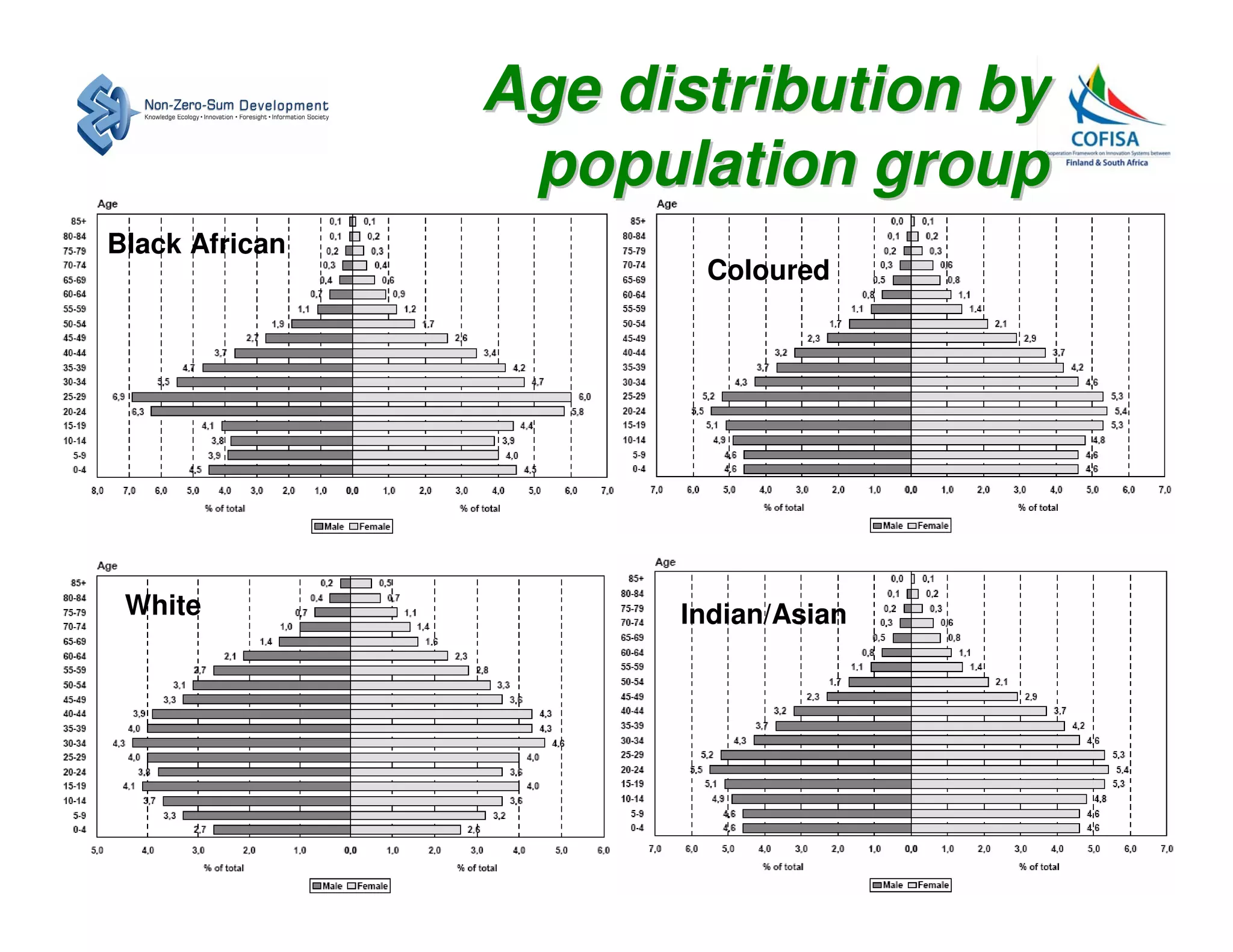
Age distribution by
                 population group
Black African
                       Coloured


 White                Indian/Asian
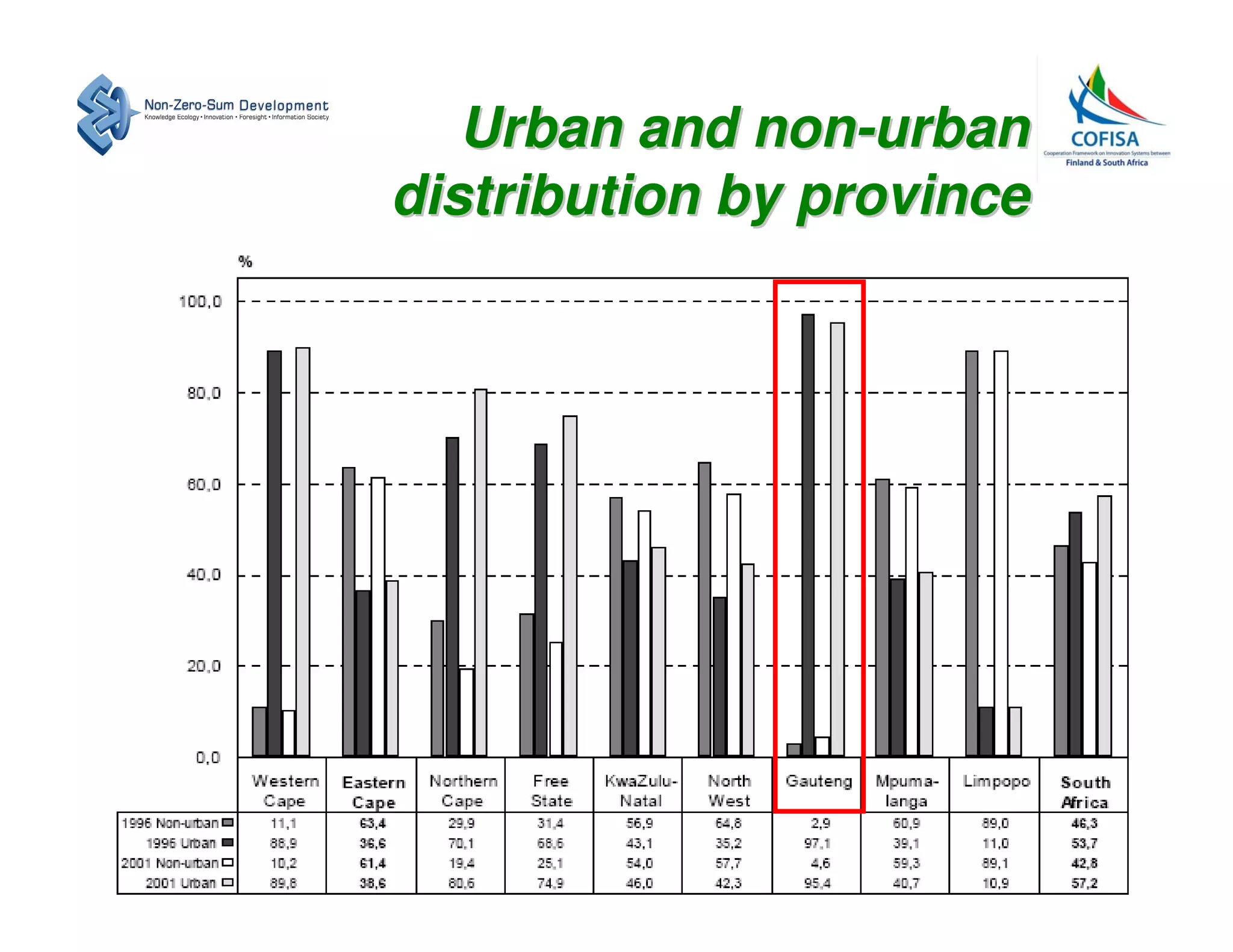
Urban and non-urban
distribution by province
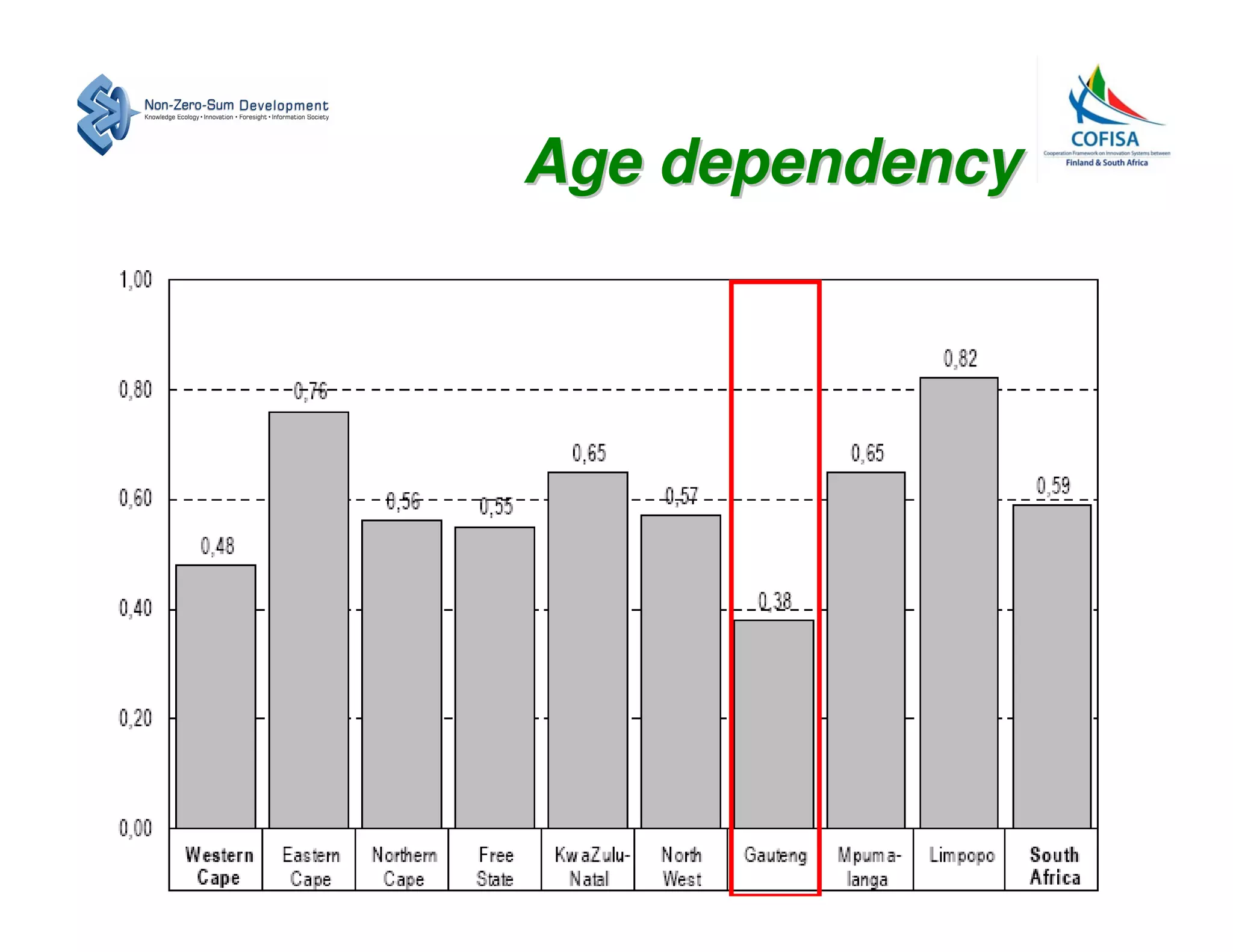
Age dependency
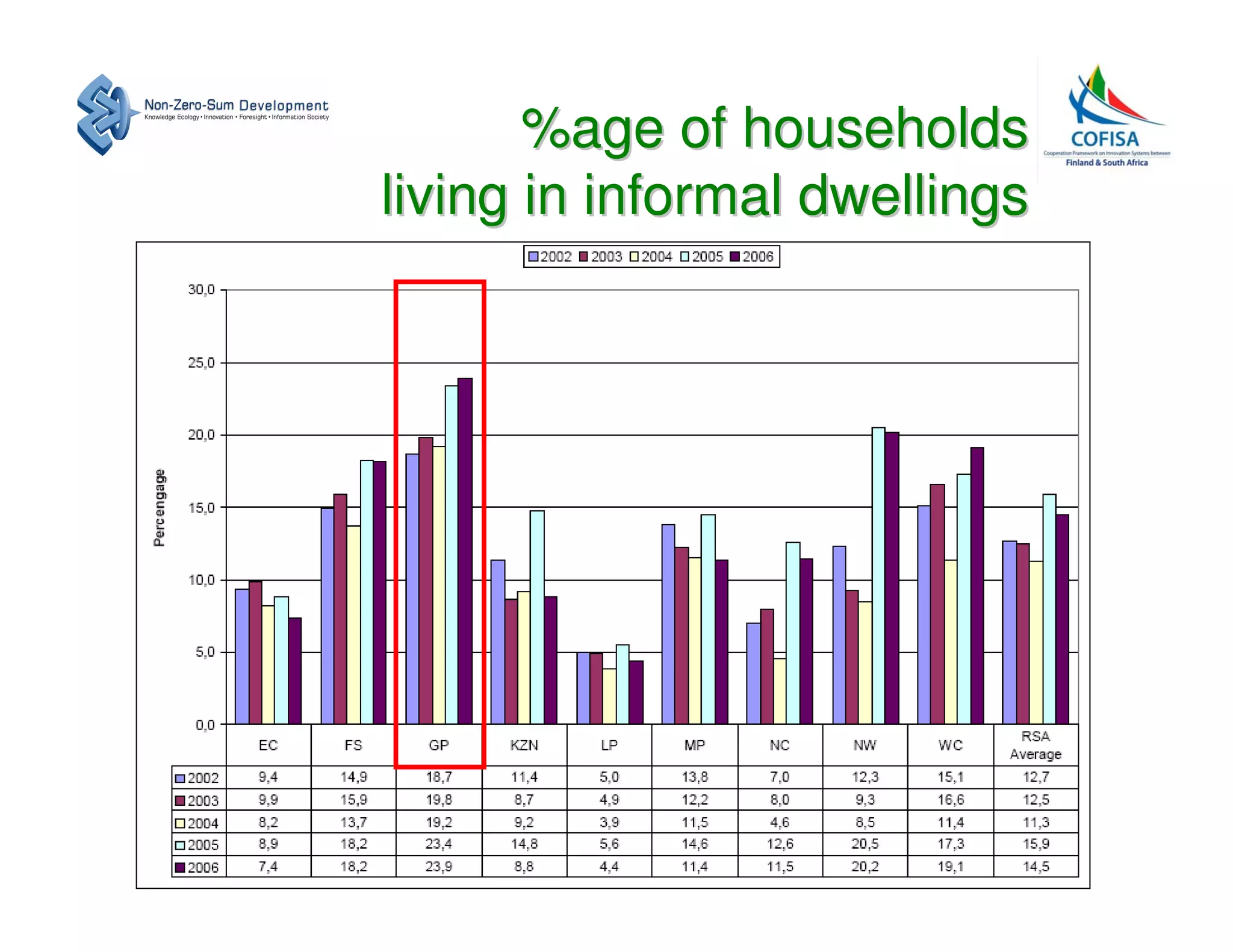
%age of households
living in informal dwellings
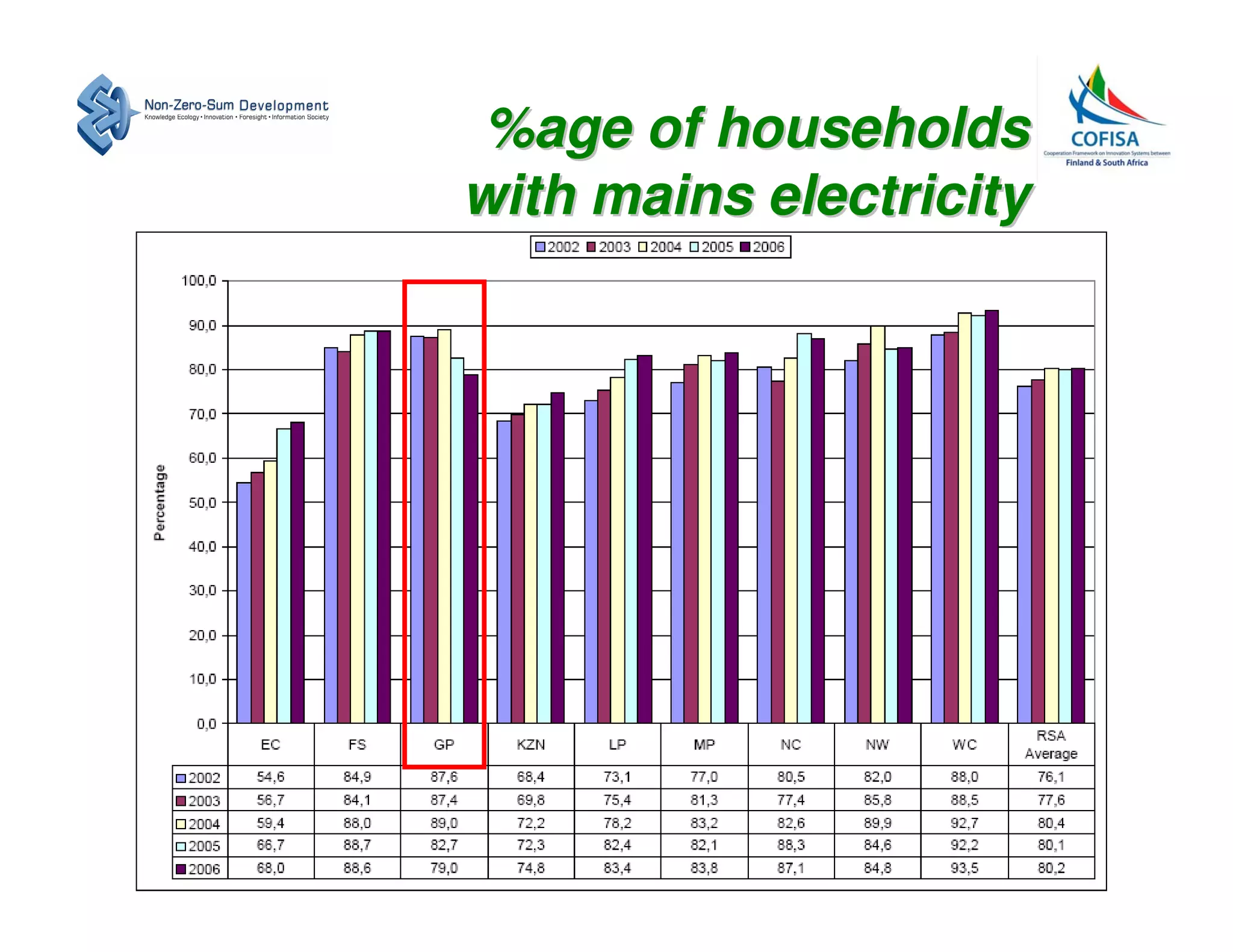
%age of households
with mains electricity
%age of households
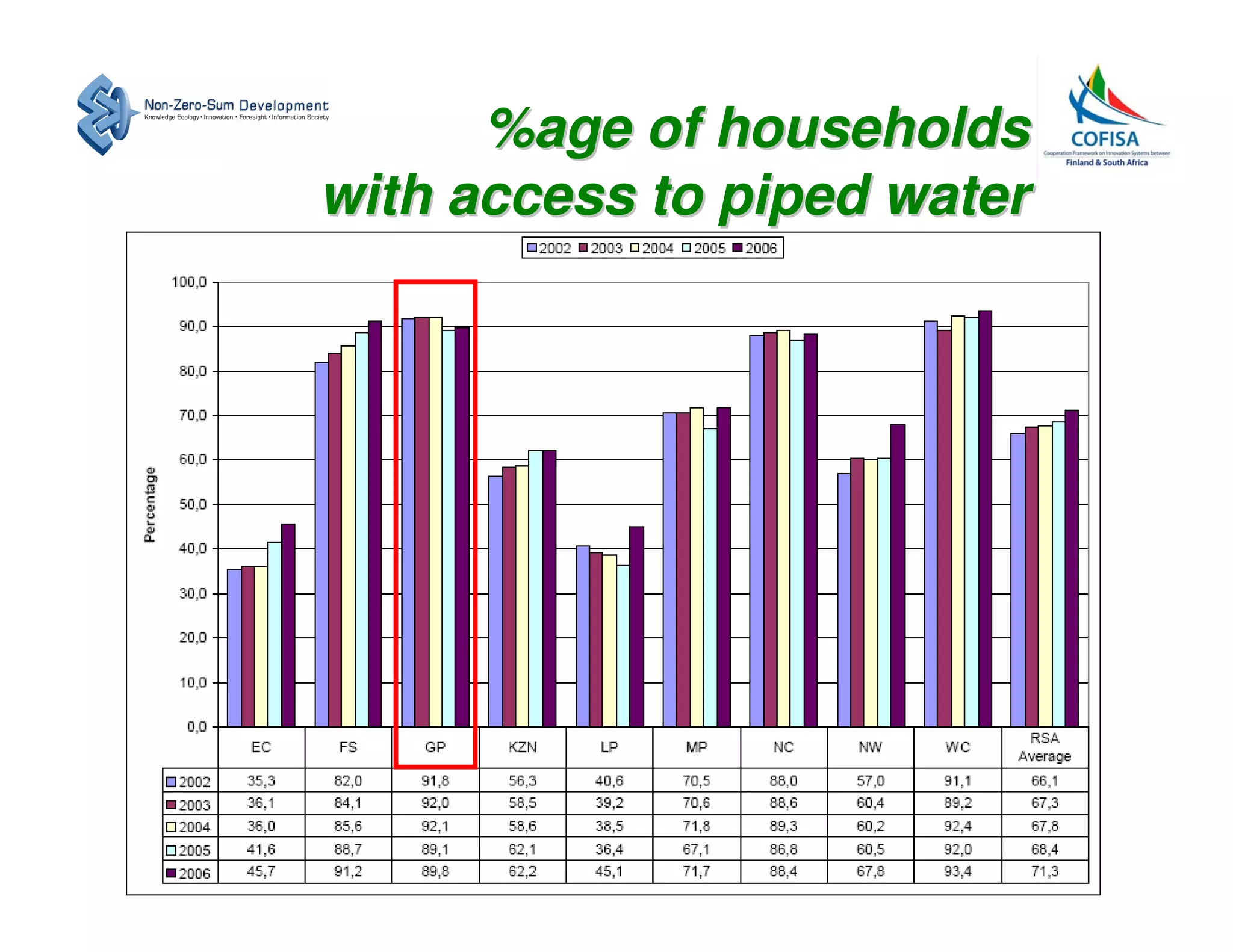
with access to piped water
%age of households
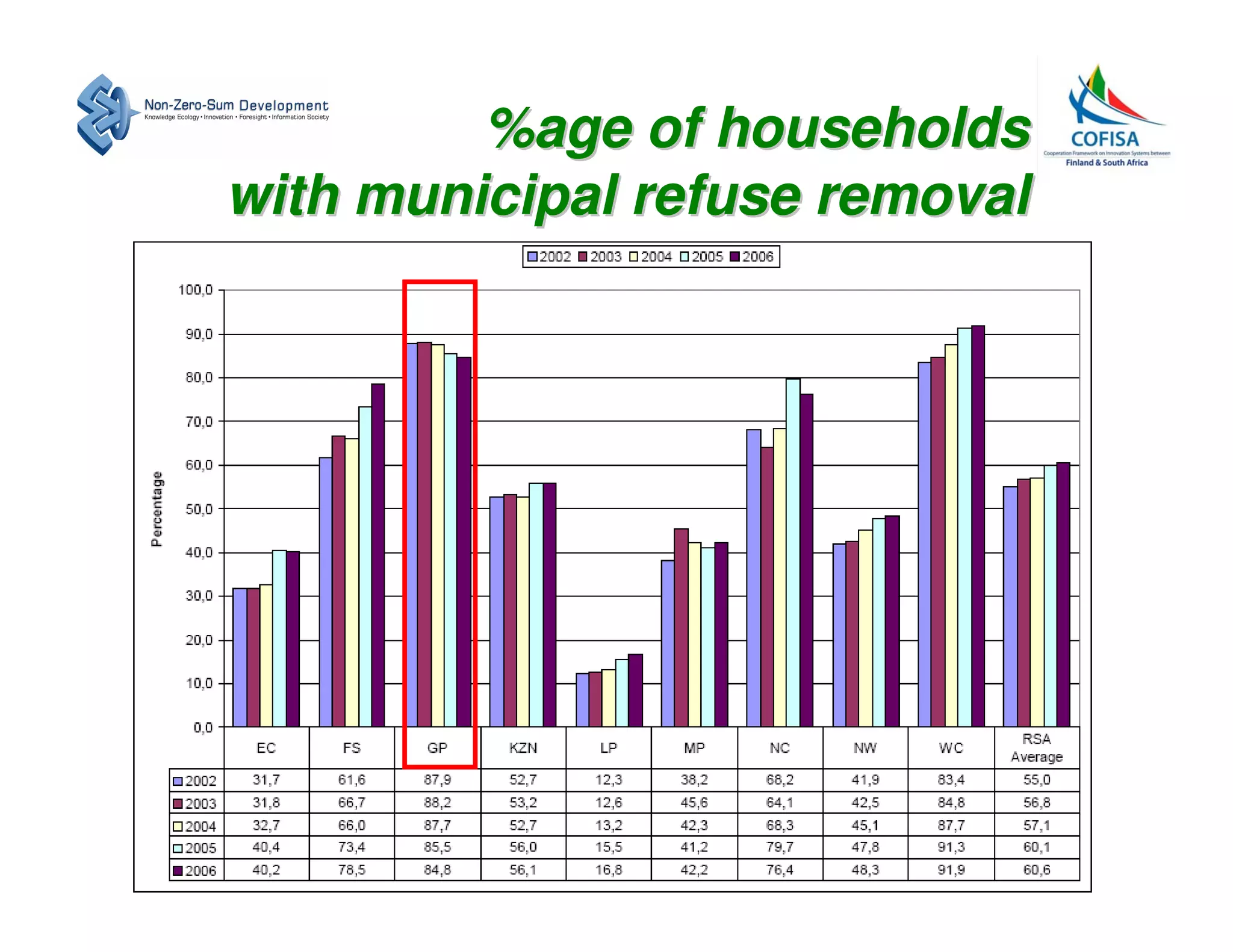
with municipal refuse removal
%age of households
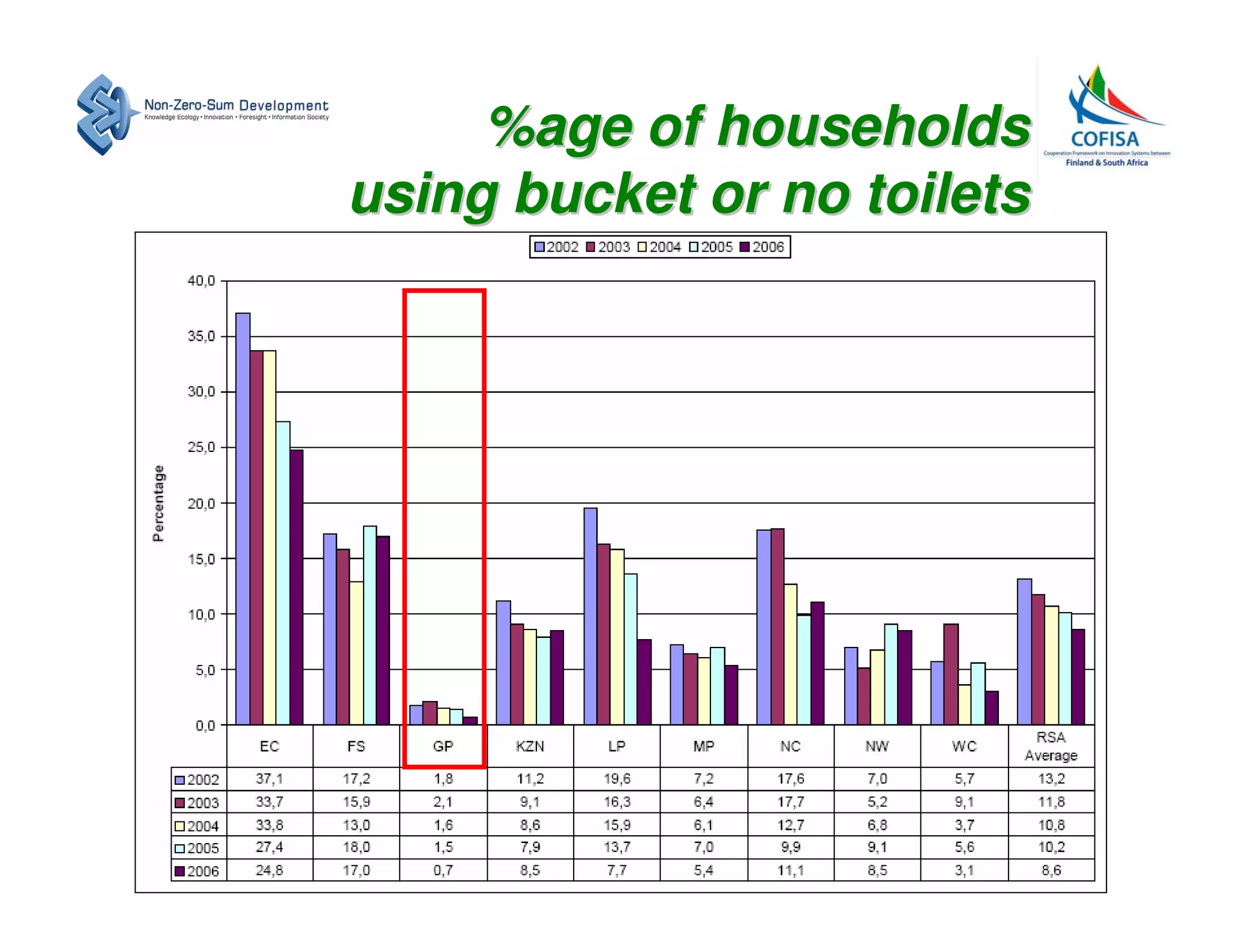
using bucket or no toilets
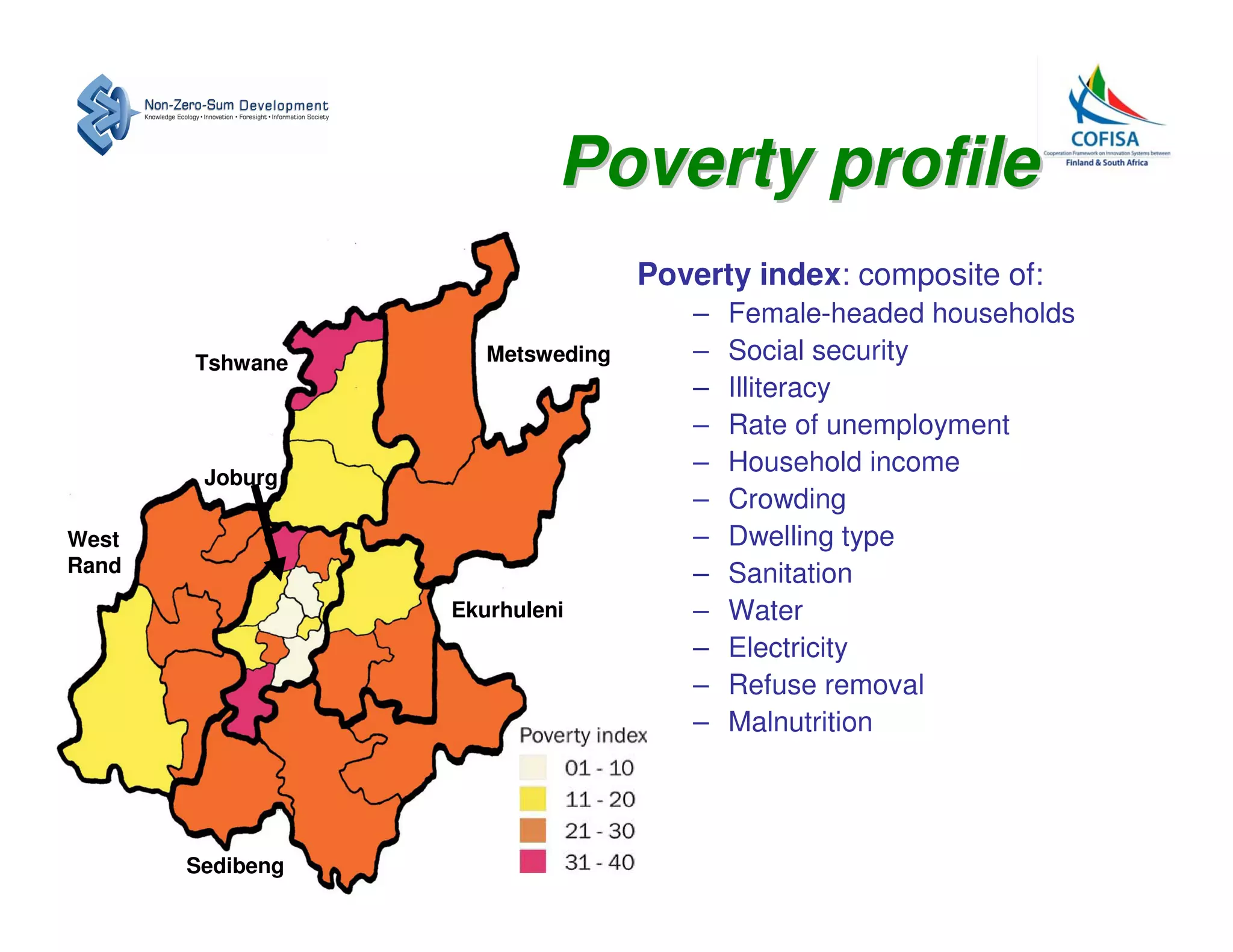
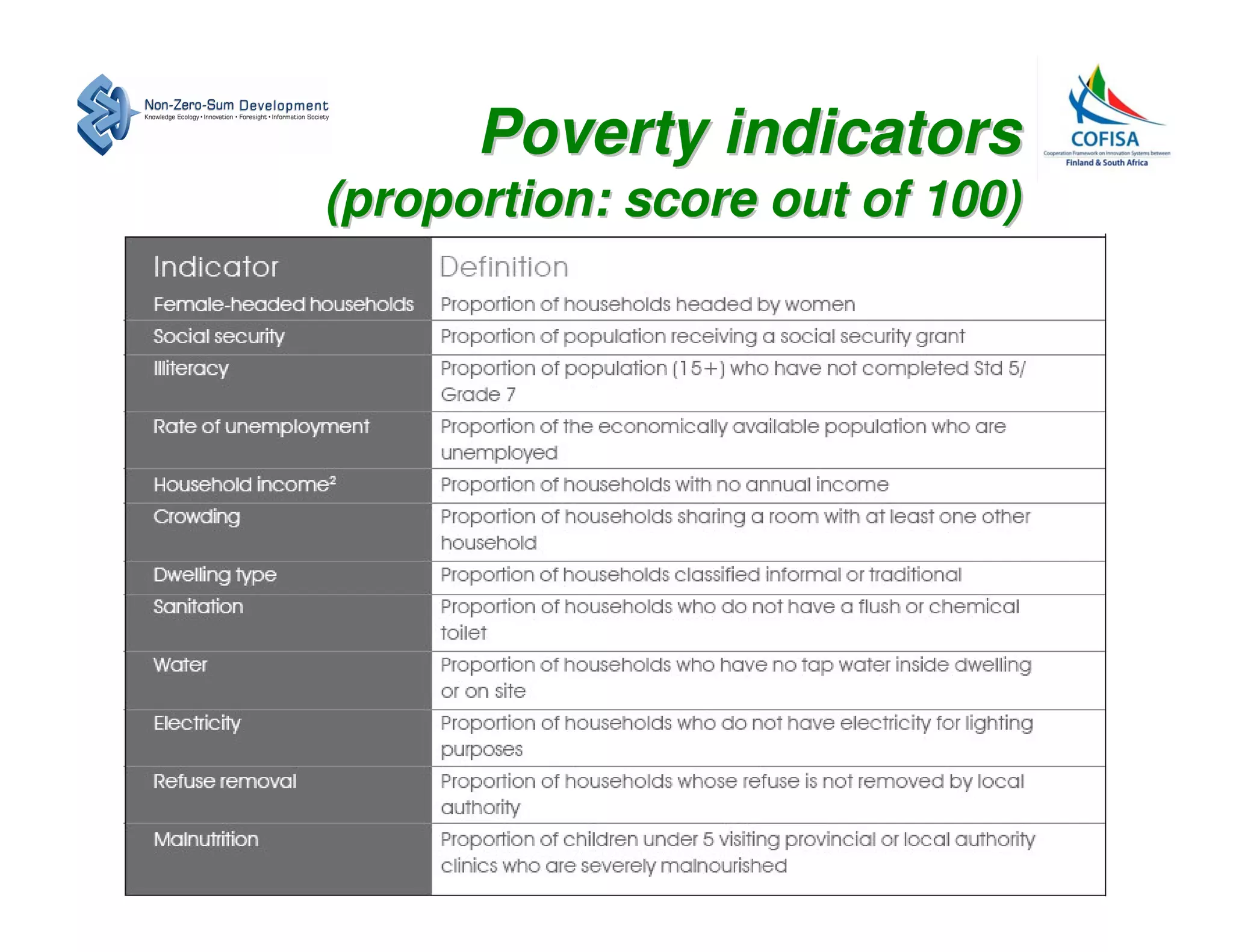
Poverty profile
                                  Poverty index: composite of:
                                     –   Female-headed households
       Tshwane       Metsweding      –   Social security
                                     –   Illiteracy
                                     –   Rate of unemployment
        Joburg
                                     –   Household income
                                     –   Crowding
West                                 –   Dwelling type
Rand                                 –   Sanitation
                  Ekurhuleni         –   Water
                                     –   Electricity
                                     –   Refuse removal
                                     –   Malnutrition


       Sedibeng
Education
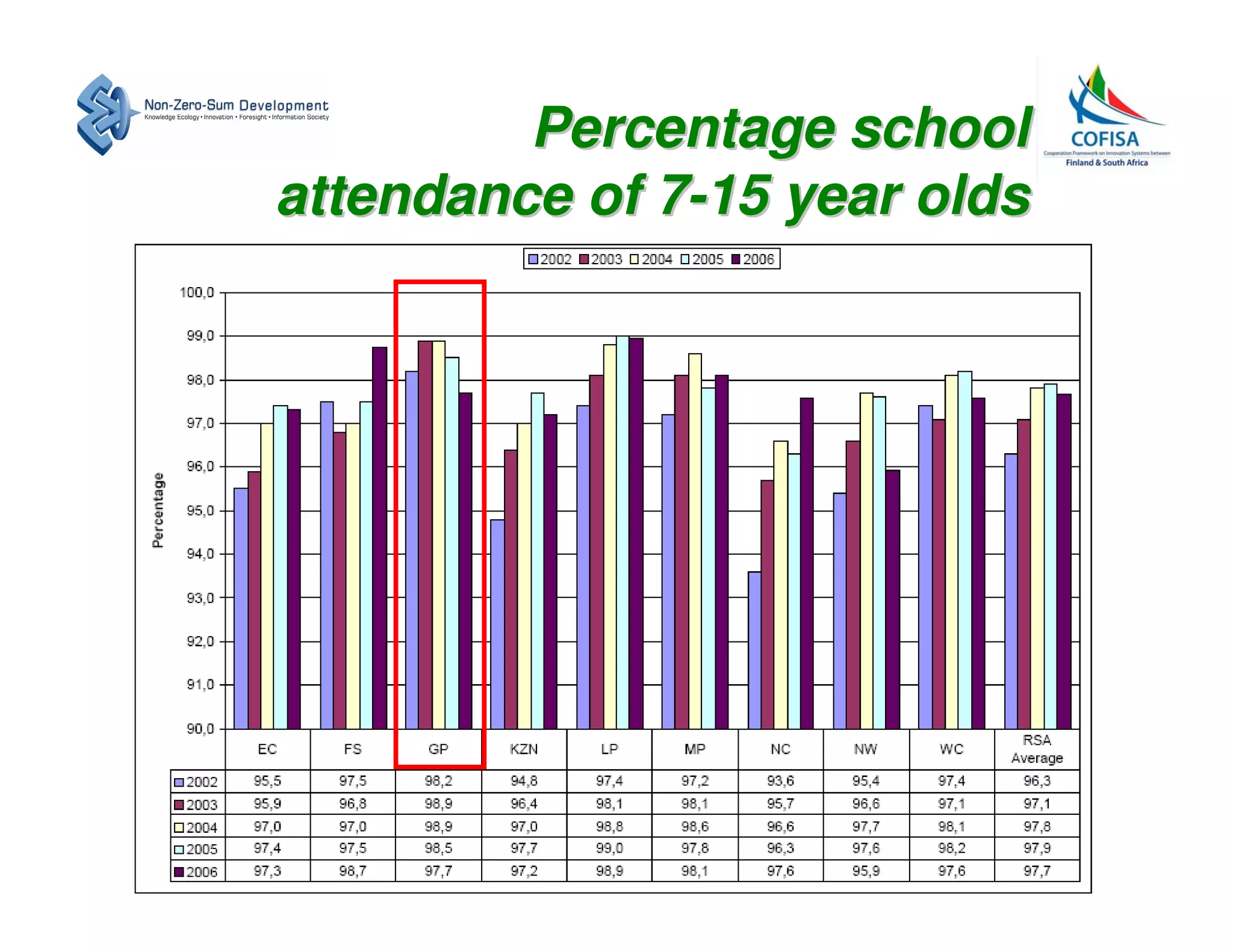
Percentage school
attendance of 7-15 year olds
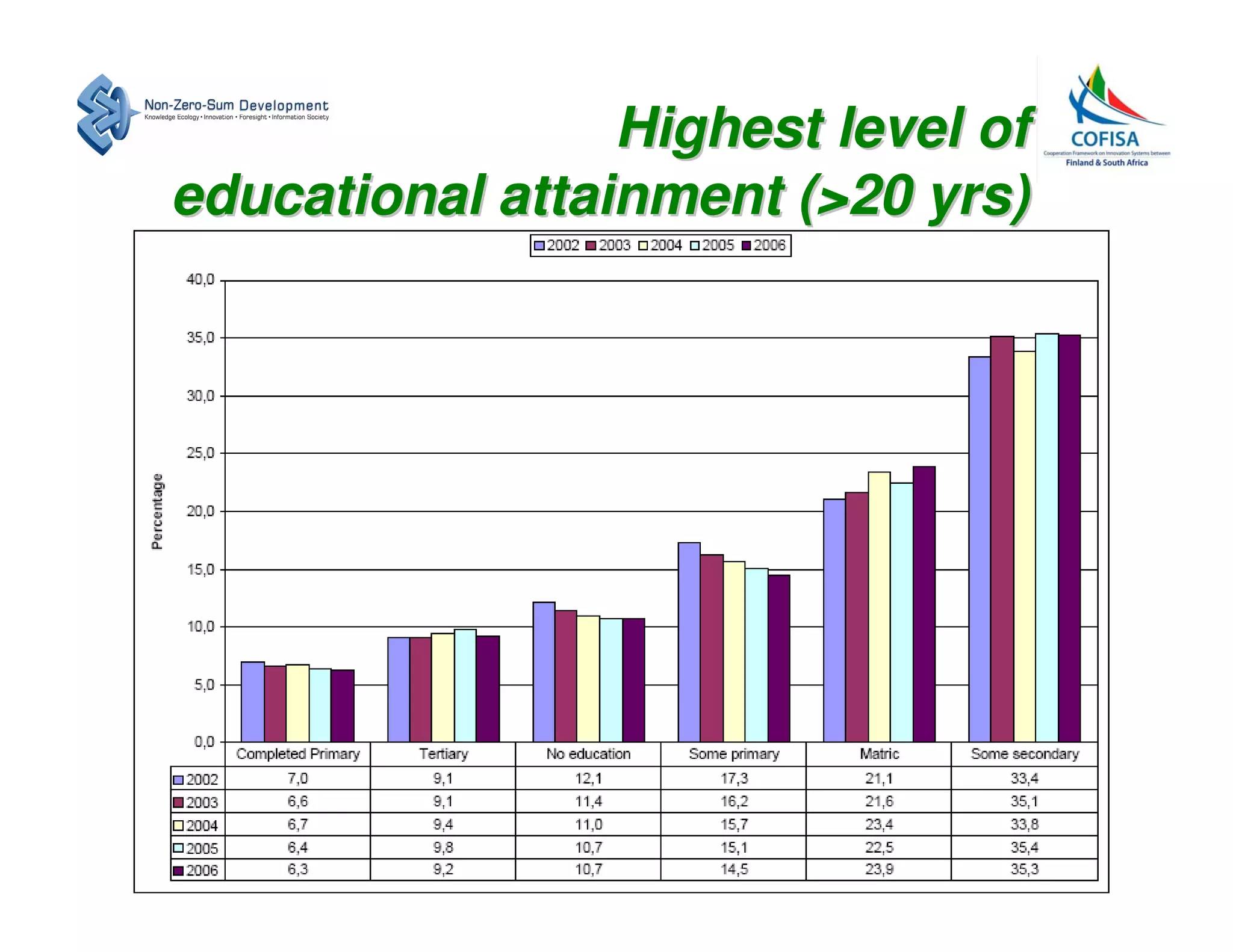
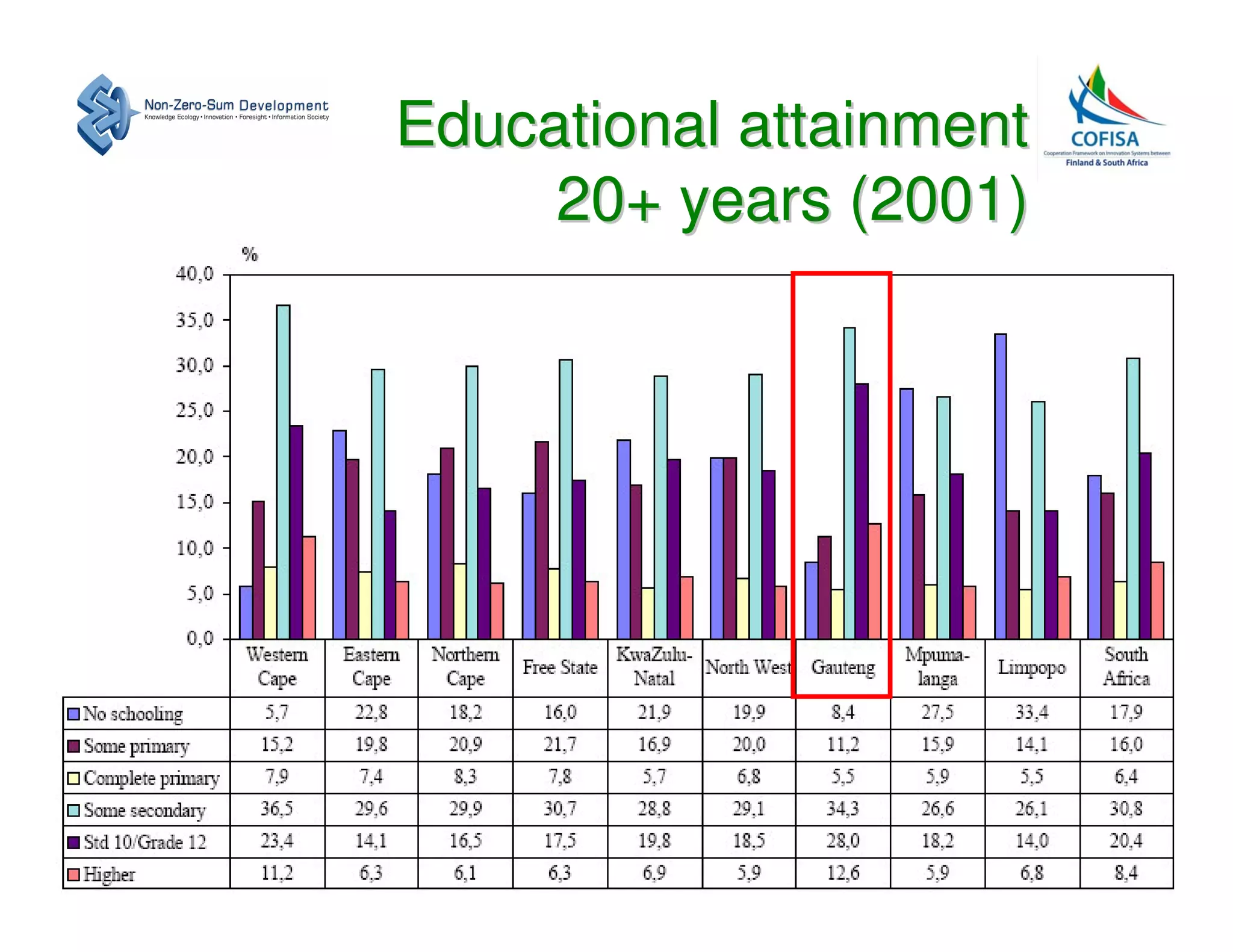
Highest level of
educational attainment (>20 yrs)
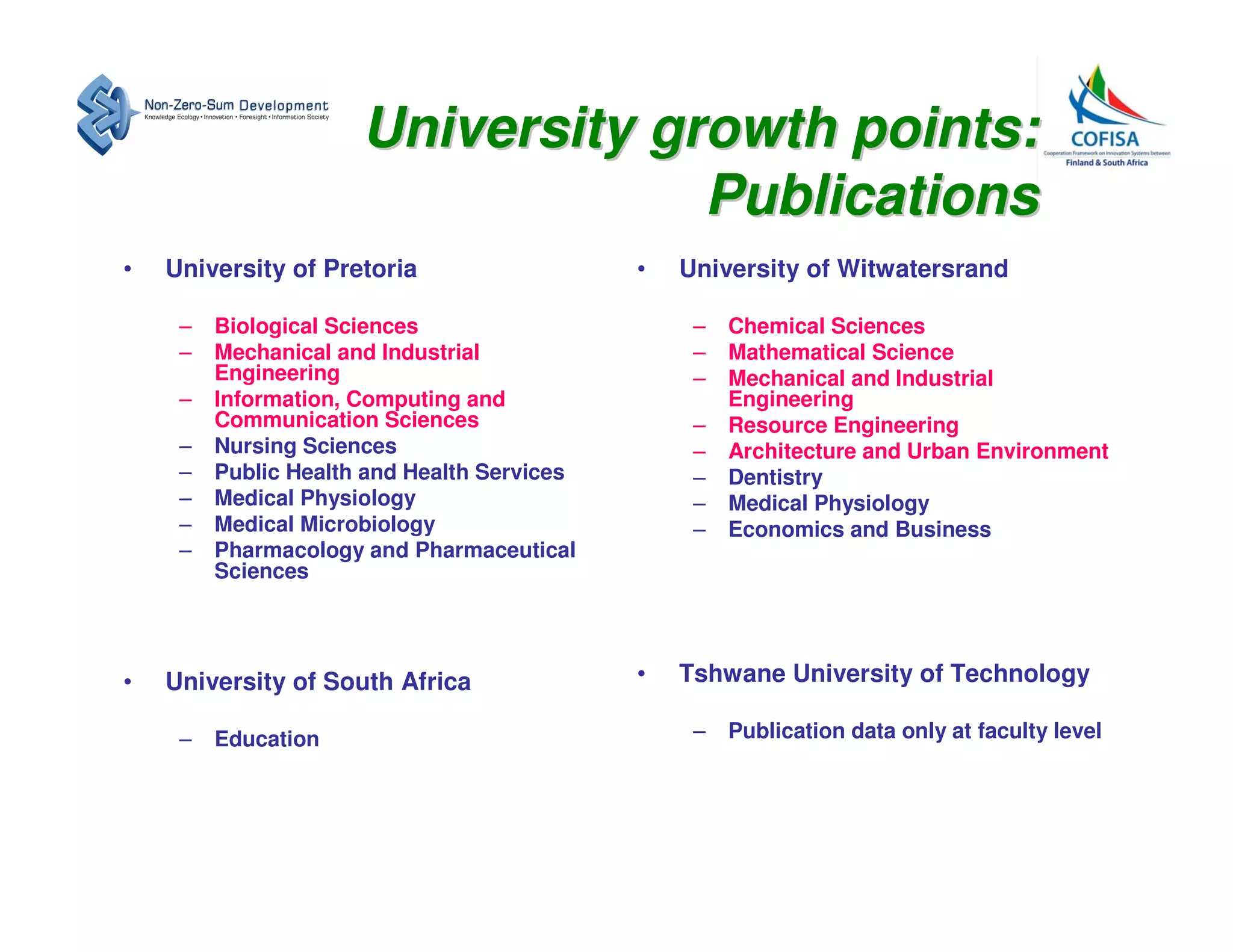
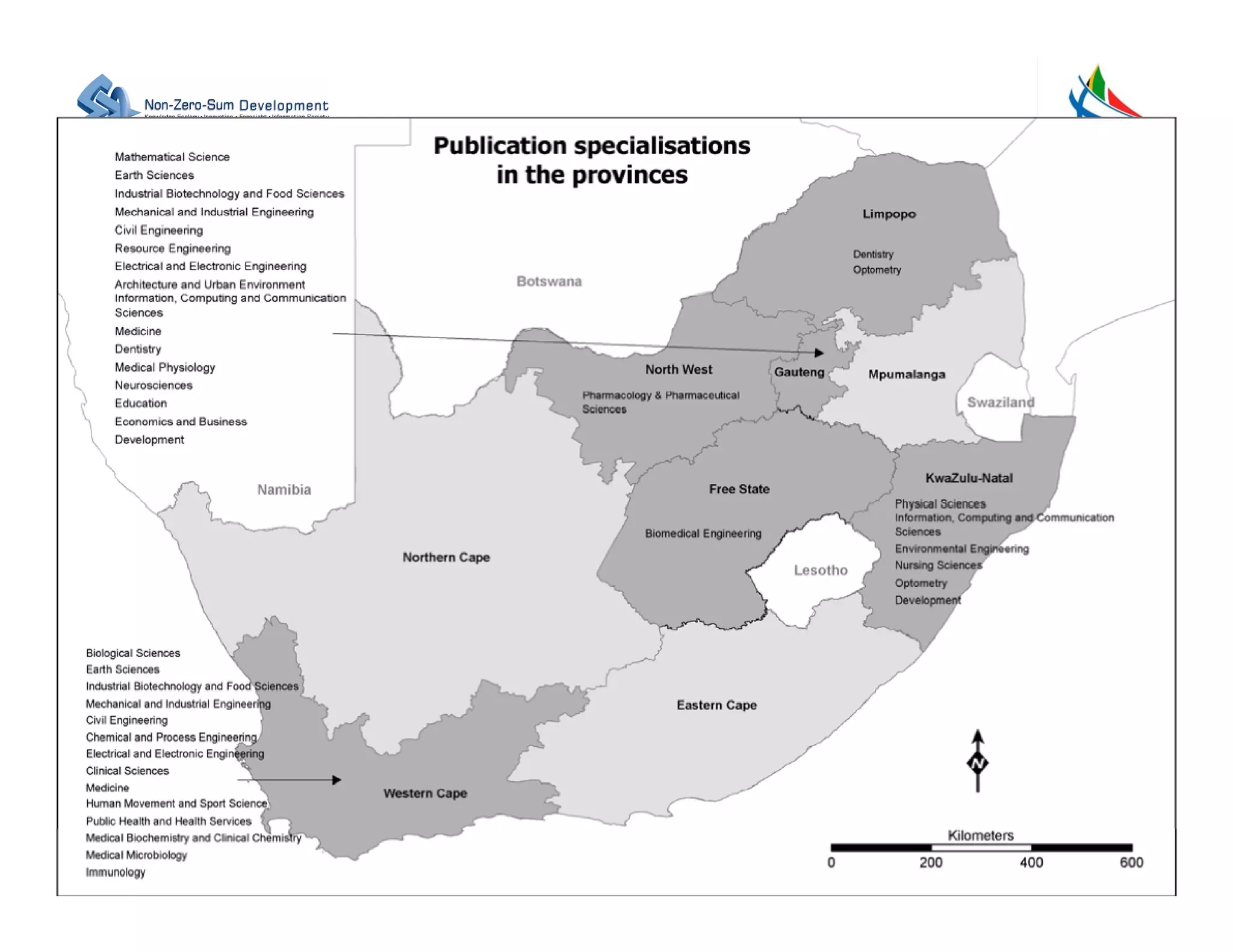
University growth points:
                                   Publications
•   University of Pretoria                   •   University of Witwatersrand

     –   Biological Sciences                      –   Chemical Sciences
     –   Mechanical and Industrial                –   Mathematical Science
         Engineering                              –   Mechanical and Industrial
     –   Information, Computing and                   Engineering
         Communication Sciences                   –   Resource Engineering
     –   Nursing Sciences                         –   Architecture and Urban Environment
     –   Public Health and Health Services        –   Dentistry
     –   Medical Physiology                       –   Medical Physiology
     –   Medical Microbiology                     –   Economics and Business
     –   Pharmacology and Pharmaceutical
         Sciences


•   University of South Africa               •   Tshwane University of Technology

     –   Education                                –   Publication data only at faculty level
Gauteng Provincial
    Growth and
Development Strategy
Provincial innovation
       systems in South Africa
“But what emerges from the work so far
suggests that regional or local innovation
systems exist, if at all, only in Gauteng and
Western Cape, and possibly in KZN, but
nowhere else.”
          REGIONAL AND LOCAL INNOVATION SYSTEMS A study on
          behalf of NACI
             March 2007 (unpublished)


So: an innovation system exists in Gauteng,
 but only just?
Gauteng PGDS,
            Trade and Industry Strategy
•   Emphasises the role of innovation:
     – Realignment of manufacturing;
     – Smart industries;
     – Financial and business services

•   Some objectives:
     – Higher-value added production in manufacturing
     – Expansion of high-tech industries and technological activities

•   But:
     – Some objectives rely on a functioning knowledge economy
     – How should relationships between producers and users of knowledge
       manifest themselves at the local level?
     – How may the provincial government contribute to generating positive
       dynamics?
     – What are the systemic requirements for innovation?
     – What is the innovation strategy?
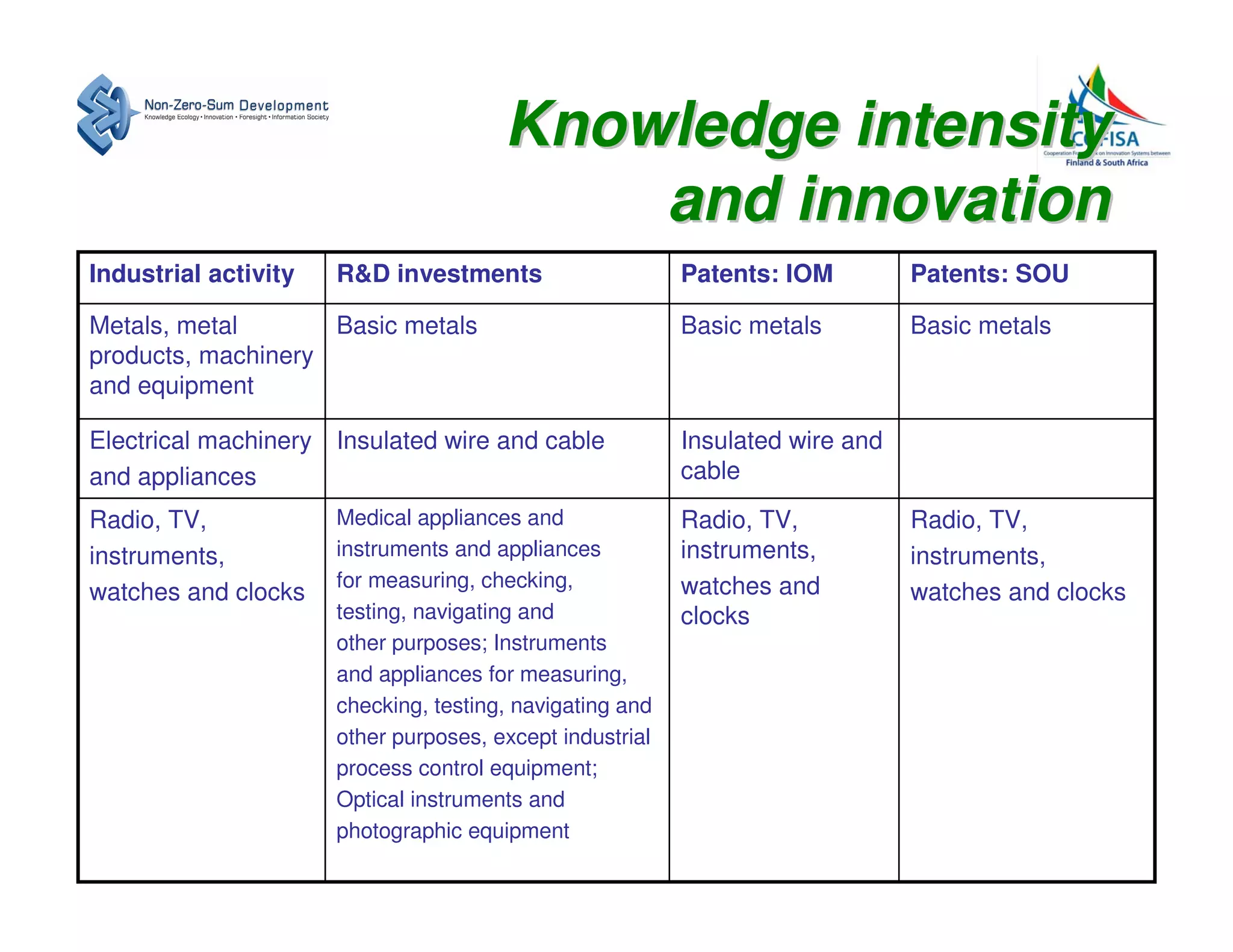
Industry
Industrial
                                   specialisations
                             (Provincial share >20% of national total)


• Gauteng                            • Western Cape
  – Manufacturing                        – Agriculture, forestry and
      • Metals, metal products,            fishing
        machinery, equipment             – Food, beverages and
      • Other non-metal mineral            tobacco
        products                         – Textiles, clothing and
      • Electrical machinery and           leather goods
        apparatus                        – Finance and business
      • Radio, TV, instruments,            services
        watches, clocks
      • Furniture and other
        manufacturing
  – Construction                     • Eastern Cape
  – Wholesale and retail trade,          – Transport equipment
    catering and
    accommodation
  – Finance and business
    services
Farming operations
            (2001)
Gross agricultural
          income
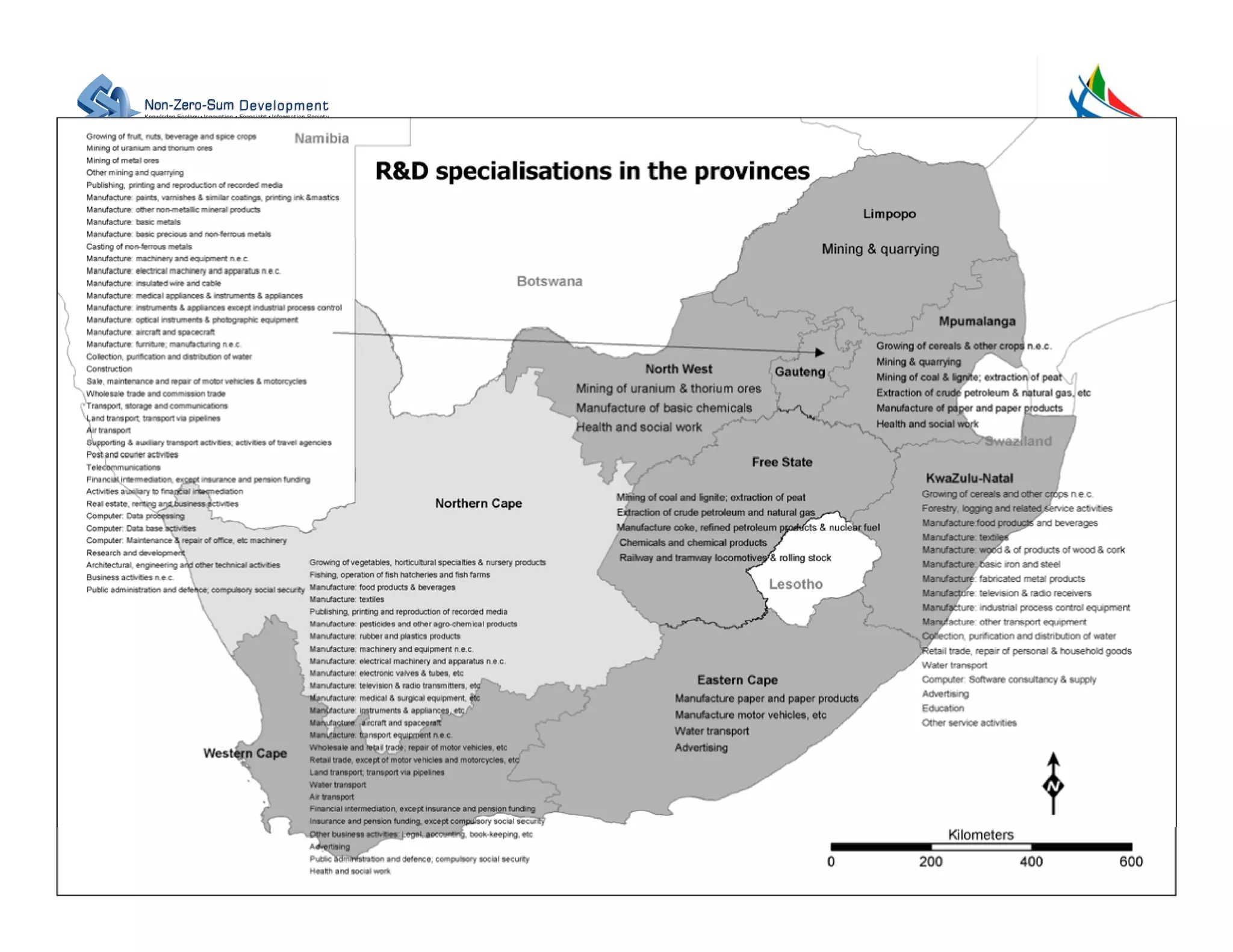
Research &
Development (R&D)
Technology
                 Achievement Index (TAI)

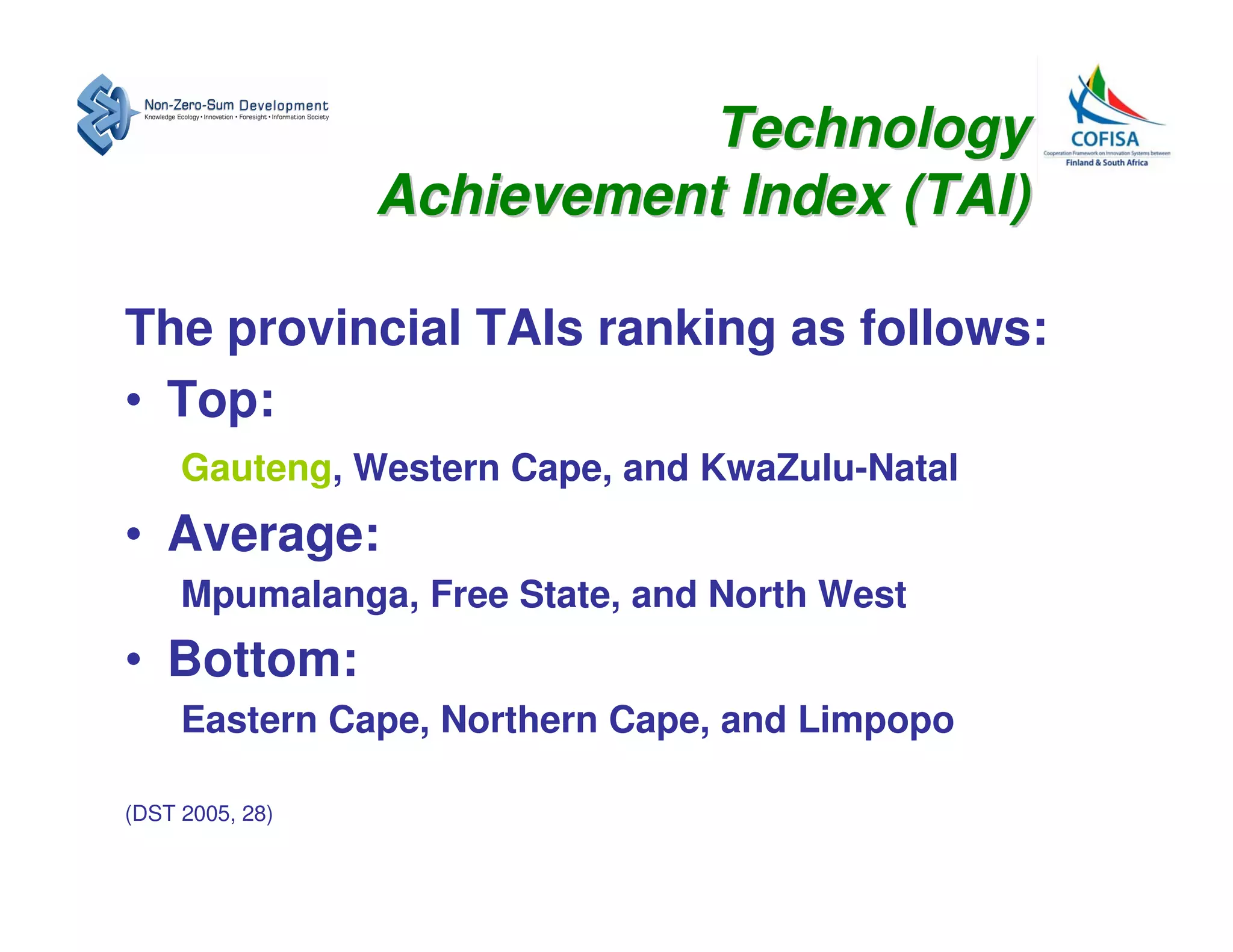
The provincial TAIs ranking as follows:
• Top:
     Gauteng, Western Cape, and KwaZulu-Natal
• Average:
     Mpumalanga, Free State, and North West
• Bottom:
     Eastern Cape, Northern Cape, and Limpopo

(DST 2005, 28)
Summary
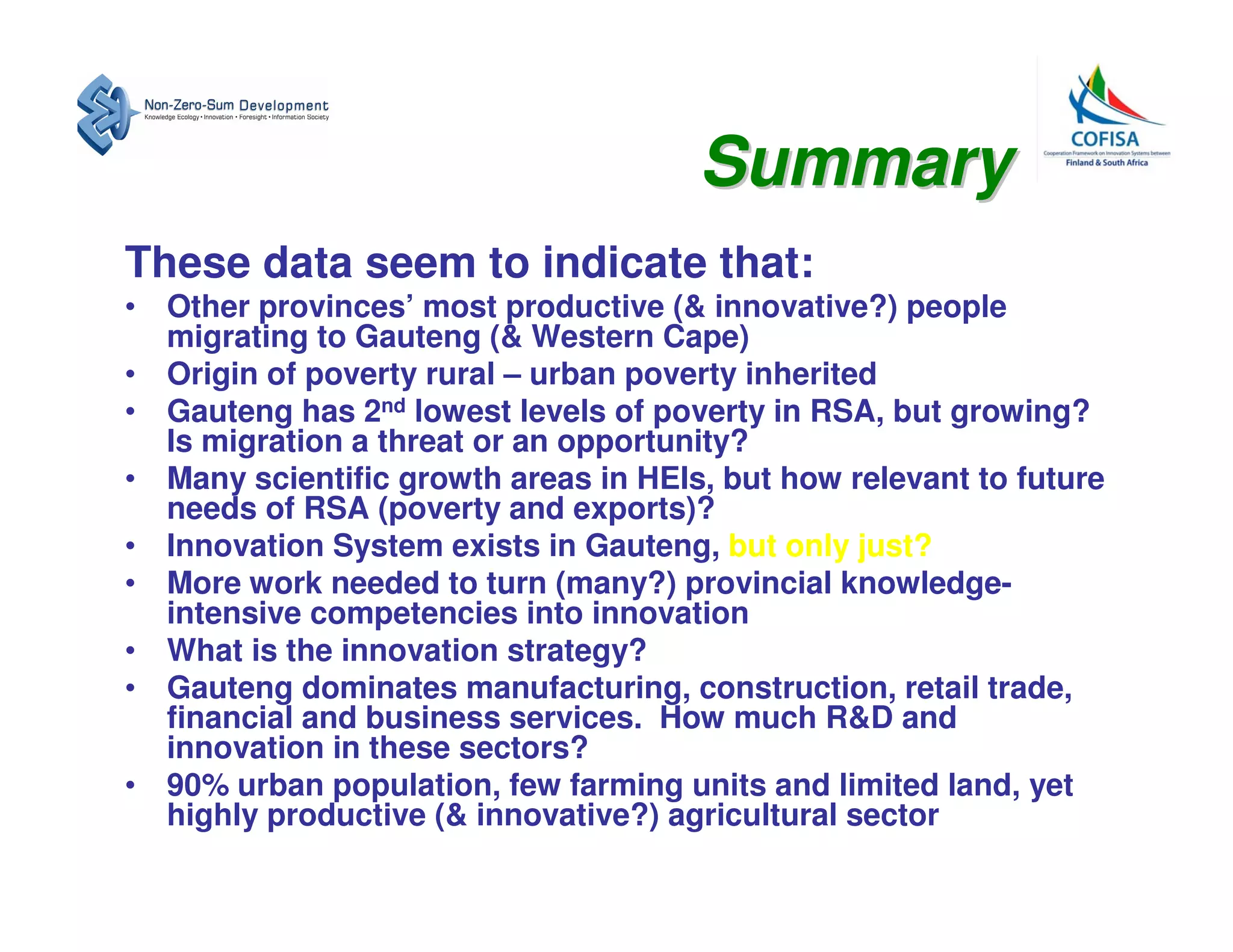
These data seem to indicate that:
• Other provinces’ most productive (& innovative?) people
  migrating to Gauteng (& Western Cape)
• Origin of poverty rural – urban poverty inherited
• Gauteng has 2nd lowest levels of poverty in RSA, but growing?
  Is migration a threat or an opportunity?
• Many scientific growth areas in HEIs, but how relevant to future
  needs of RSA (poverty and exports)?
• Innovation System exists in Gauteng, but only just?
• More work needed to turn (many?) provincial knowledge-
  intensive competencies into innovation
• What is the innovation strategy?
• Gauteng dominates manufacturing, construction, retail trade,
  financial and business services. How much R&D and
  innovation in these sectors?
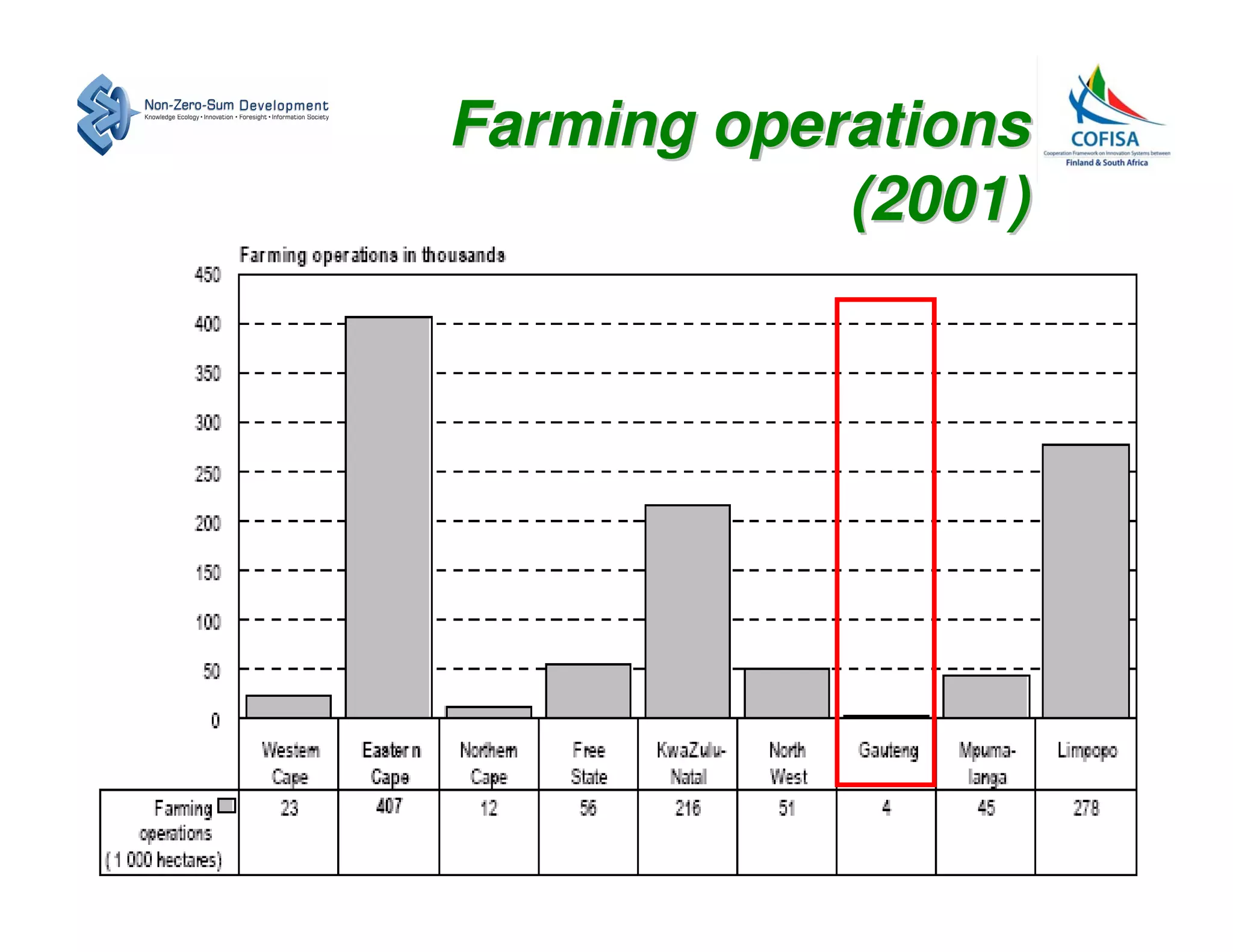
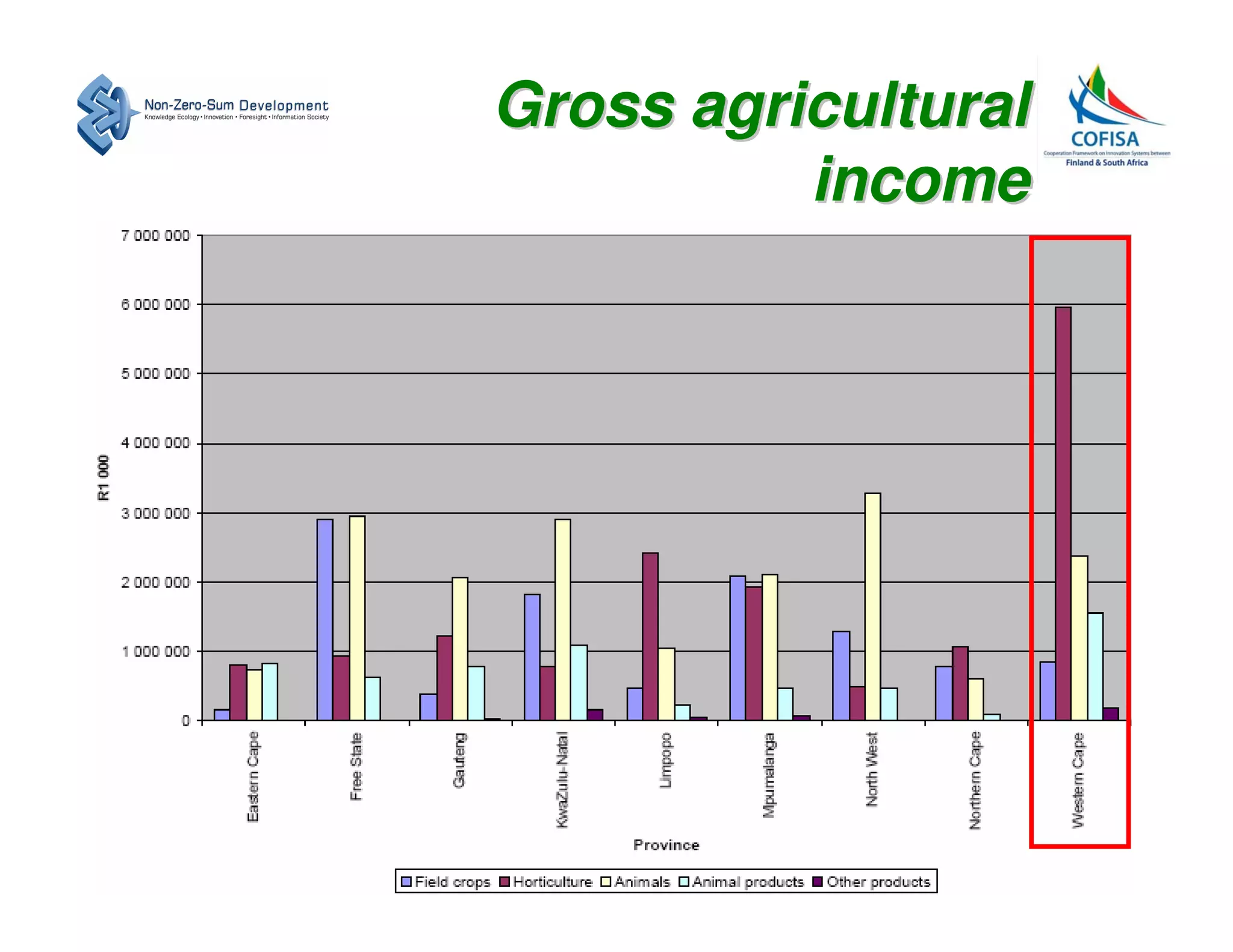
• 90% urban population, few farming units and limited land, yet
  highly productive (& innovative?) agricultural sector
Thank
   You
bday@scientia.co.za
Poverty indicators
(proportion: score out of 100)
Knowledge intensity
                                           and innovation
Industrial activity   R&D investments                     Patents: IOM         Patents: SOU

Metals, metal       Basic metals                          Basic metals         Basic metals
products, machinery
and equipment

Electrical machinery Insulated wire and cable             Insulated wire and
and appliances                                            cable
Radio, TV,            Medical appliances and              Radio, TV,           Radio, TV,
instruments,          instruments and appliances          instruments,         instruments,
                      for measuring, checking,            watches and
watches and clocks                                                             watches and clocks
                      testing, navigating and             clocks
                      other purposes; Instruments
                      and appliances for measuring,
                      checking, testing, navigating and
                      other purposes, except industrial
                      process control equipment;
                      Optical instruments and
                      photographic equipment
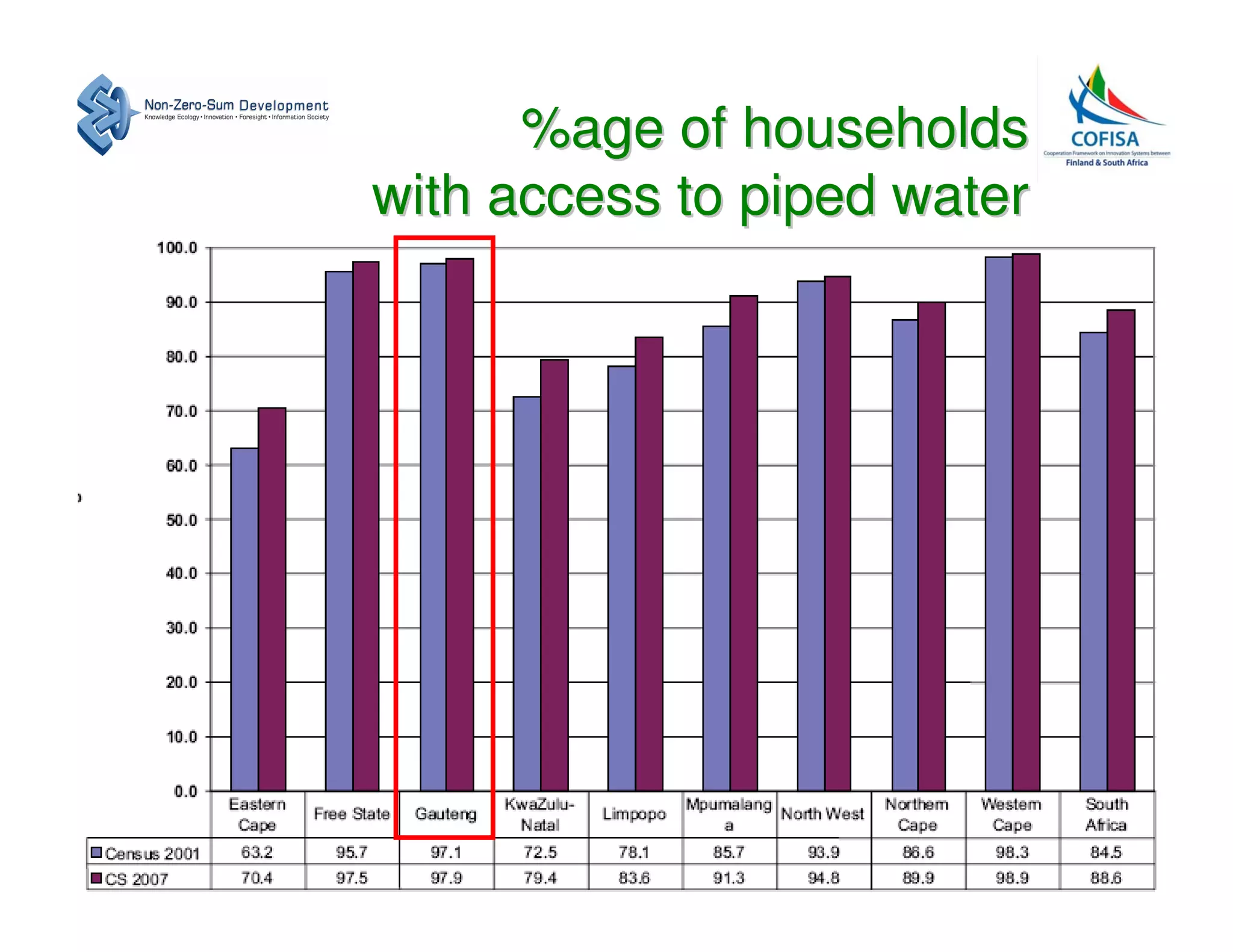
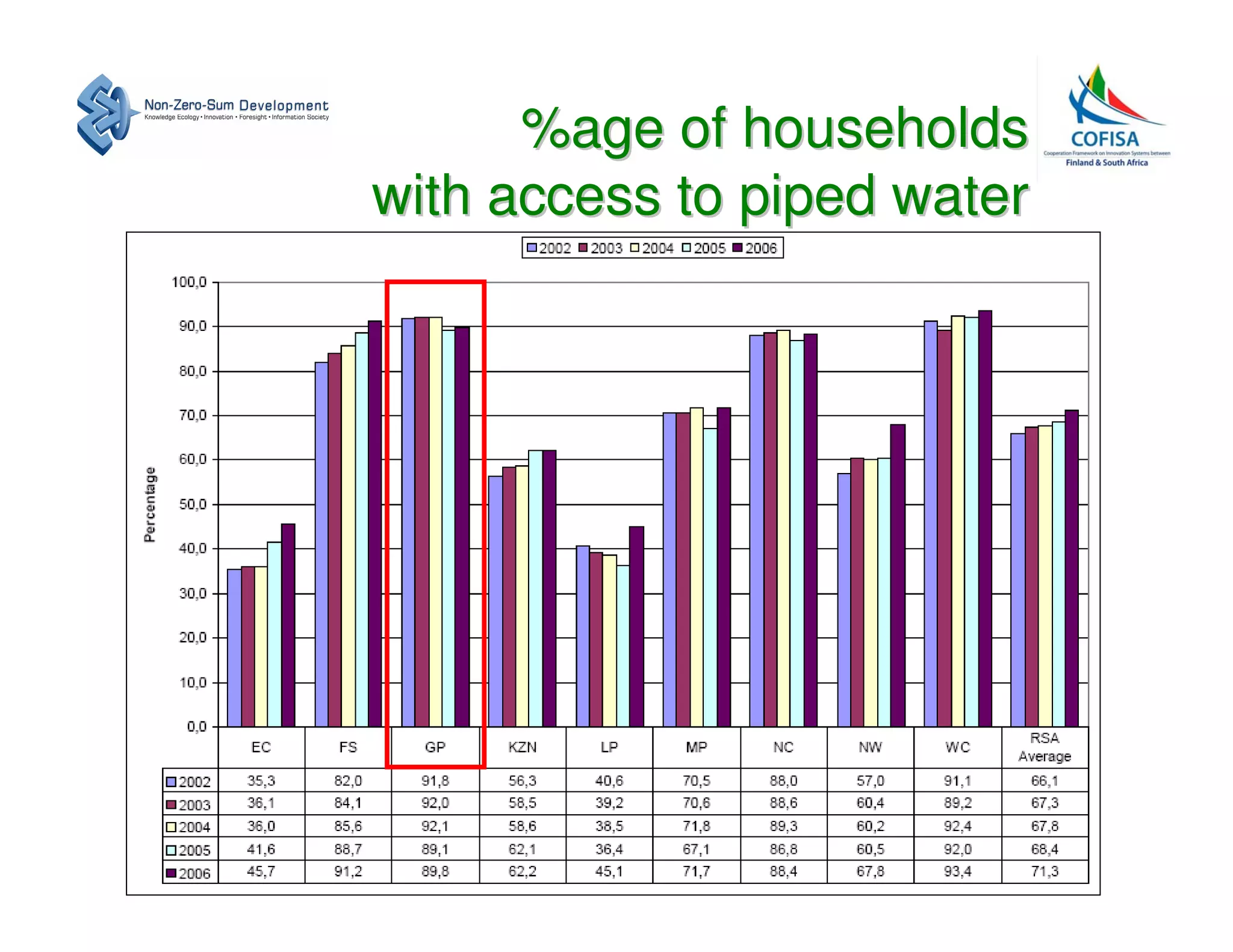
%age of households
with access to piped water
%age of households
with access to piped water
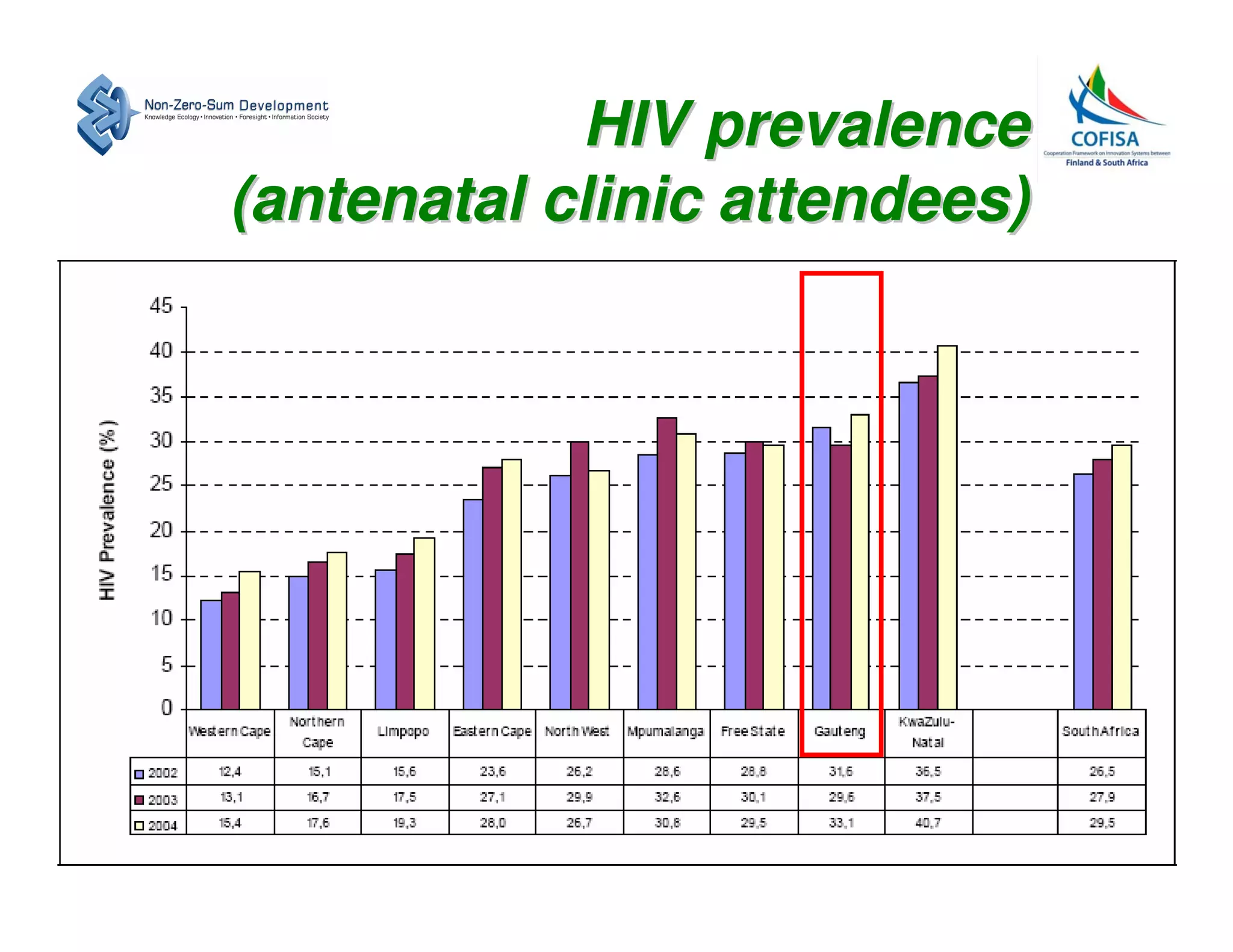
HIV prevalence
(antenatal clinic attendees)
Educational attainment
     20+ years (2001)
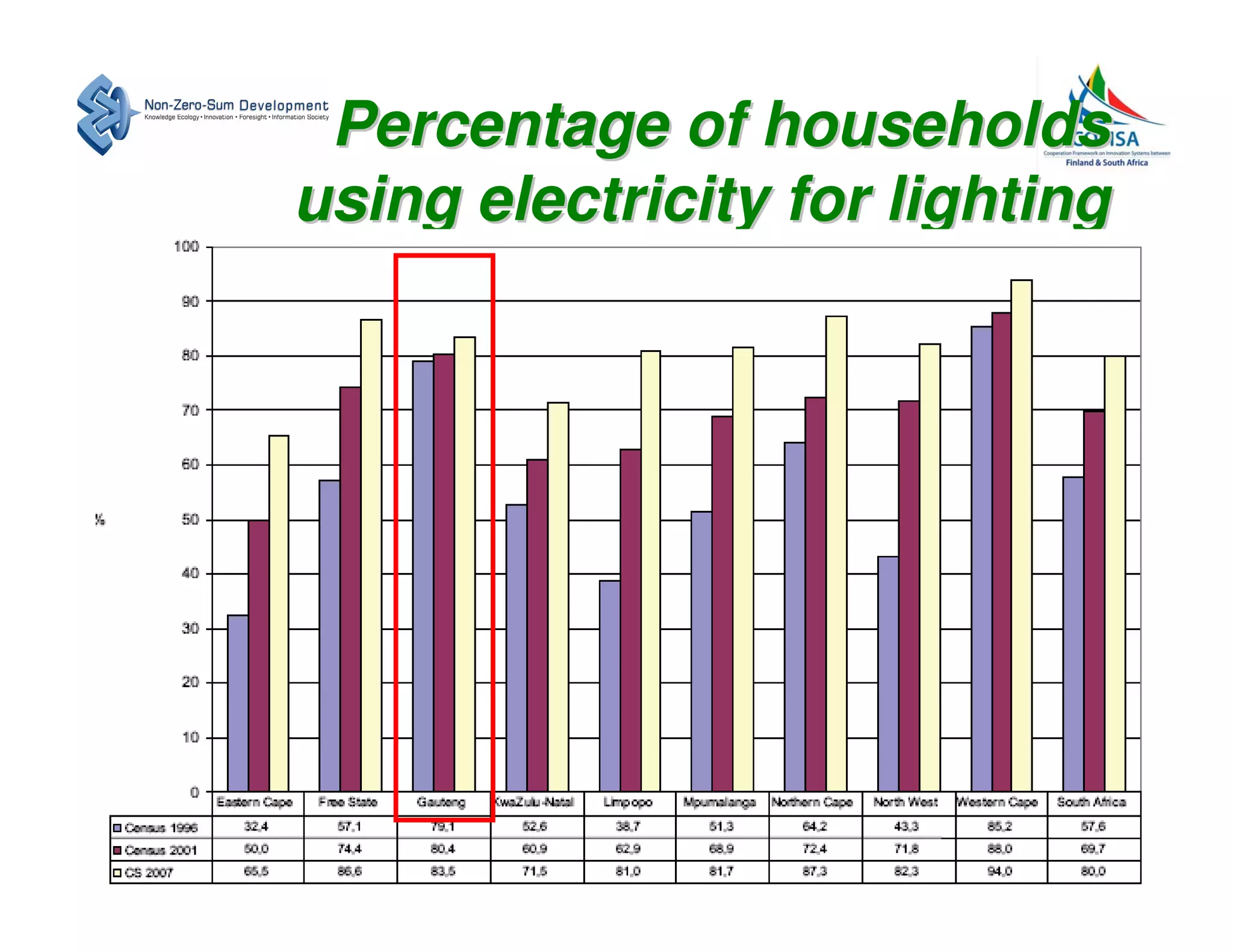
Percentage of households
using electricity for lighting
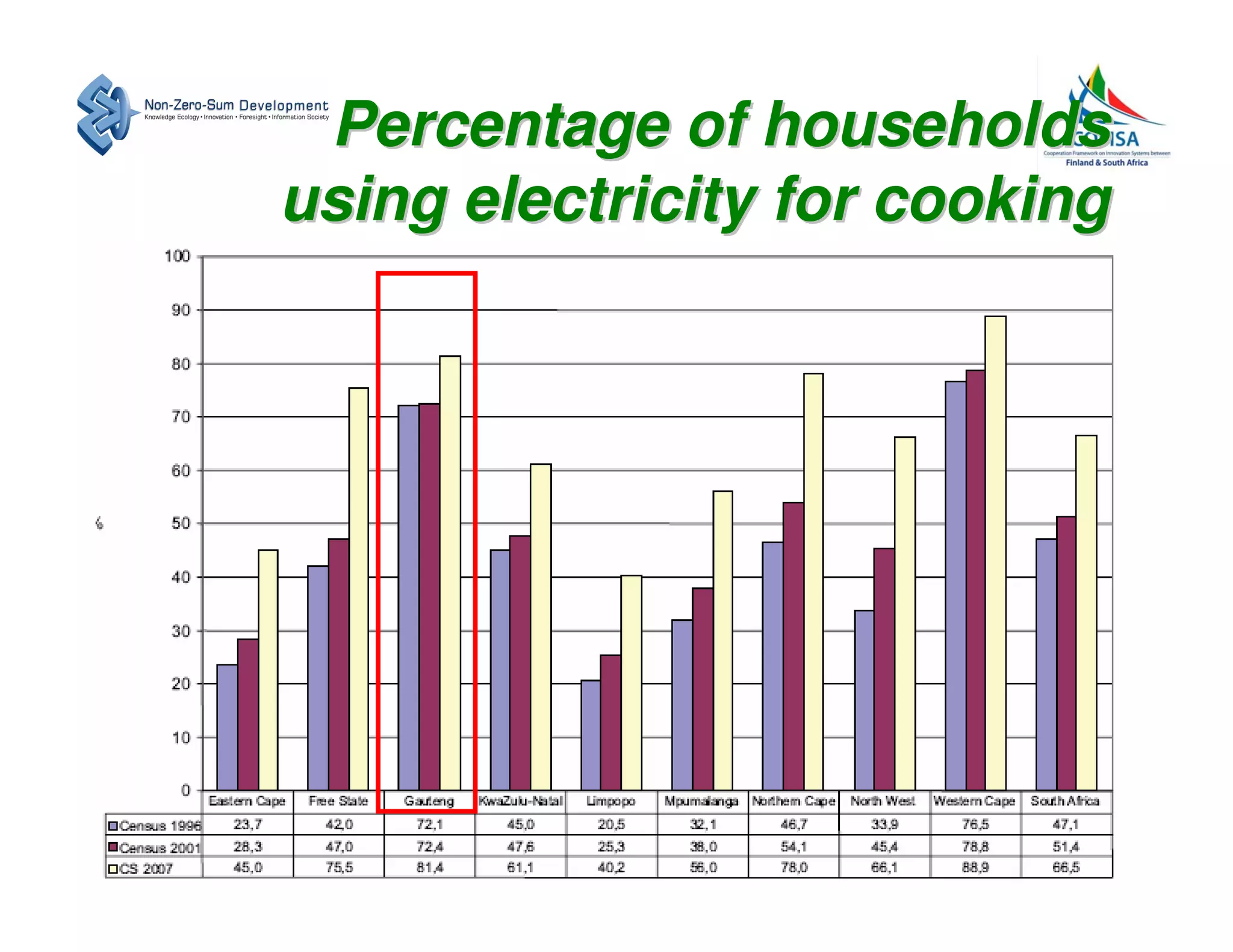
Percentage of households
using electricity for cooking
Gauteng Baseline Snapshot November 2007

Gauteng Baseline Snapshot November 2007

  • 1.
    COFISA: Foresight for Provincial Innovation Gauteng A Baseline Data Snapshot Eskom Convention Centre, Midrand, 15th November 2007 Peter Greenwood & Bob Day Non-Zero-Sum Development
  • 2.
    Data sources • COFISAbaseline data study – In progress for E Cape, W Cape and Gauteng (IsambuloAMI) – Meta-data for ~800 datasets, at different degrees of disaggregation – CeSTII innovation data disaggregated to provincial level by December • Gauteng baseline data – Only ~180 datasets currently (freely) available with data that is disaggregated down to the province or finer – Our sources for Gauteng: • Human Sciences Research Council • Statistics South Africa • Gauteng Provincial Government
  • 3.
    Topics • Population, Poverty and Basic Services • Education • Gauteng PGDS • Industry • Research and Development
  • 4.
  • 5.
    Gauteng population growth 12 10 Gauteng Population (millions) 8 6 4 2 0 1996 2001 2007 Year
  • 6.
    Net loss orgain of people in each province through inter-provincial migration over the five years preceding October 2001 500000 400000 300000 Population 200000 100000 0 -100000 -200000 -300000 EC LP FS KZN MP NC NW WC GP -400000 Province Source: Statistics South Africa, Census 2001
  • 7.
    Population by agegroup (2001)
  • 8.
    Age distribution by population group Black African Coloured White Indian/Asian
  • 9.
  • 10.
  • 11.
    %age of households livingin informal dwellings
  • 12.
    %age of households withmains electricity
  • 13.
    %age of households withaccess to piped water
  • 14.
    %age of households withmunicipal refuse removal
  • 15.
    %age of households usingbucket or no toilets
  • 16.
    Poverty profile Poverty index: composite of: – Female-headed households Tshwane Metsweding – Social security – Illiteracy – Rate of unemployment Joburg – Household income – Crowding West – Dwelling type Rand – Sanitation Ekurhuleni – Water – Electricity – Refuse removal – Malnutrition Sedibeng
  • 17.
  • 18.
  • 19.
    Highest level of educationalattainment (>20 yrs)
  • 20.
    University growth points: Publications • University of Pretoria • University of Witwatersrand – Biological Sciences – Chemical Sciences – Mechanical and Industrial – Mathematical Science Engineering – Mechanical and Industrial – Information, Computing and Engineering Communication Sciences – Resource Engineering – Nursing Sciences – Architecture and Urban Environment – Public Health and Health Services – Dentistry – Medical Physiology – Medical Physiology – Medical Microbiology – Economics and Business – Pharmacology and Pharmaceutical Sciences • University of South Africa • Tshwane University of Technology – Education – Publication data only at faculty level
  • 21.
    Gauteng Provincial Growth and Development Strategy
  • 22.
    Provincial innovation systems in South Africa “But what emerges from the work so far suggests that regional or local innovation systems exist, if at all, only in Gauteng and Western Cape, and possibly in KZN, but nowhere else.” REGIONAL AND LOCAL INNOVATION SYSTEMS A study on behalf of NACI March 2007 (unpublished) So: an innovation system exists in Gauteng, but only just?
  • 23.
    Gauteng PGDS, Trade and Industry Strategy • Emphasises the role of innovation: – Realignment of manufacturing; – Smart industries; – Financial and business services • Some objectives: – Higher-value added production in manufacturing – Expansion of high-tech industries and technological activities • But: – Some objectives rely on a functioning knowledge economy – How should relationships between producers and users of knowledge manifest themselves at the local level? – How may the provincial government contribute to generating positive dynamics? – What are the systemic requirements for innovation? – What is the innovation strategy?
  • 24.
  • 25.
    Industrial specialisations (Provincial share >20% of national total) • Gauteng • Western Cape – Manufacturing – Agriculture, forestry and • Metals, metal products, fishing machinery, equipment – Food, beverages and • Other non-metal mineral tobacco products – Textiles, clothing and • Electrical machinery and leather goods apparatus – Finance and business • Radio, TV, instruments, services watches, clocks • Furniture and other manufacturing – Construction • Eastern Cape – Wholesale and retail trade, – Transport equipment catering and accommodation – Finance and business services
  • 26.
  • 27.
  • 28.
  • 31.
    Technology Achievement Index (TAI) The provincial TAIs ranking as follows: • Top: Gauteng, Western Cape, and KwaZulu-Natal • Average: Mpumalanga, Free State, and North West • Bottom: Eastern Cape, Northern Cape, and Limpopo (DST 2005, 28)
  • 32.
    Summary These data seemto indicate that: • Other provinces’ most productive (& innovative?) people migrating to Gauteng (& Western Cape) • Origin of poverty rural – urban poverty inherited • Gauteng has 2nd lowest levels of poverty in RSA, but growing? Is migration a threat or an opportunity? • Many scientific growth areas in HEIs, but how relevant to future needs of RSA (poverty and exports)? • Innovation System exists in Gauteng, but only just? • More work needed to turn (many?) provincial knowledge- intensive competencies into innovation • What is the innovation strategy? • Gauteng dominates manufacturing, construction, retail trade, financial and business services. How much R&D and innovation in these sectors? • 90% urban population, few farming units and limited land, yet highly productive (& innovative?) agricultural sector
  • 33.
    Thank You bday@scientia.co.za
  • 34.
  • 35.
    Knowledge intensity and innovation Industrial activity R&D investments Patents: IOM Patents: SOU Metals, metal Basic metals Basic metals Basic metals products, machinery and equipment Electrical machinery Insulated wire and cable Insulated wire and and appliances cable Radio, TV, Medical appliances and Radio, TV, Radio, TV, instruments, instruments and appliances instruments, instruments, for measuring, checking, watches and watches and clocks watches and clocks testing, navigating and clocks other purposes; Instruments and appliances for measuring, checking, testing, navigating and other purposes, except industrial process control equipment; Optical instruments and photographic equipment
  • 36.
    %age of households withaccess to piped water
  • 37.
    %age of households withaccess to piped water
  • 38.
  • 39.
    Educational attainment 20+ years (2001)
  • 40.
    Percentage of households usingelectricity for lighting
  • 41.
    Percentage of households usingelectricity for cooking