GATEWAY TO AGILE
Inaugural	event
THANK YOU
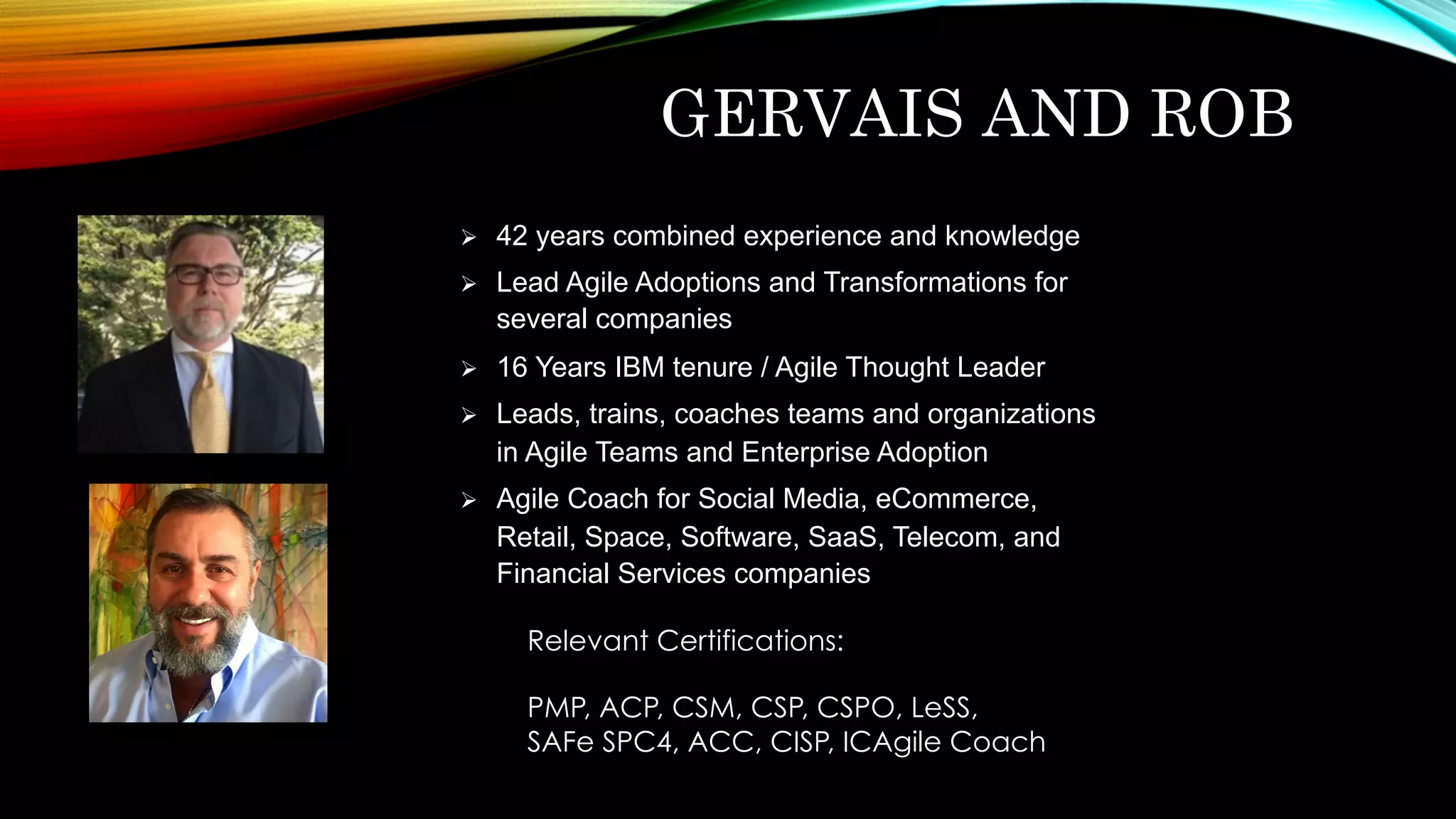
GERVAIS AND ROB
Ø  42 years combined experience and knowledge
Ø  Lead Agile Adoptions and Transformations for
several companies
Ø  16 Years IBM tenure / Agile Thought Leader
Ø  Leads, trains, coaches teams and organizations
in Agile Teams and Enterprise Adoption
Ø  Agile Coach for Social Media, eCommerce,
Retail, Space, Software, SaaS, Telecom, and
Financial Services companies
Relevant Certifications:
PMP, ACP, CSM, CSP, CSPO, LeSS,
SAFe SPC4, ACC, CISP, ICAgile Coach
HYPER-PERFORMING
TEAMS
What	we	all	want
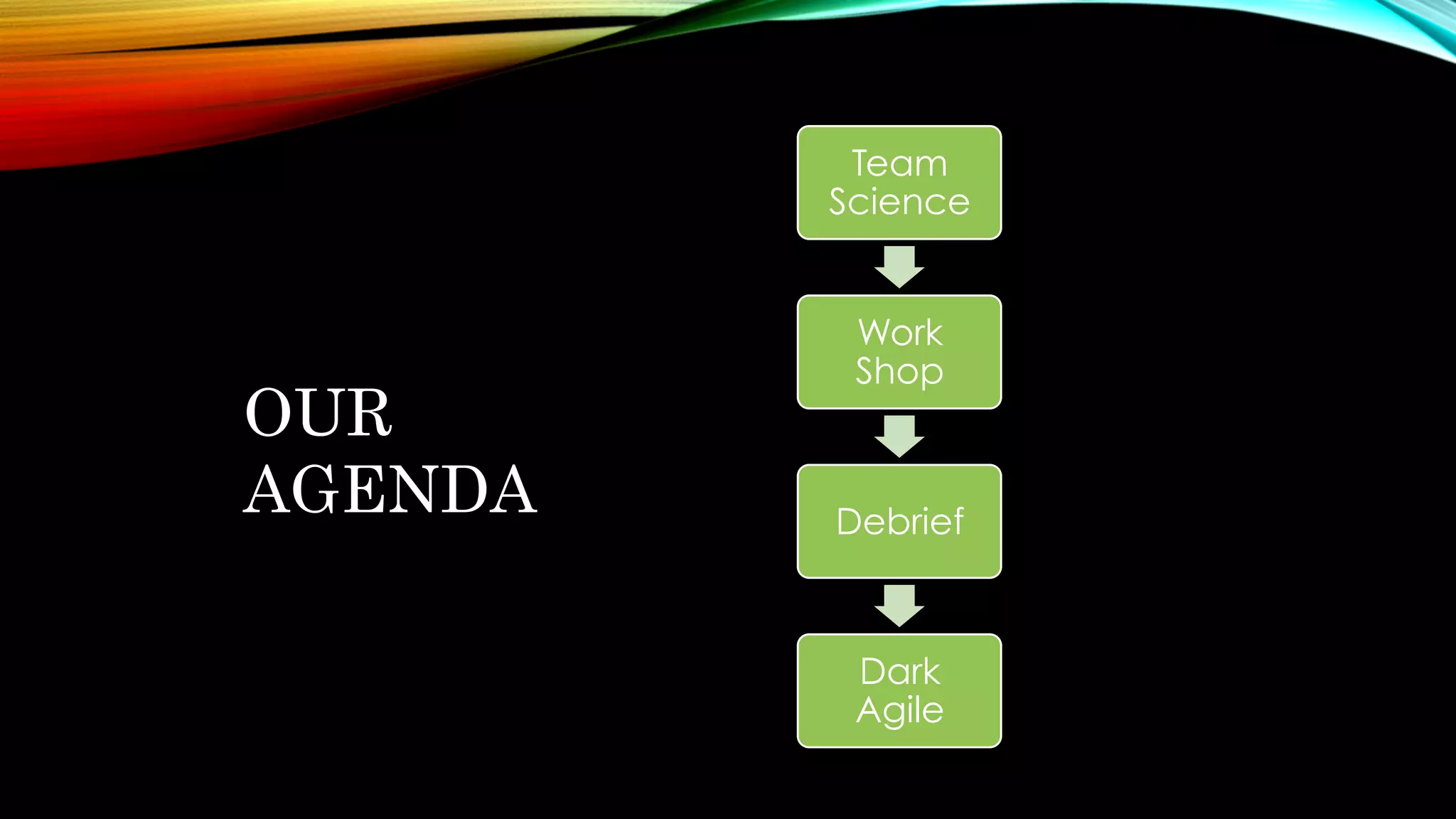
Team
Science
Work
Shop
Debrief
Dark
Agile
OUR
AGENDA
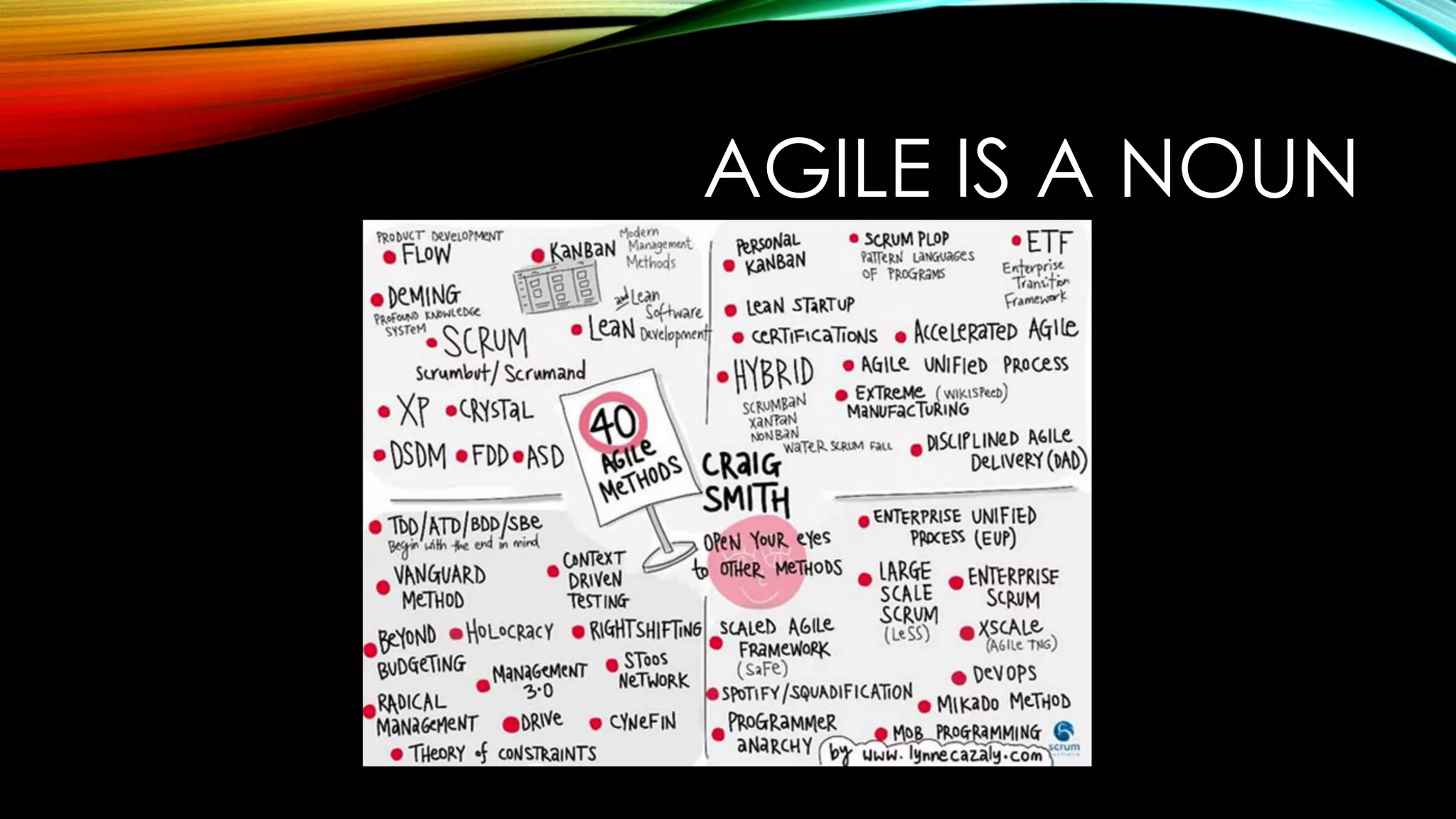
AGILE IS A NOUN
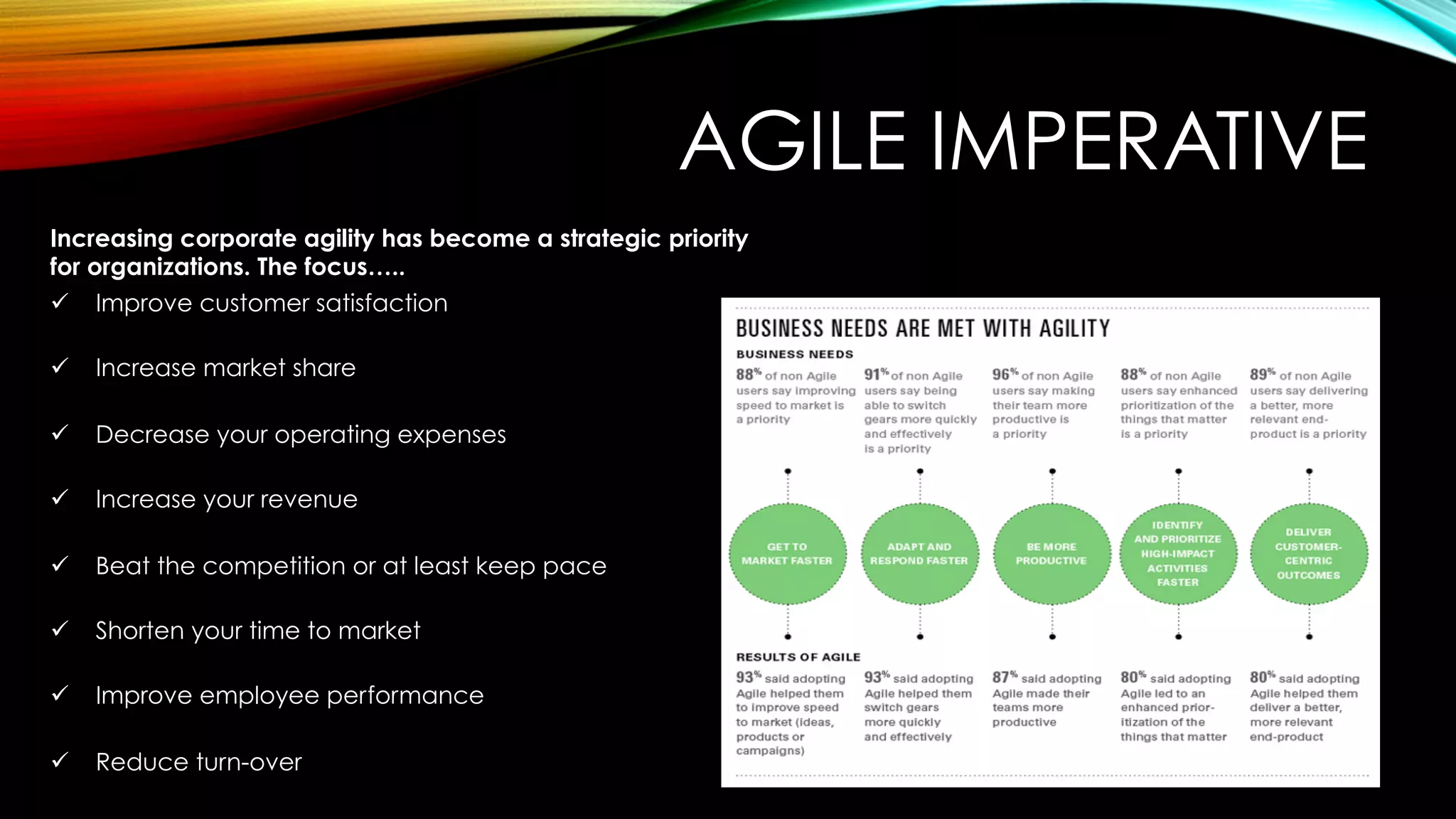
AGILE IMPERATIVE
Increasing corporate agility has become a strategic priority
for organizations. The focus…..
ü  Improve customer satisfaction
ü  Increase market share
ü  Decrease your operating expenses
ü  Increase your revenue
ü  Beat the competition or at least keep pace
ü  Shorten your time to market
ü  Improve employee performance
ü  Reduce turn-over
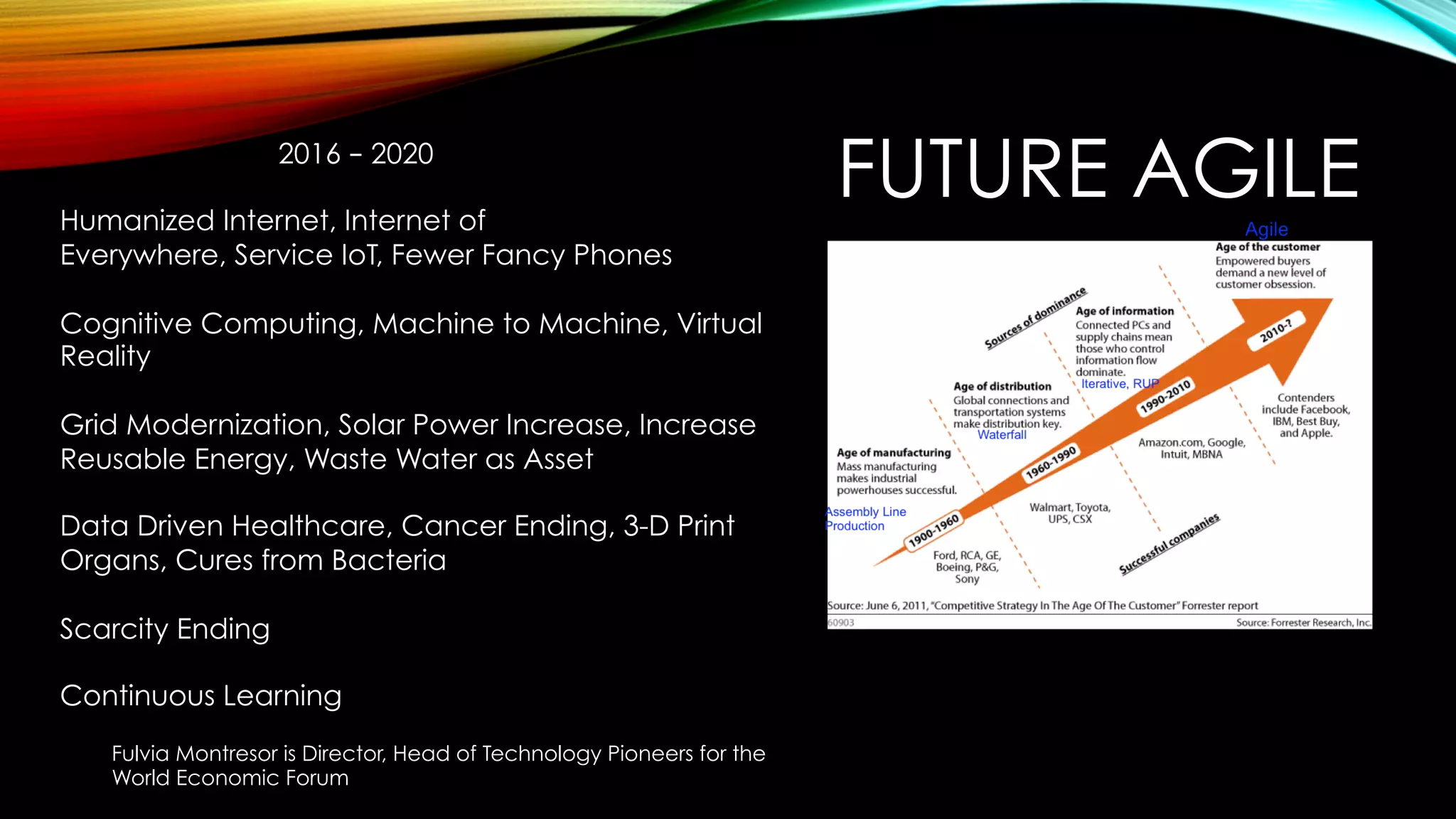
FUTURE AGILE2016 – 2020
Humanized Internet, Internet of
Everywhere, Service IoT, Fewer Fancy Phones
Cognitive Computing, Machine to Machine, Virtual
Reality
Grid Modernization, Solar Power Increase, Increase
Reusable Energy, Waste Water as Asset
Data Driven Healthcare, Cancer Ending, 3-D Print
Organs, Cures from Bacteria
Scarcity Ending
Continuous Learning
Fulvia Montresor is Director, Head of Technology Pioneers for the
World Economic Forum
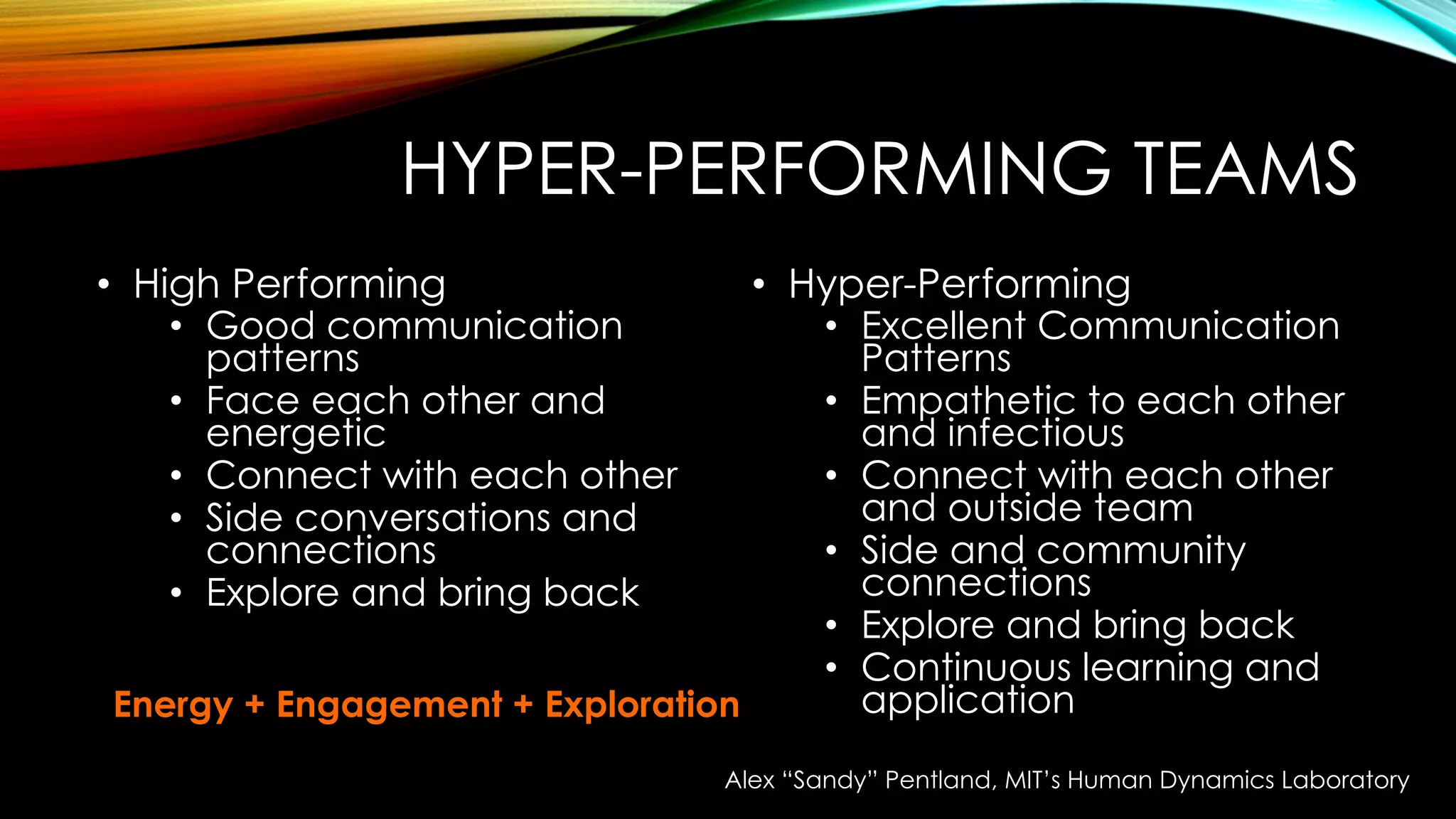
HYPER-PERFORMING TEAMS
•  High Performing
•  Good communication
patterns
•  Face each other and
energetic
•  Connect with each other
•  Side conversations and
connections
•  Explore and bring back
•  Hyper-Performing
•  Excellent Communication
Patterns
•  Empathetic to each other
and infectious
•  Connect with each other
and outside team
•  Side and community
connections
•  Explore and bring back
•  Continuous learning and
application
Alex “Sandy” Pentland, MIT’s Human Dynamics Laboratory
Energy + Engagement + Exploration
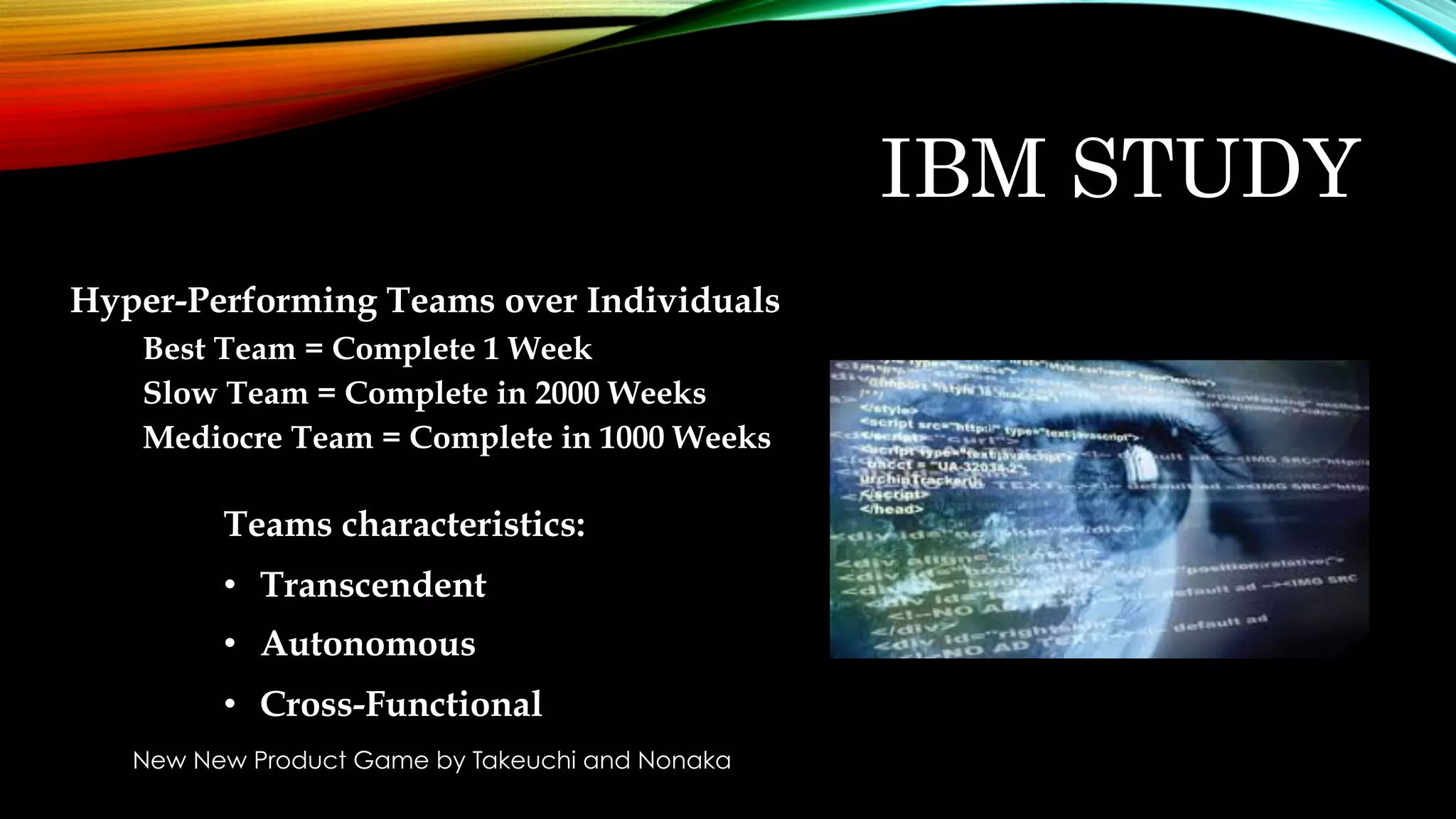
IBM STUDY
Hyper-Performing Teams over Individuals
Best Team = Complete 1 Week
Slow Team = Complete in 2000 Weeks
Mediocre Team = Complete in 1000 Weeks
Teams characteristics:
•  Transcendent
•  Autonomous
•  Cross-Functional
New New Product Game by Takeuchi and Nonaka
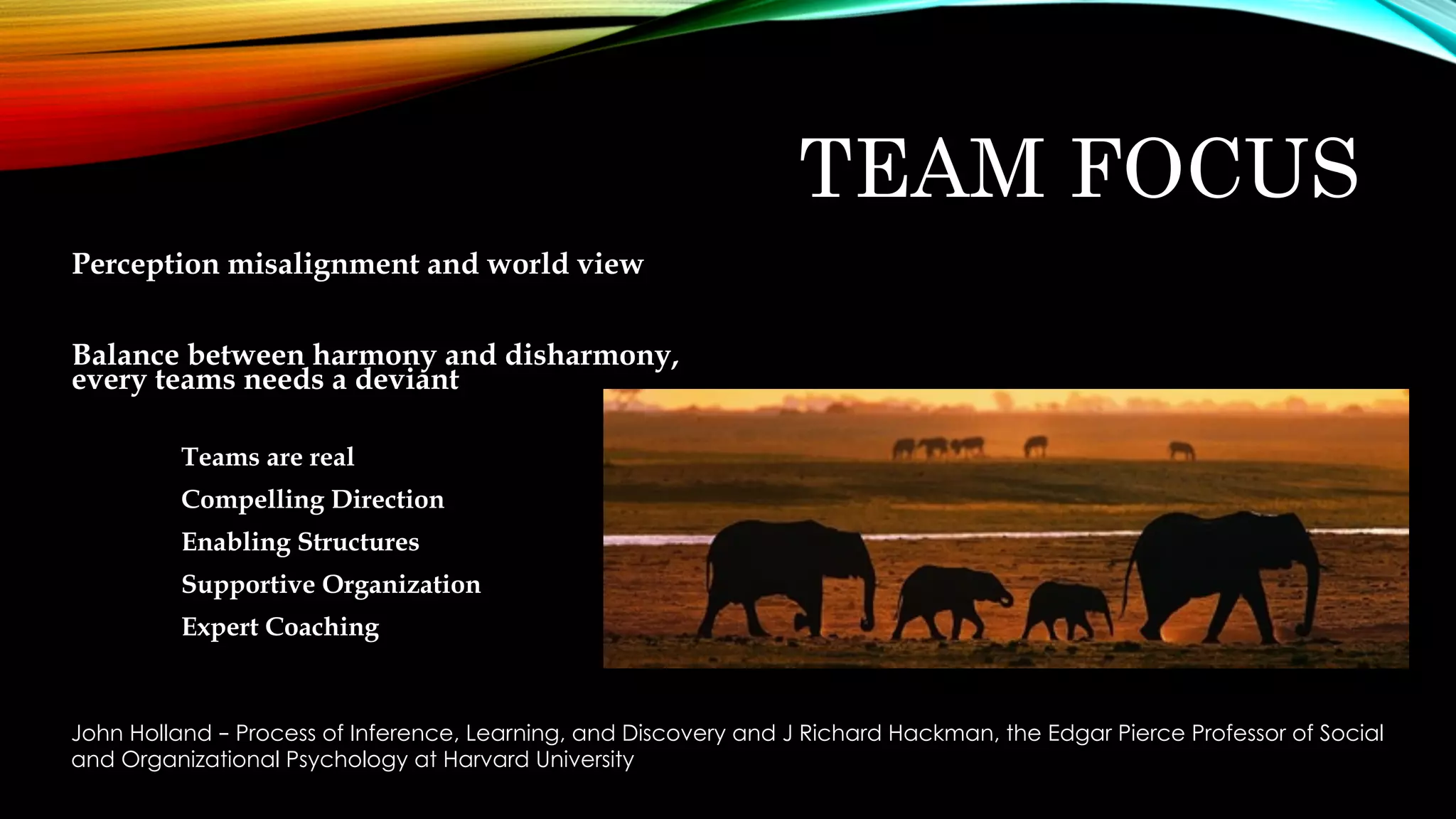
TEAM FOCUS
Perception misalignment and world view
Balance between harmony and disharmony,
every teams needs a deviant
John Holland – Process of Inference, Learning, and Discovery and J Richard Hackman, the Edgar Pierce Professor of Social
and Organizational Psychology at Harvard University
Teams are real
Compelling Direction
Enabling Structures
Supportive Organization
Expert Coaching
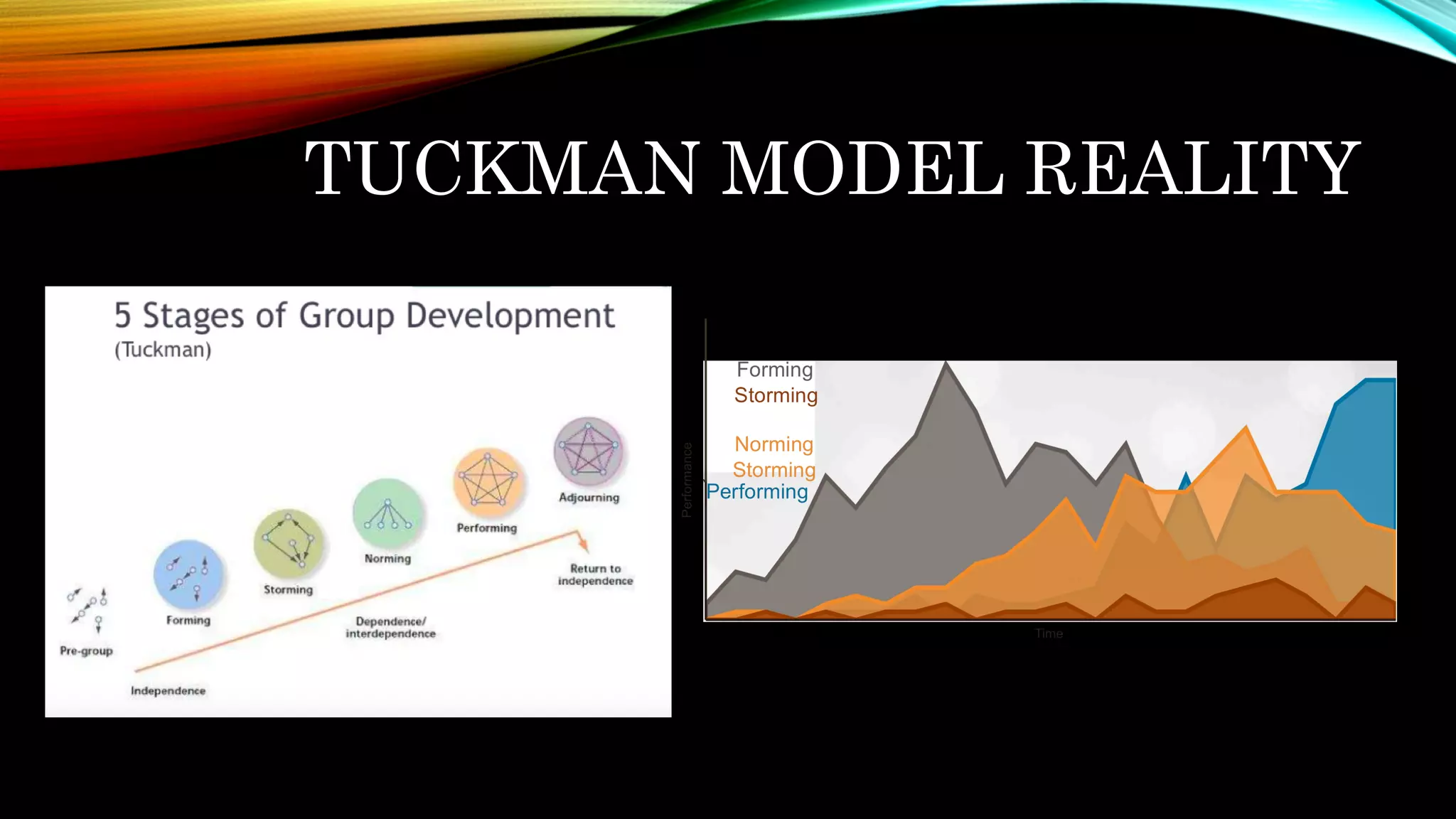
TUCKMAN MODEL REALITY
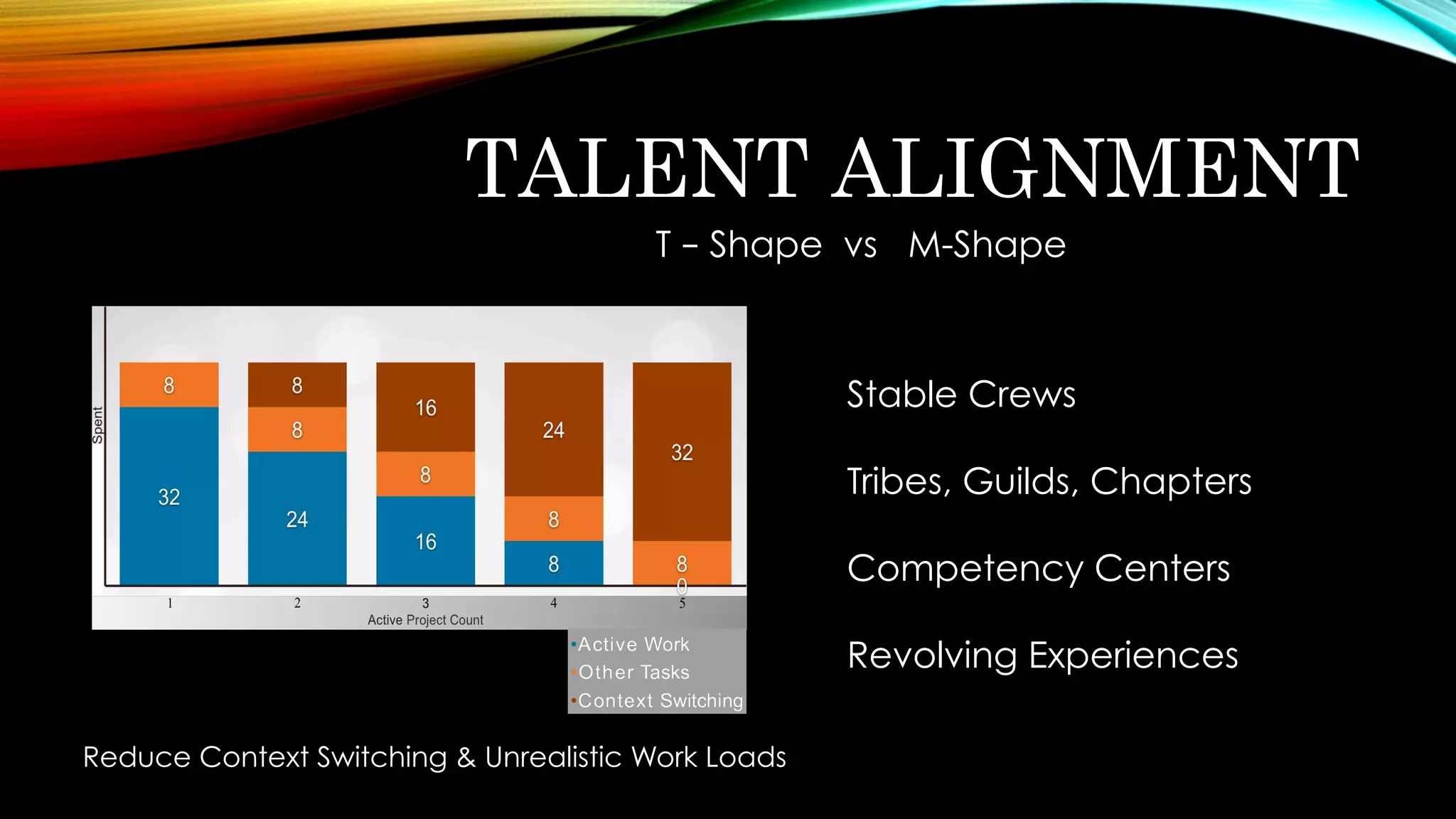
TALENT ALIGNMENT
Stable Crews
Tribes, Guilds, Chapters
Competency Centers
Revolving Experiences
T – Shape vs M-Shape
Reduce Context Switching & Unrealistic Work Loads
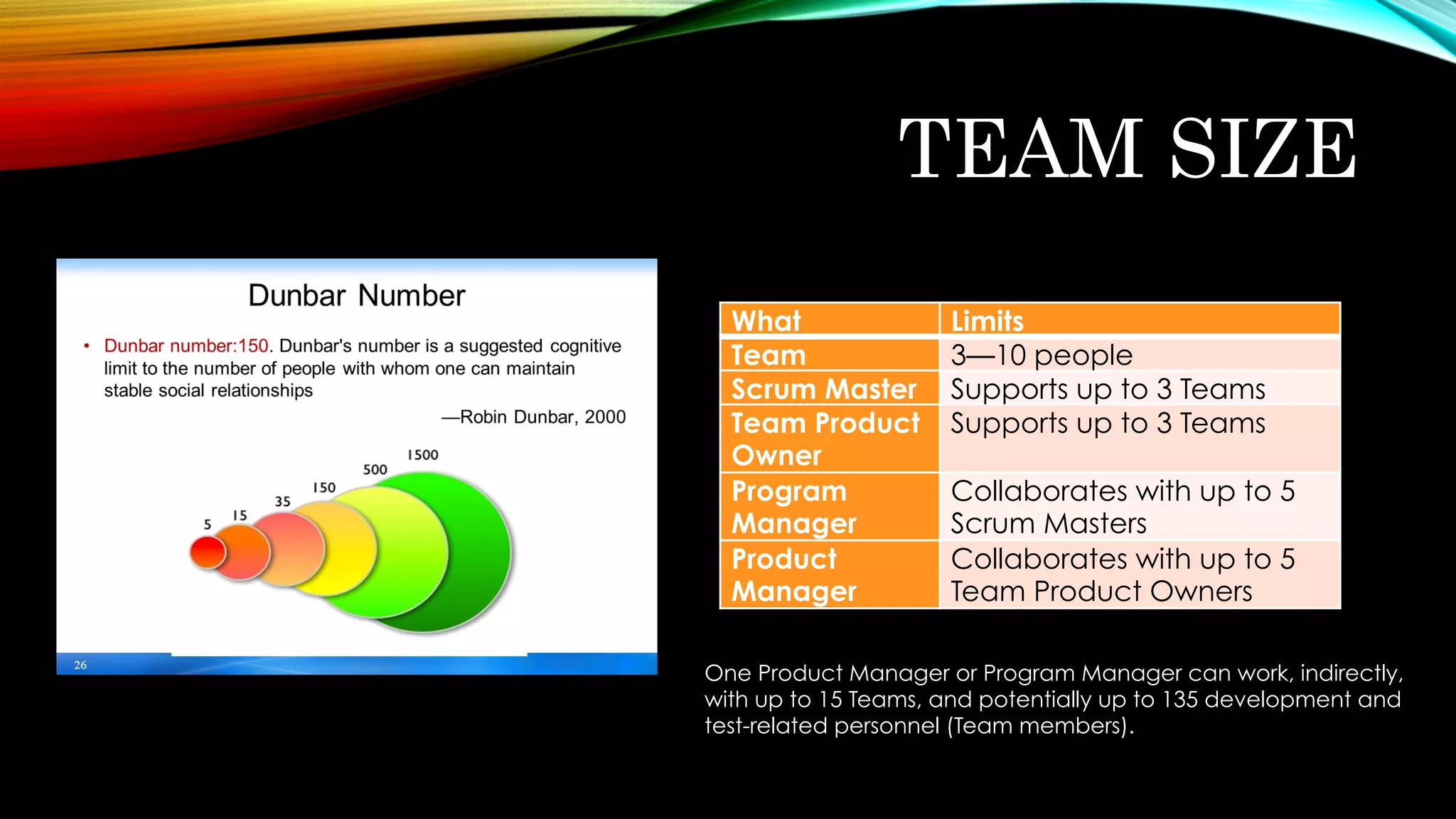
TEAM SIZE
What	 Limits	
Team	 3—10 people	
Scrum Master	 Supports up to 3 Teams	
Team Product
Owner	
Supports up to 3 Teams	
Program
Manager	
Collaborates with up to 5
Scrum Masters	
Product
Manager	
Collaborates with up to 5
Team Product Owners	
One Product Manager or Program Manager can work, indirectly,
with up to 15 Teams, and potentially up to 135 development and
test-related personnel (Team members).
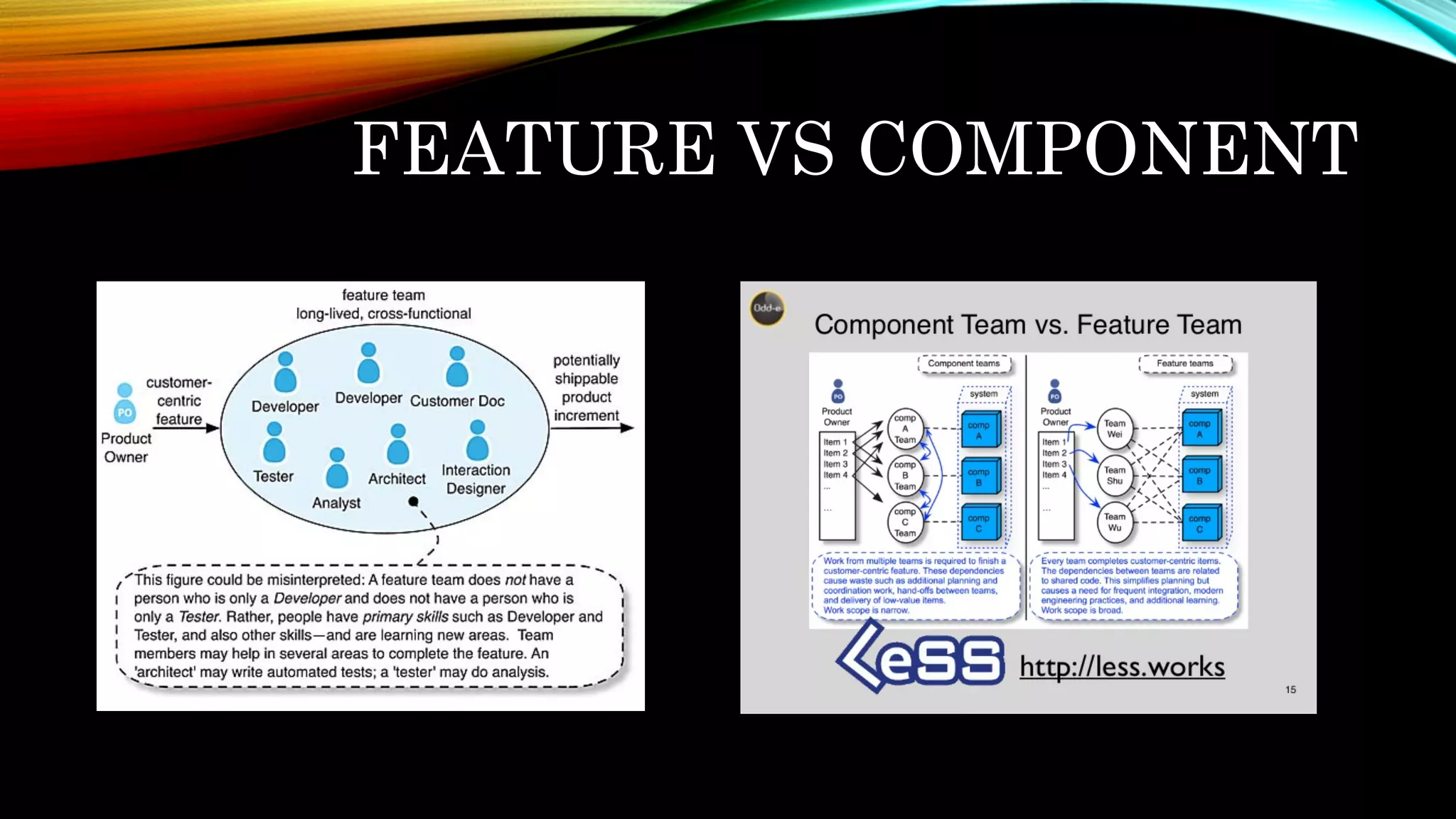
FEATURE VS COMPONENT
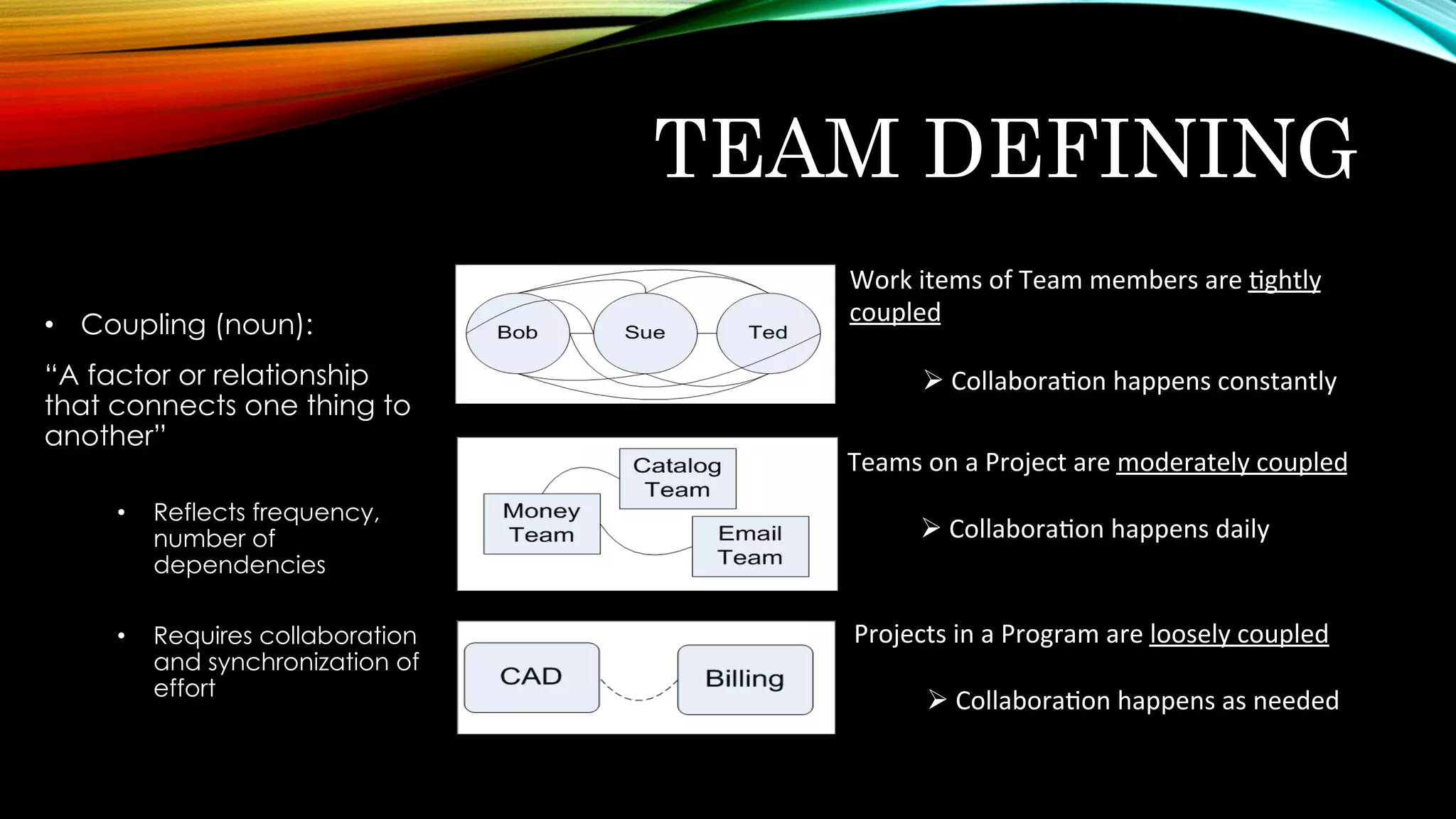
TEAM DEFINING
•  Coupling (noun):
“A factor or relationship
that connects one thing to
another”
•  Reflects frequency,
number of
dependencies
•  Requires collaboration
and synchronization of
effort
Work	items	of	Team	members	are	/ghtly	
coupled	
	
Ø 	Collabora/on	happens	constantly	
	
Teams	on	a	Project	are	moderately	coupled	
	
Ø 	Collabora/on	happens	daily	
	
Projects	in	a	Program	are	loosely	coupled	
	
Ø 	Collabora/on	happens	as	needed
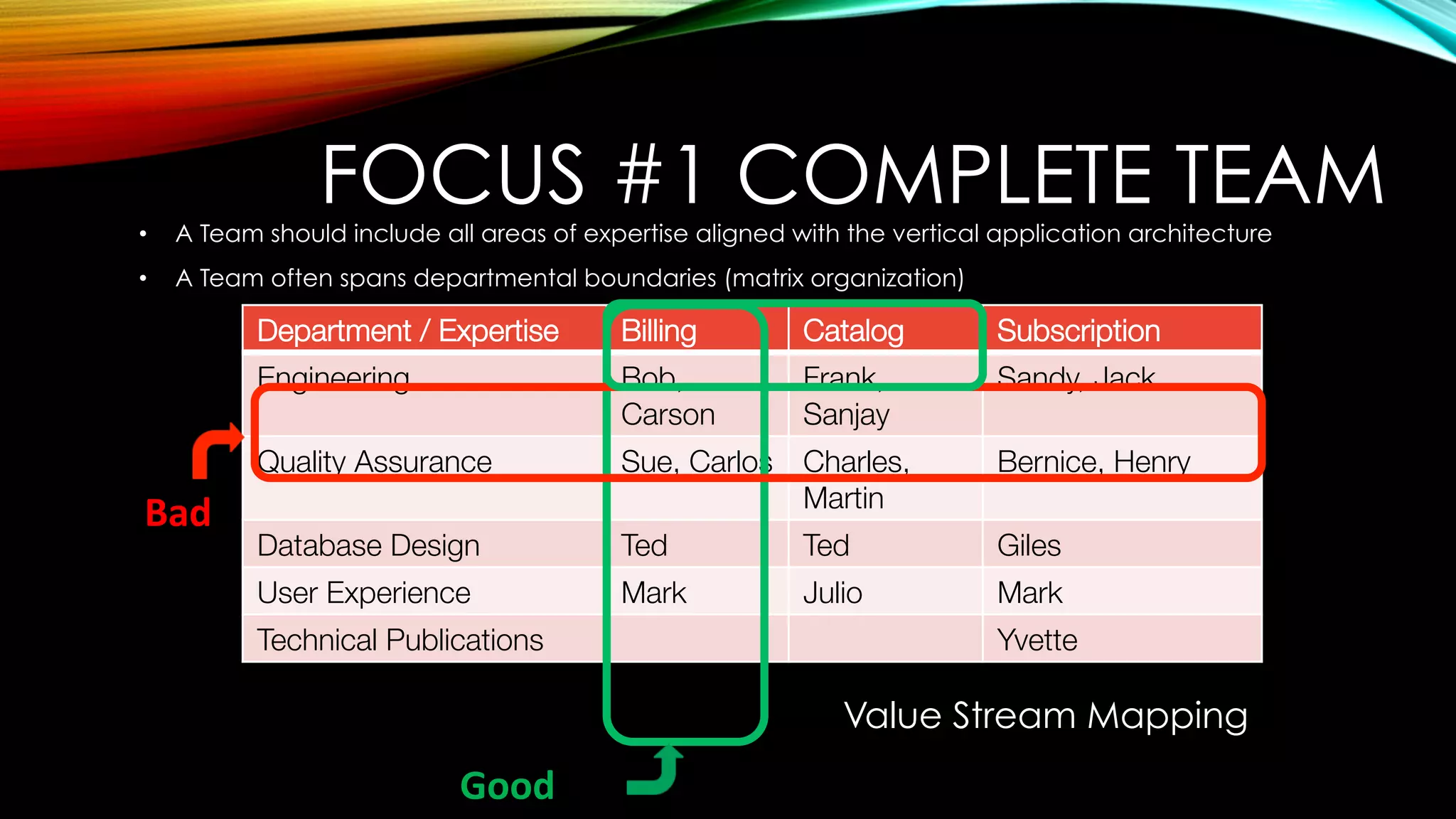
FOCUS #1 COMPLETE TEAM
Department / Expertise
 Billing
 Catalog
 Subscription
Engineering
 Bob,
Carson
Frank,
Sanjay
Sandy, Jack
Quality Assurance
 Sue, Carlos
 Charles,
Martin
Bernice, Henry
Database Design
 Ted
 Ted
 Giles
User Experience
 Mark
 Julio
 Mark
Technical Publications
 Yvette
Good		
Bad		
•  A Team should include all areas of expertise aligned with the vertical application architecture
•  A Team often spans departmental boundaries (matrix organization)
Value Stream Mapping
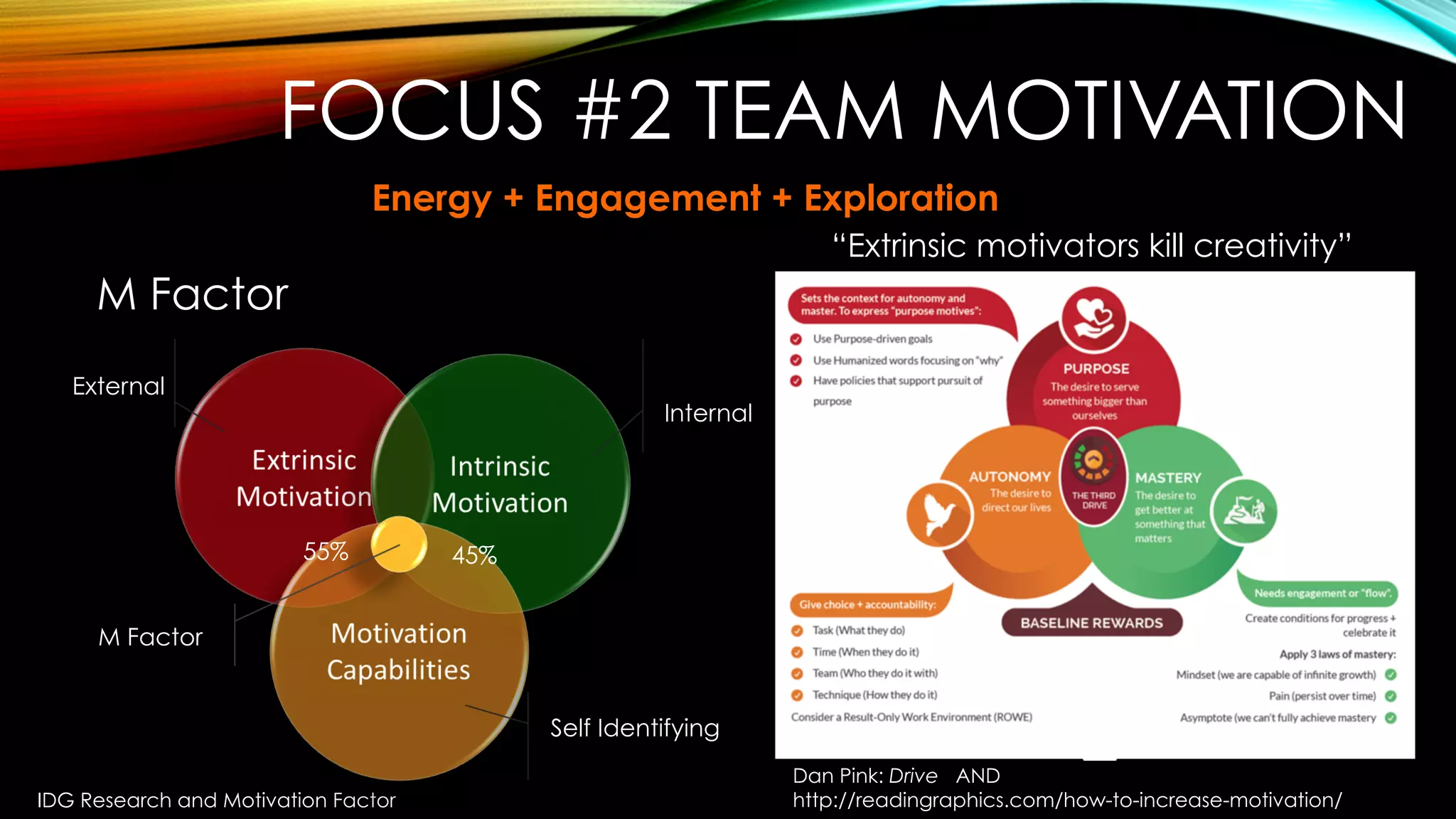
FOCUS #2 TEAM MOTIVATION
IDG Research and Motivation Factor
Energy + Engagement + Exploration
M Factor
External
Internal
Self Identifying
M Factor
45%55%
Dan Pink: Drive AND
http://readingraphics.com/how-to-increase-motivation/
“Extrinsic motivators kill creativity”
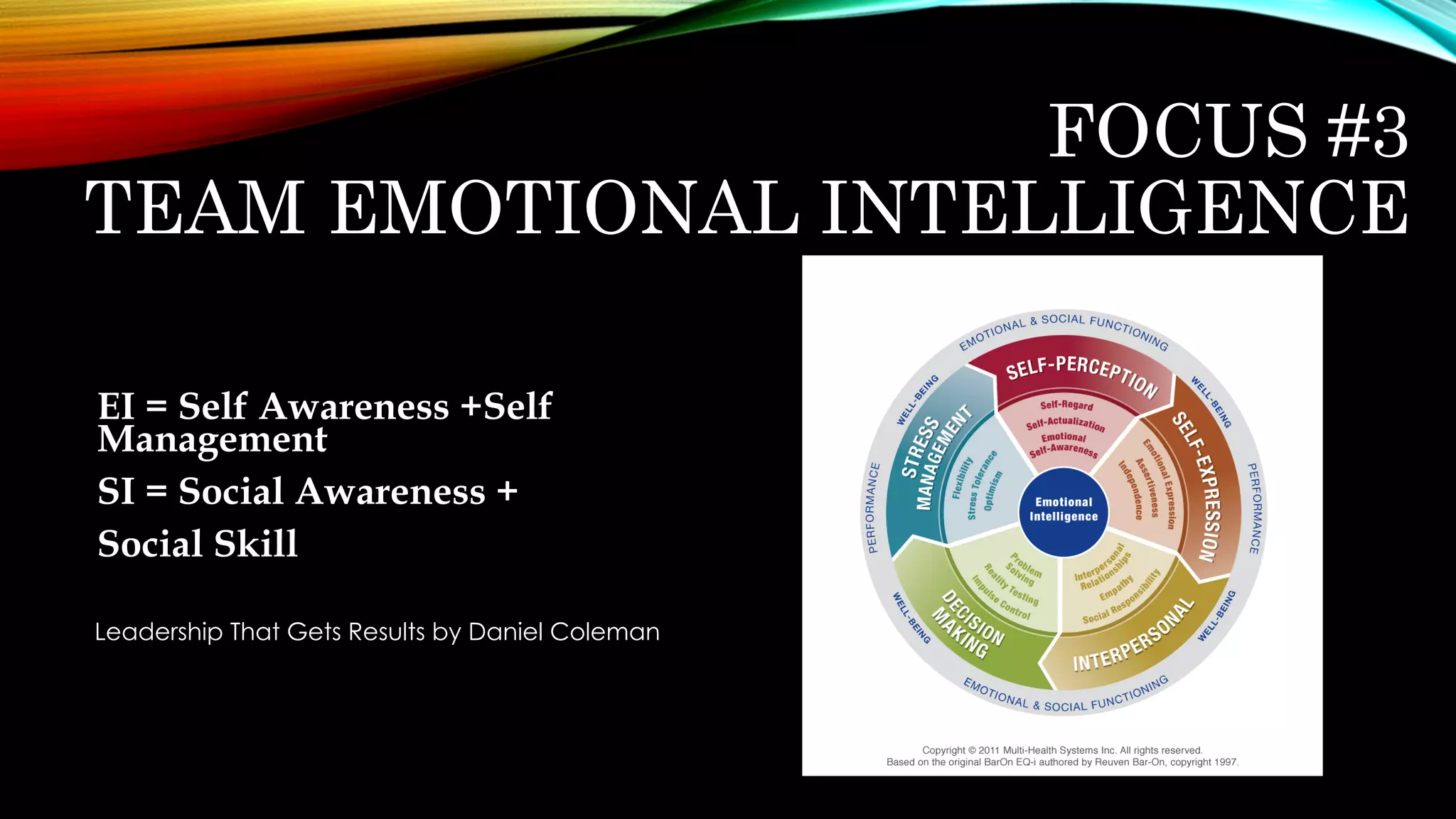
FOCUS #3
TEAM EMOTIONAL INTELLIGENCE
EI = Self Awareness +Self
Management
SI = Social Awareness +
Social Skill
Leadership That Gets Results by Daniel Coleman
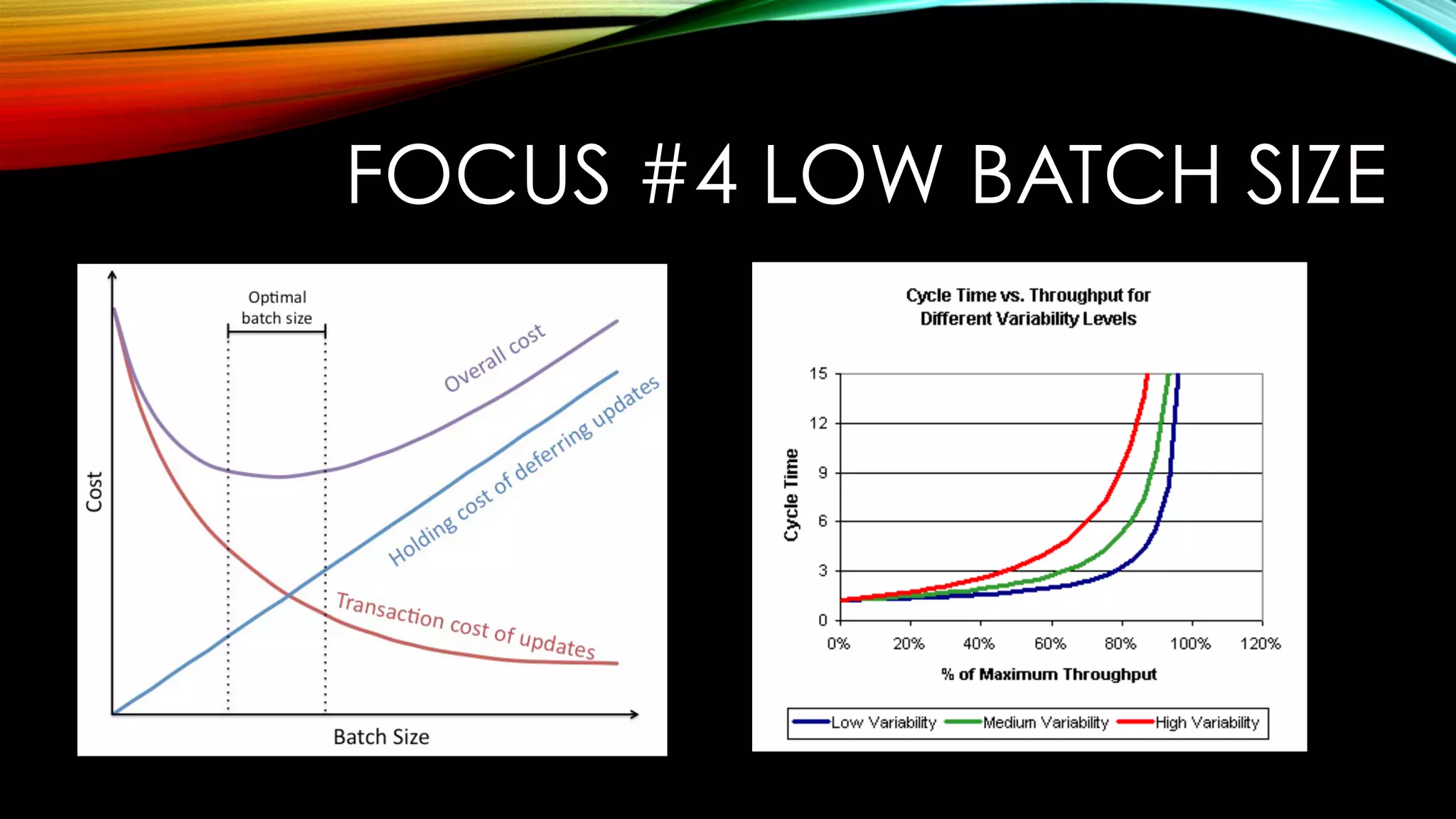
FOCUS #4 LOW BATCH SIZE
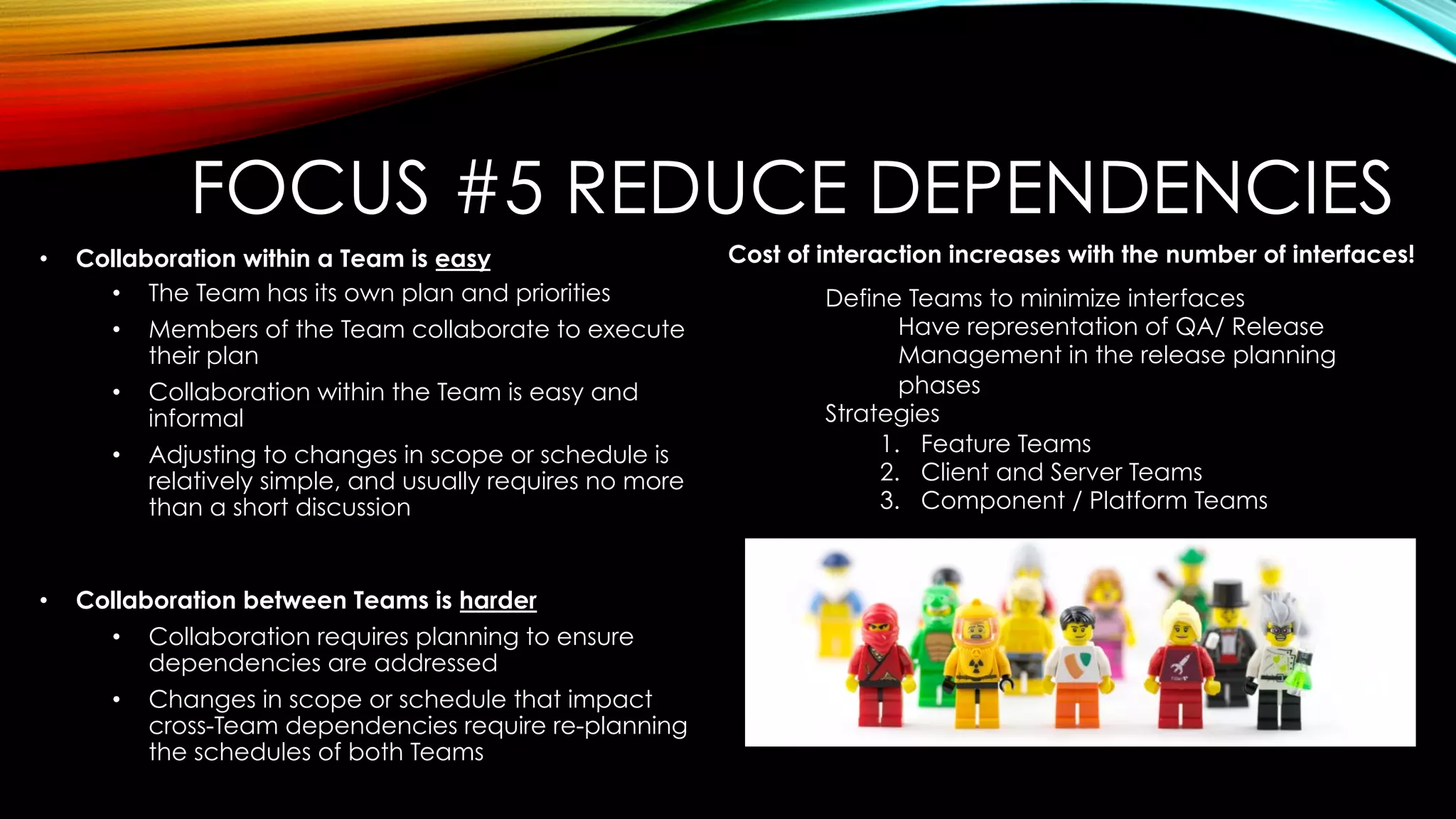
•  Collaboration within a Team is easy
•  The Team has its own plan and priorities
•  Members of the Team collaborate to execute
their plan
•  Collaboration within the Team is easy and
informal
•  Adjusting to changes in scope or schedule is
relatively simple, and usually requires no more
than a short discussion
•  Collaboration between Teams is harder
•  Collaboration requires planning to ensure
dependencies are addressed
•  Changes in scope or schedule that impact
cross-Team dependencies require re-planning
the schedules of both Teams
Define Teams to minimize interfaces
Have representation of QA/ Release
Management in the release planning
phases
Strategies
1.  Feature Teams
2.  Client and Server Teams
3.  Component / Platform Teams
Cost of interaction increases with the number of interfaces!
FOCUS #5 REDUCE DEPENDENCIES
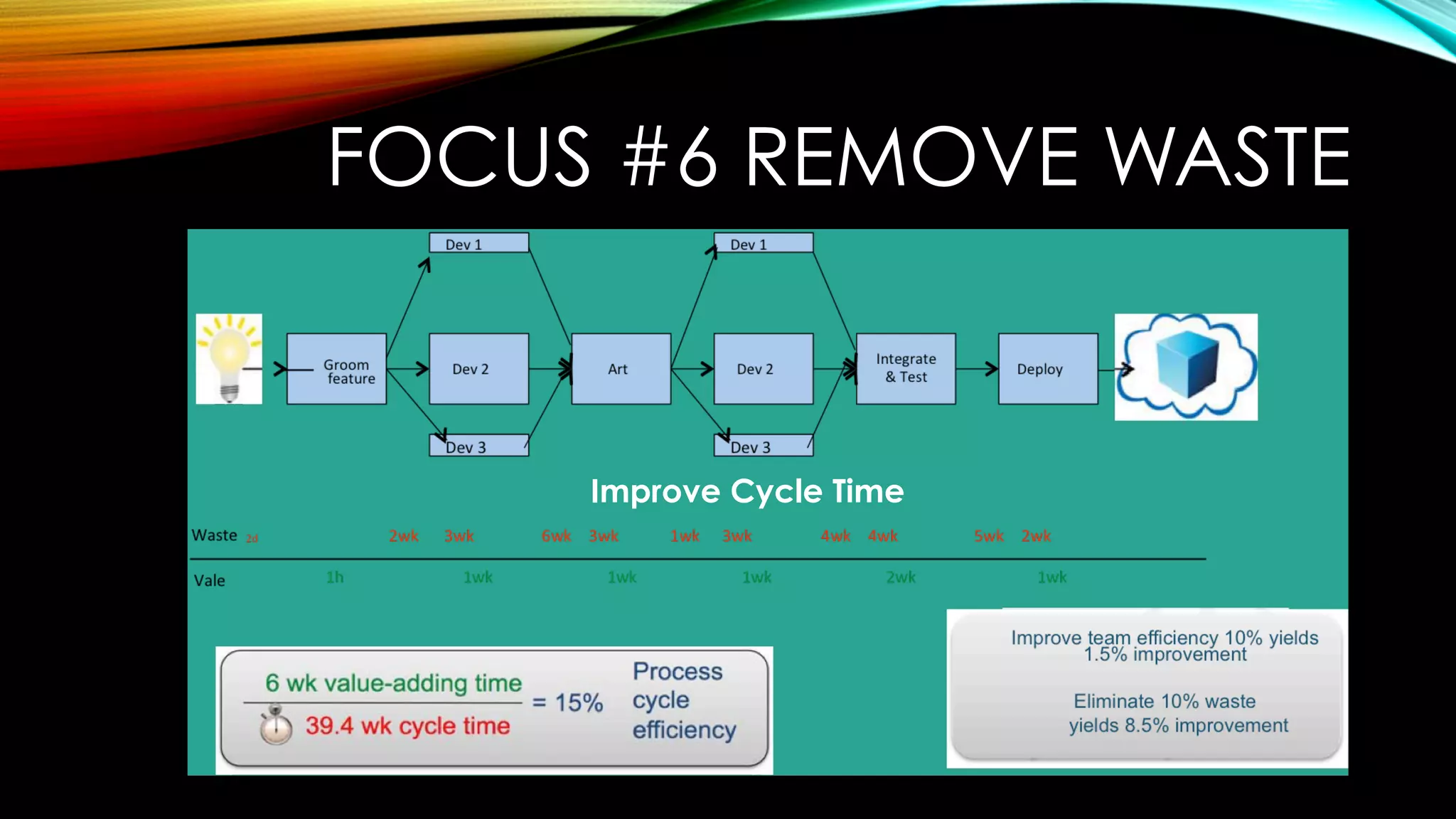
FOCUS #6 REMOVE WASTE
Improve Cycle Time
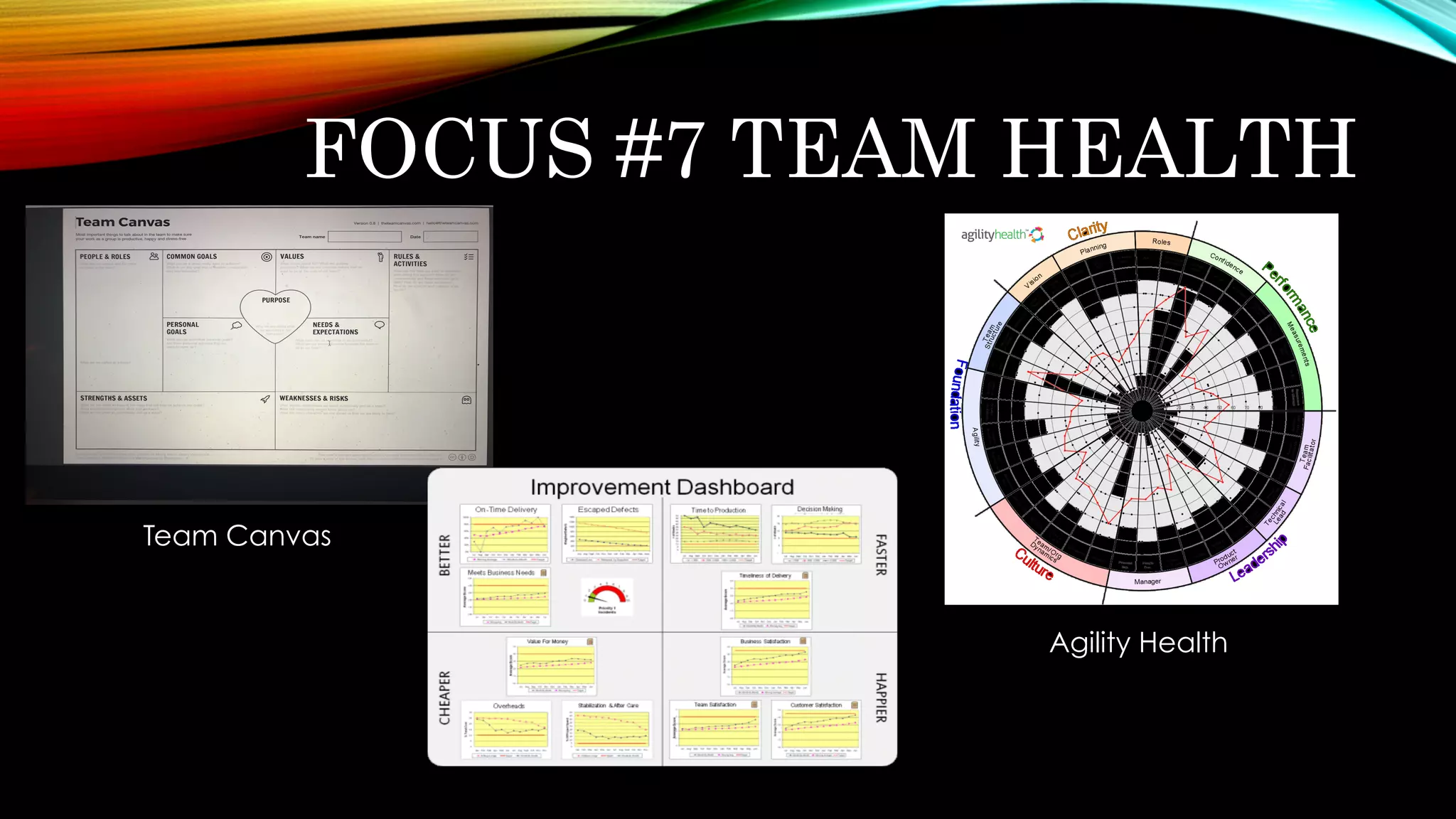
FOCUS #7 TEAM HEALTH
Agility Health
Team Canvas
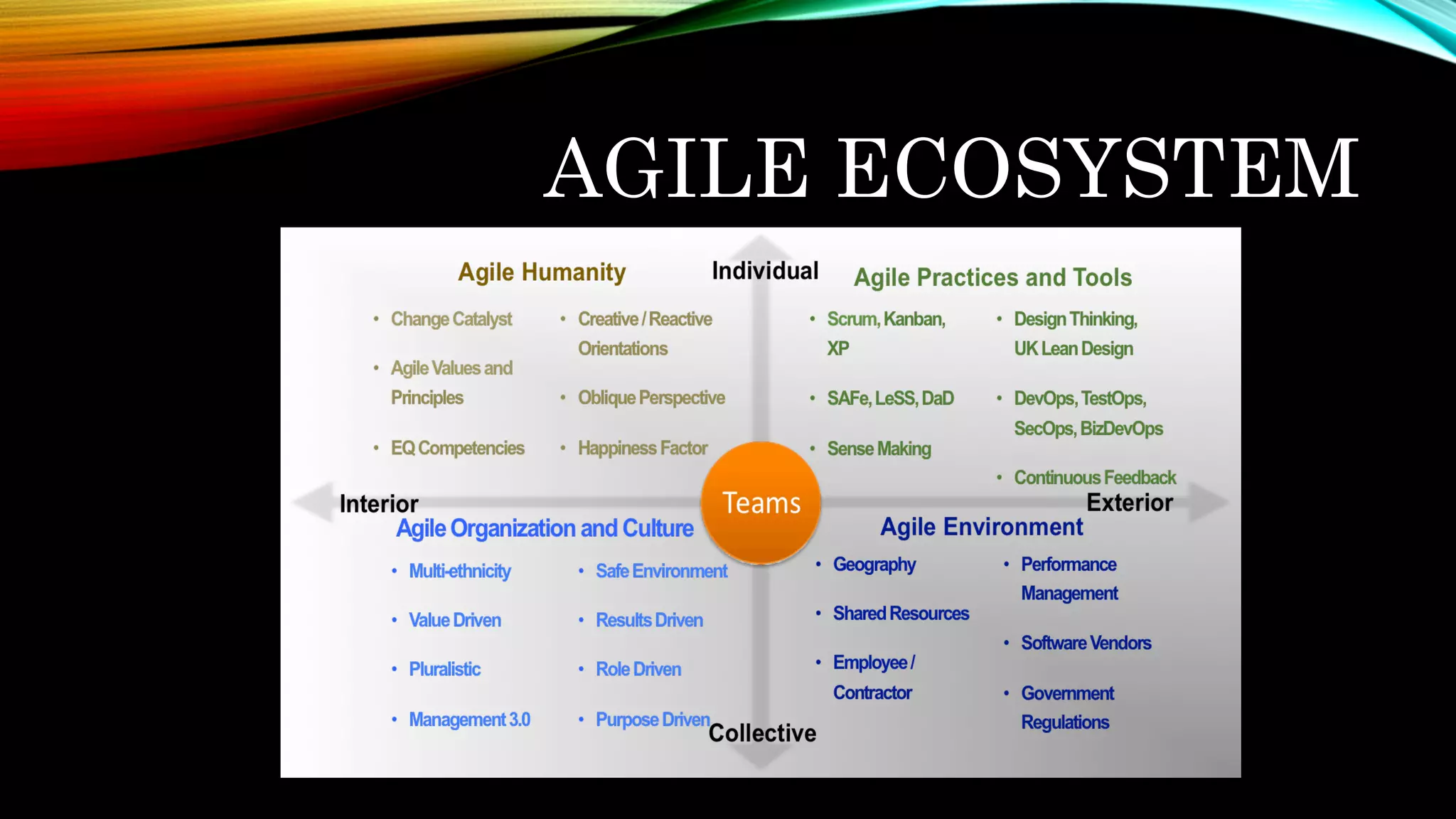
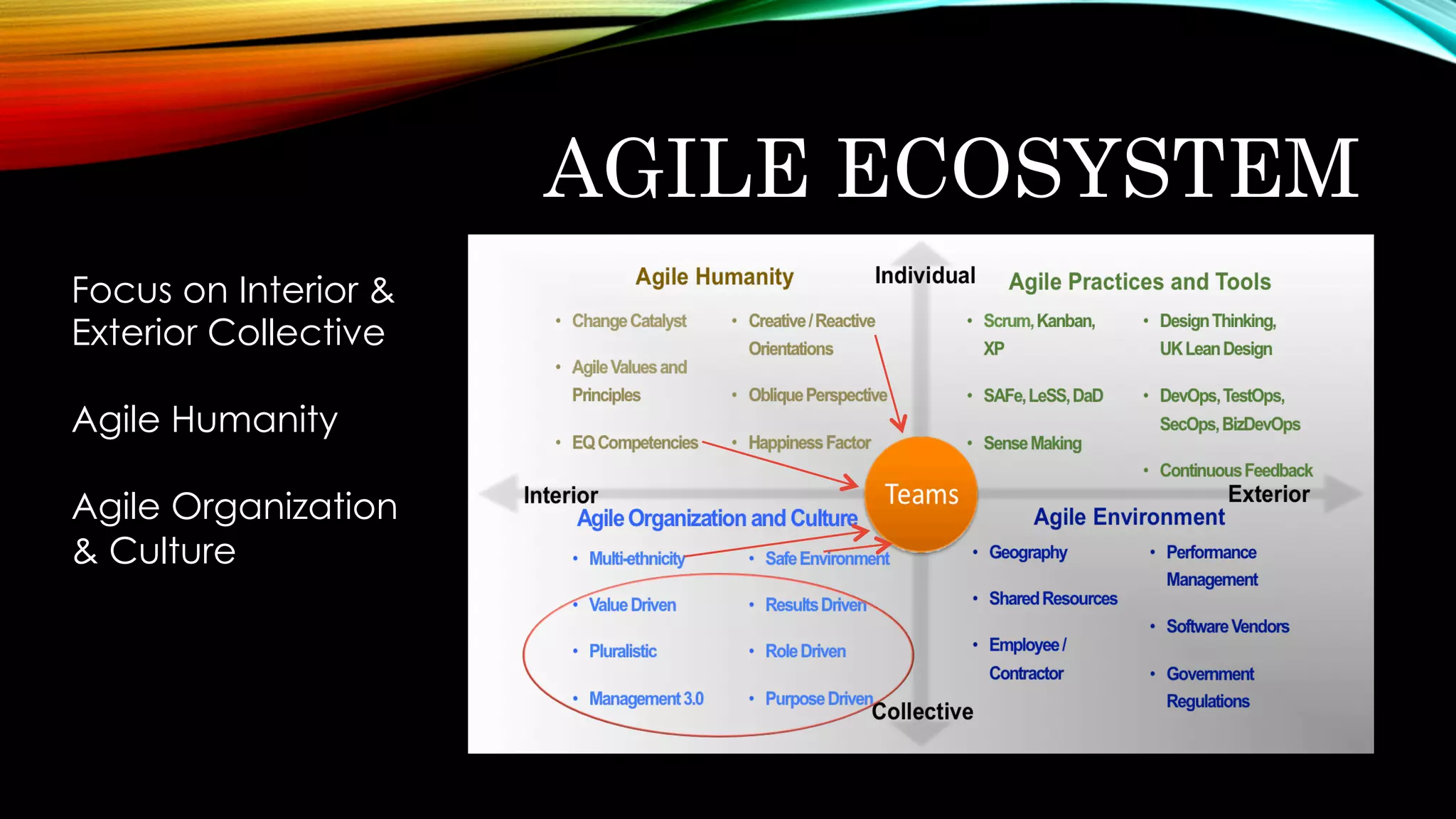
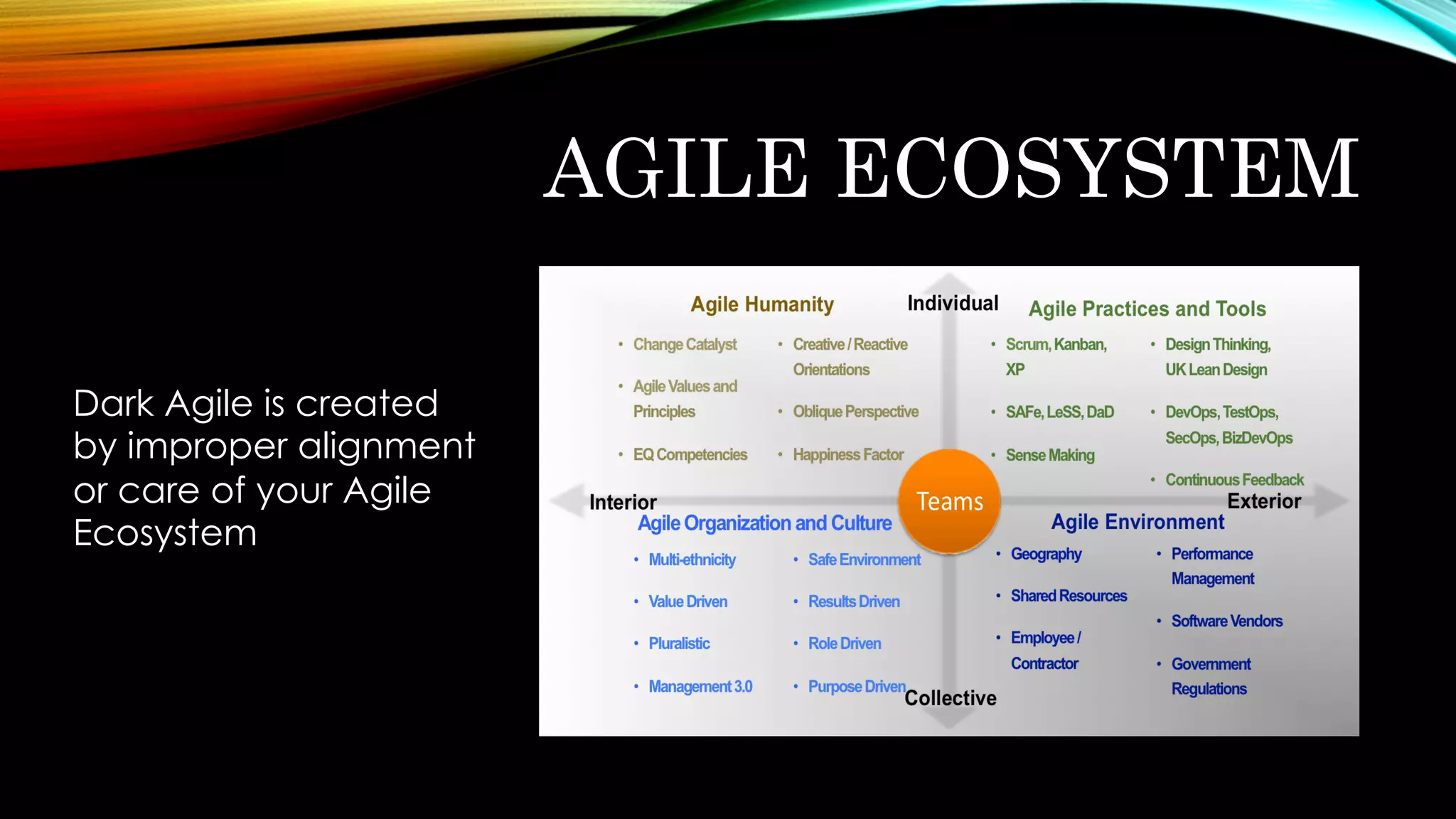
AGILE ECOSYSTEM
AGILE ECOSYSTEM
Focus on Interior &
Exterior Collective
Agile Humanity
Agile Organization
& Culture
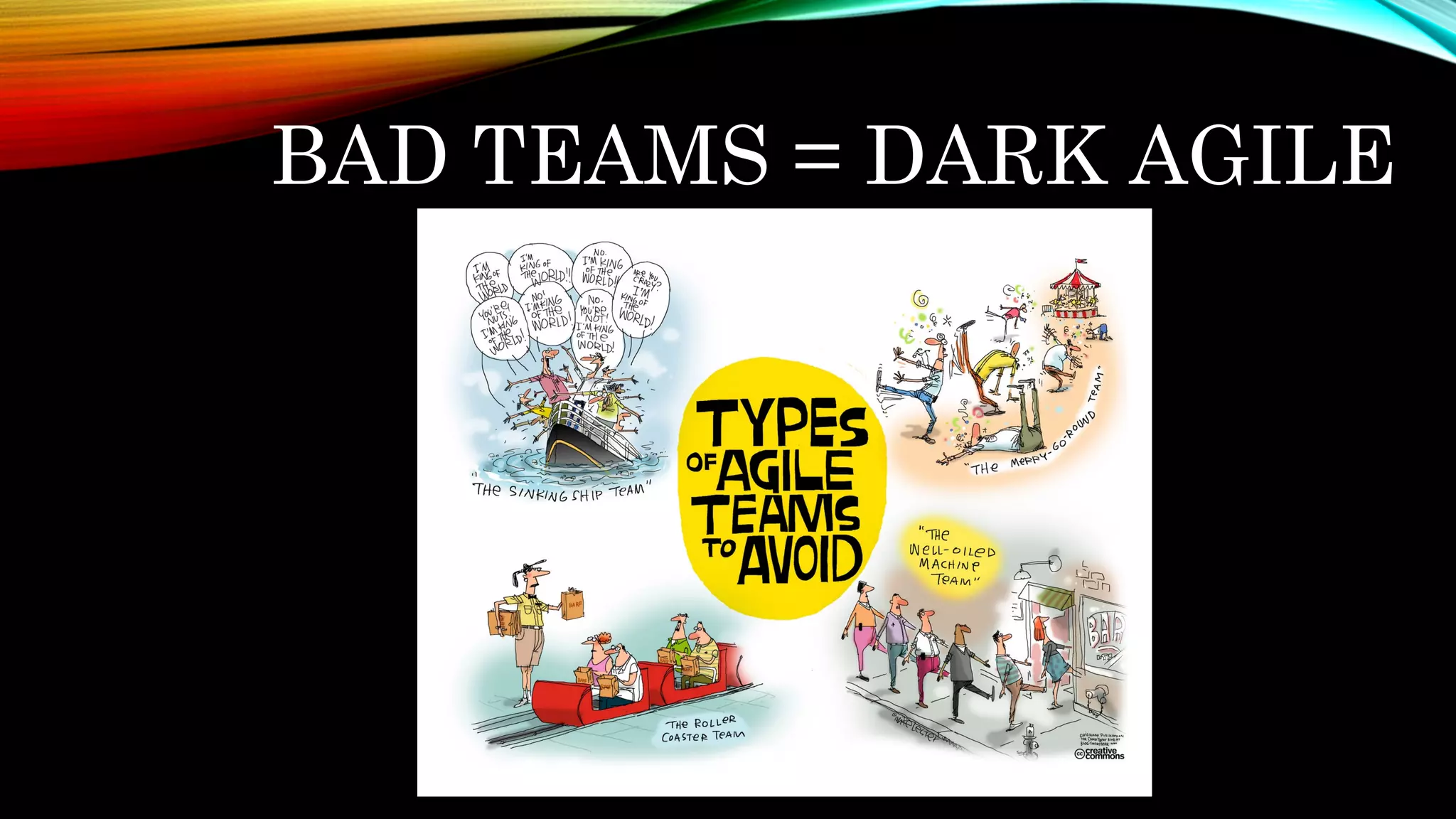
BAD TEAMS = DARK AGILE
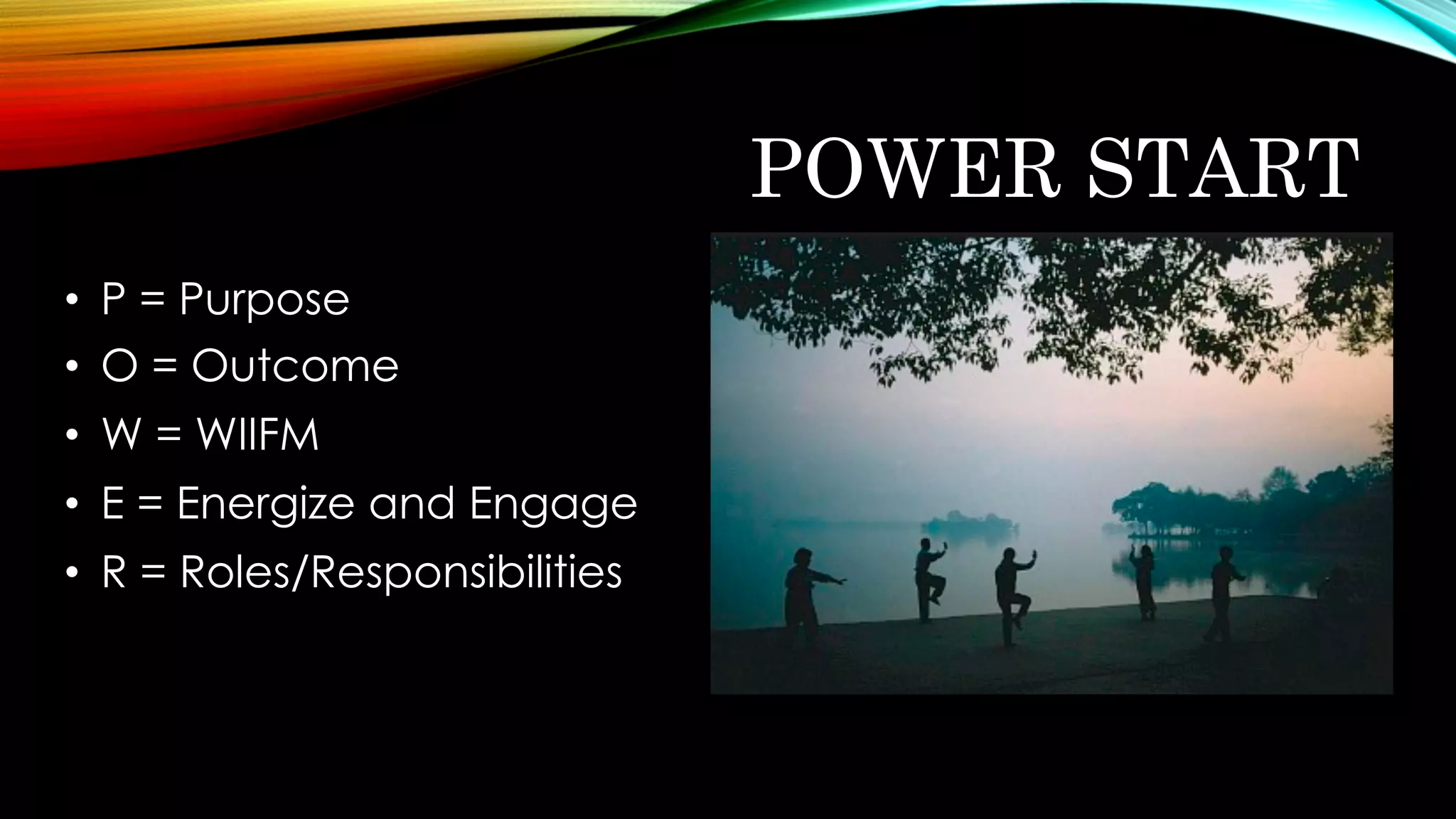
POWER START
•  P = Purpose
•  O = Outcome
•  W = WIIFM
•  E = Energize and Engage
•  R = Roles/Responsibilities
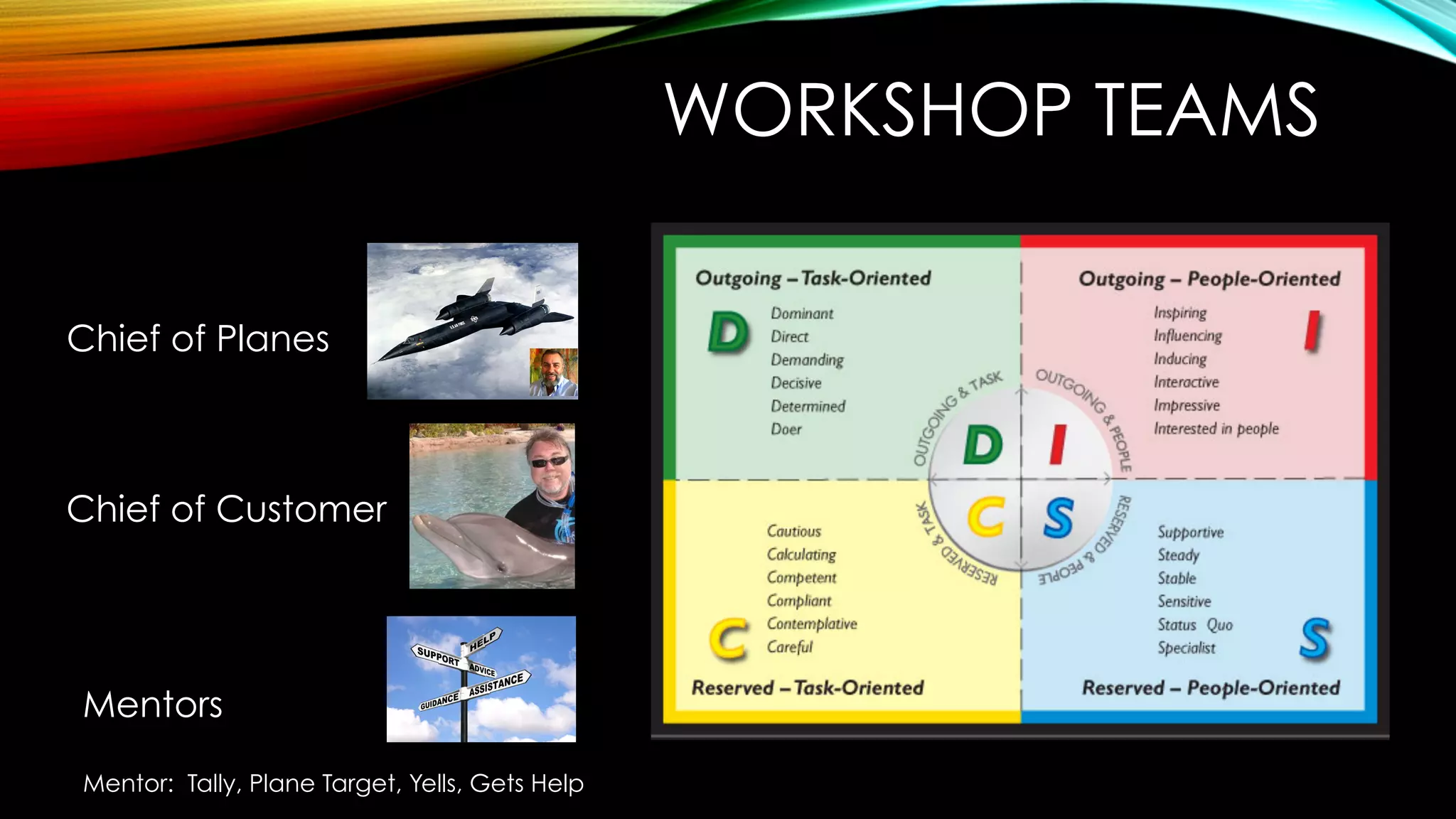
WORKSHOP TEAMS
Chief of Planes
Chief of Customer
Mentors
Mentor: Tally, Plane Target, Yells, Gets Help
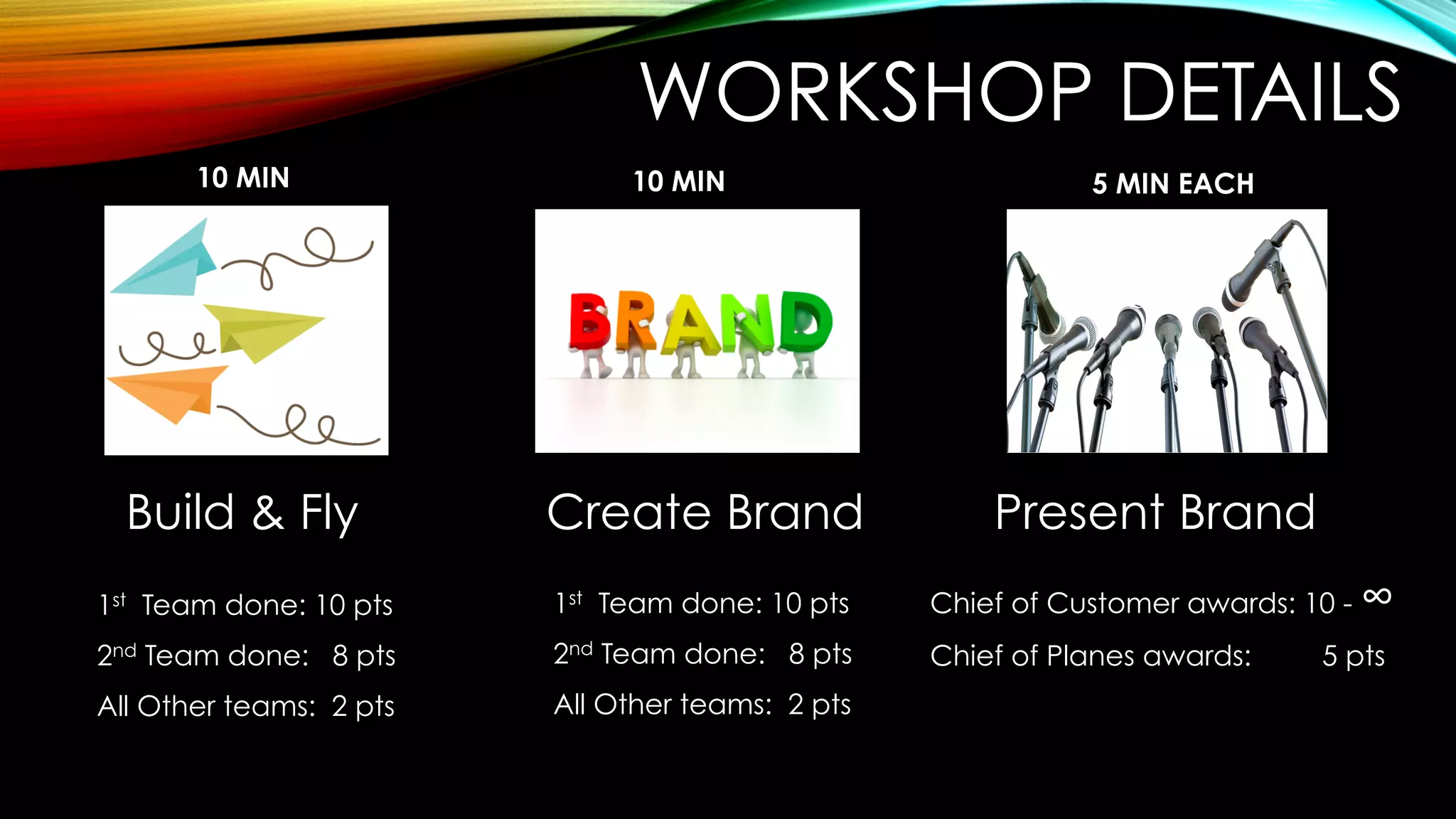
WORKSHOP DETAILS
Build & Fly
1st Team done: 10 pts
2nd Team done: 8 pts
All Other teams: 2 pts
Create Brand
1st Team done: 10 pts
2nd Team done: 8 pts
All Other teams: 2 pts
Present Brand
Chief of Customer awards: 10 - ∞
Chief of Planes awards: 5 pts
10 MIN 10 MIN 5 MIN EACH
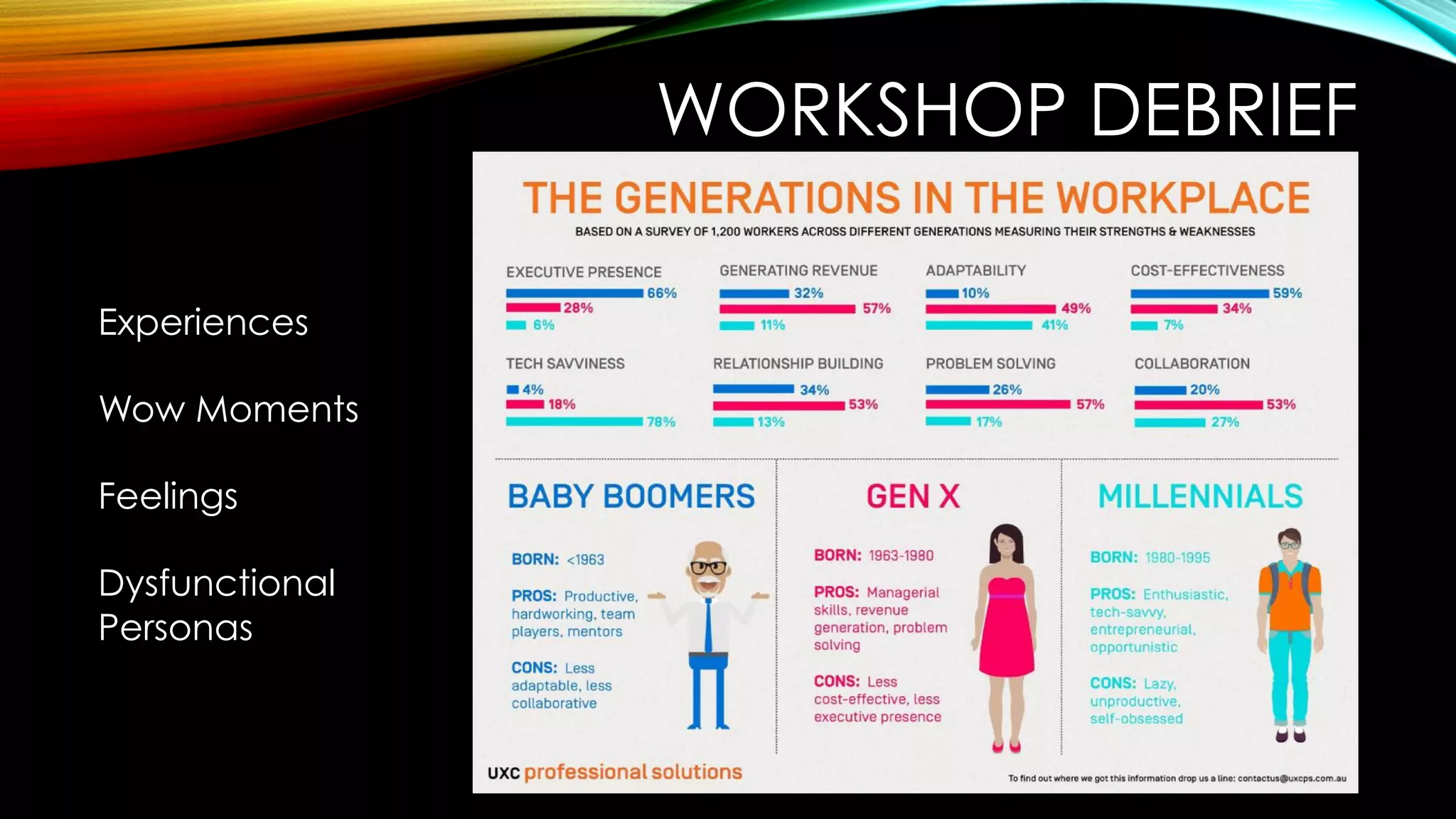
WORKSHOP DEBRIEF
Experiences
Wow Moments
Feelings
Dysfunctional
Personas
DARK AGILE
Avoidance	Therapy
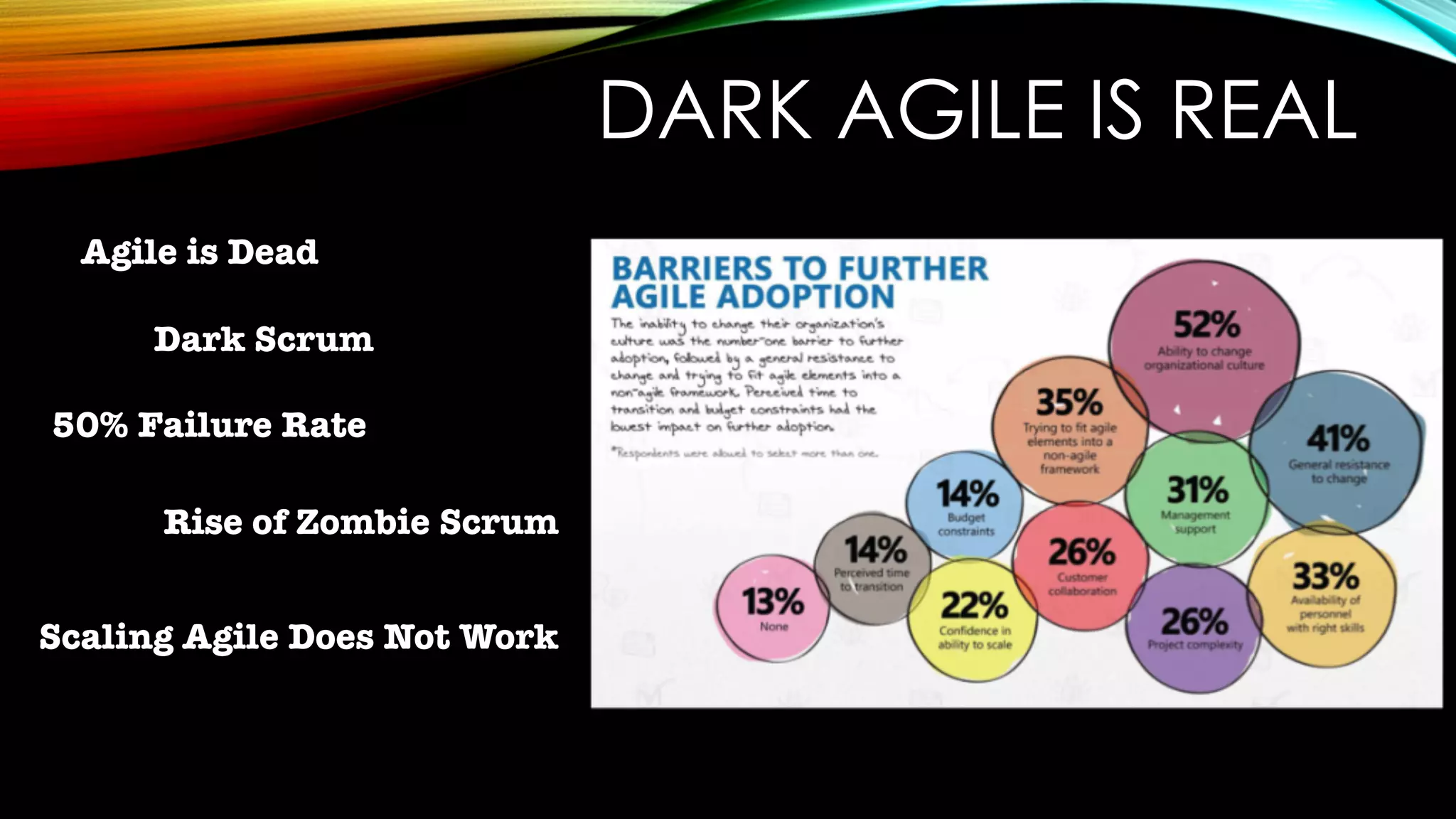
DARK AGILE IS REAL
Agile is Dead
Dark Scrum
Scaling Agile Does Not Work
Rise of Zombie Scrum
50% Failure Rate
AGILE ECOSYSTEM
Dark Agile is created
by improper alignment
or care of your Agile
Ecosystem
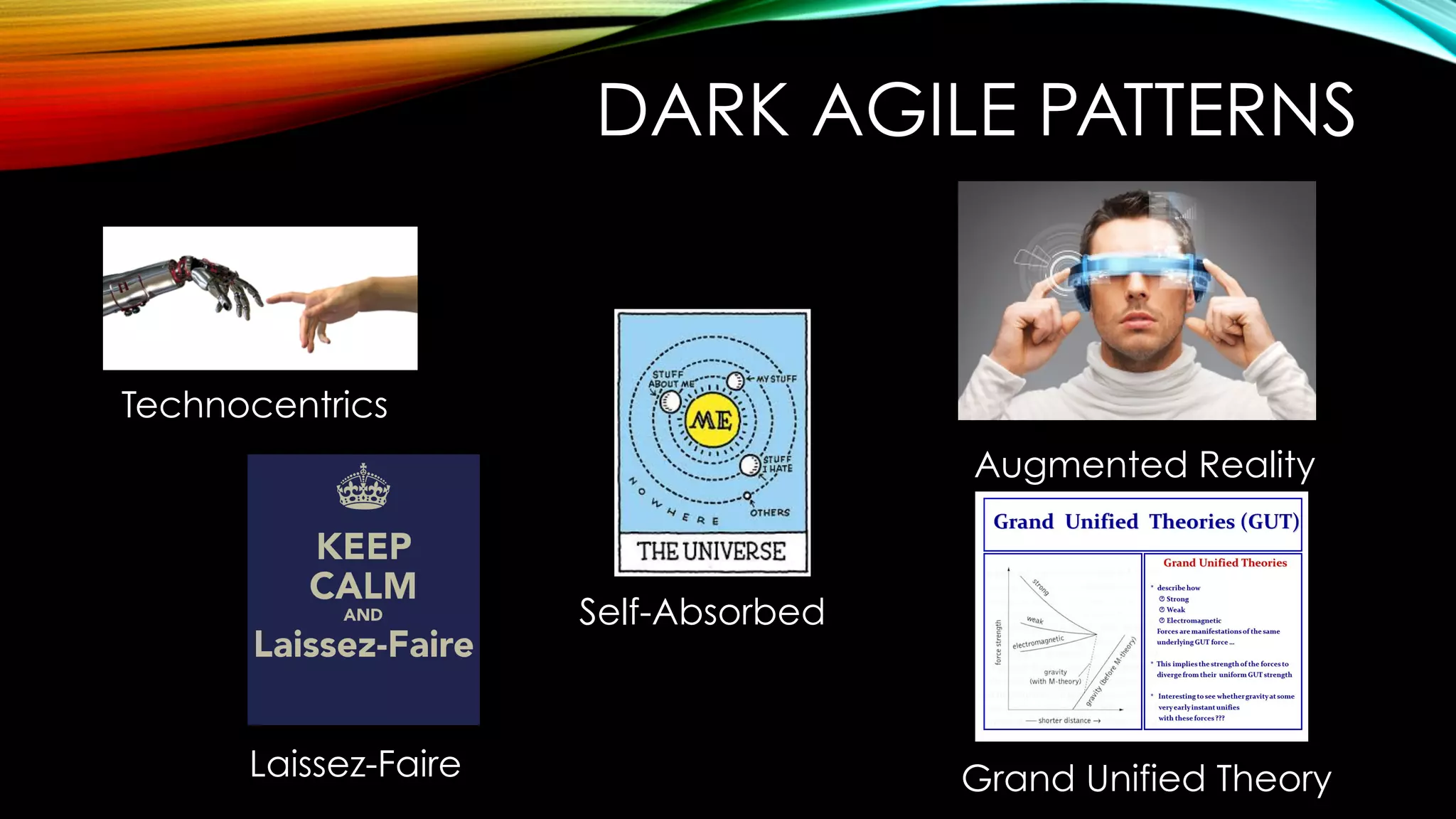
DARK AGILE PATTERNS
Technocentrics
Self-Absorbed
Augmented Reality
Laissez-Faire Grand Unified Theory
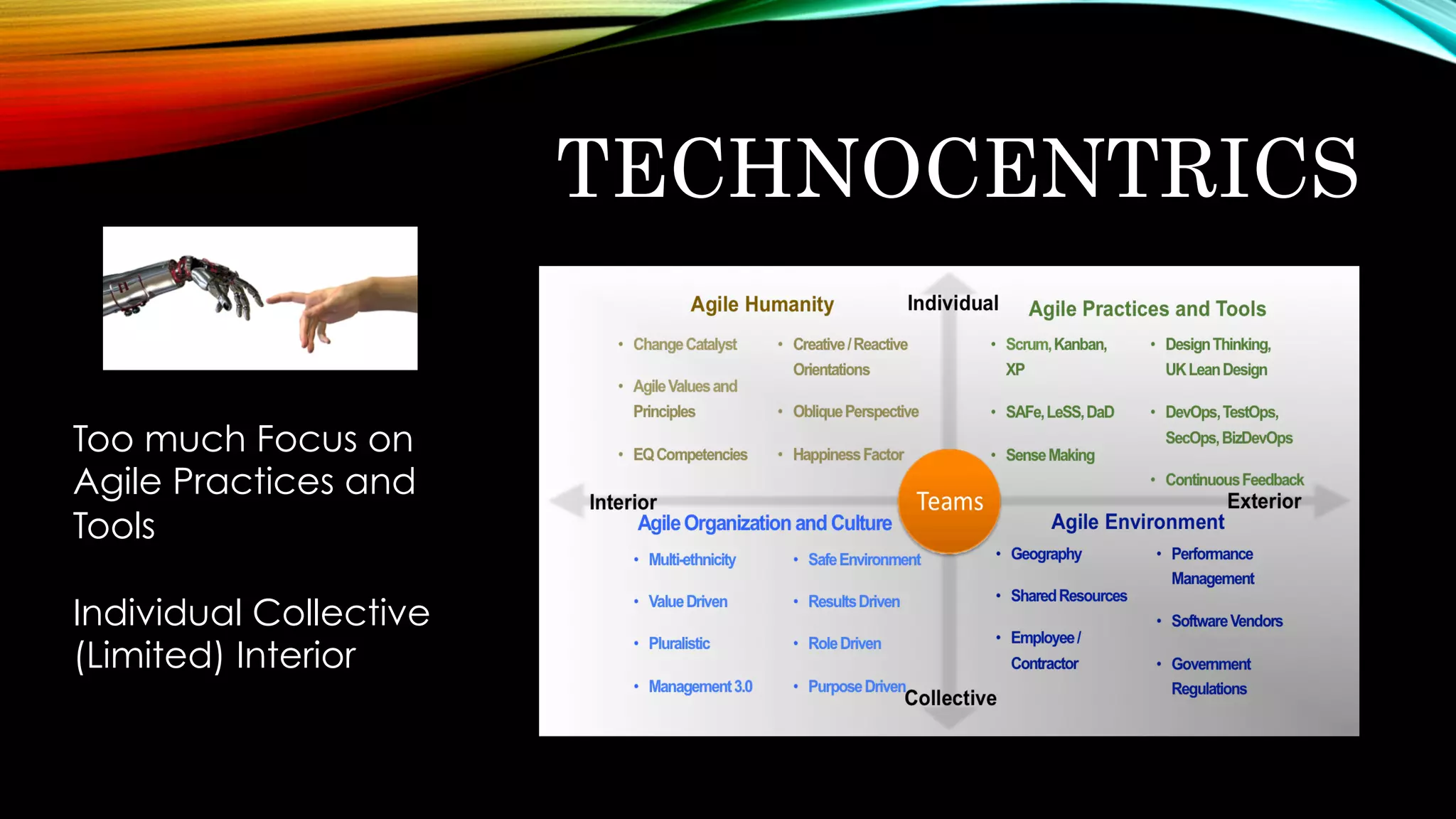
TECHNOCENTRICS
Too much Focus on
Agile Practices and
Tools
Individual Collective
(Limited) Interior
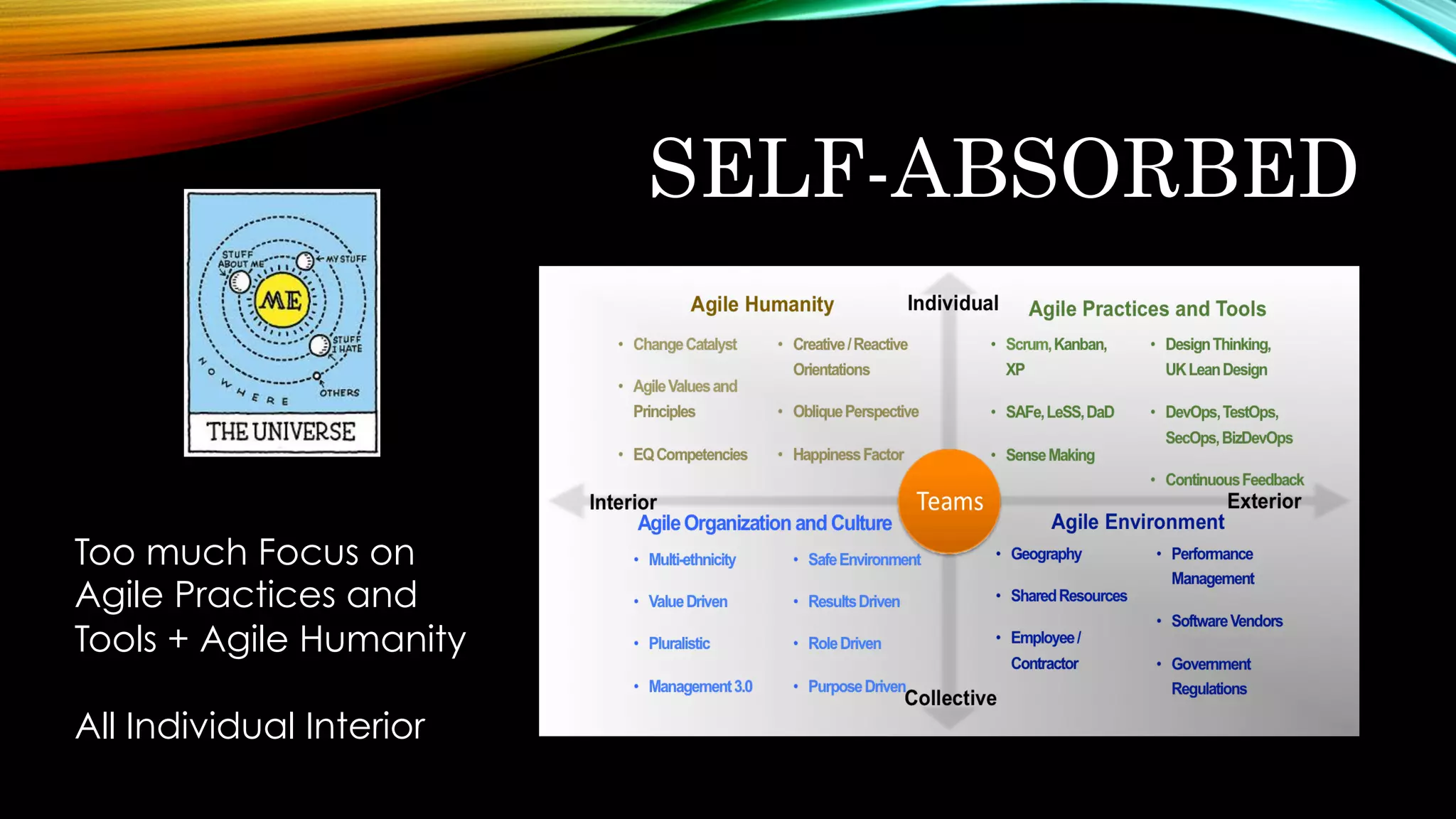
SELF-ABSORBED
Too much Focus on
Agile Practices and
Tools + Agile Humanity
All Individual Interior
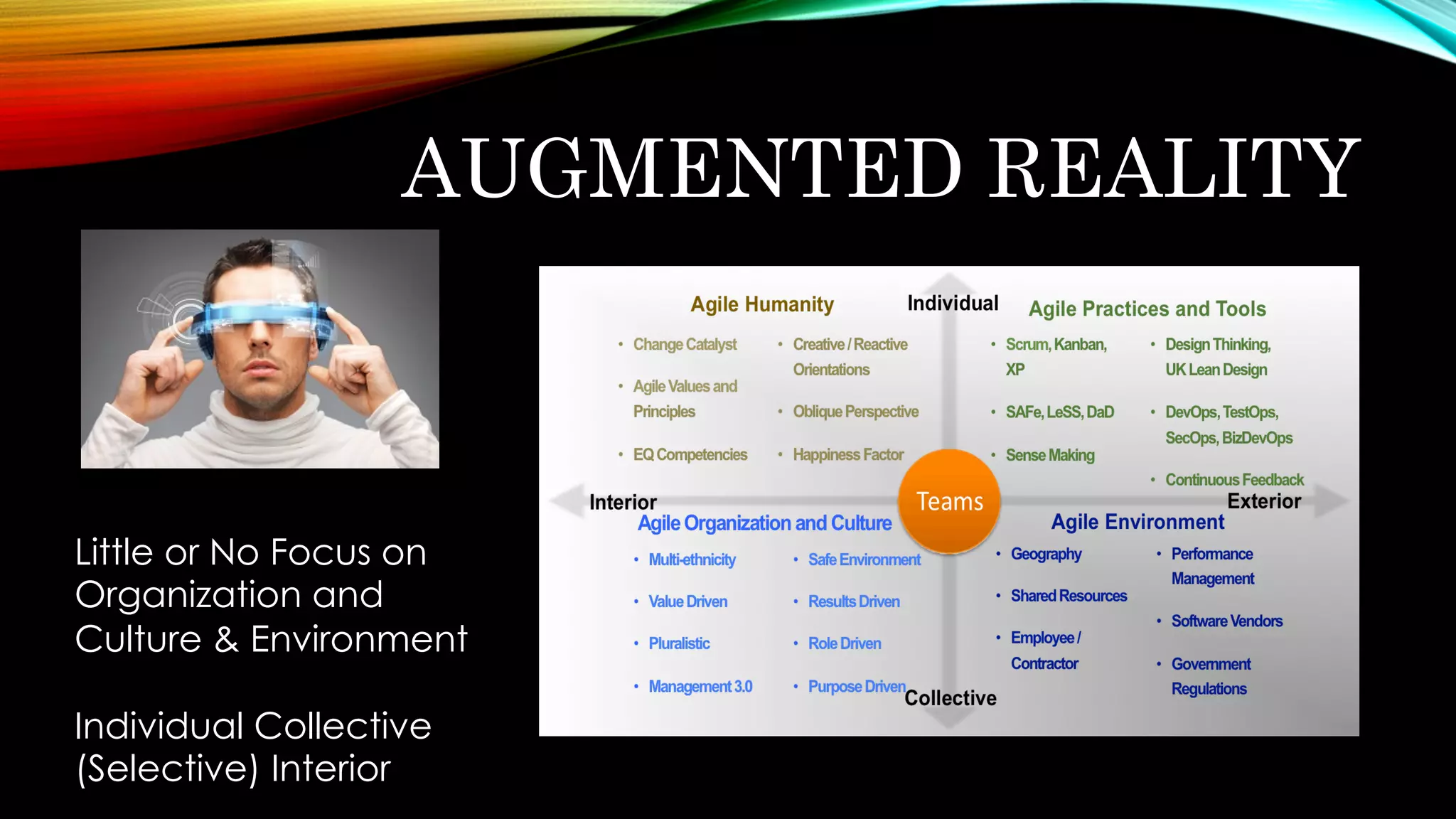
AUGMENTED REALITY
Little or No Focus on
Organization and
Culture & Environment
Individual Collective
(Selective) Interior
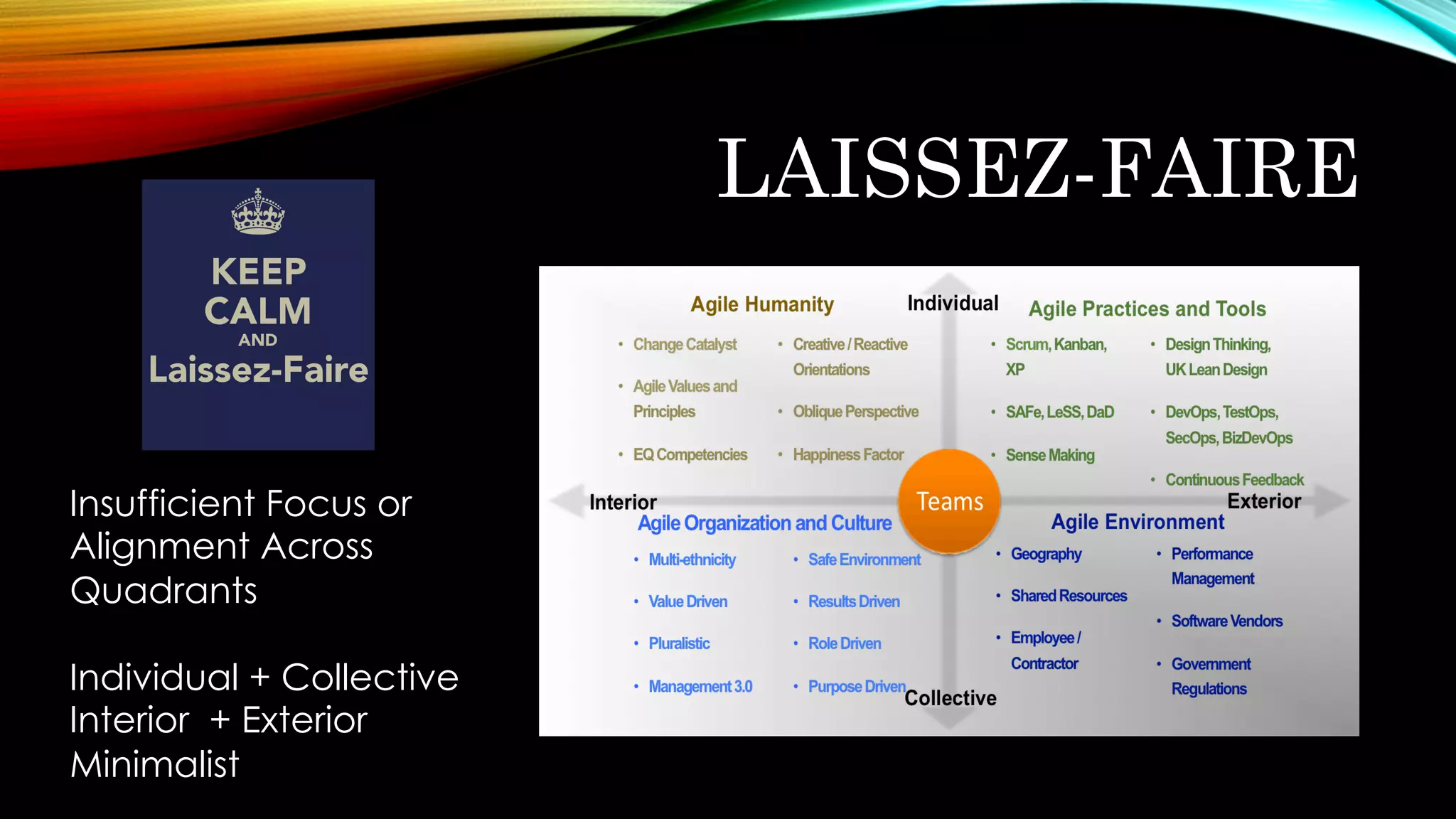
LAISSEZ-FAIRE
Insufficient Focus or
Alignment Across
Quadrants
Individual + Collective
Interior + Exterior
Minimalist
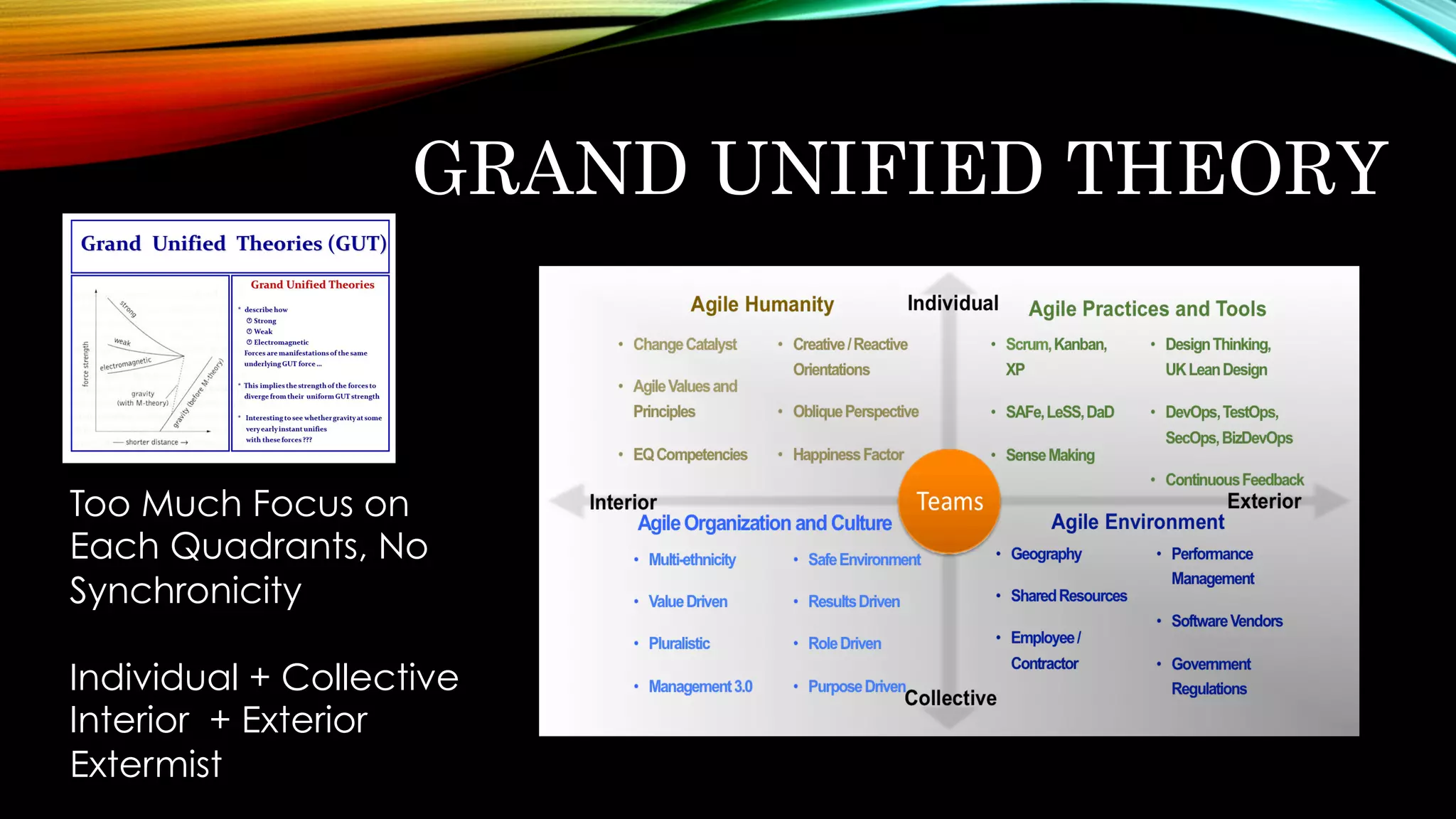
GRAND UNIFIED THEORY
Too Much Focus on
Each Quadrants, No
Synchronicity
Individual + Collective
Interior + Exterior
Extermist
GATEWAY TO AGILE
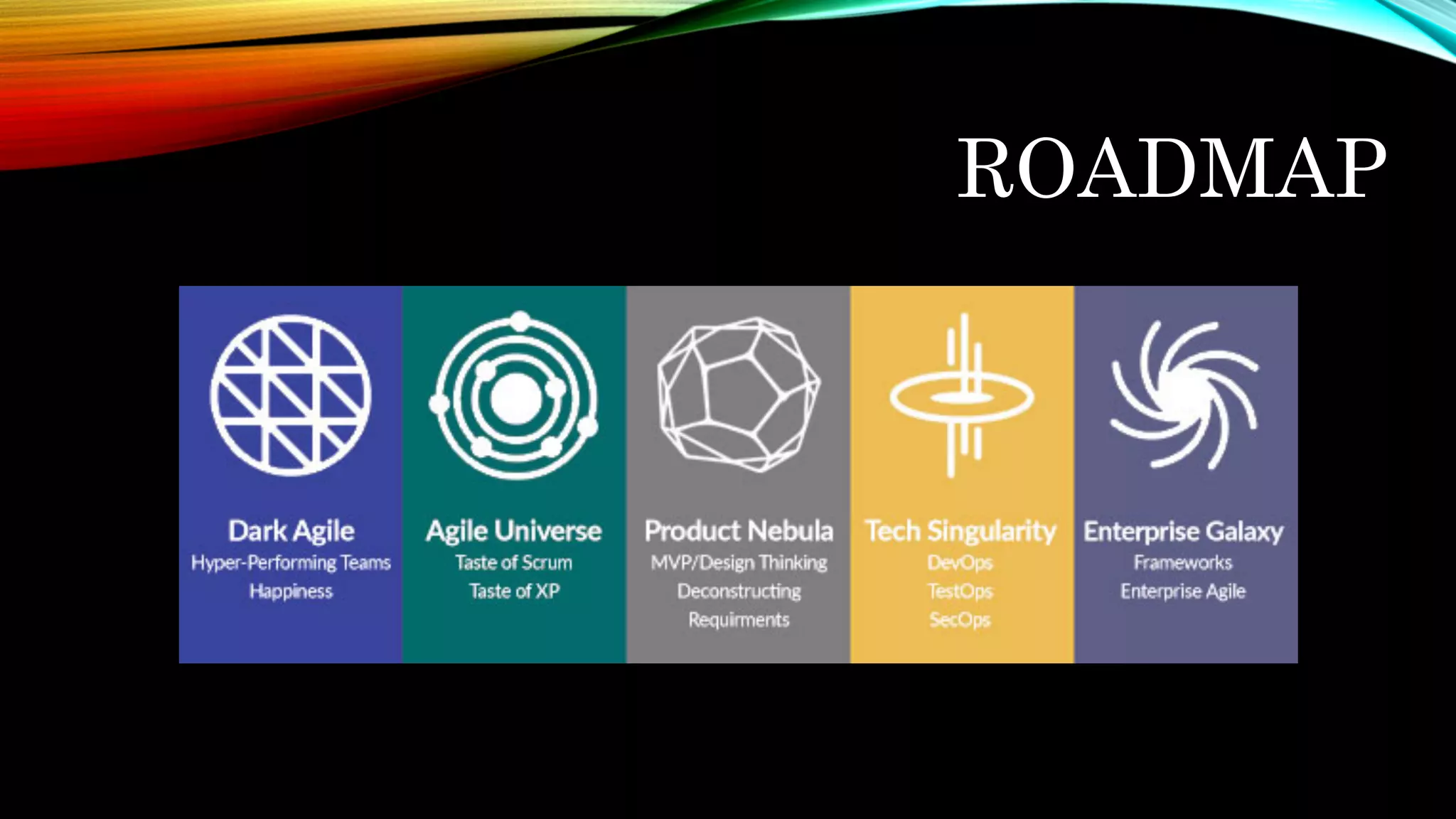
Roadmap	and	Interests	Groups
ROADMAP
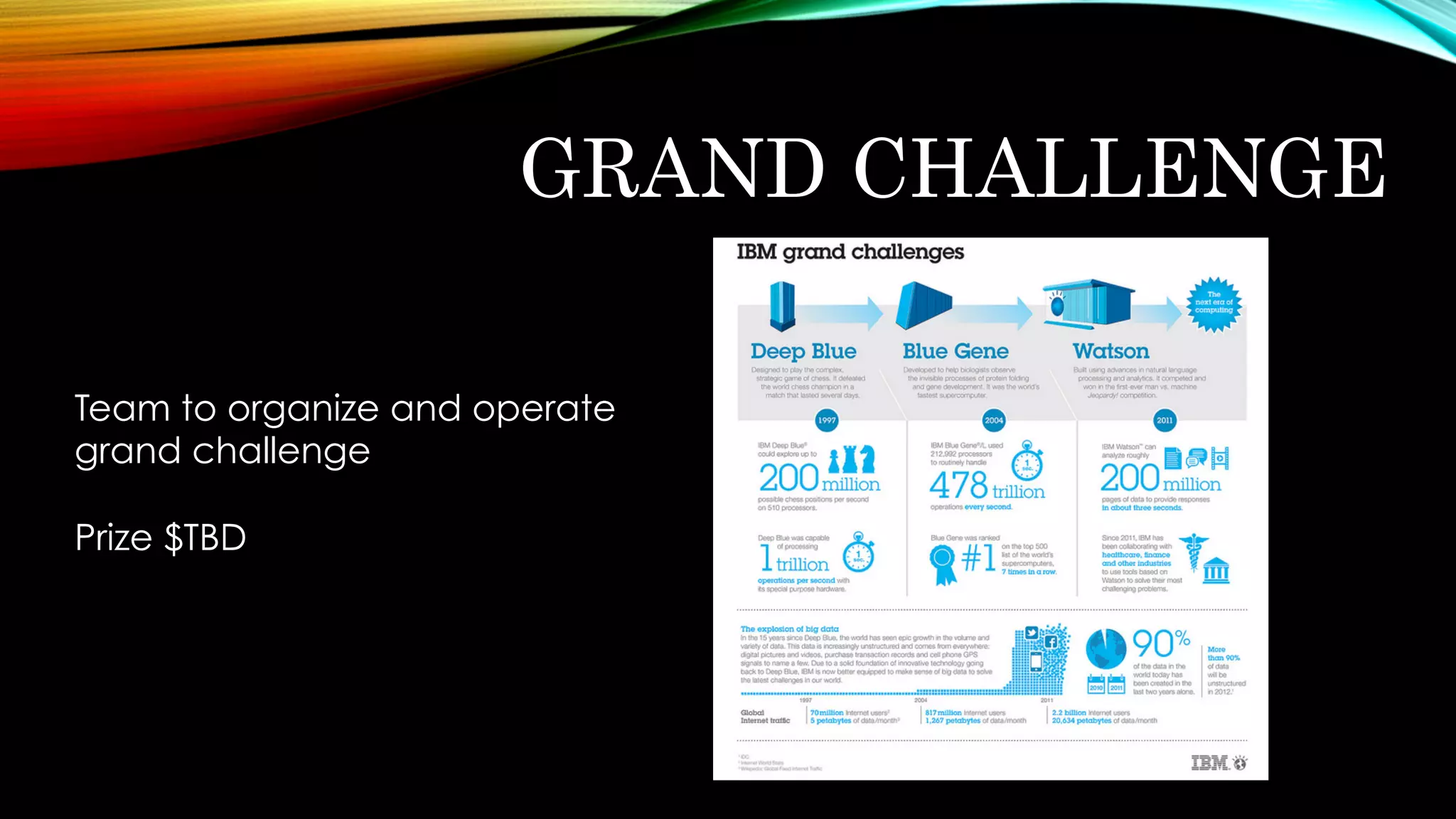
GRAND CHALLENGE
Team to organize and operate
grand challenge
Prize $TBD
EVENT COORDINATION
Team to help with
Meetup and
Events
SPONSOR MANAGEMENT
Team to help with
Sponsors
THANK YOU
Happiness	at	Wells	Fargo	Next

Gateway to Agile: Session 1 Dark Agile and Hyper-Performing Teams

  • 1.
  • 2.
  • 3.
    GERVAIS AND ROB Ø 42 years combined experience and knowledge Ø  Lead Agile Adoptions and Transformations for several companies Ø  16 Years IBM tenure / Agile Thought Leader Ø  Leads, trains, coaches teams and organizations in Agile Teams and Enterprise Adoption Ø  Agile Coach for Social Media, eCommerce, Retail, Space, Software, SaaS, Telecom, and Financial Services companies Relevant Certifications: PMP, ACP, CSM, CSP, CSPO, LeSS, SAFe SPC4, ACC, CISP, ICAgile Coach
  • 4.
  • 5.
  • 6.
  • 7.
    AGILE IMPERATIVE Increasing corporateagility has become a strategic priority for organizations. The focus….. ü  Improve customer satisfaction ü  Increase market share ü  Decrease your operating expenses ü  Increase your revenue ü  Beat the competition or at least keep pace ü  Shorten your time to market ü  Improve employee performance ü  Reduce turn-over
  • 8.
    FUTURE AGILE2016 –2020 Humanized Internet, Internet of Everywhere, Service IoT, Fewer Fancy Phones Cognitive Computing, Machine to Machine, Virtual Reality Grid Modernization, Solar Power Increase, Increase Reusable Energy, Waste Water as Asset Data Driven Healthcare, Cancer Ending, 3-D Print Organs, Cures from Bacteria Scarcity Ending Continuous Learning Fulvia Montresor is Director, Head of Technology Pioneers for the World Economic Forum
  • 9.
    HYPER-PERFORMING TEAMS •  HighPerforming •  Good communication patterns •  Face each other and energetic •  Connect with each other •  Side conversations and connections •  Explore and bring back •  Hyper-Performing •  Excellent Communication Patterns •  Empathetic to each other and infectious •  Connect with each other and outside team •  Side and community connections •  Explore and bring back •  Continuous learning and application Alex “Sandy” Pentland, MIT’s Human Dynamics Laboratory Energy + Engagement + Exploration
  • 10.
    IBM STUDY Hyper-Performing Teamsover Individuals Best Team = Complete 1 Week Slow Team = Complete in 2000 Weeks Mediocre Team = Complete in 1000 Weeks Teams characteristics: •  Transcendent •  Autonomous •  Cross-Functional New New Product Game by Takeuchi and Nonaka
  • 11.
    TEAM FOCUS Perception misalignmentand world view Balance between harmony and disharmony, every teams needs a deviant John Holland – Process of Inference, Learning, and Discovery and J Richard Hackman, the Edgar Pierce Professor of Social and Organizational Psychology at Harvard University Teams are real Compelling Direction Enabling Structures Supportive Organization Expert Coaching
  • 12.
  • 13.
    TALENT ALIGNMENT Stable Crews Tribes,Guilds, Chapters Competency Centers Revolving Experiences T – Shape vs M-Shape Reduce Context Switching & Unrealistic Work Loads
  • 14.
    TEAM SIZE What Limits Team 3—10 people Scrum Master Supports up to 3 Teams Team Product Owner Supports up to 3 Teams Program Manager Collaborates with up to 5 Scrum Masters Product Manager Collaborates with up to 5 Team Product Owners One Product Manager or Program Manager can work, indirectly, with up to 15 Teams, and potentially up to 135 development and test-related personnel (Team members).
  • 15.
  • 16.
    TEAM DEFINING •  Coupling(noun): “A factor or relationship that connects one thing to another” •  Reflects frequency, number of dependencies •  Requires collaboration and synchronization of effort Work items of Team members are /ghtly coupled Ø  Collabora/on happens constantly Teams on a Project are moderately coupled Ø  Collabora/on happens daily Projects in a Program are loosely coupled Ø  Collabora/on happens as needed
  • 17.
    FOCUS #1 COMPLETETEAM Department / Expertise Billing Catalog Subscription Engineering Bob, Carson Frank, Sanjay Sandy, Jack Quality Assurance Sue, Carlos Charles, Martin Bernice, Henry Database Design Ted Ted Giles User Experience Mark Julio Mark Technical Publications Yvette Good Bad •  A Team should include all areas of expertise aligned with the vertical application architecture •  A Team often spans departmental boundaries (matrix organization) Value Stream Mapping
  • 18.
    FOCUS #2 TEAMMOTIVATION IDG Research and Motivation Factor Energy + Engagement + Exploration M Factor External Internal Self Identifying M Factor 45%55% Dan Pink: Drive AND http://readingraphics.com/how-to-increase-motivation/ “Extrinsic motivators kill creativity”
  • 19.
    FOCUS #3 TEAM EMOTIONALINTELLIGENCE EI = Self Awareness +Self Management SI = Social Awareness + Social Skill Leadership That Gets Results by Daniel Coleman
  • 20.
    FOCUS #4 LOWBATCH SIZE
  • 21.
    •  Collaboration withina Team is easy •  The Team has its own plan and priorities •  Members of the Team collaborate to execute their plan •  Collaboration within the Team is easy and informal •  Adjusting to changes in scope or schedule is relatively simple, and usually requires no more than a short discussion •  Collaboration between Teams is harder •  Collaboration requires planning to ensure dependencies are addressed •  Changes in scope or schedule that impact cross-Team dependencies require re-planning the schedules of both Teams Define Teams to minimize interfaces Have representation of QA/ Release Management in the release planning phases Strategies 1.  Feature Teams 2.  Client and Server Teams 3.  Component / Platform Teams Cost of interaction increases with the number of interfaces! FOCUS #5 REDUCE DEPENDENCIES
  • 22.
    FOCUS #6 REMOVEWASTE Improve Cycle Time
  • 23.
    FOCUS #7 TEAMHEALTH Agility Health Team Canvas
  • 24.
  • 25.
    AGILE ECOSYSTEM Focus onInterior & Exterior Collective Agile Humanity Agile Organization & Culture
  • 26.
    BAD TEAMS =DARK AGILE
  • 27.
    POWER START •  P= Purpose •  O = Outcome •  W = WIIFM •  E = Energize and Engage •  R = Roles/Responsibilities
  • 28.
    WORKSHOP TEAMS Chief ofPlanes Chief of Customer Mentors Mentor: Tally, Plane Target, Yells, Gets Help
  • 29.
    WORKSHOP DETAILS Build &Fly 1st Team done: 10 pts 2nd Team done: 8 pts All Other teams: 2 pts Create Brand 1st Team done: 10 pts 2nd Team done: 8 pts All Other teams: 2 pts Present Brand Chief of Customer awards: 10 - ∞ Chief of Planes awards: 5 pts 10 MIN 10 MIN 5 MIN EACH
  • 30.
  • 31.
  • 32.
    DARK AGILE ISREAL Agile is Dead Dark Scrum Scaling Agile Does Not Work Rise of Zombie Scrum 50% Failure Rate
  • 33.
    AGILE ECOSYSTEM Dark Agileis created by improper alignment or care of your Agile Ecosystem
  • 34.
    DARK AGILE PATTERNS Technocentrics Self-Absorbed AugmentedReality Laissez-Faire Grand Unified Theory
  • 35.
    TECHNOCENTRICS Too much Focuson Agile Practices and Tools Individual Collective (Limited) Interior
  • 36.
    SELF-ABSORBED Too much Focuson Agile Practices and Tools + Agile Humanity All Individual Interior
  • 37.
    AUGMENTED REALITY Little orNo Focus on Organization and Culture & Environment Individual Collective (Selective) Interior
  • 38.
    LAISSEZ-FAIRE Insufficient Focus or AlignmentAcross Quadrants Individual + Collective Interior + Exterior Minimalist
  • 39.
    GRAND UNIFIED THEORY TooMuch Focus on Each Quadrants, No Synchronicity Individual + Collective Interior + Exterior Extermist
  • 40.
  • 41.
  • 42.
    GRAND CHALLENGE Team toorganize and operate grand challenge Prize $TBD
  • 43.
    EVENT COORDINATION Team tohelp with Meetup and Events
  • 44.
    SPONSOR MANAGEMENT Team tohelp with Sponsors
  • 45.