GASTROINTESTINAL DISORDERS
For Level one
Midwifery and MHN
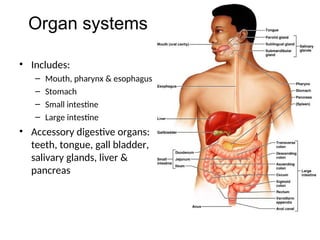
Organ systems
• Includes:
– Mouth, pharynx & esophagus
– Stomach
– Small intestine
– Large intestine
• Accessory digestive organs:
teeth, tongue, gall bladder,
salivary glands, liver &
pancreas
FUNCTIONS OF THE DIGESTIVE
SYSTEM
Overall, the digestive system performs six basic
processes:
1. Ingestion. This process involves taking foods and
liquids into the mouth (eating).
2. Secretion. Release of water acids, buffers, enzymes &
salts by epithelium of GI tract and glandular organs
3. Mixing and propulsion. Alternating contractions and
relaxations of smooth muscle in the walls of the GI
tract mix food and secretions and propel them toward
the anus. This capability of the GI tract to mix and
move material along its length is called motility.
FUNCTIONS OF THE DIGESTIVE
SYSTEM
4. Digestion. Mechanical and chemical processes break
down ingested food into small molecules.
In mechanical digestion the teeth cut and grind food
before it is swallowed, and then smooth muscles of
the stomach and small intestine churn the food.
In chemical digestion: the large carbohydrate, lipid,
protein, and nucleic acid molecules in food are split
into smaller molecules by hydrolysis.
• A few substances in food can be absorbed without
chemical digestion. These include vitamins, ions,
cholesterol, and water.
FUNCTIONS OF THE DIGESTIVE
SYSTEM
5. Absorption. Is the entrance of ingested and secreted
fluids, ions, and the products of digestion into the
epithelial cells lining the lumen of the GI tract is called
absorption. The absorbed substances pass into blood
or lymph and circulate to cells throughout the body.
6. Defecation /Elimination. Here the wastes, indigestible
substances, bacteria, cells sloughed from the lining of
the GI tract, and digested materials that were not
absorbed in their journey through the digestive tract
leave the body through the anus. The eliminated
material is termed feces.
GASTROINTESTINAL DISORDERS
Nutritional problems: Malnutrition and Obesity
Eating disorders: Anorexia nervosa, Bulimia nervosa
Upper GI problems: nausea and vomiting, oral inflammations and
infections(gingivitis, oral candidiasis, herpes simplex, stomatitis,
parotitis,…), oral cancer, esophageal disorders (gastroesophageal
reflux disease(GERD), hital hernia, esophageal cancer, esophageal
diverticula, esophageal strictures, achalasia, esophageal varices),
upper gastrointestinal bleeding, disorders of the stomach and
upper small intestine (gastritis, peptic ulcer disease, stomach
cancer, foodborne illness)
GASTROINTESTINAL DISORDERS
Lower gastrointestinal problems: diarrhea,
fecal incontinence, constipation, acute and
chronic abdominal pain, irritable bowel
syndrome (IBS) abdominal trauma,
inflammatory disorders (appendicitis,
gastroenteritis, IBS, intestinal obstruction,
polyps of large intestine, colorectal cancer),
diverticulosis and diverticulitis, hernia, celiac
disease, lactase deficiency, short bowel
syndrome, gastrointestinal tromal tumors)
GASTROINTESTINAL DISORDERS
Anorectal problems: hemorrhoids, anal fissure,
anorectal abscess, anal fistula, pilonidal sinus
Disorders of the liver: hepatitis, cirrhosis, liver
cancer
Disorders of the pancreas : acute and chronic
pancreatitis, pancreatic cancer.
Disorders of biliary tract: cholelithiasis and
cholecystitis, gallbladder cancer.
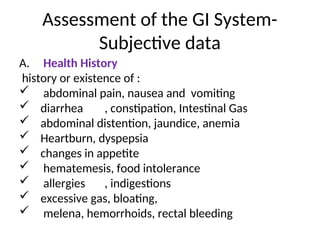
Assessment of the GI System-
Subjective data
A. Health History
history or existence of :
 abdominal pain, nausea and vomiting
 diarrhea , constipation, Intestinal Gas
 abdominal distention, jaundice, anemia
 Heartburn, dyspepsia
 changes in appetite
 hematemesis, food intolerance
 allergies , indigestions
 excessive gas, bloating,
 melena, hemorrhoids, rectal bleeding
Assessment….
B. Medications:
past and current use of medications
 OTC drugs
prescription drugs
herbal products and nutritional supplements
Drug allergies
C. Surgeries and other treatments
 information about hospitalizations for any
problems related to GI system
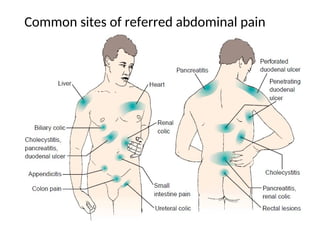
Common sites of referred abdominal pain
Assessment…Objective Data
A. INSPECTION
Lips – symmetry, color and size
observe for abnormalities : pallor or cyanosis, cracking,
ulcers, or fissures.
Tongue : color, fissures, deviation and lesions
Buccal Mucosa : color and lesions and distinctive breath odors
Teeth and gums : caries, loose teeth, abnormal shape and
position of the teeth, presence of swelling , bleeding,
discoloration.
Assessment….
Abdomen
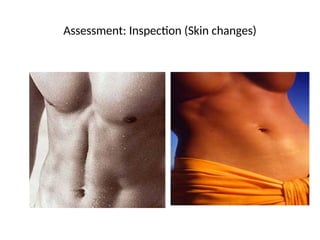
 Skin changes ( color, texture, scars, striae, dilated
veins, rashes, and lesions.)
 umbilicus – location and contour
 contour – flat, rounded, distended.
 observable masses, hernias and other
masses.
 movement – observable peristalsis and
pulsation.
Assessment: Inspection (Skin changes)
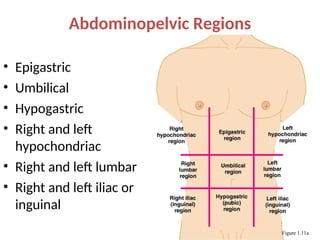
Abdominopelvic Regions
• Epigastric
• Umbilical
• Hypogastric
• Right and left
hypochondriac
• Right and left lumbar
• Right and left iliac or
inguinal
Figure 1.11a
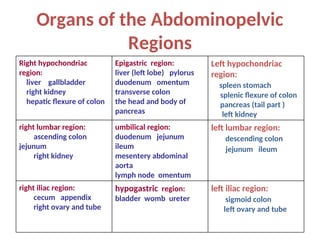
Organs of the Abdominopelvic
Regions
Right hypochondriac
region:
liver gallbladder
right kidney
hepatic flexure of colon
Epigastric region:
liver (left lobe) pylorus
duodenum omentum
transverse colon
the head and body of
pancreas
Left hypochondriac
region:
spleen stomach
splenic flexure of colon
pancreas (tail part )
left kidney
right lumbar region:
ascending colon
jejunum
right kidney
umbilical region:
duodenum jejunum
ileum
mesentery abdominal
aorta
lymph node omentum
left lumbar region:
descending colon
jejunum ileum
right iliac region:
cecum appendix
right ovary and tube
hypogastric region:
bladder womb ureter
left iliac region:
sigmoid colon
left ovary and tube
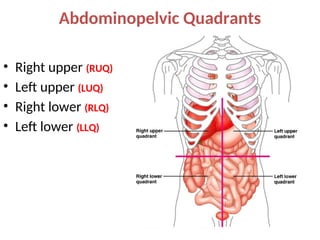
Abdominopelvic Quadrants
• Right upper (RUQ)
• Left upper (LUQ)
• Right lower (RLQ)
• Left lower (LLQ)
Assessment….
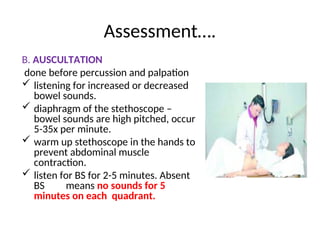
B. AUSCULTATION
done before percussion and palpation
 listening for increased or decreased
bowel sounds.
 diaphragm of the stethoscope –
bowel sounds are high pitched, occur
5-35x per minute.
 warm up stethoscope in the hands to
prevent abdominal muscle
contraction.
 listen for BS for 2-5 minutes. Absent
BS means no sounds for 5
minutes on each quadrant.
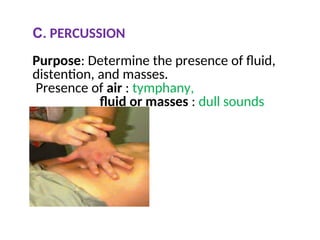
C. PERCUSSION
Purpose: Determine the presence of fluid,
distention, and masses.
Presence of air : tymphany,
fluid or masses : dull sounds
Assessment….
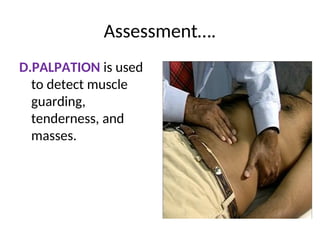
D.PALPATION is used
to detect muscle
guarding,
tenderness, and
masses.
Diagnostic Studies
A. Upper GI Series or Barrium Swallow
 X-ray study with fluoroscopy with contrast medium
 used to diagnose structural abnormalities of the esophagus,
stomach, and duodenal bulb
 NPO for 8-12 hours
 pt. will drink contrast medium
 give pt. laxatives and fluid to prevent contrast medium
impaction.
 the stool may be white up to 72 hours after the test
B. Small Bowel Series – same as upper GI series
Diagnostic tests
C. Lower GI or Barium Enema
 Fluoroscopic examination of the colon using contrast
medium w/c is administered rectally.
 administer laxatives and enemas the night before the
procedure
 clear liquid diet the night before.
 NPO for 8 hours before the procedure.
 cramping and urge to defecate may occur.
 explain that pt will be assuming various position in tilt
table.
 give laxatives, fluids to assist in expelling barium.
Diagnostic tests
C. Ultrasound
 noninvasive procedure uses high frequency sound waves
to visualize the solid organs.
 NPO 8-12 hours
D. CT-Scan
 non invasive radiologic examination that combines x-ray
machine and computer.
E. MRI
 non invasive procedure using radiofrequency waves and
magnetic field
 NPO for 6 hours
 C/I in pt with metal implants or who is pregnant
Diagnostic tests
PEPTIC ULCER DISEASES(PUD)
• PUD is a condition characterized by erosion of
the GI mucosa resulting from the digestive
action of HCl and pepsin.
• Any portion of GIT that comes into contact with
gastric secretions is susceptible to ulcer dvpt
including:
• Lower esophagus, stomach, duodenum and
margin of gastrojejunal anastomosis after surical
procedures
TYPES
According to the degree and duration of mucosal involvement:
Acute ulcers: superficial erosion and minimal inflammation.
It is of short duration and resolves quickly when the cause is
indentified and removed.
Chronic ulcers: is one of long duration, eroding through the
muscular wall with formation of fibrous tissue. It is more
common than acute ulcer
According to the location:
Gastric ulcers
Duodenal ulcers
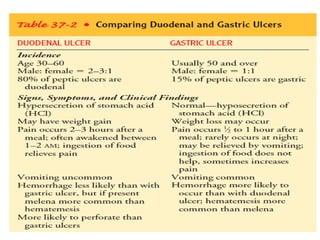
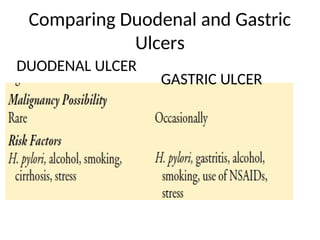
Comparing Duodenal and Gastric
Ulcers
DUODENAL ULCER
GASTRIC ULCER
Causes and predisposing factors
• PUDs develop only in the presence of an acid environment.
• stress and anxiety
• Infection with the gram-negative bacteria H. pylori
• The ingestion of milk and caffeinated beverages, smoking, and
alcohol also may increase HCl secretion.
• chronic use of NSAIDs, alcohol ingestion, and excessive
smoking.
• people with blood type O are more susceptible to peptic ulcers
than are those with blood type A, B, or AB.
• Zollinger-Ellison syndrome (ZES)
• Familial tendency may be a significant predisposing factor
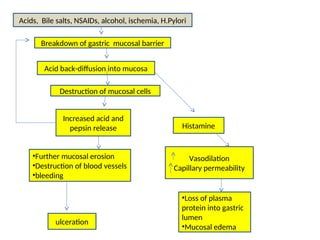
Breakdown of gastric mucosal barrier
Histamine
Acids, Bile salts, NSAIDs, alcohol, ischemia, H.Pylori
Acid back-diffusion into mucosa
Destruction of mucosal cells
Increased acid and
pepsin release
Vasodilation
Capillary permeability
ulceration
•Loss of plasma
protein into gastric
lumen
•Mucosal edema
•Further mucosal erosion
•Destruction of blood vessels
•bleeding
Clinical manifestation
• Pain is classic symptom: burning, aching hunger like
in epigastric region possibly radiating to back;
• Duodenal ulcers: pain relieved by eating
• Gastric ulcers: pain exacerbated by food
• Vomiting , nausea , constipation & diarrhea
• Symptoms less clear in older adult; may have poorly
localized discomfort, dysphagia, weight loss;
presenting symptom may be complication: GI
hemorrhage or perforation of stomach or duodenum
Complications of PUDs
3 major complications of chronic PUD
Hemorrhage
Perforation
Gastric outlet obstruction
• All are emergency situations and may require
surgical intervention
Diagnostic studies
• History and physical examination
• Upper GI endoscopy with biopsy
• H.P testing of breath, urine, blood, tissue
• Barium contast study for ulcer detection
• Laboratory tests: CBC, urinalysis, liver
enzymes studies, serum amylase
determination, and stool examination
MEDICAL MANAGEMENT
Medications
Lifestyle changes
Surgical intervention
MEDICAL MANAGEMENT
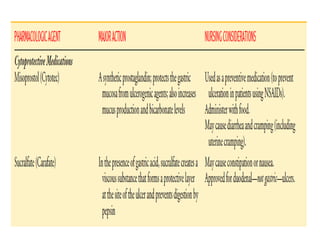
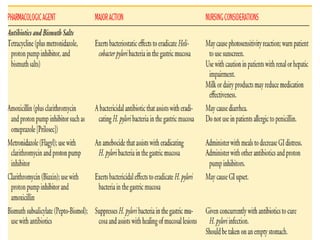
• PHARMACOLOGIC THERAPY:
a combination of antibiotics, proton pump
inhibitors, and bismuth salts that suppresses
or eradicates H. pylori
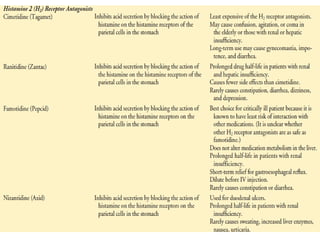
histamine2 (H2) receptor antagonists
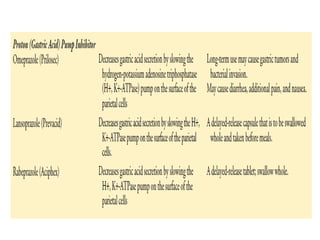
 proton pump inhibitors
MEDICAL MANAGEMENT
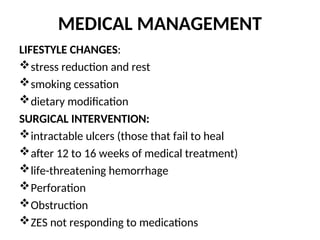
LIFESTYLE CHANGES:
stress reduction and rest
smoking cessation
dietary modification
SURGICAL INTERVENTION:
intractable ulcers (those that fail to heal
after 12 to 16 weeks of medical treatment)
life-threatening hemorrhage
Perforation
Obstruction
ZES not responding to medications
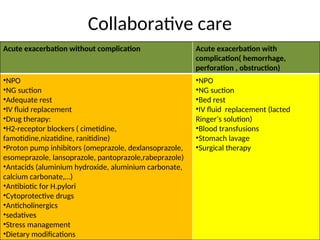
Collaborative care
Acute exacerbation without complication Acute exacerbation with
complication( hemorrhage,
perforation , obstruction)
•NPO
•NG suction
•Adequate rest
•IV fluid replacement
•Drug therapy:
•H2-receptor blockers ( cimetidine,
famotidine,nizatidine, ranitidine)
•Proton pump inhibitors (omeprazole, dexlansoprazole,
esomeprazole, lansoprazole, pantoprazole,rabeprazole)
•Antacids (aluminium hydroxide, aluminium carbonate,
calcium carbonate,…)
•Antibiotic for H.pylori
•Cytoprotective drugs
•Anticholinergics
•sedatives
•Stress management
•Dietary modifications
•NPO
•NG suction
•Bed rest
•IV fluid replacement (lacted
Ringer’s solution)
•Blood transfusions
•Stomach lavage
•Surgical therapy
Nursing care plan
• See on nursing care plan of patient with PUD
CIRRHOSIS
• Cirrhosis is a chronic progressive disease of the liver
• Characterized by extensive degeneration and
destruction of the liver parenchymal cells
• The liver cells attempt to regenerate but the
regenerative process is disorganized, resulting in
abnormal blood vessel and bile duct architecture.
• The overgrowth of new and fibrous connective tissue
distorts the liver’s normal lobular structure, resulting
in lobules of irregular size and shape with impeded
blood flow.
CIRRHOSIS
• Irregular, disorganized regeneration, poor
cellular nutrition and hypoxia caused by
inadequate blood flow and scar tissue result in
decreased functioning of the liver.
• Cirrhosis is twice as common in men as in
women
TYPES OF CIRRHOSIS
There are three types of cirrhosis or scarring of the liver:
 Alcoholic cirrhosis, in which the scar tissue characteristically
surrounds the portal areas.
• This is most frequently due to chronic alcoholism and is the most
common type of cirrhosis.
 Postnecrotic cirrhosis, in which there are broad bands of scar
tissue as a late result of a previous bout of acute viral hepatitis.
 Biliary cirrhosis, in which scarring occurs in the liver around the bile
ducts.
• This type usually is the result of chronic biliary obstruction and
infection (cholangitis); it is much less common than the other two
types.
Causes, & Risk Factors
• Cirrhosis is caused by chronic liver disease.
• Common causes of chronic liver disease include:
• Chronic Hepatitis C and chronic hepatitis B
• Long-term alcohol abuse
Other causes of cirrhosis include:
• Autoimmune inflammation of the liver
• Disorders of the drainage system of the liver (the biliary system), such as
primary biliary cirrhosis and primary sclerosing cholangitis
• Medications
• Metabolic disorders of iron and copper (hemochromatosis and Wilson’s
disease)
• Nonalcoholic fatty liver disease (NAFLD) and nonalcoholic steatohepatitis
(NASH)
Pathophysiology
• Primary event is injury to hepatocellular elements
• Initiates inflammatory response with cytokine release
• Destruction of hepatocytes, bile duct cells, vascular endothelial
cells
• Repair thru cellular proliferation and regeneration
• Formation of fibrous scar
• Prevents normal flow of nutrients to hepatocytes and
increases vascular resistance
• Initially, fibrosis may be reversible if inciting events are
removed
• With sustained injury, process of fibrosis becomes irreversible
and leads to cirrhosis
Pathophysiology
Major functional losses in person with cirrhosis
include:
Decreased removal and conjugation of bilirubin
Reduced production of bile
Impaired digestion and absorption of nutrients,
particularly fats and fat-soluble vitamins
Decreased production of blood clotting
factors(prothrombin, fibrinogen) and plasma protein
(albumin)
Pathophysiology
Impaired glucose/glycogen metabolism
Inadequate storage of iron and vitamin B12
Decreased inactivation of hormones, such as
aldosterone and estrogen
Decreased removal of toxic substances such
as ammonia and drugs
Pathophysiology
The second group of effects is related to obstruction of
the bile ducts and blood flow by fibrous tissue as
follows:
Reduction of the amount of bile entering the intestine,
impairing digestion and absorption
Back up of bile in the liver, leading to obstructive
jaundice with elevated conjugated and unconjugated
bilirubin levels in the blood
Blockage of the blood flow through the liver leading to
high pressure in the portal veins, or portal hypertension
Pathophysiology
Congestion in the spleen (splenomegaly),
increasing hemolysis
Congestion in intestinal walls and stomach,
impairing digestion and absorption
Development of esophageal varices
Development of ascites, an accumulation of
fluid in the peritoneal cavity that cause
abdominal distention and pressure
• Clinical manifestations include intermittent jaundice and
• fever. Initially the liver is enlarged, hard, and irregular,
but eventually it atrophies.
• Symptoms may develop gradually, or there may be no
symptoms.
• When symptoms do occur, they can include:
Gastrointestinal
• Nausea and vomiting
• Anorexia
• Pale or clay-colored stools
• Pyrosis, dyspepsia
Symptoms & Signs
• Gastrointestinal:
• Weight loss/malnutrition
• Constipation
• Flatulence
• Vomiting blood or blood in stools
• Gastritis, hemorrhoidal varices
• Abdominal indigestion or pain
• Esophageal and gastric varices
• Caput medusa (superficial abdominal veins)
Symptoms & Signs Cont’d
Integumentary (Skin)
• Small, red spider-like blood vessels on the skin
• Edema
• Ecchymosis
• Propensity for bleeding
• Yellow color in the skin, mucus membranes, or eyes
(jaundice)
• Palmar erythema
• Loss of body hair
Symptoms & SignsCont’d
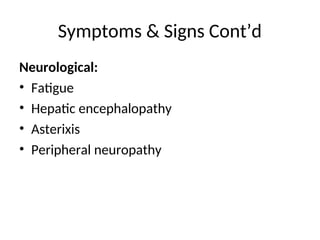
Neurological:
• Fatigue
• Hepatic encephalopathy
• Asterixis
• Peripheral neuropathy
Symptoms & Signs Cont’d
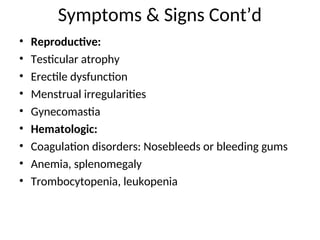
• Reproductive:
• Testicular atrophy
• Erectile dysfunction
• Menstrual irregularities
• Gynecomastia
• Hematologic:
• Coagulation disorders: Nosebleeds or bleeding gums
• Anemia, splenomegaly
• Trombocytopenia, leukopenia
Symptoms & Signs Cont’d
Symptoms & Signs
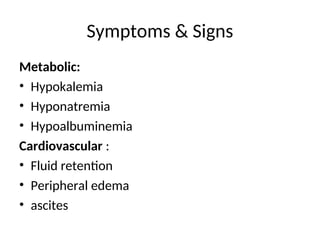
Metabolic:
• Hypokalemia
• Hyponatremia
• Hypoalbuminemia
Cardiovascular :
• Fluid retention
• Peripheral edema
• ascites
Complications of cirrhosis
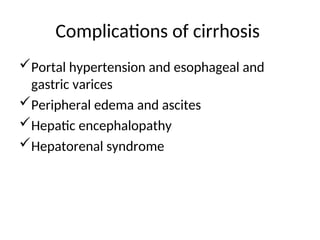
Portal hypertension and esophageal and
gastric varices
Peripheral edema and ascites
Hepatic encephalopathy
Hepatorenal syndrome
Collaborative management
Health promotion:
Common risk factors for cirrhosis include
alcohol, malnutrition, hepatitis, biliary
obstruction, obesity and right sided heart
failure
Prevention and early treatment of cirrhosis
must focus on reducing or eliminating these
risk factors.
Collaborative management
• Rest
• Administration of B-complex vitamins
• Avoid alcohol
• Minimize or avoid aspirin, acetaminophen and NSAIDS
• Vitamin K: correction of clotting abnormalities
• Ascites: low sodium diet, diuretics, paracentesis if
indicated, peritoneovenous shunt if indicated
• Esophageal and gastric varices: drugs (octreotide,
vasopressin,nitroglycerin, B-adrenergic blockers
(propranolol, …)) and surgery
• Hepatic encephalopathy: antibiotics, lactulose
PERITONITIS
 Peritonitis is inflammation of the peritoneum ,
the serous membrane lining the abdominal
cavity and covering the viscera.
 Causes:
1) Bacterial infection such as E.coli, Proteus,
Pseudomonas.
2) External sources such as injury or trauma .
3) Inflammation that extends from an organ
outside the peritoneal area such as the kidney.
PERITONITIS
Other common causes of peritonitis are
appendicitis ,perforated ulcer ,diverticulitis and
bowel perforation .
Peritonitis may also be associated with
abdominal surgical procedures and peritoneal
dialysis.
PATHOPHYSIOLOGY
• Primary peritonitis occurs when blood-borne
organisms enter the peritoneal cavity.
• Primary (blood-borne organisms, genital tract
organisms, cirrhosis with ascites)
• Secondary peritonitis is much more common.
• It occurs when abdominal organs perforate or
rupture and release their contents (bile,
enzymes, and bacteria) into the peritoneal cavity
PATHOPHYSIOLOGY
Peritonitis is caused by leakage of contents
from abdominal organs into the abdominal
cavity, usually as a result of inflammation,
infection, ischemia, trauma, or tumor
perforation.
Edema of the tissues results, and exudation
of fluid develops in a short time.
PATHOPHYSIOLOGY
Fluid in the peritoneal cavity becomes turbid
with increasing amounts of protein, white
blood cells, cellular debris, and blood.
The immediate response of the intestinal tract
is hypermotility, soon followed by paralytic
ileus with an accumulation of air and fluid in
the bowel.
Clinical Manifestations
Symptoms depend on the location and extent
of the inflammation.
The pain tends to become constant, localized,
and more intense near the site of the
inflammation. Movement usually aggravates it
The affected area of the abdomen becomes
extremely tender and distended, and the
muscles become rigid.
Clinical Manifestations
Rebound tenderness and paralytic ileus may
be present.
Nausea and vomiting
Peristalsis is diminished.
The temperature and pulse rate increase.
Elevation of the leukocyte count.
Tachypnea ( shallow respiration because deep
respiration and slight mvt cause pain
Assessment and Diagnostic Findings
The leukocyte count is elevated
The hemoglobin and hematocrit levels may be
low if blood loss has occurred
Serum electrolyte studies may reveal altered
levels of potassium, sodium, and chloride.
An abdominal x-ray is obtained, and findings
may show air and fluid levels as well as
distended bowel loops.
Assessment and Diagnostic Findings
A CT scan of the abdomen may show abscess
and ascites formation.
Peritoneal aspiration and culture and
sensitivity studies of the aspirated fluid may
reveal infection and identify the causative
organisms.
Complications
Hypovolemic shock.
Sepsis
Intraabdominal abscess formation
Paralytic ileus
Acute respiratory distress syndrome
Peritonitis can be fatal if treatment is delayed
Complications
Postoperative complications are wound
evisceration and abscess formation.
The sudden occurrence of serosanguineous
wound drainage strongly suggests wound
dehiscence.
Medical Management
NPO
Fluid, and electrolyte replacement.
Hypovolemia occurs because massive
amounts of fluid and electrolytes move from
the intestinal lumen into the peritoneal cavity
and deplete the fluid in the vascular space.
Analgesics, Antiemetics are prescribed
NG suction assist in relieving abdominal
distention and in promoting intestinal function.
Medical Management
Oxygen therapy by nasal cannula or mask can promote
adequate oxygenation.
Massive antibiotic therapy is usually initiated early in
the treatment of peritonitis.
Preparation for surgery
Surgery:
Post operative management: NPO, NGT, semi-Fowler’s
position, blood transfusion as needed, ATBs, parenteral
nutrition as needed and sedatives and opioids and Fluid,
and electrolyte replacement
Nursing Management
IV line is inserted to replace vascular fluids lost to the
peritoneal cavity and as an access for antibiotic therapy.
Monitor the pt for pain and response to analgesic
therapy.
Knees flexed position to increase comfort.
Sedatives may be given to allay anxiety
Accurate monitoring of fluid intake and out put and
electrolyte status is necessary to determine replacement
therapy.
Nursing Management
Antiemetic may be administered to decrease nausea and
vomiting and prevent further fluid and electrolyte losses.
Pt is placed on NPO status and may need an NG tube to
decrease gastric distension and further leakage of bowel
contents into peritoneum.
The nurse must prepare the patient for emergency surgery
Low-flow oxygen may be needed.
Post operative care if a surgical operation has been done.
COMPULSORY READINGS
• Liver function tests
• Esophageal Varices, Hernia, Esophageal CA,
• Gastro Esophageal Reflux Disease (GERD), Gastritis,
• Pyloric Stenosis
• Pancreatitis, Hepatobiliary Disorders,
• Conditions of Malabsorption, Intestinal
Obstruction, Ulcerative Colitis, Crohn’s Disease,
Appendicitis, Colon Cancer, Hemorrhoids
Exercise
• Mr. T.C, age 25 visited the emergency department
complaining a severe abdominal pain, anorexia,
nausea and vomiting since one day. On assessment
the BP:
90/55mmhg,HR:110bpm,RR:26bpm,To
:38.8o
C,GCS:1
5/15,weight:60 kg, height:165cm.on auscultation
the bowel sound is present, on palpation, the
physician reveals rebound tenderness in LRQ of the
abdomen at McBurney’s point, CBC: elevated WBC
count,
Exercise
• Make the differential medical diagnosis for Mr.
T.C.
• Among the proposed differential medical
diagnosis, which may be a working medical
diagnosis? what assessment findings do you
base on to confirm the working medical
diagnosis?
• According to the priority needs of Mr T.C, Make
a nursing care plan for him

GASTROINTESTINAL_DISORDERS- management ppt

  • 1.
  • 2.
    Organ systems • Includes: –Mouth, pharynx & esophagus – Stomach – Small intestine – Large intestine • Accessory digestive organs: teeth, tongue, gall bladder, salivary glands, liver & pancreas
  • 3.
    FUNCTIONS OF THEDIGESTIVE SYSTEM Overall, the digestive system performs six basic processes: 1. Ingestion. This process involves taking foods and liquids into the mouth (eating). 2. Secretion. Release of water acids, buffers, enzymes & salts by epithelium of GI tract and glandular organs 3. Mixing and propulsion. Alternating contractions and relaxations of smooth muscle in the walls of the GI tract mix food and secretions and propel them toward the anus. This capability of the GI tract to mix and move material along its length is called motility.
  • 4.
    FUNCTIONS OF THEDIGESTIVE SYSTEM 4. Digestion. Mechanical and chemical processes break down ingested food into small molecules. In mechanical digestion the teeth cut and grind food before it is swallowed, and then smooth muscles of the stomach and small intestine churn the food. In chemical digestion: the large carbohydrate, lipid, protein, and nucleic acid molecules in food are split into smaller molecules by hydrolysis. • A few substances in food can be absorbed without chemical digestion. These include vitamins, ions, cholesterol, and water.
  • 5.
    FUNCTIONS OF THEDIGESTIVE SYSTEM 5. Absorption. Is the entrance of ingested and secreted fluids, ions, and the products of digestion into the epithelial cells lining the lumen of the GI tract is called absorption. The absorbed substances pass into blood or lymph and circulate to cells throughout the body. 6. Defecation /Elimination. Here the wastes, indigestible substances, bacteria, cells sloughed from the lining of the GI tract, and digested materials that were not absorbed in their journey through the digestive tract leave the body through the anus. The eliminated material is termed feces.
  • 6.
    GASTROINTESTINAL DISORDERS Nutritional problems:Malnutrition and Obesity Eating disorders: Anorexia nervosa, Bulimia nervosa Upper GI problems: nausea and vomiting, oral inflammations and infections(gingivitis, oral candidiasis, herpes simplex, stomatitis, parotitis,…), oral cancer, esophageal disorders (gastroesophageal reflux disease(GERD), hital hernia, esophageal cancer, esophageal diverticula, esophageal strictures, achalasia, esophageal varices), upper gastrointestinal bleeding, disorders of the stomach and upper small intestine (gastritis, peptic ulcer disease, stomach cancer, foodborne illness)
  • 7.
    GASTROINTESTINAL DISORDERS Lower gastrointestinalproblems: diarrhea, fecal incontinence, constipation, acute and chronic abdominal pain, irritable bowel syndrome (IBS) abdominal trauma, inflammatory disorders (appendicitis, gastroenteritis, IBS, intestinal obstruction, polyps of large intestine, colorectal cancer), diverticulosis and diverticulitis, hernia, celiac disease, lactase deficiency, short bowel syndrome, gastrointestinal tromal tumors)
  • 8.
    GASTROINTESTINAL DISORDERS Anorectal problems:hemorrhoids, anal fissure, anorectal abscess, anal fistula, pilonidal sinus Disorders of the liver: hepatitis, cirrhosis, liver cancer Disorders of the pancreas : acute and chronic pancreatitis, pancreatic cancer. Disorders of biliary tract: cholelithiasis and cholecystitis, gallbladder cancer.
  • 9.
    Assessment of theGI System- Subjective data A. Health History history or existence of :  abdominal pain, nausea and vomiting  diarrhea , constipation, Intestinal Gas  abdominal distention, jaundice, anemia  Heartburn, dyspepsia  changes in appetite  hematemesis, food intolerance  allergies , indigestions  excessive gas, bloating,  melena, hemorrhoids, rectal bleeding
  • 10.
    Assessment…. B. Medications: past andcurrent use of medications  OTC drugs prescription drugs herbal products and nutritional supplements Drug allergies C. Surgeries and other treatments  information about hospitalizations for any problems related to GI system
  • 11.
    Common sites ofreferred abdominal pain
  • 12.
    Assessment…Objective Data A. INSPECTION Lips– symmetry, color and size observe for abnormalities : pallor or cyanosis, cracking, ulcers, or fissures. Tongue : color, fissures, deviation and lesions Buccal Mucosa : color and lesions and distinctive breath odors Teeth and gums : caries, loose teeth, abnormal shape and position of the teeth, presence of swelling , bleeding, discoloration.
  • 13.
    Assessment…. Abdomen  Skin changes( color, texture, scars, striae, dilated veins, rashes, and lesions.)  umbilicus – location and contour  contour – flat, rounded, distended.  observable masses, hernias and other masses.  movement – observable peristalsis and pulsation.
  • 14.
  • 15.
    Abdominopelvic Regions • Epigastric •Umbilical • Hypogastric • Right and left hypochondriac • Right and left lumbar • Right and left iliac or inguinal Figure 1.11a
  • 16.
    Organs of theAbdominopelvic Regions Right hypochondriac region: liver gallbladder right kidney hepatic flexure of colon Epigastric region: liver (left lobe) pylorus duodenum omentum transverse colon the head and body of pancreas Left hypochondriac region: spleen stomach splenic flexure of colon pancreas (tail part ) left kidney right lumbar region: ascending colon jejunum right kidney umbilical region: duodenum jejunum ileum mesentery abdominal aorta lymph node omentum left lumbar region: descending colon jejunum ileum right iliac region: cecum appendix right ovary and tube hypogastric region: bladder womb ureter left iliac region: sigmoid colon left ovary and tube
  • 17.
    Abdominopelvic Quadrants • Rightupper (RUQ) • Left upper (LUQ) • Right lower (RLQ) • Left lower (LLQ)
  • 18.
    Assessment…. B. AUSCULTATION done beforepercussion and palpation  listening for increased or decreased bowel sounds.  diaphragm of the stethoscope – bowel sounds are high pitched, occur 5-35x per minute.  warm up stethoscope in the hands to prevent abdominal muscle contraction.  listen for BS for 2-5 minutes. Absent BS means no sounds for 5 minutes on each quadrant.
  • 19.
    C. PERCUSSION Purpose: Determinethe presence of fluid, distention, and masses. Presence of air : tymphany, fluid or masses : dull sounds
  • 20.
    Assessment…. D.PALPATION is used todetect muscle guarding, tenderness, and masses.
  • 21.
    Diagnostic Studies A. UpperGI Series or Barrium Swallow  X-ray study with fluoroscopy with contrast medium  used to diagnose structural abnormalities of the esophagus, stomach, and duodenal bulb  NPO for 8-12 hours  pt. will drink contrast medium  give pt. laxatives and fluid to prevent contrast medium impaction.  the stool may be white up to 72 hours after the test B. Small Bowel Series – same as upper GI series
  • 22.
    Diagnostic tests C. LowerGI or Barium Enema  Fluoroscopic examination of the colon using contrast medium w/c is administered rectally.  administer laxatives and enemas the night before the procedure  clear liquid diet the night before.  NPO for 8 hours before the procedure.  cramping and urge to defecate may occur.  explain that pt will be assuming various position in tilt table.  give laxatives, fluids to assist in expelling barium.
  • 23.
    Diagnostic tests C. Ultrasound noninvasive procedure uses high frequency sound waves to visualize the solid organs.  NPO 8-12 hours D. CT-Scan  non invasive radiologic examination that combines x-ray machine and computer. E. MRI  non invasive procedure using radiofrequency waves and magnetic field  NPO for 6 hours  C/I in pt with metal implants or who is pregnant
  • 24.
  • 26.
    PEPTIC ULCER DISEASES(PUD) •PUD is a condition characterized by erosion of the GI mucosa resulting from the digestive action of HCl and pepsin. • Any portion of GIT that comes into contact with gastric secretions is susceptible to ulcer dvpt including: • Lower esophagus, stomach, duodenum and margin of gastrojejunal anastomosis after surical procedures
  • 27.
    TYPES According to thedegree and duration of mucosal involvement: Acute ulcers: superficial erosion and minimal inflammation. It is of short duration and resolves quickly when the cause is indentified and removed. Chronic ulcers: is one of long duration, eroding through the muscular wall with formation of fibrous tissue. It is more common than acute ulcer According to the location: Gastric ulcers Duodenal ulcers
  • 29.
    Comparing Duodenal andGastric Ulcers DUODENAL ULCER GASTRIC ULCER
  • 30.
    Causes and predisposingfactors • PUDs develop only in the presence of an acid environment. • stress and anxiety • Infection with the gram-negative bacteria H. pylori • The ingestion of milk and caffeinated beverages, smoking, and alcohol also may increase HCl secretion. • chronic use of NSAIDs, alcohol ingestion, and excessive smoking. • people with blood type O are more susceptible to peptic ulcers than are those with blood type A, B, or AB. • Zollinger-Ellison syndrome (ZES) • Familial tendency may be a significant predisposing factor
  • 31.
    Breakdown of gastricmucosal barrier Histamine Acids, Bile salts, NSAIDs, alcohol, ischemia, H.Pylori Acid back-diffusion into mucosa Destruction of mucosal cells Increased acid and pepsin release Vasodilation Capillary permeability ulceration •Loss of plasma protein into gastric lumen •Mucosal edema •Further mucosal erosion •Destruction of blood vessels •bleeding
  • 32.
    Clinical manifestation • Painis classic symptom: burning, aching hunger like in epigastric region possibly radiating to back; • Duodenal ulcers: pain relieved by eating • Gastric ulcers: pain exacerbated by food • Vomiting , nausea , constipation & diarrhea • Symptoms less clear in older adult; may have poorly localized discomfort, dysphagia, weight loss; presenting symptom may be complication: GI hemorrhage or perforation of stomach or duodenum
  • 33.
    Complications of PUDs 3major complications of chronic PUD Hemorrhage Perforation Gastric outlet obstruction • All are emergency situations and may require surgical intervention
  • 34.
    Diagnostic studies • Historyand physical examination • Upper GI endoscopy with biopsy • H.P testing of breath, urine, blood, tissue • Barium contast study for ulcer detection • Laboratory tests: CBC, urinalysis, liver enzymes studies, serum amylase determination, and stool examination
  • 35.
  • 36.
    MEDICAL MANAGEMENT • PHARMACOLOGICTHERAPY: a combination of antibiotics, proton pump inhibitors, and bismuth salts that suppresses or eradicates H. pylori histamine2 (H2) receptor antagonists  proton pump inhibitors
  • 41.
    MEDICAL MANAGEMENT LIFESTYLE CHANGES: stressreduction and rest smoking cessation dietary modification SURGICAL INTERVENTION: intractable ulcers (those that fail to heal after 12 to 16 weeks of medical treatment) life-threatening hemorrhage Perforation Obstruction ZES not responding to medications
  • 42.
    Collaborative care Acute exacerbationwithout complication Acute exacerbation with complication( hemorrhage, perforation , obstruction) •NPO •NG suction •Adequate rest •IV fluid replacement •Drug therapy: •H2-receptor blockers ( cimetidine, famotidine,nizatidine, ranitidine) •Proton pump inhibitors (omeprazole, dexlansoprazole, esomeprazole, lansoprazole, pantoprazole,rabeprazole) •Antacids (aluminium hydroxide, aluminium carbonate, calcium carbonate,…) •Antibiotic for H.pylori •Cytoprotective drugs •Anticholinergics •sedatives •Stress management •Dietary modifications •NPO •NG suction •Bed rest •IV fluid replacement (lacted Ringer’s solution) •Blood transfusions •Stomach lavage •Surgical therapy
  • 43.
    Nursing care plan •See on nursing care plan of patient with PUD
  • 44.
    CIRRHOSIS • Cirrhosis isa chronic progressive disease of the liver • Characterized by extensive degeneration and destruction of the liver parenchymal cells • The liver cells attempt to regenerate but the regenerative process is disorganized, resulting in abnormal blood vessel and bile duct architecture. • The overgrowth of new and fibrous connective tissue distorts the liver’s normal lobular structure, resulting in lobules of irregular size and shape with impeded blood flow.
  • 45.
    CIRRHOSIS • Irregular, disorganizedregeneration, poor cellular nutrition and hypoxia caused by inadequate blood flow and scar tissue result in decreased functioning of the liver. • Cirrhosis is twice as common in men as in women
  • 46.
    TYPES OF CIRRHOSIS Thereare three types of cirrhosis or scarring of the liver:  Alcoholic cirrhosis, in which the scar tissue characteristically surrounds the portal areas. • This is most frequently due to chronic alcoholism and is the most common type of cirrhosis.  Postnecrotic cirrhosis, in which there are broad bands of scar tissue as a late result of a previous bout of acute viral hepatitis.  Biliary cirrhosis, in which scarring occurs in the liver around the bile ducts. • This type usually is the result of chronic biliary obstruction and infection (cholangitis); it is much less common than the other two types.
  • 47.
    Causes, & RiskFactors • Cirrhosis is caused by chronic liver disease. • Common causes of chronic liver disease include: • Chronic Hepatitis C and chronic hepatitis B • Long-term alcohol abuse Other causes of cirrhosis include: • Autoimmune inflammation of the liver • Disorders of the drainage system of the liver (the biliary system), such as primary biliary cirrhosis and primary sclerosing cholangitis • Medications • Metabolic disorders of iron and copper (hemochromatosis and Wilson’s disease) • Nonalcoholic fatty liver disease (NAFLD) and nonalcoholic steatohepatitis (NASH)
  • 48.
    Pathophysiology • Primary eventis injury to hepatocellular elements • Initiates inflammatory response with cytokine release • Destruction of hepatocytes, bile duct cells, vascular endothelial cells • Repair thru cellular proliferation and regeneration • Formation of fibrous scar • Prevents normal flow of nutrients to hepatocytes and increases vascular resistance • Initially, fibrosis may be reversible if inciting events are removed • With sustained injury, process of fibrosis becomes irreversible and leads to cirrhosis
  • 49.
    Pathophysiology Major functional lossesin person with cirrhosis include: Decreased removal and conjugation of bilirubin Reduced production of bile Impaired digestion and absorption of nutrients, particularly fats and fat-soluble vitamins Decreased production of blood clotting factors(prothrombin, fibrinogen) and plasma protein (albumin)
  • 50.
    Pathophysiology Impaired glucose/glycogen metabolism Inadequatestorage of iron and vitamin B12 Decreased inactivation of hormones, such as aldosterone and estrogen Decreased removal of toxic substances such as ammonia and drugs
  • 51.
    Pathophysiology The second groupof effects is related to obstruction of the bile ducts and blood flow by fibrous tissue as follows: Reduction of the amount of bile entering the intestine, impairing digestion and absorption Back up of bile in the liver, leading to obstructive jaundice with elevated conjugated and unconjugated bilirubin levels in the blood Blockage of the blood flow through the liver leading to high pressure in the portal veins, or portal hypertension
  • 52.
    Pathophysiology Congestion in thespleen (splenomegaly), increasing hemolysis Congestion in intestinal walls and stomach, impairing digestion and absorption Development of esophageal varices Development of ascites, an accumulation of fluid in the peritoneal cavity that cause abdominal distention and pressure
  • 53.
    • Clinical manifestationsinclude intermittent jaundice and • fever. Initially the liver is enlarged, hard, and irregular, but eventually it atrophies. • Symptoms may develop gradually, or there may be no symptoms. • When symptoms do occur, they can include: Gastrointestinal • Nausea and vomiting • Anorexia • Pale or clay-colored stools • Pyrosis, dyspepsia Symptoms & Signs
  • 54.
    • Gastrointestinal: • Weightloss/malnutrition • Constipation • Flatulence • Vomiting blood or blood in stools • Gastritis, hemorrhoidal varices • Abdominal indigestion or pain • Esophageal and gastric varices • Caput medusa (superficial abdominal veins) Symptoms & Signs Cont’d
  • 55.
    Integumentary (Skin) • Small,red spider-like blood vessels on the skin • Edema • Ecchymosis • Propensity for bleeding • Yellow color in the skin, mucus membranes, or eyes (jaundice) • Palmar erythema • Loss of body hair Symptoms & SignsCont’d
  • 56.
    Neurological: • Fatigue • Hepaticencephalopathy • Asterixis • Peripheral neuropathy Symptoms & Signs Cont’d
  • 57.
    • Reproductive: • Testicularatrophy • Erectile dysfunction • Menstrual irregularities • Gynecomastia • Hematologic: • Coagulation disorders: Nosebleeds or bleeding gums • Anemia, splenomegaly • Trombocytopenia, leukopenia Symptoms & Signs Cont’d
  • 58.
    Symptoms & Signs Metabolic: •Hypokalemia • Hyponatremia • Hypoalbuminemia Cardiovascular : • Fluid retention • Peripheral edema • ascites
  • 59.
    Complications of cirrhosis Portalhypertension and esophageal and gastric varices Peripheral edema and ascites Hepatic encephalopathy Hepatorenal syndrome
  • 60.
    Collaborative management Health promotion: Commonrisk factors for cirrhosis include alcohol, malnutrition, hepatitis, biliary obstruction, obesity and right sided heart failure Prevention and early treatment of cirrhosis must focus on reducing or eliminating these risk factors.
  • 61.
    Collaborative management • Rest •Administration of B-complex vitamins • Avoid alcohol • Minimize or avoid aspirin, acetaminophen and NSAIDS • Vitamin K: correction of clotting abnormalities • Ascites: low sodium diet, diuretics, paracentesis if indicated, peritoneovenous shunt if indicated • Esophageal and gastric varices: drugs (octreotide, vasopressin,nitroglycerin, B-adrenergic blockers (propranolol, …)) and surgery • Hepatic encephalopathy: antibiotics, lactulose
  • 62.
    PERITONITIS  Peritonitis isinflammation of the peritoneum , the serous membrane lining the abdominal cavity and covering the viscera.  Causes: 1) Bacterial infection such as E.coli, Proteus, Pseudomonas. 2) External sources such as injury or trauma . 3) Inflammation that extends from an organ outside the peritoneal area such as the kidney.
  • 63.
    PERITONITIS Other common causesof peritonitis are appendicitis ,perforated ulcer ,diverticulitis and bowel perforation . Peritonitis may also be associated with abdominal surgical procedures and peritoneal dialysis.
  • 64.
    PATHOPHYSIOLOGY • Primary peritonitisoccurs when blood-borne organisms enter the peritoneal cavity. • Primary (blood-borne organisms, genital tract organisms, cirrhosis with ascites) • Secondary peritonitis is much more common. • It occurs when abdominal organs perforate or rupture and release their contents (bile, enzymes, and bacteria) into the peritoneal cavity
  • 65.
    PATHOPHYSIOLOGY Peritonitis is causedby leakage of contents from abdominal organs into the abdominal cavity, usually as a result of inflammation, infection, ischemia, trauma, or tumor perforation. Edema of the tissues results, and exudation of fluid develops in a short time.
  • 66.
    PATHOPHYSIOLOGY Fluid in theperitoneal cavity becomes turbid with increasing amounts of protein, white blood cells, cellular debris, and blood. The immediate response of the intestinal tract is hypermotility, soon followed by paralytic ileus with an accumulation of air and fluid in the bowel.
  • 67.
    Clinical Manifestations Symptoms dependon the location and extent of the inflammation. The pain tends to become constant, localized, and more intense near the site of the inflammation. Movement usually aggravates it The affected area of the abdomen becomes extremely tender and distended, and the muscles become rigid.
  • 68.
    Clinical Manifestations Rebound tendernessand paralytic ileus may be present. Nausea and vomiting Peristalsis is diminished. The temperature and pulse rate increase. Elevation of the leukocyte count. Tachypnea ( shallow respiration because deep respiration and slight mvt cause pain
  • 69.
    Assessment and DiagnosticFindings The leukocyte count is elevated The hemoglobin and hematocrit levels may be low if blood loss has occurred Serum electrolyte studies may reveal altered levels of potassium, sodium, and chloride. An abdominal x-ray is obtained, and findings may show air and fluid levels as well as distended bowel loops.
  • 70.
    Assessment and DiagnosticFindings A CT scan of the abdomen may show abscess and ascites formation. Peritoneal aspiration and culture and sensitivity studies of the aspirated fluid may reveal infection and identify the causative organisms.
  • 71.
    Complications Hypovolemic shock. Sepsis Intraabdominal abscessformation Paralytic ileus Acute respiratory distress syndrome Peritonitis can be fatal if treatment is delayed
  • 72.
    Complications Postoperative complications arewound evisceration and abscess formation. The sudden occurrence of serosanguineous wound drainage strongly suggests wound dehiscence.
  • 73.
    Medical Management NPO Fluid, andelectrolyte replacement. Hypovolemia occurs because massive amounts of fluid and electrolytes move from the intestinal lumen into the peritoneal cavity and deplete the fluid in the vascular space. Analgesics, Antiemetics are prescribed NG suction assist in relieving abdominal distention and in promoting intestinal function.
  • 74.
    Medical Management Oxygen therapyby nasal cannula or mask can promote adequate oxygenation. Massive antibiotic therapy is usually initiated early in the treatment of peritonitis. Preparation for surgery Surgery: Post operative management: NPO, NGT, semi-Fowler’s position, blood transfusion as needed, ATBs, parenteral nutrition as needed and sedatives and opioids and Fluid, and electrolyte replacement
  • 75.
    Nursing Management IV lineis inserted to replace vascular fluids lost to the peritoneal cavity and as an access for antibiotic therapy. Monitor the pt for pain and response to analgesic therapy. Knees flexed position to increase comfort. Sedatives may be given to allay anxiety Accurate monitoring of fluid intake and out put and electrolyte status is necessary to determine replacement therapy.
  • 76.
    Nursing Management Antiemetic maybe administered to decrease nausea and vomiting and prevent further fluid and electrolyte losses. Pt is placed on NPO status and may need an NG tube to decrease gastric distension and further leakage of bowel contents into peritoneum. The nurse must prepare the patient for emergency surgery Low-flow oxygen may be needed. Post operative care if a surgical operation has been done.
  • 77.
    COMPULSORY READINGS • Liverfunction tests • Esophageal Varices, Hernia, Esophageal CA, • Gastro Esophageal Reflux Disease (GERD), Gastritis, • Pyloric Stenosis • Pancreatitis, Hepatobiliary Disorders, • Conditions of Malabsorption, Intestinal Obstruction, Ulcerative Colitis, Crohn’s Disease, Appendicitis, Colon Cancer, Hemorrhoids
  • 78.
    Exercise • Mr. T.C,age 25 visited the emergency department complaining a severe abdominal pain, anorexia, nausea and vomiting since one day. On assessment the BP: 90/55mmhg,HR:110bpm,RR:26bpm,To :38.8o C,GCS:1 5/15,weight:60 kg, height:165cm.on auscultation the bowel sound is present, on palpation, the physician reveals rebound tenderness in LRQ of the abdomen at McBurney’s point, CBC: elevated WBC count,
  • 79.
    Exercise • Make thedifferential medical diagnosis for Mr. T.C. • Among the proposed differential medical diagnosis, which may be a working medical diagnosis? what assessment findings do you base on to confirm the working medical diagnosis? • According to the priority needs of Mr T.C, Make a nursing care plan for him

Editor's Notes

  • #2 Gastrointestinal (GI) tract [Alimentary canal]: a continuous muscular digestive tube
  • #9 Intestinal Gas The accumulation of gas in the GI tract may result in belching (the expulsion of gas from the stomach through the mouth) or flatulence (the expulsion of gas from the rectum). It is through belching that swallowed air is expelled quickly when it reaches the stomach. Usually, gases in the small intestine pass into the colon and are released as flatus. Patients often complain of bloating, distention, or being “full of gas.” Excessive flatulence may be a symptom of gallbladder disease or food intolerance