Smallhead Clover – Trifolium microcephalum

(tri-FO-lee-um my-kro-sef-AY-lum)

Family: Fabaceae (Pea Family)
Native to: Much of western N. America from Canada to Baja; open grassy places, moist meadows,
sandy river banks and drier hillsides to about 7500 ft. elevation.

herbaceous annual
mature height: 1 ft. mature width: 1 ft.
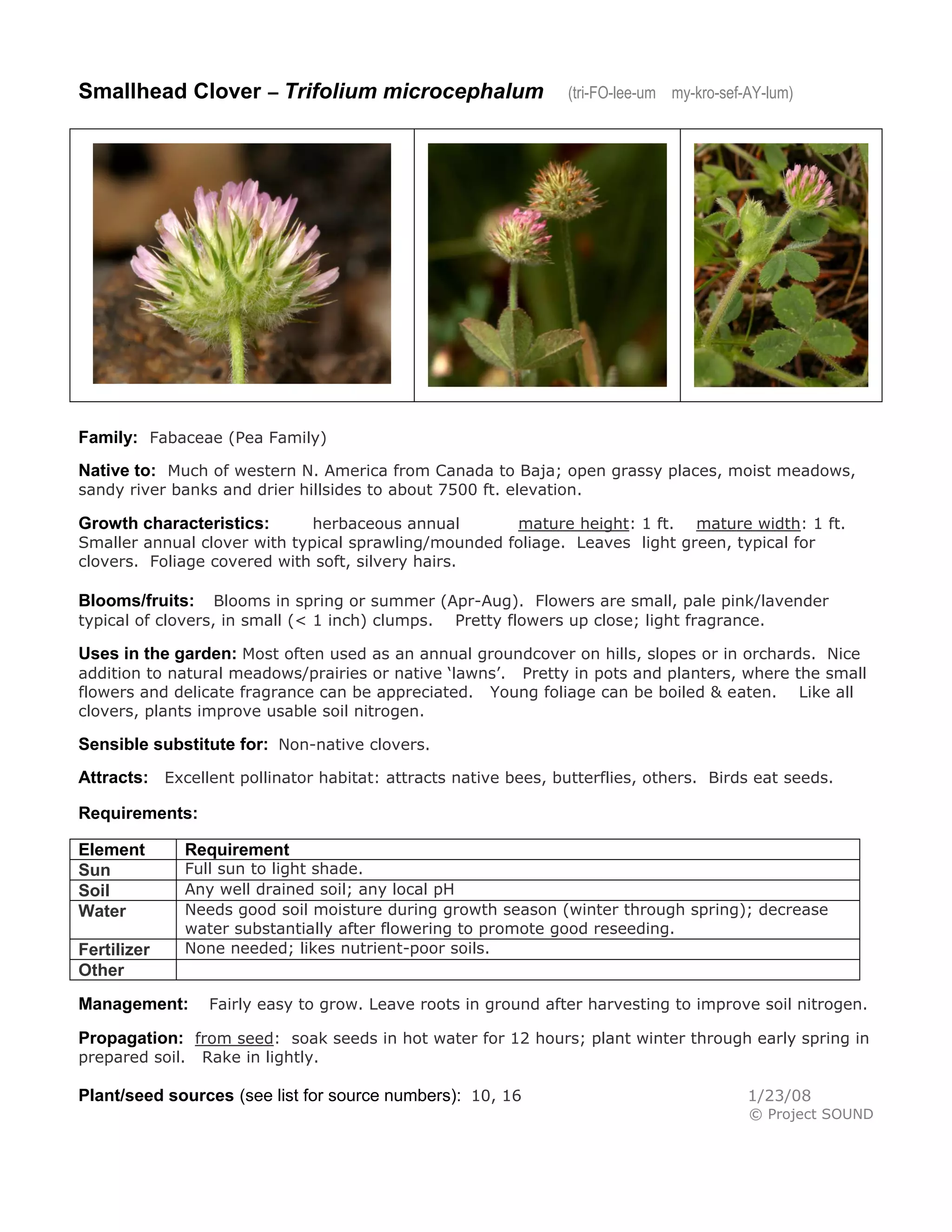
Smaller annual clover with typical sprawling/mounded foliage. Leaves light green, typical for
clovers. Foliage covered with soft, silvery hairs.

Growth characteristics:

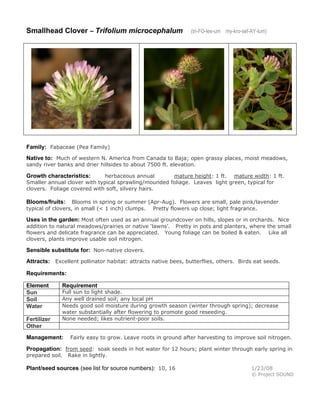
Blooms in spring or summer (Apr-Aug). Flowers are small, pale pink/lavender
typical of clovers, in small (< 1 inch) clumps. Pretty flowers up close; light fragrance.

Blooms/fruits:

Uses in the garden: Most often used as an annual groundcover on hills, slopes or in orchards. Nice
addition to natural meadows/prairies or native ‘lawns’. Pretty in pots and planters, where the small
flowers and delicate fragrance can be appreciated. Young foliage can be boiled & eaten. Like all
clovers, plants improve usable soil nitrogen.

Sensible substitute for: Non-native clovers.
Attracts: Excellent pollinator habitat: attracts native bees, butterflies, others. Birds eat seeds.
Requirements:
Element
Sun
Soil
Water
Fertilizer
Other

Requirement

Full sun to light shade.
Any well drained soil; any local pH
Needs good soil moisture during growth season (winter through spring); decrease
water substantially after flowering to promote good reseeding.
None needed; likes nutrient-poor soils.

Management:

Fairly easy to grow. Leave roots in ground after harvesting to improve soil nitrogen.

Propagation: from seed: soak seeds in hot water for 12 hours; plant winter through early spring in
prepared soil.

Rake in lightly.

Plant/seed sources (see list for source numbers): 10, 16

1/23/08
© Project SOUND

Gardening sheet trifolium microcephalum

  • 1.
    Smallhead Clover –Trifolium microcephalum (tri-FO-lee-um my-kro-sef-AY-lum) Family: Fabaceae (Pea Family) Native to: Much of western N. America from Canada to Baja; open grassy places, moist meadows, sandy river banks and drier hillsides to about 7500 ft. elevation. herbaceous annual mature height: 1 ft. mature width: 1 ft. Smaller annual clover with typical sprawling/mounded foliage. Leaves light green, typical for clovers. Foliage covered with soft, silvery hairs. Growth characteristics: Blooms in spring or summer (Apr-Aug). Flowers are small, pale pink/lavender typical of clovers, in small (< 1 inch) clumps. Pretty flowers up close; light fragrance. Blooms/fruits: Uses in the garden: Most often used as an annual groundcover on hills, slopes or in orchards. Nice addition to natural meadows/prairies or native ‘lawns’. Pretty in pots and planters, where the small flowers and delicate fragrance can be appreciated. Young foliage can be boiled & eaten. Like all clovers, plants improve usable soil nitrogen. Sensible substitute for: Non-native clovers. Attracts: Excellent pollinator habitat: attracts native bees, butterflies, others. Birds eat seeds. Requirements: Element Sun Soil Water Fertilizer Other Requirement Full sun to light shade. Any well drained soil; any local pH Needs good soil moisture during growth season (winter through spring); decrease water substantially after flowering to promote good reseeding. None needed; likes nutrient-poor soils. Management: Fairly easy to grow. Leave roots in ground after harvesting to improve soil nitrogen. Propagation: from seed: soak seeds in hot water for 12 hours; plant winter through early spring in prepared soil. Rake in lightly. Plant/seed sources (see list for source numbers): 10, 16 1/23/08 © Project SOUND