Trauma Presentation: Galleazzi Fracture
Orthopaedic Surgery
HPI
• CC: Right forearm pain and deformity
• Elderly female who fell onto an outstretched
right arm
• Immediate pain and visible deformity
ADDITIONAL HISTORY
PMH
Asthma, migraine,
GERD, HTN
PSH
Partial hysterectomy
cholecystectomy
Soc
No EtOH, smoking, drugs
Meds
Tramadol, pregabalin, prilosec
Allergies
tetracycline
PHYSICAL EXAM
Gen:
• in no acute distress
MSK:
• RUE:
– No lacerations/abrasions
– Gross deformity of forearm (radial deviation of right
wrist)
– Compartments soft
– Sensation and motor function intact
– 2+ radial pulse
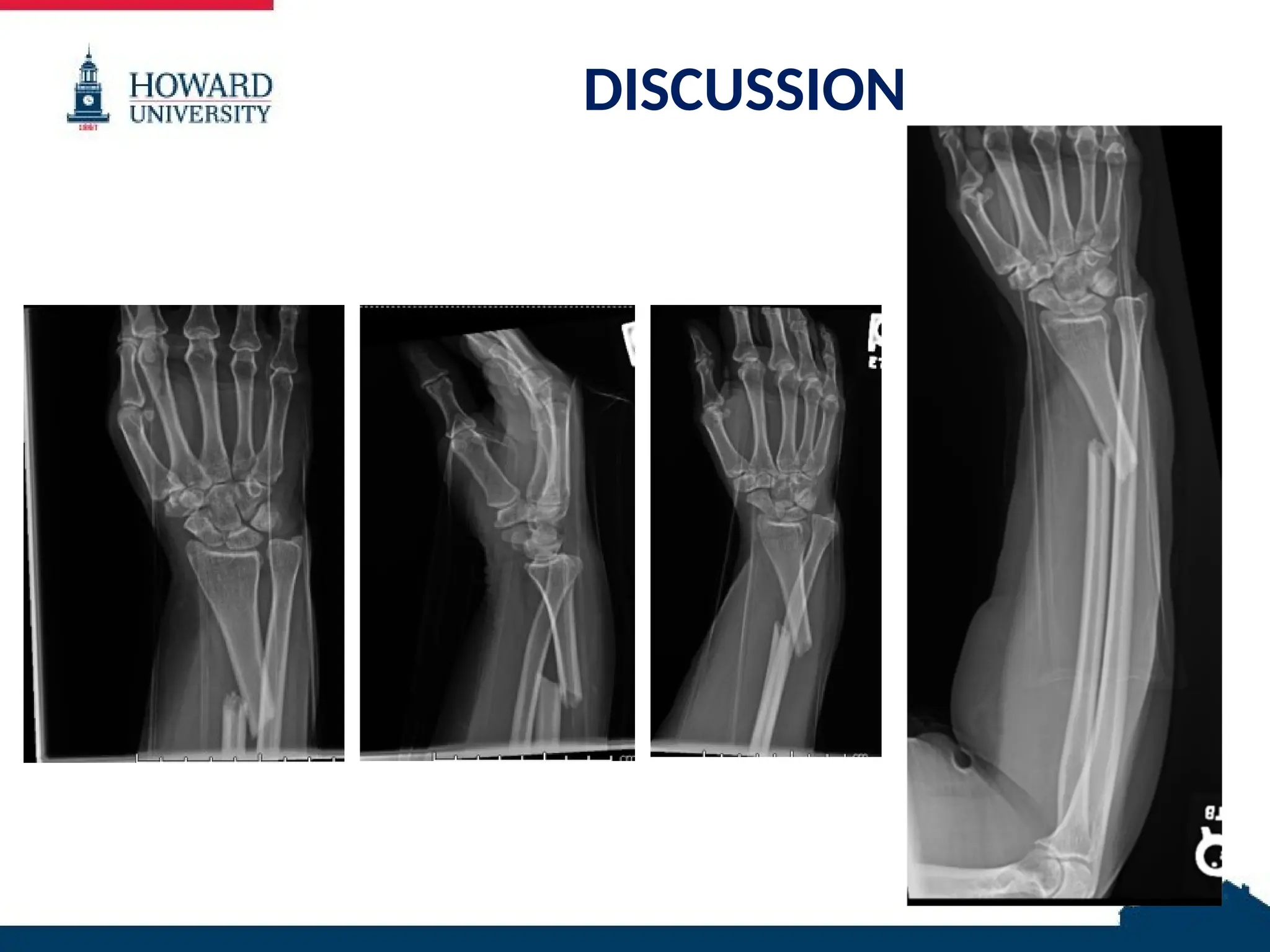
RADIOGRAPHS
GALEAZZI FRACTURE-DISLOCATION
• Defined as a fracture of the radial diaphysis
(typically distal 1/3) with a dislocation of the
DRUJ
• First described in 1822 by Sir Astley Cooper
• Further described by Galeazzi in 1934
• Frequently underdiagnosed
• Most likely to occur within 7.5cm of
midarticular surface of distal radius (Rettig and
Raskin)
MECHANISM
• Forceful axial loading of the forearm
with wrist extended and maximally
pronated
• Some authors believe loading in
supination can also result in the
injury
• Falls, MVC, electric shock, blunt
trauma
ANATOMY: OSSEOUS
• Major radial bow: from the biceps
tuberosity to the ulnar aspect of the
articular surface
– Essential for proper forearm
rotation
ANATOMY: SOFT TISSUE
• Interosseous membrane
– Complex ligamentous structure that
firmly attaches the radius and ulna
– Transfers load from radius to ulna
– Terminates proximal to the distal 1/3
radial diaphysis
• Higher risk of shortening
ANATOMY: SOFT TISSUE
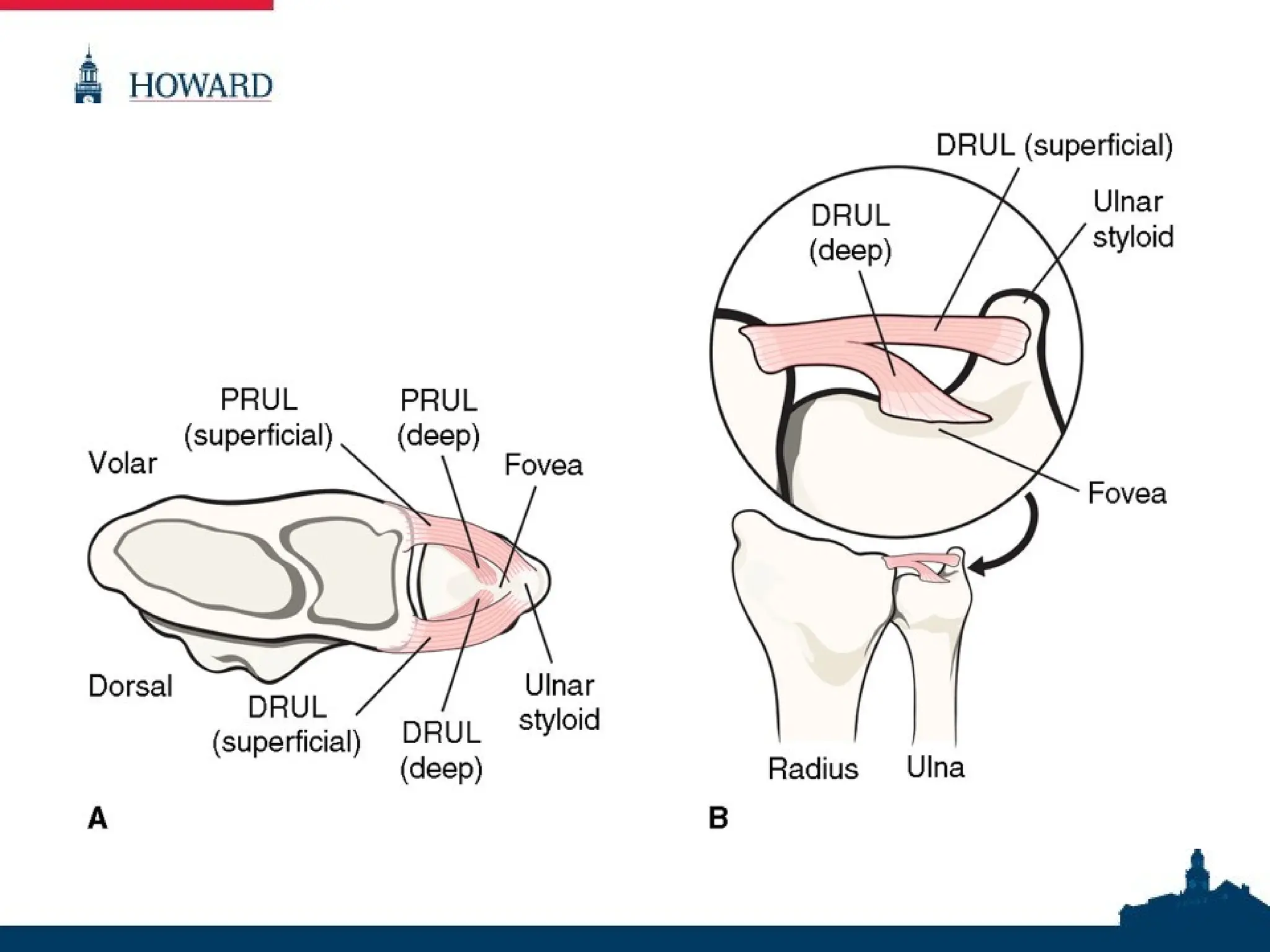
• Triangular Fibrocartilage Complex (TFCC)
– Primary stabilizer of the DRUJ
– Base attaches to the junction of the
lunate fossa and the sigmoid notch
– Apex attaches to the fovea and ulnar
styloid
– Primary stabilizers of distal ulna: dorsal
and palmar radioulnar ligaments
PATHOPHYSIOLOGY
• Radius fractures 2/2 axial load
• The radius shortens, significant force is
pulled through the distal ulna via the TFCC
• The TFCC fails in its substance or through
avulsion of the ulnar styloid
• Without this ligamentous constraint, the
DRUJ is destabilized and the distal ulna
dislocates
DEFORMING FORCES
• Shortening:
– Brachioradialis
– Abductor pollicis longus
– Extensor pollicis brevis
– Extensor digiti minimi
• Rotational
– Pronator quadratus
IMAGING
• Radiographs of the elbow, wrist, and forearm
– AP
– True lateral
• Findings suggestive of DRUJ instability:
– Ulnar styloid fracture
– DRUJ widening (AP)
– Dislocation/subluxation of ulna relative to
radius (lateral)
– Radial shortening >5mm
CLASSIFICATION
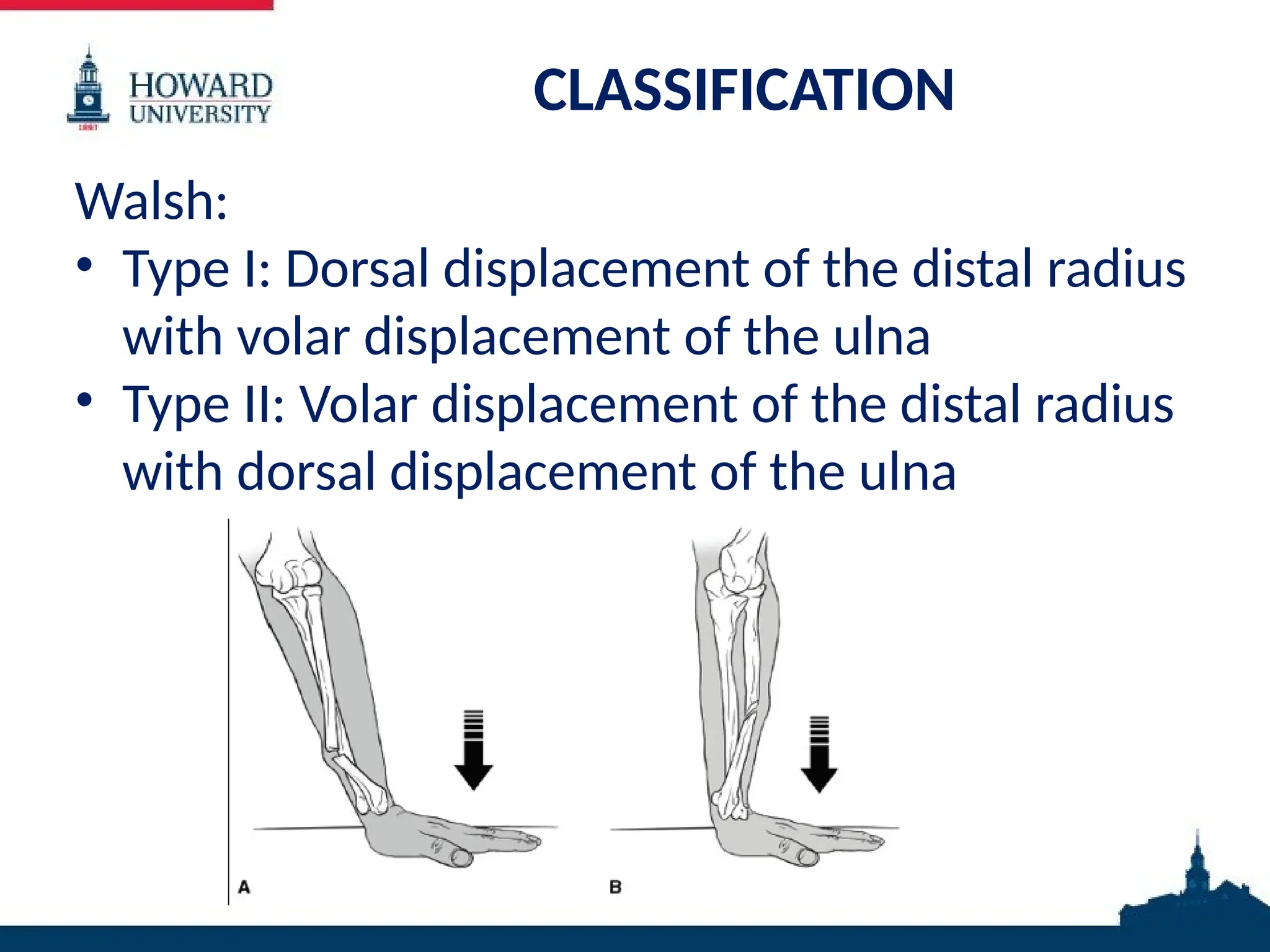
Walsh:
• Type I: Dorsal displacement of the distal radius
with volar displacement of the ulna
• Type II: Volar displacement of the distal radius
with dorsal displacement of the ulna
• an
CLASSIFICATION
Rettig and Raskin:
• Type I: within 7.5cm of wrist joint
• Type II: >7.5cm from wrist joint
• an
CLASSIFICATION
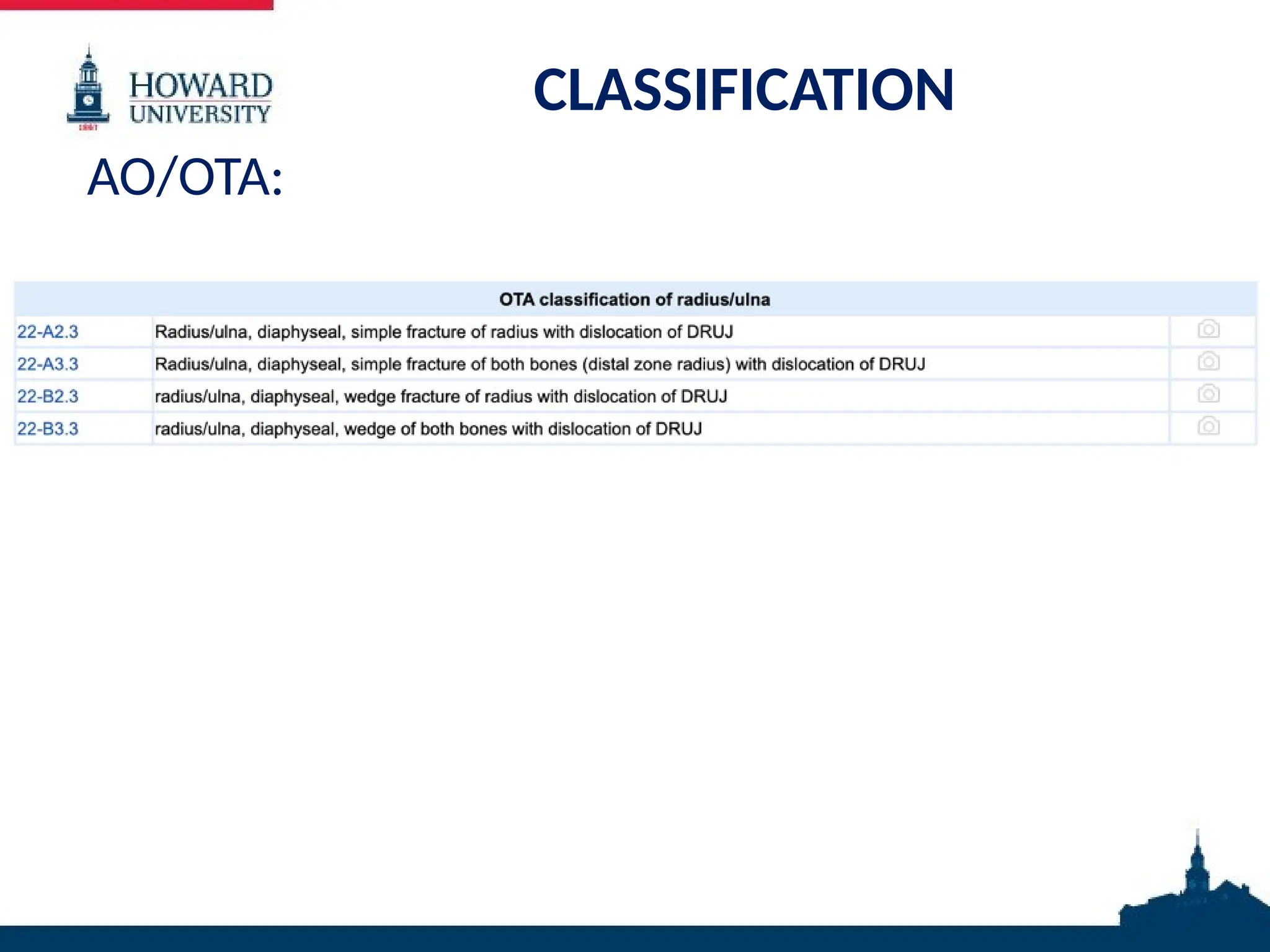
AO/OTA:
ASSESSMENT
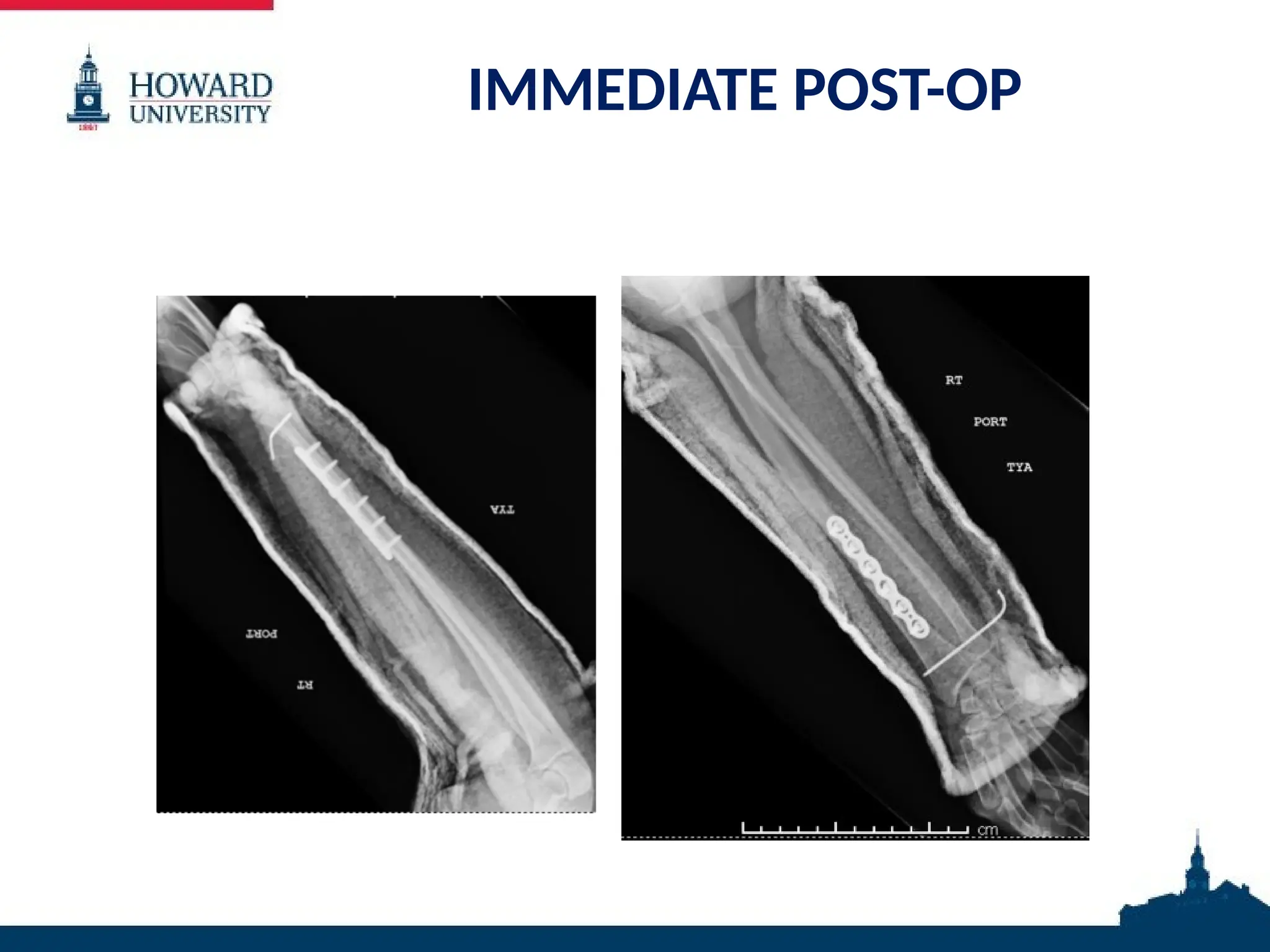
59 YO female with right distal 1/3 radial
diaphyseal fracture with associated DRUJ
dislocation
– Walsh type II
– Rettig and Raskin type I
– AO/OTA 22A2.3
MANAGEMENT
Nonoperative
• Not indicated
• Fracture of necessity
• Historically, nonoperative treatment with closed
reduction and casting yielded poor outcomes
Operative
• ORIF radius
– Plate osteosynthesis
– Rush rod
– Percutaneous K-wire fixation
• +/- ORIF ulnar styloid, open reduction of DRUJ, closed
reduction and pinning of DRUJ
LITERATURE REVIEW
1985
SUMMARY
• Largest study of compression plating at that
time (n=55)
• Both dorsal and volar techniques used
– Superior results with dorsal, although volar
technically easier (mechanical limitation to
pronation)
• Functional outcomes excellent/good in 97% of
patients
• Radiographic healing in 97% patients
LITERATURE REVIEW
2011
MATERIALS AND METHODS
• Purpose: to determine if fracture location has
an effect on DRUJ stability
• Retrospective
• 95 patients with Galeazzi fx
• Mean f/u: 6.8 months
RESULTS AND CONCLUSION
• Results:
– 40/90 pts had residual DRUJ instability after
rigid fixation of radius
• 37 w/in 10cm of radial styloid
• 2 10-15cm
• 1 >15cm
• Conclusion:
– Proximity to radial styloid is predictive of DRUJ instability
requiring fixation after rigid radius fixation
LITERATURE REVIEW
2016
MATERIALS AND METHODS
• Retrospective cohort study
• 66 patients
• Galeazzi fracture diagnosed intraoperatively
via DRUJ instability testing
RESULTS AND CONCLUSION
• 39% of fractures with residual DRUJ instability
located w/in 7.5cm of wrist joint (Rettig and
Raskin type I)
• 31% with shortening >5mm
• Conclusion: Radiographic guidelines for prediction of
Galeazzi lesion are only moderately accurate.
Intraoperative evaluation of the DRUJ should remain
the gold-standard
DISCUSSION
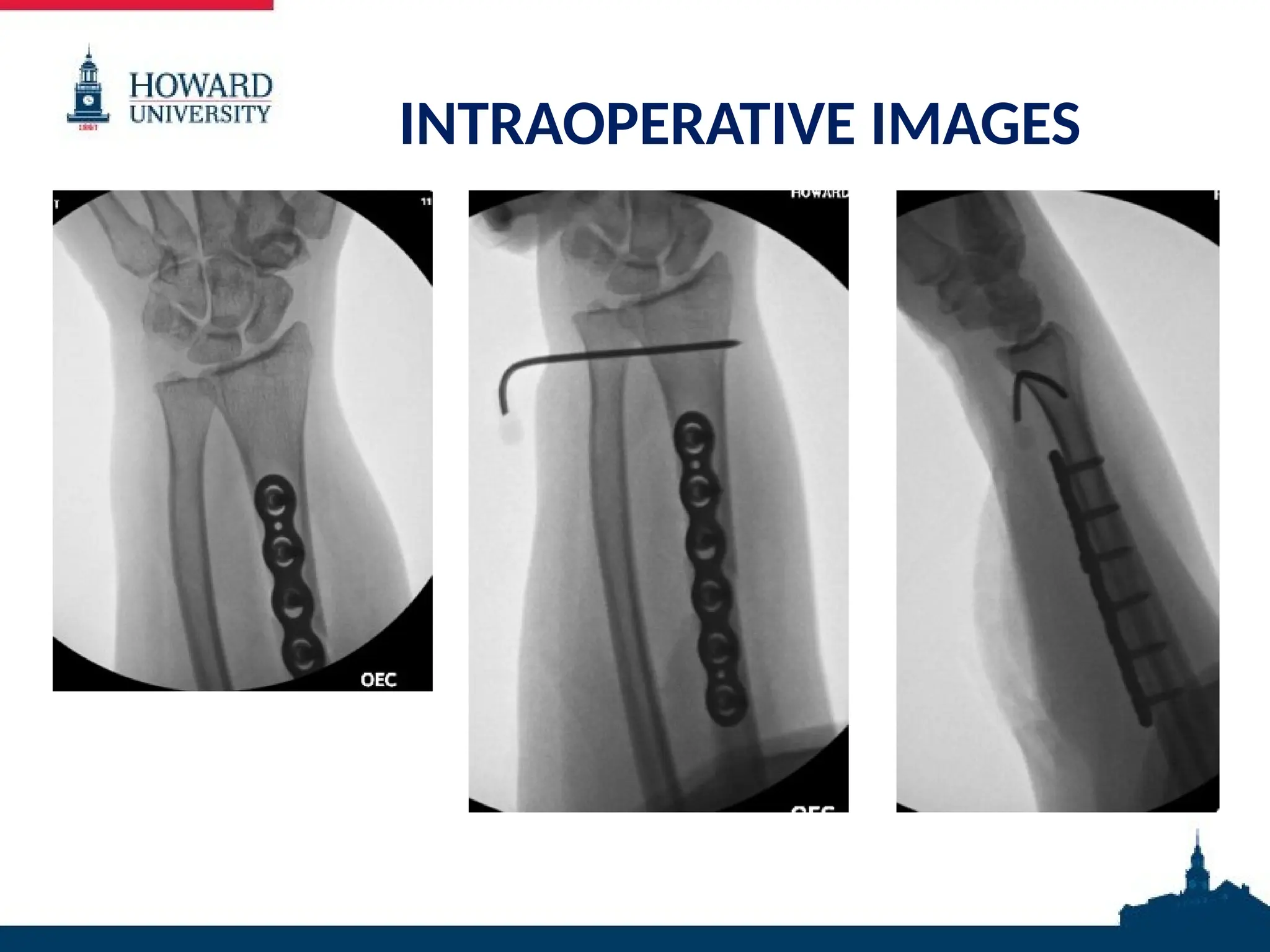
OPERATION IN BRIEF
• Volar approach of Henry
• Fracture reduced via longitudinal traction
• Reduction held with K-wire
• Dynamic compression plate applied
• Reduction judged anatomic
• DRUJ was found to be reduced after reduction
of radius
• Instability noted with both pronation and
supination, so K-wired placed across the DRUJ
INTRAOPERATIVE IMAGES
IMMEDIATE POST-OP
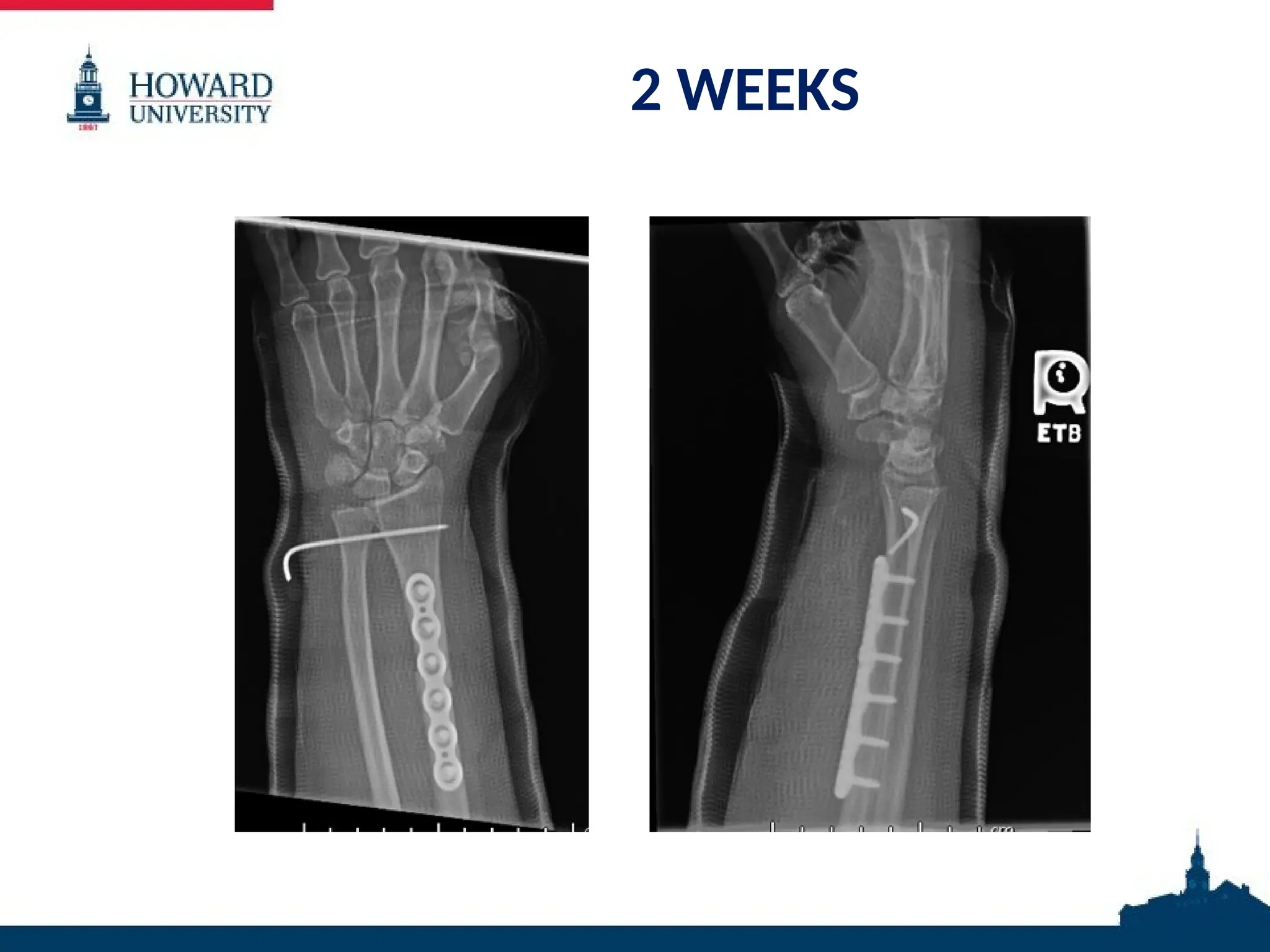
POST-OPERATIVE COURSE
2 weeks:
• Incision c/d/i
• Pain controlled
• Long arm cast placed
2 WEEKS
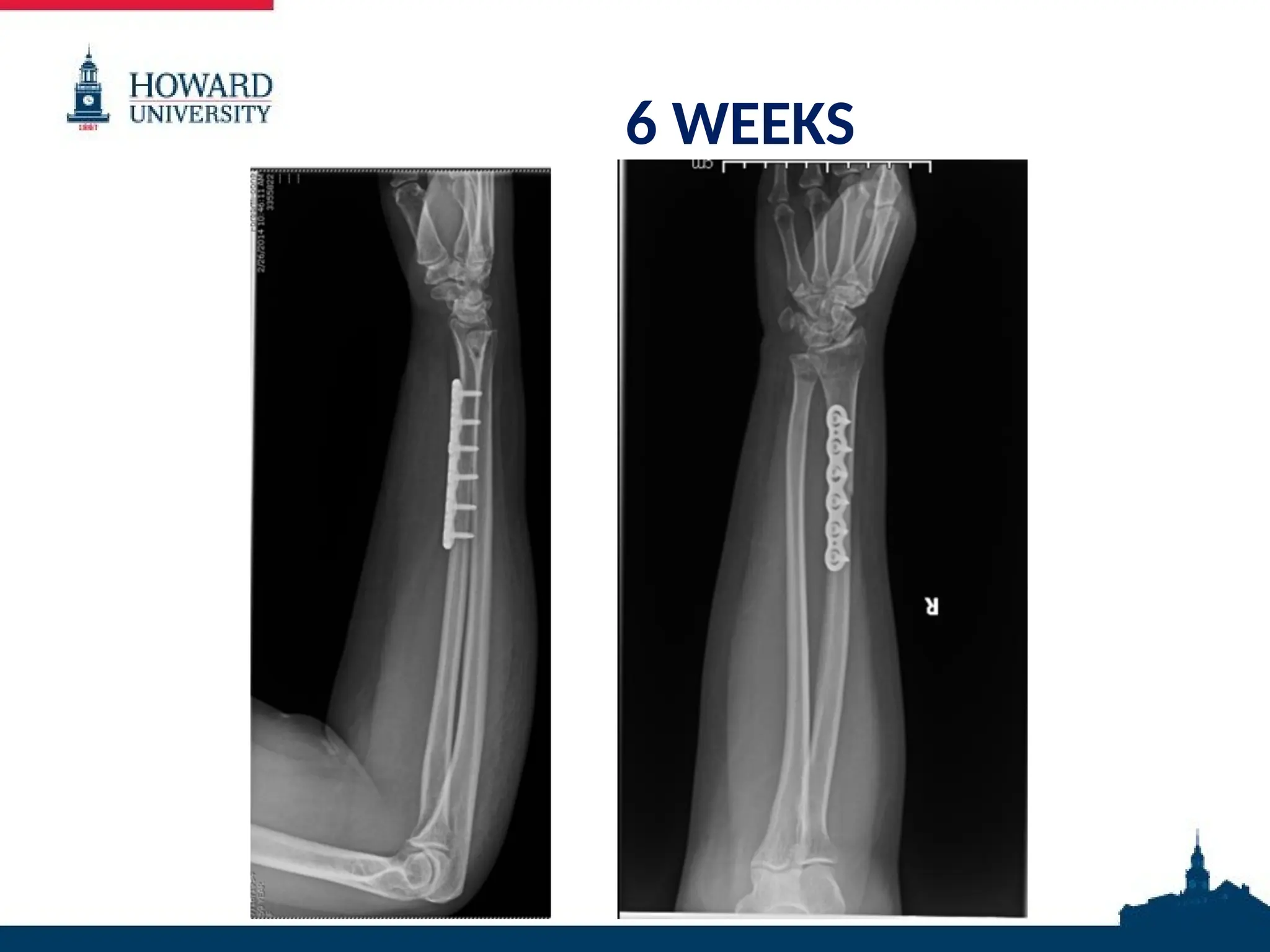
6 WEEKS
• Incision healed
• Cast removed
• Pin removed
• OT for ROM and strengthening begun
6 WEEKS
3 MONTHS
• Minimal pain
• Hypersensitivity at dorsum of wrist
• Limited flexion index finger
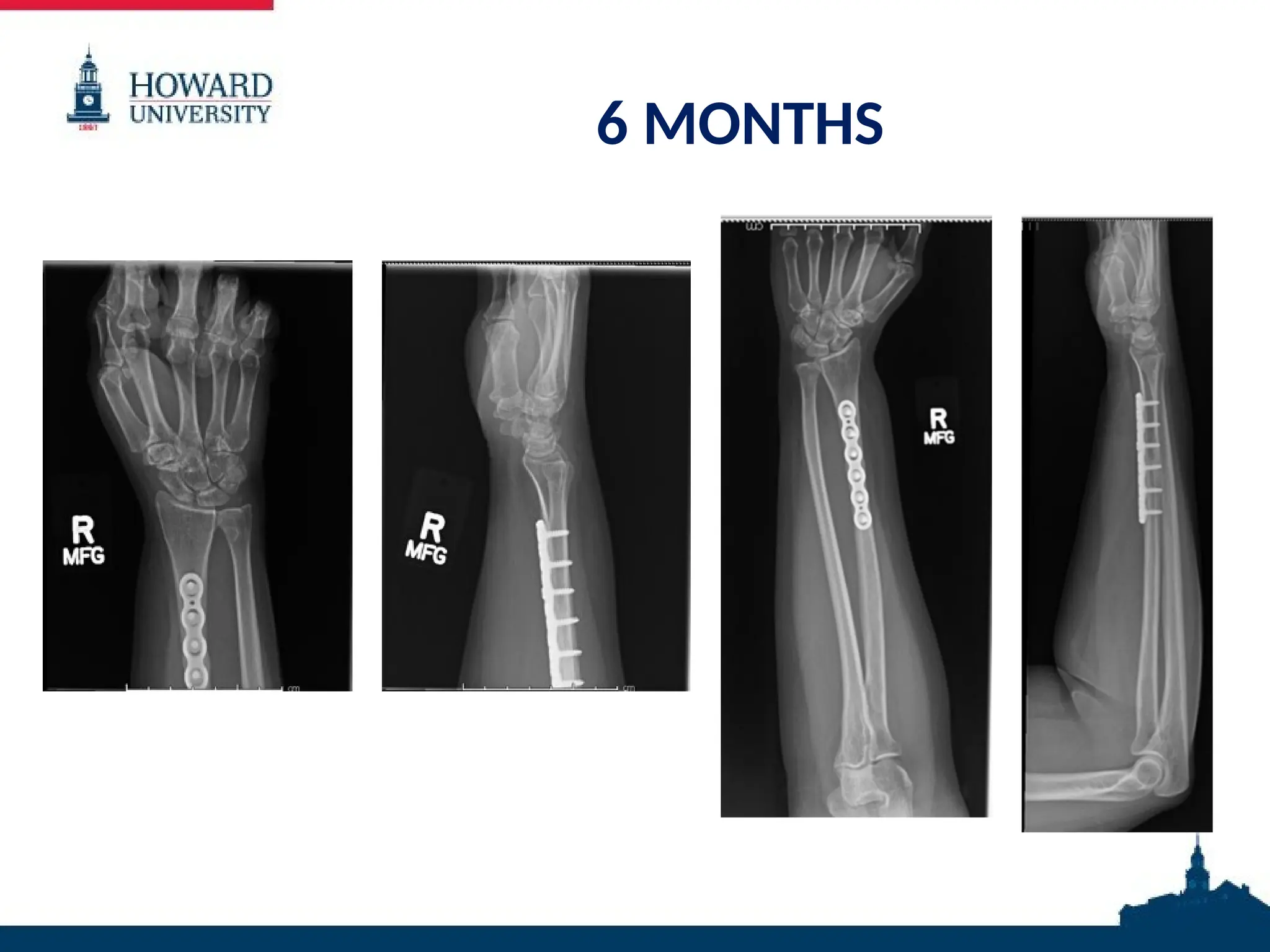
6 MONTHS
• Increased from prior visit forearm pain
• Hypersensitivity at dorsum of wrist
• Limited flexion index finger
6 MONTHS
10 MONTHS
• Continued pain in forearm
• ROM full
• Sent to hand specialist for second opinion
– Forearm tenosynovitis
– Plan medimix for pain
– f/u PRN

Galeazzi Fracture Overview and Case Example

  • 1.
    Trauma Presentation: GalleazziFracture Orthopaedic Surgery
  • 2.
    HPI • CC: Rightforearm pain and deformity • Elderly female who fell onto an outstretched right arm • Immediate pain and visible deformity
  • 3.
    ADDITIONAL HISTORY PMH Asthma, migraine, GERD,HTN PSH Partial hysterectomy cholecystectomy Soc No EtOH, smoking, drugs Meds Tramadol, pregabalin, prilosec Allergies tetracycline
  • 4.
    PHYSICAL EXAM Gen: • inno acute distress MSK: • RUE: – No lacerations/abrasions – Gross deformity of forearm (radial deviation of right wrist) – Compartments soft – Sensation and motor function intact – 2+ radial pulse
  • 5.
  • 6.
    GALEAZZI FRACTURE-DISLOCATION • Definedas a fracture of the radial diaphysis (typically distal 1/3) with a dislocation of the DRUJ • First described in 1822 by Sir Astley Cooper • Further described by Galeazzi in 1934 • Frequently underdiagnosed • Most likely to occur within 7.5cm of midarticular surface of distal radius (Rettig and Raskin)
  • 7.
    MECHANISM • Forceful axialloading of the forearm with wrist extended and maximally pronated • Some authors believe loading in supination can also result in the injury • Falls, MVC, electric shock, blunt trauma
  • 8.
    ANATOMY: OSSEOUS • Majorradial bow: from the biceps tuberosity to the ulnar aspect of the articular surface – Essential for proper forearm rotation
  • 9.
    ANATOMY: SOFT TISSUE •Interosseous membrane – Complex ligamentous structure that firmly attaches the radius and ulna – Transfers load from radius to ulna – Terminates proximal to the distal 1/3 radial diaphysis • Higher risk of shortening
  • 10.
    ANATOMY: SOFT TISSUE •Triangular Fibrocartilage Complex (TFCC) – Primary stabilizer of the DRUJ – Base attaches to the junction of the lunate fossa and the sigmoid notch – Apex attaches to the fovea and ulnar styloid – Primary stabilizers of distal ulna: dorsal and palmar radioulnar ligaments
  • 12.
    PATHOPHYSIOLOGY • Radius fractures2/2 axial load • The radius shortens, significant force is pulled through the distal ulna via the TFCC • The TFCC fails in its substance or through avulsion of the ulnar styloid • Without this ligamentous constraint, the DRUJ is destabilized and the distal ulna dislocates
  • 13.
    DEFORMING FORCES • Shortening: –Brachioradialis – Abductor pollicis longus – Extensor pollicis brevis – Extensor digiti minimi • Rotational – Pronator quadratus
  • 14.
    IMAGING • Radiographs ofthe elbow, wrist, and forearm – AP – True lateral • Findings suggestive of DRUJ instability: – Ulnar styloid fracture – DRUJ widening (AP) – Dislocation/subluxation of ulna relative to radius (lateral) – Radial shortening >5mm
  • 15.
    CLASSIFICATION Walsh: • Type I:Dorsal displacement of the distal radius with volar displacement of the ulna • Type II: Volar displacement of the distal radius with dorsal displacement of the ulna • an
  • 16.
    CLASSIFICATION Rettig and Raskin: •Type I: within 7.5cm of wrist joint • Type II: >7.5cm from wrist joint • an
  • 17.
  • 18.
    ASSESSMENT 59 YO femalewith right distal 1/3 radial diaphyseal fracture with associated DRUJ dislocation – Walsh type II – Rettig and Raskin type I – AO/OTA 22A2.3
  • 19.
    MANAGEMENT Nonoperative • Not indicated •Fracture of necessity • Historically, nonoperative treatment with closed reduction and casting yielded poor outcomes Operative • ORIF radius – Plate osteosynthesis – Rush rod – Percutaneous K-wire fixation • +/- ORIF ulnar styloid, open reduction of DRUJ, closed reduction and pinning of DRUJ
  • 20.
  • 21.
    SUMMARY • Largest studyof compression plating at that time (n=55) • Both dorsal and volar techniques used – Superior results with dorsal, although volar technically easier (mechanical limitation to pronation) • Functional outcomes excellent/good in 97% of patients • Radiographic healing in 97% patients
  • 22.
  • 23.
    MATERIALS AND METHODS •Purpose: to determine if fracture location has an effect on DRUJ stability • Retrospective • 95 patients with Galeazzi fx • Mean f/u: 6.8 months
  • 24.
    RESULTS AND CONCLUSION •Results: – 40/90 pts had residual DRUJ instability after rigid fixation of radius • 37 w/in 10cm of radial styloid • 2 10-15cm • 1 >15cm • Conclusion: – Proximity to radial styloid is predictive of DRUJ instability requiring fixation after rigid radius fixation
  • 25.
  • 26.
    MATERIALS AND METHODS •Retrospective cohort study • 66 patients • Galeazzi fracture diagnosed intraoperatively via DRUJ instability testing
  • 27.
    RESULTS AND CONCLUSION •39% of fractures with residual DRUJ instability located w/in 7.5cm of wrist joint (Rettig and Raskin type I) • 31% with shortening >5mm • Conclusion: Radiographic guidelines for prediction of Galeazzi lesion are only moderately accurate. Intraoperative evaluation of the DRUJ should remain the gold-standard
  • 28.
  • 29.
    OPERATION IN BRIEF •Volar approach of Henry • Fracture reduced via longitudinal traction • Reduction held with K-wire • Dynamic compression plate applied • Reduction judged anatomic • DRUJ was found to be reduced after reduction of radius • Instability noted with both pronation and supination, so K-wired placed across the DRUJ
  • 30.
  • 31.
  • 32.
    POST-OPERATIVE COURSE 2 weeks: •Incision c/d/i • Pain controlled • Long arm cast placed
  • 33.
  • 34.
    6 WEEKS • Incisionhealed • Cast removed • Pin removed • OT for ROM and strengthening begun
  • 35.
  • 36.
    3 MONTHS • Minimalpain • Hypersensitivity at dorsum of wrist • Limited flexion index finger
  • 37.
    6 MONTHS • Increasedfrom prior visit forearm pain • Hypersensitivity at dorsum of wrist • Limited flexion index finger
  • 38.
  • 39.
    10 MONTHS • Continuedpain in forearm • ROM full • Sent to hand specialist for second opinion – Forearm tenosynovitis – Plan medimix for pain – f/u PRN

Editor's Notes

  • #3 unspecified
  • #7 Anterior: femoral vessels and nerve, LFCN Posterior: branches of profunda femoris, sciatic PFCN Medial: Obturator artery and nerve, profunda femoris
  • #20 2010
  • #21 Nail characteristics - antegrade 10mm piriformis entry nail (Synthes) - retrograde 10mm intercondylar nail (Biomet)
  • #22 2010
  • #23 Nail characteristics - antegrade 10mm piriformis entry nail (Synthes) - retrograde 10mm intercondylar nail (Biomet)
  • #25 2010
  • #26 Nail characteristics - antegrade 10mm piriformis entry nail (Synthes) - retrograde 10mm intercondylar nail (Biomet)
  • #27 The medial cortical width decreased in
  • #30 Posterior mal: provisionally fixed with a k wire. 1/3 tubular plate applied in buttress mode Proximal long oblique posterior diaphyseal fx: also buttressed with 1/3 tubular plate after anatomic reduction Plan was for addition fixation with distal tibial locking plate, but plate was dropped on the floor Medial incision: articular surface visualized and anatomically reduced and provisionally fixed with k wires. Medial distal tibia locking plate Syndesmosis was evaluated and judged to be stable Closed primarily. Tension on medial incision, so wound vac applied Splint, NWB
  • #31 Discharged POD1