Money Through the Ages

     SEPTEMBER 6, 2012
Key Words

 Self-sufficient
 Specialization
 Division of labour
 Bartering
 Double coincidence of wants
 Deferred payment
 Token money
 Face value
What is Money?

 Bills and coins
 Used to exchange for goods or services, or to pay a
 debt
Why Do We Need Money?

 We are not self-sufficient.
 The need for specialization and exchange.
 Specialization was the first step towards a wealthier
  society.
 Division of labour = Specialization
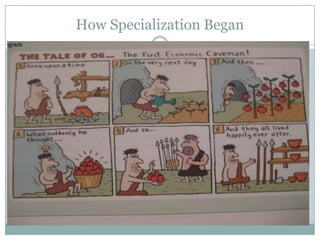
How Specialization Began
Task

 Discuss as many advantages and disadvantages of
 self-sufficiency and specialization as you can think
 of.
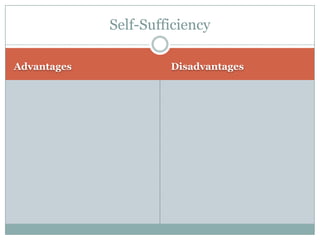
Self-Sufficiency

Advantages            Disadvantages
Specialization

Advantages           Disadvantages
Question

 How did people trade in the past without money?
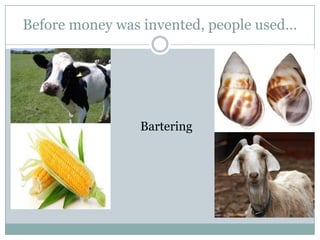
Before money was invented, people used…


                Bartering
Problems with Bartering

 Fixing a rate of exchange
 Finding someone to swap with
   Double coincidence of wants = two people can barter when
    they both want the good that the other person has.
 Trying to save
The Functions of Money

 A medium of exchange
   No need for double coincidence of wants

 A measure of value
   Helps to avoid fixing prices of goods and services in terms of
    all other goods and services.
 A store of value
   Allows people to save in order to make purchases at a later
    date.
   In times of inflation, money will fail to be such a good store of
    value.
 A means of deferred payment
Money Sense

 ‘Money makes the world go round?’ Do you agree or
 disagree with this statement? Why?
Money Sense

 ‘Money doesn’t bring happiness’. Do you agree or
 disagree with this statement? Why?
Money Matters

 Money matters!
 It affects the life choices we make.
 Money is … a form of energy that tends to make us
 more of who we already are, whether it’s greedy or
 loving.        By Dan Millman, athlete and author
What Makes A Good Money?

 Get into groups and discuss which of the items below
 would make a good money. Record the views and
 present your arguments to the class.

                     Mountains
                       Cheese
                      Cigarettes
                        Gold
What Makes A Good Money

 Acceptability – Everyone accepts it. That’s why our
    present money is a token money – a piece of paper or
    metal coin worth much less than the face value
    printed upon it.
   Durability
   Portability
   Divisibility. E.g. a whole car is worth much more
    than two halves. Hence, we divide money into
    smaller values.
   Scarcity
References

 Clifford, T. (2009). Money through the ages. Vero
    Beach, FL: Rourke Publishing LLC.
   Einspruch, A. (2011). Money sense. Managing
    money. South Yarra, Australia: Macmillan
    Education Australia Pty Ltd.
   http://www.historyforkids.org/learn/economy.mone
    y.htm
   http://library.thinkquest.org/C004203/economic01.
    htm
   http://www.pbs.org/wgbh/nova/moolah/history.ht
    ml

G9 10 econs_sept

  • 1.
    Money Through theAges SEPTEMBER 6, 2012
  • 2.
    Key Words  Self-sufficient Specialization  Division of labour  Bartering  Double coincidence of wants  Deferred payment  Token money  Face value
  • 3.
    What is Money? Bills and coins  Used to exchange for goods or services, or to pay a debt
  • 4.
    Why Do WeNeed Money?  We are not self-sufficient.  The need for specialization and exchange.  Specialization was the first step towards a wealthier society.  Division of labour = Specialization
  • 5.
  • 6.
    Task  Discuss asmany advantages and disadvantages of self-sufficiency and specialization as you can think of.
  • 7.
  • 8.
  • 9.
    Question  How didpeople trade in the past without money?
  • 10.
    Before money wasinvented, people used… Bartering
  • 11.
    Problems with Bartering Fixing a rate of exchange  Finding someone to swap with  Double coincidence of wants = two people can barter when they both want the good that the other person has.  Trying to save
  • 12.
    The Functions ofMoney  A medium of exchange  No need for double coincidence of wants  A measure of value  Helps to avoid fixing prices of goods and services in terms of all other goods and services.  A store of value  Allows people to save in order to make purchases at a later date.  In times of inflation, money will fail to be such a good store of value.  A means of deferred payment
  • 13.
    Money Sense  ‘Moneymakes the world go round?’ Do you agree or disagree with this statement? Why?
  • 14.
    Money Sense  ‘Moneydoesn’t bring happiness’. Do you agree or disagree with this statement? Why?
  • 15.
    Money Matters  Moneymatters!  It affects the life choices we make.  Money is … a form of energy that tends to make us more of who we already are, whether it’s greedy or loving. By Dan Millman, athlete and author
  • 16.
    What Makes AGood Money?  Get into groups and discuss which of the items below would make a good money. Record the views and present your arguments to the class.  Mountains  Cheese  Cigarettes  Gold
  • 17.
    What Makes AGood Money  Acceptability – Everyone accepts it. That’s why our present money is a token money – a piece of paper or metal coin worth much less than the face value printed upon it.  Durability  Portability  Divisibility. E.g. a whole car is worth much more than two halves. Hence, we divide money into smaller values.  Scarcity
  • 18.
    References  Clifford, T.(2009). Money through the ages. Vero Beach, FL: Rourke Publishing LLC.  Einspruch, A. (2011). Money sense. Managing money. South Yarra, Australia: Macmillan Education Australia Pty Ltd.  http://www.historyforkids.org/learn/economy.mone y.htm  http://library.thinkquest.org/C004203/economic01. htm  http://www.pbs.org/wgbh/nova/moolah/history.ht ml