WHAT IS THE FUTURE FOR
SMALL FARMS IN AFRICA AND
RENEWED ROLE FOR
FARMERS?

Mabel Ndakaripa Munyuki-Hungwe
(PhD)
Barefoot Education for Afrika Trust
ndakaripahungwe@gmail.com
African smallholders






Africa has shown some impressive growth rate
in real GDP (5%)
Growth due to enabling policy and business
environment, favourable commodity prices (in
some) and improved peace and stability
(AfDB, 2013)
Success: central Kenya: coffee, dairy,
vegetable; South west Nigeria: tomatoes &
peppers; Ghana (Brong-Ahafo) tomatoes
achieving higher gross margins from land and
labour in commercial enterprises
African smallholder farmers






But this has not translated to jobs, wealth,
income growth, poverty reduction & food
security needed to transform Africa
388 million Africans still live in poor conditions,
239 million are under nourished and of the 20
least competitive economies, 14 are African
(WEF, 2012)
But Africa possesses greatest potential to
create wealth and transform especially through
agriculture
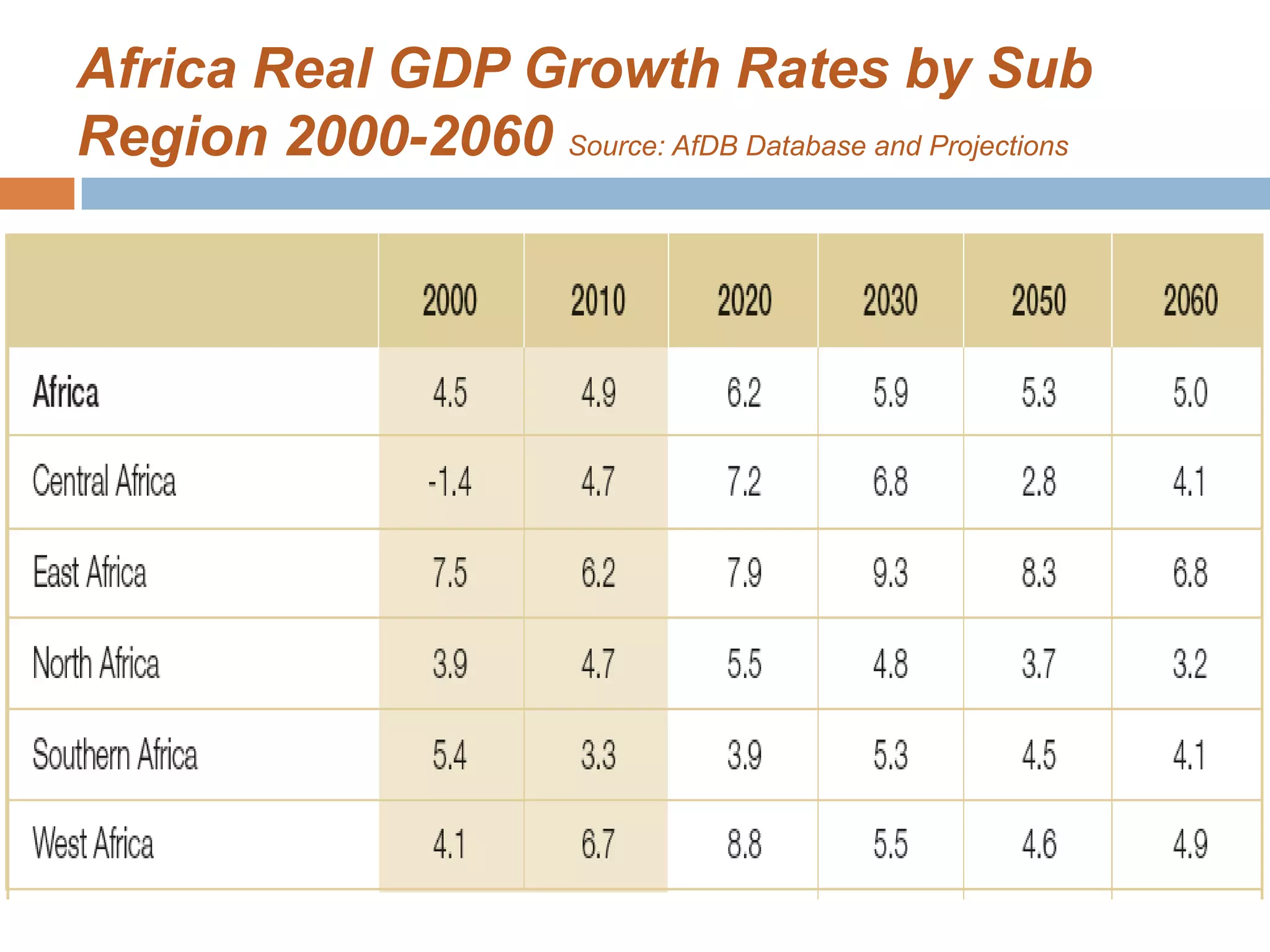
Africa Real GDP Growth Rates by Sub
Region 2000-2060 Source: AfDB Database and Projections
African agriculture







Agriculture still the main stay – employment &
livelihoods of many economies
Agriculture contributes to foreign exchange
earnings
Investment is therefore crucial
African leaders through CAADP have also in
their part placed agriculture on the agenda in
development to improve food & nutrition
security, increasing incomes in African
communities (what is needed is more
implementation)
Small holder farmers









Globally there are 450 million smallholder
farmers
Africa has about 63 million such farmers
Income ranges between $170 -$570 per
annum
Many farm on less than 2 hectares
Many only market produce within their locale
Less than 10% have entered lucrative export
value chains
But Small farms offers opportunities
Can:
 use land more efficiently
% of all farms
Farm size (ha)

Africa

<2



produce cheaper and
more nutritious foods



increase own incomes
and productivity



promote equity, hunger,
and poverty reduction

80

2-10

15

10-100

3

>100

0

Source: Calculations based on most recent data available from FAO
Agricultural World Census from late 1980s-2000s

AND average farm size in Africa will continue to decline due
to rural population growth therefore: SMALL FARMS HAVE

BECOME THE NEW FORCE FOR AFRICAN
AGRICULTURAL TRANSFORMATION
New challenges facing African
smallholders








Poor access to inputs (SSA pay high prices for
fertilizer hence use less in the world), credit,
support services, knowledge to boost
production
Smallholders face risks to climate shocks, pest
& disease outbreaks, have limited access to
risk reduction strategies (safety nets)
Some face poor information, resources and
bargaining power
Land scarcity, acquisitions as they compete
with the state, multi national corporation, other
communities
Challenges & opportunities








Africa increasingly being rapidly urbanised
trends show that by 2020-2030 most of Africa
will predominantly urbanised (Reardon et al, 2013)
Emergence of an African middle class
economy both rural and urban with more non
staple foods: wheat, processed foods, milk,
meat, poultry, fruits and vegetables
African youths an untapped resource yet 40%
of workforce is under 23 years of age (Rukuni,
2013)
Almost every smallholder farmer has a mobile
Source: Adapted from Haggblade, 2012
Smallholders opportunities
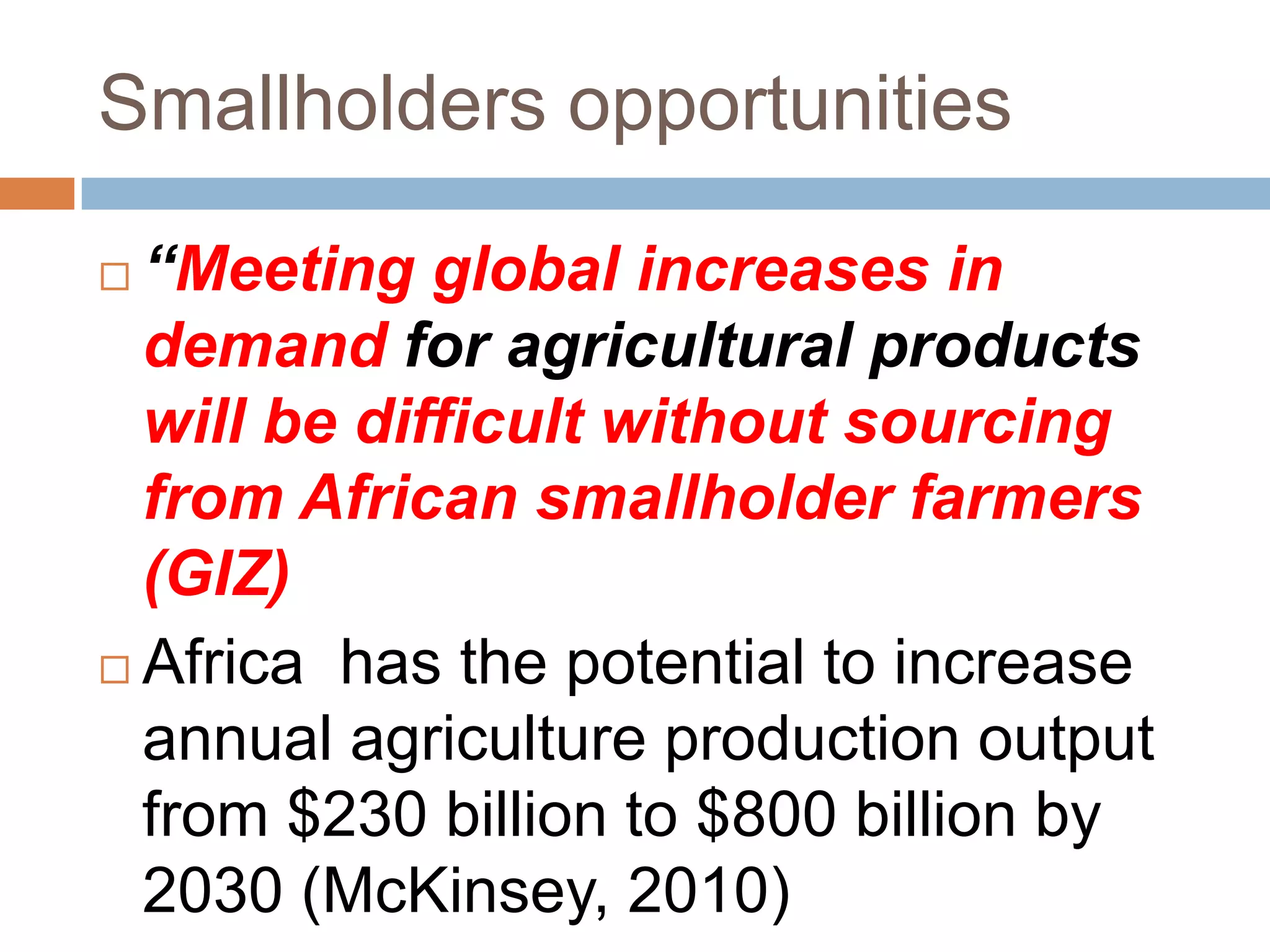
“Meeting global increases in
demand for agricultural products
will be difficult without sourcing
from African smallholder farmers
(GIZ)
 Africa has the potential to increase
annual agriculture production output
from $230 billion to $800 billion by
2030 (McKinsey, 2010)

PPP Partnerships




Mobilizing Private Sector Finance through
innovative and targeted Public Private
Partnerships is central to unlocking the
potential of African Agriculture.
Need for better negotiation skills among
African farmers especially farmer
organisations
Promote Transformative and
Targeted public-private
partnerships
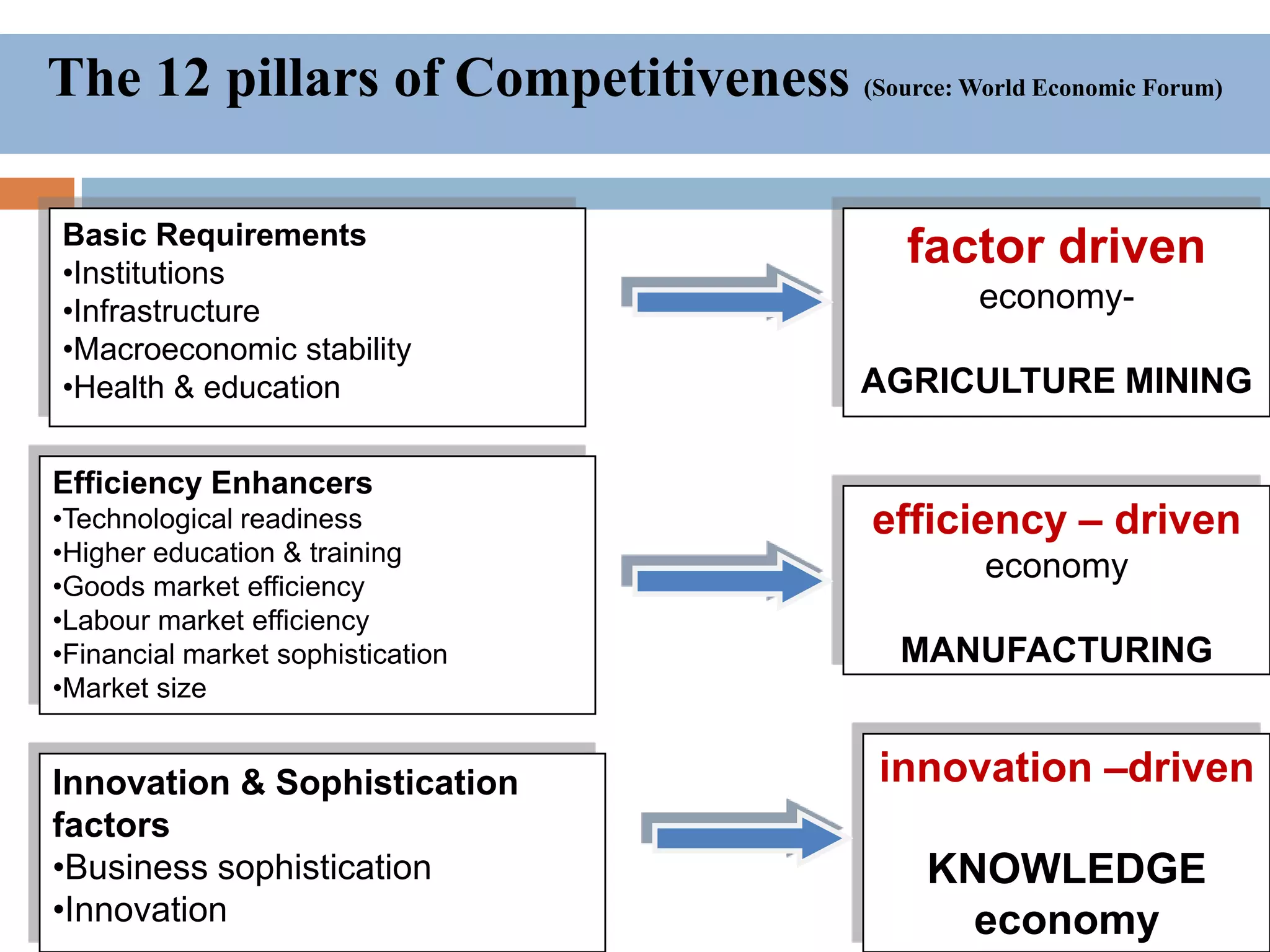
The 12 pillars of Competitiveness (Source: World Economic Forum)
Basic Requirements
•Institutions
•Infrastructure
•Macroeconomic stability
•Health & education

Efficiency Enhancers
•Technological readiness
•Higher education & training
•Goods market efficiency
•Labour market efficiency
•Financial market sophistication
•Market size

Innovation & Sophistication
factors
•Business sophistication
•Innovation

factor driven
economyAGRICULTURE MINING

efficiency – driven
economy
MANUFACTURING

innovation –driven
KNOWLEDGE
economy
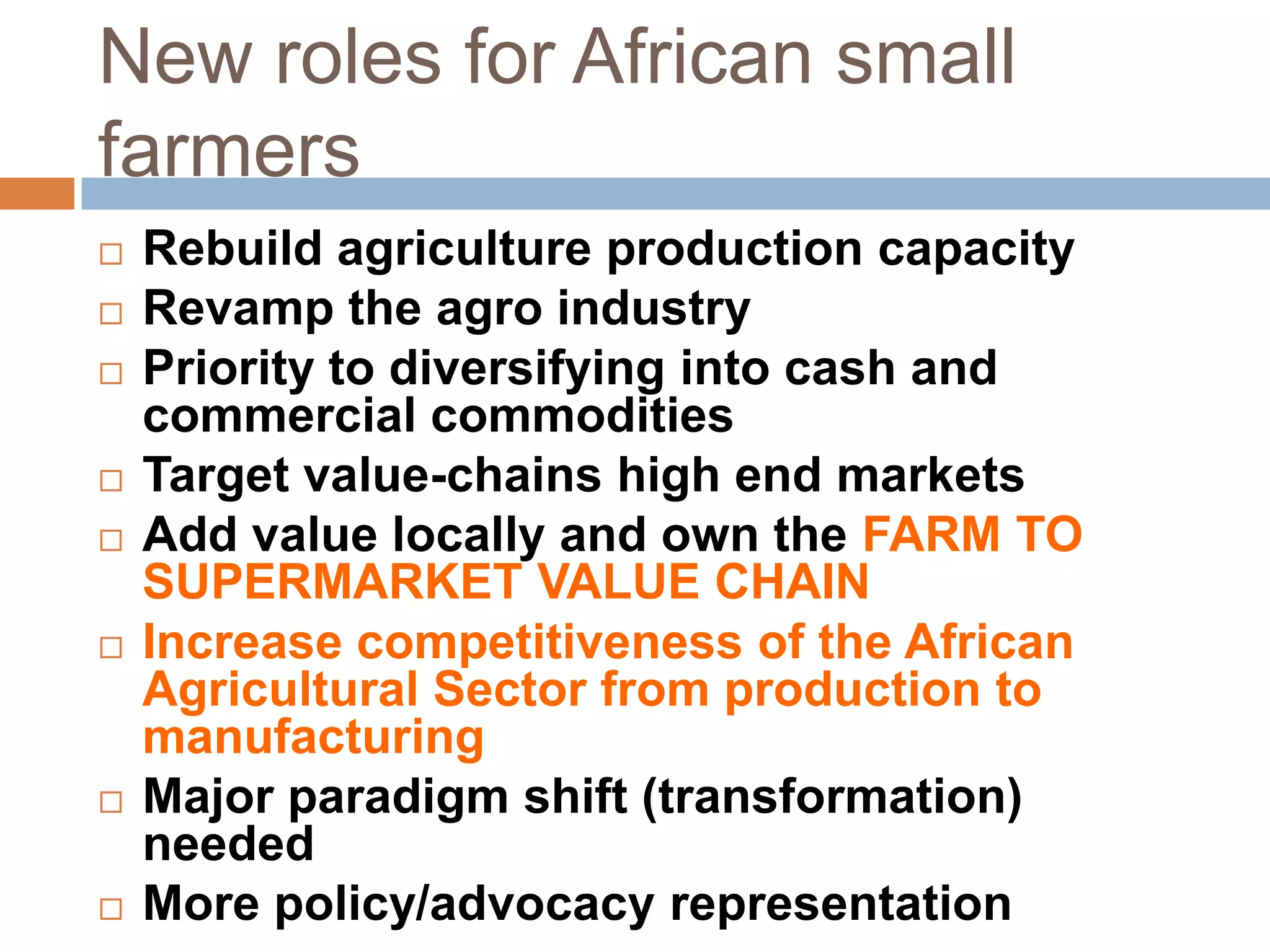
New roles for African small
farmers













Rebuild agriculture production capacity
Revamp the agro industry
Priority to diversifying into cash and
commercial commodities
Target value-chains high end markets
Add value locally and own the FARM TO
SUPERMARKET VALUE CHAIN
Increase competitiveness of the African
Agricultural Sector from production to
manufacturing
Major paradigm shift (transformation)
needed
More policy/advocacy representation
Prime movers necessary for
agricultural development












Human capital development – professional, managerial and
technical skills necessary in the sector
Sustained growth of biological capital (improved genetic
and crop and animal husbandry) and physical investments
in dams, irrigation and roads
Improved performance of institutions (marketing, credit,
research, extension and settlements) currently many key
agricultural institutions under stress
Favourable economic policy environment and political
support for agriculture over long terms (CAADP)
New technology produced by private and public
investments in agricultural research
Land/agrarian reform – improved tenure security and
wealth creating capacity than before
Thank you! Asante Sana!
Merci!

future for small farms

  • 1.
    WHAT IS THEFUTURE FOR SMALL FARMS IN AFRICA AND RENEWED ROLE FOR FARMERS? Mabel Ndakaripa Munyuki-Hungwe (PhD) Barefoot Education for Afrika Trust ndakaripahungwe@gmail.com
  • 2.
    African smallholders    Africa hasshown some impressive growth rate in real GDP (5%) Growth due to enabling policy and business environment, favourable commodity prices (in some) and improved peace and stability (AfDB, 2013) Success: central Kenya: coffee, dairy, vegetable; South west Nigeria: tomatoes & peppers; Ghana (Brong-Ahafo) tomatoes achieving higher gross margins from land and labour in commercial enterprises
  • 3.
    African smallholder farmers    Butthis has not translated to jobs, wealth, income growth, poverty reduction & food security needed to transform Africa 388 million Africans still live in poor conditions, 239 million are under nourished and of the 20 least competitive economies, 14 are African (WEF, 2012) But Africa possesses greatest potential to create wealth and transform especially through agriculture
  • 4.
    Africa Real GDPGrowth Rates by Sub Region 2000-2060 Source: AfDB Database and Projections
  • 5.
    African agriculture     Agriculture stillthe main stay – employment & livelihoods of many economies Agriculture contributes to foreign exchange earnings Investment is therefore crucial African leaders through CAADP have also in their part placed agriculture on the agenda in development to improve food & nutrition security, increasing incomes in African communities (what is needed is more implementation)
  • 6.
    Small holder farmers       Globallythere are 450 million smallholder farmers Africa has about 63 million such farmers Income ranges between $170 -$570 per annum Many farm on less than 2 hectares Many only market produce within their locale Less than 10% have entered lucrative export value chains
  • 7.
    But Small farmsoffers opportunities Can:  use land more efficiently % of all farms Farm size (ha) Africa <2  produce cheaper and more nutritious foods  increase own incomes and productivity  promote equity, hunger, and poverty reduction 80 2-10 15 10-100 3 >100 0 Source: Calculations based on most recent data available from FAO Agricultural World Census from late 1980s-2000s AND average farm size in Africa will continue to decline due to rural population growth therefore: SMALL FARMS HAVE BECOME THE NEW FORCE FOR AFRICAN AGRICULTURAL TRANSFORMATION
  • 8.
    New challenges facingAfrican smallholders     Poor access to inputs (SSA pay high prices for fertilizer hence use less in the world), credit, support services, knowledge to boost production Smallholders face risks to climate shocks, pest & disease outbreaks, have limited access to risk reduction strategies (safety nets) Some face poor information, resources and bargaining power Land scarcity, acquisitions as they compete with the state, multi national corporation, other communities
  • 9.
    Challenges & opportunities     Africaincreasingly being rapidly urbanised trends show that by 2020-2030 most of Africa will predominantly urbanised (Reardon et al, 2013) Emergence of an African middle class economy both rural and urban with more non staple foods: wheat, processed foods, milk, meat, poultry, fruits and vegetables African youths an untapped resource yet 40% of workforce is under 23 years of age (Rukuni, 2013) Almost every smallholder farmer has a mobile
  • 10.
    Source: Adapted fromHaggblade, 2012
  • 11.
    Smallholders opportunities “Meeting globalincreases in demand for agricultural products will be difficult without sourcing from African smallholder farmers (GIZ)  Africa has the potential to increase annual agriculture production output from $230 billion to $800 billion by 2030 (McKinsey, 2010) 
  • 12.
    PPP Partnerships   Mobilizing PrivateSector Finance through innovative and targeted Public Private Partnerships is central to unlocking the potential of African Agriculture. Need for better negotiation skills among African farmers especially farmer organisations
  • 13.
    Promote Transformative and Targetedpublic-private partnerships
  • 14.
    The 12 pillarsof Competitiveness (Source: World Economic Forum) Basic Requirements •Institutions •Infrastructure •Macroeconomic stability •Health & education Efficiency Enhancers •Technological readiness •Higher education & training •Goods market efficiency •Labour market efficiency •Financial market sophistication •Market size Innovation & Sophistication factors •Business sophistication •Innovation factor driven economyAGRICULTURE MINING efficiency – driven economy MANUFACTURING innovation –driven KNOWLEDGE economy
  • 15.
    New roles forAfrican small farmers         Rebuild agriculture production capacity Revamp the agro industry Priority to diversifying into cash and commercial commodities Target value-chains high end markets Add value locally and own the FARM TO SUPERMARKET VALUE CHAIN Increase competitiveness of the African Agricultural Sector from production to manufacturing Major paradigm shift (transformation) needed More policy/advocacy representation
  • 16.
    Prime movers necessaryfor agricultural development       Human capital development – professional, managerial and technical skills necessary in the sector Sustained growth of biological capital (improved genetic and crop and animal husbandry) and physical investments in dams, irrigation and roads Improved performance of institutions (marketing, credit, research, extension and settlements) currently many key agricultural institutions under stress Favourable economic policy environment and political support for agriculture over long terms (CAADP) New technology produced by private and public investments in agricultural research Land/agrarian reform – improved tenure security and wealth creating capacity than before
  • 17.
    Thank you! AsanteSana! Merci!