Monitoring and Tracking
Progress and Achievement in
the context of 5.1
(appendix 2)
Supporting the development of effective
monitoring and tracking
May 2014
Louise Turnbull – Head Teacher, LVPS
This presentation should be read in conjunction with the following Professional
Learning Resources from Education Scotland:
• Assessing progress and achievement overarching paper
• Monitoring and tracking progress and achievement in the broad general
education
• Taking a closer look at the National Assessment Resource
• Curriculum for Excellence Workgroup on Tackling Bureaucracy
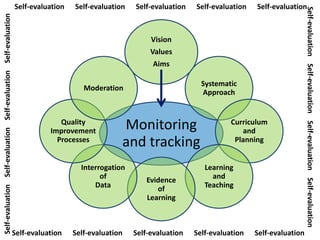
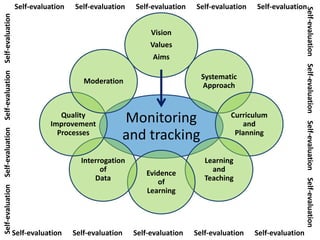
Monitoring
and tracking
Vision
Values
Aims
Systematic
Approach
Curriculum
and
Planning
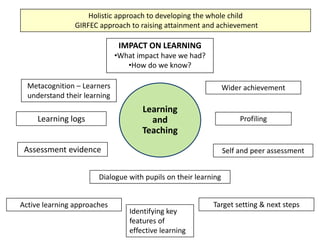
Learning
and
Teaching
Evidence
of
Learning
Interrogation
of
Data
Quality
Improvement
Processes
Moderation
Self-evaluation Self-evaluation Self-evaluation Self-evaluation Self-evaluation
Self-evaluation
Self-evaluation
Self-evaluation
Self-evaluation
Self-evaluation
Self-evaluation
Self-evaluation
Self-evaluation
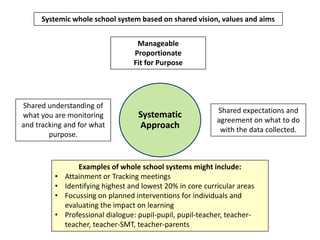
Systematic
Approach
Systemic whole school system based on shared vision, values and aims
Manageable
Proportionate
Fit for Purpose
Shared understanding of
what you are monitoring
and tracking and for what
purpose.
Shared expectations and
agreement on what to do
with the data collected.
Examples of whole school systems might include:
• Attainment or Tracking meetings
• Identifying highest and lowest 20% in core curricular areas
• Focussing on planned interventions for individuals and
evaluating the impact on learning
• Professional dialogue: pupil-pupil, pupil-teacher, teacher-
teacher, teacher-SMT, teacher-parents
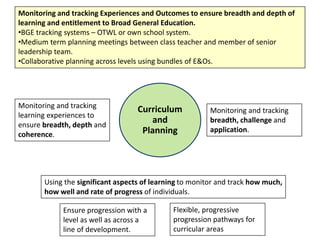
Monitoring and tracking
learning experiences to
ensure breadth, depth and
coherence.
Monitoring and tracking
breadth, challenge and
application.
Curriculum
and
Planning
Monitoring and tracking Experiences and Outcomes to ensure breadth and depth of
learning and entitlement to Broad General Education.
•BGE tracking systems – OTWL or own school system.
•Medium term planning meetings between class teacher and member of senior
leadership team.
•Collaborative planning across levels using bundles of E&Os.
Using the significant aspects of learning to monitor and track how much,
how well and rate of progress of individuals.
Ensure progression with a
level as well as across a
line of development.
Flexible, progressive
progression pathways for
curricular areas
Learning logs Profiling
Metacognition – Learners
understand their learning
Learning
and
Teaching
Self and peer assessment
Active learning approaches
Dialogue with pupils on their learning
IMPACT ON LEARNING
•What impact have we had?
•How do we know?
Assessment evidence
Wider achievement
Target setting & next steps
Holistic approach to developing the whole child
GIRFEC approach to raising attainment and achievement
Identifying key
features of
effective learning
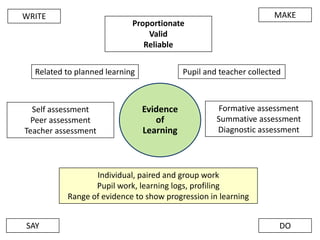
Evidence
of
Learning
Proportionate
Valid
Reliable
Pupil and teacher collected
Related to planned learning
Formative assessment
Summative assessment
Diagnostic assessment
Self assessment
Peer assessment
Teacher assessment
Individual, paired and group work
Pupil work, learning logs, profiling
Range of evidence to show progression in learning
WRITE
DO
MAKE
SAY
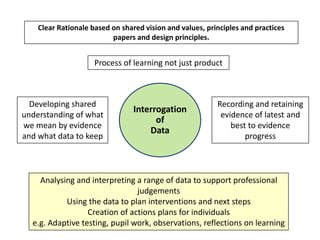
Clear Rationale based on shared vision and values, principles and practices
papers and design principles.
Interrogation
of
Data
Developing shared
understanding of what
we mean by evidence
and what data to keep
Recording and retaining
evidence of latest and
best to evidence
progress
Analysing and interpreting a range of data to support professional
judgements
Using the data to plan interventions and next steps
Creation of actions plans for individuals
e.g. Adaptive testing, pupil work, observations, reflections on learning
Process of learning not just product
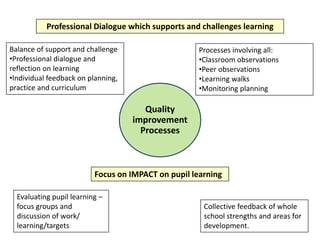
Balance of support and challenge
•Professional dialogue and
reflection on learning
•Individual feedback on planning,
practice and curriculum
Focus on IMPACT on pupil learning
Quality
improvement
Processes
Evaluating pupil learning –
focus groups and
discussion of work/
learning/targets
Collective feedback of whole
school strengths and areas for
development.
Professional Dialogue which supports and challenges learning
Processes involving all:
•Classroom observations
•Peer observations
•Learning walks
•Monitoring planning
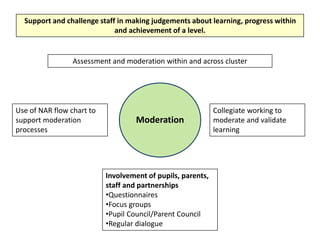
Moderation
Involvement of pupils, parents,
staff and partnerships
•Questionnaires
•Focus groups
•Pupil Council/Parent Council
•Regular dialogue
Assessment and moderation within and across cluster
Support and challenge staff in making judgements about learning, progress within
and achievement of a level.
Use of NAR flow chart to
support moderation
processes
Collegiate working to
moderate and validate
learning
Monitoring
and tracking
Vision
Values
Aims
Systematic
Approach
Curriculum
and
Planning
Learning
and
Teaching
Evidence
of
Learning
Interrogation
of
Data
Quality
Improvement
Processes
Moderation
Self-evaluation Self-evaluation Self-evaluation Self-evaluation Self-evaluation
Self-evaluation
Self-evaluation
Self-evaluation
Self-evaluation
Self-evaluation
Self-evaluation
Self-evaluation
Self-evaluation

frwk17-case-study-2-monitoring-and-tracking.ppt

  • 1.
    Monitoring and Tracking Progressand Achievement in the context of 5.1 (appendix 2) Supporting the development of effective monitoring and tracking May 2014 Louise Turnbull – Head Teacher, LVPS This presentation should be read in conjunction with the following Professional Learning Resources from Education Scotland: • Assessing progress and achievement overarching paper • Monitoring and tracking progress and achievement in the broad general education • Taking a closer look at the National Assessment Resource • Curriculum for Excellence Workgroup on Tackling Bureaucracy
  • 2.
    Monitoring and tracking Vision Values Aims Systematic Approach Curriculum and Planning Learning and Teaching Evidence of Learning Interrogation of Data Quality Improvement Processes Moderation Self-evaluation Self-evaluationSelf-evaluation Self-evaluation Self-evaluation Self-evaluation Self-evaluation Self-evaluation Self-evaluation Self-evaluation Self-evaluation Self-evaluation Self-evaluation Self-evaluation Self-evaluation Self-evaluation Self-evaluation Self-evaluation
  • 3.
    Systematic Approach Systemic whole schoolsystem based on shared vision, values and aims Manageable Proportionate Fit for Purpose Shared understanding of what you are monitoring and tracking and for what purpose. Shared expectations and agreement on what to do with the data collected. Examples of whole school systems might include: • Attainment or Tracking meetings • Identifying highest and lowest 20% in core curricular areas • Focussing on planned interventions for individuals and evaluating the impact on learning • Professional dialogue: pupil-pupil, pupil-teacher, teacher- teacher, teacher-SMT, teacher-parents
  • 4.
    Monitoring and tracking learningexperiences to ensure breadth, depth and coherence. Monitoring and tracking breadth, challenge and application. Curriculum and Planning Monitoring and tracking Experiences and Outcomes to ensure breadth and depth of learning and entitlement to Broad General Education. •BGE tracking systems – OTWL or own school system. •Medium term planning meetings between class teacher and member of senior leadership team. •Collaborative planning across levels using bundles of E&Os. Using the significant aspects of learning to monitor and track how much, how well and rate of progress of individuals. Ensure progression with a level as well as across a line of development. Flexible, progressive progression pathways for curricular areas
  • 5.
    Learning logs Profiling Metacognition– Learners understand their learning Learning and Teaching Self and peer assessment Active learning approaches Dialogue with pupils on their learning IMPACT ON LEARNING •What impact have we had? •How do we know? Assessment evidence Wider achievement Target setting & next steps Holistic approach to developing the whole child GIRFEC approach to raising attainment and achievement Identifying key features of effective learning
  • 6.
    Evidence of Learning Proportionate Valid Reliable Pupil and teachercollected Related to planned learning Formative assessment Summative assessment Diagnostic assessment Self assessment Peer assessment Teacher assessment Individual, paired and group work Pupil work, learning logs, profiling Range of evidence to show progression in learning WRITE DO MAKE SAY
  • 7.
    Clear Rationale basedon shared vision and values, principles and practices papers and design principles. Interrogation of Data Developing shared understanding of what we mean by evidence and what data to keep Recording and retaining evidence of latest and best to evidence progress Analysing and interpreting a range of data to support professional judgements Using the data to plan interventions and next steps Creation of actions plans for individuals e.g. Adaptive testing, pupil work, observations, reflections on learning Process of learning not just product
  • 8.
    Balance of supportand challenge •Professional dialogue and reflection on learning •Individual feedback on planning, practice and curriculum Focus on IMPACT on pupil learning Quality improvement Processes Evaluating pupil learning – focus groups and discussion of work/ learning/targets Collective feedback of whole school strengths and areas for development. Professional Dialogue which supports and challenges learning Processes involving all: •Classroom observations •Peer observations •Learning walks •Monitoring planning
  • 9.
    Moderation Involvement of pupils,parents, staff and partnerships •Questionnaires •Focus groups •Pupil Council/Parent Council •Regular dialogue Assessment and moderation within and across cluster Support and challenge staff in making judgements about learning, progress within and achievement of a level. Use of NAR flow chart to support moderation processes Collegiate working to moderate and validate learning
  • 10.
    Monitoring and tracking Vision Values Aims Systematic Approach Curriculum and Planning Learning and Teaching Evidence of Learning Interrogation of Data Quality Improvement Processes Moderation Self-evaluation Self-evaluationSelf-evaluation Self-evaluation Self-evaluation Self-evaluation Self-evaluation Self-evaluation Self-evaluation Self-evaluation Self-evaluation Self-evaluation Self-evaluation Self-evaluation Self-evaluation Self-evaluation Self-evaluation Self-evaluation