FRUIT AND VEGETABLES
HIGHEST IN
VITAMINC
A COMPILED REPORT
By
Allah Dad Khan
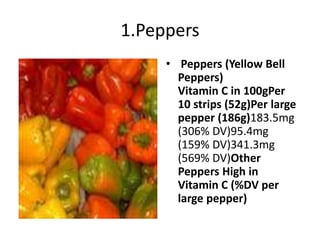
1.Peppers
• Peppers (Yellow Bell
Peppers)
Vitamin C in 100gPer
10 strips (52g)Per large
pepper (186g)183.5mg
(306% DV)95.4mg
(159% DV)341.3mg
(569% DV)Other
Peppers High in
Vitamin C (%DV per
large pepper)
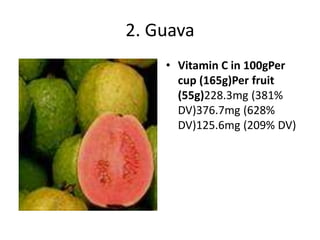
2. Guava
• Vitamin C in 100gPer
cup (165g)Per fruit
(55g)228.3mg (381%
DV)376.7mg (628%
DV)125.6mg (209% DV)
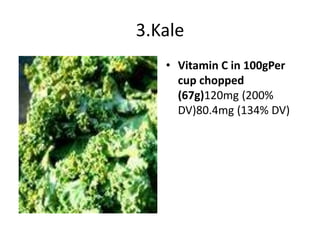
3.Kale
• Vitamin C in 100gPer
cup chopped
(67g)120mg (200%
DV)80.4mg (134% DV)
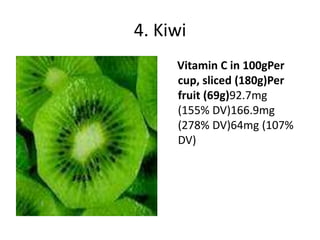
4. Kiwi
Vitamin C in 100gPer
cup, sliced (180g)Per
fruit (69g)92.7mg
(155% DV)166.9mg
(278% DV)64mg (107%
DV)
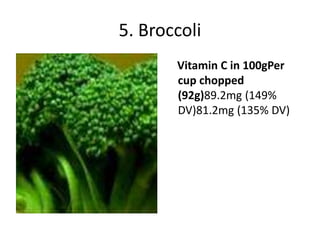
5. Broccoli
Vitamin C in 100gPer
cup chopped
(92g)89.2mg (149%
DV)81.2mg (135% DV)
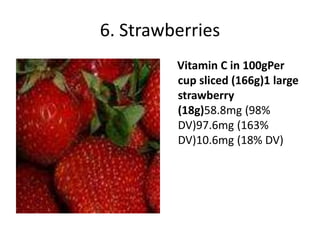
6. Strawberries
Vitamin C in 100gPer
cup sliced (166g)1 large
strawberry
(18g)58.8mg (98%
DV)97.6mg (163%
DV)10.6mg (18% DV)
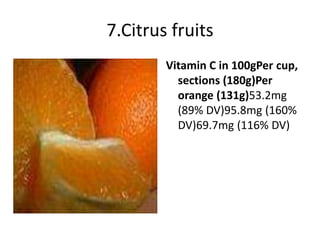
7.Citrus fruits
Vitamin C in 100gPer cup,
sections (180g)Per
orange (131g)53.2mg
(89% DV)95.8mg (160%
DV)69.7mg (116% DV)
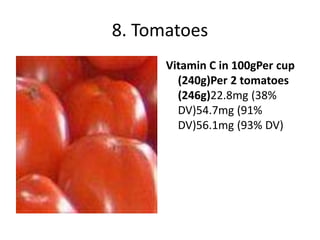
8. Tomatoes
Vitamin C in 100gPer cup
(240g)Per 2 tomatoes
(246g)22.8mg (38%
DV)54.7mg (91%
DV)56.1mg (93% DV)
9. Peas
Vitamin C in 100gPer cup
(63g)Per 10 pods
(34g)60mg (100%
DV)37.8mg (63%
DV)20.4mg (34% DV)
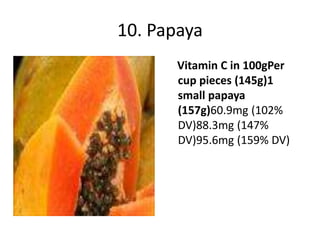
10. Papaya
Vitamin C in 100gPer
cup pieces (145g)1
small papaya
(157g)60.9mg (102%
DV)88.3mg (147%
DV)95.6mg (159% DV)
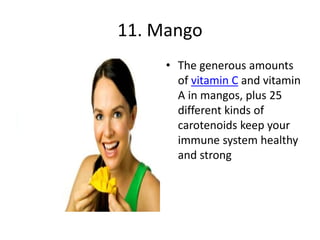
11. Mango
• The generous amounts
of vitamin C and vitamin
A in mangos, plus 25
different kinds of
carotenoids keep your
immune system healthy
and strong
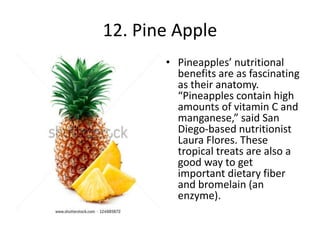
12. Pine Apple
• Pineapples’ nutritional
benefits are as fascinating
as their anatomy.
“Pineapples contain high
amounts of vitamin C and
manganese,” said San
Diego-based nutritionist
Laura Flores. These
tropical treats are also a
good way to get
important dietary fiber
and bromelain (an
enzyme).
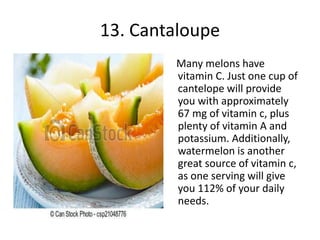
13. Cantaloupe
Many melons have
vitamin C. Just one cup of
cantelope will provide
you with approximately
67 mg of vitamin c, plus
plenty of vitamin A and
potassium. Additionally,
watermelon is another
great source of vitamin c,
as one serving will give
you 112% of your daily
needs.
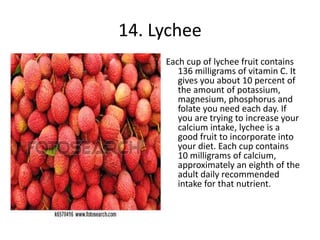
14. Lychee
Each cup of lychee fruit contains
136 milligrams of vitamin C. It
gives you about 10 percent of
the amount of potassium,
magnesium, phosphorus and
folate you need each day. If
you are trying to increase your
calcium intake, lychee is a
good fruit to incorporate into
your diet. Each cup contains
10 milligrams of calcium,
approximately an eighth of the
adult daily recommended
intake for that nutrient.
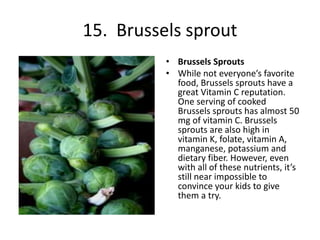
15. Brussels sprout
• Brussels Sprouts
• While not everyone’s favorite
food, Brussels sprouts have a
great Vitamin C reputation.
One serving of cooked
Brussels sprouts has almost 50
mg of vitamin C. Brussels
sprouts are also high in
vitamin K, folate, vitamin A,
manganese, potassium and
dietary fiber. However, even
with all of these nutrients, it’s
still near impossible to
convince your kids to give
them a try.
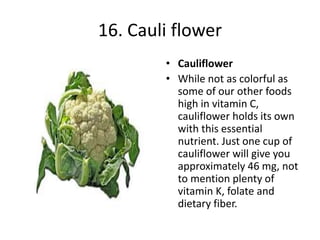
16. Cauli flower
• Cauliflower
• While not as colorful as
some of our other foods
high in vitamin C,
cauliflower holds its own
with this essential
nutrient. Just one cup of
cauliflower will give you
approximately 46 mg, not
to mention plenty of
vitamin K, folate and
dietary fiber.
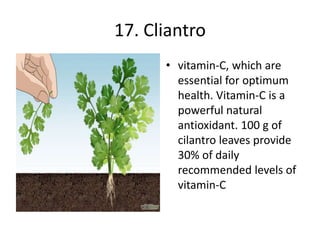
17. Cliantro
• vitamin-C, which are
essential for optimum
health. Vitamin-C is a
powerful natural
antioxidant. 100 g of
cilantro leaves provide
30% of daily
recommended levels of
vitamin-C
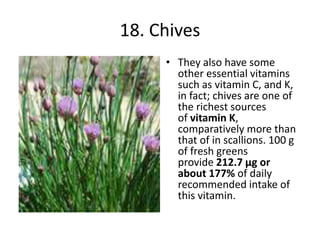
18. Chives
• They also have some
other essential vitamins
such as vitamin C, and K,
in fact; chives are one of
the richest sources
of vitamin K,
comparatively more than
that of in scallions. 100 g
of fresh greens
provide 212.7 µg or
about 177% of daily
recommended intake of
this vitamin.
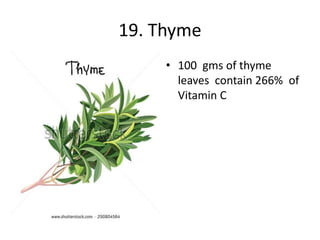
19. Thyme
• 100 gms of thyme
leaves contain 266% of
Vitamin C
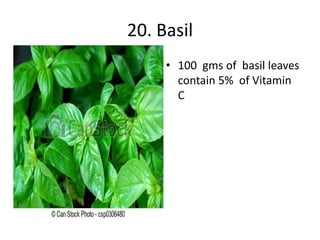
20. Basil
• 100 gms of basil leaves
contain 5% of Vitamin
C
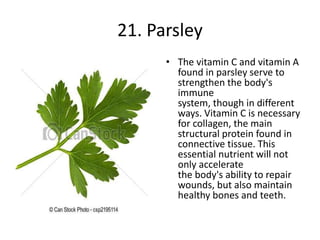
21. Parsley
• The vitamin C and vitamin A
found in parsley serve to
strengthen the body's
immune
system, though in different
ways. Vitamin C is necessary
for collagen, the main
structural protein found in
connective tissue. This
essential nutrient will not
only accelerate
the body's ability to repair
wounds, but also maintain
healthy bones and teeth.
Fruit and vegetables A Lecture by Allah Dad Khan

Fruit and vegetables A Lecture by Allah Dad Khan

  • 2.
    FRUIT AND VEGETABLES HIGHESTIN VITAMINC A COMPILED REPORT By Allah Dad Khan
  • 26.
    1.Peppers • Peppers (YellowBell Peppers) Vitamin C in 100gPer 10 strips (52g)Per large pepper (186g)183.5mg (306% DV)95.4mg (159% DV)341.3mg (569% DV)Other Peppers High in Vitamin C (%DV per large pepper)
  • 27.
    2. Guava • VitaminC in 100gPer cup (165g)Per fruit (55g)228.3mg (381% DV)376.7mg (628% DV)125.6mg (209% DV)
  • 28.
    3.Kale • Vitamin Cin 100gPer cup chopped (67g)120mg (200% DV)80.4mg (134% DV)
  • 29.
    4. Kiwi Vitamin Cin 100gPer cup, sliced (180g)Per fruit (69g)92.7mg (155% DV)166.9mg (278% DV)64mg (107% DV)
  • 30.
    5. Broccoli Vitamin Cin 100gPer cup chopped (92g)89.2mg (149% DV)81.2mg (135% DV)
  • 31.
    6. Strawberries Vitamin Cin 100gPer cup sliced (166g)1 large strawberry (18g)58.8mg (98% DV)97.6mg (163% DV)10.6mg (18% DV)
  • 32.
    7.Citrus fruits Vitamin Cin 100gPer cup, sections (180g)Per orange (131g)53.2mg (89% DV)95.8mg (160% DV)69.7mg (116% DV)
  • 33.
    8. Tomatoes Vitamin Cin 100gPer cup (240g)Per 2 tomatoes (246g)22.8mg (38% DV)54.7mg (91% DV)56.1mg (93% DV)
  • 34.
    9. Peas Vitamin Cin 100gPer cup (63g)Per 10 pods (34g)60mg (100% DV)37.8mg (63% DV)20.4mg (34% DV)
  • 35.
    10. Papaya Vitamin Cin 100gPer cup pieces (145g)1 small papaya (157g)60.9mg (102% DV)88.3mg (147% DV)95.6mg (159% DV)
  • 36.
    11. Mango • Thegenerous amounts of vitamin C and vitamin A in mangos, plus 25 different kinds of carotenoids keep your immune system healthy and strong
  • 37.
    12. Pine Apple •Pineapples’ nutritional benefits are as fascinating as their anatomy. “Pineapples contain high amounts of vitamin C and manganese,” said San Diego-based nutritionist Laura Flores. These tropical treats are also a good way to get important dietary fiber and bromelain (an enzyme).
  • 38.
    13. Cantaloupe Many melonshave vitamin C. Just one cup of cantelope will provide you with approximately 67 mg of vitamin c, plus plenty of vitamin A and potassium. Additionally, watermelon is another great source of vitamin c, as one serving will give you 112% of your daily needs.
  • 39.
    14. Lychee Each cupof lychee fruit contains 136 milligrams of vitamin C. It gives you about 10 percent of the amount of potassium, magnesium, phosphorus and folate you need each day. If you are trying to increase your calcium intake, lychee is a good fruit to incorporate into your diet. Each cup contains 10 milligrams of calcium, approximately an eighth of the adult daily recommended intake for that nutrient.
  • 40.
    15. Brussels sprout •Brussels Sprouts • While not everyone’s favorite food, Brussels sprouts have a great Vitamin C reputation. One serving of cooked Brussels sprouts has almost 50 mg of vitamin C. Brussels sprouts are also high in vitamin K, folate, vitamin A, manganese, potassium and dietary fiber. However, even with all of these nutrients, it’s still near impossible to convince your kids to give them a try.
  • 41.
    16. Cauli flower •Cauliflower • While not as colorful as some of our other foods high in vitamin C, cauliflower holds its own with this essential nutrient. Just one cup of cauliflower will give you approximately 46 mg, not to mention plenty of vitamin K, folate and dietary fiber.
  • 42.
    17. Cliantro • vitamin-C,which are essential for optimum health. Vitamin-C is a powerful natural antioxidant. 100 g of cilantro leaves provide 30% of daily recommended levels of vitamin-C
  • 43.
    18. Chives • Theyalso have some other essential vitamins such as vitamin C, and K, in fact; chives are one of the richest sources of vitamin K, comparatively more than that of in scallions. 100 g of fresh greens provide 212.7 µg or about 177% of daily recommended intake of this vitamin.
  • 44.
    19. Thyme • 100gms of thyme leaves contain 266% of Vitamin C
  • 45.
    20. Basil • 100gms of basil leaves contain 5% of Vitamin C
  • 46.
    21. Parsley • Thevitamin C and vitamin A found in parsley serve to strengthen the body's immune system, though in different ways. Vitamin C is necessary for collagen, the main structural protein found in connective tissue. This essential nutrient will not only accelerate the body's ability to repair wounds, but also maintain healthy bones and teeth.