From Scrum to flow using
actionable agile metrics
Peter Pito
A #NoEstimates approach in an agile delivery project
@theppito
When will it be done?
DDD
Date
Driven
Development
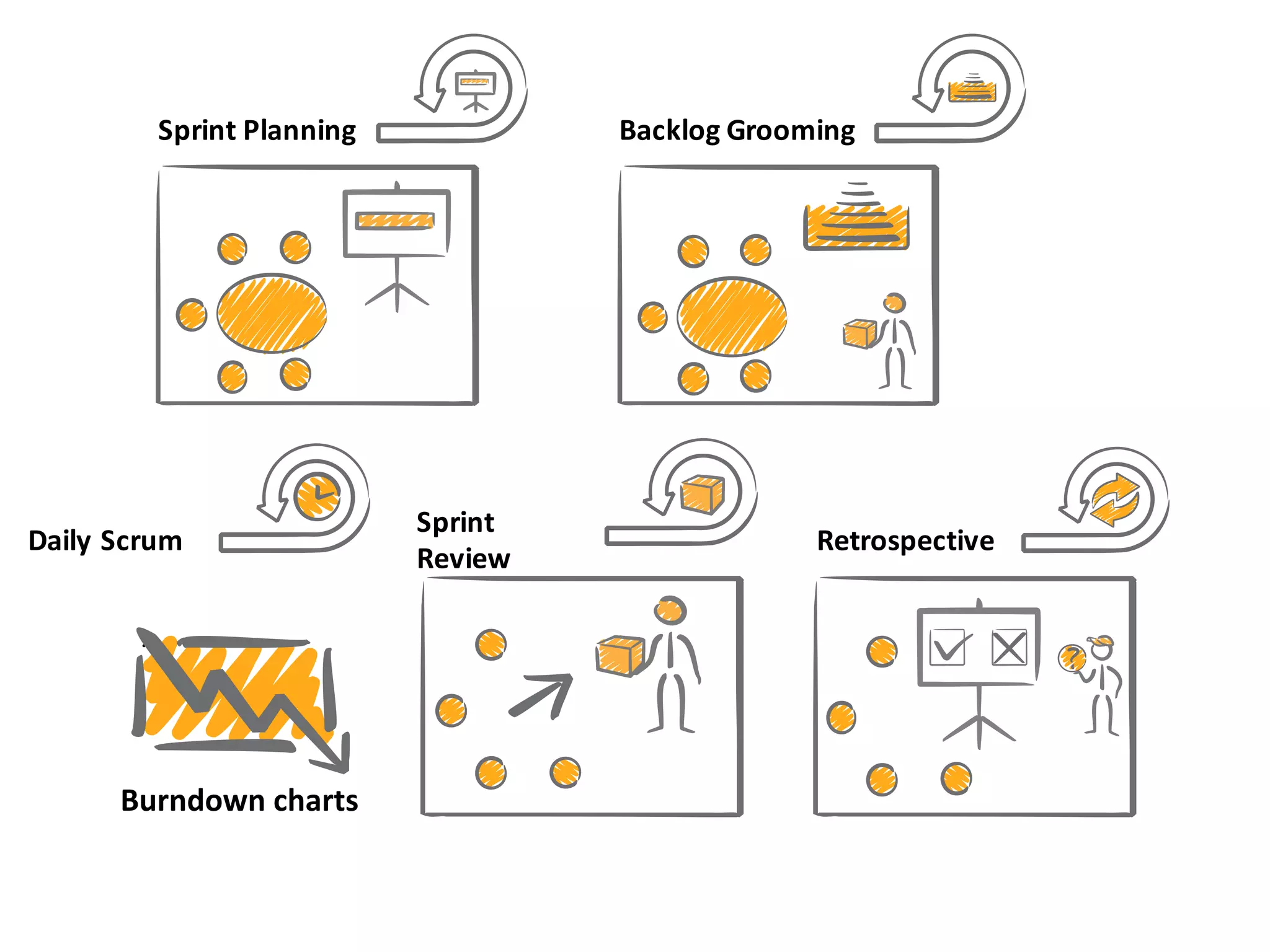
Daily&Scrum
Sprint&
Review
Retrospective
Sprint&Planning Backlog&Grooming
Burndown	
  charts
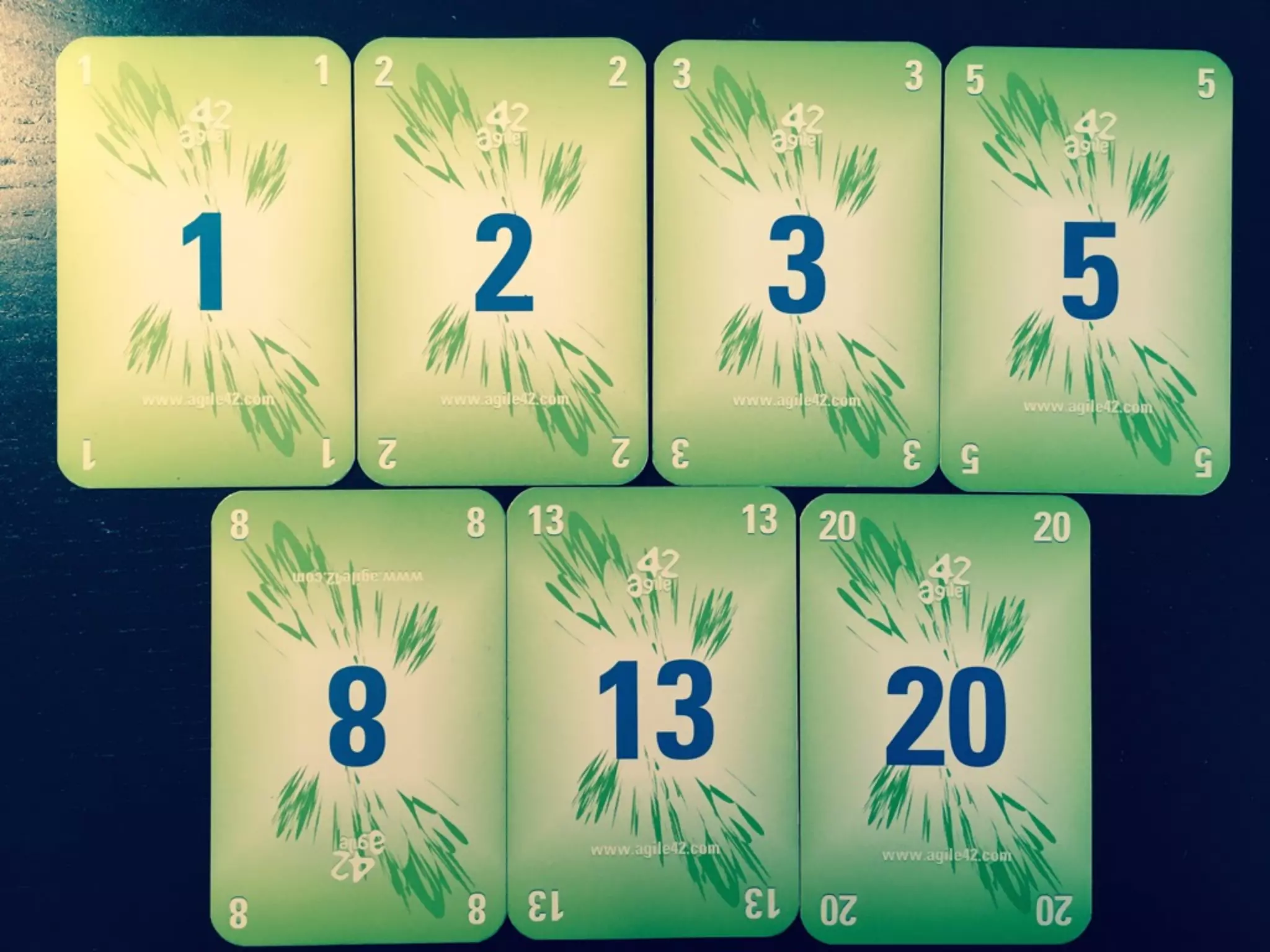
Story
Point
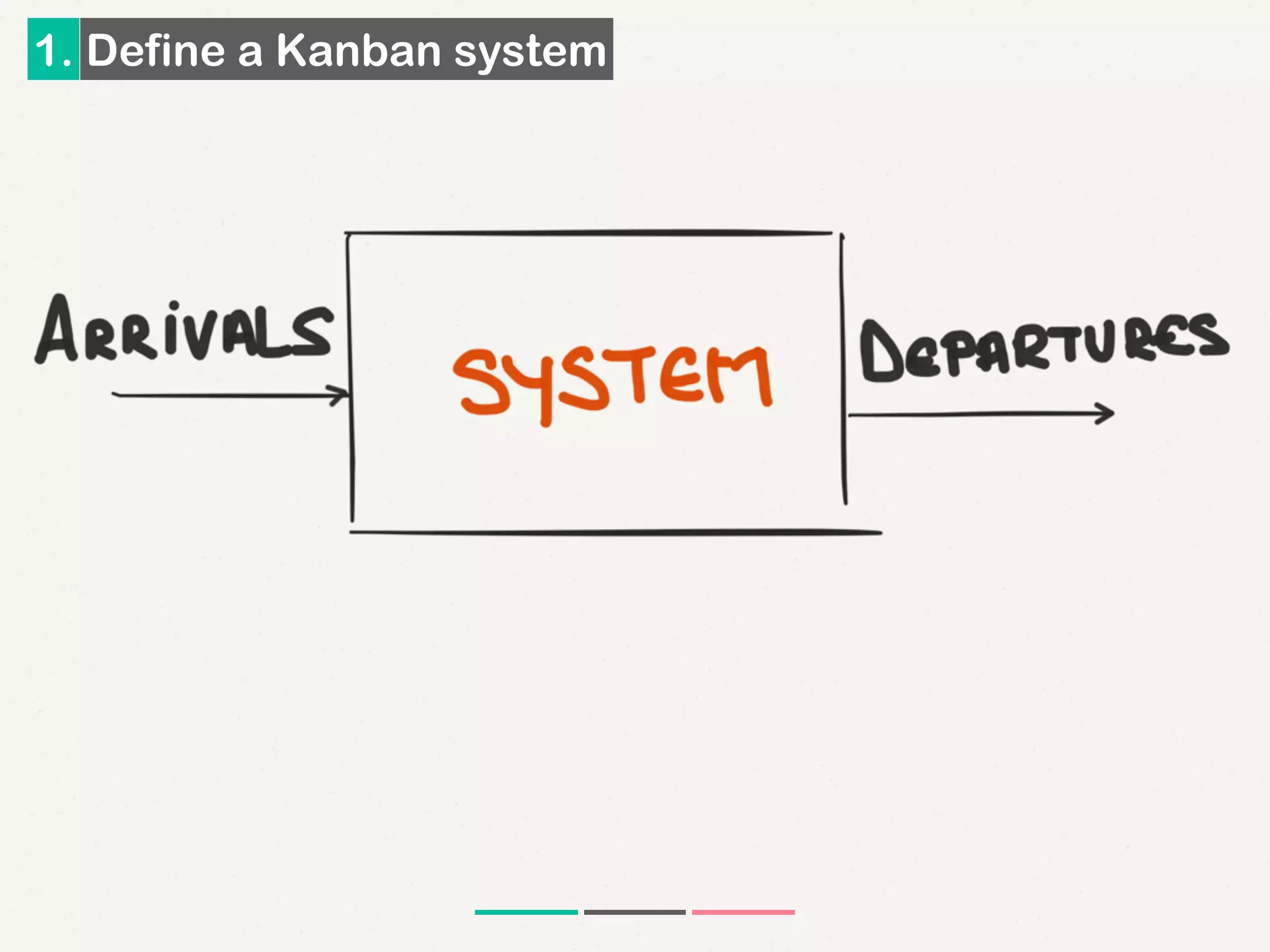
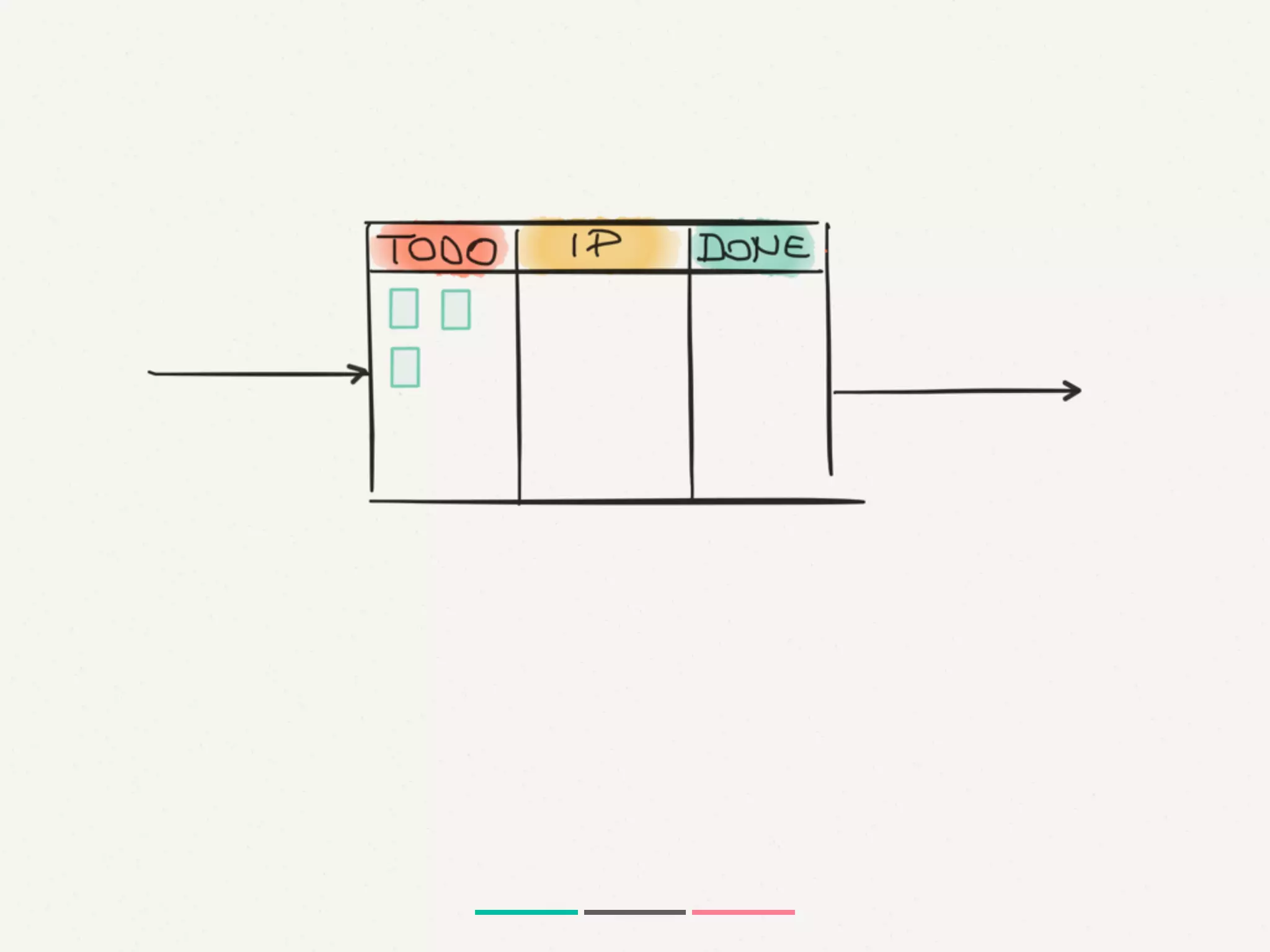
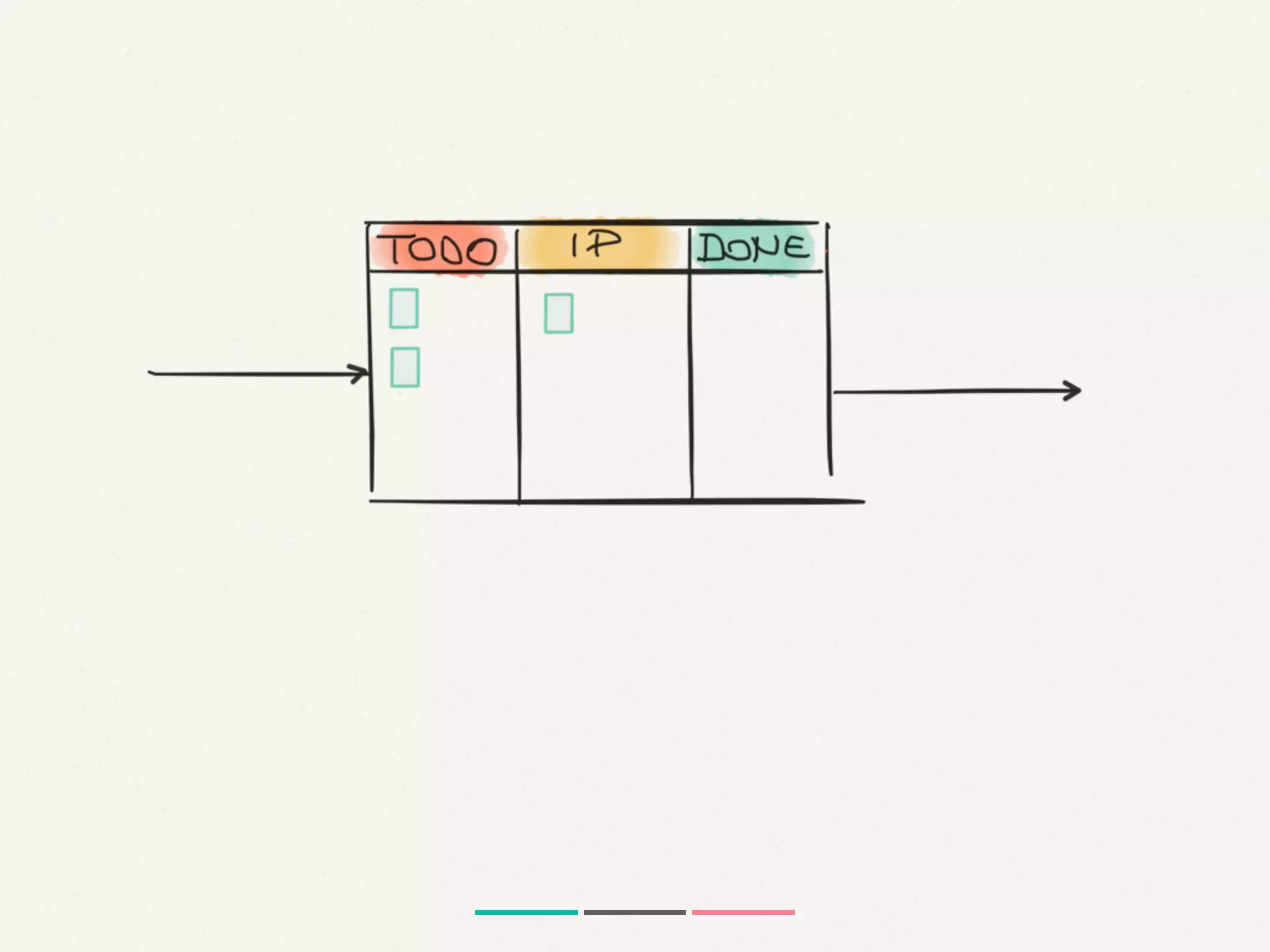
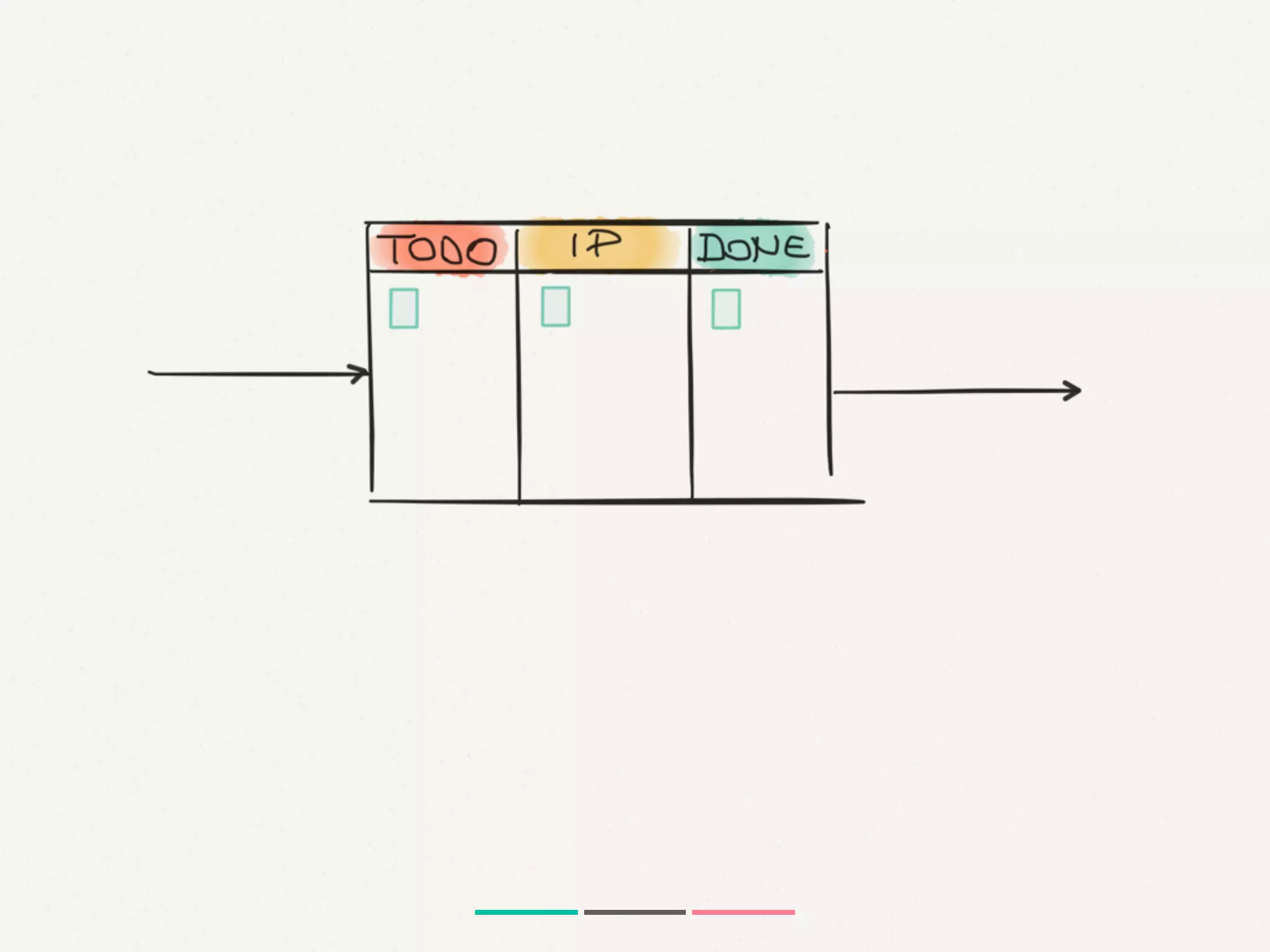
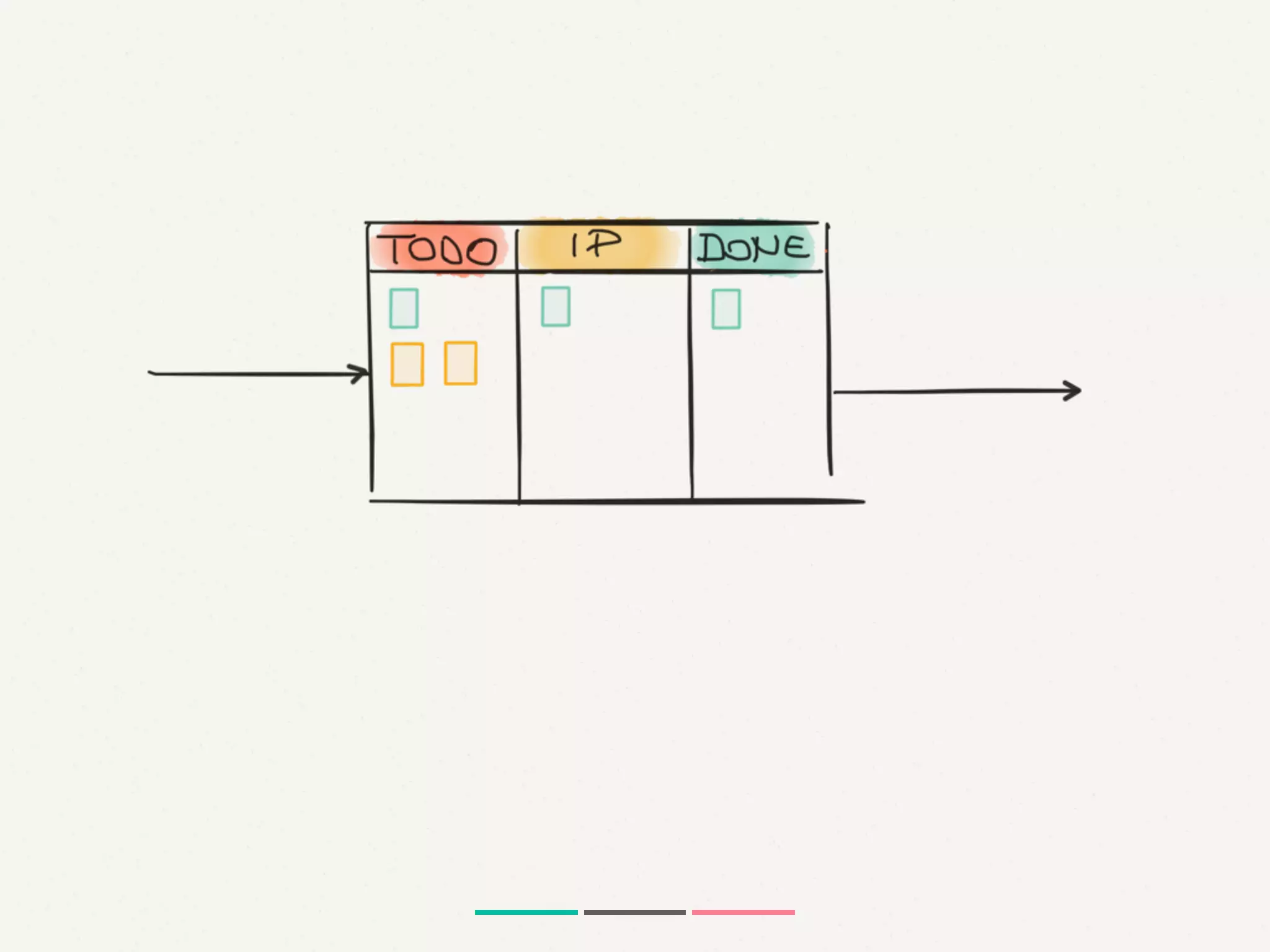
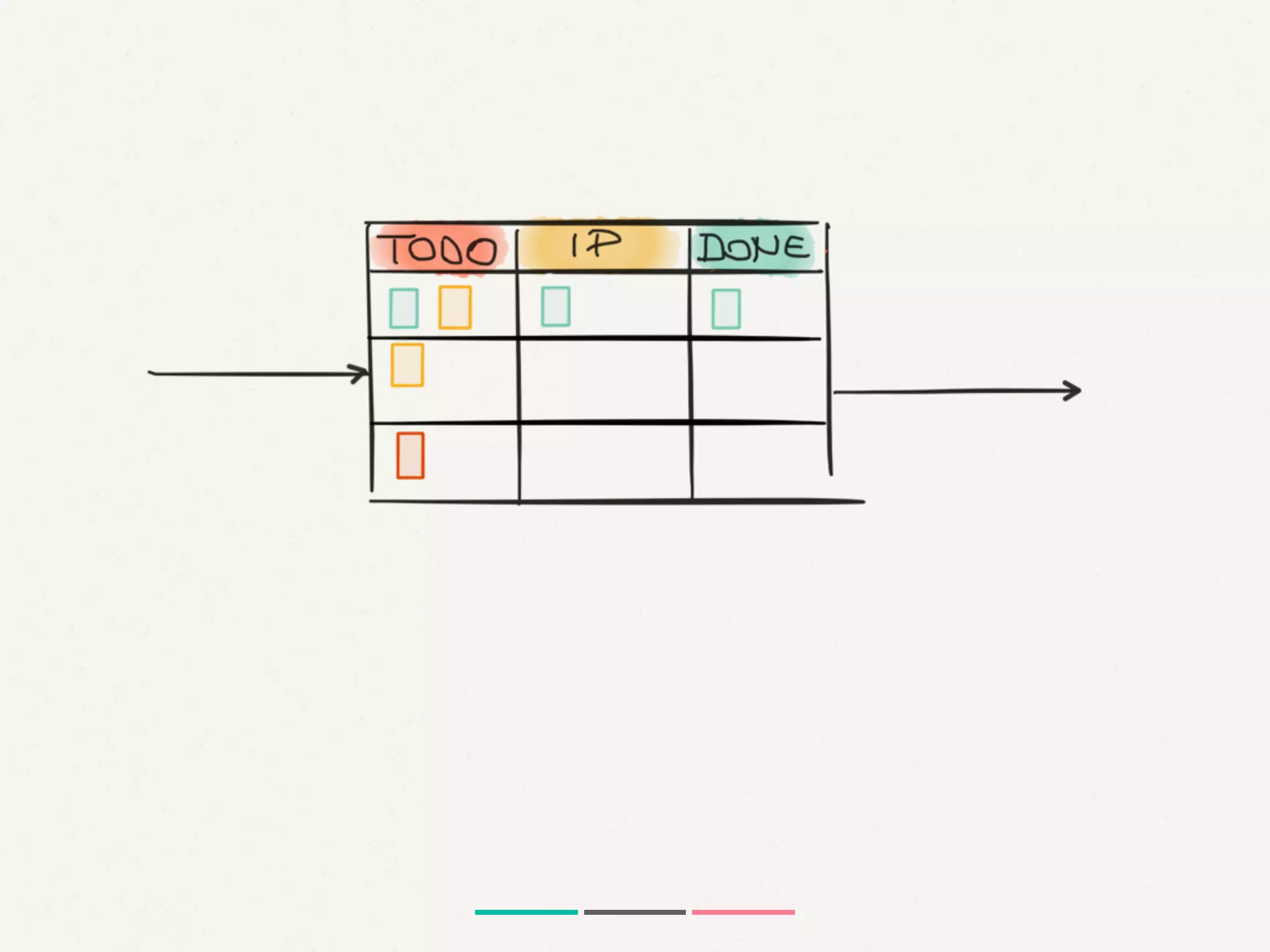
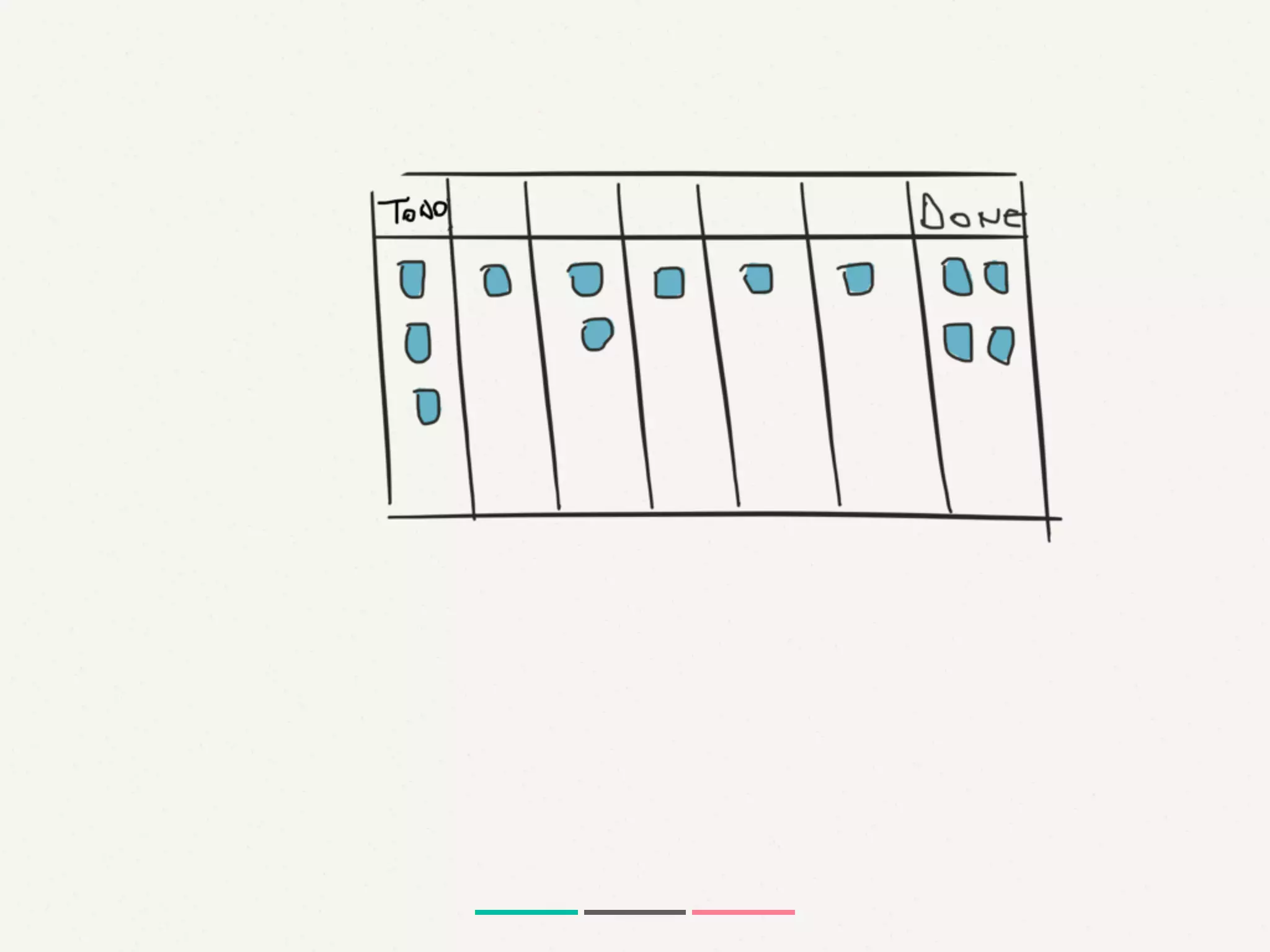
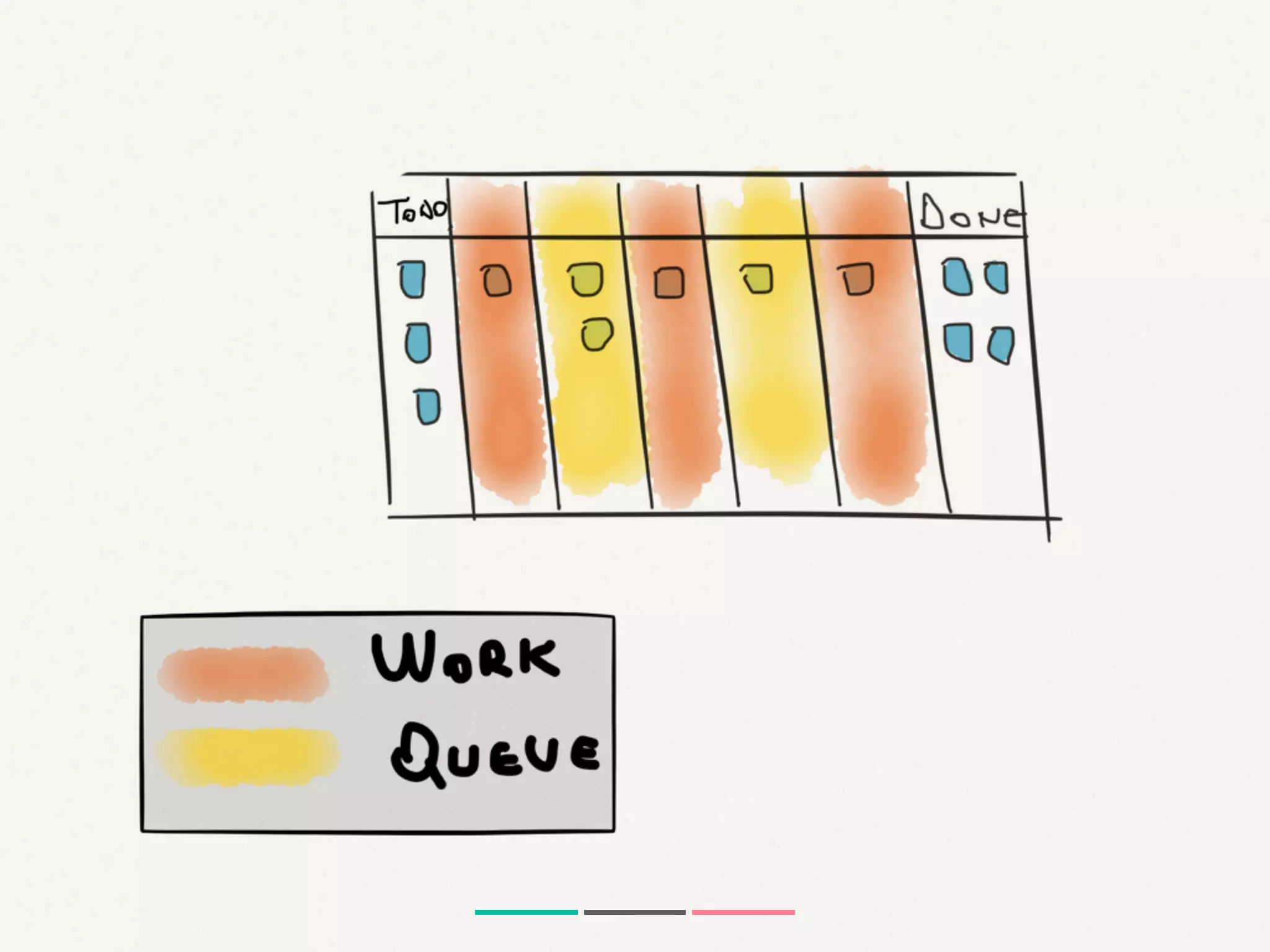
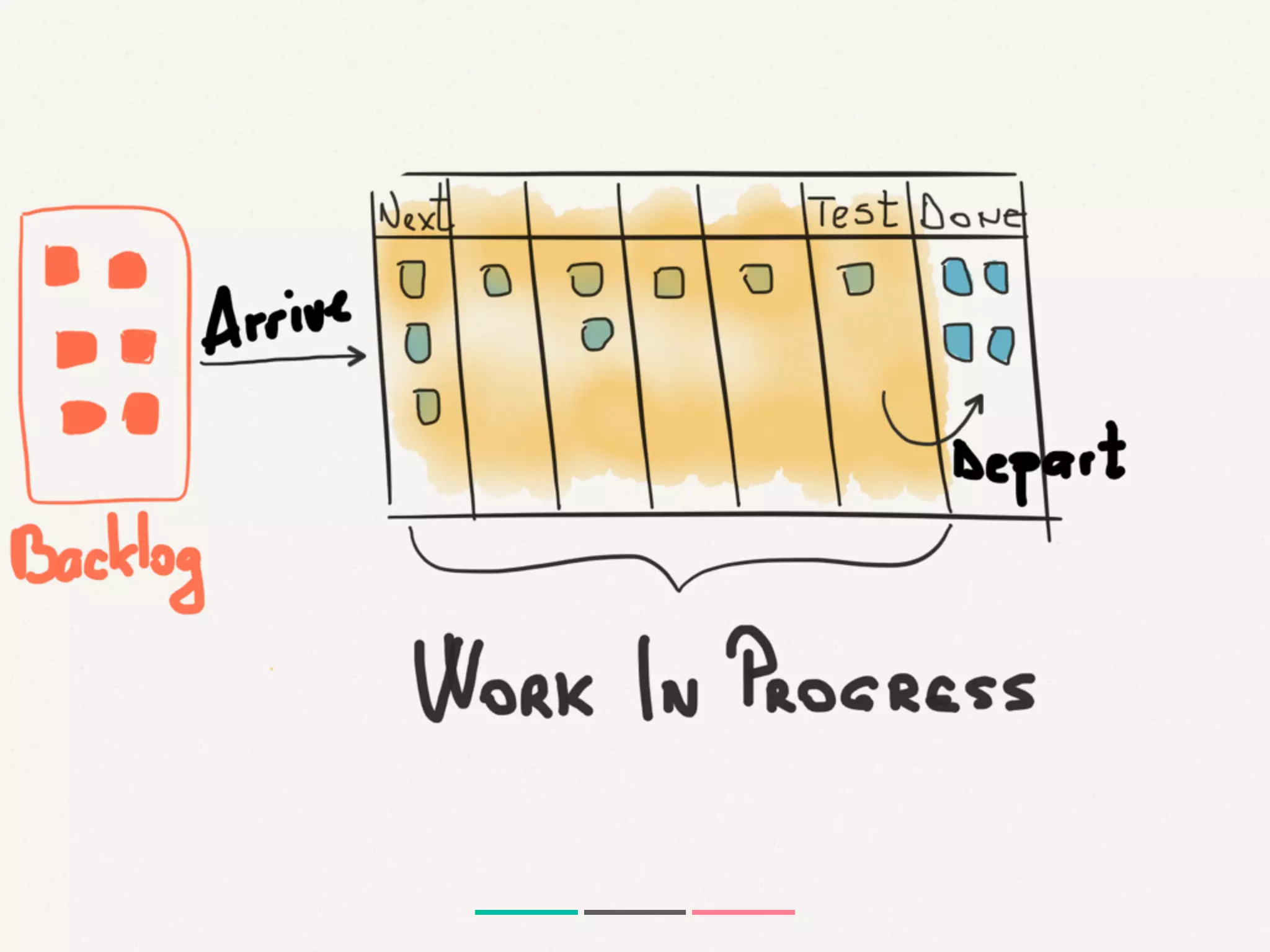
1. Define a Kanban system
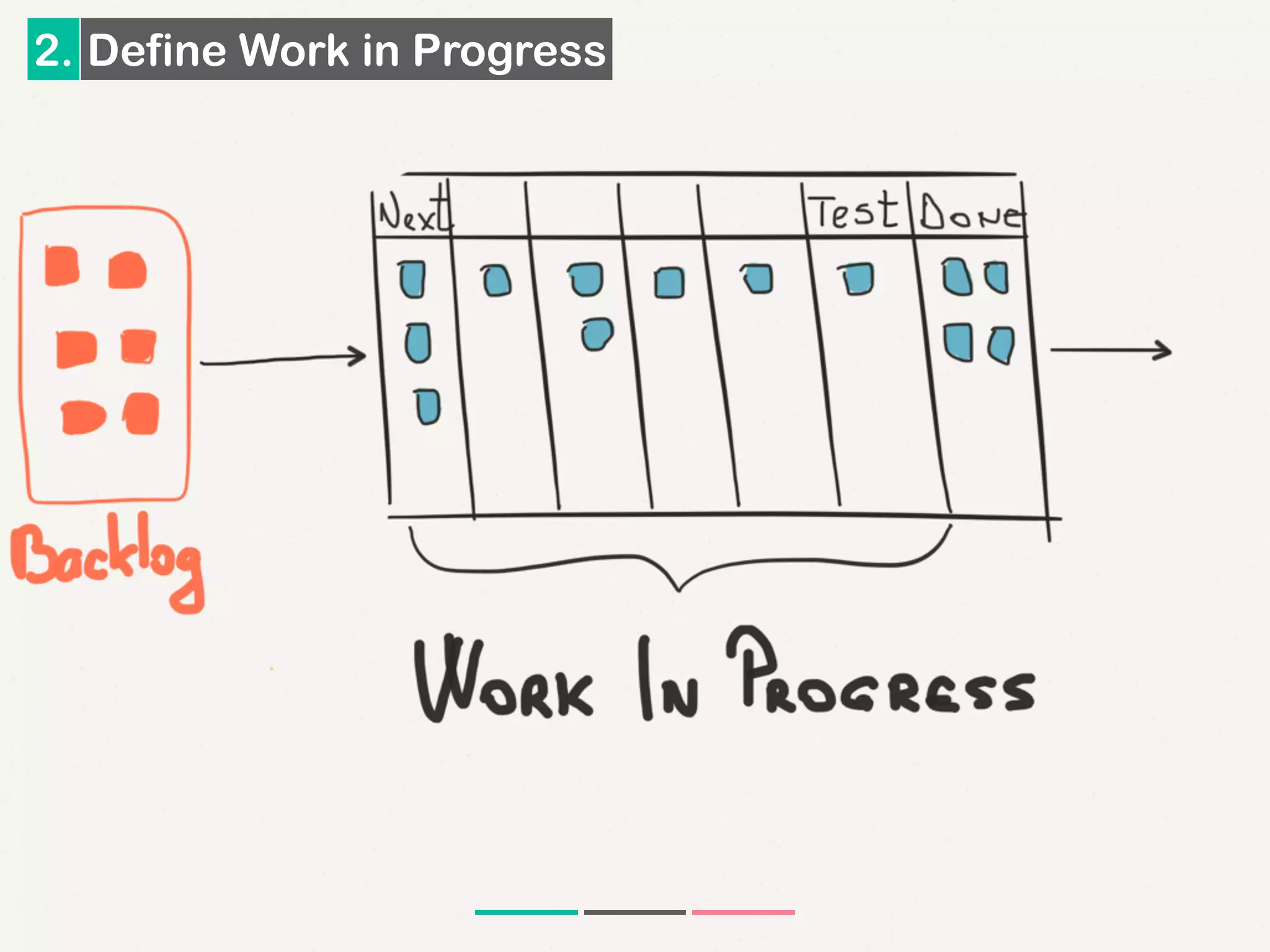
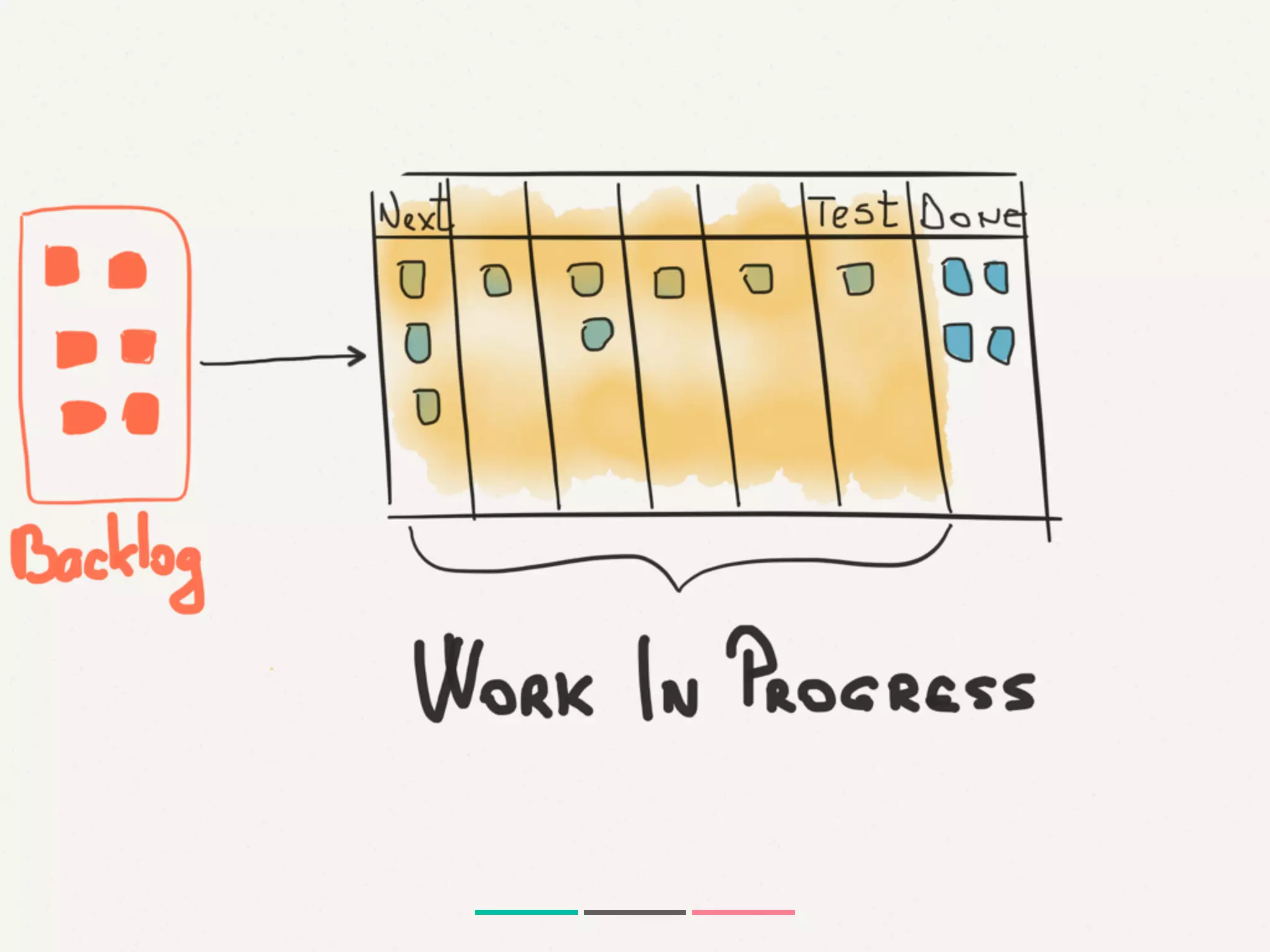
2. Define Work in Progress
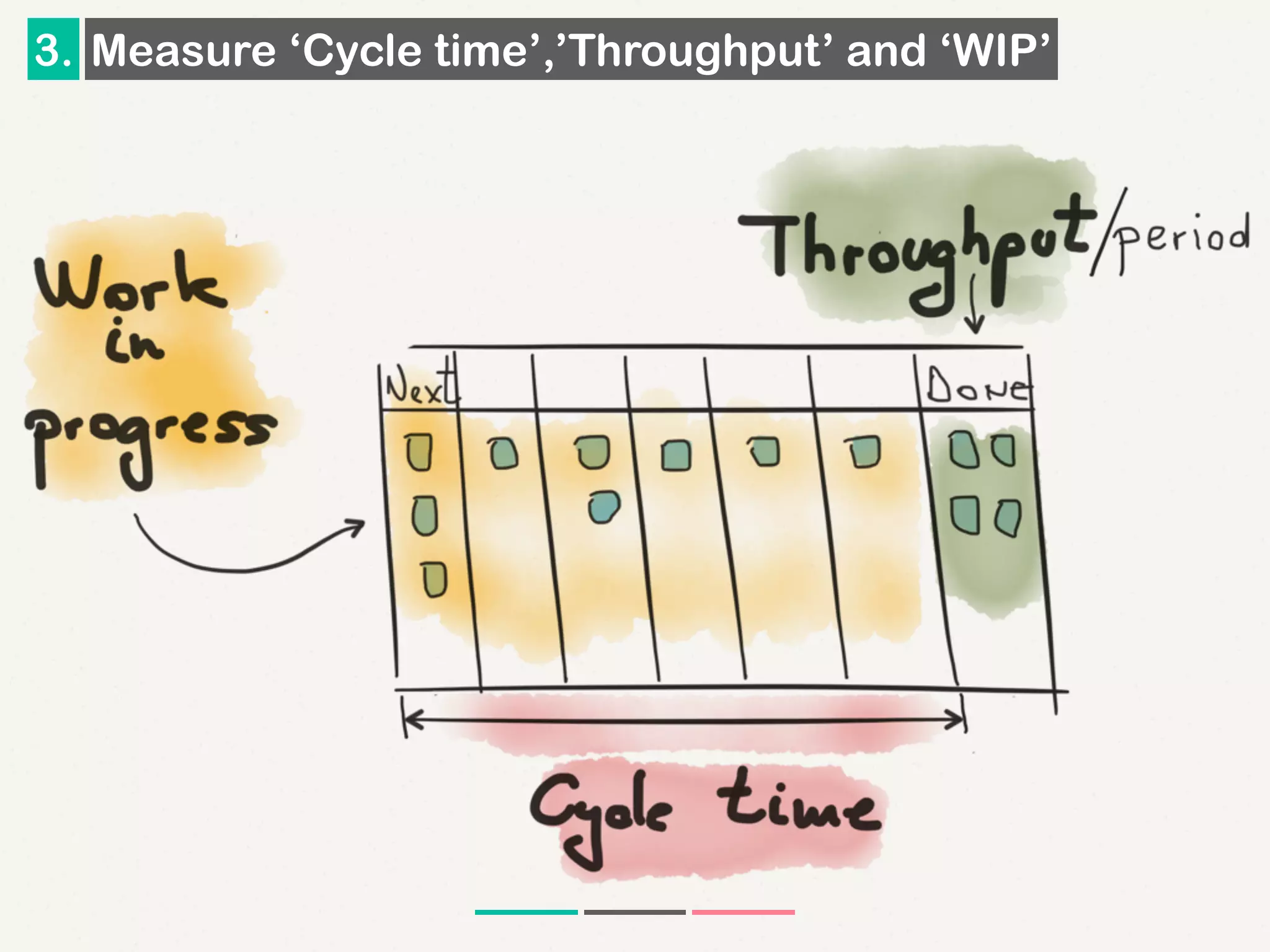
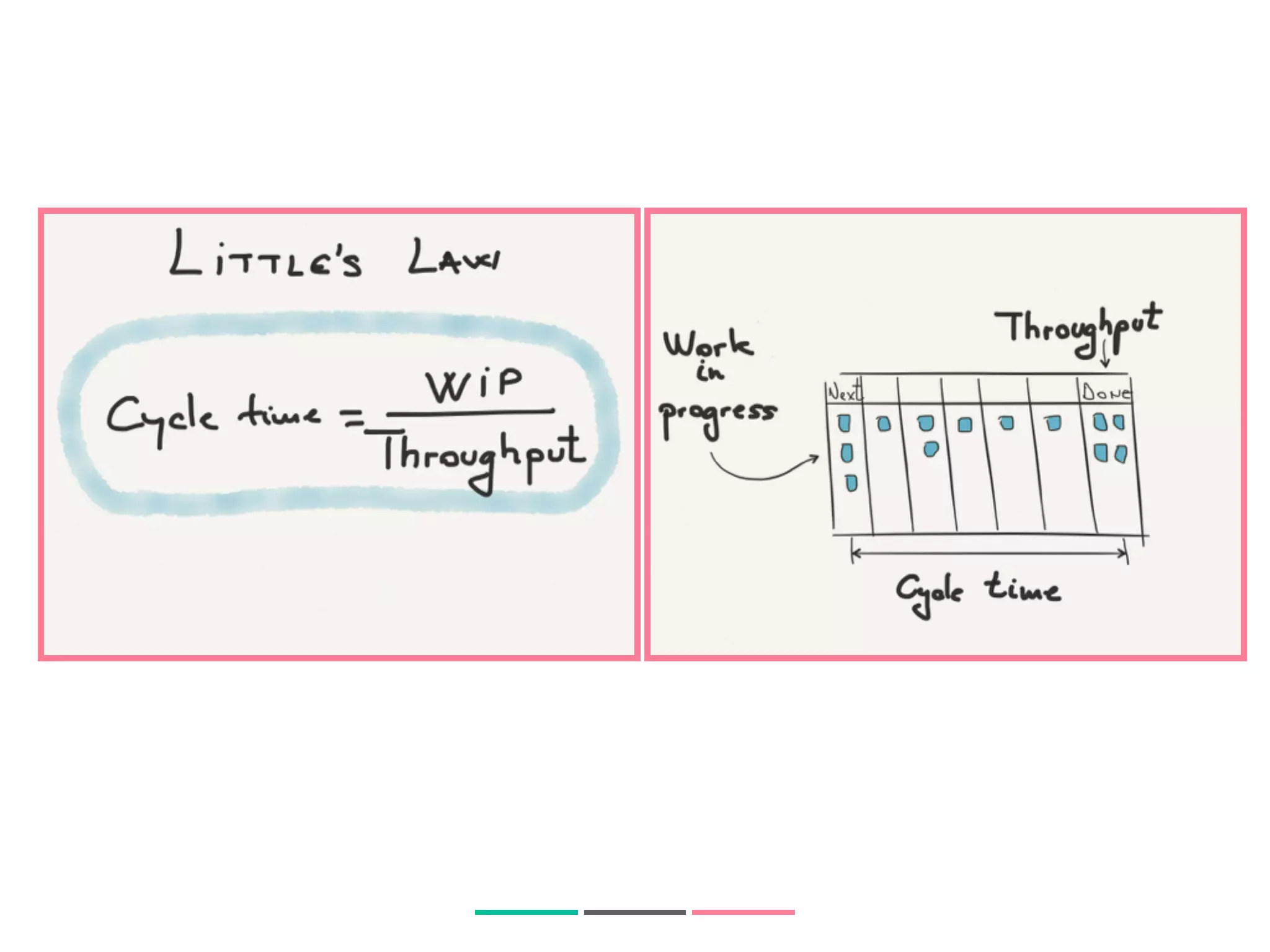
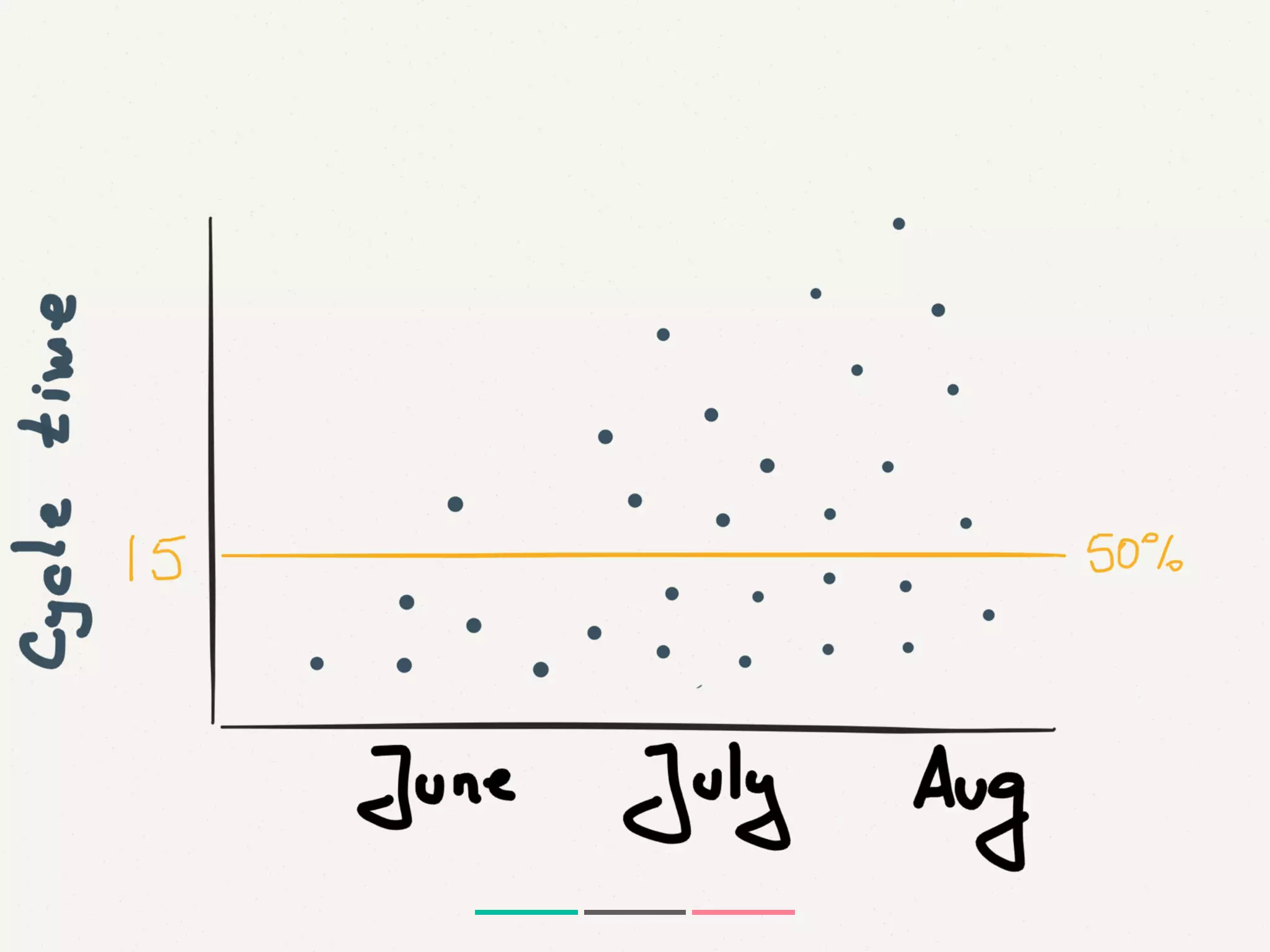
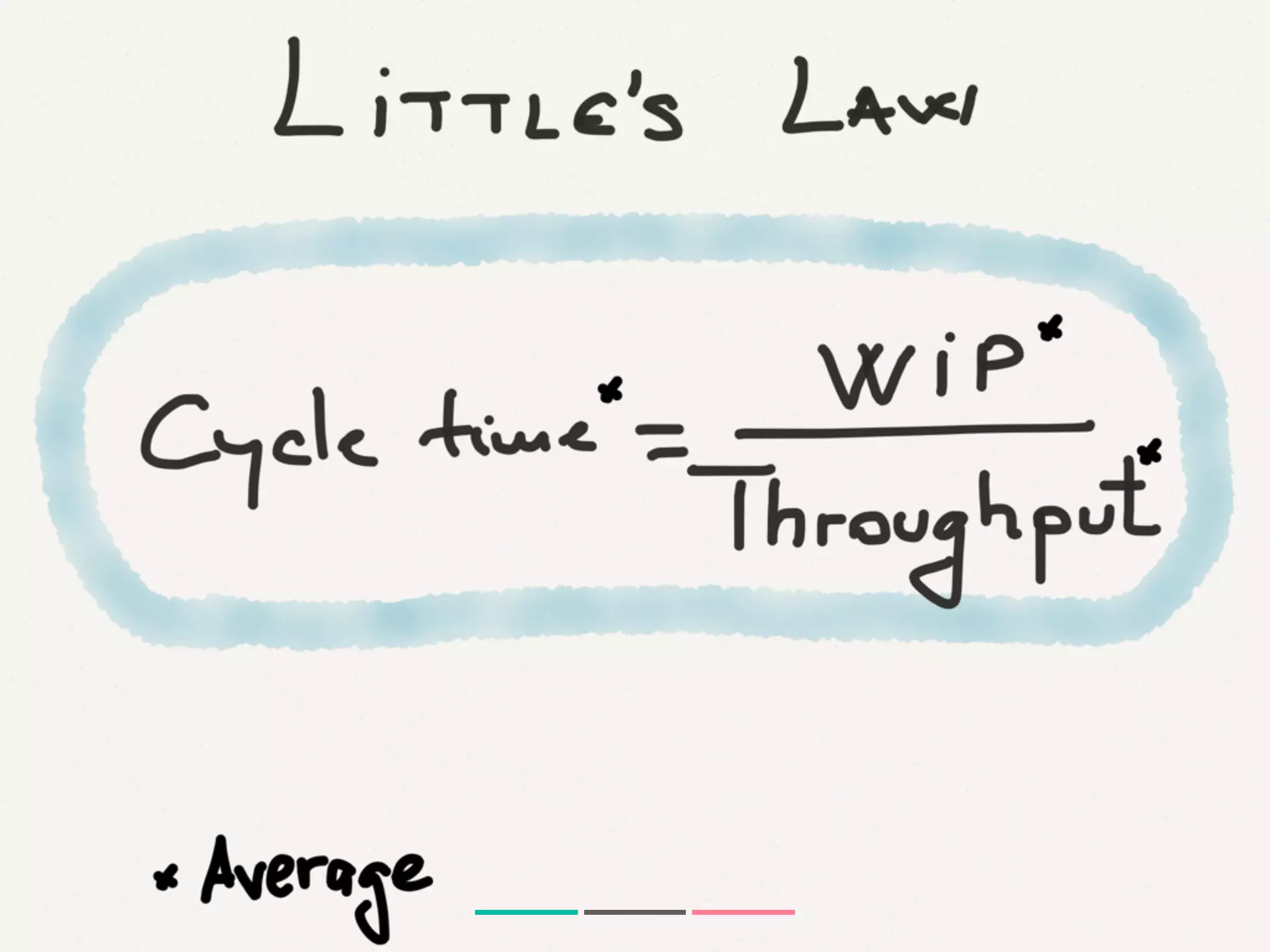
3. Measure ‘Cycle time’,’Throughput’ and ‘WIP’
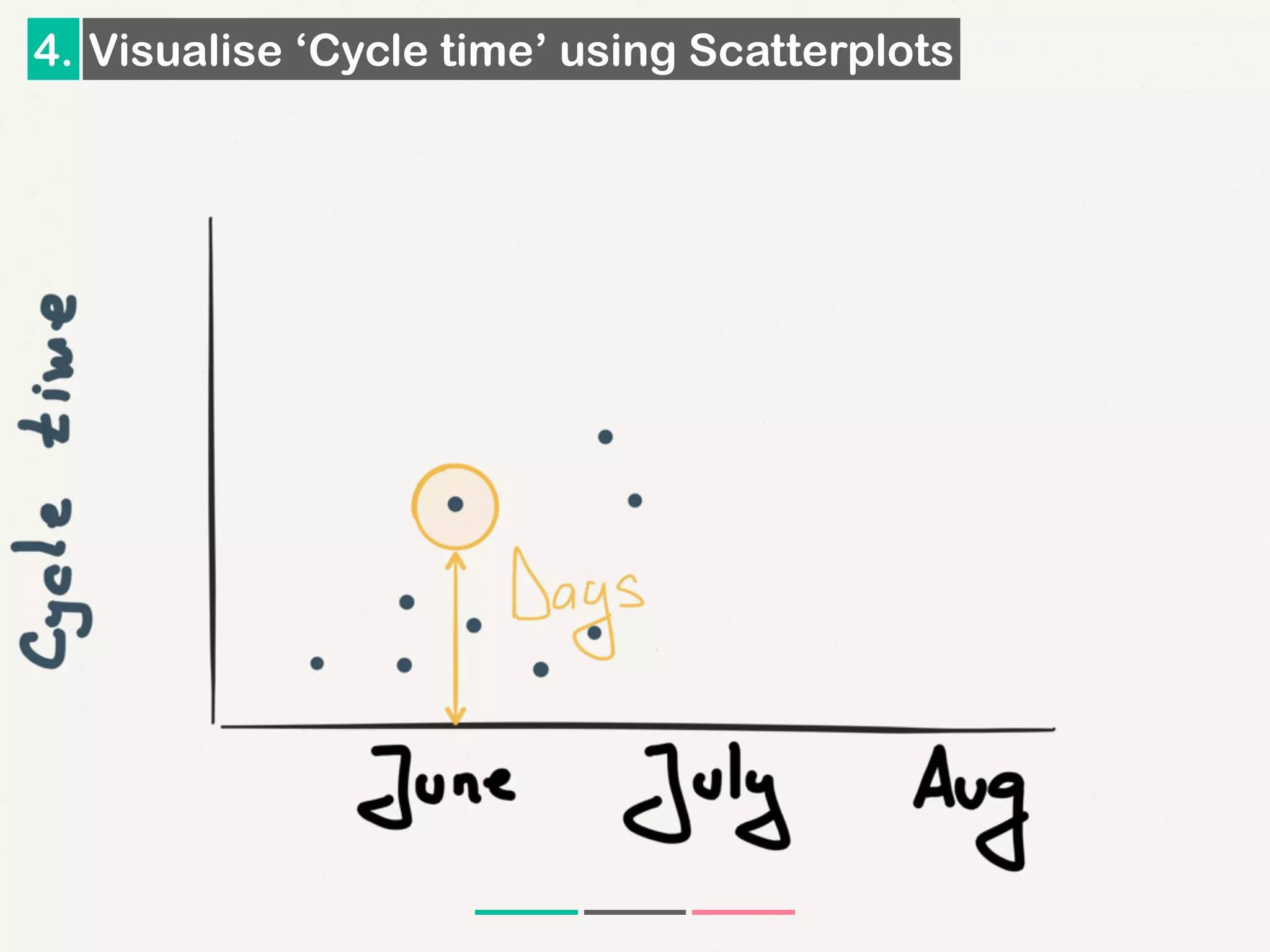
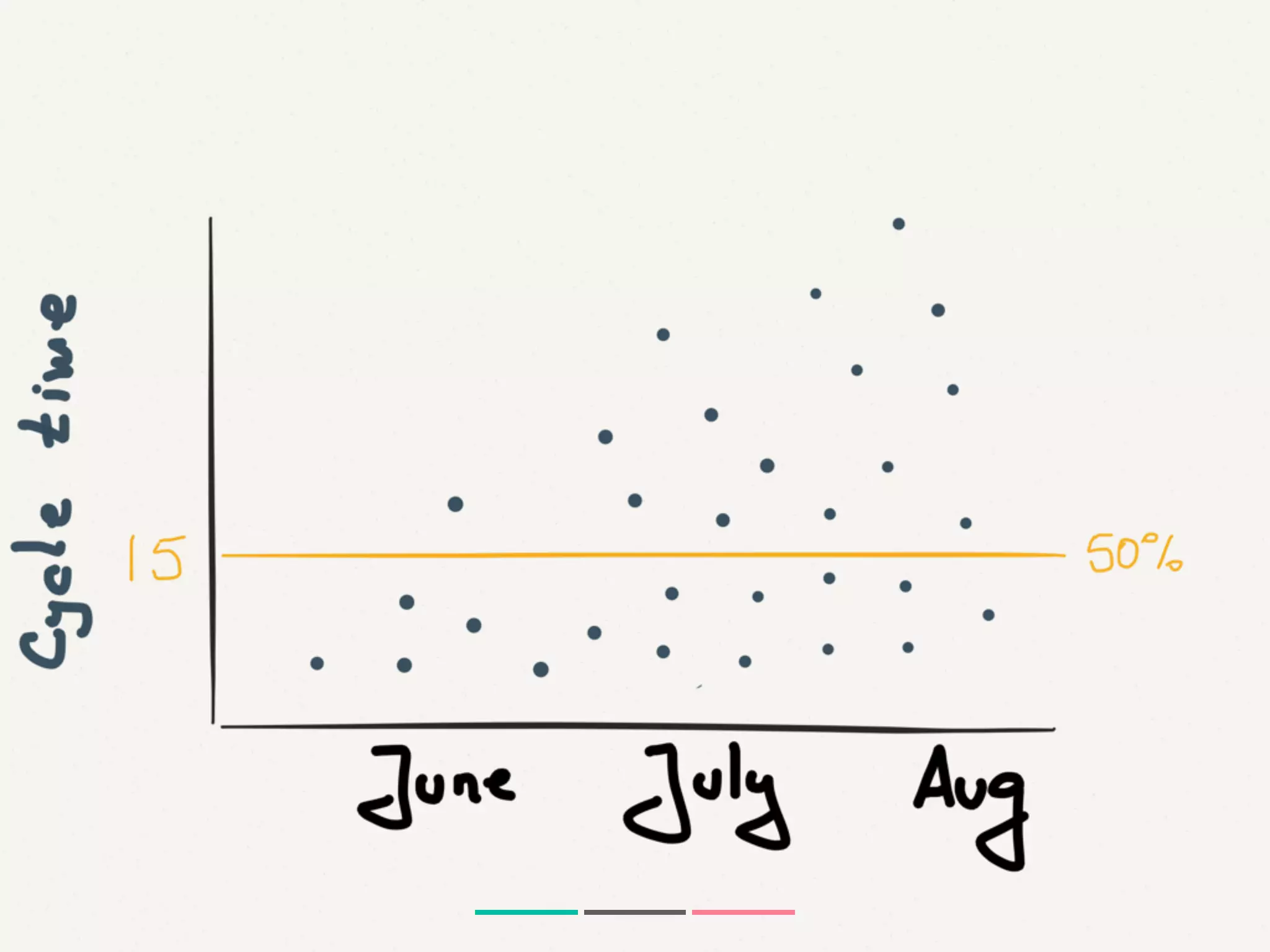
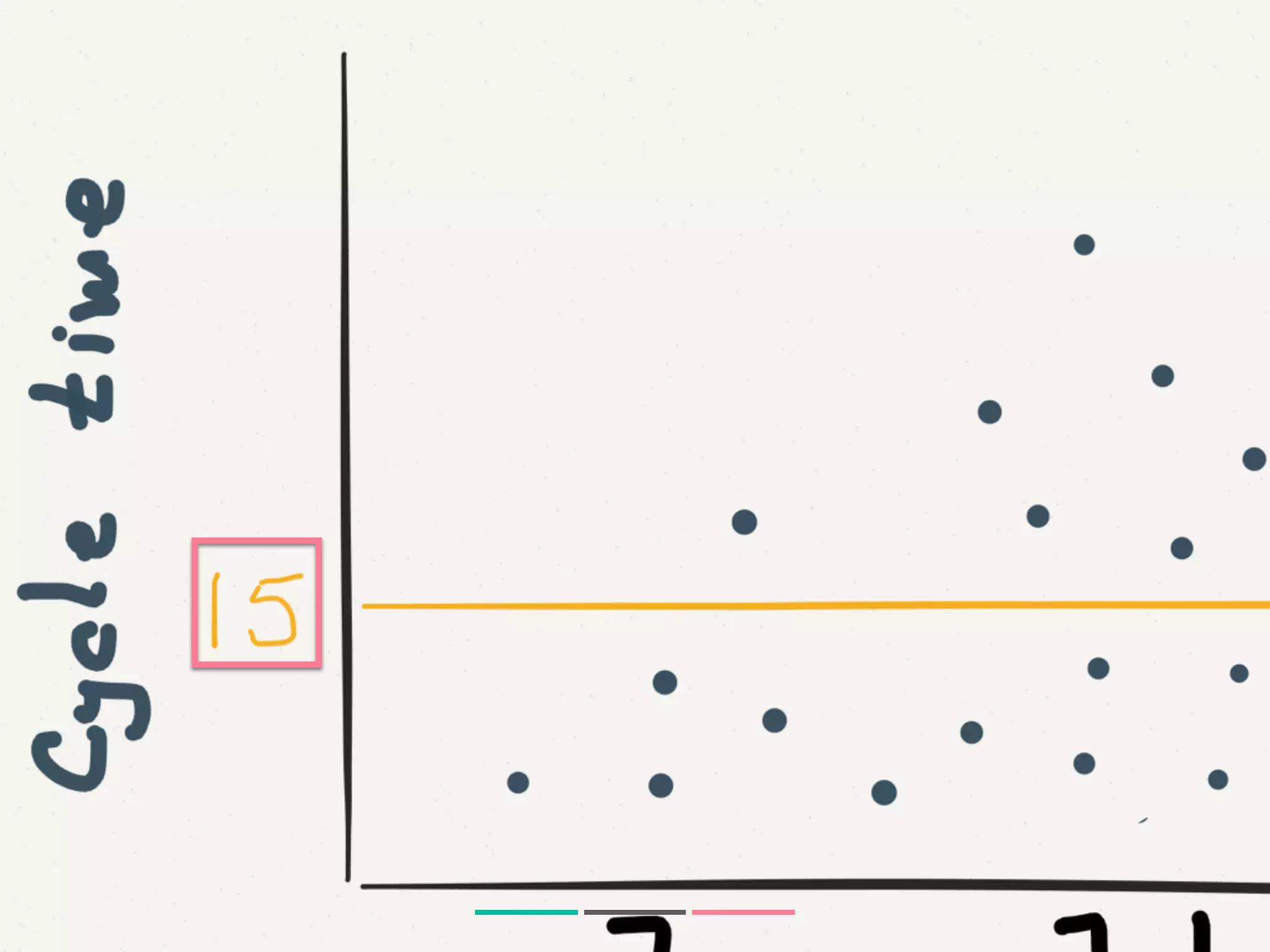
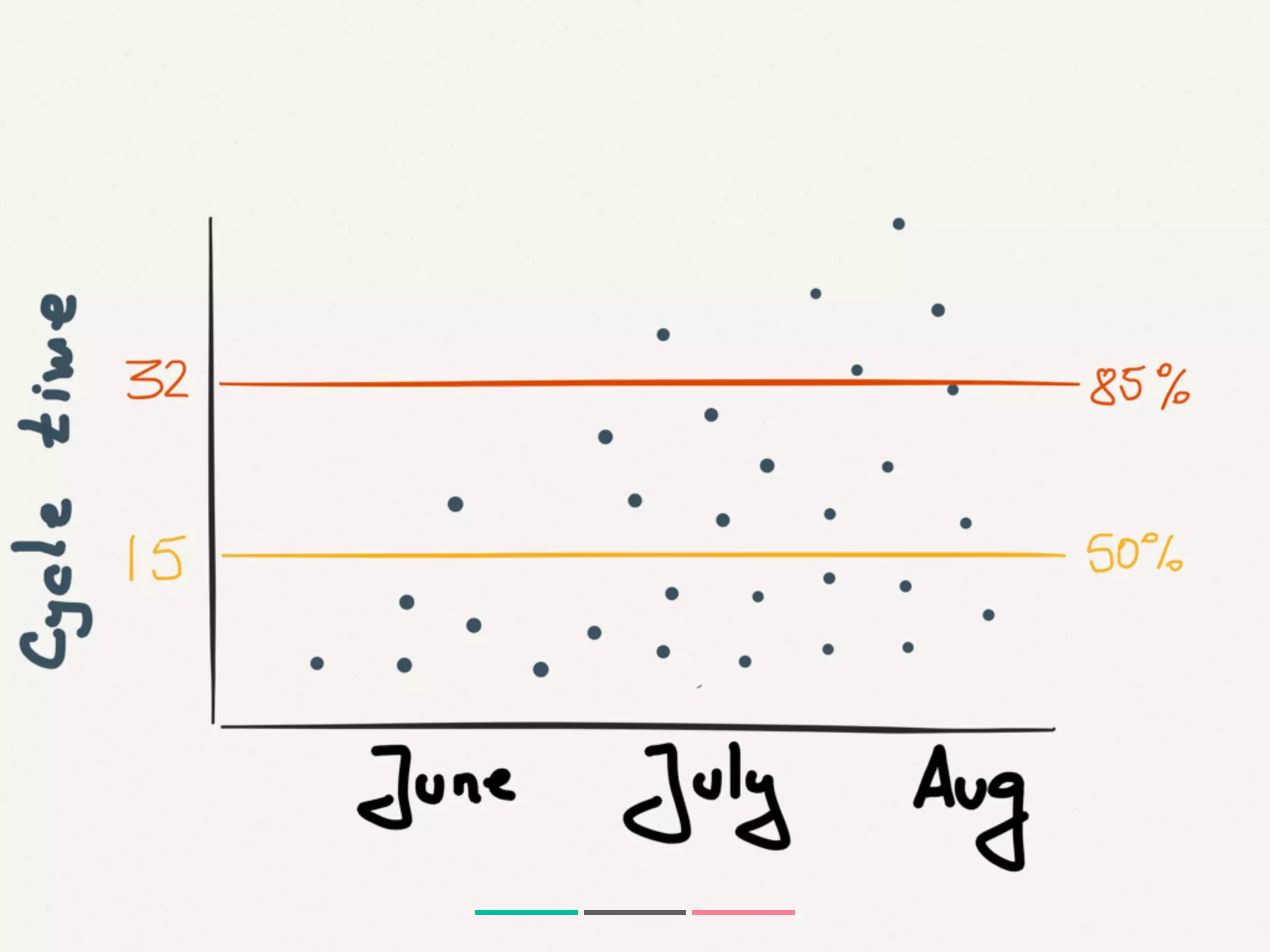
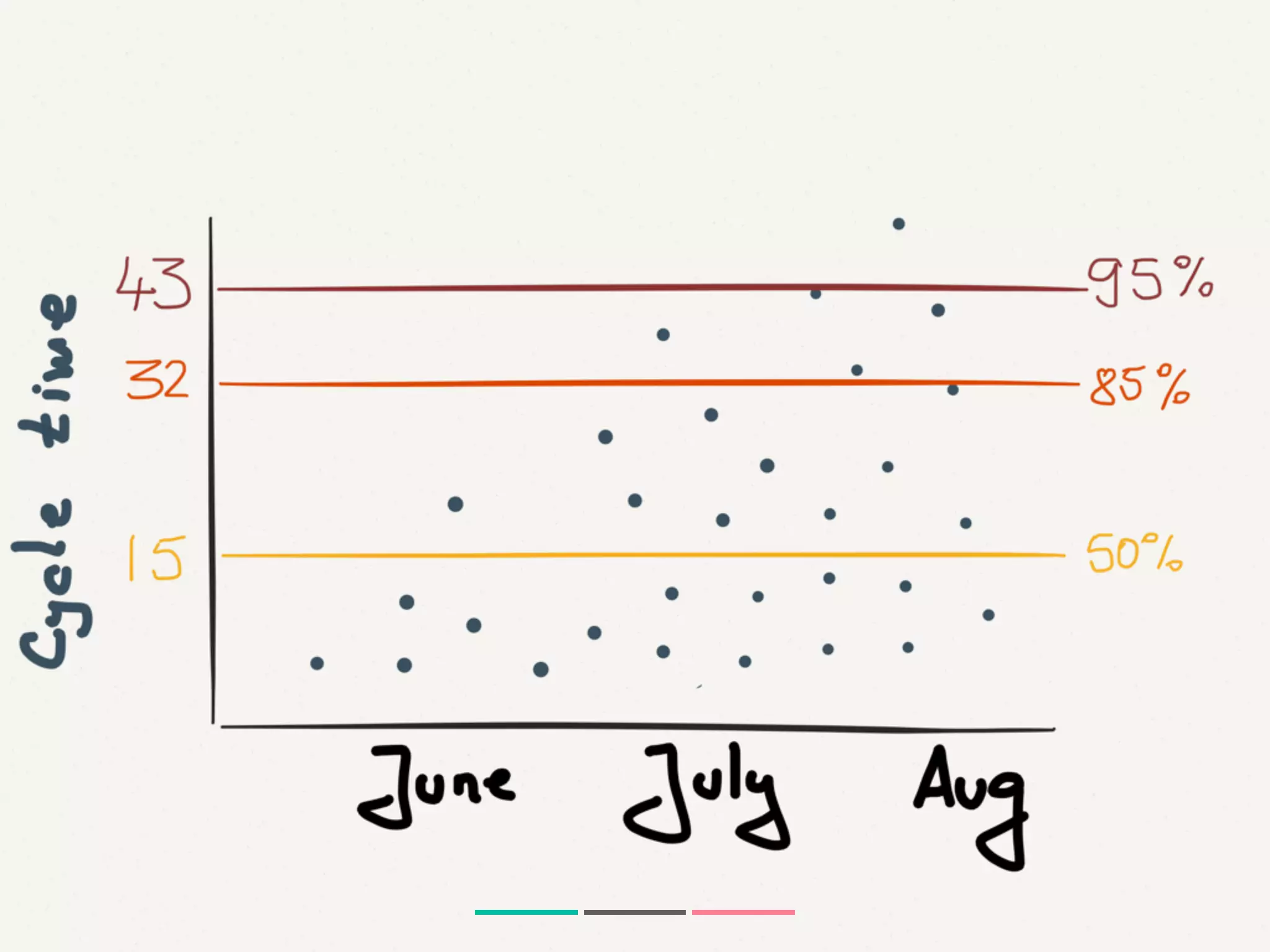
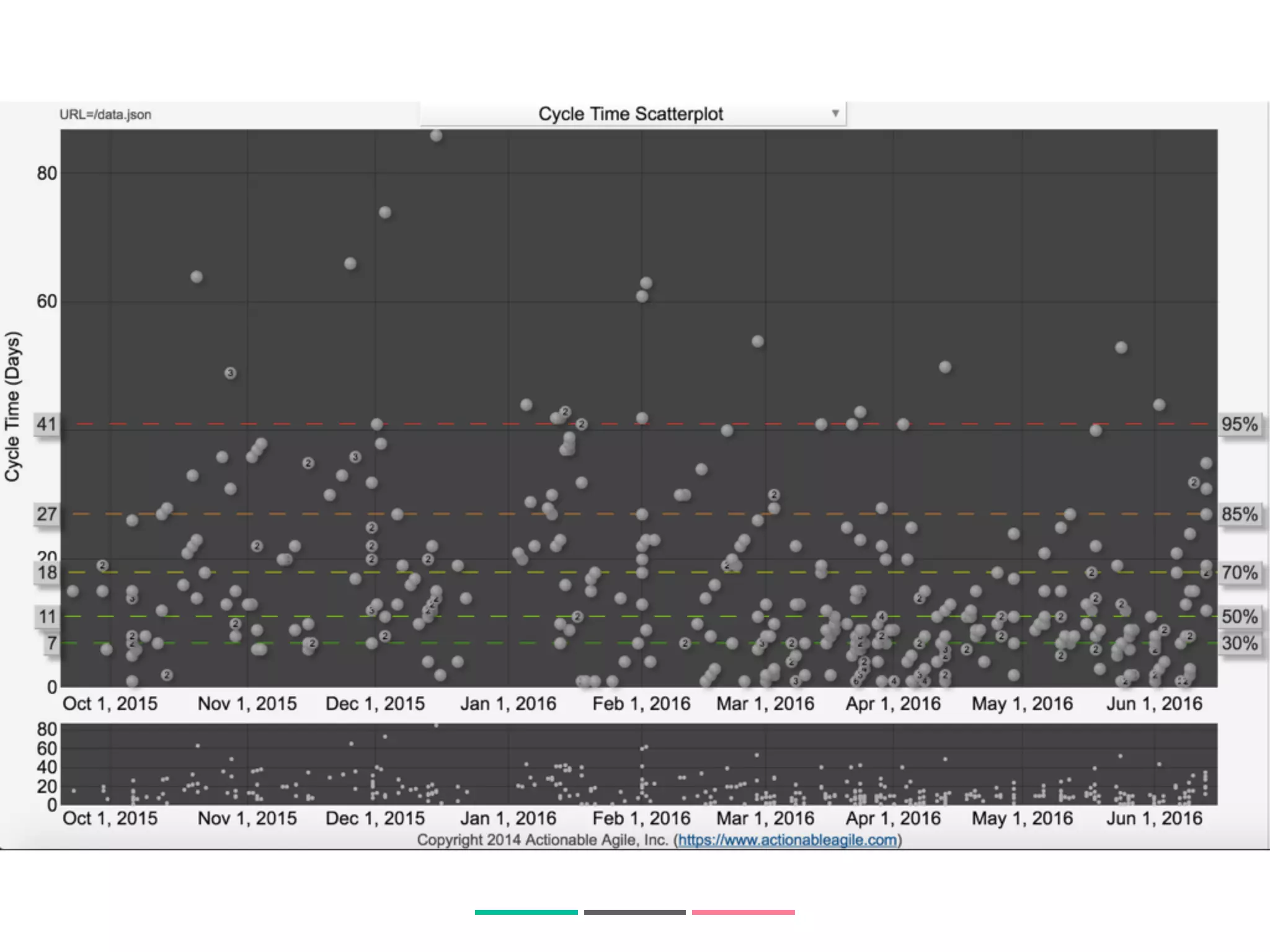
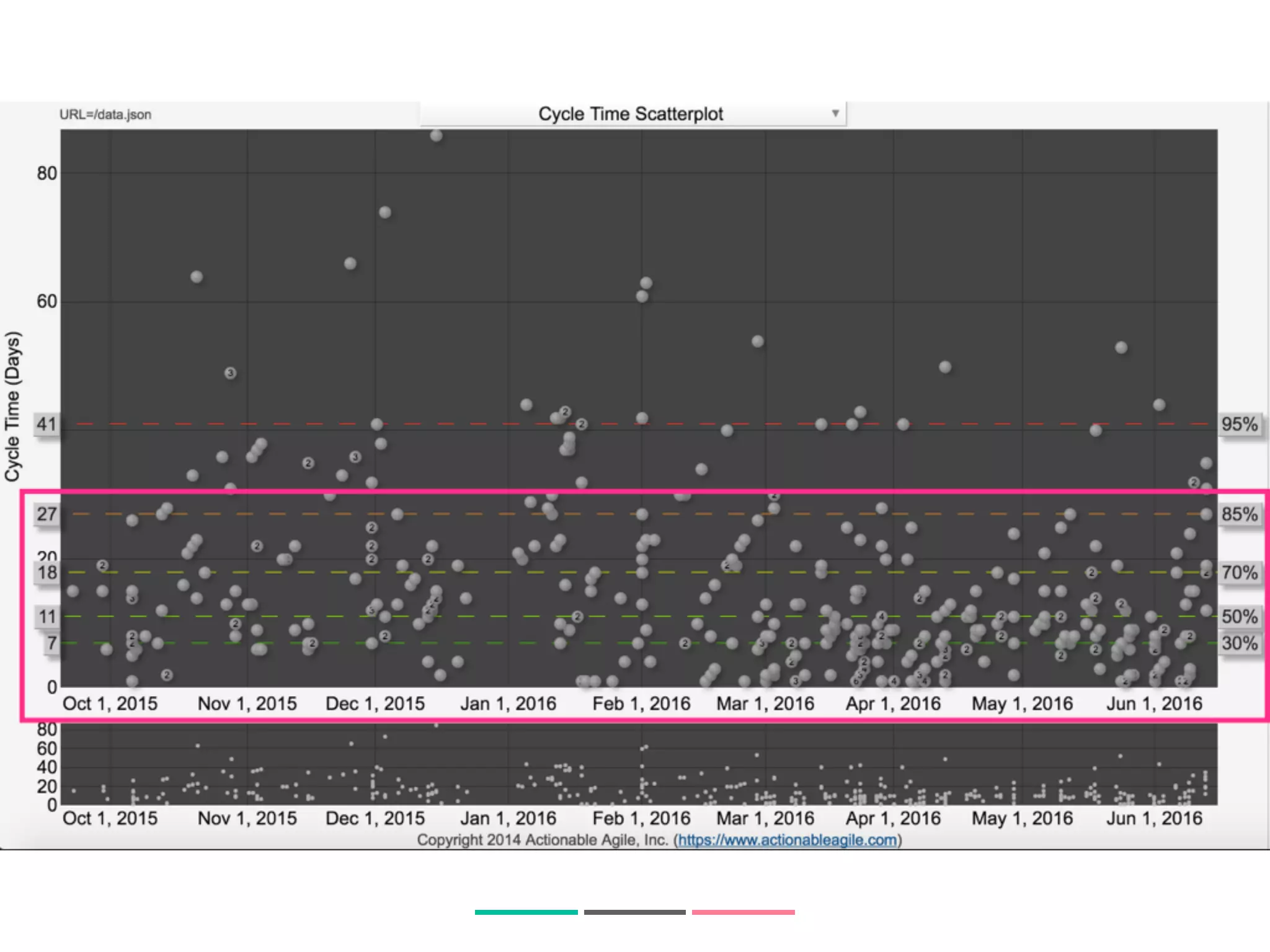
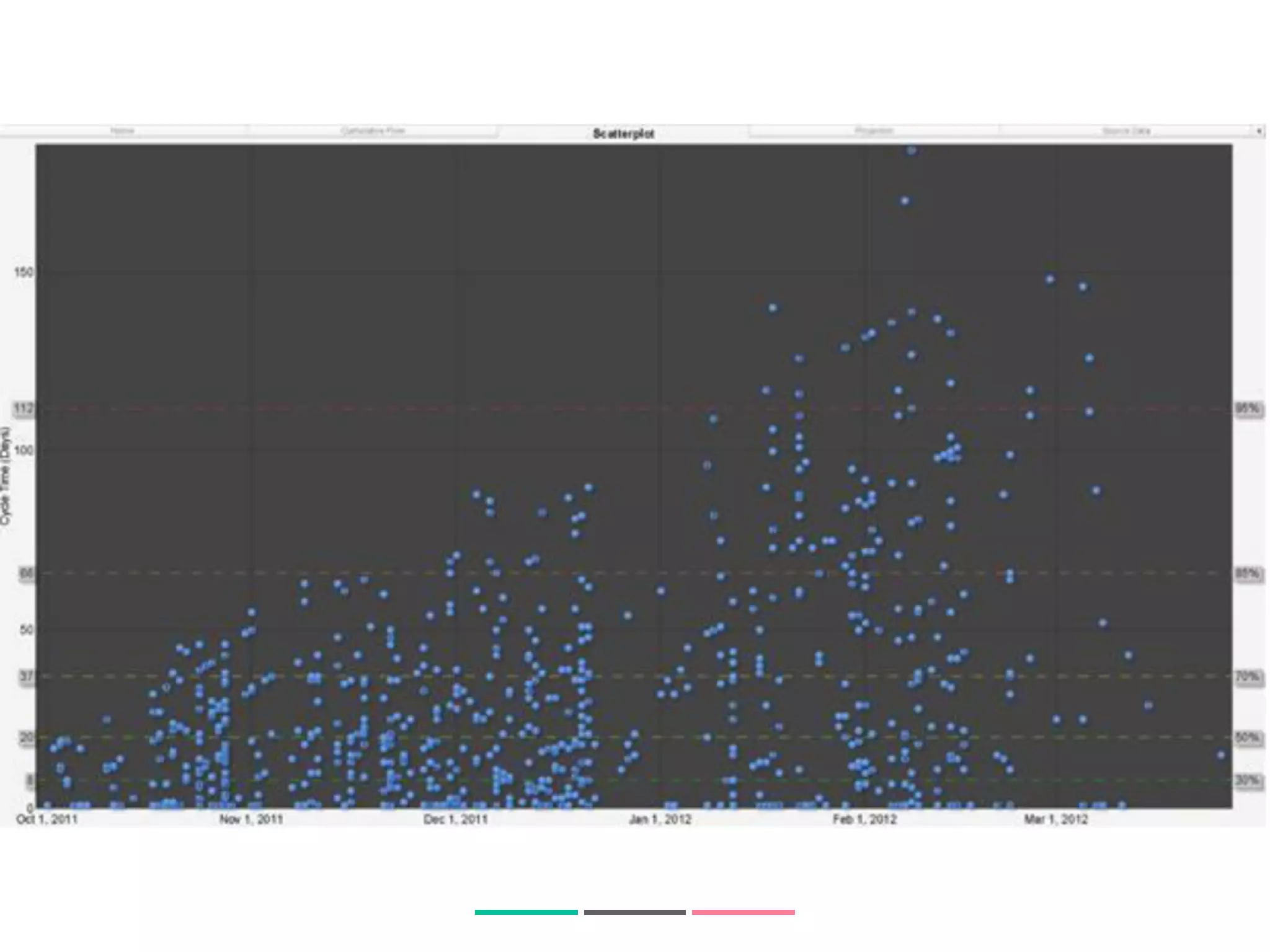
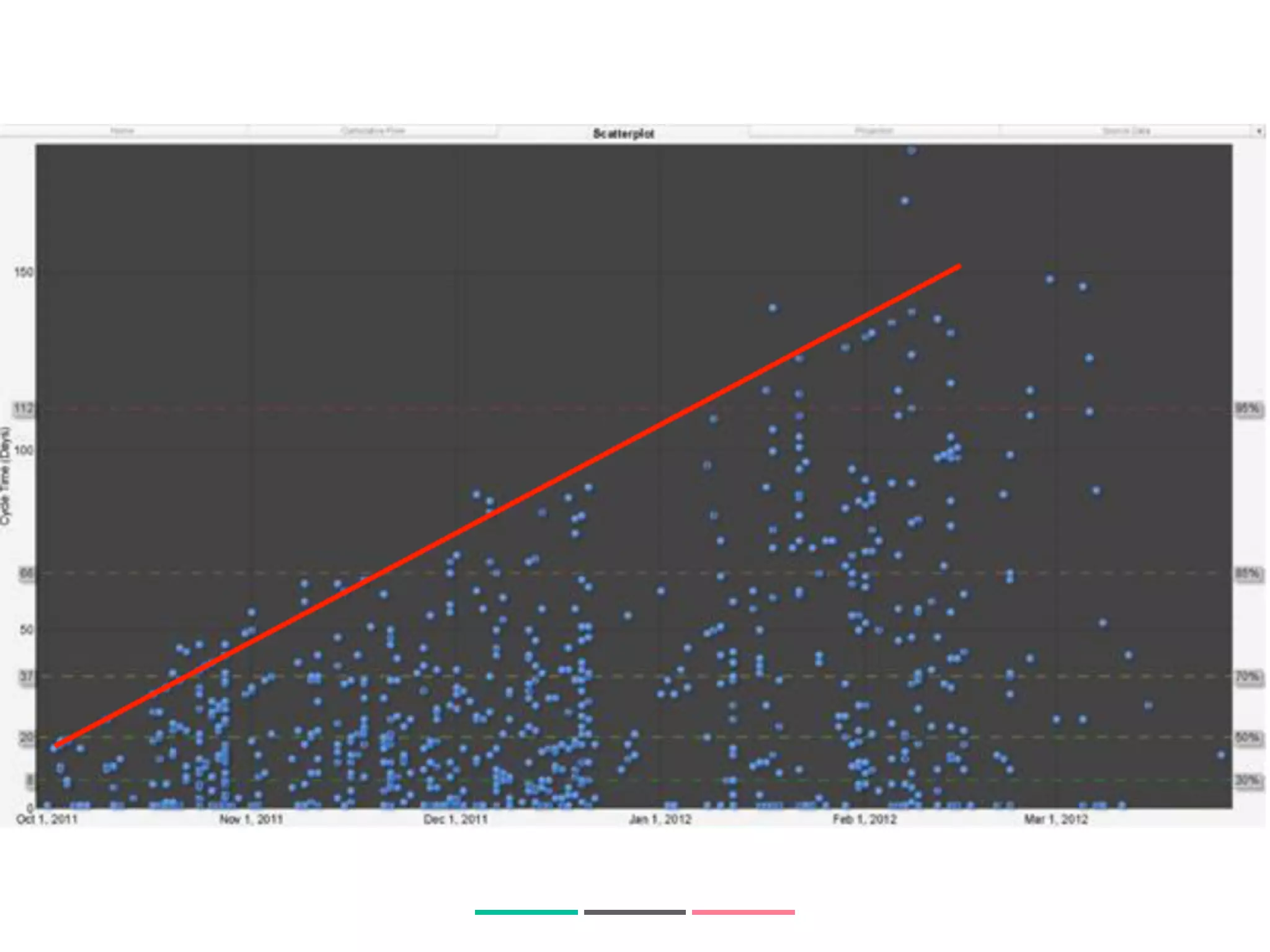
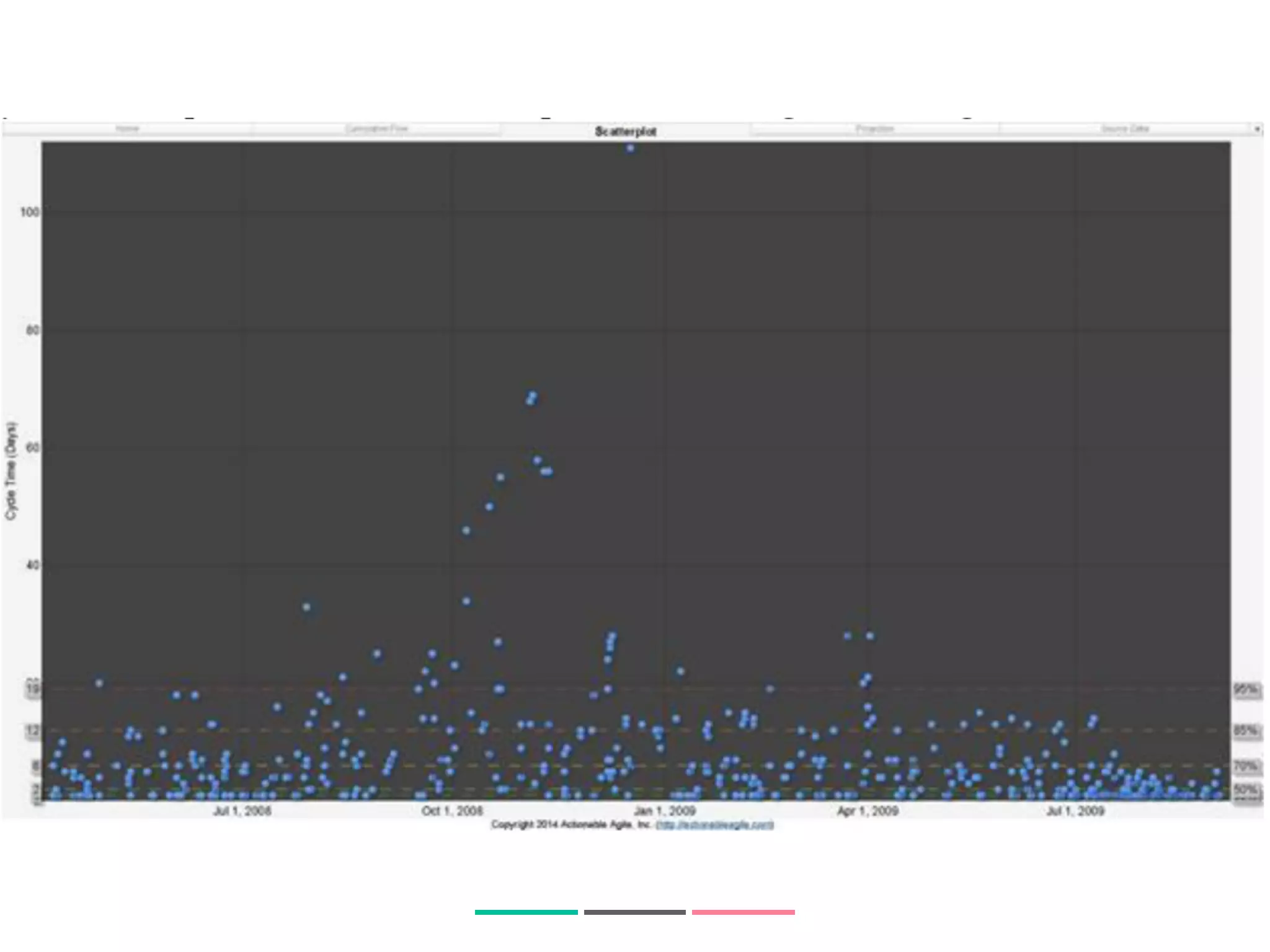
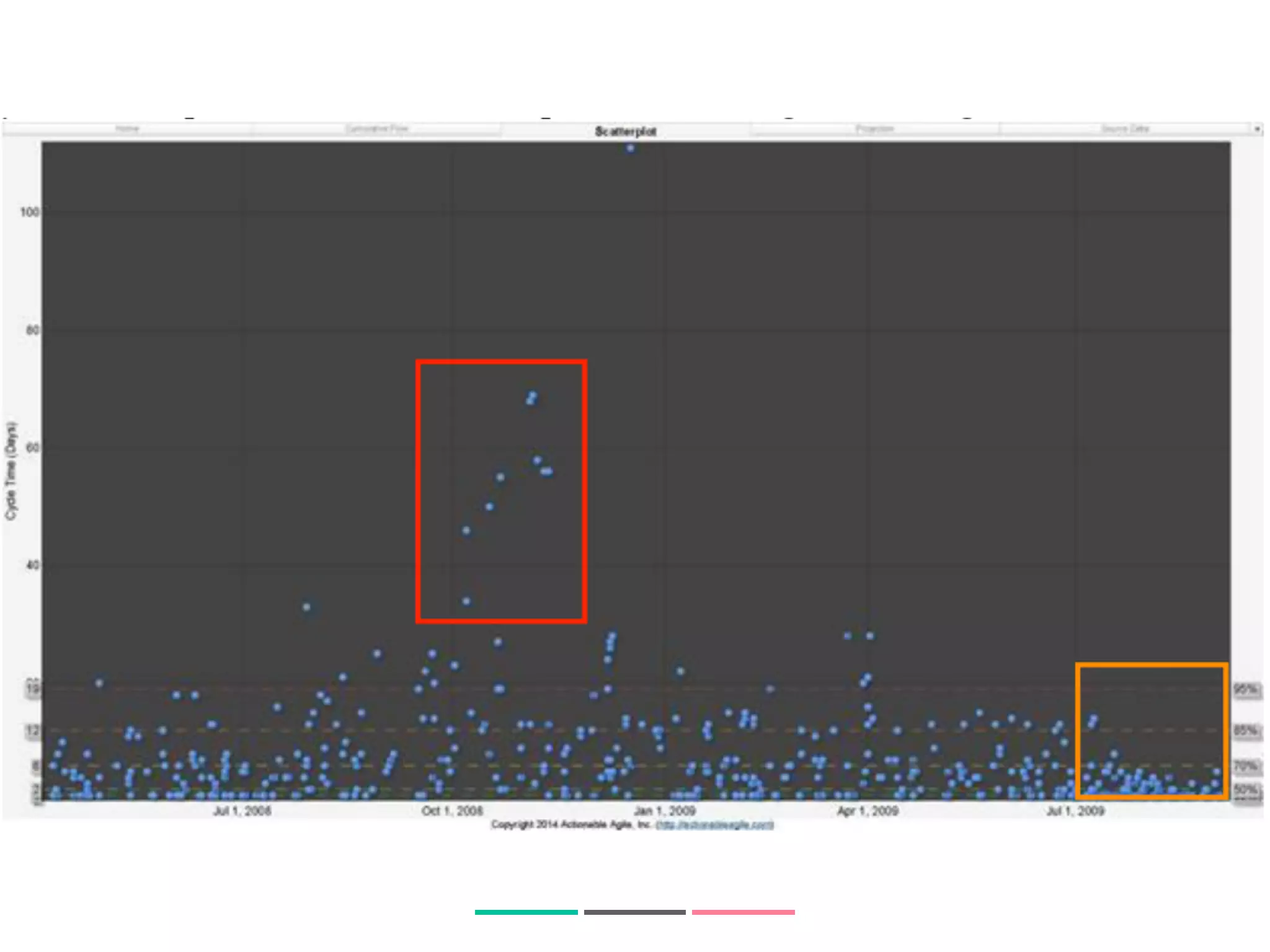
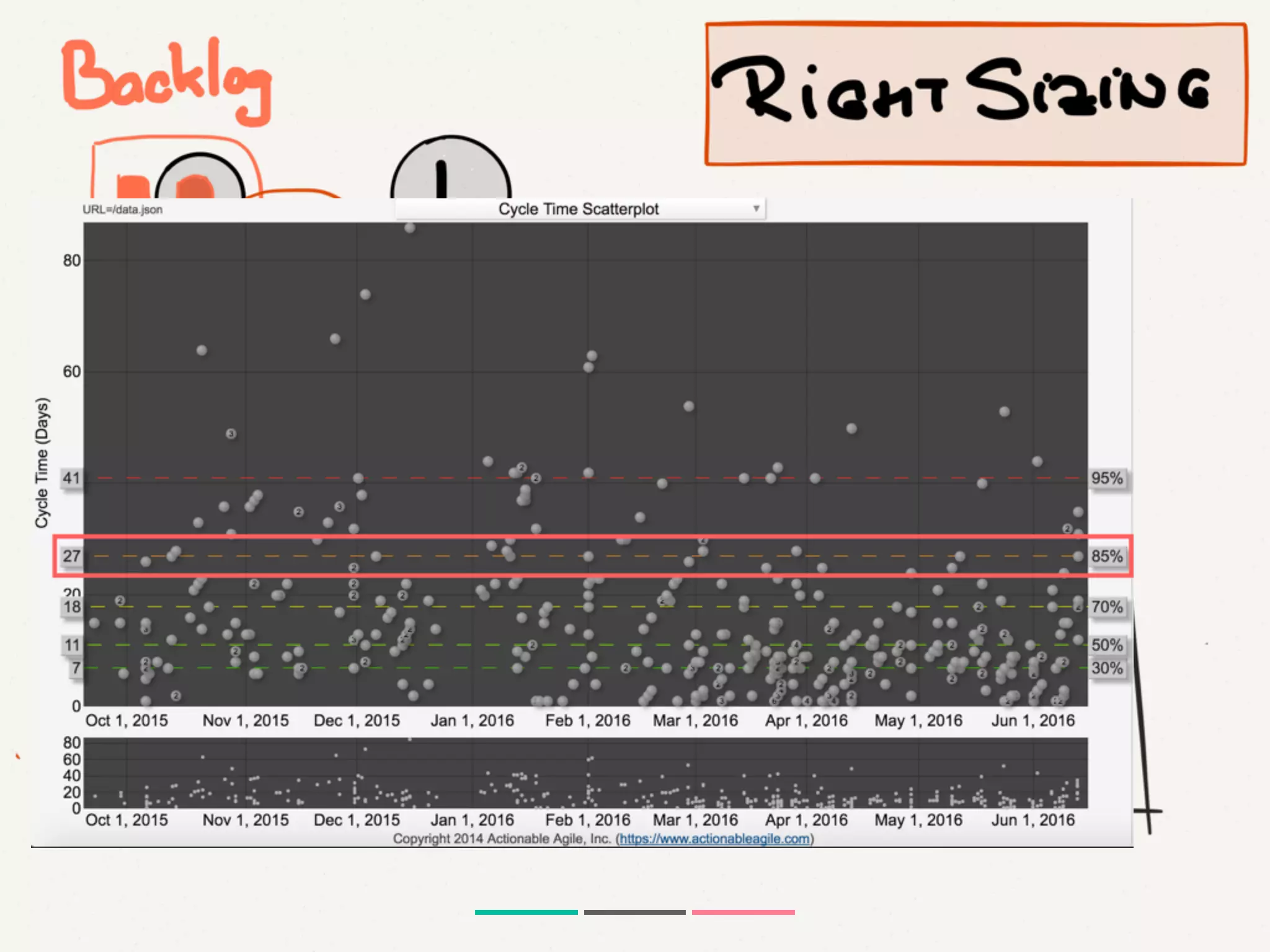
4. Visualise ‘Cycle time’ using Scatterplots
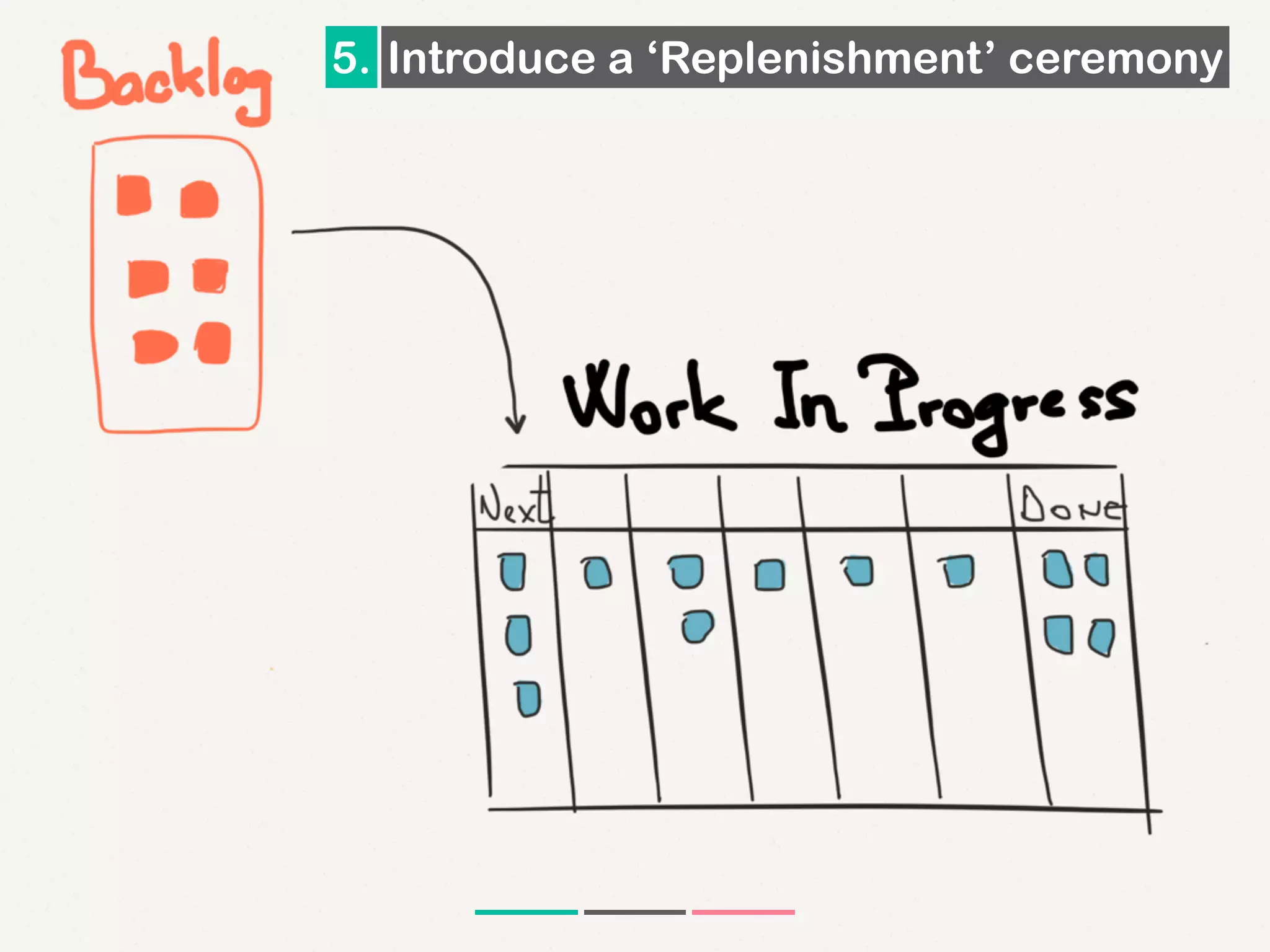
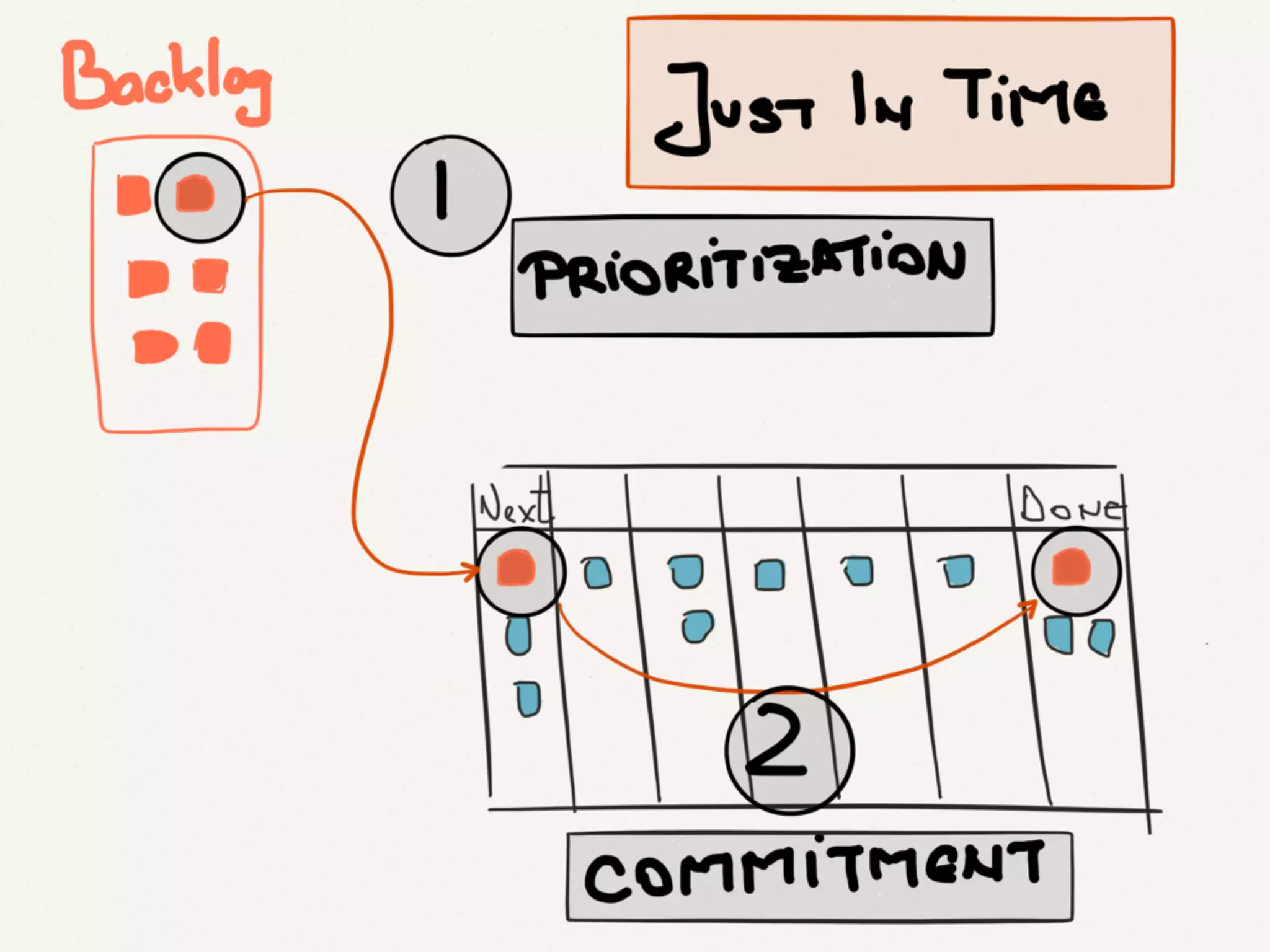
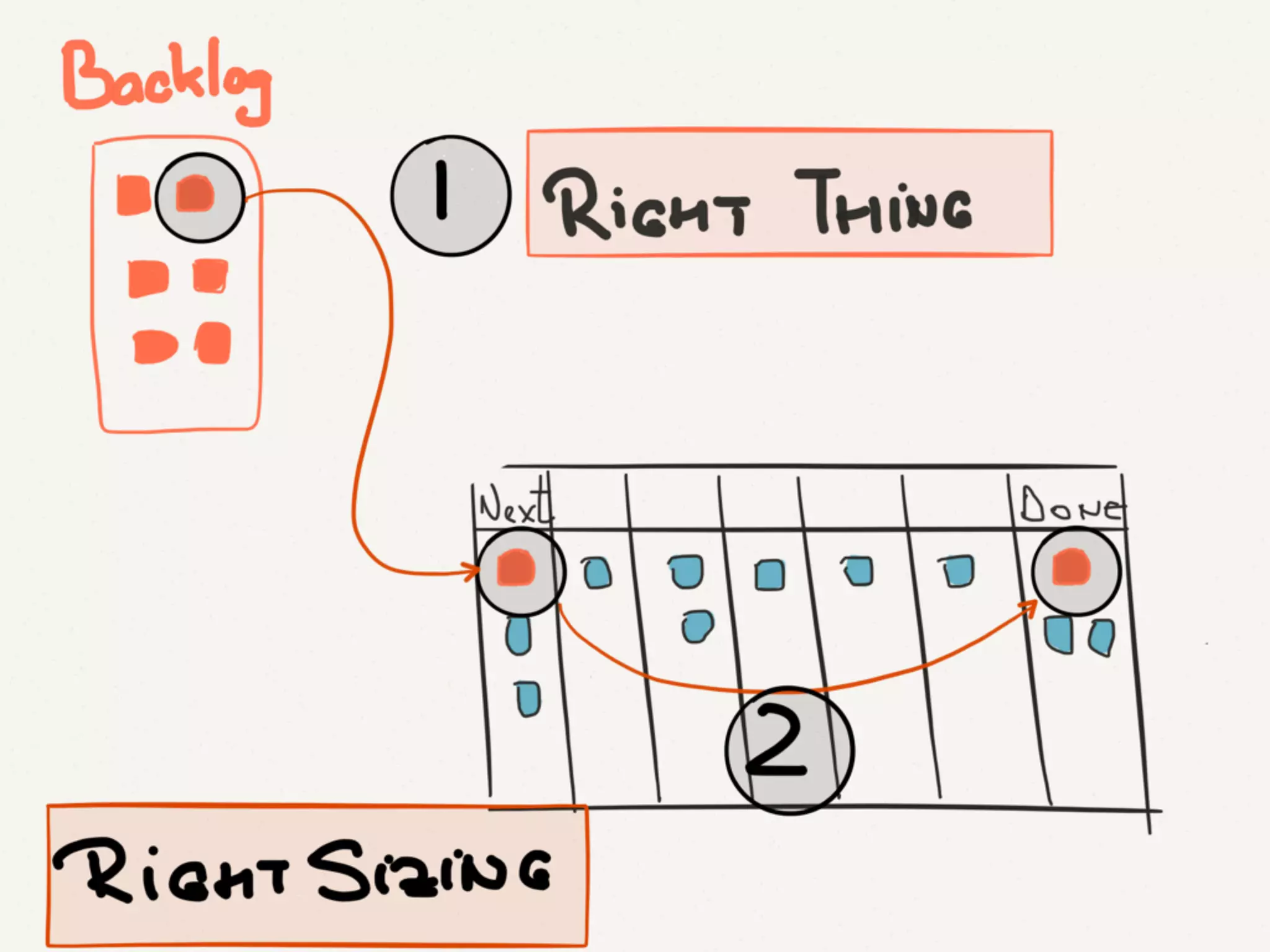
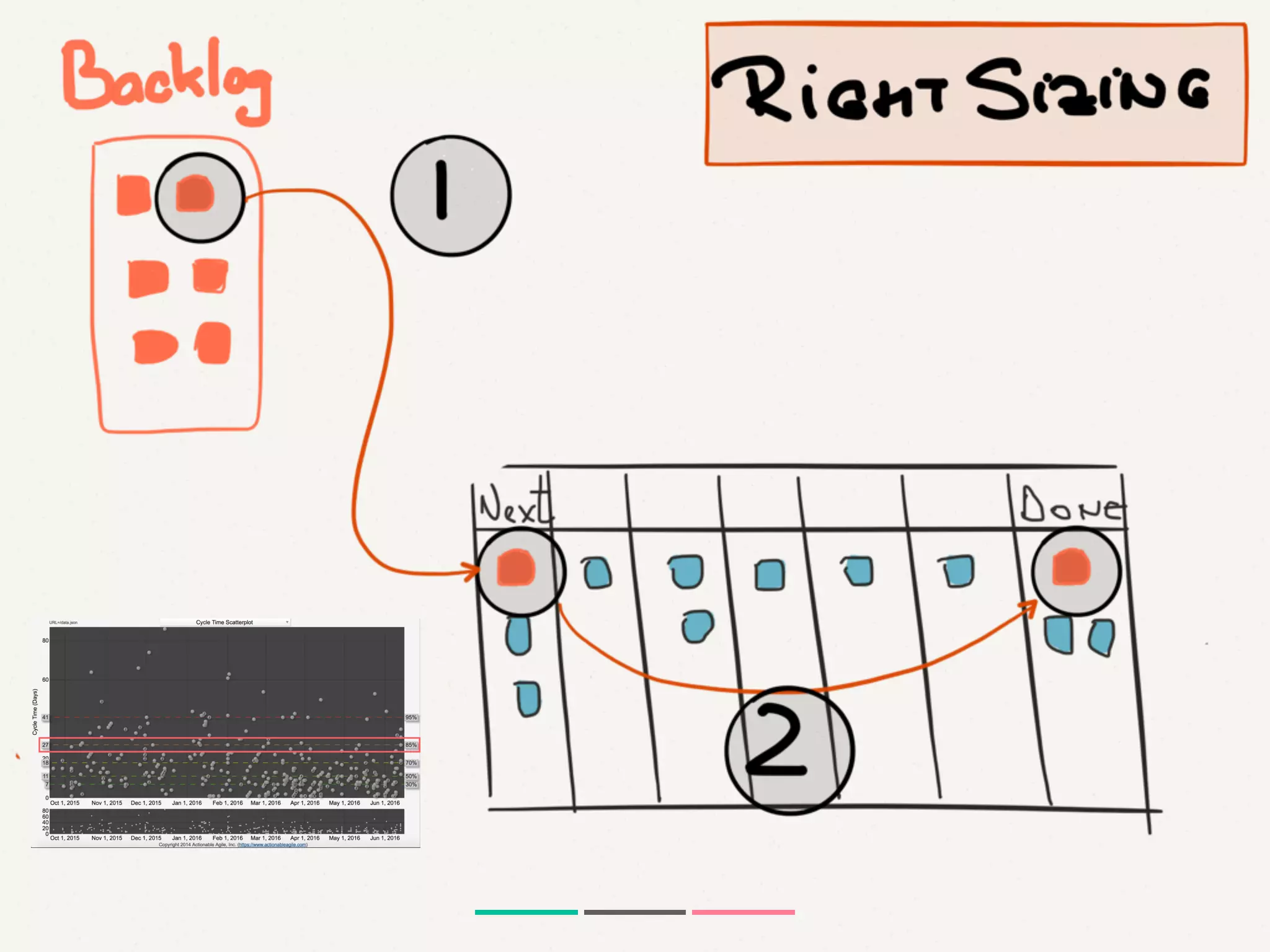
5. Introduce a ‘Replenishment’ ceremony
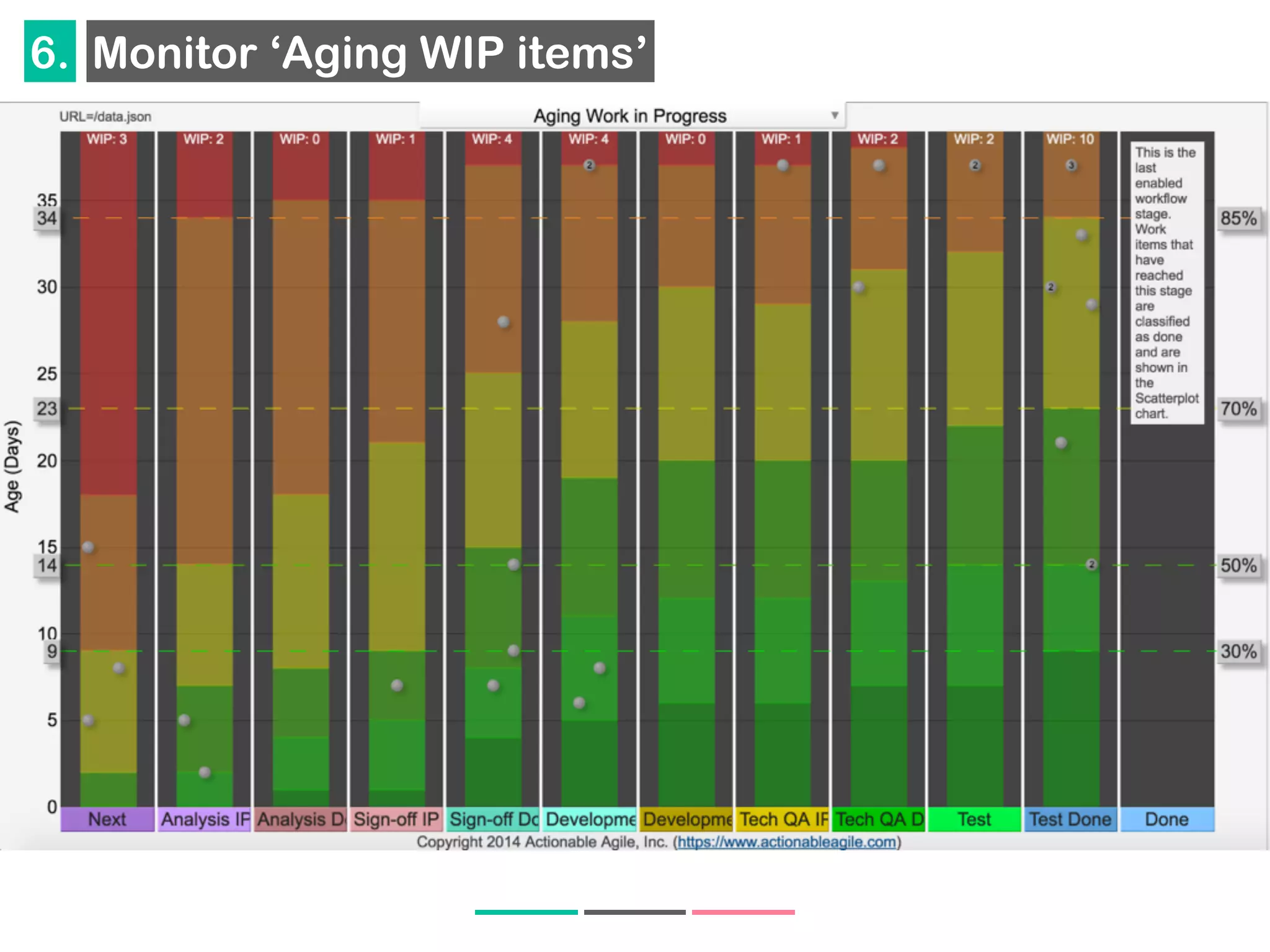
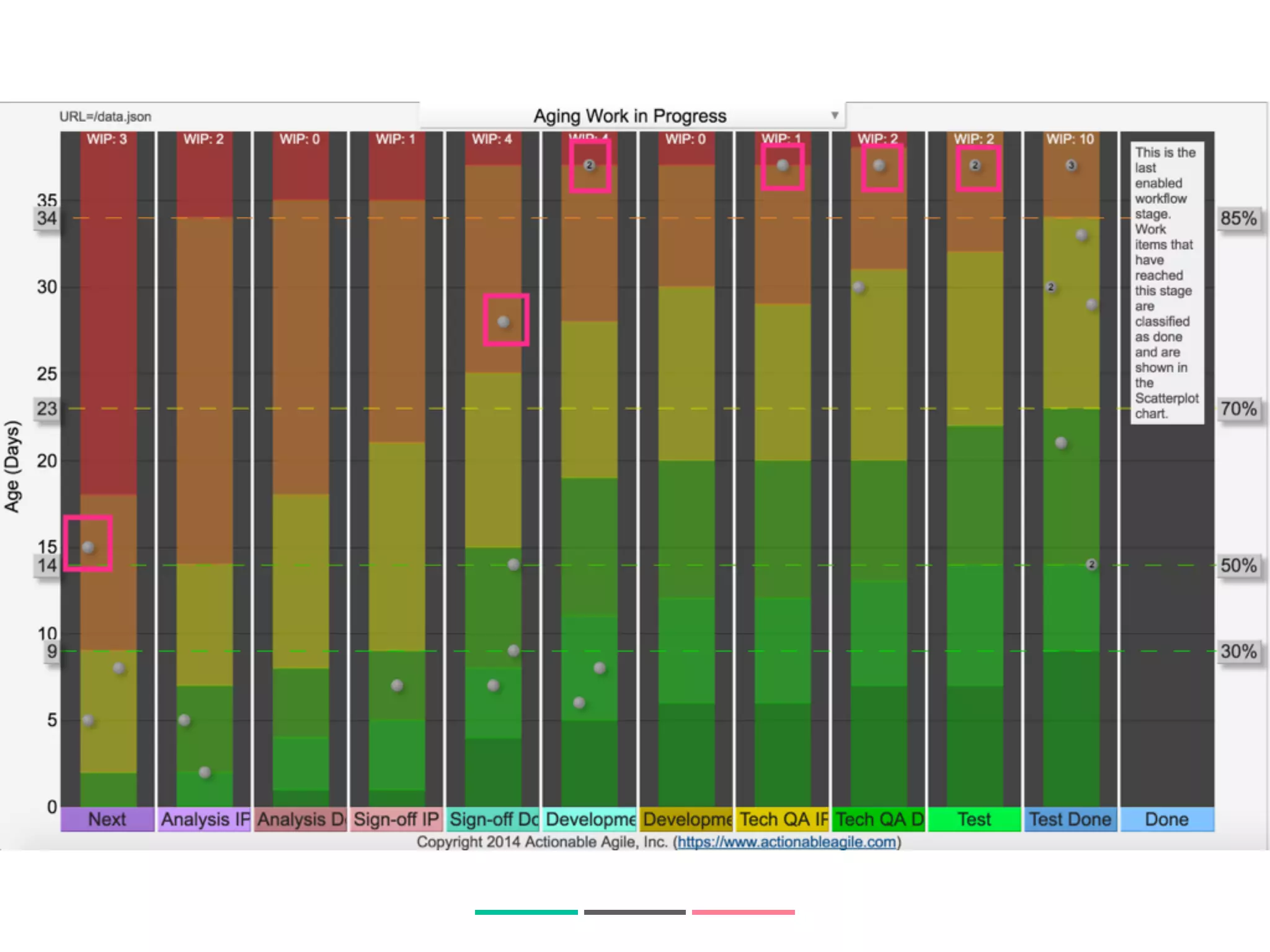
6. Monitor ‘Aging WIP items’
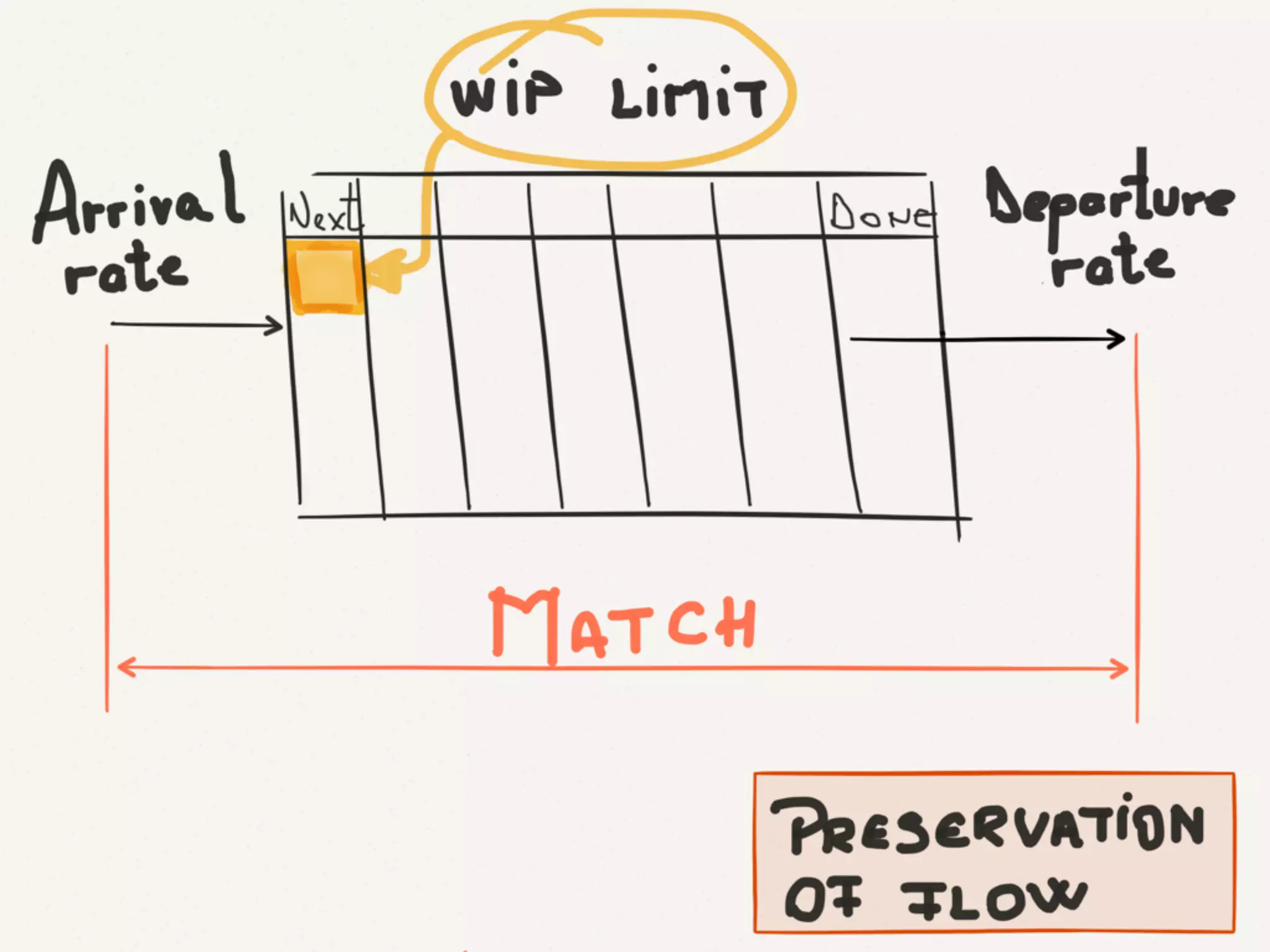
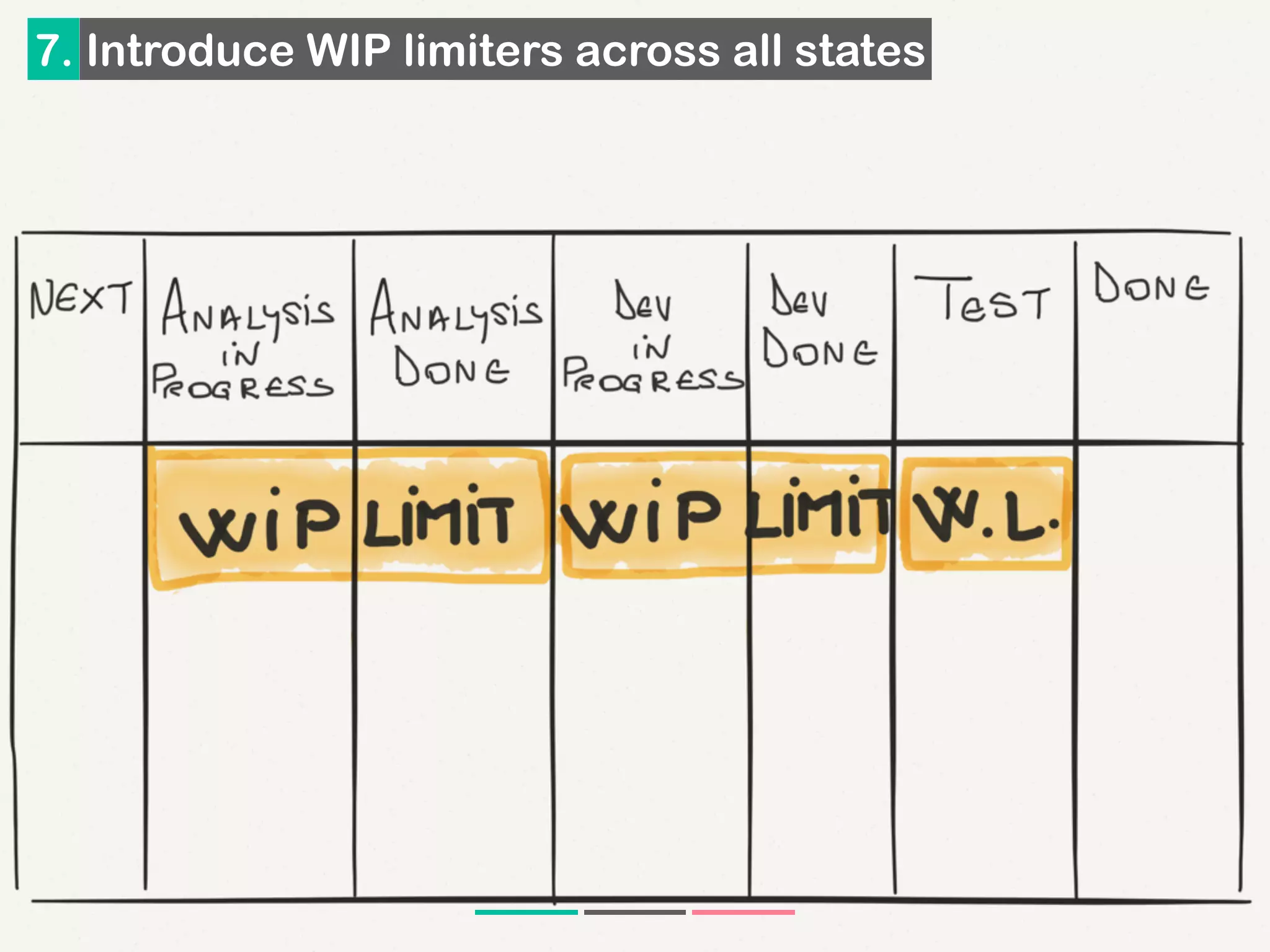
7. Introduce WIP limiters across all states
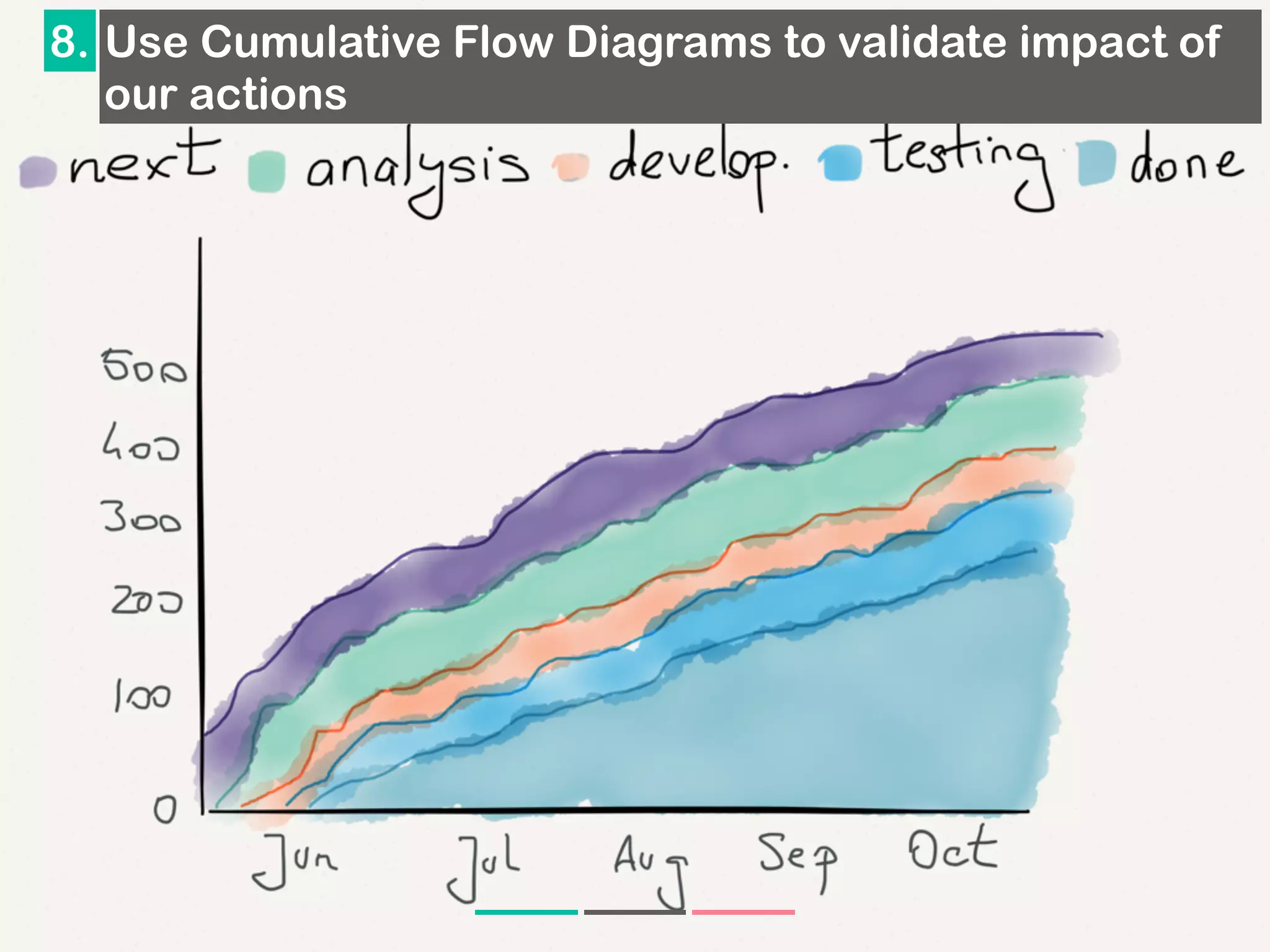
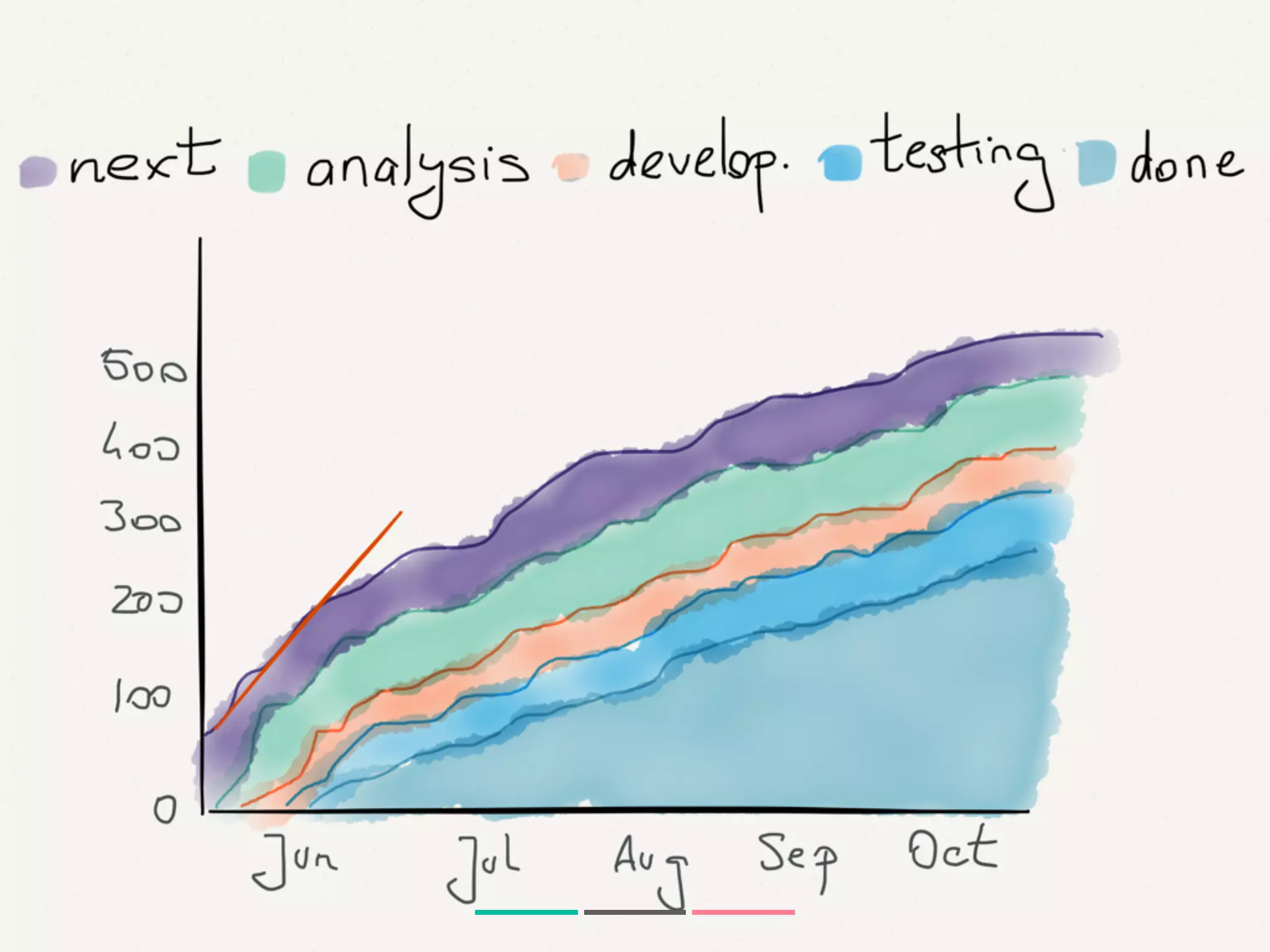
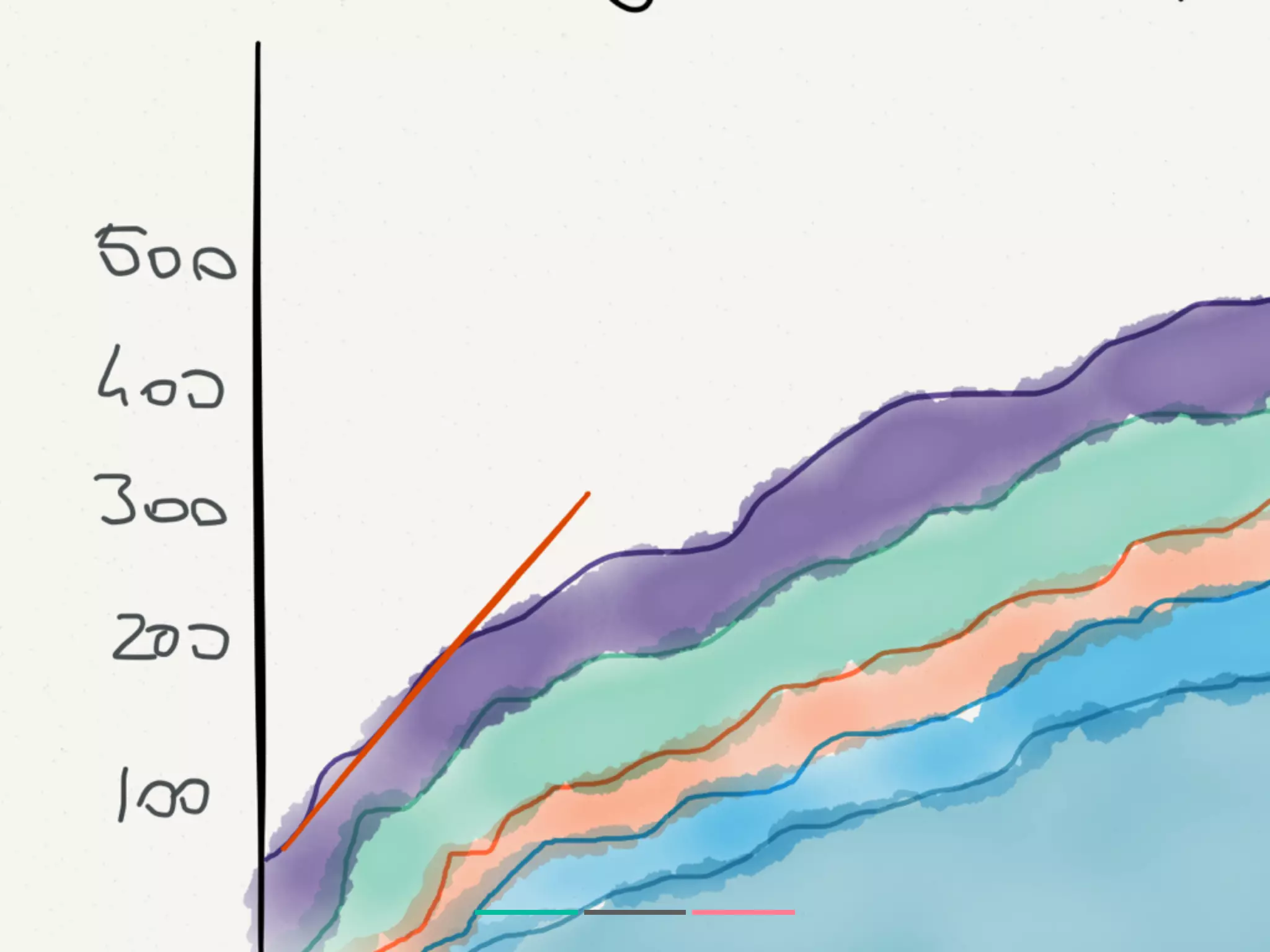
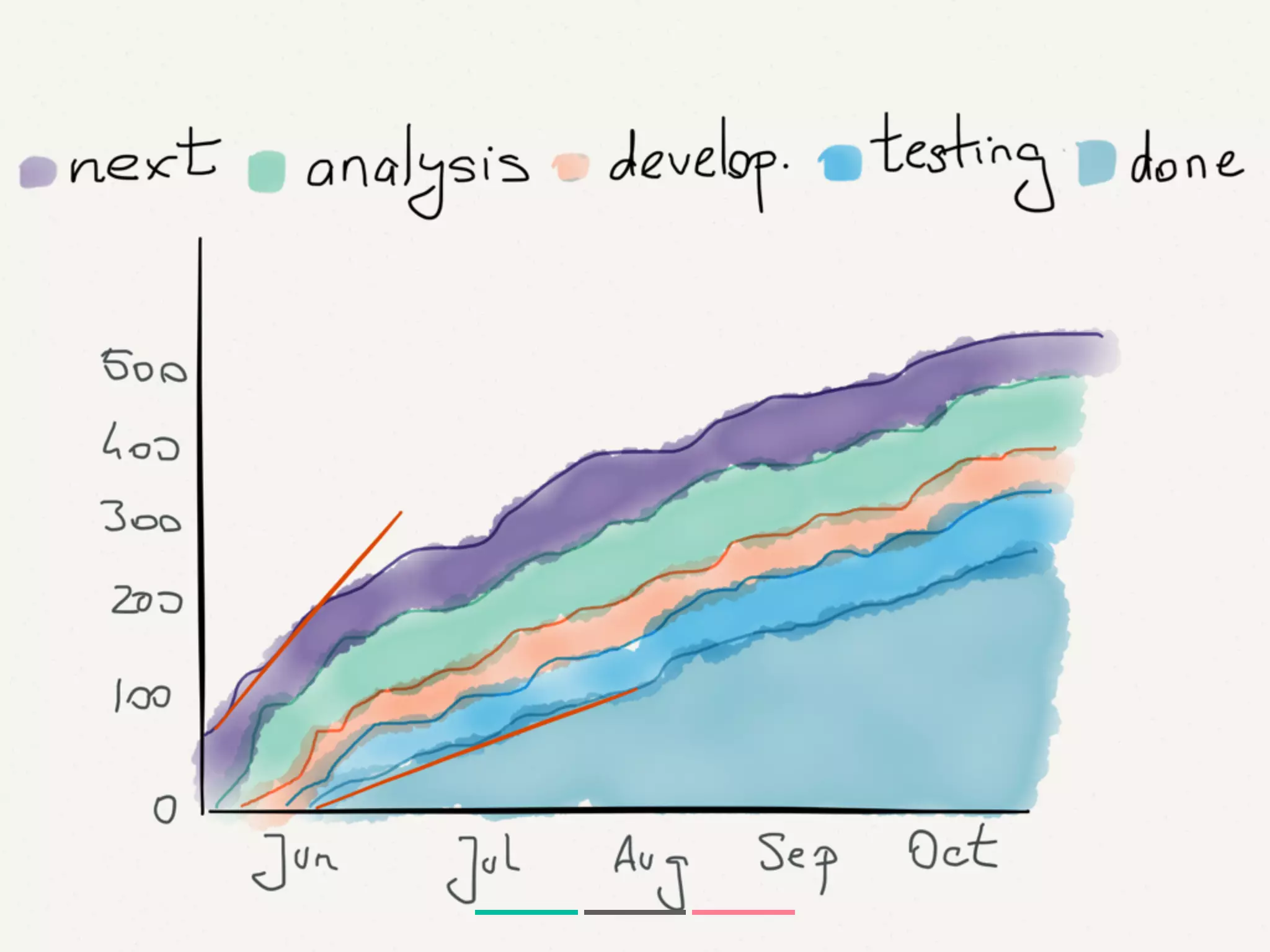
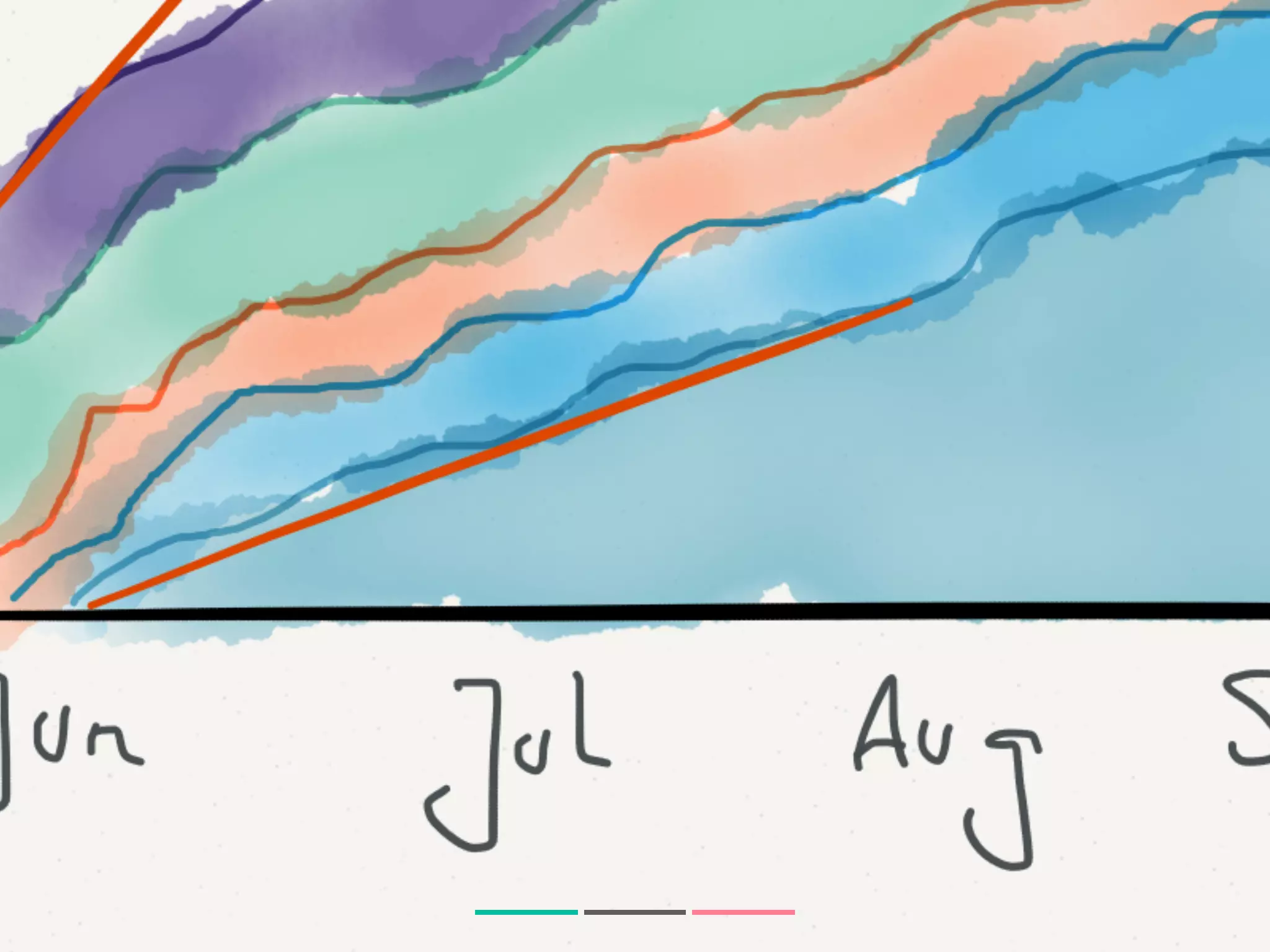
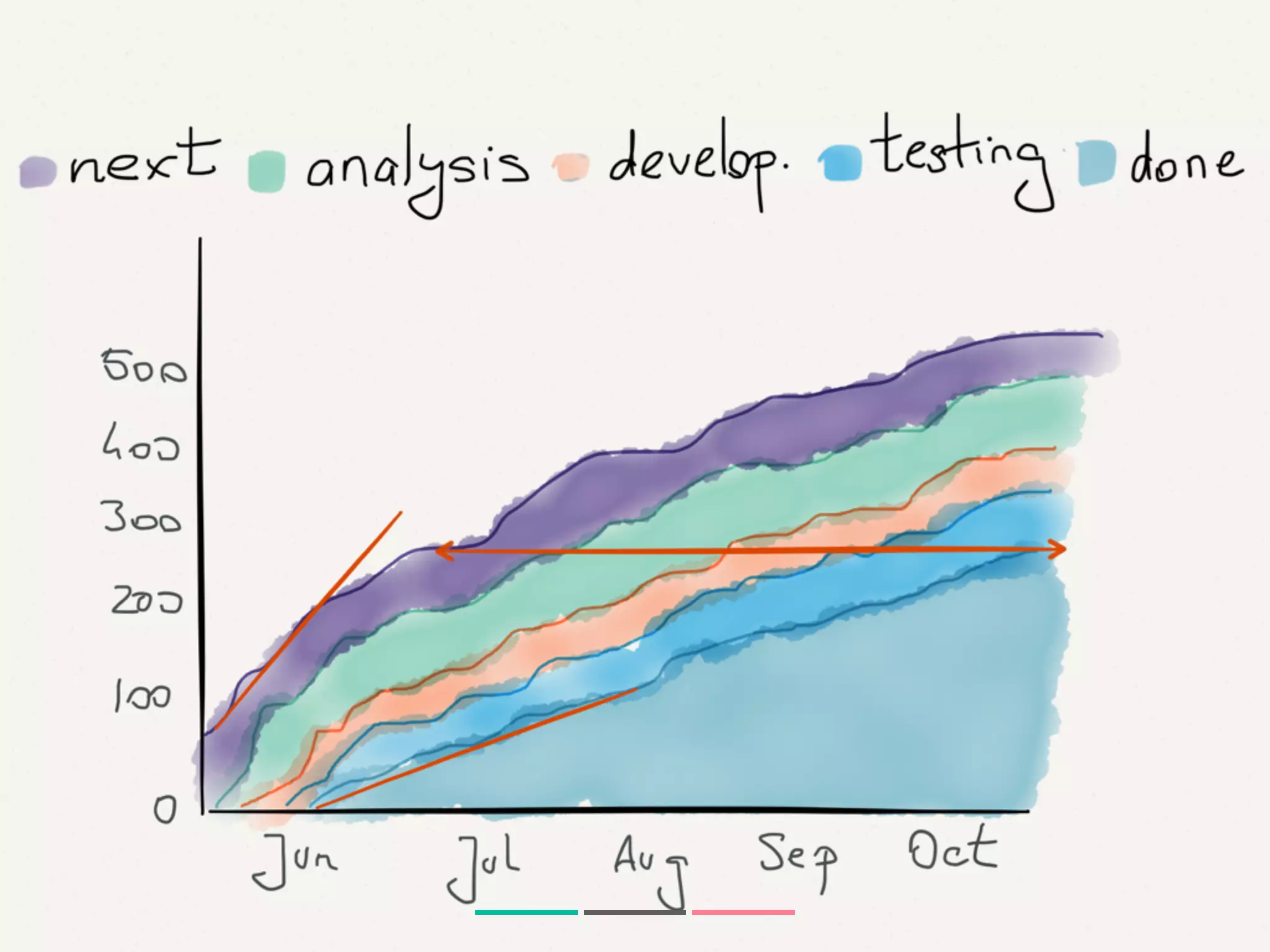
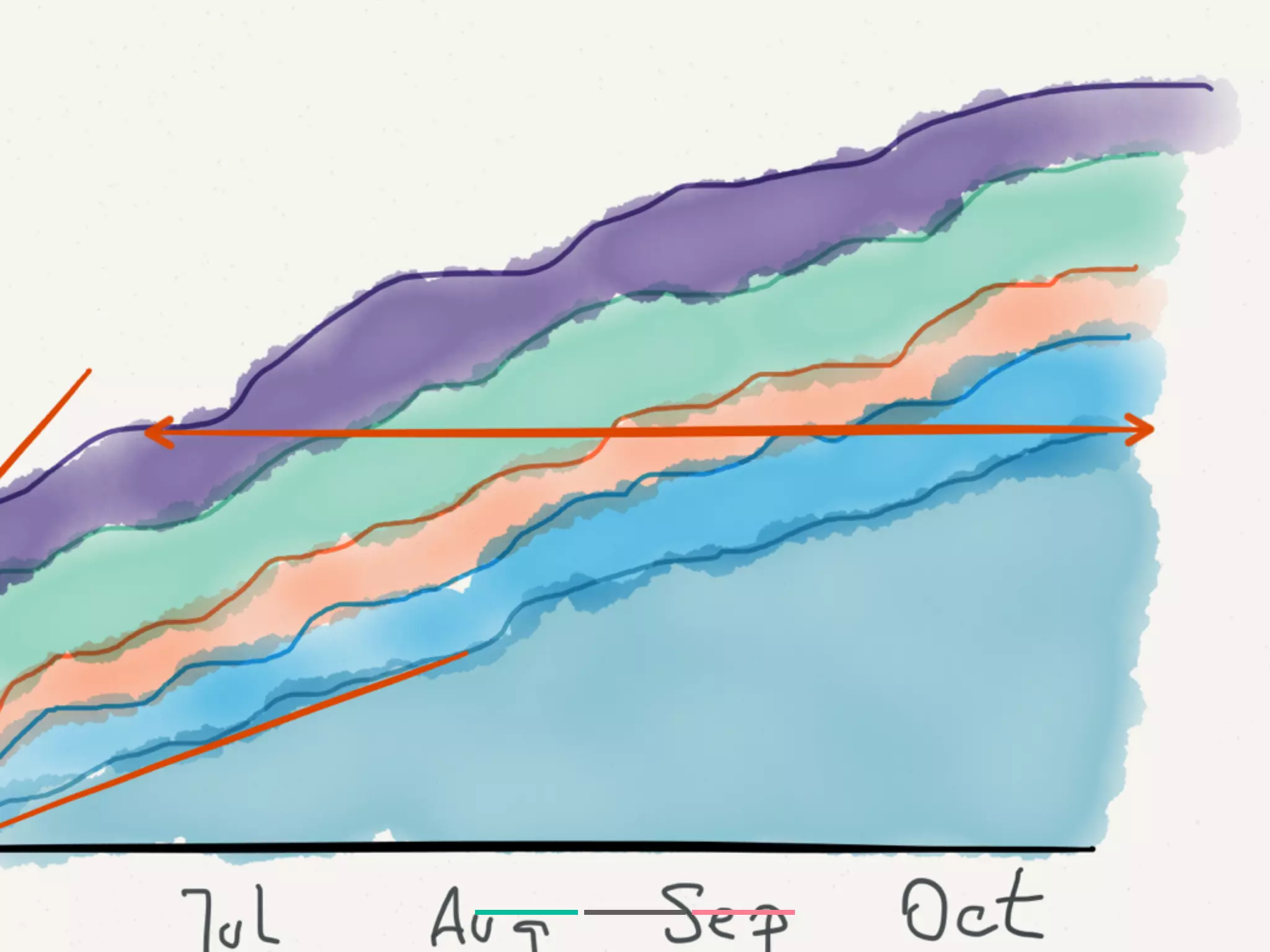
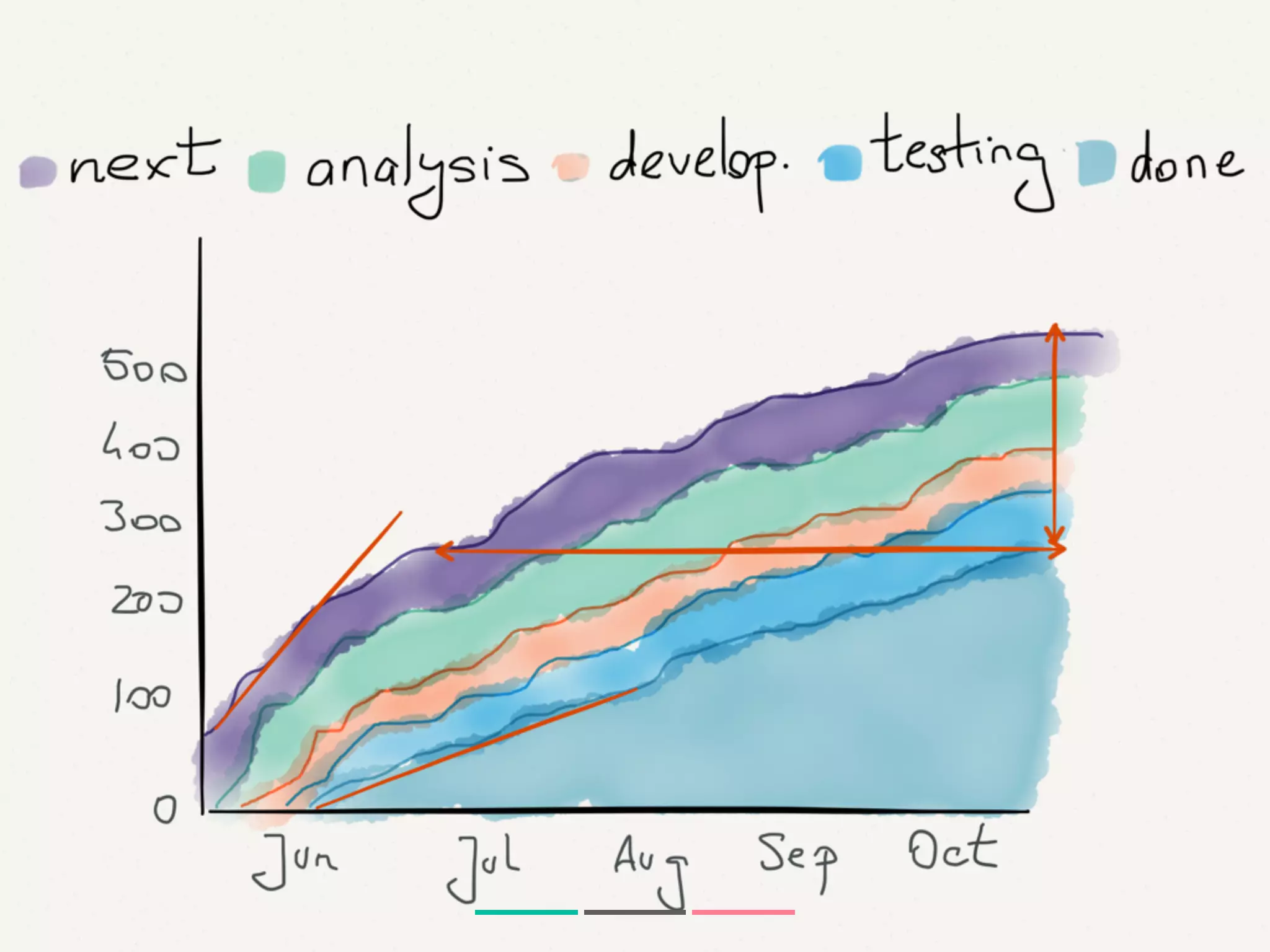
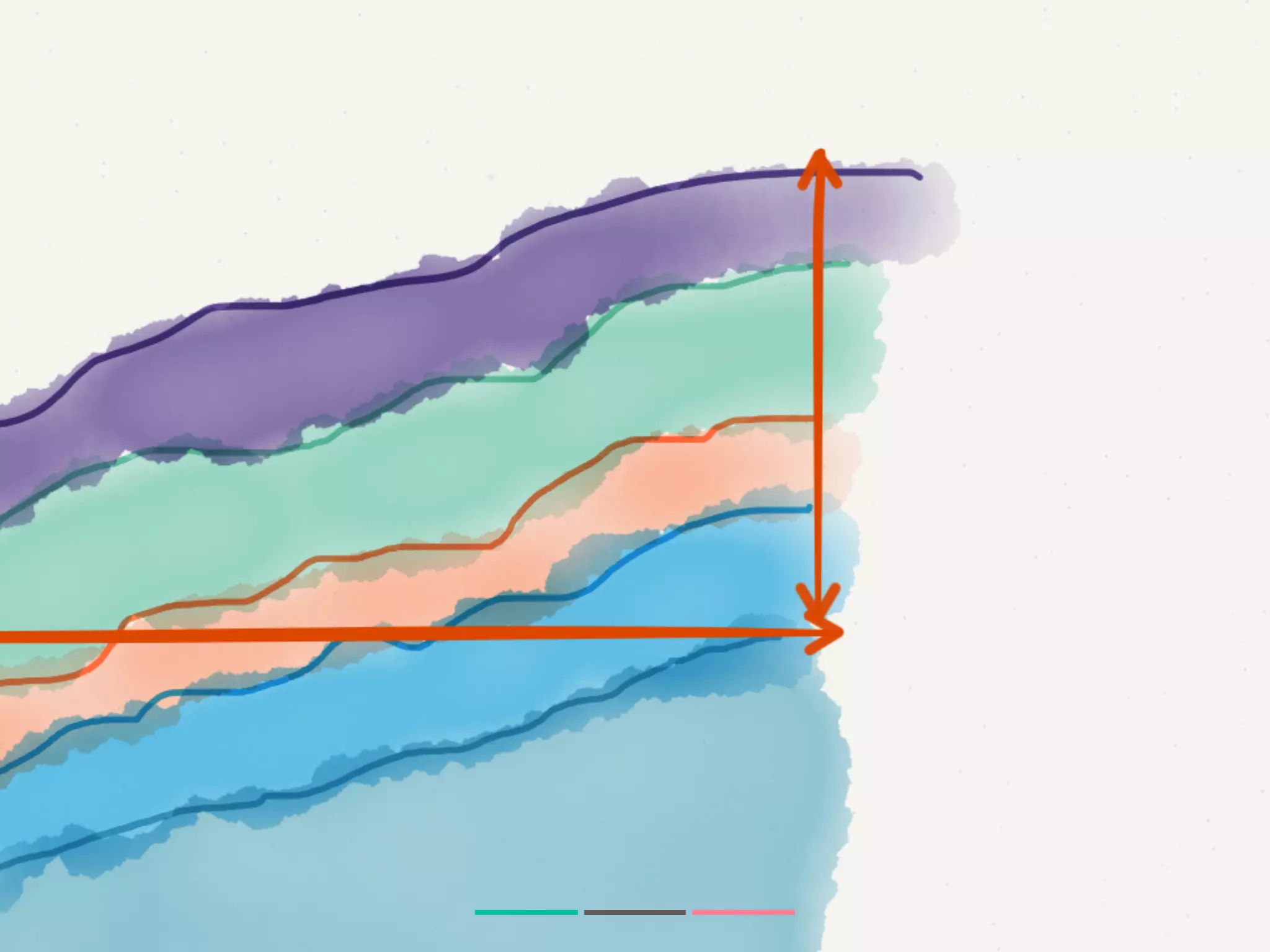
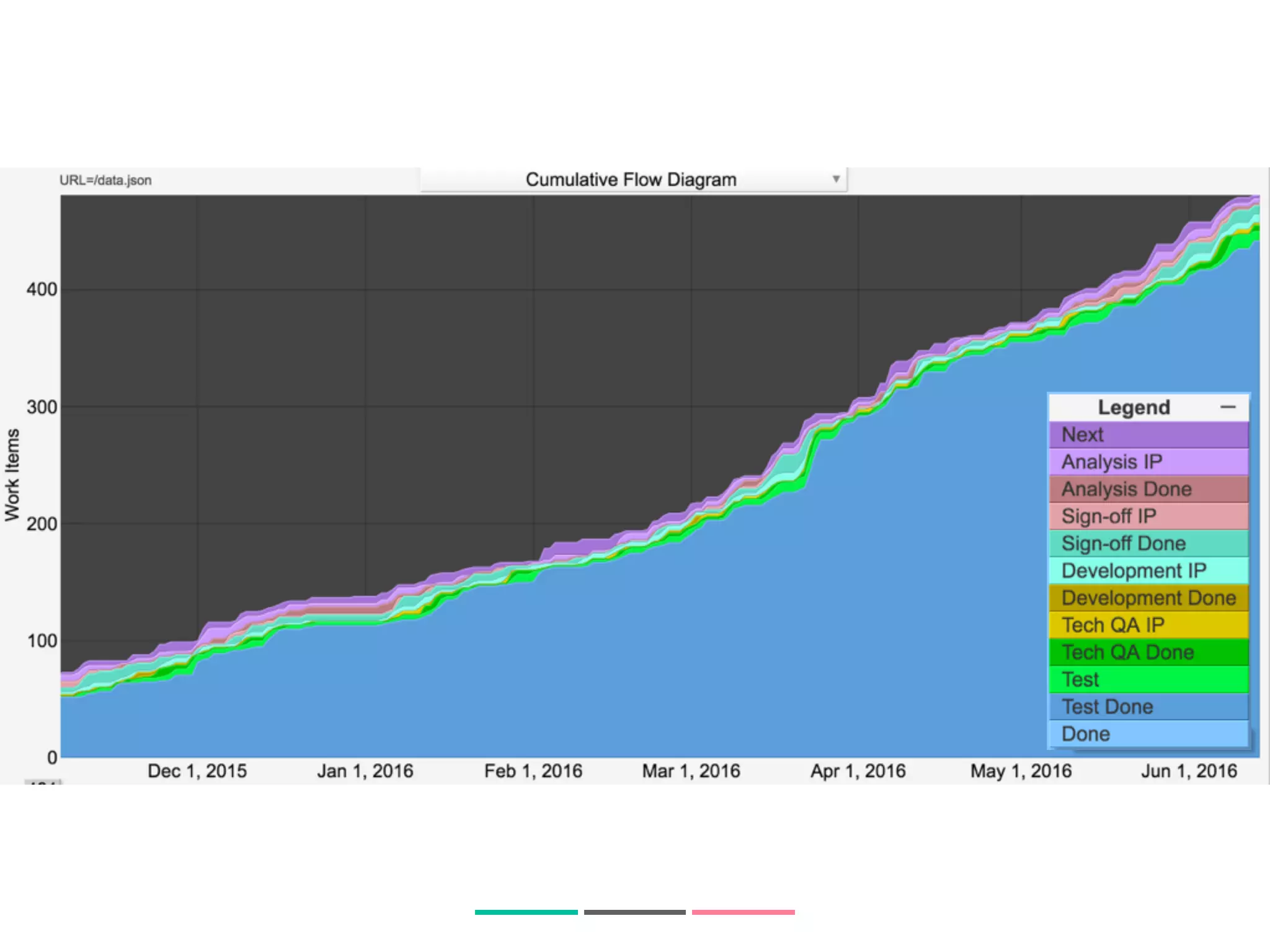
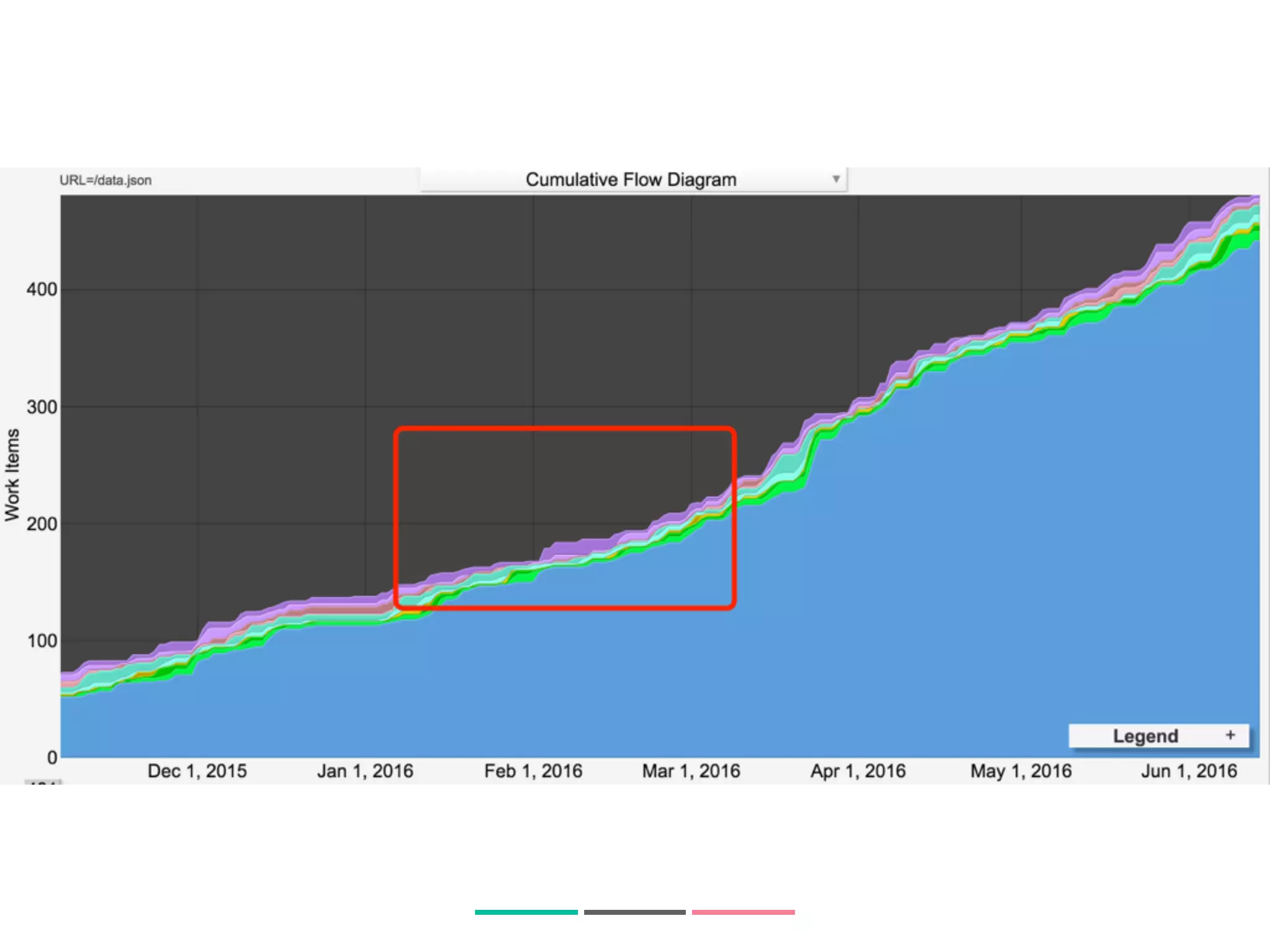
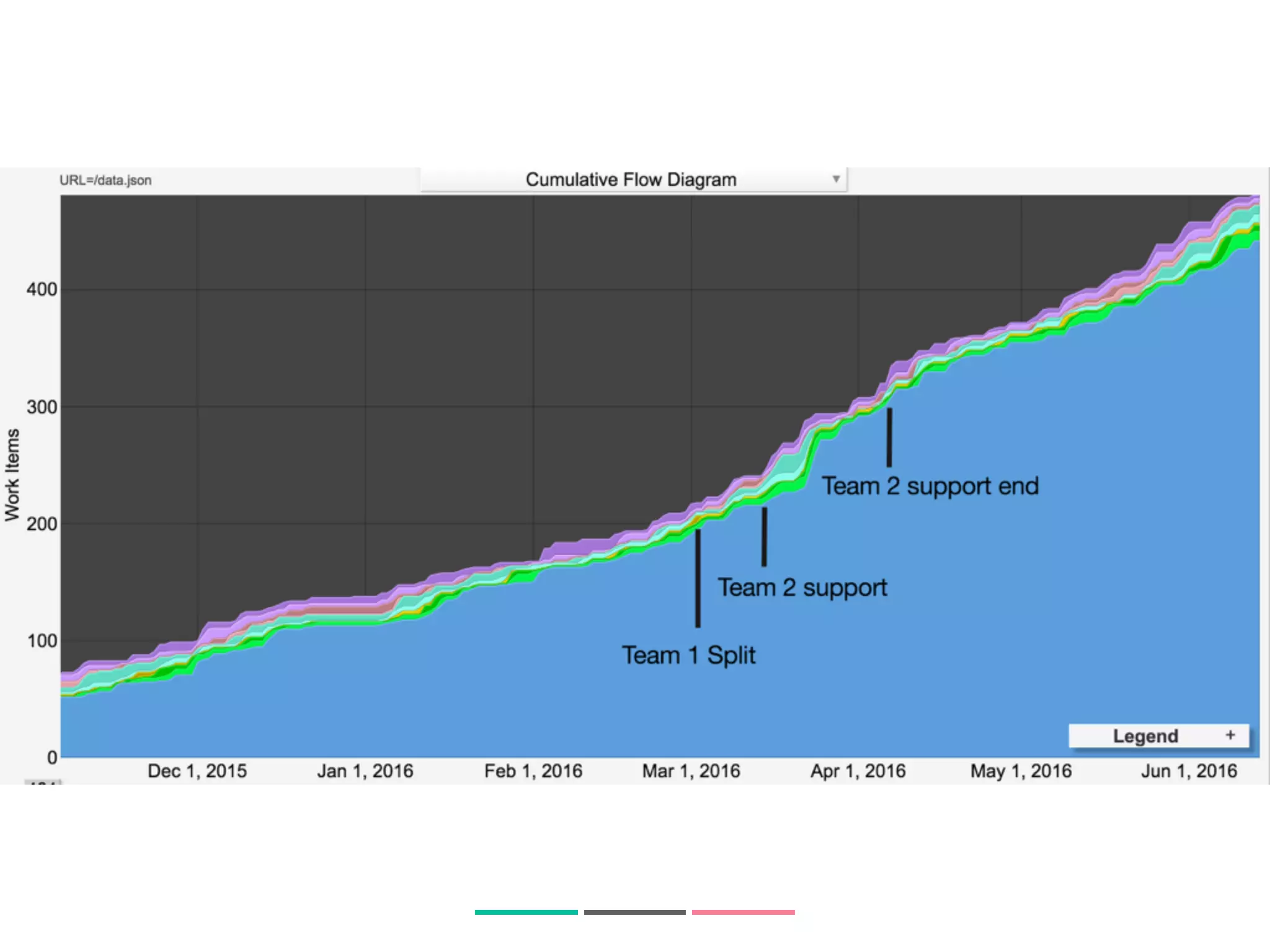
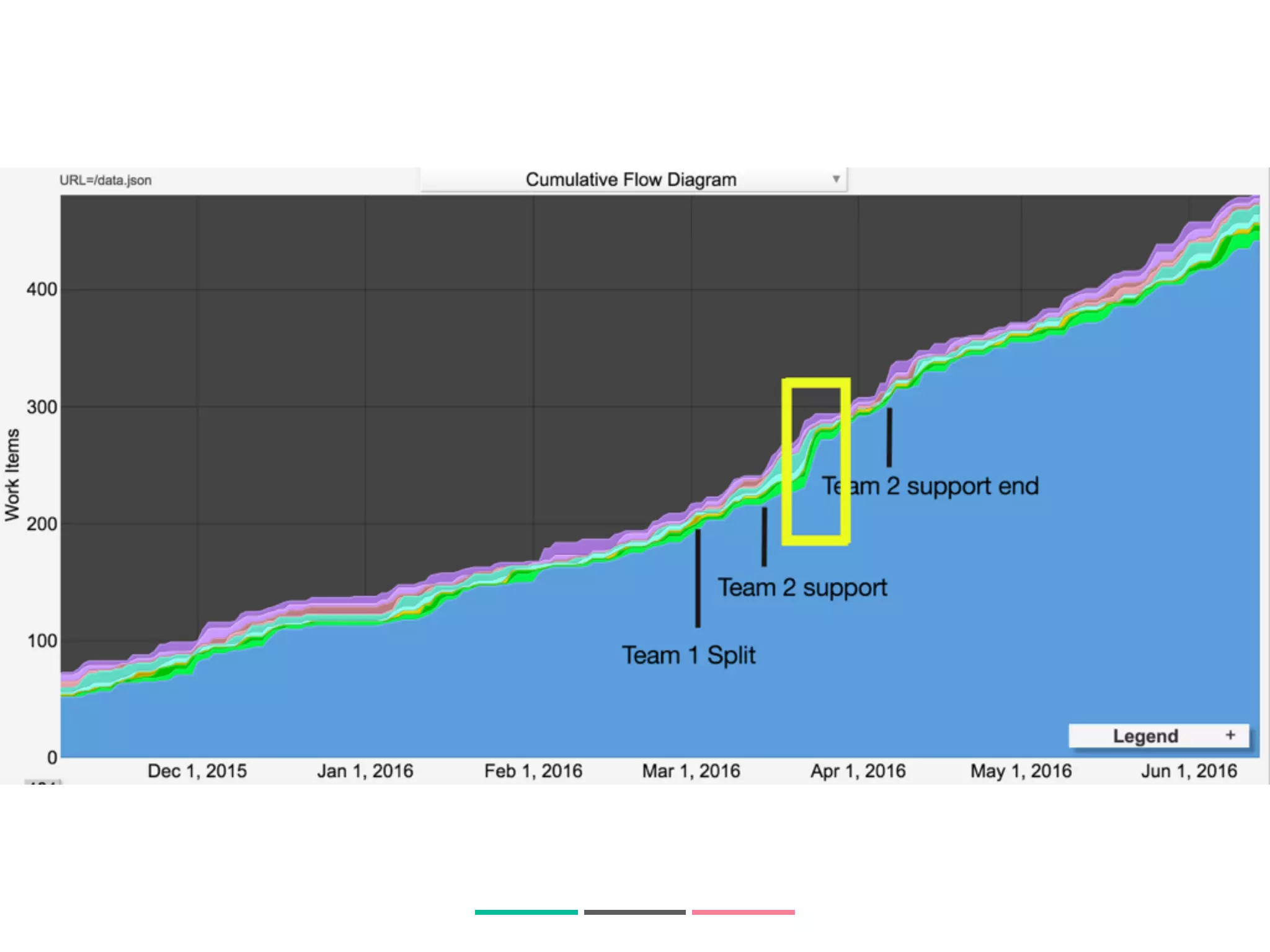
8. Use Cumulative Flow Diagrams to validate impact of
our actions
A bit of
theory
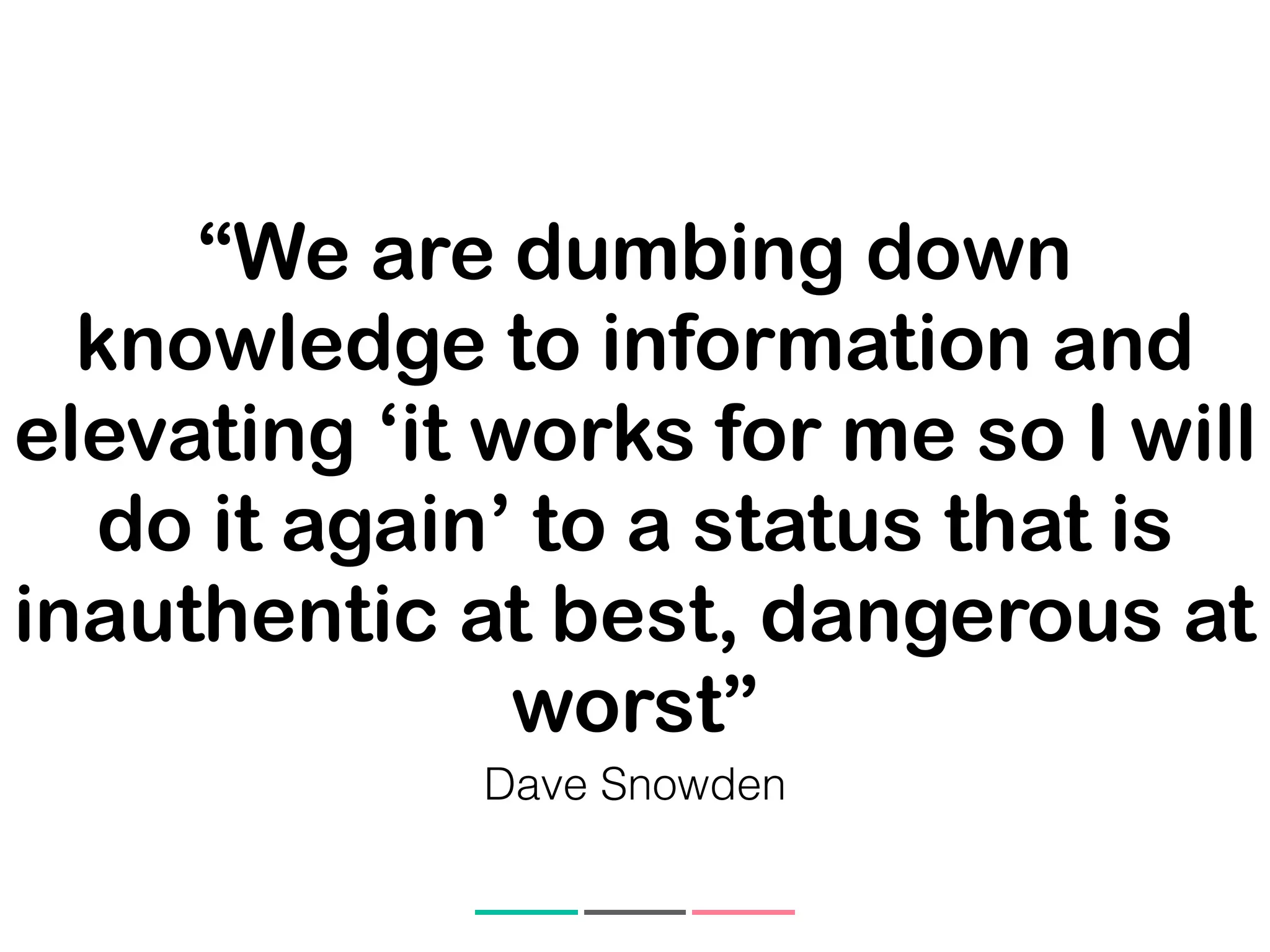
“We are dumbing down
knowledge to information and
elevating ‘it works for me so I will
do it again’ to a status that is
inauthentic at best, dangerous at
worst”
Dave Snowden
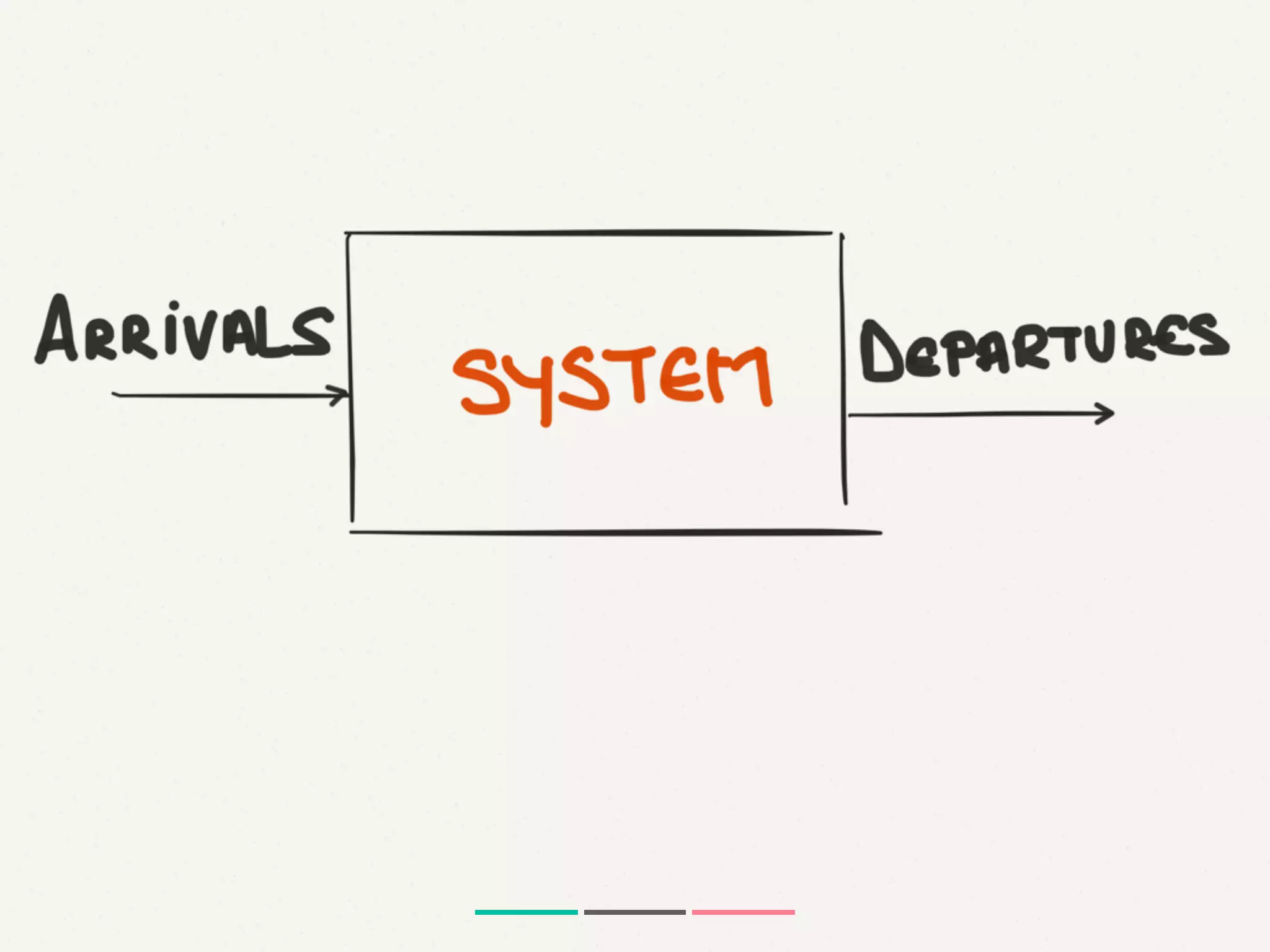
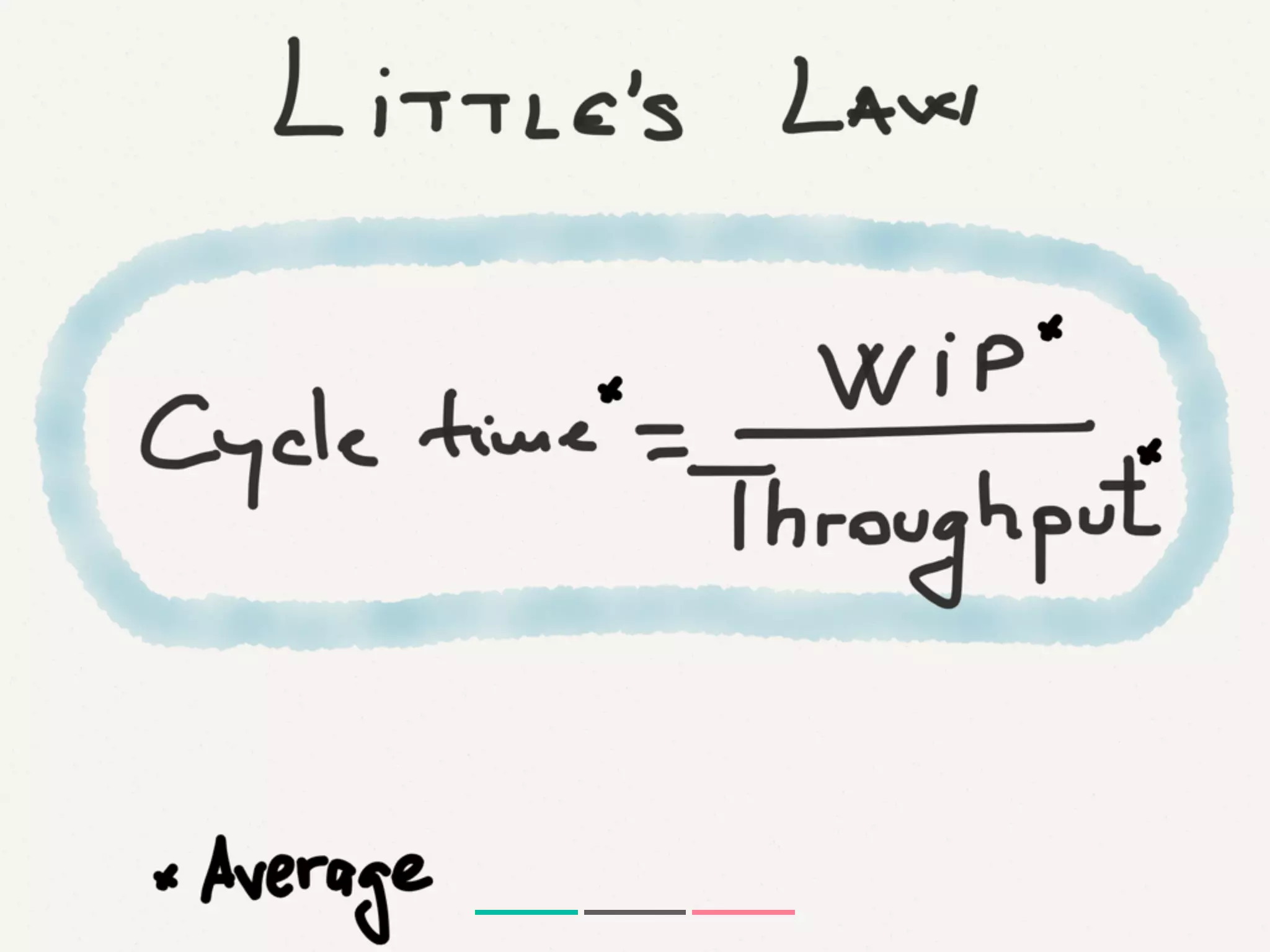
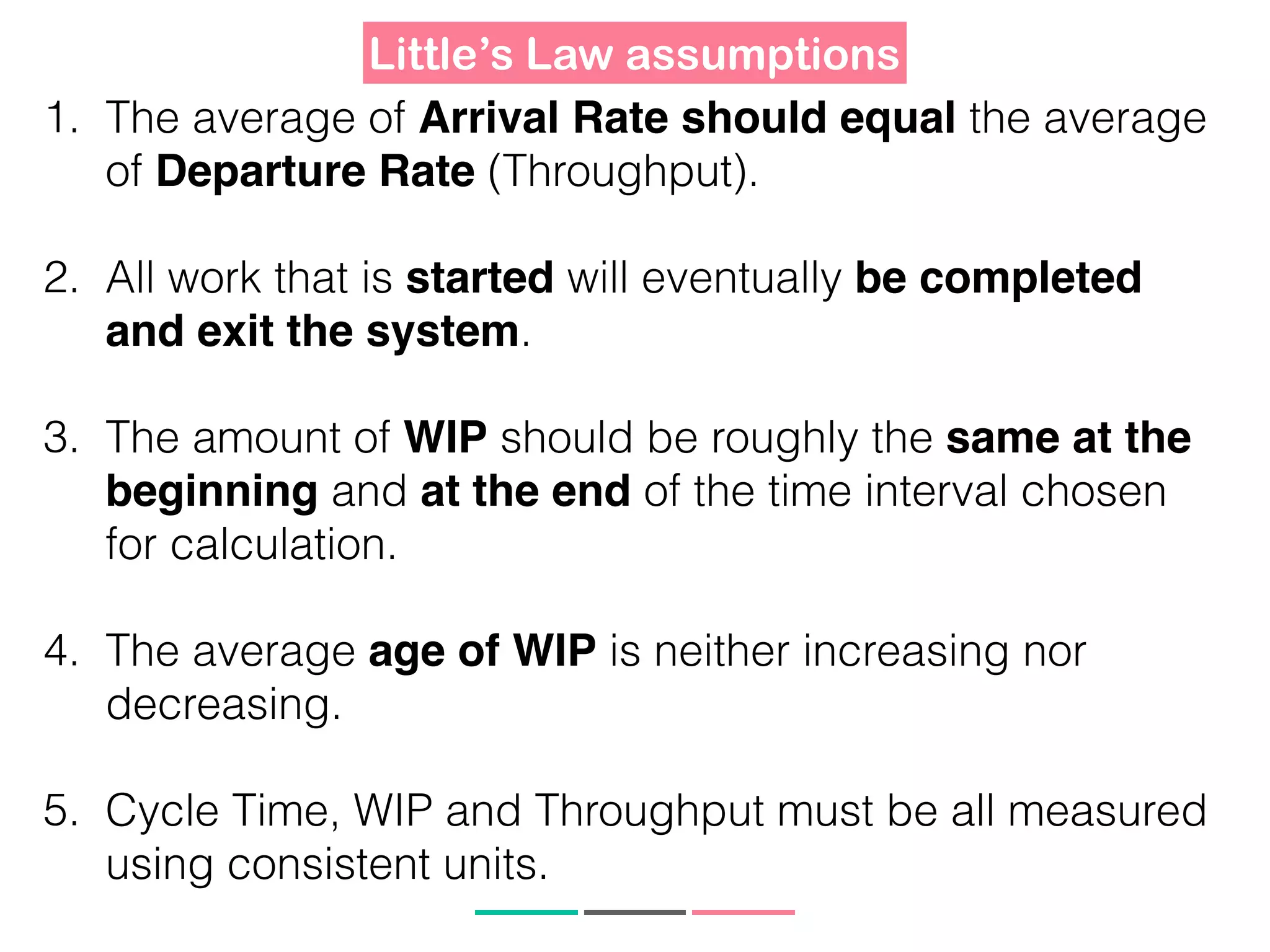
Little’s Law assumptions
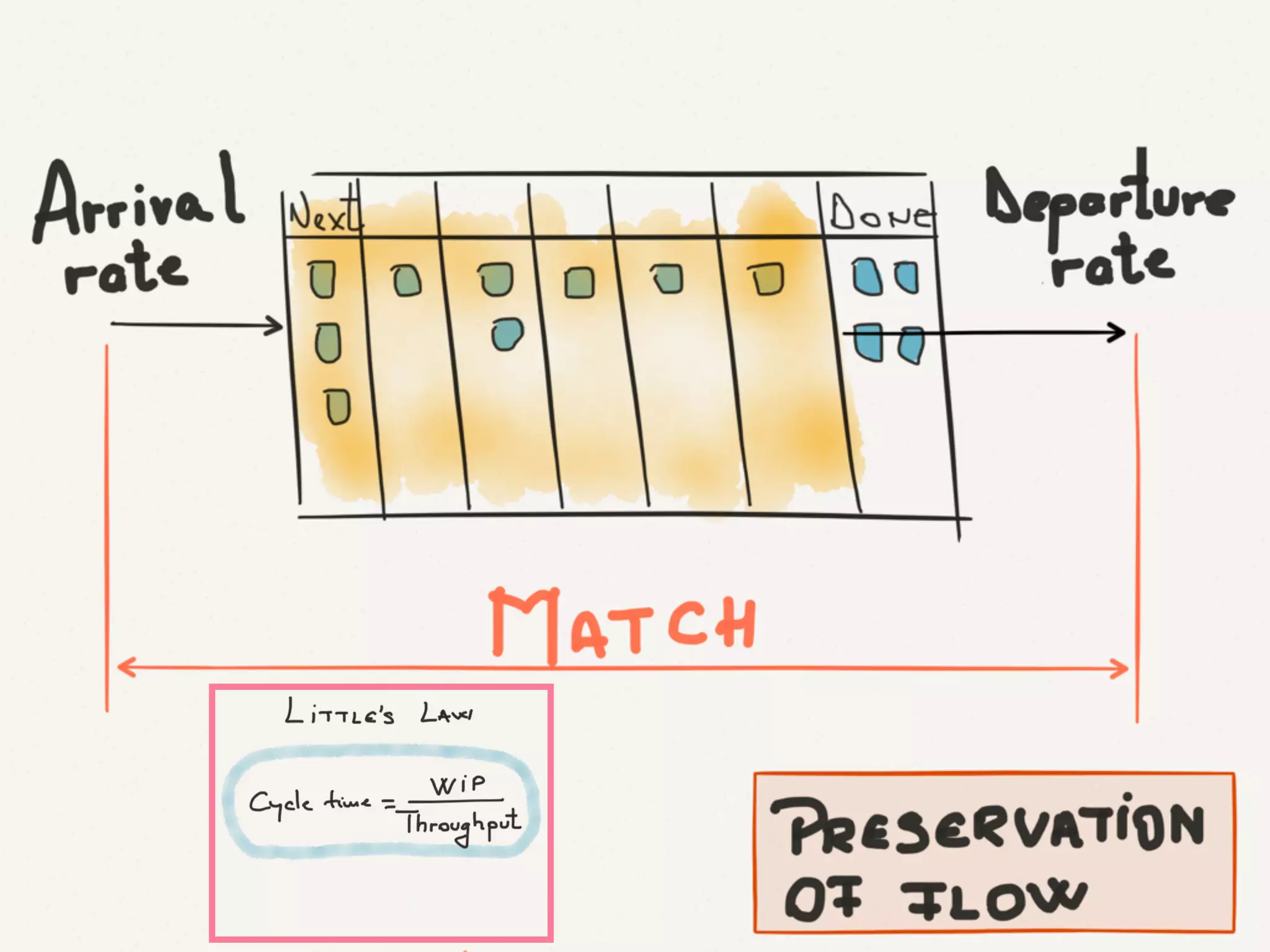
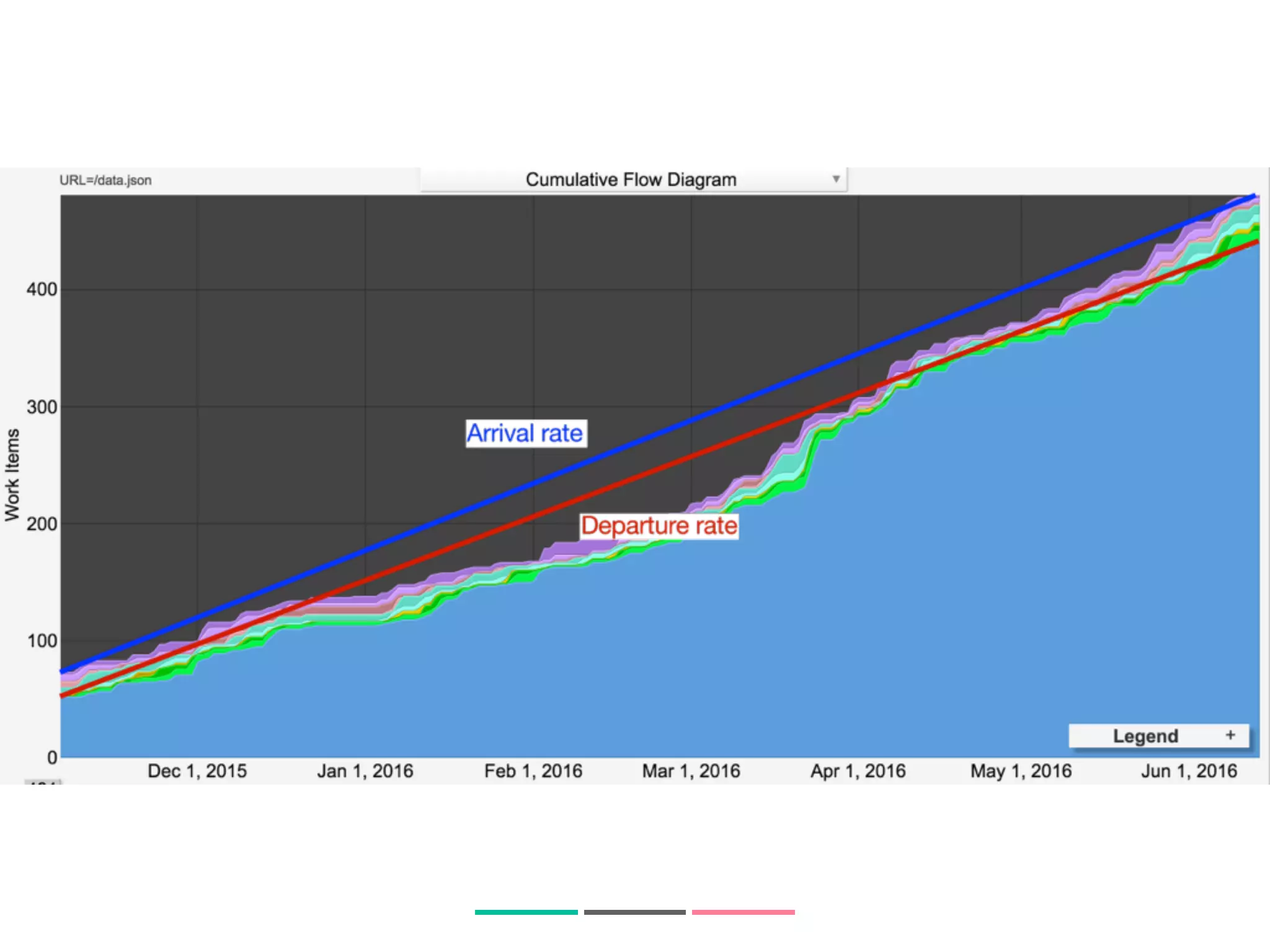
1. The average of Arrival Rate should equal the average
of Departure Rate (Throughput).
2. All work that is started will eventually be completed
and exit the system.
3. The amount of WIP should be roughly the same at the
beginning and at the end of the time interval chosen
for calculation.
4. The average age of WIP is neither increasing nor
decreasing.
5. Cycle Time, WIP and Throughput must be all measured
using consistent units.
Every time an assumption of Little’s Law is
violated the process becomes less
predictable.
Every time.
Protect Assumptions
as
Process Policies
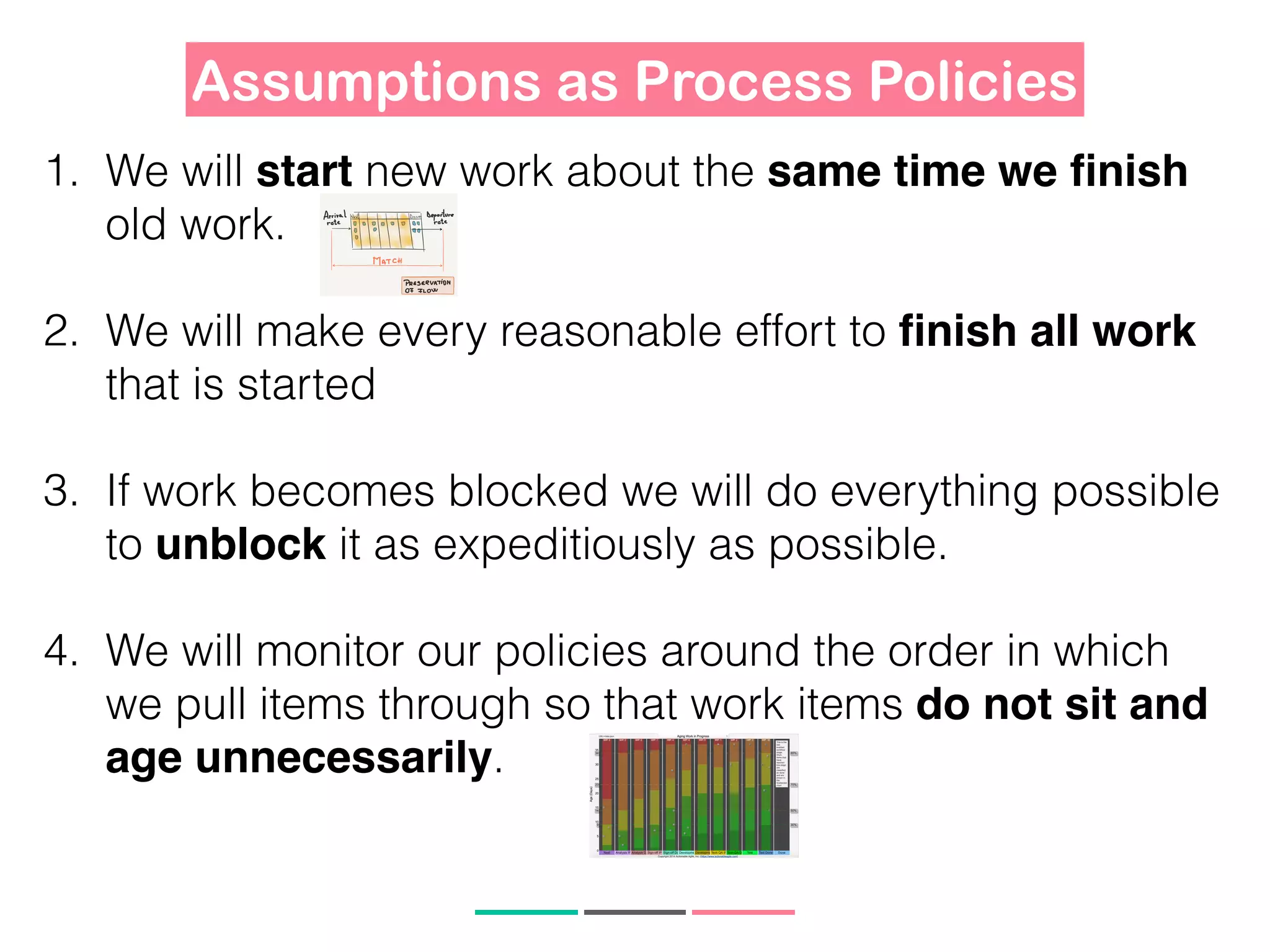
1. We will start new work about the same time we finish
old work.
2. We will make every reasonable effort to finish all work
that is started
3. If work becomes blocked we will do everything possible
to unblock it as expeditiously as possible.
4. We will monitor our policies around the order in which
we pull items through so that work items do not sit and
age unnecessarily.
Assumptions as Process Policies
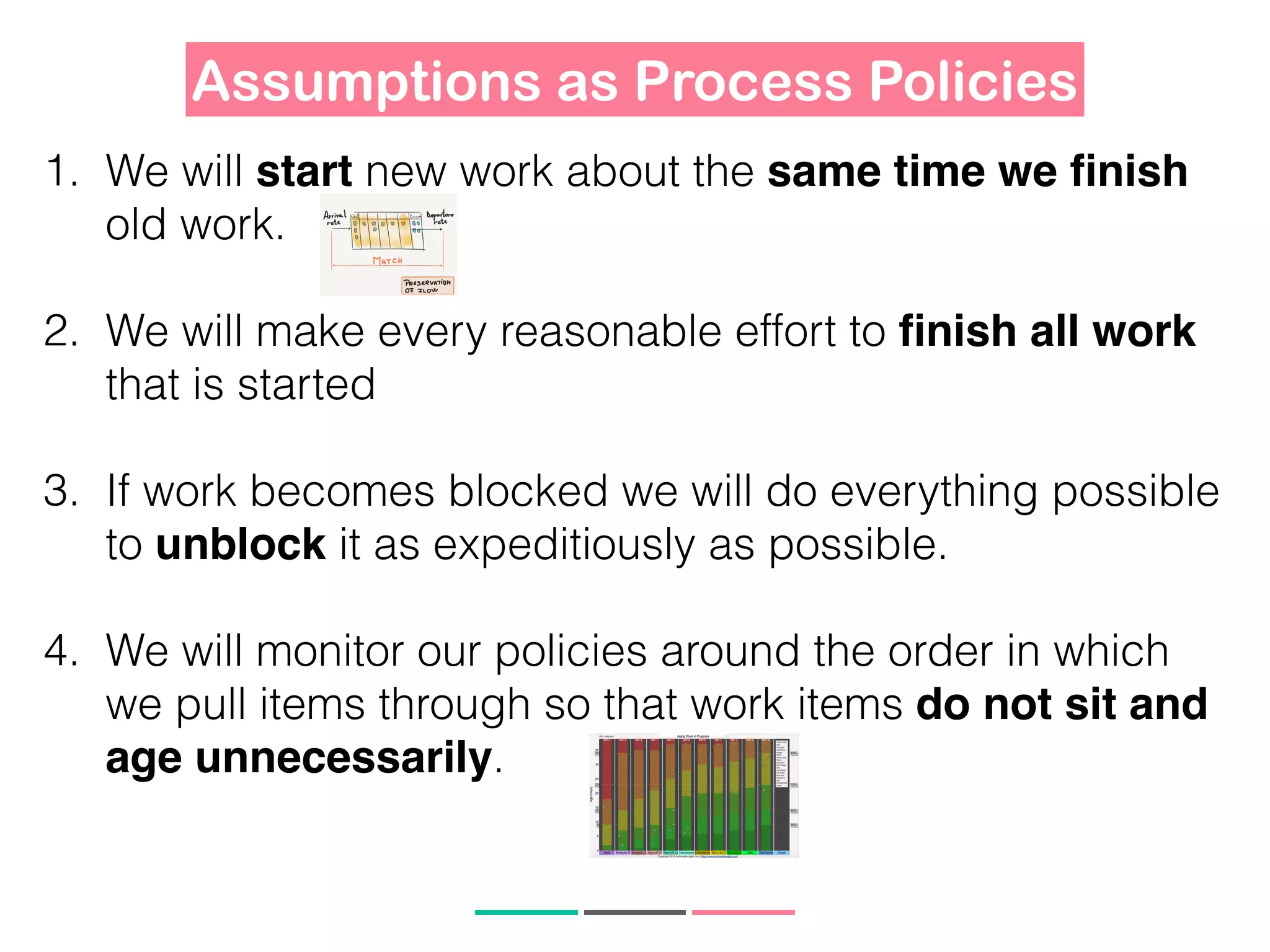
1. We will start new work about the same time we finish
old work.
2. We will make every reasonable effort to finish all work
that is started
3. If work becomes blocked we will do everything possible
to unblock it as expeditiously as possible.
4. We will monitor our policies around the order in which
we pull items through so that work items do not sit and
age unnecessarily.
Assumptions as Process Policies
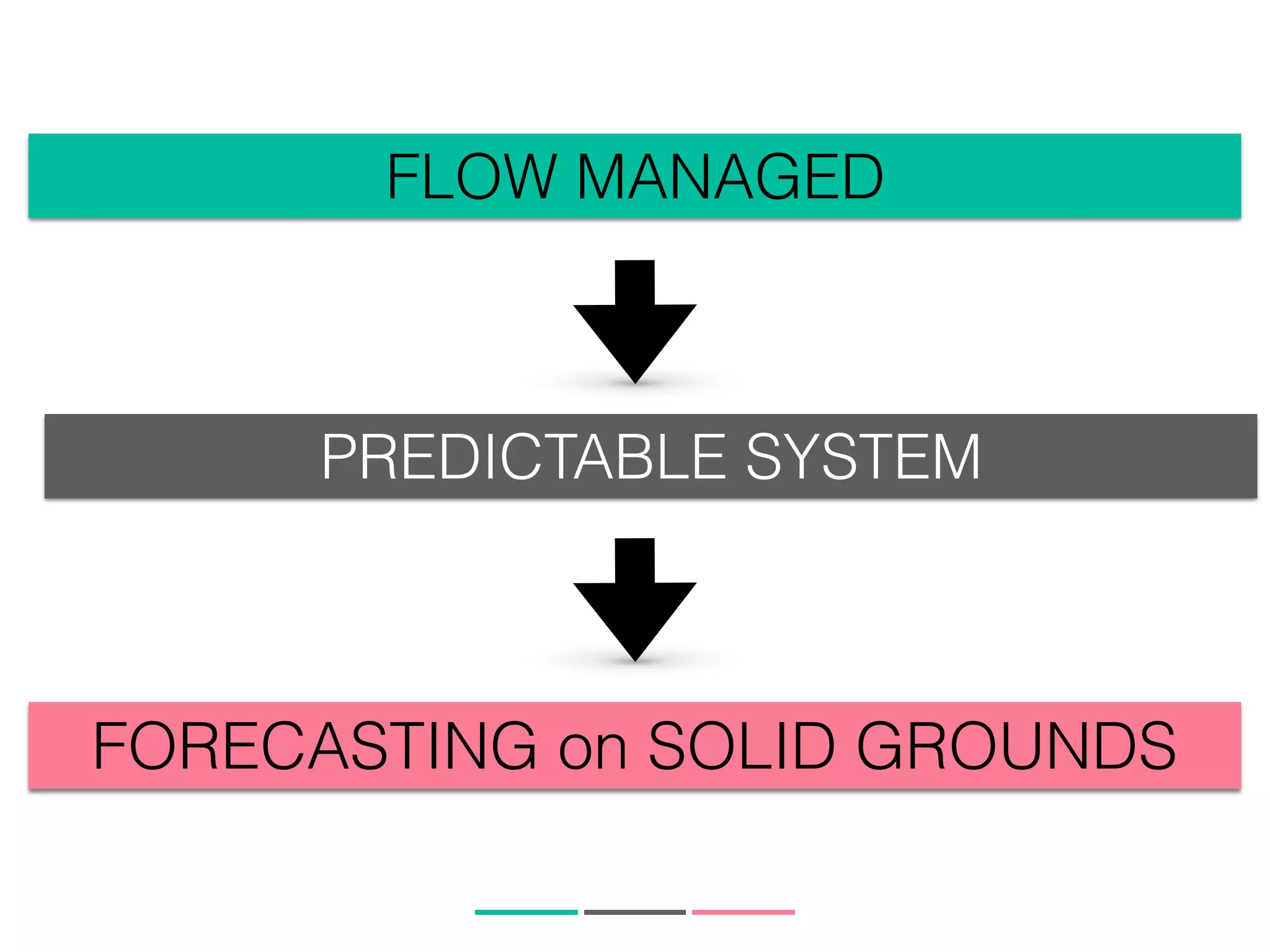
FLOW MANAGED
FORECASTING on SOLID GROUNDS
PREDICTABLE SYSTEM
When will it be done?
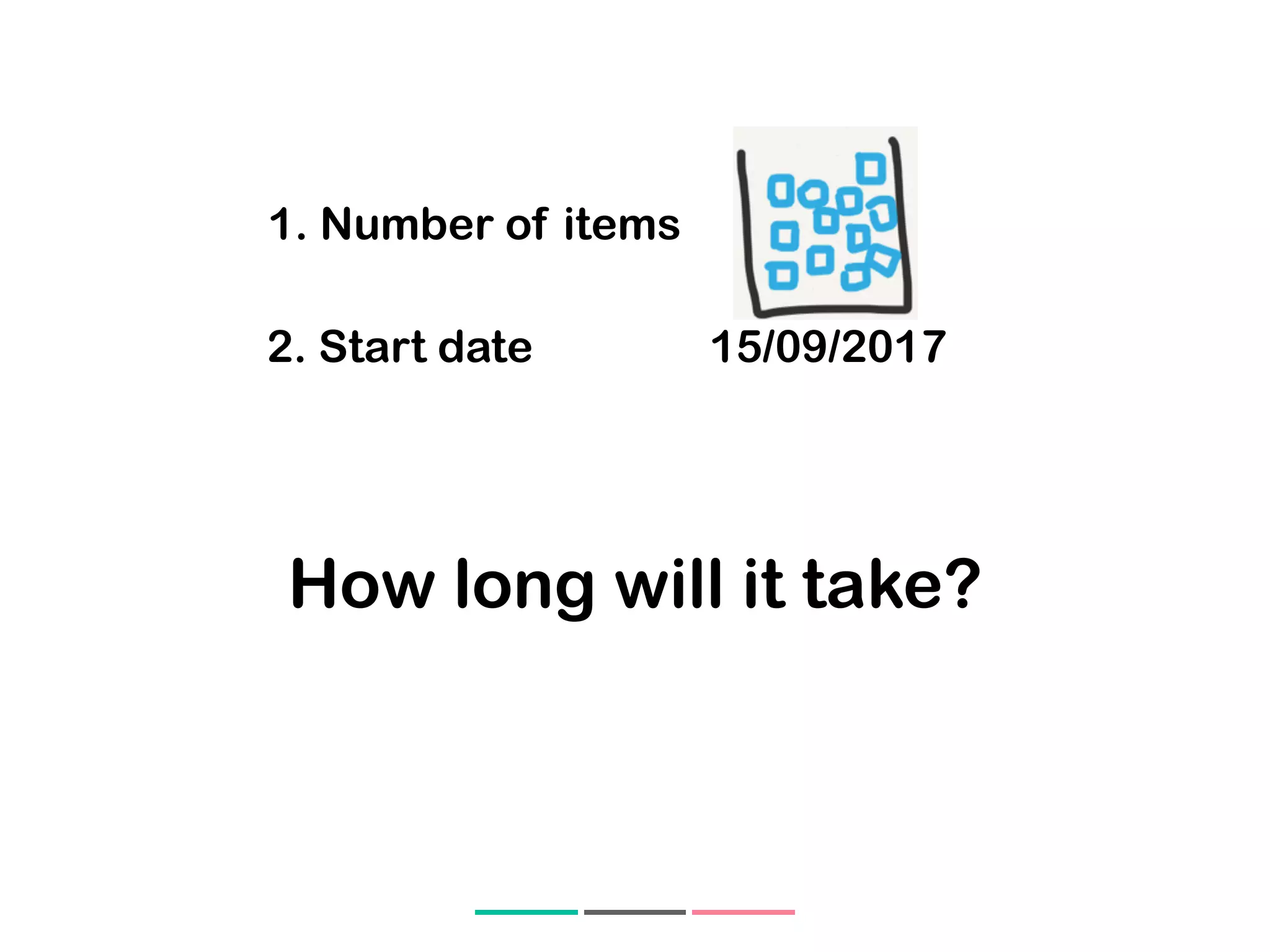
1. Number of items
2. Start date 15/09/2017
How long will it take?
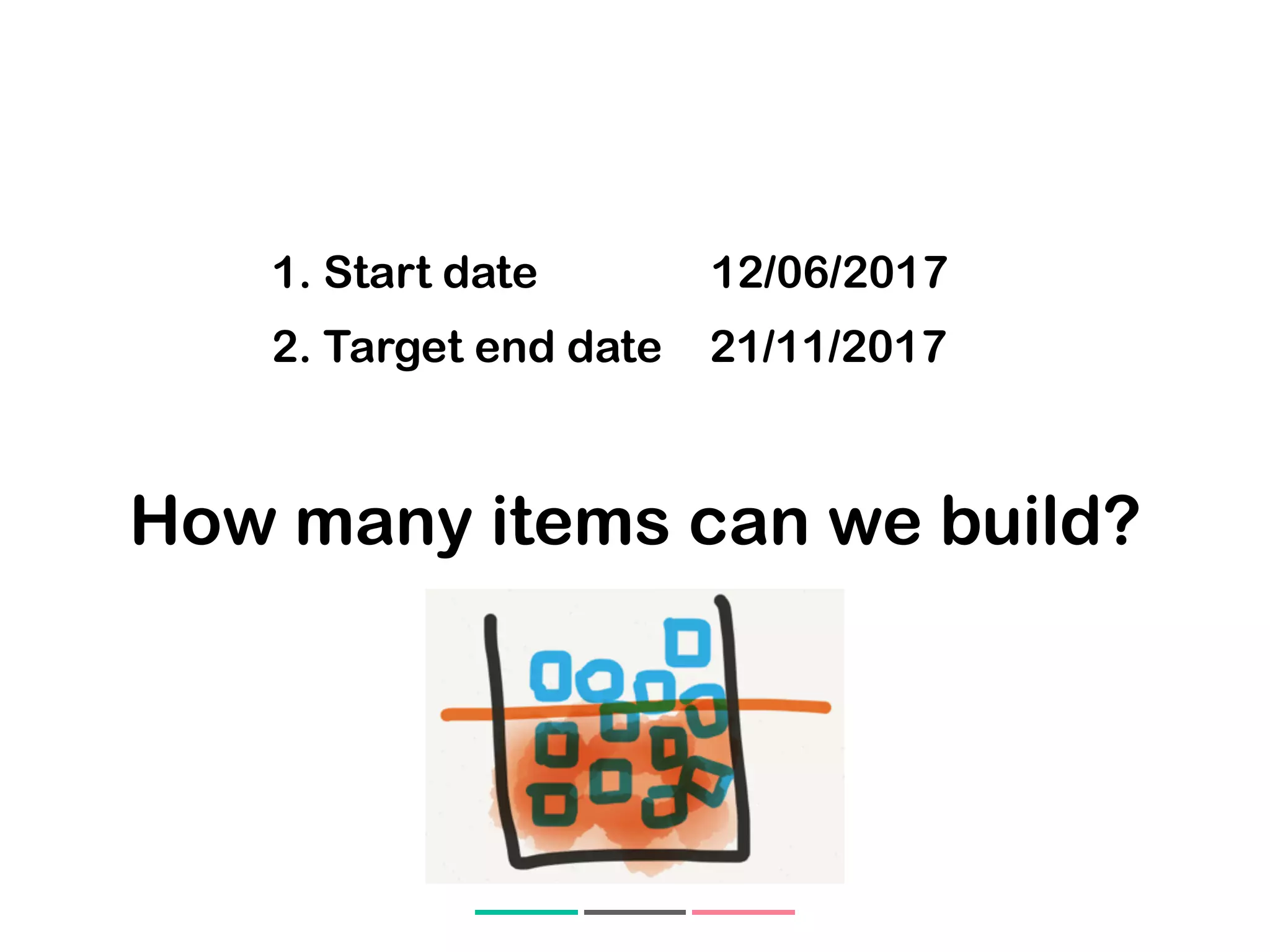
2. Target end date 21/11/2017
How many items can we build?
1. Start date 12/06/2017
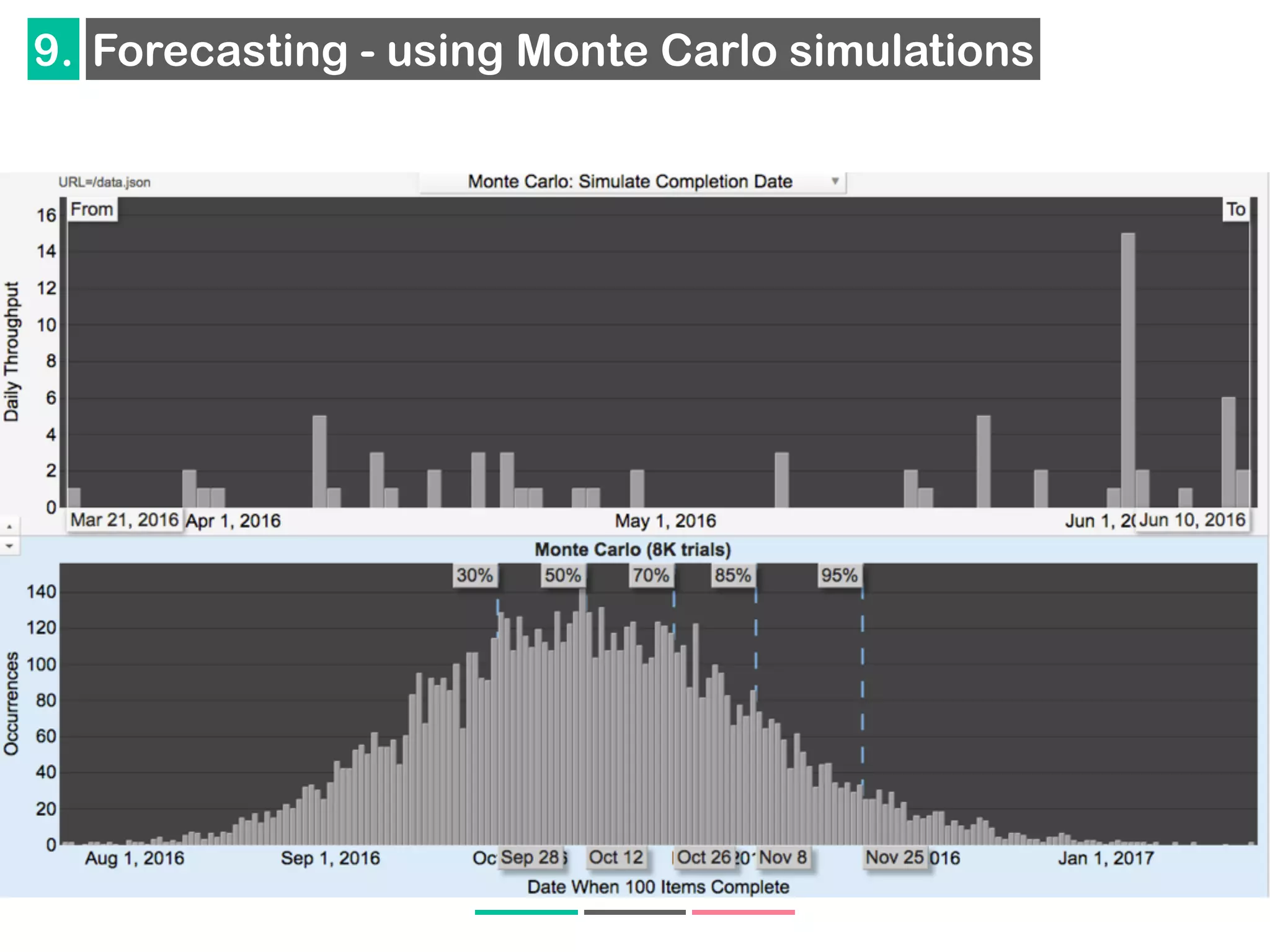
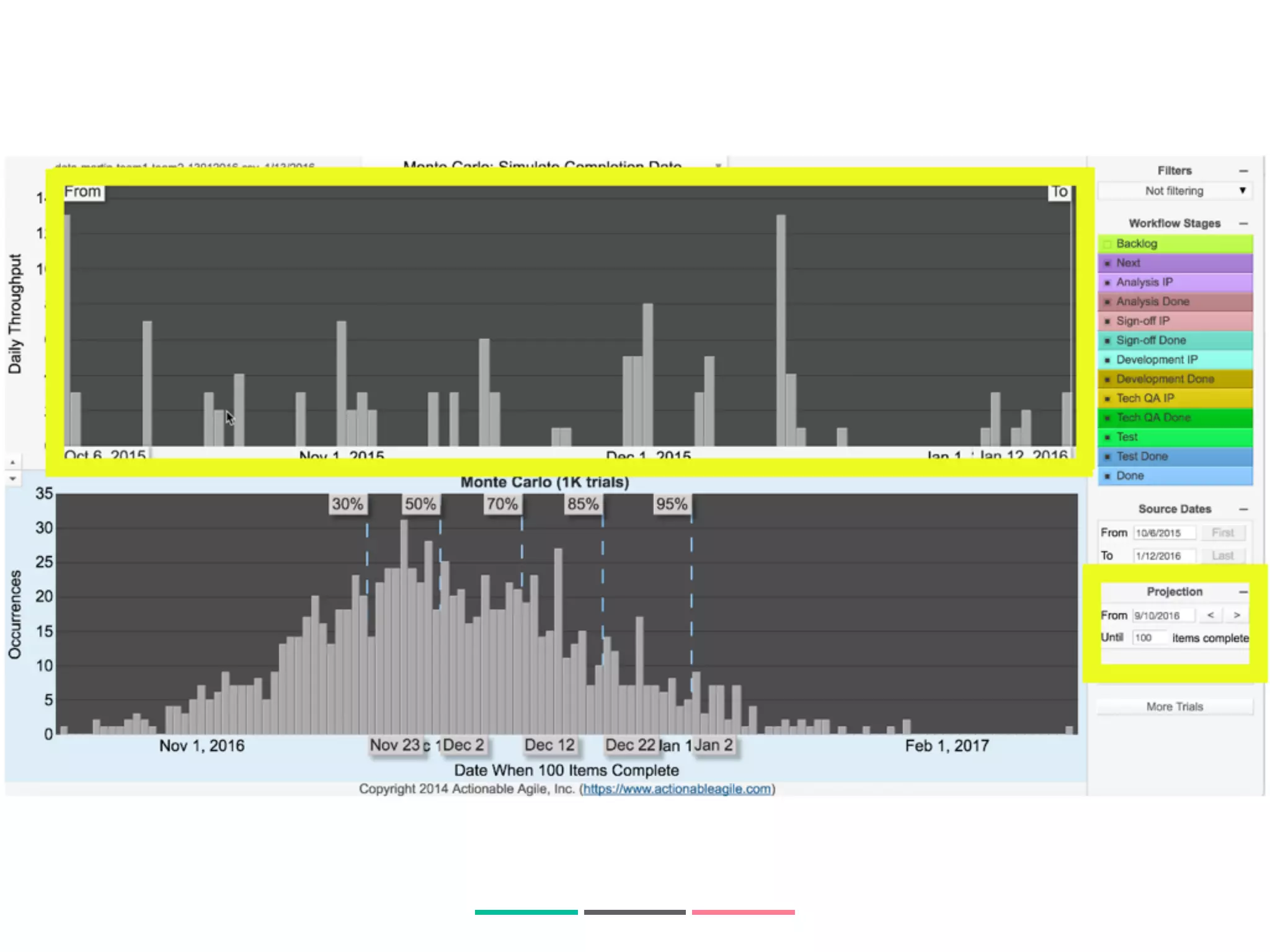
9. Forecasting - using Monte Carlo simulations
MC Simulation
- Define domain of possible inputs
- Generate inputs randomly from domain
- Perform a computation
- Aggregate result
[source: Wikipedia]
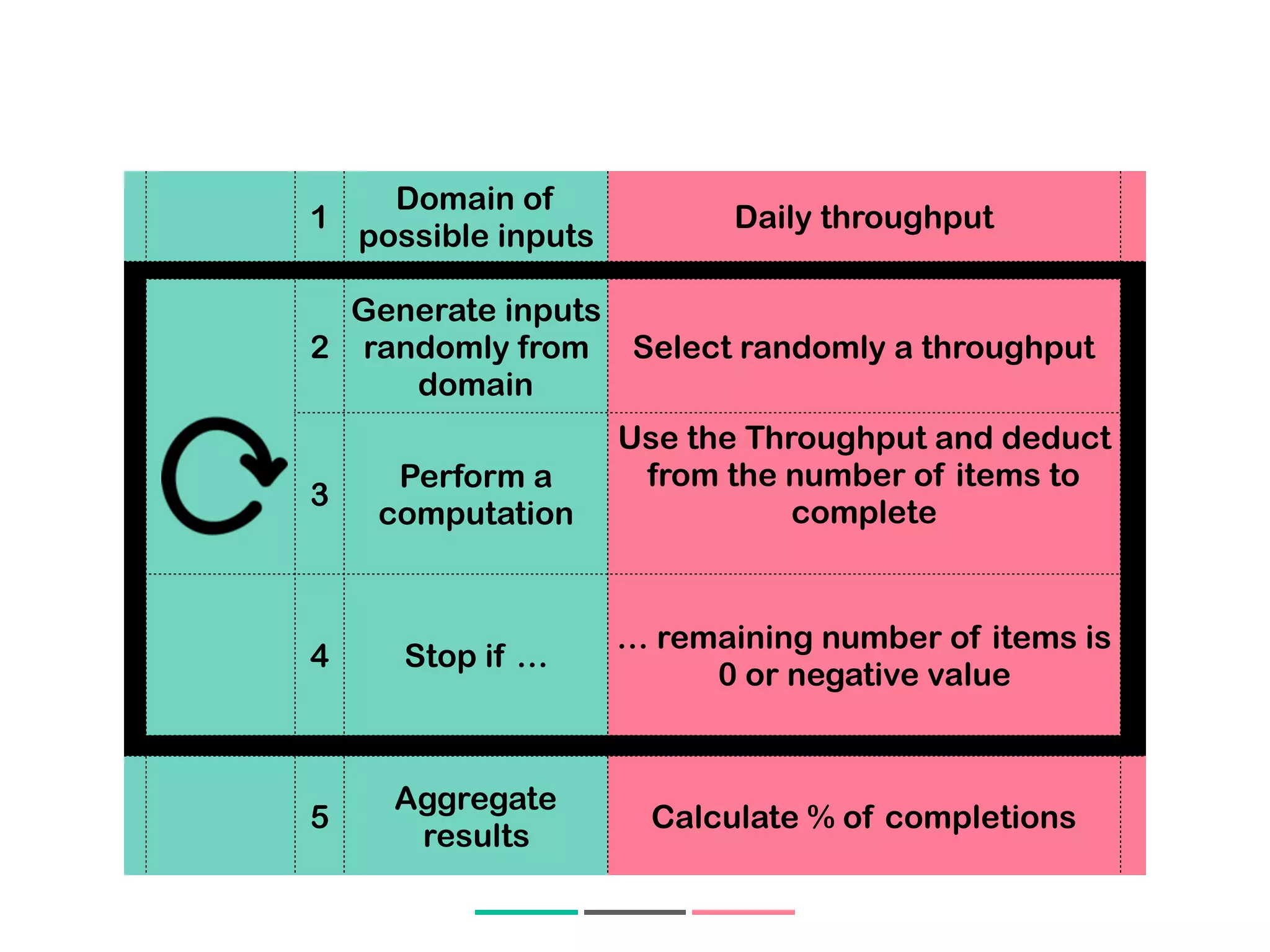
Statistical sampling based simulation
1
Domain of
possible inputs
Daily throughput
2
Generate inputs
randomly from
domain
Select randomly a throughput
3
Perform a
computation
Use the Throughput and deduct
from the number of items to
complete
Increase the end date by one
4 Stop if …
… remaining number of items is
0 or negative value
5
Aggregate
results
Calculate % of completions
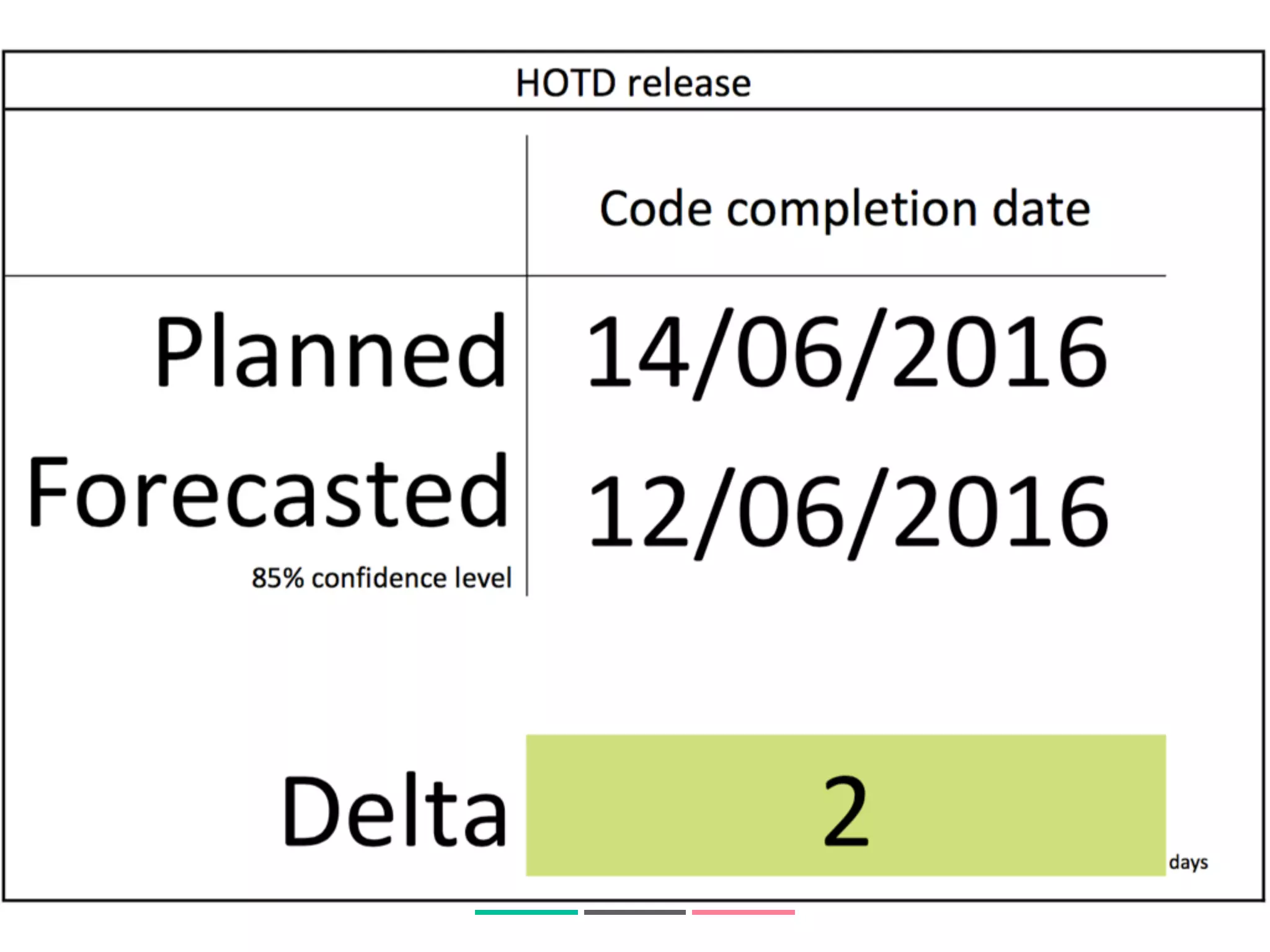
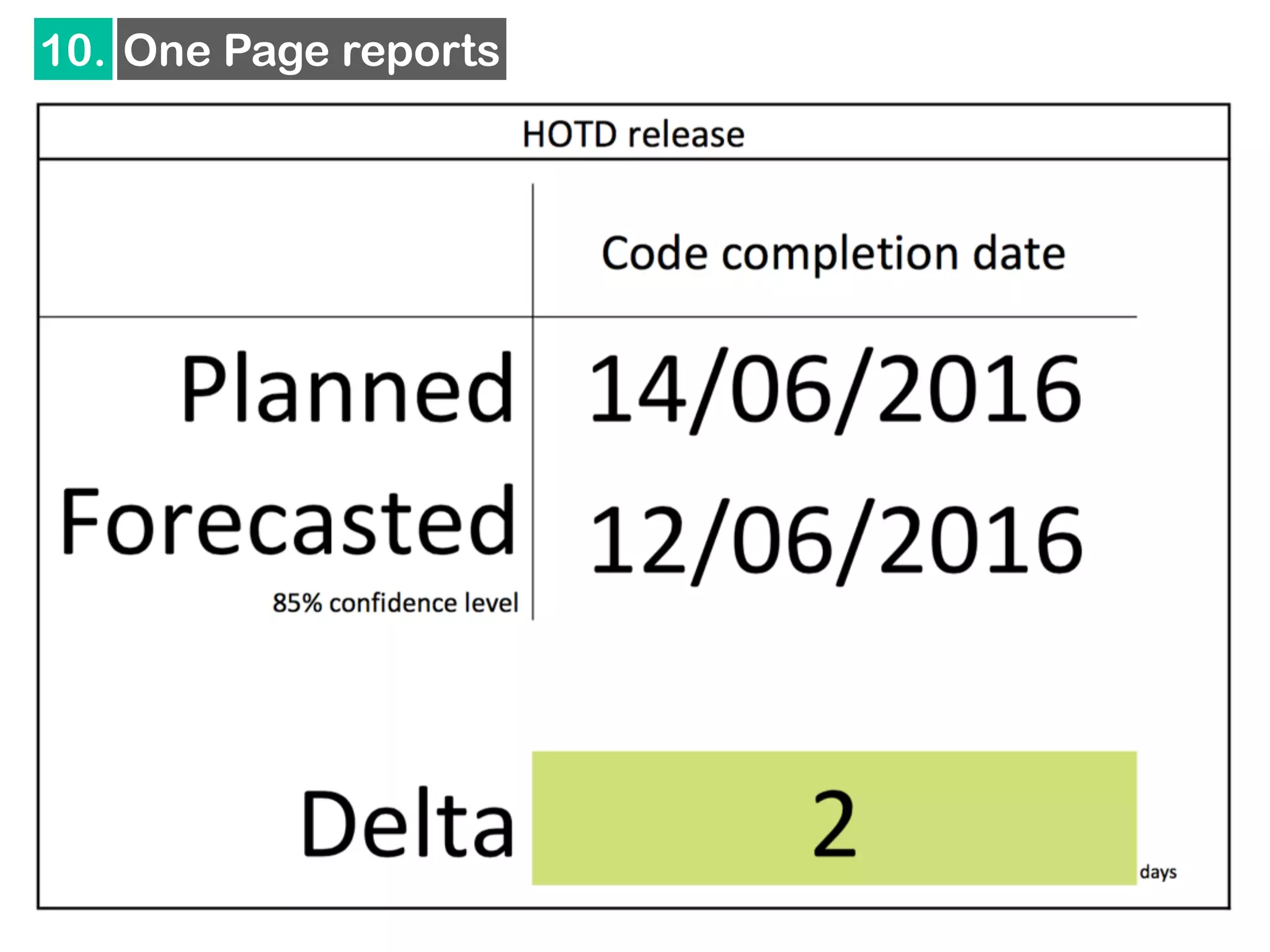
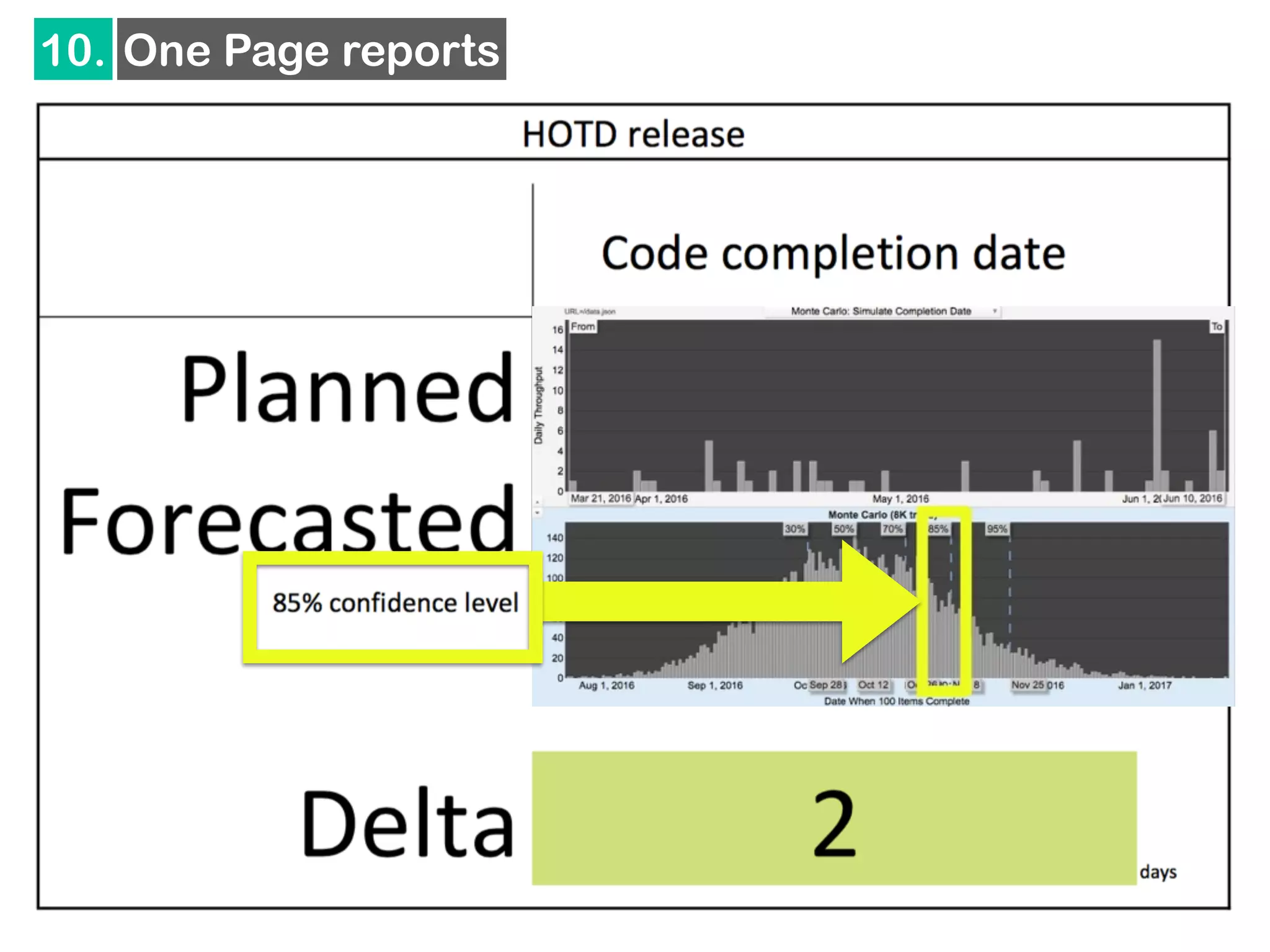
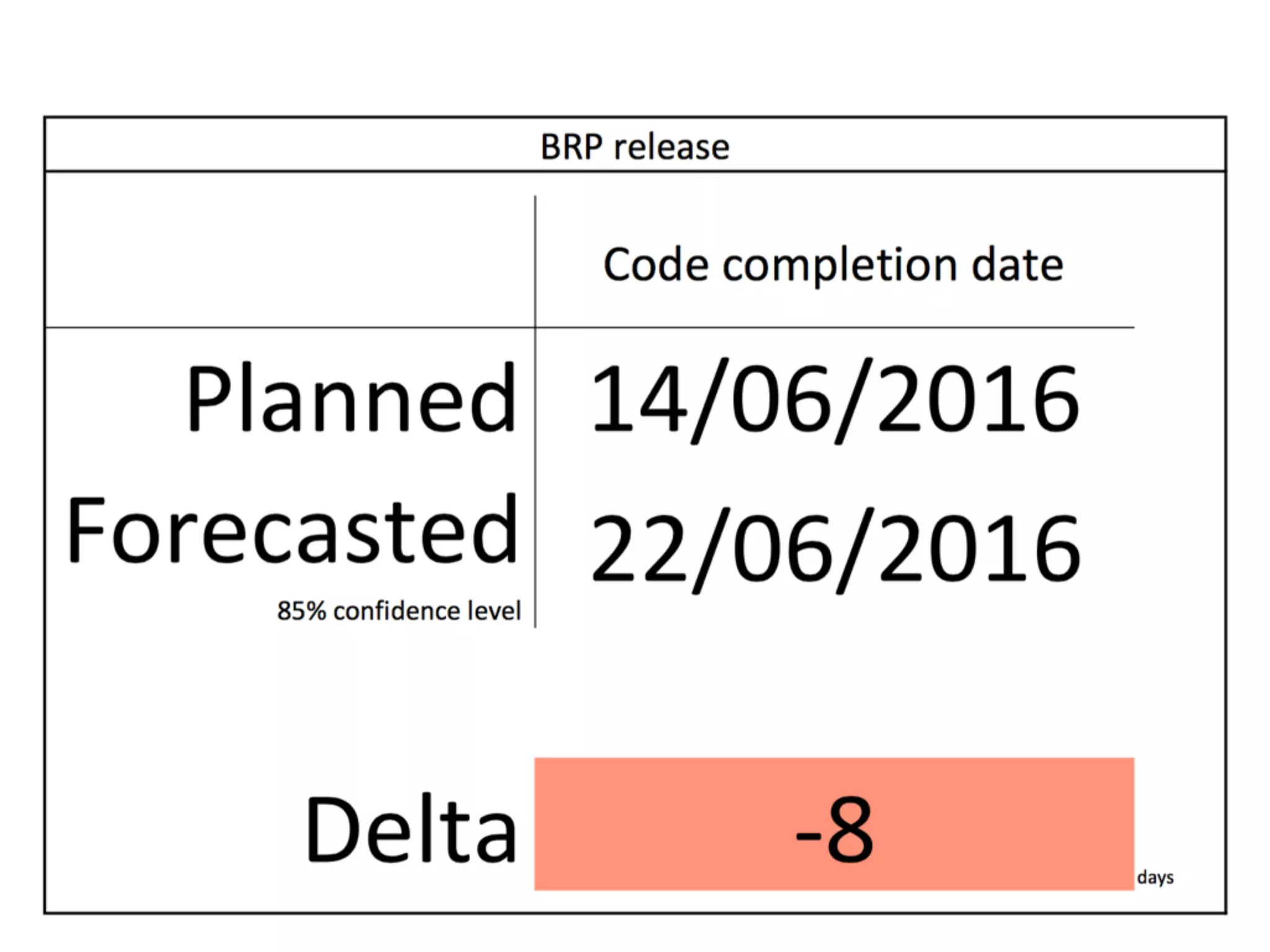
10. One Page reports
Date
Driven
Development
Data
Driven
Development
Effortless
Data
Driven
Development
Effortlessly
Predictable
Development
Thank you!
@theppito

From Scrum to flow using actionable agile metrics