
The Art of Aging:  Our Elders, Our StateChapel Hill AAUWMarch 20, 2010North Carolina Center for Public Policy Researchby Mebane Rash, Attorney and Editor of North Carolina Insight
Dr. Helen Martikainen
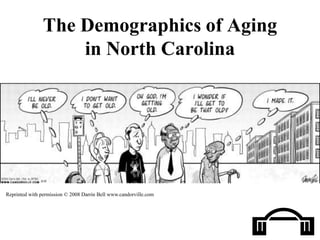
The Demographics of Aging in North CarolinaReprinted with permission © 2008 Darrin Bell www.candorville.com
Aging■  Population age 65         	and older will 	double from 	1.1 million to 	2.2 million by 2030.■  In 26 counties, 	more than ¼ of the 	population will be 	65 or older.
Shifts in the 65+ Age Group2.5 times more 85 and older
67 to 77 per 100 men to women
21 percent non-whitePublic Policy ConcernsFinancial Well-being of Seniors
Rural/Urban Differences
Work Force
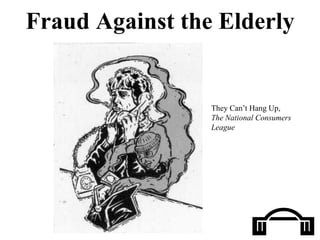
Financial Implications for the StateFraud Against the ElderlyThey Can’t Hang Up, The National Consumers League
Consumer Fraud Hot SpotsDunn (4th)
Thomasville-Lexington (11th)
Salisbury (18th)
New Bern (27th)
Statesville-Mooresville (31st)
Durham (33rd)Fraud by Loved OnesIntentional Theft of Money
Borrow Money Without Intending to Repay
Withhold Services/Medical Care to Preserve Assets
Sell Property Without Permission
Misuse ATM or Credit Cards
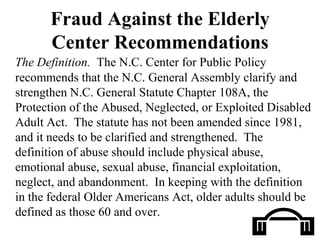
Force Signing Legal DocumentsFraud Against the ElderlyCenter RecommendationsThe Definition.  The N.C. Center for Public Policy recommends that the N.C. General Assembly clarify and strengthen N.C. General Statute Chapter 108A, the Protection of the Abused, Neglected, or Exploited Disabled Adult Act.  The statute has not been amended since 1981, and it needs to be clarified and strengthened.  The definition of abuse should include physical abuse, emotional abuse, sexual abuse, financial exploitation, neglect, and abandonment.  In keeping with the definition in the federal Older Americans Act, older adults should be defined as those 60 and over.
Fraud Against the ElderlyCenter RecommendationsThe Numbers.  The Center recommends that the N.C. General Assembly require reporting on the statewide incidence and prevalence of mistreatment of the elderly.
Fraud Against the ElderlyCenter RecommendationsThe Role of the Banks.  The Center recommends that the N.C. General Assembly establish a study commission to examine how the N.C. Commissioner of Banks, the financial management industry, and law enforcement agencies can partner to prevent fraud against the elderly.  The study commission should assess whether training for bank employees can help them recognize, report, and reduce the incidence of fraud against the elderly.
Fraud Against the ElderlyCenter RecommendationsThe Role of the Attorney General.  The Center recommends that the N.C. General Assembly consider giving the N.C. Attorney General authority to initiate prosecutions for fraud against the elderly.  Only five states do not give their Attorney General any authority to initiate local prosecutions – North Carolina, Arkansas, Connecticut, Texas, and West Virginia.
Tips to Avoid Being ScammedKnow the ScamsThe NC Senior Consumer Fraud Task Forcehttp://www.ncdhhs.gov/aging/fraud/alert.htmTo learn about the scams:http://www.ncdhhs.gov/aging/fraud/cfalert.htm
Tips for Identifying Victims1. Overnight courier services	2. Cheap prizes in the home 	3. Phone bills 	4. Colorful mailings in the home re: international lotteries, puzzle-solving contests	5. Questions about other countries, foreign taxes, Lloyd’s of London insurance policies, wire transfers, “barristers,” customs duties,  or registering bonds overseas	6. Checking and credit card accounts	7. Unexpected or unexplained borrowing patterns; an unexpected inability to pay bills or meet living expenses.	8. A sudden reluctance to be away from home or to have visitors in the home.
What Should Victims Do?File a ComplaintCall 1-877-5-NO-SCAM
In writing:	Consumer ProtectionAttorney General's OfficeMail Service Center 9001Raleigh, NC 27699-9001On the Internet:http://www.ncdoj.com	top issues, seniors, file a complaint
If you are concerned about someone…Call local law enforcement.
Contact adult protective services in your county department of social services.	“Any person having reasonable cause to believe that a disabled adult is in need of protective services shall report such information to the director.”http://www.ncdhhs.gov/dss/local/index.htm

Fraud Committed Against the Elderly in N.C.

  • 1.
    The Art ofAging: Our Elders, Our StateChapel Hill AAUWMarch 20, 2010North Carolina Center for Public Policy Researchby Mebane Rash, Attorney and Editor of North Carolina Insight
  • 2.
  • 3.
    The Demographics ofAging in North CarolinaReprinted with permission © 2008 Darrin Bell www.candorville.com
  • 4.
    Aging■ Populationage 65 and older will double from 1.1 million to 2.2 million by 2030.■ In 26 counties, more than ¼ of the population will be 65 or older.
  • 5.
    Shifts in the65+ Age Group2.5 times more 85 and older
  • 6.
    67 to 77per 100 men to women
  • 7.
    21 percent non-whitePublicPolicy ConcernsFinancial Well-being of Seniors
  • 8.
  • 9.
  • 10.
    Financial Implications forthe StateFraud Against the ElderlyThey Can’t Hang Up, The National Consumers League
  • 11.
    Consumer Fraud HotSpotsDunn (4th)
  • 12.
  • 13.
  • 14.
  • 15.
  • 16.
    Durham (33rd)Fraud byLoved OnesIntentional Theft of Money
  • 17.
    Borrow Money WithoutIntending to Repay
  • 18.
  • 19.
  • 20.
    Misuse ATM orCredit Cards
  • 21.
    Force Signing LegalDocumentsFraud Against the ElderlyCenter RecommendationsThe Definition. The N.C. Center for Public Policy recommends that the N.C. General Assembly clarify and strengthen N.C. General Statute Chapter 108A, the Protection of the Abused, Neglected, or Exploited Disabled Adult Act. The statute has not been amended since 1981, and it needs to be clarified and strengthened. The definition of abuse should include physical abuse, emotional abuse, sexual abuse, financial exploitation, neglect, and abandonment. In keeping with the definition in the federal Older Americans Act, older adults should be defined as those 60 and over.
  • 22.
    Fraud Against theElderlyCenter RecommendationsThe Numbers. The Center recommends that the N.C. General Assembly require reporting on the statewide incidence and prevalence of mistreatment of the elderly.
  • 23.
    Fraud Against theElderlyCenter RecommendationsThe Role of the Banks. The Center recommends that the N.C. General Assembly establish a study commission to examine how the N.C. Commissioner of Banks, the financial management industry, and law enforcement agencies can partner to prevent fraud against the elderly. The study commission should assess whether training for bank employees can help them recognize, report, and reduce the incidence of fraud against the elderly.
  • 24.
    Fraud Against theElderlyCenter RecommendationsThe Role of the Attorney General. The Center recommends that the N.C. General Assembly consider giving the N.C. Attorney General authority to initiate prosecutions for fraud against the elderly. Only five states do not give their Attorney General any authority to initiate local prosecutions – North Carolina, Arkansas, Connecticut, Texas, and West Virginia.
  • 25.
    Tips to AvoidBeing ScammedKnow the ScamsThe NC Senior Consumer Fraud Task Forcehttp://www.ncdhhs.gov/aging/fraud/alert.htmTo learn about the scams:http://www.ncdhhs.gov/aging/fraud/cfalert.htm
  • 26.
    Tips for IdentifyingVictims1. Overnight courier services 2. Cheap prizes in the home 3. Phone bills 4. Colorful mailings in the home re: international lotteries, puzzle-solving contests 5. Questions about other countries, foreign taxes, Lloyd’s of London insurance policies, wire transfers, “barristers,” customs duties, or registering bonds overseas 6. Checking and credit card accounts 7. Unexpected or unexplained borrowing patterns; an unexpected inability to pay bills or meet living expenses. 8. A sudden reluctance to be away from home or to have visitors in the home.
  • 27.
    What Should VictimsDo?File a ComplaintCall 1-877-5-NO-SCAM
  • 28.
    In writing: Consumer ProtectionAttorneyGeneral's OfficeMail Service Center 9001Raleigh, NC 27699-9001On the Internet:http://www.ncdoj.com top issues, seniors, file a complaint
  • 29.
    If you areconcerned about someone…Call local law enforcement.
  • 30.
    Contact adult protectiveservices in your county department of social services. “Any person having reasonable cause to believe that a disabled adult is in need of protective services shall report such information to the director.”http://www.ncdhhs.gov/dss/local/index.htm