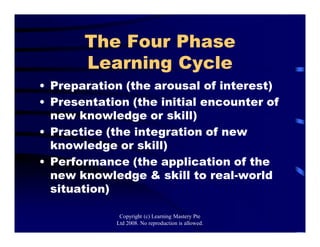
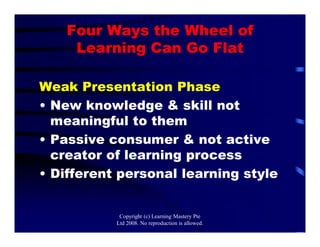
The Four Phase
Learning Cycle
• Preparation (the arousal of interest)
• Presentation (the initial encounter of
new knowledge or skill)
• Practice (the integration of new
knowledge or skill)
• Performance (the application of the
new knowledge & skill to real-world
situation)
Copyright (c) Learning Mastery Pte
Ltd 2008. No reproduction is allowed.
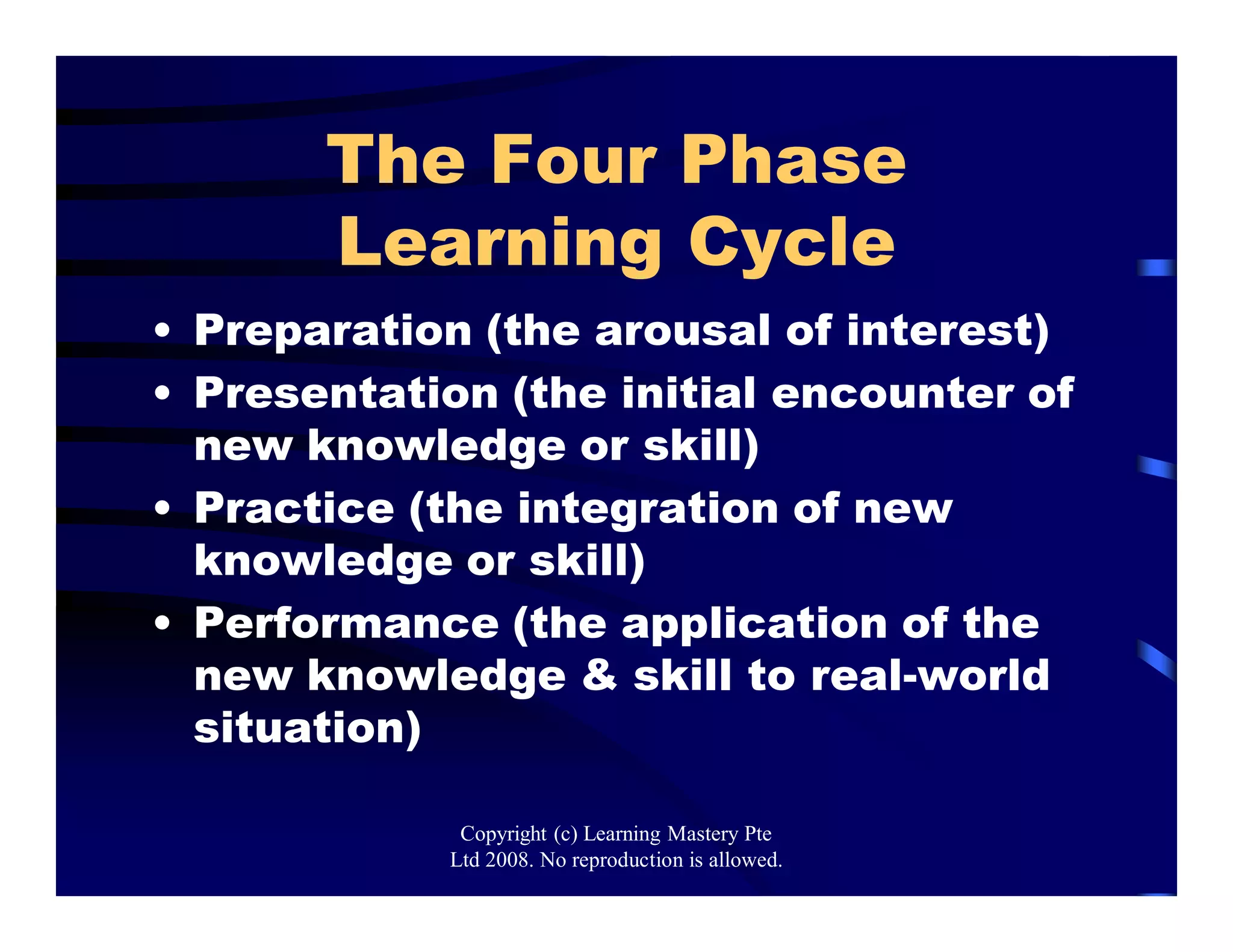
Four Ways the Wheel of
Learning Can Go Flat
Weak Preparation Phase
• Not open
• Not Ready to learn
• Don’t see the benefit oif
learning for themselves
• Have barriers
• Negative Subconscious feeling
Copyright (c) Learning Mastery Pte
Ltd 2008. No reproduction is allowed.
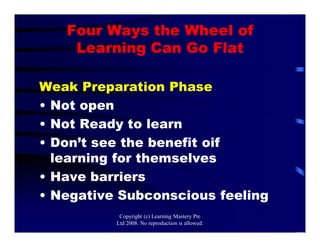
Four Ways the Wheel of
Learning Can Go Flat
Weak Presentation Phase
• New knowledge & skill not
meaningful to them
• Passive consumer & not active
creator of learning process
• Different personal learning style
Copyright (c) Learning Mastery Pte
Ltd 2008. No reproduction is allowed.
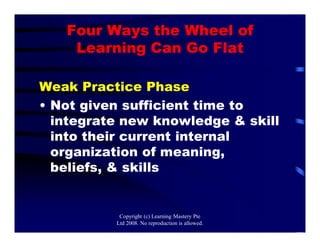
Four Ways the Wheel of
Learning Can Go Flat
Weak Practice Phase
• Not given sufficient time to
integrate new knowledge & skill
into their current internal
organization of meaning,
beliefs, & skills
Copyright (c) Learning Mastery Pte
Ltd 2008. No reproduction is allowed.
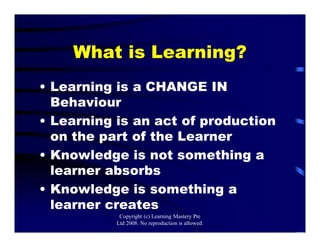
What is Learning?
• Learning is a CHANGE IN
Behaviour
• Learning is an act of production
on the part of the Learner
• Knowledge is not something a
learner absorbs
• Knowledge is something a
learner creates
Copyright (c) Learning Mastery Pte
Ltd 2008. No reproduction is allowed.
Four Ways the Wheel of
Learning Can Go Flat
Weak Performance Phase
• No chance to immediately apply
what they’ve learned
Copyright (c) Learning Mastery Pte
Ltd 2008. No reproduction is allowed.
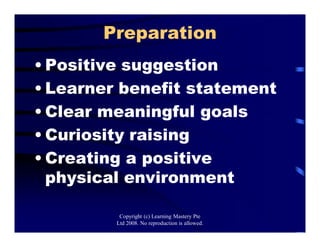
Preparation
• Positive suggestion
• Learner benefit statement
• Clear meaningful goals
• Curiosity raising
• Creating a positive
physical environment
Copyright (c) Learning Mastery Pte
Ltd 2008. No reproduction is allowed.
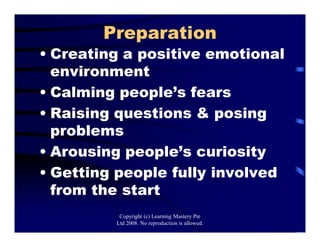
Preparation
• Creating a positive emotional
environment
• Calming people’s fears
• Raising questions & posing
problems
• Arousing people’s curiosity
• Getting people fully involved
from the start
Copyright (c) Learning Mastery Pte
Ltd 2008. No reproduction is allowed.

Four Phases of A Learning.pdf

  • 1.
    The Four Phase LearningCycle • Preparation (the arousal of interest) • Presentation (the initial encounter of new knowledge or skill) • Practice (the integration of new knowledge or skill) • Performance (the application of the new knowledge & skill to real-world situation) Copyright (c) Learning Mastery Pte Ltd 2008. No reproduction is allowed.
  • 2.
    Four Ways theWheel of Learning Can Go Flat Weak Preparation Phase • Not open • Not Ready to learn • Don’t see the benefit oif learning for themselves • Have barriers • Negative Subconscious feeling Copyright (c) Learning Mastery Pte Ltd 2008. No reproduction is allowed.
  • 3.
    Four Ways theWheel of Learning Can Go Flat Weak Presentation Phase • New knowledge & skill not meaningful to them • Passive consumer & not active creator of learning process • Different personal learning style Copyright (c) Learning Mastery Pte Ltd 2008. No reproduction is allowed.
  • 4.
    Four Ways theWheel of Learning Can Go Flat Weak Practice Phase • Not given sufficient time to integrate new knowledge & skill into their current internal organization of meaning, beliefs, & skills Copyright (c) Learning Mastery Pte Ltd 2008. No reproduction is allowed.
  • 5.
    What is Learning? •Learning is a CHANGE IN Behaviour • Learning is an act of production on the part of the Learner • Knowledge is not something a learner absorbs • Knowledge is something a learner creates Copyright (c) Learning Mastery Pte Ltd 2008. No reproduction is allowed.
  • 6.
    Four Ways theWheel of Learning Can Go Flat Weak Performance Phase • No chance to immediately apply what they’ve learned Copyright (c) Learning Mastery Pte Ltd 2008. No reproduction is allowed.
  • 7.
    Preparation • Positive suggestion •Learner benefit statement • Clear meaningful goals • Curiosity raising • Creating a positive physical environment Copyright (c) Learning Mastery Pte Ltd 2008. No reproduction is allowed.
  • 8.
    Preparation • Creating apositive emotional environment • Calming people’s fears • Raising questions & posing problems • Arousing people’s curiosity • Getting people fully involved from the start Copyright (c) Learning Mastery Pte Ltd 2008. No reproduction is allowed.