Founder Institute 2015
Research and
Customer Development
Humphrey Laubscher
23rd March 2015
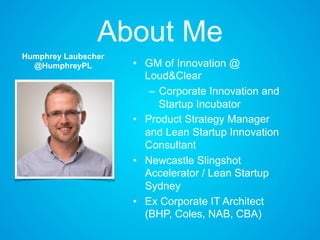
About Me
• GM of Innovation @
Loud&Clear
– Corporate Innovation and
Startup Incubator
• Product Strategy Manager
and Lean Startup Innovation
Consultant
• Newcastle Slingshot
Accelerator / Lean Startup
Sydney
• Ex Corporate IT Architect
(BHP, Coles, NAB, CBA)
Humphrey Laubscher
@HumphreyPL
Overview
• What research can you do to validate or to kill an idea?
• How do you determine the key assumptions of your business?
• Can key assumptions be tested?
• What are tactics to test key assumptions when you just have
an idea?
• How do you identify and interview potential customers?
• What are some tactics for effective surveying?
• Does the market that you choose matter?
• What are good markets, and what are bad markets?
• Do competitors matter and why?
• How do you define your competitive landscape?
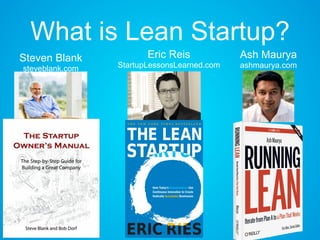
What is Lean Startup?
Steven Blank
steveblank.com
Eric Reis
StartupLessonsLearned.com
Ash Maurya
ashmaurya.com
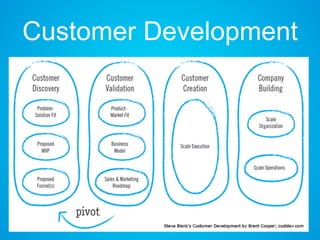
Customer Development
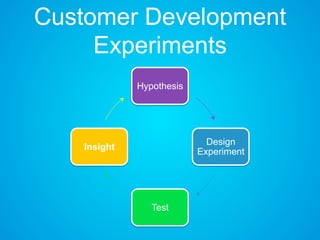
Experiments
Hypothesis
Design
Experiment
Test
Insight
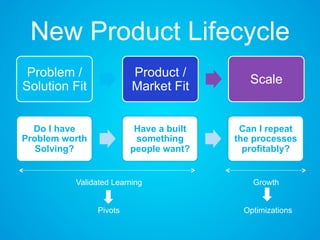
New Product Lifecycle
Problem /
Solution Fit
Product /
Market Fit
Scale
Do I have
Problem worth
Solving?
Have a built
something
people want?
Can I repeat
the processes
profitably?
Validated Learning Growth
Pivots Optimizations
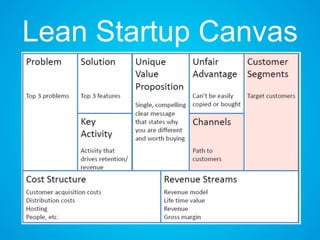
Lean Startup Canvas
Find a
Problem
Curiosity in Business
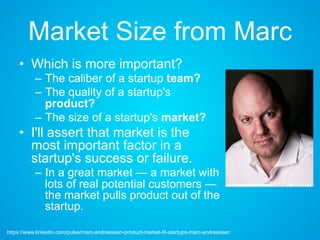
Market Size from Marc
• Which is more important?
– The caliber of a startup team?
– The quality of a startup's
product?
– The size of a startup's market?
• I'll assert that market is the
most important factor in a
startup's success or failure.
– In a great market — a market with
lots of real potential customers —
the market pulls product out of
the startup.
https://www.linkedin.com/pulse/marc-andreessen-product-market-fit-startups-marc-andreessen
Andy Rachleff
ex-Benchmark Capital
• When a great team meets
a lousy market, market
wins.
• When a lousy team meets
a great market, market
wins.
• When a great team meets
a great market, something
special happens.
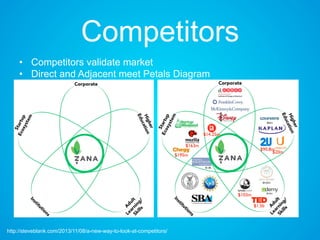
Competitors
• Competitors validate market
• Direct and Adjacent meet Petals Diagram
http://steveblank.com/2013/11/08/a-new-way-to-look-at-competitors/
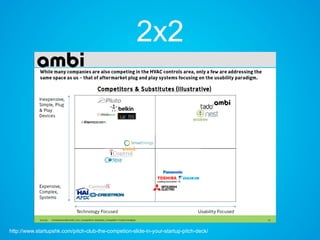
2x2
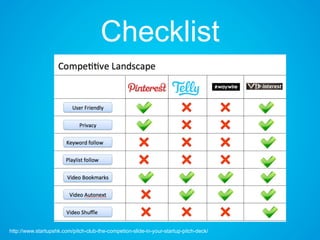
http://www.startupshk.com/pitch-club-the-competion-slide-in-your-startup-pitch-deck/
Checklist
http://www.startupshk.com/pitch-club-the-competion-slide-in-your-startup-pitch-deck/
Searching for a
Business Model
Failure and Search
Hypothesis
Testing Hypothesis
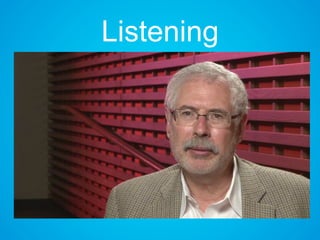
Listen Your Customers
Listening
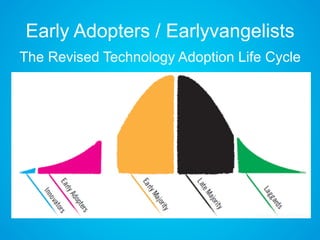
Early Adopters / Earlyvangelists
The Revised Technology Adoption Life Cycle
Early Adopters
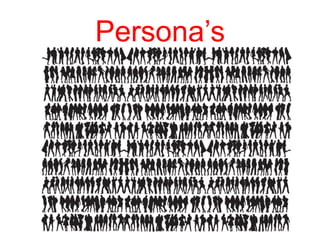
Persona’s
Fictitious
Represents
Target
Customers
User Motivation
User Expectation
Helps Teams Focus!
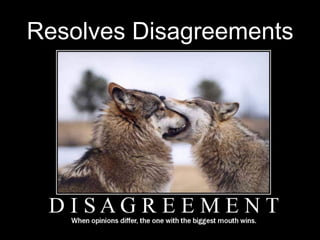
Resolves Disagreements
User Empathy
Channels
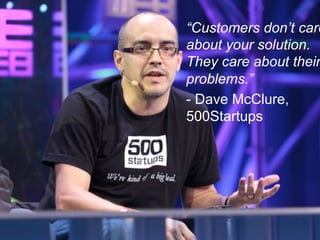
“Customers don’t care
about your solution.
They care about their
problems.”
- Dave McClure,
500Startups
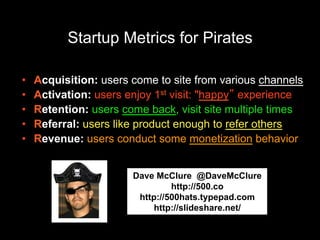
Startup Metrics for Pirates
• Acquisition: users come to site from various channels
• Activation: users enjoy 1st visit: "happy” experience
• Retention: users come back, visit site multiple times
• Referral: users like product enough to refer others
• Revenue: users conduct some monetization behavior
Dave McClure @DaveMcClure
http://500.co
http://500hats.typepad.com
http://slideshare.net/dmc500hat
s
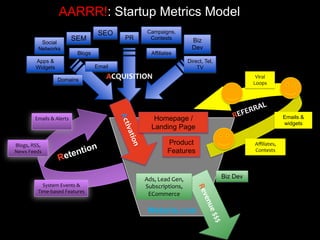
AARRR!: Startup Metrics Model
Website.com
Biz DevAds, Lead Gen,
Subscriptions,
ECommerce
Homepage /
Landing Page
Product
Features
ACQUISITION
SEO
SEM
Apps &
Widgets
Affiliates
Email
PR Biz
Dev
Campaigns,
Contests
Direct, Tel,
TV
Social
Networks
Blogs
Domains
Emails & Alerts
System Events &
Time-based Features
Blogs, RSS,
News Feeds
Emails &
widgets
Affiliates,
Contests
Viral
Loops
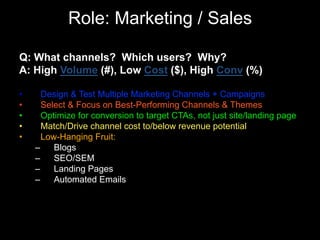
Role: Marketing / Sales
Q: What channels? Which users? Why?
A: High Volume (#), Low Cost ($), High Conv (%)
• Design & Test Multiple Marketing Channels + Campaigns
• Select & Focus on Best-Performing Channels & Themes
• Optimize for conversion to target CTAs, not just site/landing page
• Match/Drive channel cost to/below revenue potential
• Low-Hanging Fruit:
– Blogs
– SEO/SEM
– Landing Pages
– Automated Emails
Where from?
Create Content
Cold Call
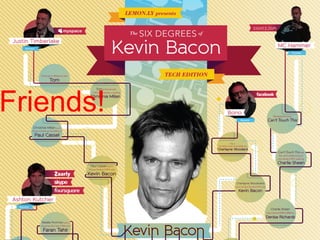
Friends!
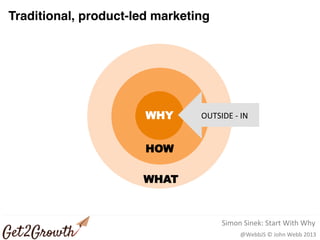
@WebbJS © John Webb 2013
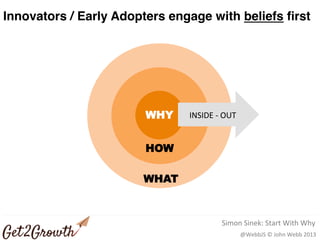
WHY
HOW
WHAT
Simon Sinek: Start With Why
Traditional, product-led marketing
OUTSIDE - IN
@WebbJS © John Webb 2013
Innovators / Early Adopters engage with beliefs first
WHY
HOW
WHAT
INSIDE - OUT
Simon Sinek: Start With Why
@WebbJS © John Webb 2013
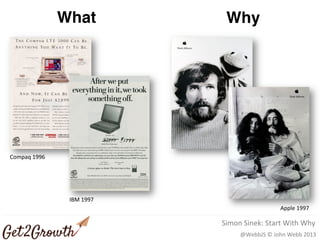
What
Compaq 1996
IBM 1997
Why
Apple 1997
Simon Sinek: Start With Why
@WebbJS © John Webb 2013
Rockstar)Games)
When your WHY is seen as a
“Noble Cause” people will follow
Simon Sinek: Start With Why
Workout
• 3 Top Problems
• 3 Top Solutions
• Target Market
• Customer
Empathy Map
• Early Adopter
Persona
• Facebook/Goog
le Ad
Test Hypothesis through
Interviews
• Customer Segments: Who has
the pain?
– How to identify early-adopters?
• Problem: What are you
solving?
– How do customers rank the top 3
problems?
– What is their pain level: must-
have, nice-to-have, don’t-need?
– How do customers solve these
problems today?
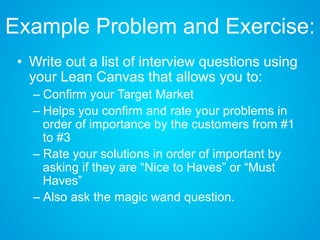
Example Problem and Exercise:
• Write out a list of interview questions using
your Lean Canvas that allows you to:
– Confirm your Target Market
– Helps you confirm and rate your problems in
order of importance by the customers from #1
to #3
– Rate your solutions in order of important by
asking if they are “Nice to Haves” or “Must
Haves”
– Also ask the magic wand question.
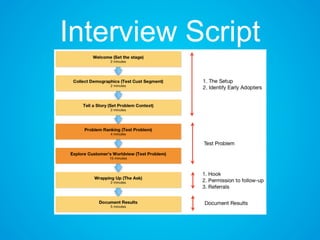
Interview Script
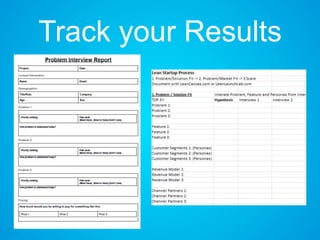
Track your Results
Time to Get out of
the Building!
Overview
• What research can you do to validate or to kill an idea?
• How do you determine the key assumptions of your business?
• Can key assumptions be tested?
• What are tactics to test key assumptions when you just have
an idea?
• How do you identify and interview potential customers?
• What are some tactics for effective surveying?
• Does the market that you choose matter?
• What are good markets, and what are bad markets?
• Do competitors matter and why?
• How do you define your competitive landscape?

Founders Institute - Mentor Presentation on Research, Customer Development and Lean Startup

  • 1.
    Founder Institute 2015 Researchand Customer Development Humphrey Laubscher 23rd March 2015
  • 2.
    About Me • GMof Innovation @ Loud&Clear – Corporate Innovation and Startup Incubator • Product Strategy Manager and Lean Startup Innovation Consultant • Newcastle Slingshot Accelerator / Lean Startup Sydney • Ex Corporate IT Architect (BHP, Coles, NAB, CBA) Humphrey Laubscher @HumphreyPL
  • 3.
    Overview • What researchcan you do to validate or to kill an idea? • How do you determine the key assumptions of your business? • Can key assumptions be tested? • What are tactics to test key assumptions when you just have an idea? • How do you identify and interview potential customers? • What are some tactics for effective surveying? • Does the market that you choose matter? • What are good markets, and what are bad markets? • Do competitors matter and why? • How do you define your competitive landscape?
  • 4.
    What is LeanStartup? Steven Blank steveblank.com Eric Reis StartupLessonsLearned.com Ash Maurya ashmaurya.com
  • 5.
  • 6.
  • 7.
    New Product Lifecycle Problem/ Solution Fit Product / Market Fit Scale Do I have Problem worth Solving? Have a built something people want? Can I repeat the processes profitably? Validated Learning Growth Pivots Optimizations
  • 8.
  • 9.
  • 10.
  • 11.
    Market Size fromMarc • Which is more important? – The caliber of a startup team? – The quality of a startup's product? – The size of a startup's market? • I'll assert that market is the most important factor in a startup's success or failure. – In a great market — a market with lots of real potential customers — the market pulls product out of the startup. https://www.linkedin.com/pulse/marc-andreessen-product-market-fit-startups-marc-andreessen
  • 12.
    Andy Rachleff ex-Benchmark Capital •When a great team meets a lousy market, market wins. • When a lousy team meets a great market, market wins. • When a great team meets a great market, something special happens.
  • 13.
    Competitors • Competitors validatemarket • Direct and Adjacent meet Petals Diagram http://steveblank.com/2013/11/08/a-new-way-to-look-at-competitors/
  • 14.
  • 15.
  • 16.
  • 17.
  • 19.
  • 20.
  • 21.
  • 22.
  • 23.
    Early Adopters /Earlyvangelists The Revised Technology Adoption Life Cycle
  • 24.
  • 25.
  • 26.
  • 27.
  • 28.
  • 29.
  • 31.
  • 32.
  • 33.
  • 34.
  • 35.
    “Customers don’t care aboutyour solution. They care about their problems.” - Dave McClure, 500Startups
  • 36.
    Startup Metrics forPirates • Acquisition: users come to site from various channels • Activation: users enjoy 1st visit: "happy” experience • Retention: users come back, visit site multiple times • Referral: users like product enough to refer others • Revenue: users conduct some monetization behavior Dave McClure @DaveMcClure http://500.co http://500hats.typepad.com http://slideshare.net/dmc500hat s
  • 37.
    AARRR!: Startup MetricsModel Website.com Biz DevAds, Lead Gen, Subscriptions, ECommerce Homepage / Landing Page Product Features ACQUISITION SEO SEM Apps & Widgets Affiliates Email PR Biz Dev Campaigns, Contests Direct, Tel, TV Social Networks Blogs Domains Emails & Alerts System Events & Time-based Features Blogs, RSS, News Feeds Emails & widgets Affiliates, Contests Viral Loops
  • 38.
    Role: Marketing /Sales Q: What channels? Which users? Why? A: High Volume (#), Low Cost ($), High Conv (%) • Design & Test Multiple Marketing Channels + Campaigns • Select & Focus on Best-Performing Channels & Themes • Optimize for conversion to target CTAs, not just site/landing page • Match/Drive channel cost to/below revenue potential • Low-Hanging Fruit: – Blogs – SEO/SEM – Landing Pages – Automated Emails
  • 39.
  • 40.
  • 41.
  • 42.
  • 43.
    @WebbJS © JohnWebb 2013 WHY HOW WHAT Simon Sinek: Start With Why Traditional, product-led marketing OUTSIDE - IN
  • 44.
    @WebbJS © JohnWebb 2013 Innovators / Early Adopters engage with beliefs first WHY HOW WHAT INSIDE - OUT Simon Sinek: Start With Why
  • 45.
    @WebbJS © JohnWebb 2013 What Compaq 1996 IBM 1997 Why Apple 1997 Simon Sinek: Start With Why
  • 46.
    @WebbJS © JohnWebb 2013 Rockstar)Games) When your WHY is seen as a “Noble Cause” people will follow Simon Sinek: Start With Why
  • 47.
    Workout • 3 TopProblems • 3 Top Solutions • Target Market • Customer Empathy Map • Early Adopter Persona • Facebook/Goog le Ad
  • 48.
    Test Hypothesis through Interviews •Customer Segments: Who has the pain? – How to identify early-adopters? • Problem: What are you solving? – How do customers rank the top 3 problems? – What is their pain level: must- have, nice-to-have, don’t-need? – How do customers solve these problems today?
  • 49.
    Example Problem andExercise: • Write out a list of interview questions using your Lean Canvas that allows you to: – Confirm your Target Market – Helps you confirm and rate your problems in order of importance by the customers from #1 to #3 – Rate your solutions in order of important by asking if they are “Nice to Haves” or “Must Haves” – Also ask the magic wand question.
  • 50.
  • 51.
  • 52.
    Time to Getout of the Building!
  • 54.
    Overview • What researchcan you do to validate or to kill an idea? • How do you determine the key assumptions of your business? • Can key assumptions be tested? • What are tactics to test key assumptions when you just have an idea? • How do you identify and interview potential customers? • What are some tactics for effective surveying? • Does the market that you choose matter? • What are good markets, and what are bad markets? • Do competitors matter and why? • How do you define your competitive landscape?