MBBS PROGRAMME
Indian medical graduate
A walk through the MBBS curriculum
Scope after MBBS
“Indian Medical
Graduate” (IMG)
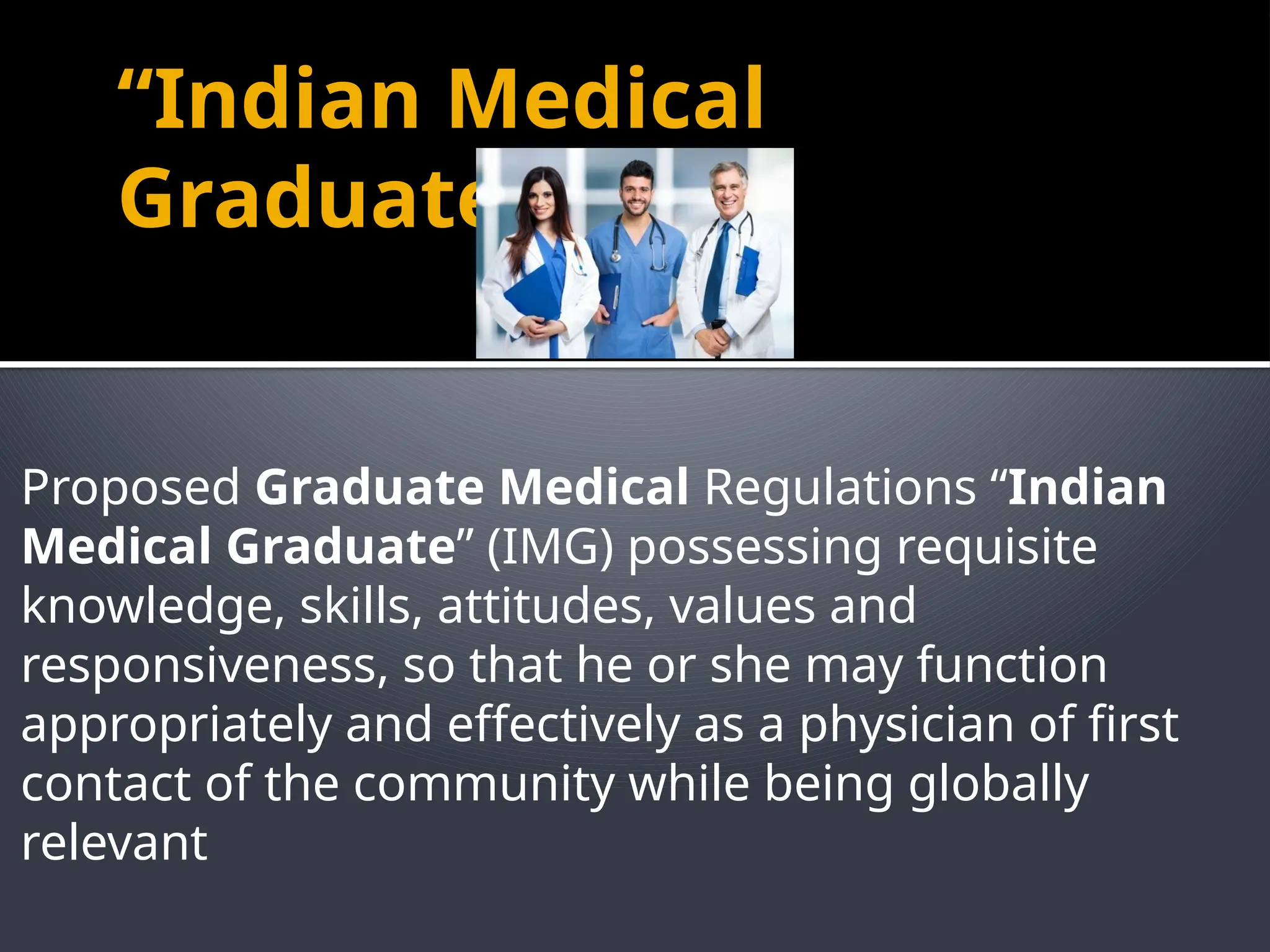
Proposed Graduate Medical Regulations “Indian
Medical Graduate” (IMG) possessing requisite
knowledge, skills, attitudes, values and
responsiveness, so that he or she may function
appropriately and effectively as a physician of first
contact of the community while being globally
relevant
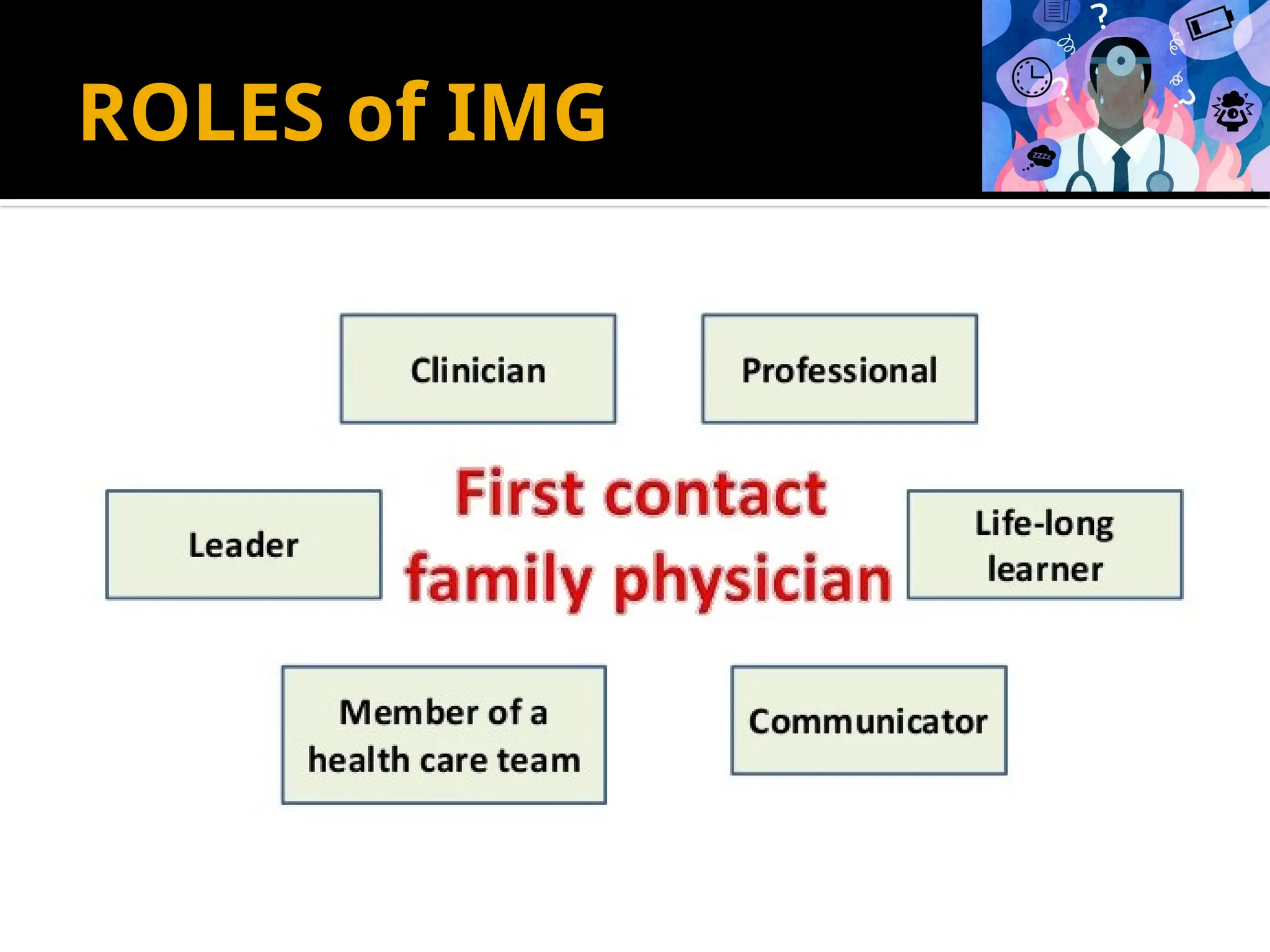
ROLES of IMG
Specific Competencies
 Competency-based
 Integrated and
 Learner-centered acquisition of skills
and ethical & humanistic values
 Acquired by the learner in the
corresponding professional year
 Interpreted in the larger context
COMPETENCIES eg..
 Abide by prescribed ethical and legal codes of
conduct and practice
 Educate and motivate other members of the
team and work in a collaborative and collegial
fashion that will help to maximize the health
care delivery potential of the team
 Demonstrate ability to choose the appropriate
diagnostic tests and interpret these tests
based on scientific validity, cost effectiveness
and clinical context
PHASE WISE TRAINING AND TIME
DISTRIBUTION FOR PROFESSIONAL
DEVELOPMENT
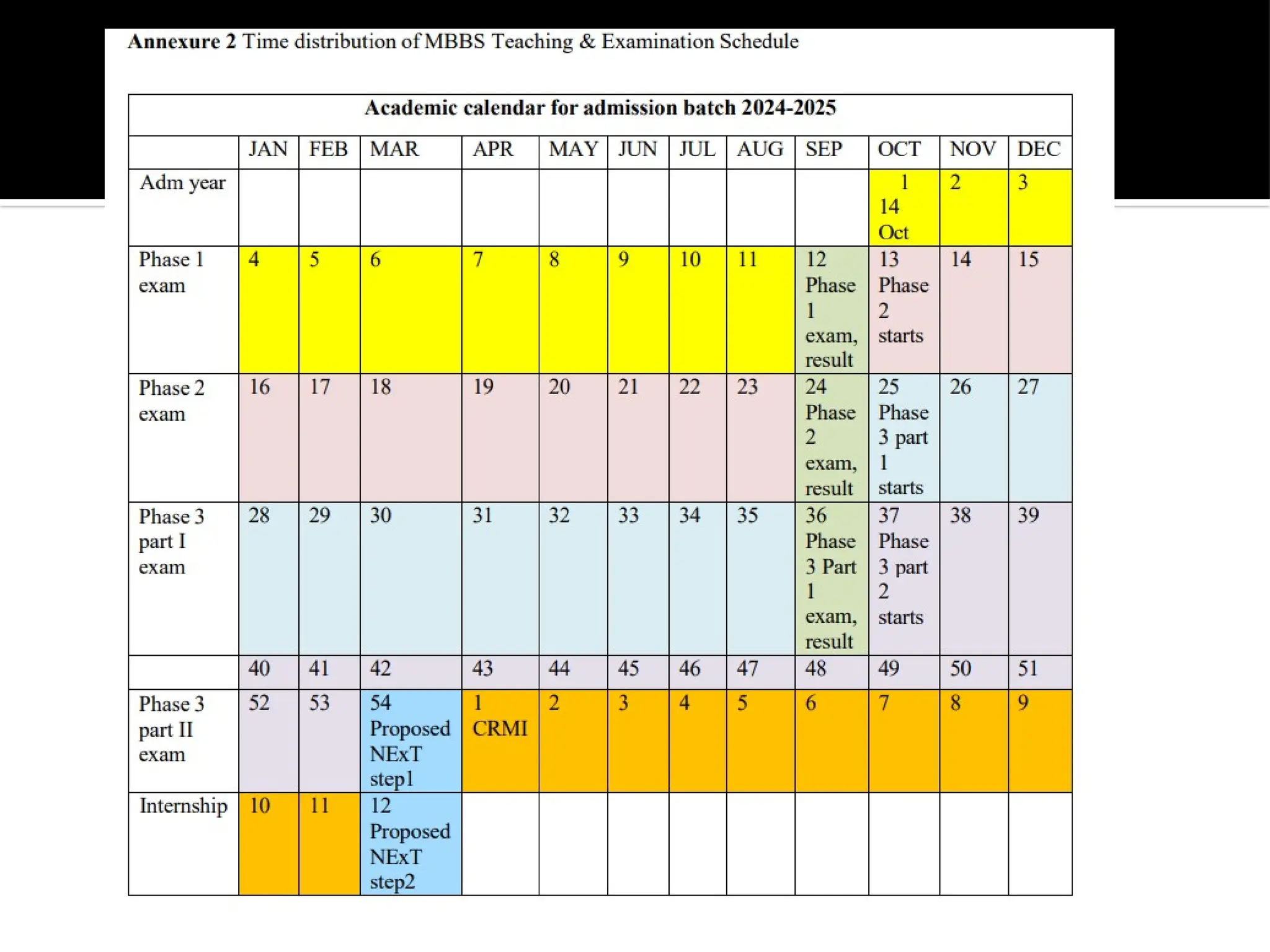
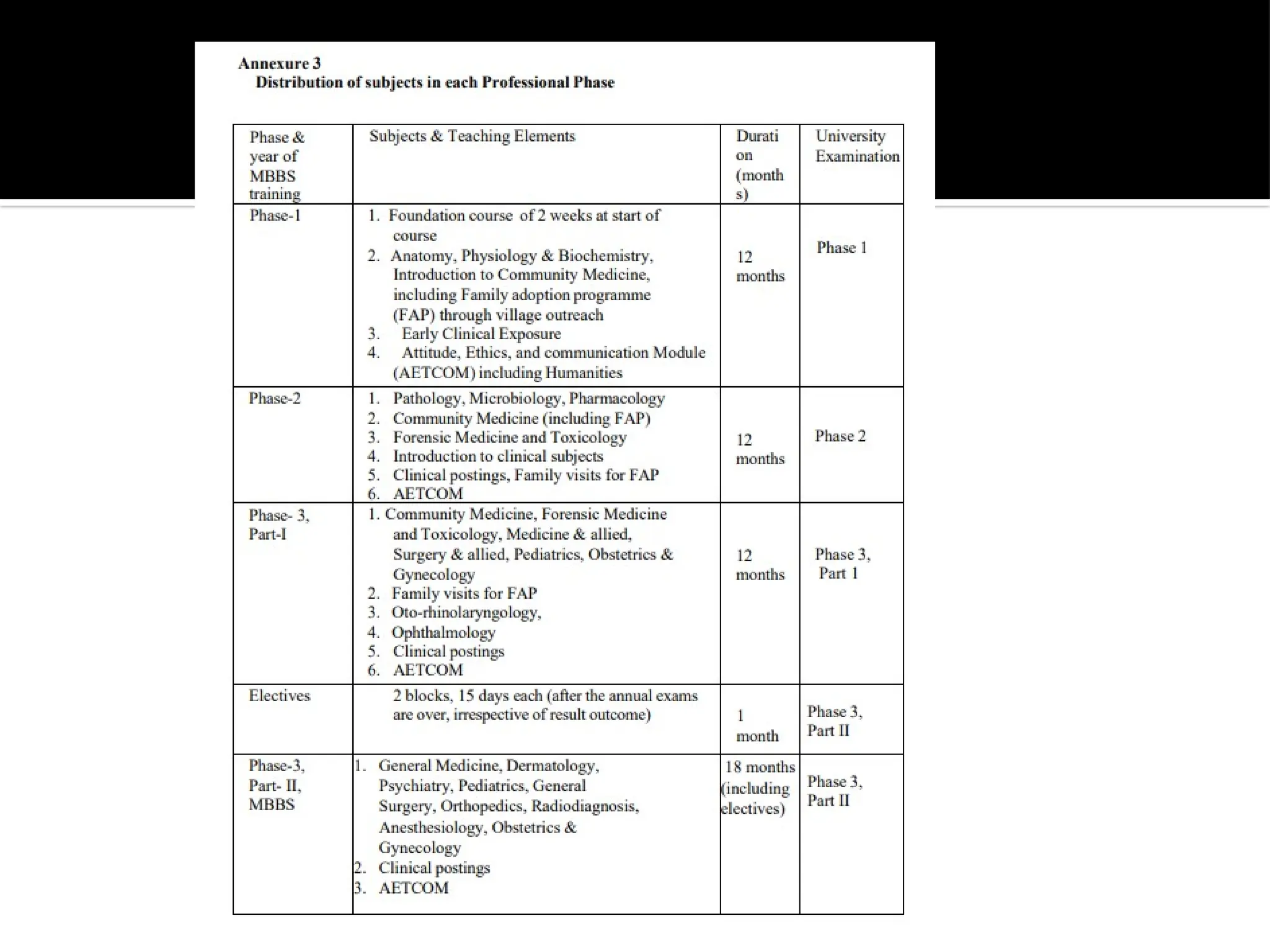
Training period and time distribution
Phase distribution and timing of
examination
Attendance
New teaching / learning elements
Specific Competencies
Assessment
INTERNSHIP
Training period and time
distribution
 4 ½ academic years
 Nine semesters + one year of
compulsory rotating internship
 Each academic year will have at least
240 teaching days
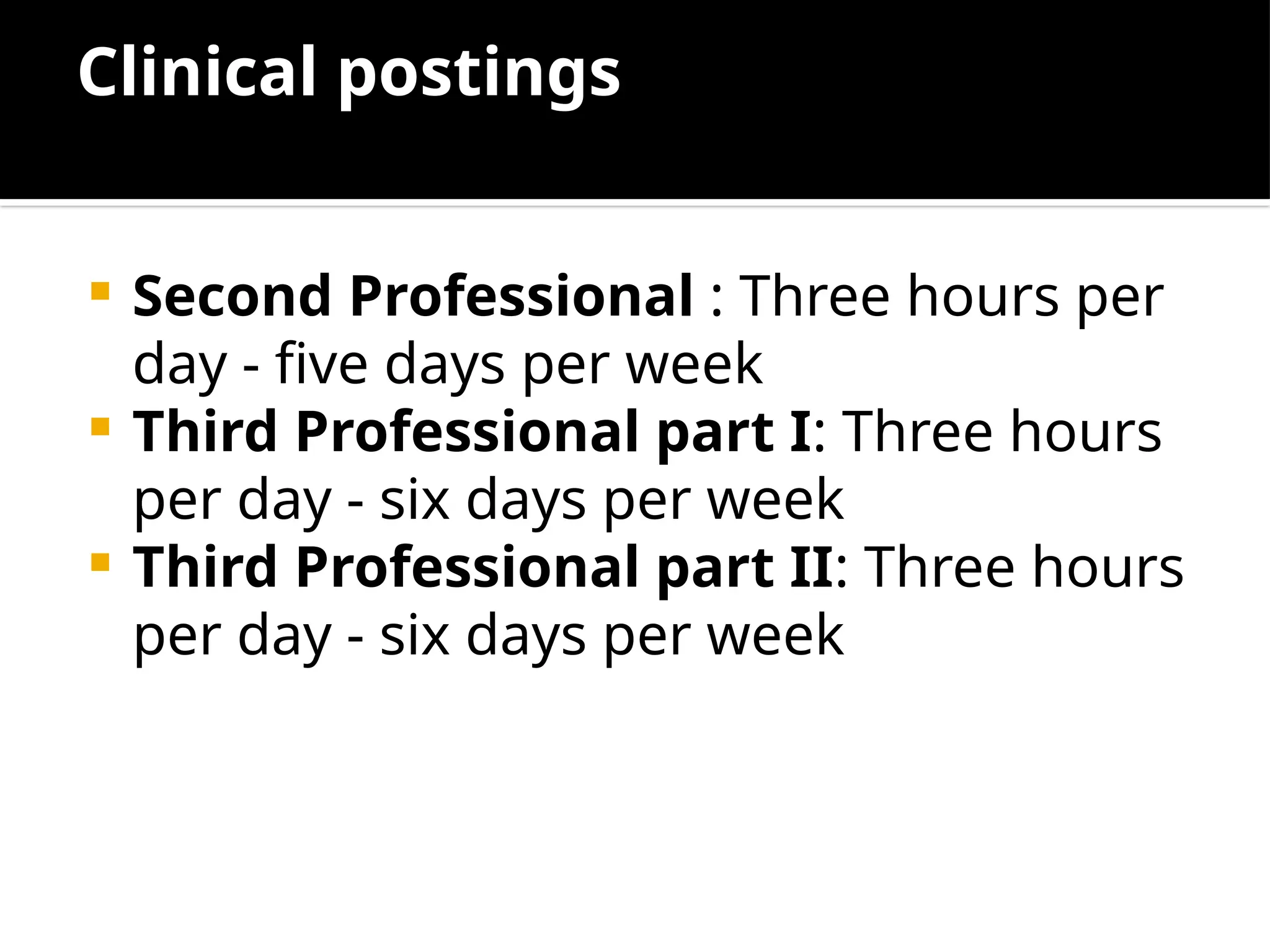
Clinical postings
 Second Professional : Three hours per
day - five days per week
 Third Professional part I: Three hours
per day - six days per week
 Third Professional part II: Three hours
per day - six days per week
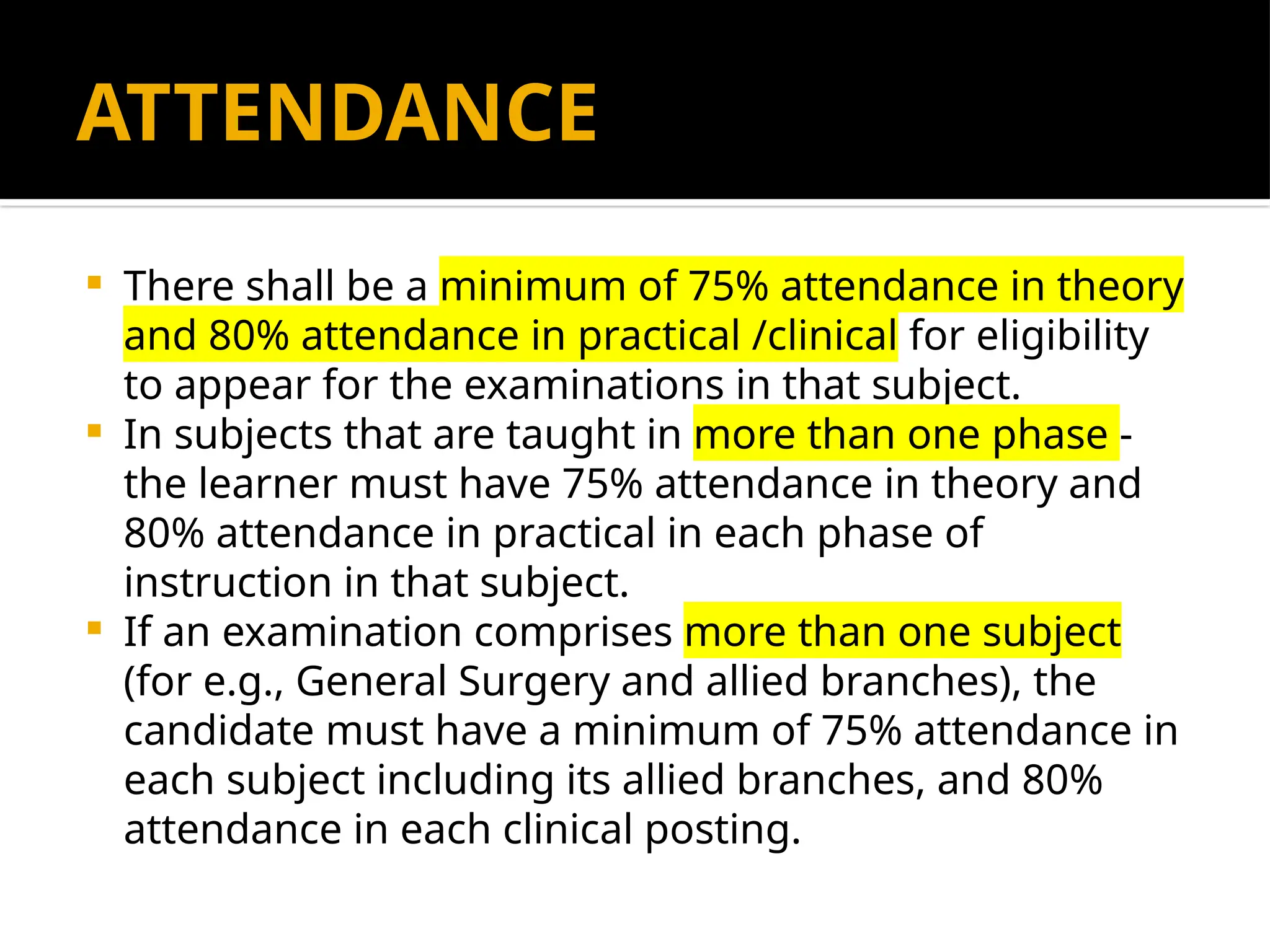
ATTENDANCE
 There shall be a minimum of 75% attendance in theory
and 80% attendance in practical /clinical for eligibility
to appear for the examinations in that subject.
 In subjects that are taught in more than one phase -
the learner must have 75% attendance in theory and
80% attendance in practical in each phase of
instruction in that subject.
 If an examination comprises more than one subject
(for e.g., General Surgery and allied branches), the
candidate must have a minimum of 75% attendance in
each subject including its allied branches, and 80%
attendance in each clinical posting.
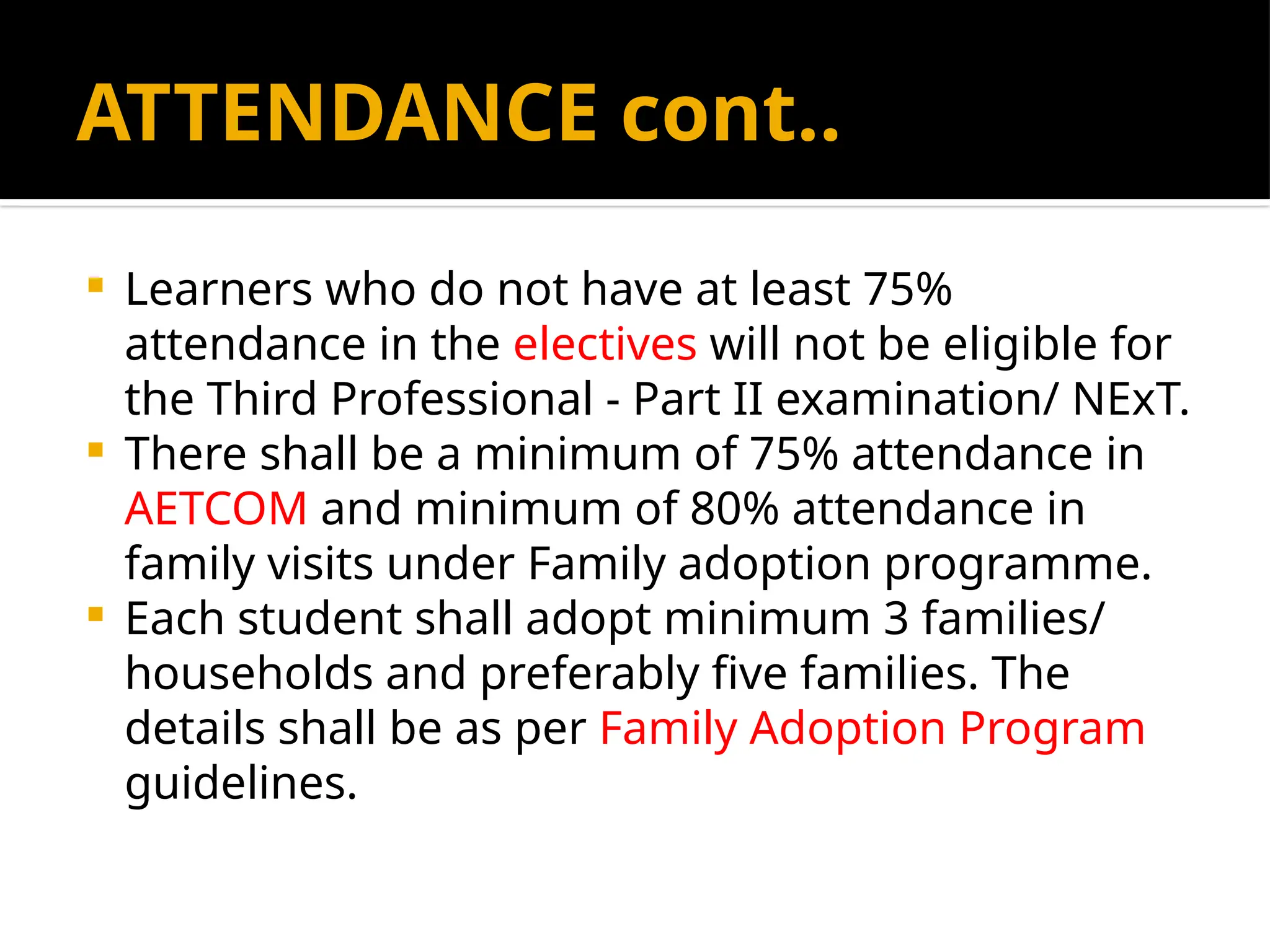
ATTENDANCE cont..
 Learners who do not have at least 75%
attendance in the electives will not be eligible for
the Third Professional - Part II examination/ NExT.
 There shall be a minimum of 75% attendance in
AETCOM and minimum of 80% attendance in
family visits under Family adoption programme.
 Each student shall adopt minimum 3 families/
households and preferably five families. The

details shall be as per Family Adoption Program
guidelines.
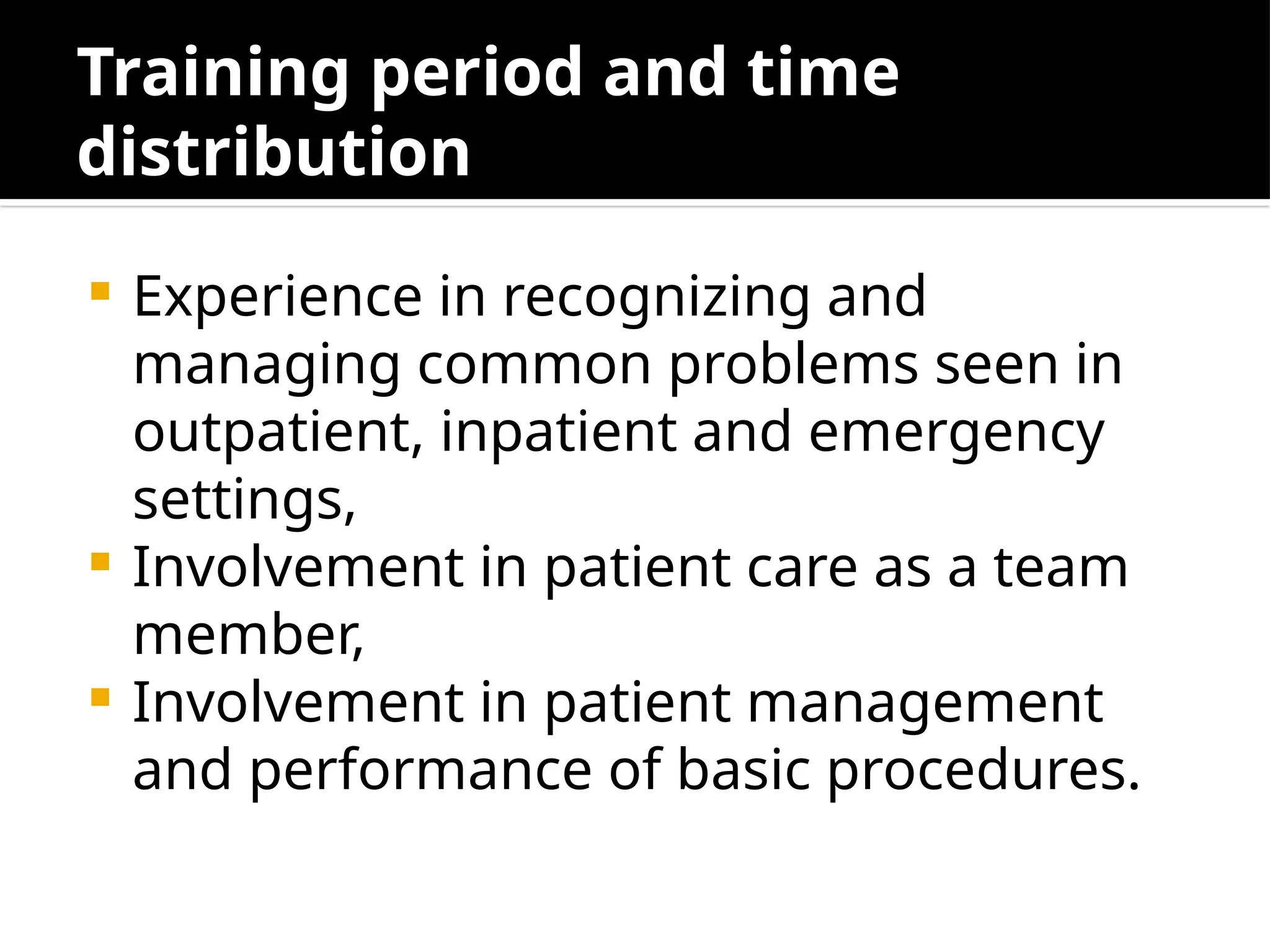
Training period and time
distribution
 Experience in recognizing and
managing common problems seen in
outpatient, inpatient and emergency
settings,
 Involvement in patient care as a team
member,
 Involvement in patient management
and performance of basic procedures.
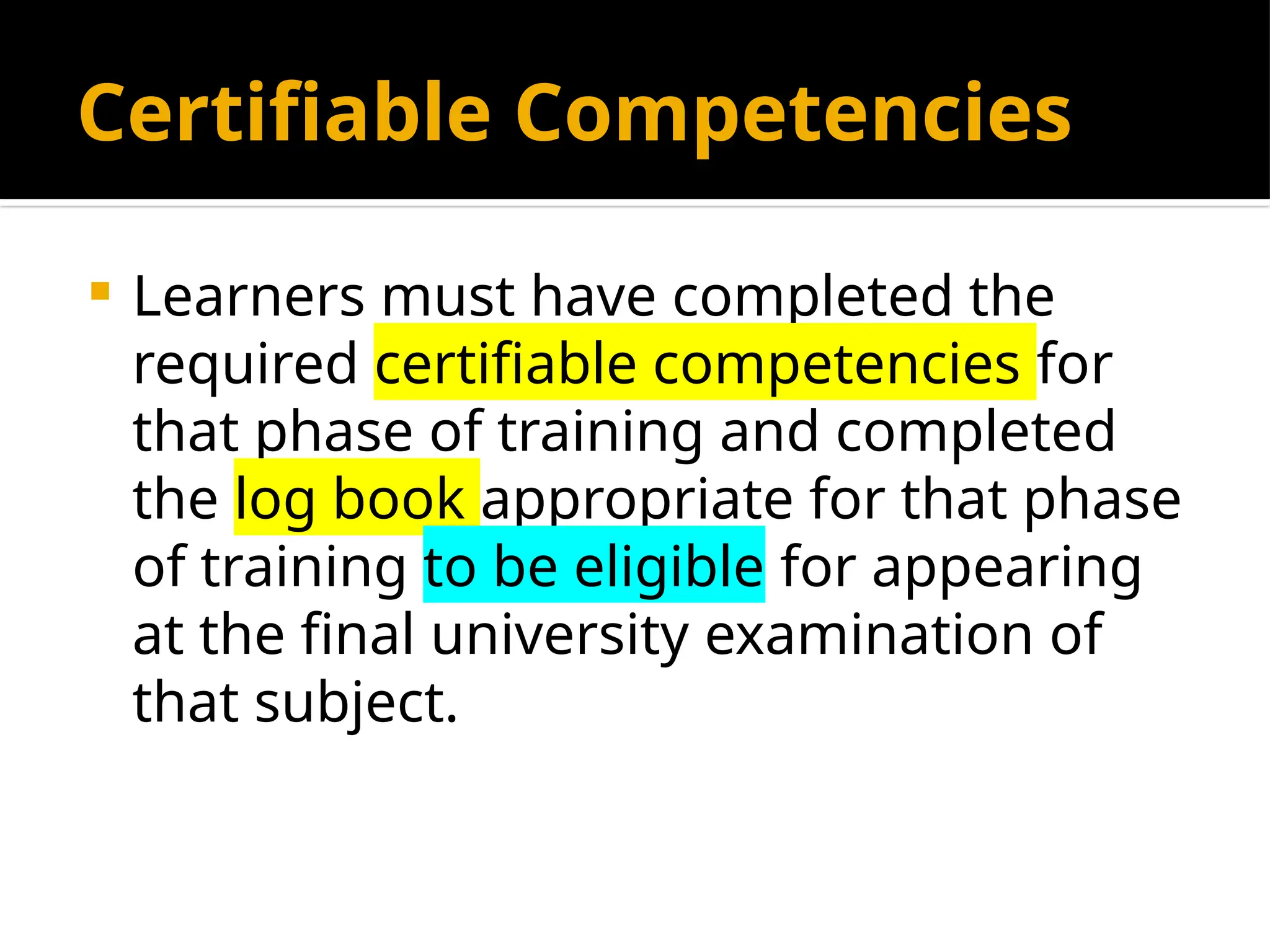
Certifiable Competencies
 Learners must have completed the
required certifiable competencies for
that phase of training and completed
the log book appropriate for that phase
of training to be eligible for appearing
at the final university examination of
that subject.
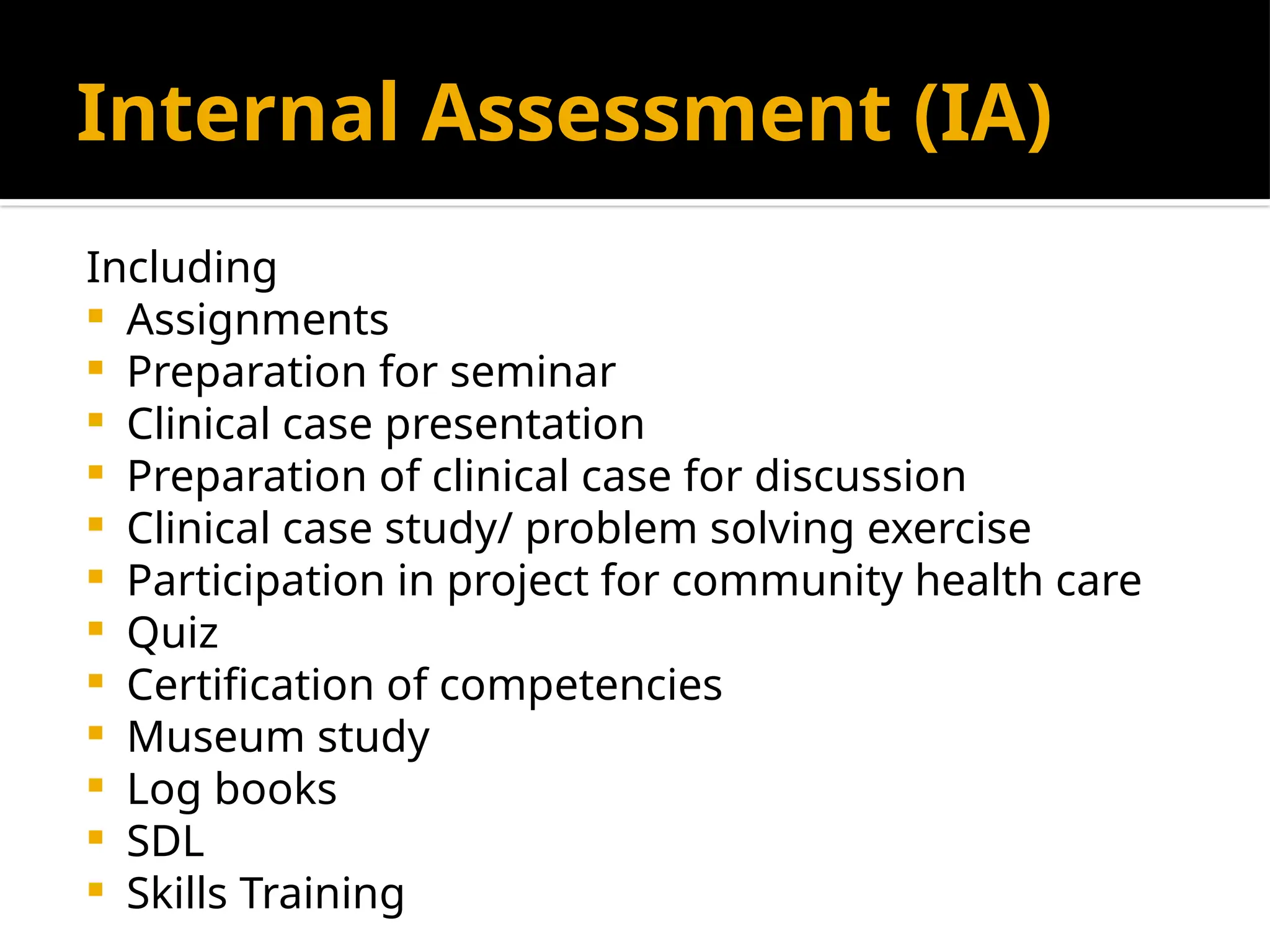
Internal Assessment (IA)
Including
 Assignments
 Preparation for seminar
 Clinical case presentation
 Preparation of clinical case for discussion
 Clinical case study/ problem solving exercise
 Participation in project for community health care
 Quiz
 Certification of competencies
 Museum study
 Log books
 SDL
 Skills Training
Remedial measures
 A student whose has deficiency(s) in
any of the 3 criteria that are required to
be eligible to appear in university
examination
Attendance
Certifiable competencies
Internal assessment (IA)
Training period and time
distribution Examination
 One main examination in an academic
year
 Supplementary exam to be held 6-8
weeks after the declaration of the
results of the main examination-
eligibility
 If the student fails in the
supplementary examination in phase 1
of MBBS, the student goes to the junior
batch for teaching learning as well as
Training period and time distribution
Examination
 Shall not be entitled to graduate after 10 years of
his/her joining of the first part of the MBBS course.
 First Professional- maximum number of 4
permissible attempts, cleared within 4 years of
admission
 Second Professional-shall not be allowed to appear
in third Professional Part I examination unless
she/he clears second Professional examination
 Third Professional-Part I(can continue part II
without passing,but have to clear to appear for part
II exam), Part II(14 months including 2 months of
electives)
ELEMENTS IN CBME
 Foundation Course
 Early Clinical Exposure
 Electives
 Attitude, Ethics and Communication
Module (AETCOM)
 Alignment and integration (AIT)
teaching
 Learner-doctor method of clinical
training (Clinical Clerkship)
 Family Adoption Programme
INTERNSHIP
 Acquire the skills and competencies for
practice of medical and health care
under supervision
 Certified for independent medical
practice as an Indian Medical Graduate.
 Assessment
After MBBS
After MBBS
www.menti.com
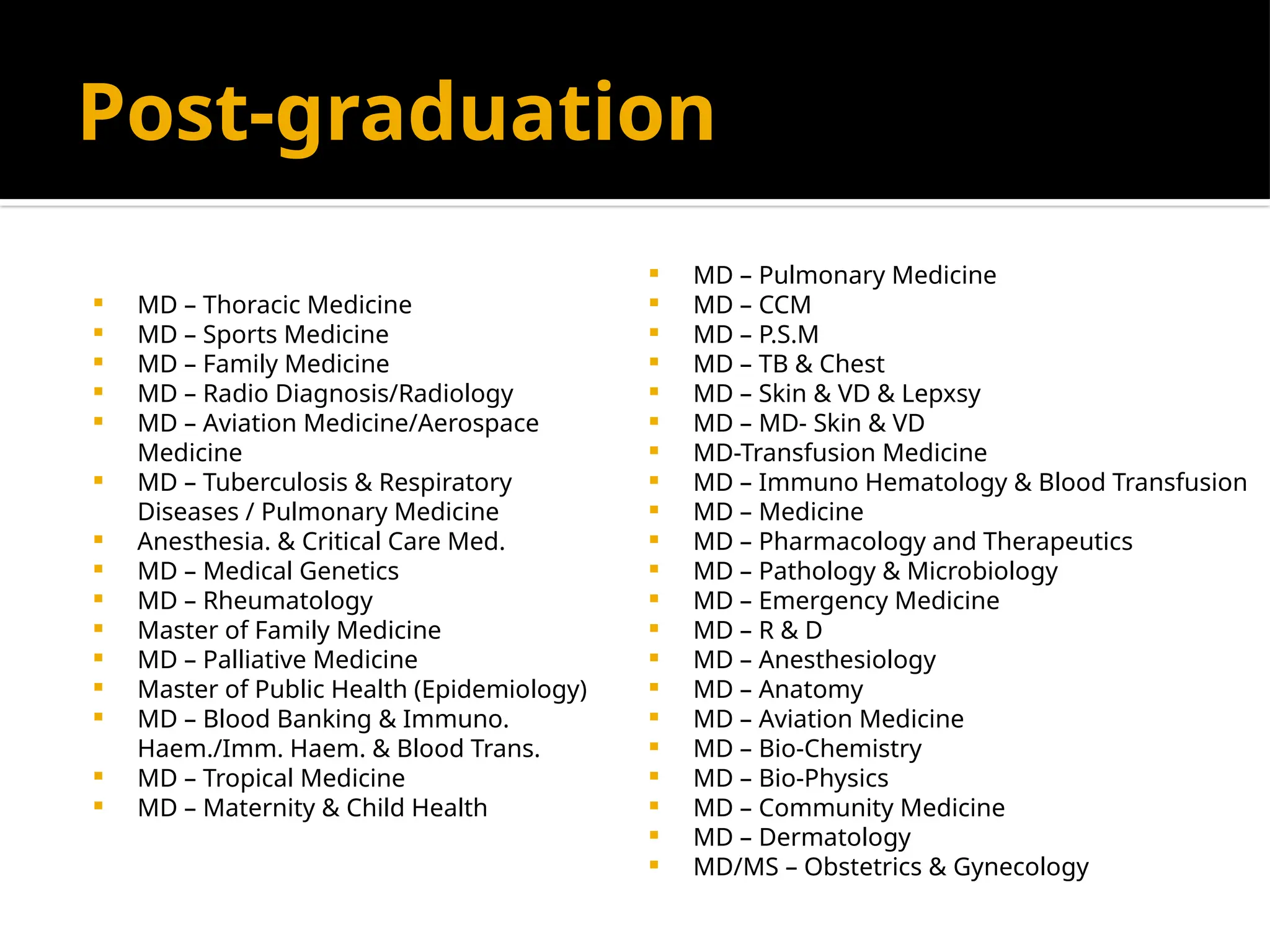
Post-graduation
 MD – Thoracic Medicine
 MD – Sports Medicine
 MD – Family Medicine
 MD – Radio Diagnosis/Radiology
 MD – Aviation Medicine/Aerospace
Medicine
 MD – Tuberculosis & Respiratory
Diseases / Pulmonary Medicine
 Anesthesia. & Critical Care Med.
 MD – Medical Genetics
 MD – Rheumatology
 Master of Family Medicine
 MD – Palliative Medicine
 Master of Public Health (Epidemiology)
 MD – Blood Banking & Immuno.
Haem./Imm. Haem. & Blood Trans.
 MD – Tropical Medicine
 MD – Maternity & Child Health
 MD – Pulmonary Medicine
 MD – CCM
 MD – P.S.M
 MD – TB & Chest
 MD – Skin & VD & Lepxsy
 MD – MD- Skin & VD
 MD-Transfusion Medicine
 MD – Immuno Hematology & Blood Transfusion
 MD – Medicine
 MD – Pharmacology and Therapeutics
 MD – Pathology & Microbiology
 MD – Emergency Medicine
 MD – R & D
 MD – Anesthesiology
 MD – Anatomy
 MD – Aviation Medicine
 MD – Bio-Chemistry
 MD – Bio-Physics
 MD – Community Medicine
 MD – Dermatology
 MD/MS – Obstetrics & Gynecology
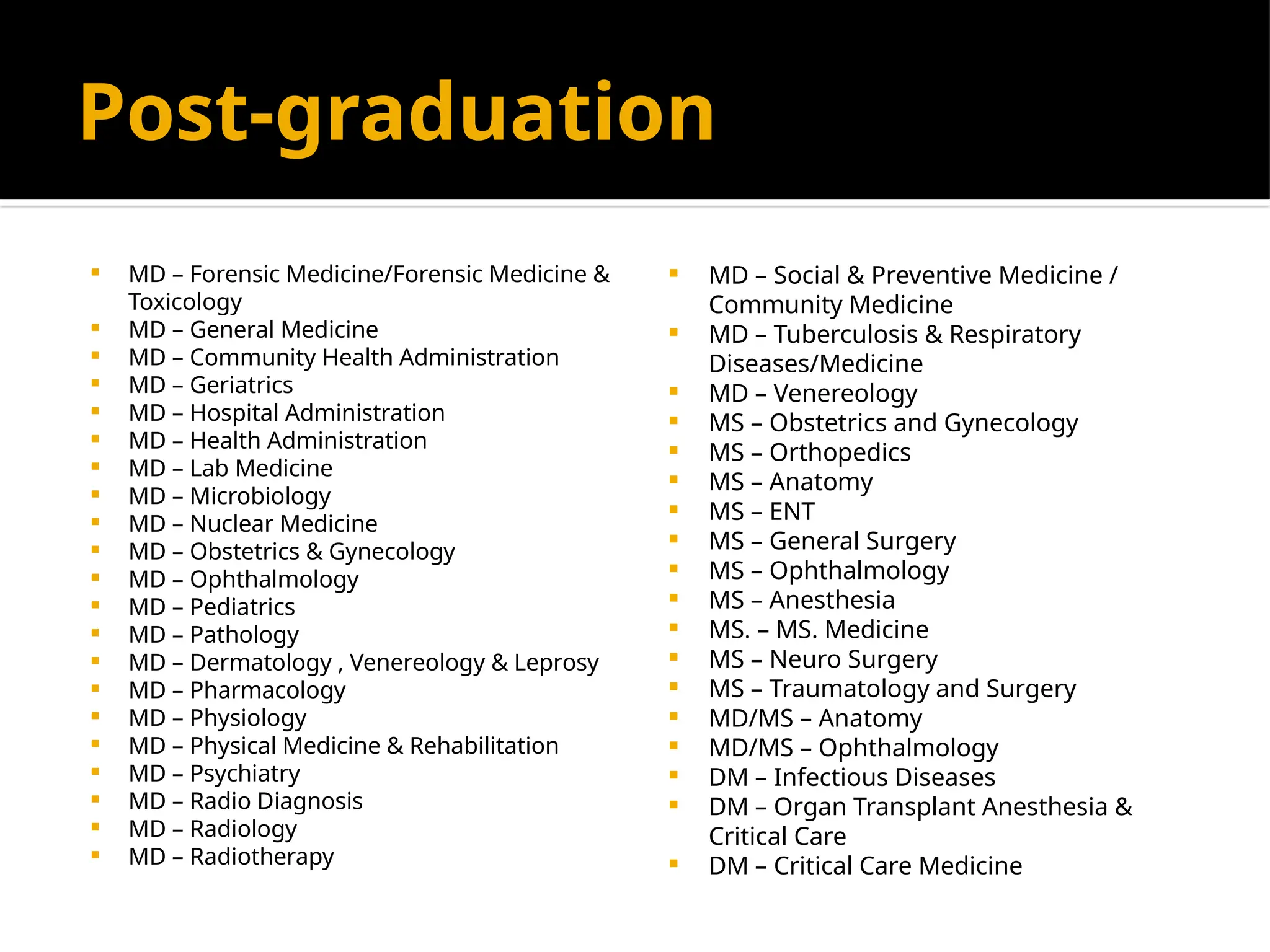
Post-graduation
 MD – Forensic Medicine/Forensic Medicine &
Toxicology
 MD – General Medicine
 MD – Community Health Administration
 MD – Geriatrics
 MD – Hospital Administration
 MD – Health Administration
 MD – Lab Medicine
 MD – Microbiology
 MD – Nuclear Medicine
 MD – Obstetrics & Gynecology
 MD – Ophthalmology
 MD – Pediatrics
 MD – Pathology
 MD – Dermatology , Venereology & Leprosy
 MD – Pharmacology
 MD – Physiology
 MD – Physical Medicine & Rehabilitation
 MD – Psychiatry
 MD – Radio Diagnosis
 MD – Radiology
 MD – Radiotherapy
 MD – Social & Preventive Medicine /
Community Medicine
 MD – Tuberculosis & Respiratory
Diseases/Medicine
 MD – Venereology
 MS – Obstetrics and Gynecology
 MS – Orthopedics
 MS – Anatomy
 MS – ENT
 MS – General Surgery
 MS – Ophthalmology
 MS – Anesthesia
 MS. – MS. Medicine
 MS – Neuro Surgery
 MS – Traumatology and Surgery
 MD/MS – Anatomy
 MD/MS – Ophthalmology
 DM – Infectious Diseases
 DM – Organ Transplant Anesthesia &
Critical Care
 DM – Critical Care Medicine
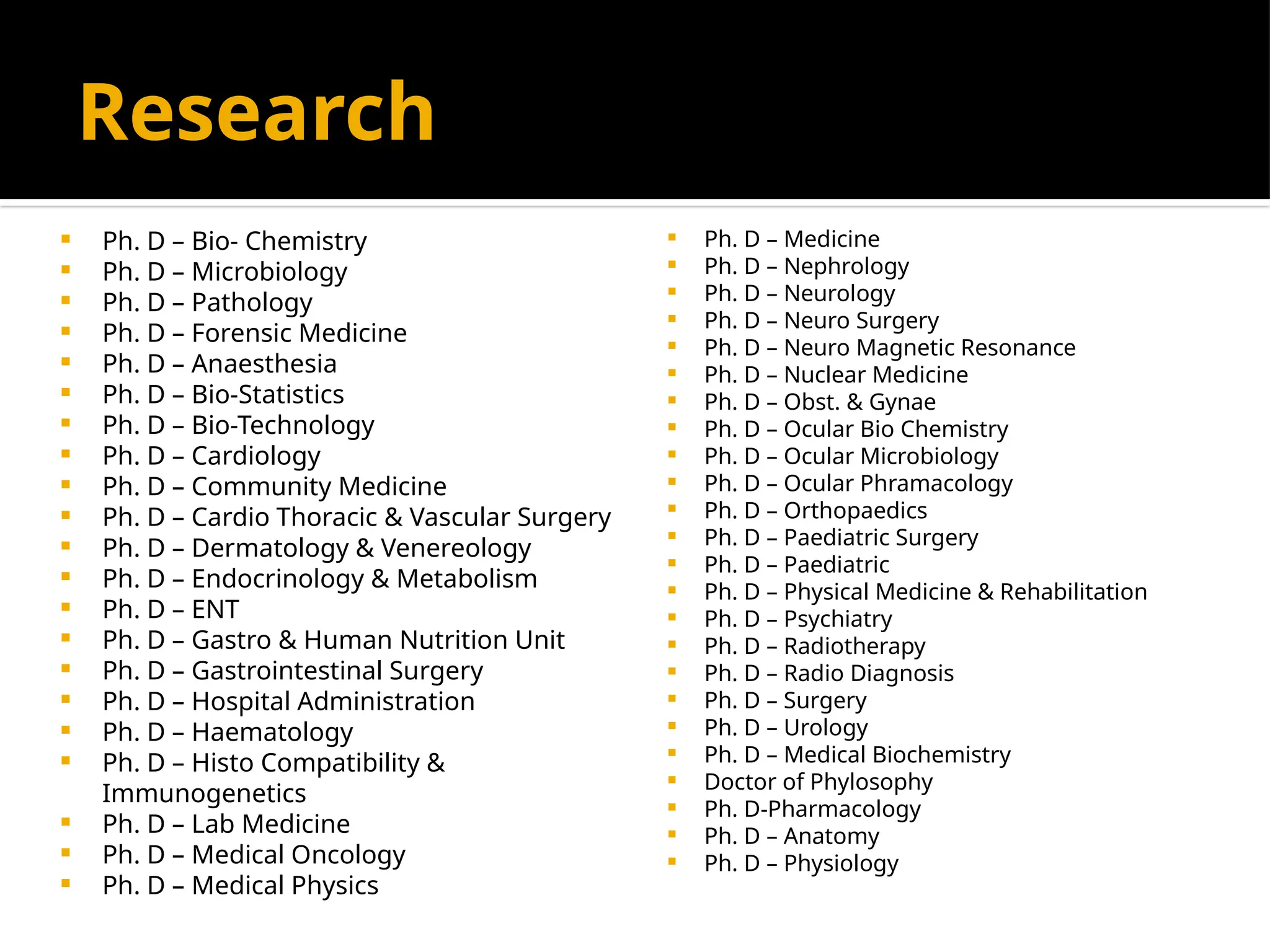
Research
 Ph. D – Bio- Chemistry
 Ph. D – Microbiology
 Ph. D – Pathology
 Ph. D – Forensic Medicine
 Ph. D – Anaesthesia
 Ph. D – Bio-Statistics
 Ph. D – Bio-Technology
 Ph. D – Cardiology
 Ph. D – Community Medicine
 Ph. D – Cardio Thoracic & Vascular Surgery
 Ph. D – Dermatology & Venereology
 Ph. D – Endocrinology & Metabolism
 Ph. D – ENT
 Ph. D – Gastro & Human Nutrition Unit
 Ph. D – Gastrointestinal Surgery
 Ph. D – Hospital Administration
 Ph. D – Haematology
 Ph. D – Histo Compatibility &
Immunogenetics
 Ph. D – Lab Medicine
 Ph. D – Medical Oncology
 Ph. D – Medical Physics
 Ph. D – Medicine
 Ph. D – Nephrology
 Ph. D – Neurology
 Ph. D – Neuro Surgery
 Ph. D – Neuro Magnetic Resonance
 Ph. D – Nuclear Medicine
 Ph. D – Obst. & Gynae
 Ph. D – Ocular Bio Chemistry
 Ph. D – Ocular Microbiology
 Ph. D – Ocular Phramacology
 Ph. D – Orthopaedics
 Ph. D – Paediatric Surgery
 Ph. D – Paediatric
 Ph. D – Physical Medicine & Rehabilitation
 Ph. D – Psychiatry
 Ph. D – Radiotherapy
 Ph. D – Radio Diagnosis
 Ph. D – Surgery
 Ph. D – Urology
 Ph. D – Medical Biochemistry
 Doctor of Phylosophy
 Ph. D-Pharmacology
 Ph. D – Anatomy
 Ph. D – Physiology
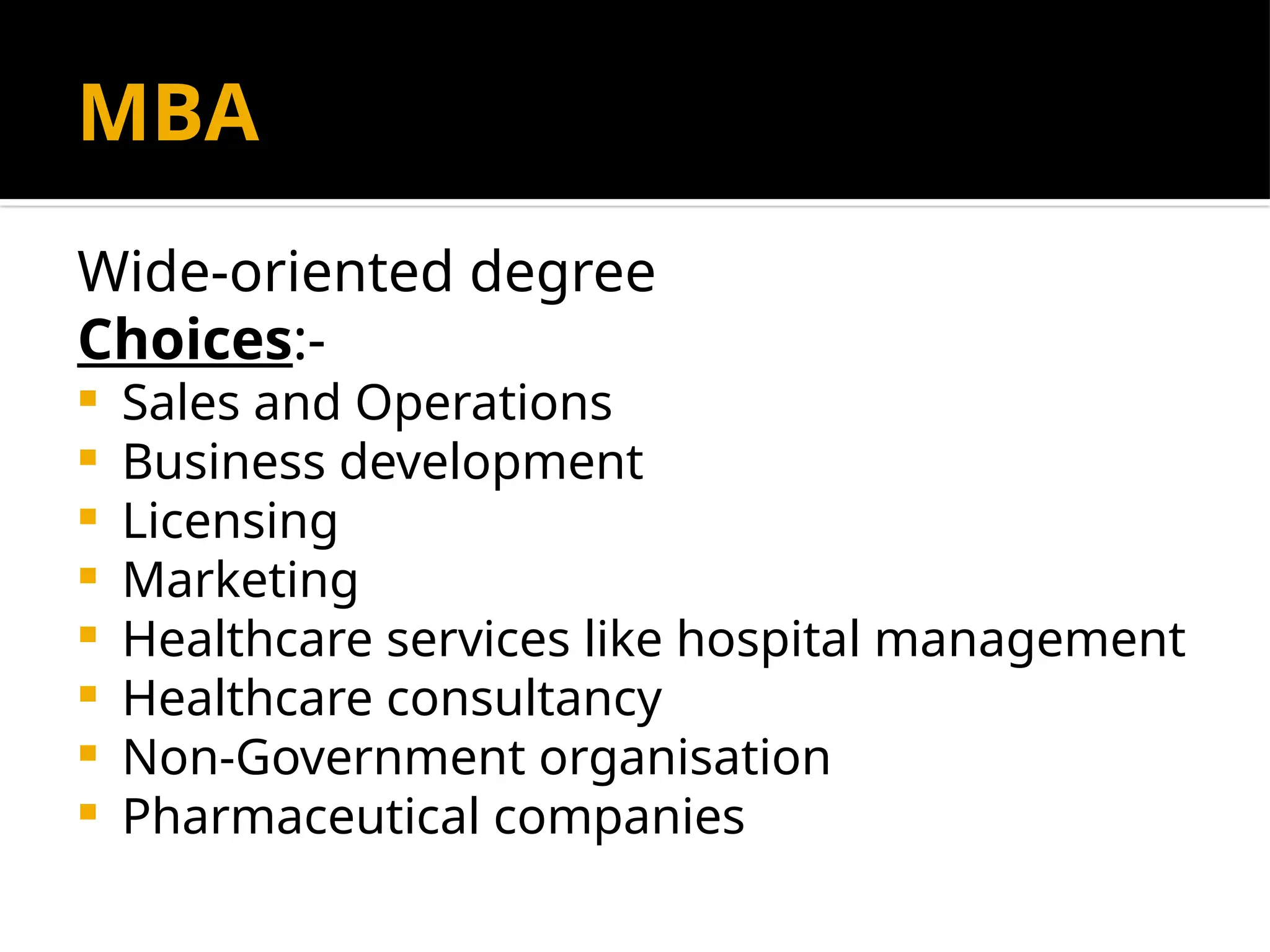
MBA
Wide-oriented degree
Choices:-
 Sales and Operations
 Business development
 Licensing
 Marketing
 Healthcare services like hospital management
 Healthcare consultancy
 Non-Government organisation
 Pharmaceutical companies
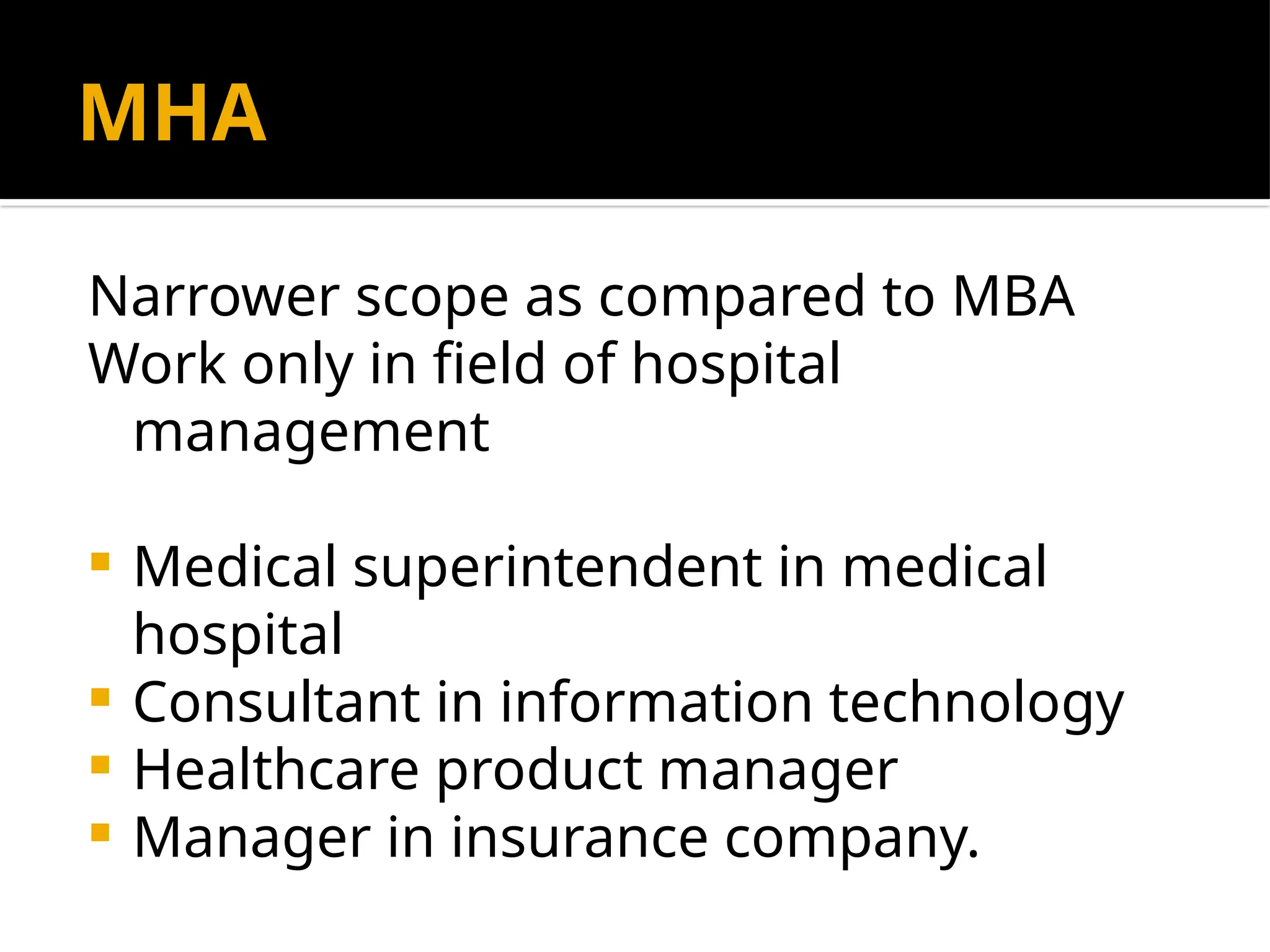
MHA
Narrower scope as compared to MBA
Work only in field of hospital
management
 Medical superintendent in medical
hospital
 Consultant in information technology
 Healthcare product manager
 Manager in insurance company.
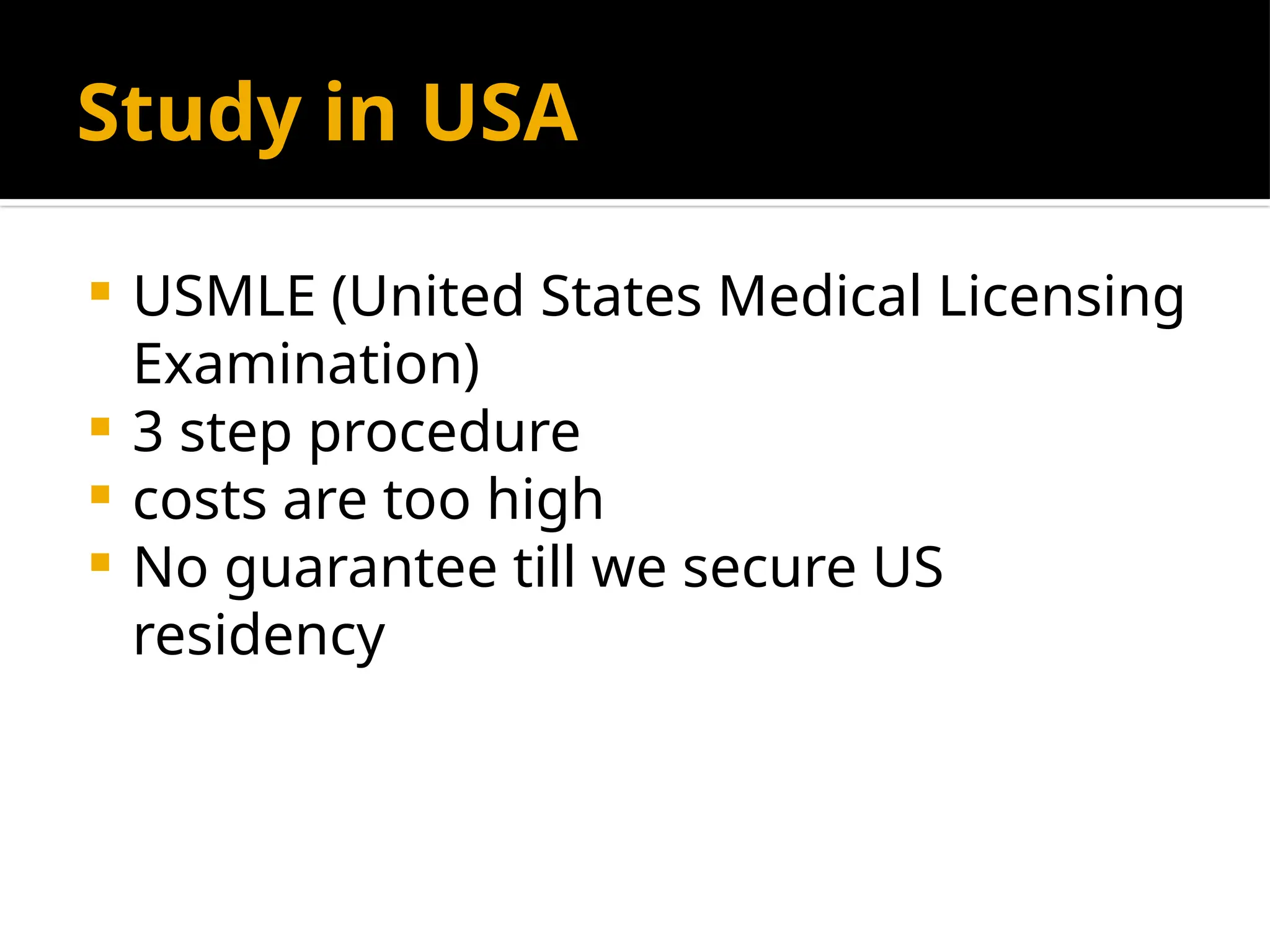
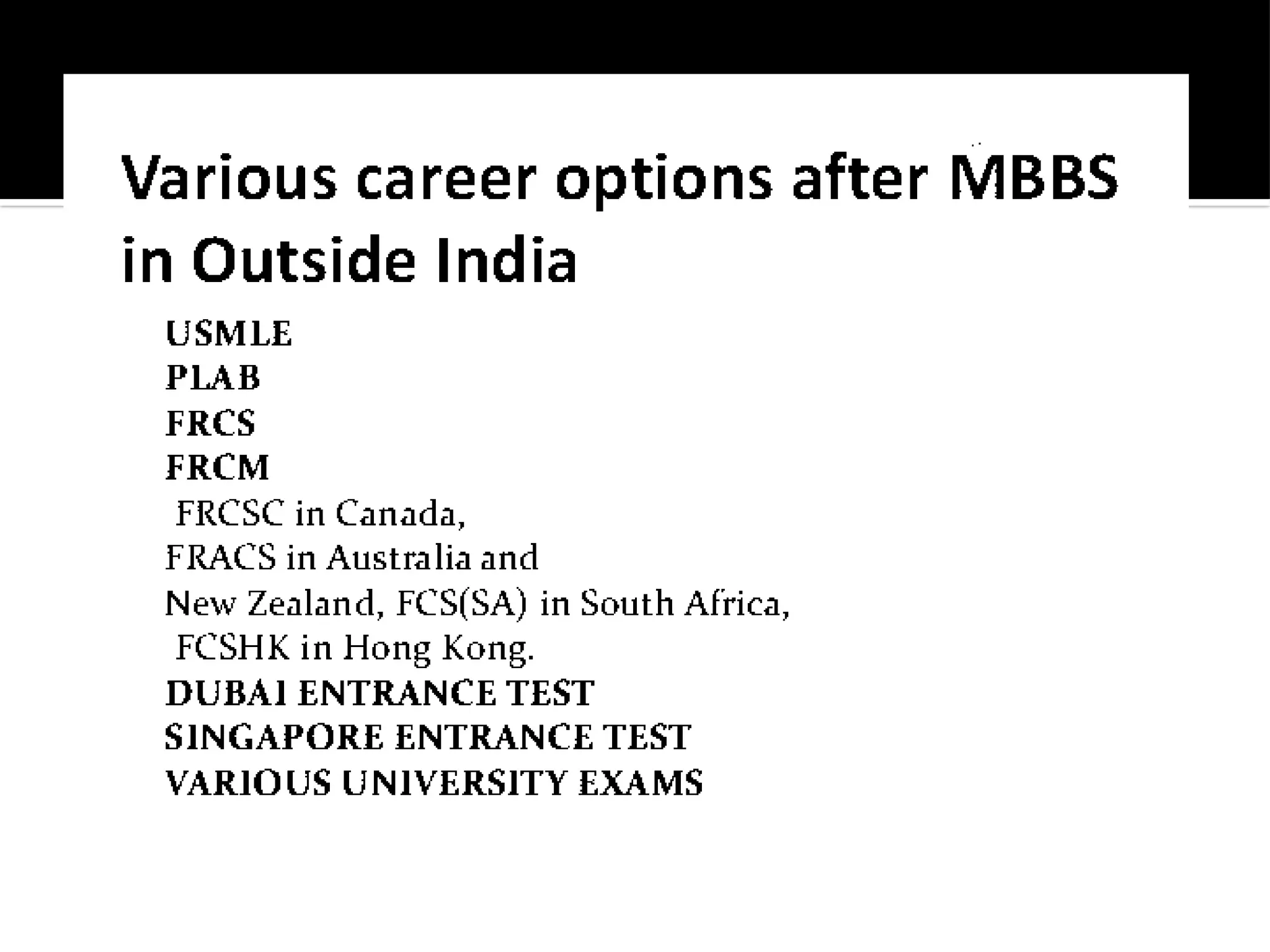
Study in USA
 USMLE (United States Medical Licensing
Examination)
 3 step procedure
 costs are too high
 No guarantee till we secure US
residency
Study in UK
 PLAB (Professional and Linguistic
Assessments Board)
 It is an option after MBBS in UK
Clinical Practice after MBBS
Practicing help in preparing for PG exams
Start clinical practice immediately after
completing MBBS
 Government hospitals: (Full time job or
even do contract basis part time job)
 Private Hospitals ( Corporate sectors
always welcome worthy students)
 Own practice (Owned clinic, nursing home
or hospitals)
Your career pathway
doesn’t end here...
Summary
IMG…
THANK YOU ALL…

Foundation Course- Overview of MBBS PROGRAMME- DR N PREETHA

  • 1.
    MBBS PROGRAMME Indian medicalgraduate A walk through the MBBS curriculum Scope after MBBS
  • 2.
    “Indian Medical Graduate” (IMG) ProposedGraduate Medical Regulations “Indian Medical Graduate” (IMG) possessing requisite knowledge, skills, attitudes, values and responsiveness, so that he or she may function appropriately and effectively as a physician of first contact of the community while being globally relevant
  • 4.
  • 5.
    Specific Competencies  Competency-based Integrated and  Learner-centered acquisition of skills and ethical & humanistic values  Acquired by the learner in the corresponding professional year  Interpreted in the larger context
  • 6.
    COMPETENCIES eg..  Abideby prescribed ethical and legal codes of conduct and practice  Educate and motivate other members of the team and work in a collaborative and collegial fashion that will help to maximize the health care delivery potential of the team  Demonstrate ability to choose the appropriate diagnostic tests and interpret these tests based on scientific validity, cost effectiveness and clinical context
  • 7.
    PHASE WISE TRAININGAND TIME DISTRIBUTION FOR PROFESSIONAL DEVELOPMENT Training period and time distribution Phase distribution and timing of examination Attendance New teaching / learning elements Specific Competencies Assessment INTERNSHIP
  • 8.
    Training period andtime distribution  4 ½ academic years  Nine semesters + one year of compulsory rotating internship  Each academic year will have at least 240 teaching days
  • 11.
    Clinical postings  SecondProfessional : Three hours per day - five days per week  Third Professional part I: Three hours per day - six days per week  Third Professional part II: Three hours per day - six days per week
  • 12.
    ATTENDANCE  There shallbe a minimum of 75% attendance in theory and 80% attendance in practical /clinical for eligibility to appear for the examinations in that subject.  In subjects that are taught in more than one phase - the learner must have 75% attendance in theory and 80% attendance in practical in each phase of instruction in that subject.  If an examination comprises more than one subject (for e.g., General Surgery and allied branches), the candidate must have a minimum of 75% attendance in each subject including its allied branches, and 80% attendance in each clinical posting.
  • 13.
    ATTENDANCE cont..  Learnerswho do not have at least 75% attendance in the electives will not be eligible for the Third Professional - Part II examination/ NExT.  There shall be a minimum of 75% attendance in AETCOM and minimum of 80% attendance in family visits under Family adoption programme.  Each student shall adopt minimum 3 families/ households and preferably five families. The details shall be as per Family Adoption Program guidelines.
  • 14.
    Training period andtime distribution  Experience in recognizing and managing common problems seen in outpatient, inpatient and emergency settings,  Involvement in patient care as a team member,  Involvement in patient management and performance of basic procedures.
  • 15.
    Certifiable Competencies  Learnersmust have completed the required certifiable competencies for that phase of training and completed the log book appropriate for that phase of training to be eligible for appearing at the final university examination of that subject.
  • 16.
    Internal Assessment (IA) Including Assignments  Preparation for seminar  Clinical case presentation  Preparation of clinical case for discussion  Clinical case study/ problem solving exercise  Participation in project for community health care  Quiz  Certification of competencies  Museum study  Log books  SDL  Skills Training
  • 17.
    Remedial measures  Astudent whose has deficiency(s) in any of the 3 criteria that are required to be eligible to appear in university examination Attendance Certifiable competencies Internal assessment (IA)
  • 18.
    Training period andtime distribution Examination  One main examination in an academic year  Supplementary exam to be held 6-8 weeks after the declaration of the results of the main examination- eligibility  If the student fails in the supplementary examination in phase 1 of MBBS, the student goes to the junior batch for teaching learning as well as
  • 20.
    Training period andtime distribution Examination  Shall not be entitled to graduate after 10 years of his/her joining of the first part of the MBBS course.  First Professional- maximum number of 4 permissible attempts, cleared within 4 years of admission  Second Professional-shall not be allowed to appear in third Professional Part I examination unless she/he clears second Professional examination  Third Professional-Part I(can continue part II without passing,but have to clear to appear for part II exam), Part II(14 months including 2 months of electives)
  • 21.
    ELEMENTS IN CBME Foundation Course  Early Clinical Exposure  Electives  Attitude, Ethics and Communication Module (AETCOM)  Alignment and integration (AIT) teaching  Learner-doctor method of clinical training (Clinical Clerkship)  Family Adoption Programme
  • 22.
    INTERNSHIP  Acquire theskills and competencies for practice of medical and health care under supervision  Certified for independent medical practice as an Indian Medical Graduate.  Assessment
  • 23.
  • 24.
  • 25.
    Post-graduation  MD –Thoracic Medicine  MD – Sports Medicine  MD – Family Medicine  MD – Radio Diagnosis/Radiology  MD – Aviation Medicine/Aerospace Medicine  MD – Tuberculosis & Respiratory Diseases / Pulmonary Medicine  Anesthesia. & Critical Care Med.  MD – Medical Genetics  MD – Rheumatology  Master of Family Medicine  MD – Palliative Medicine  Master of Public Health (Epidemiology)  MD – Blood Banking & Immuno. Haem./Imm. Haem. & Blood Trans.  MD – Tropical Medicine  MD – Maternity & Child Health  MD – Pulmonary Medicine  MD – CCM  MD – P.S.M  MD – TB & Chest  MD – Skin & VD & Lepxsy  MD – MD- Skin & VD  MD-Transfusion Medicine  MD – Immuno Hematology & Blood Transfusion  MD – Medicine  MD – Pharmacology and Therapeutics  MD – Pathology & Microbiology  MD – Emergency Medicine  MD – R & D  MD – Anesthesiology  MD – Anatomy  MD – Aviation Medicine  MD – Bio-Chemistry  MD – Bio-Physics  MD – Community Medicine  MD – Dermatology  MD/MS – Obstetrics & Gynecology
  • 26.
    Post-graduation  MD –Forensic Medicine/Forensic Medicine & Toxicology  MD – General Medicine  MD – Community Health Administration  MD – Geriatrics  MD – Hospital Administration  MD – Health Administration  MD – Lab Medicine  MD – Microbiology  MD – Nuclear Medicine  MD – Obstetrics & Gynecology  MD – Ophthalmology  MD – Pediatrics  MD – Pathology  MD – Dermatology , Venereology & Leprosy  MD – Pharmacology  MD – Physiology  MD – Physical Medicine & Rehabilitation  MD – Psychiatry  MD – Radio Diagnosis  MD – Radiology  MD – Radiotherapy  MD – Social & Preventive Medicine / Community Medicine  MD – Tuberculosis & Respiratory Diseases/Medicine  MD – Venereology  MS – Obstetrics and Gynecology  MS – Orthopedics  MS – Anatomy  MS – ENT  MS – General Surgery  MS – Ophthalmology  MS – Anesthesia  MS. – MS. Medicine  MS – Neuro Surgery  MS – Traumatology and Surgery  MD/MS – Anatomy  MD/MS – Ophthalmology  DM – Infectious Diseases  DM – Organ Transplant Anesthesia & Critical Care  DM – Critical Care Medicine
  • 27.
    Research  Ph. D– Bio- Chemistry  Ph. D – Microbiology  Ph. D – Pathology  Ph. D – Forensic Medicine  Ph. D – Anaesthesia  Ph. D – Bio-Statistics  Ph. D – Bio-Technology  Ph. D – Cardiology  Ph. D – Community Medicine  Ph. D – Cardio Thoracic & Vascular Surgery  Ph. D – Dermatology & Venereology  Ph. D – Endocrinology & Metabolism  Ph. D – ENT  Ph. D – Gastro & Human Nutrition Unit  Ph. D – Gastrointestinal Surgery  Ph. D – Hospital Administration  Ph. D – Haematology  Ph. D – Histo Compatibility & Immunogenetics  Ph. D – Lab Medicine  Ph. D – Medical Oncology  Ph. D – Medical Physics  Ph. D – Medicine  Ph. D – Nephrology  Ph. D – Neurology  Ph. D – Neuro Surgery  Ph. D – Neuro Magnetic Resonance  Ph. D – Nuclear Medicine  Ph. D – Obst. & Gynae  Ph. D – Ocular Bio Chemistry  Ph. D – Ocular Microbiology  Ph. D – Ocular Phramacology  Ph. D – Orthopaedics  Ph. D – Paediatric Surgery  Ph. D – Paediatric  Ph. D – Physical Medicine & Rehabilitation  Ph. D – Psychiatry  Ph. D – Radiotherapy  Ph. D – Radio Diagnosis  Ph. D – Surgery  Ph. D – Urology  Ph. D – Medical Biochemistry  Doctor of Phylosophy  Ph. D-Pharmacology  Ph. D – Anatomy  Ph. D – Physiology
  • 29.
    MBA Wide-oriented degree Choices:-  Salesand Operations  Business development  Licensing  Marketing  Healthcare services like hospital management  Healthcare consultancy  Non-Government organisation  Pharmaceutical companies
  • 30.
    MHA Narrower scope ascompared to MBA Work only in field of hospital management  Medical superintendent in medical hospital  Consultant in information technology  Healthcare product manager  Manager in insurance company.
  • 32.
    Study in USA USMLE (United States Medical Licensing Examination)  3 step procedure  costs are too high  No guarantee till we secure US residency
  • 33.
    Study in UK PLAB (Professional and Linguistic Assessments Board)  It is an option after MBBS in UK
  • 35.
    Clinical Practice afterMBBS Practicing help in preparing for PG exams Start clinical practice immediately after completing MBBS  Government hospitals: (Full time job or even do contract basis part time job)  Private Hospitals ( Corporate sectors always welcome worthy students)  Own practice (Owned clinic, nursing home or hospitals)
  • 36.
  • 38.
  • 40.

Editor's Notes

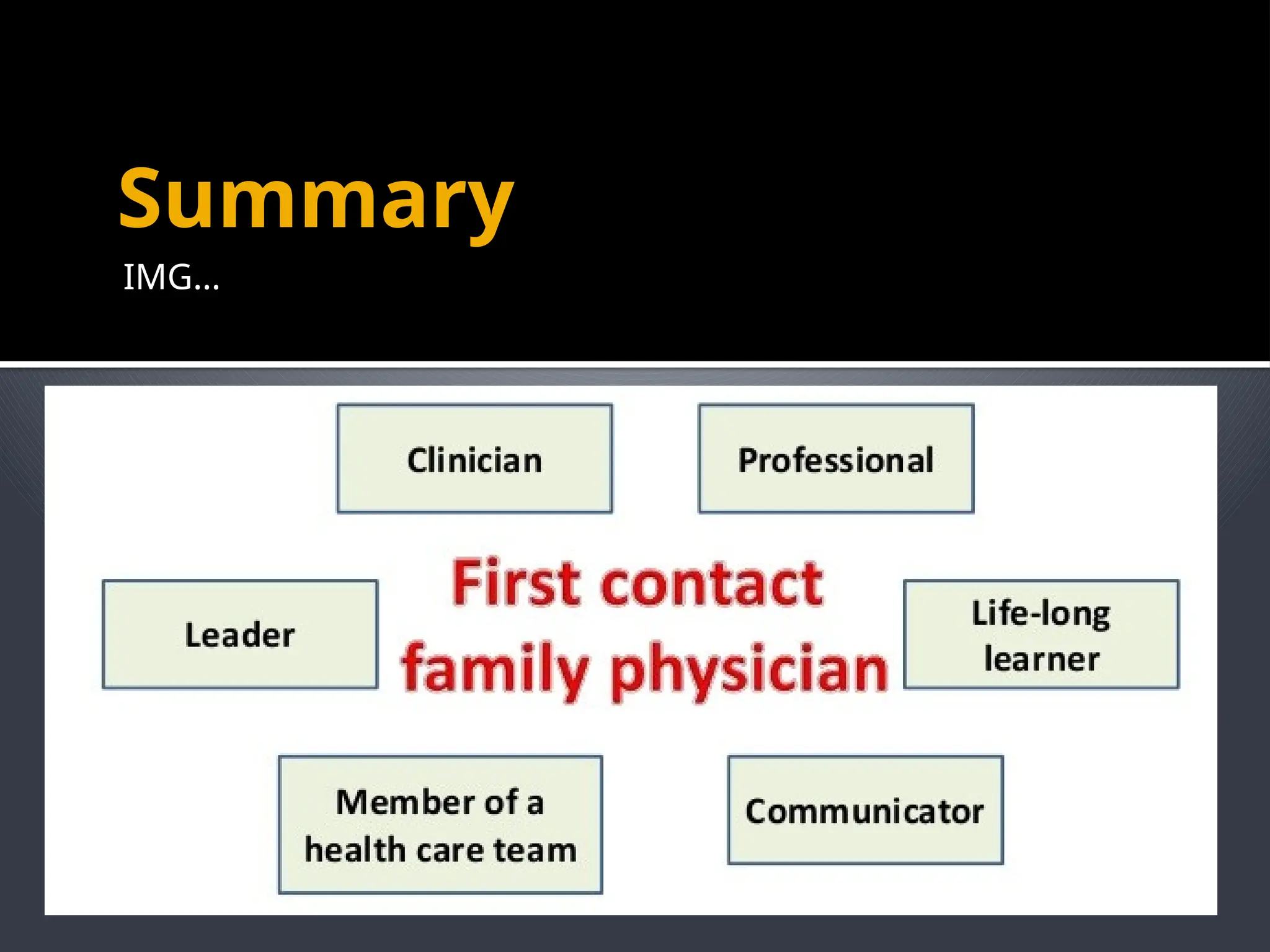
  • #4 a)Clinician who understands and provides preventive, promotive, curative, palliative and holistic care with compassion. b) Leader and member of the health care team and system with capabilities to collect analyze, synthesize and communicate health data appropriately. c) Communicator with patients, families, colleagues and community. d) Lifelong learner committed to continuous improvement of skills and knowledge. e) Professional, who is committed to excellence, is ethical, responsive and accountable to patients, community and profession
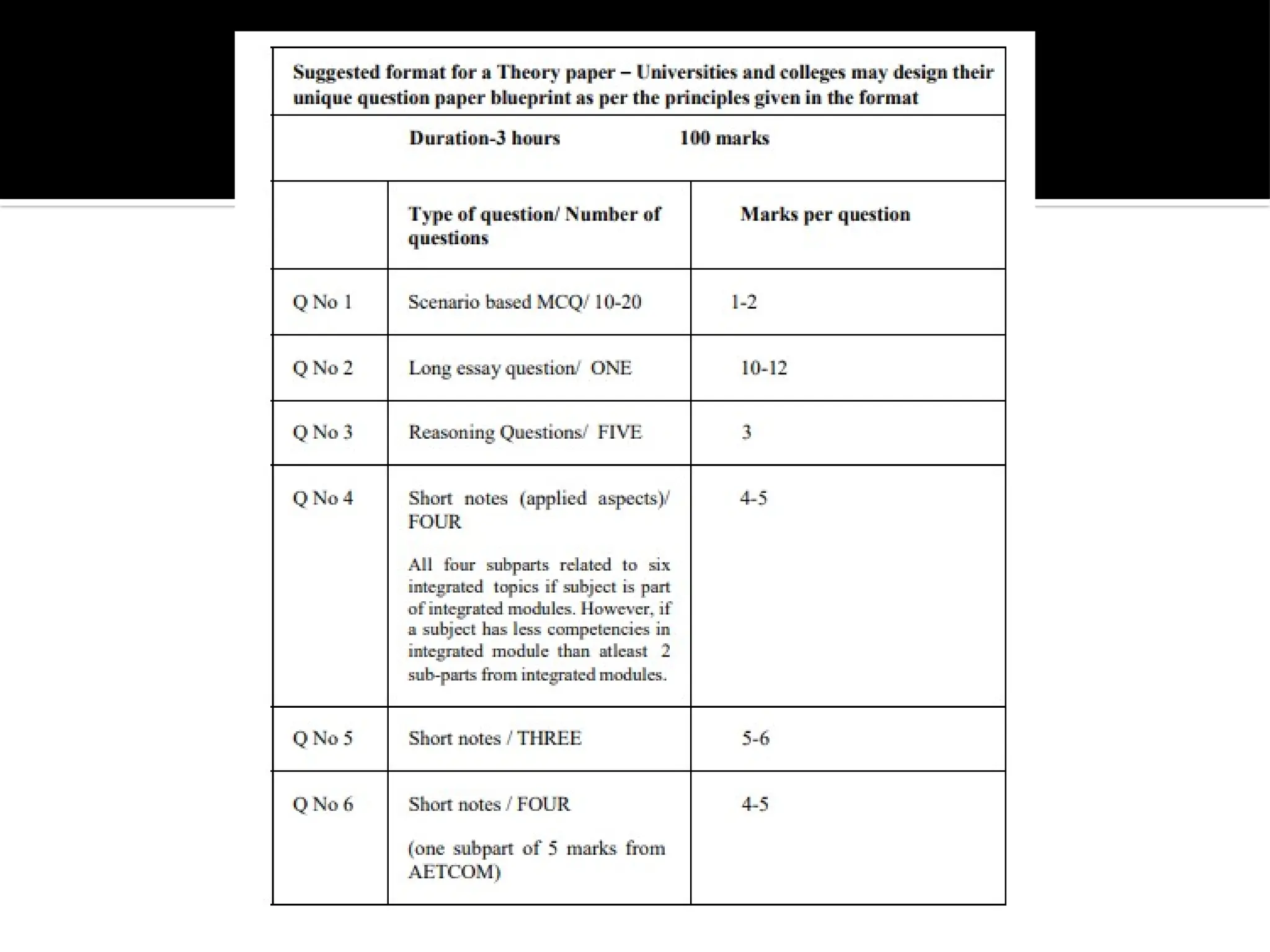
  • #20 discipline of Orthopedics, Anesthesiology, Dentistry and Radiodiagnosis will constitute 25% of the total theory marks incorporated as a separate section in paper II of General Surgery. 3. The discipline of Psychiatry and Dermatology, Venereology and Leprosy (DVL), Respiratory Medicine including Tuberculosis will constitute 25% of the total theory marks in General Medicine incorporated as a separate section in paper II of General Medicine.