Forward Bend
Seed Pose
A posture that shares
common principles of
alignment,
architecture and awareness
with subsequent relative
variations. Seed poses are
found in
a basic sun salute.
Uttansana
Intense Forward Bend
• Seed pose for all Forward Bends
• Components
• Foundation – four corners of the feet
• Dynamic alignment – awareness of joints
and their respective placement for the
practitioner’s level
• Anatomic neutral posture achieved with
dynamic alignment
• Spinal Flexion
Foundation
• FOUNDATION
• FOUNDATION
• FOUNDATION
Joint Placement
• Second Toe (or ray) forward facing.
• Ankle
• Knee cap (patella) aligned with second toe
• Hip Neutral over ankles
• Spinal Flexion
• Shoulders in flexion with hands or finger tips
touching floor, middle finger in line with second
toe.
• Cervical spine in flexion or neutral depending on
amount of spinal flexion in lumbar region.
Awareness
• Bandhas
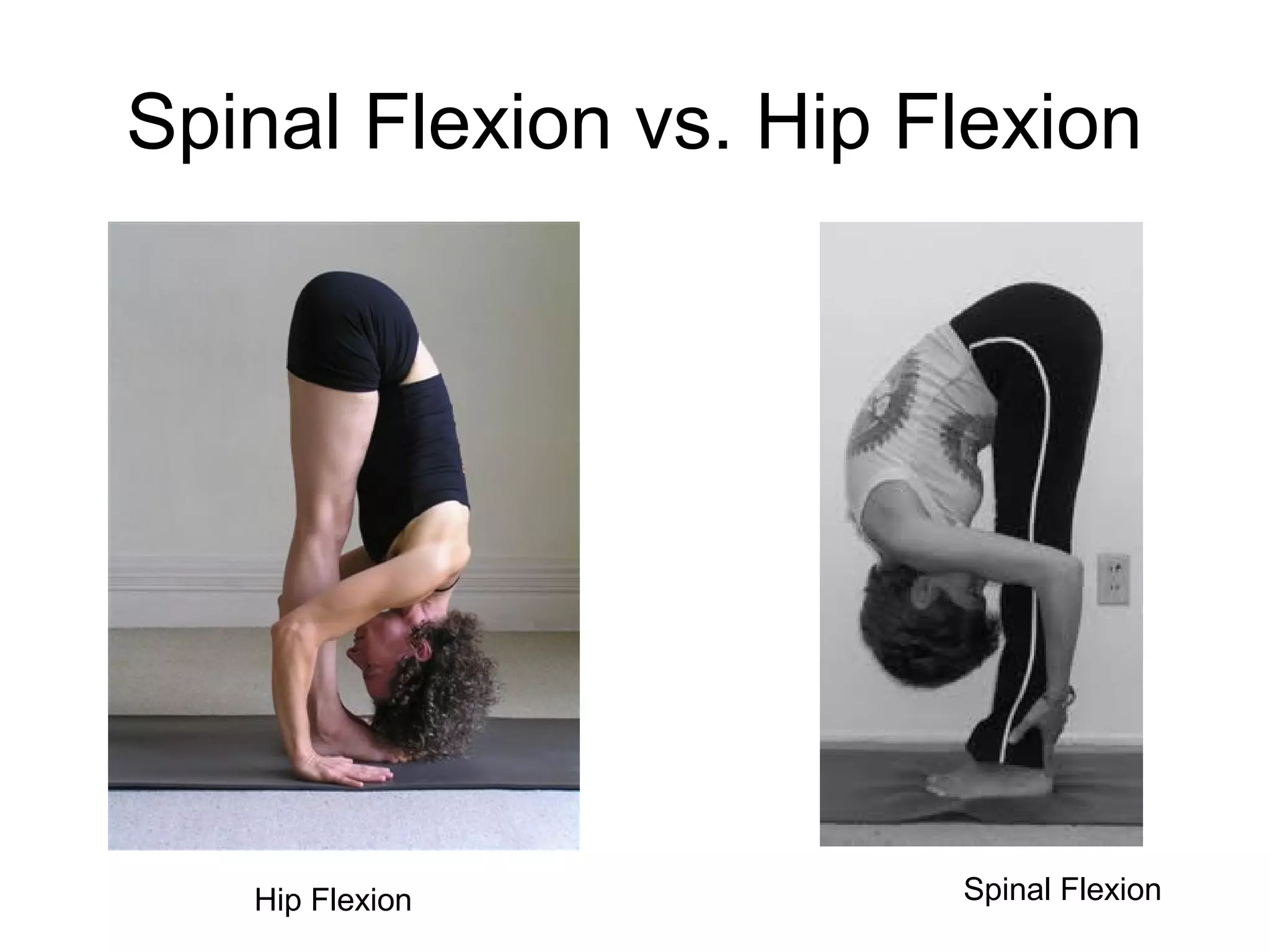
• Spinal Flexion vs. Hip Flexion
The role of the hamstrings
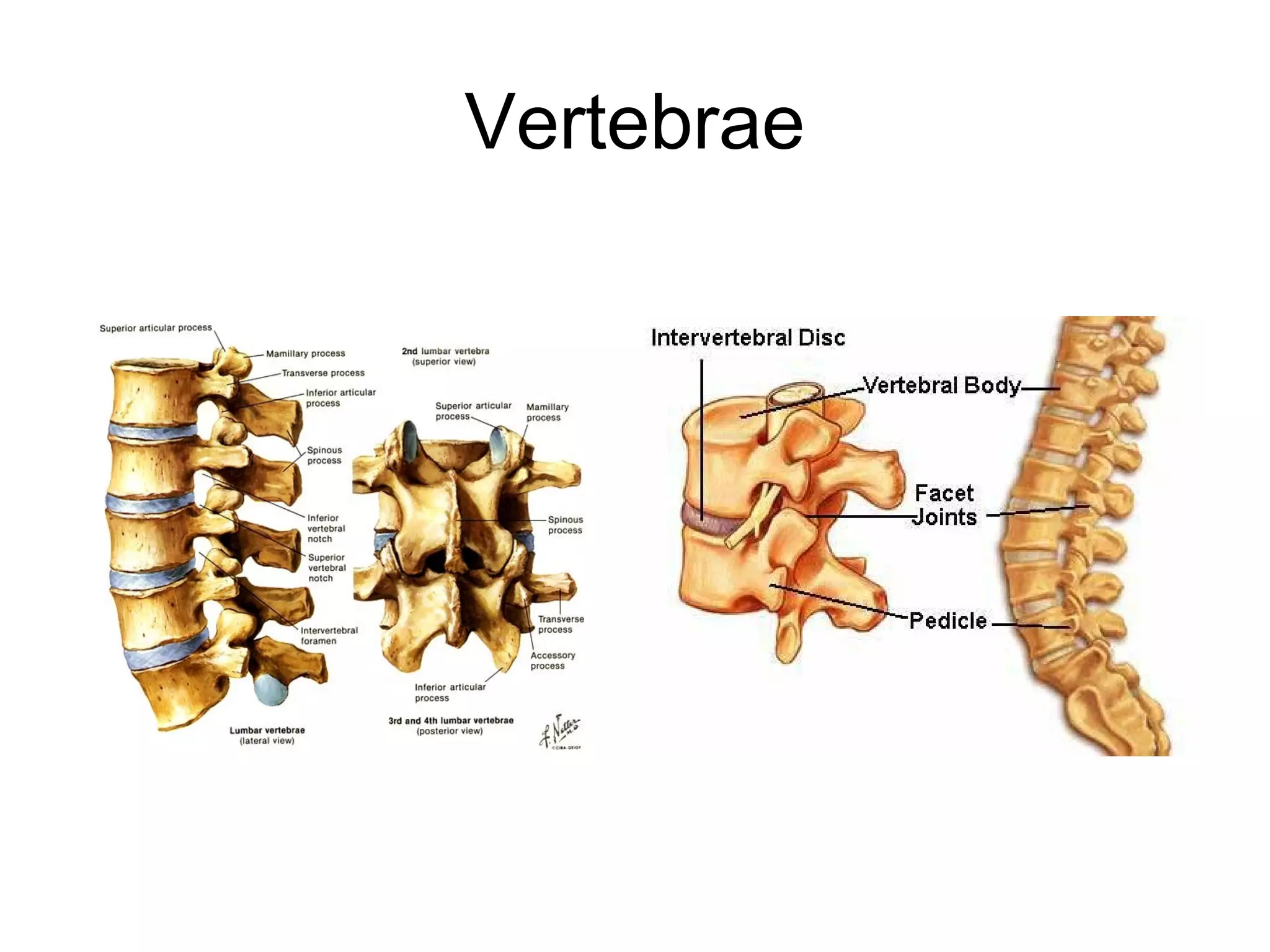
Vertebrae
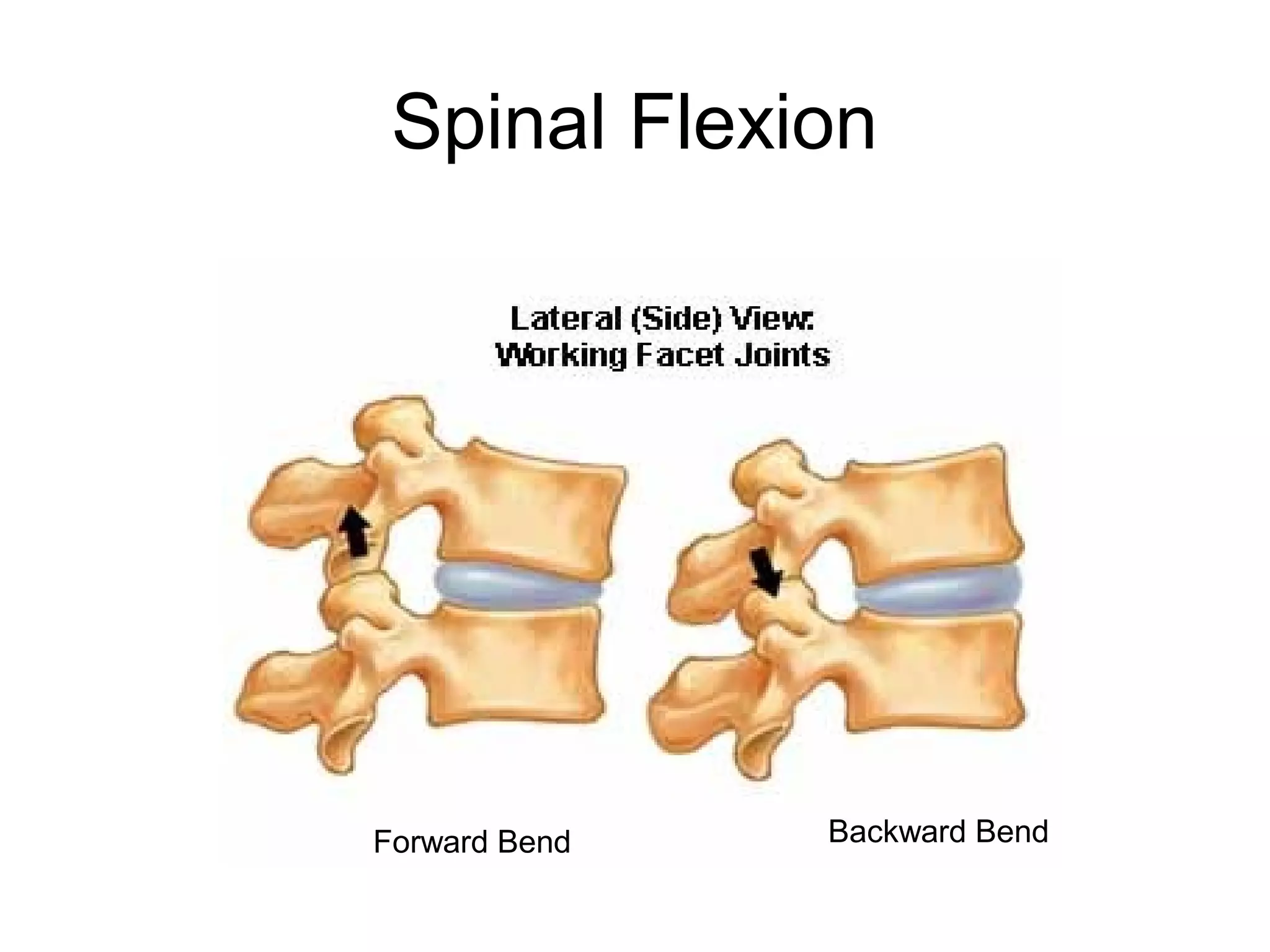
Spinal Flexion
Forward Bend Backward Bend
Functional Range of Motion
• Cervical Spine Flexion - 45 degrees
• Thoracic Spine Flexion – limited
• Lumbar Spine Flexion – Greatest up to 60
degrees
• What does “Functional” mean?
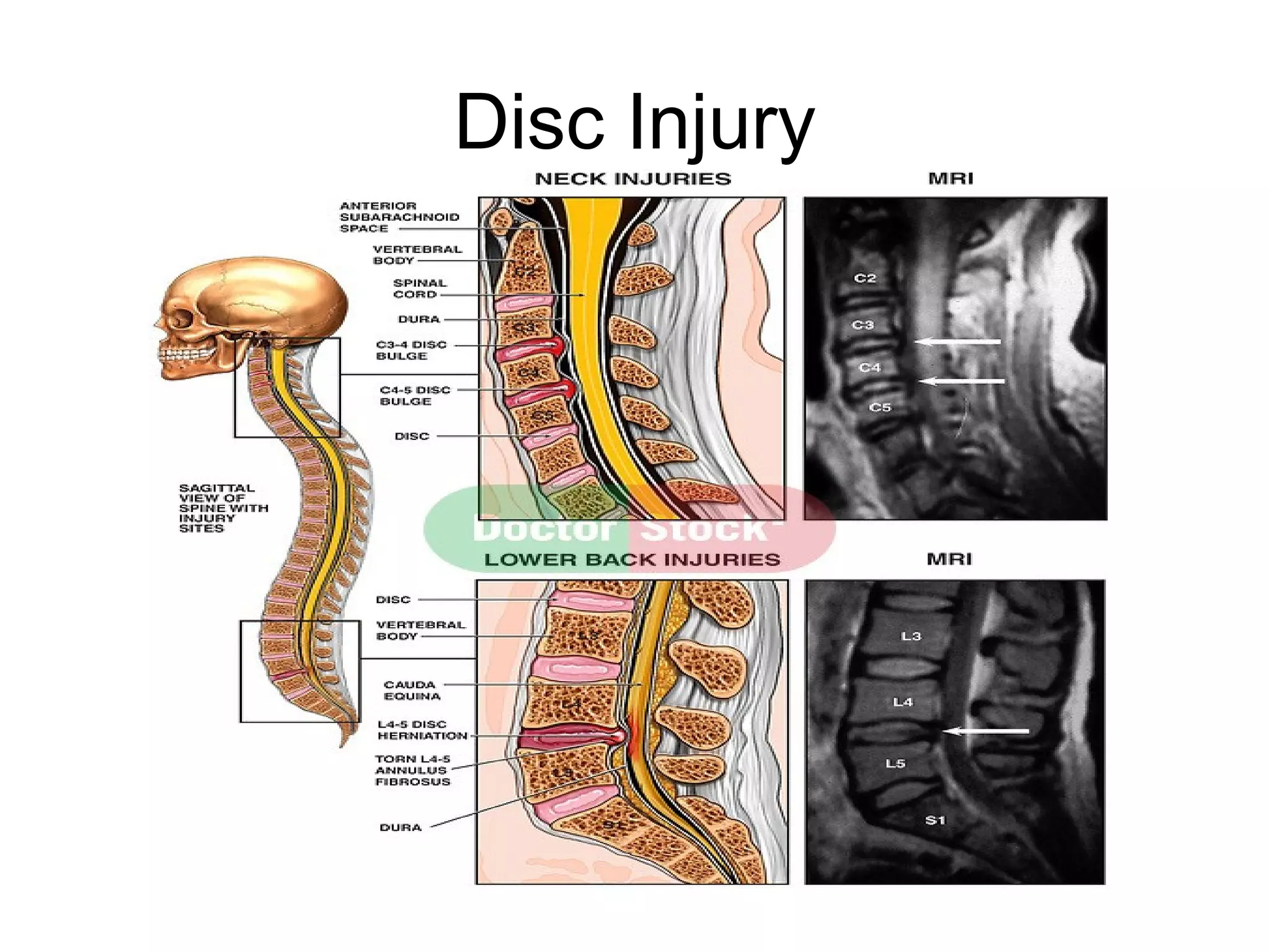
Disc Injury
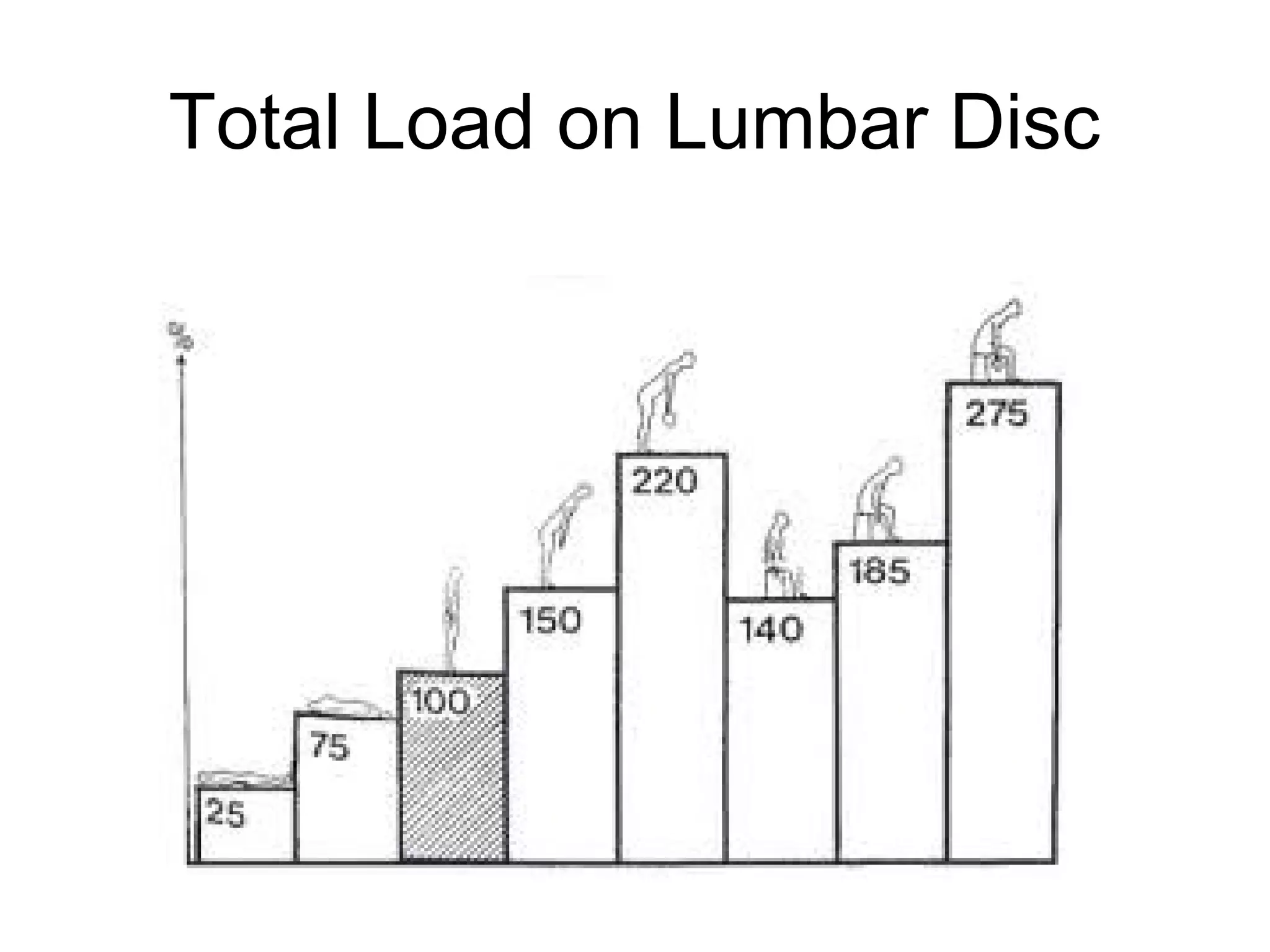
Total Load on Lumbar Disc
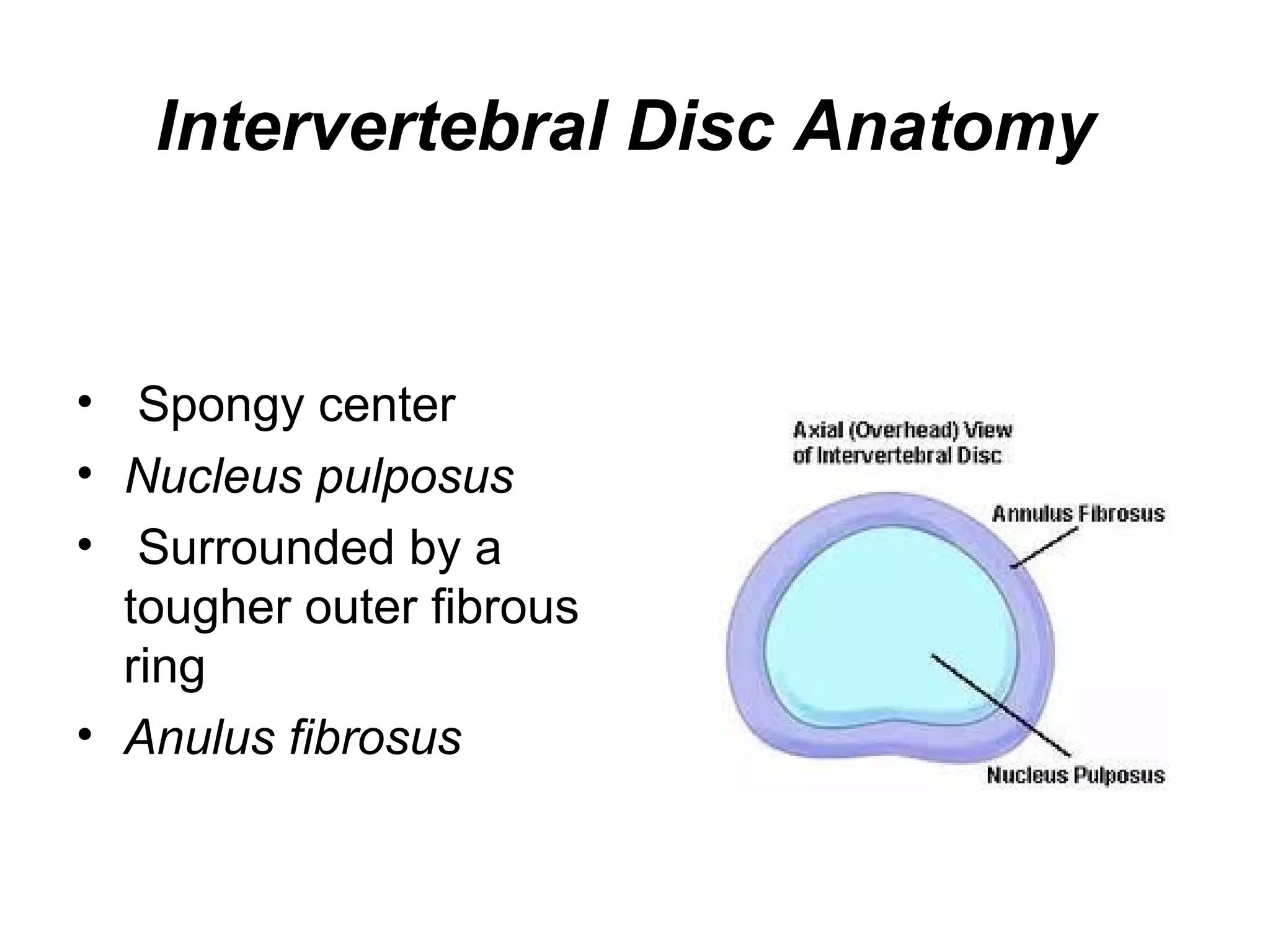
Intervertebral Disc Anatomy
• Spongy center
• Nucleus pulposus
• Surrounded by a
tougher outer fibrous
ring
• Anulus fibrosus
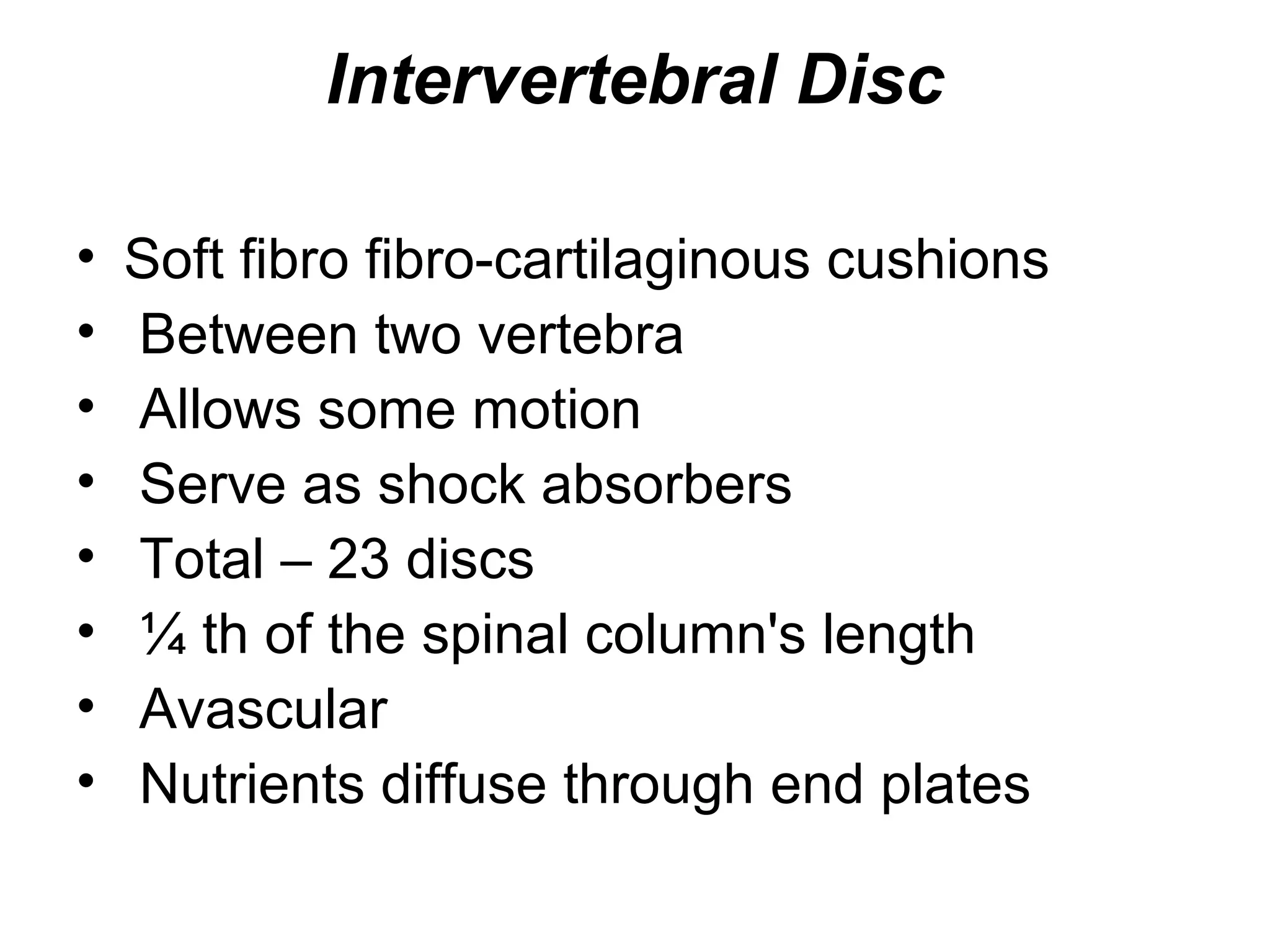
Intervertebral Disc
• Soft fibro fibro-cartilaginous cushions
• Between two vertebra
• Allows some motion
• Serve as shock absorbers
• Total – 23 discs
• ¼ th of the spinal column's length
• Avascular
• Nutrients diffuse through end plates
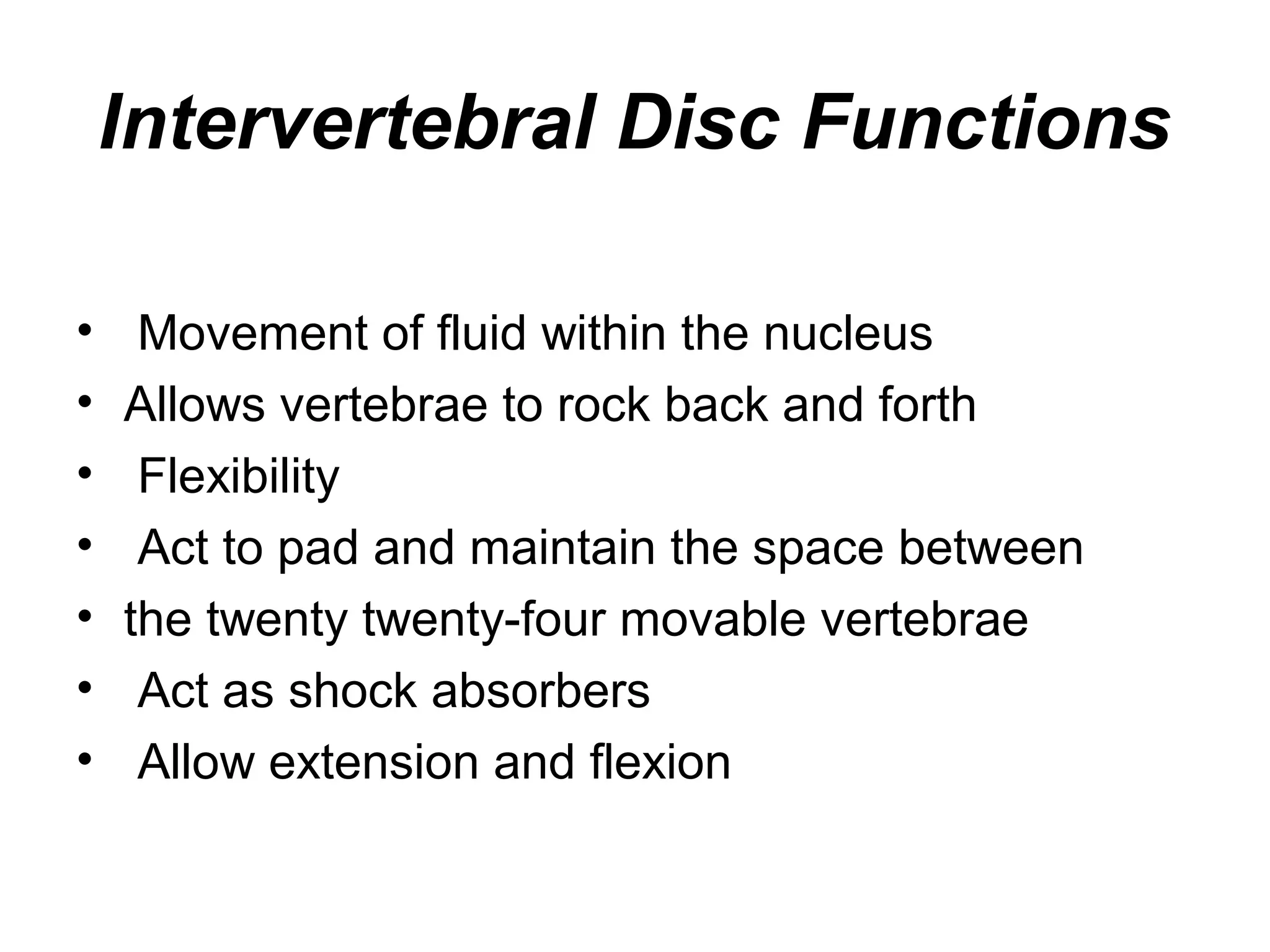
Intervertebral Disc Functions
• Movement of fluid within the nucleus
• Allows vertebrae to rock back and forth
• Flexibility
• Act to pad and maintain the space between
• the twenty twenty-four movable vertebrae
• Act as shock absorbers
• Allow extension and flexion
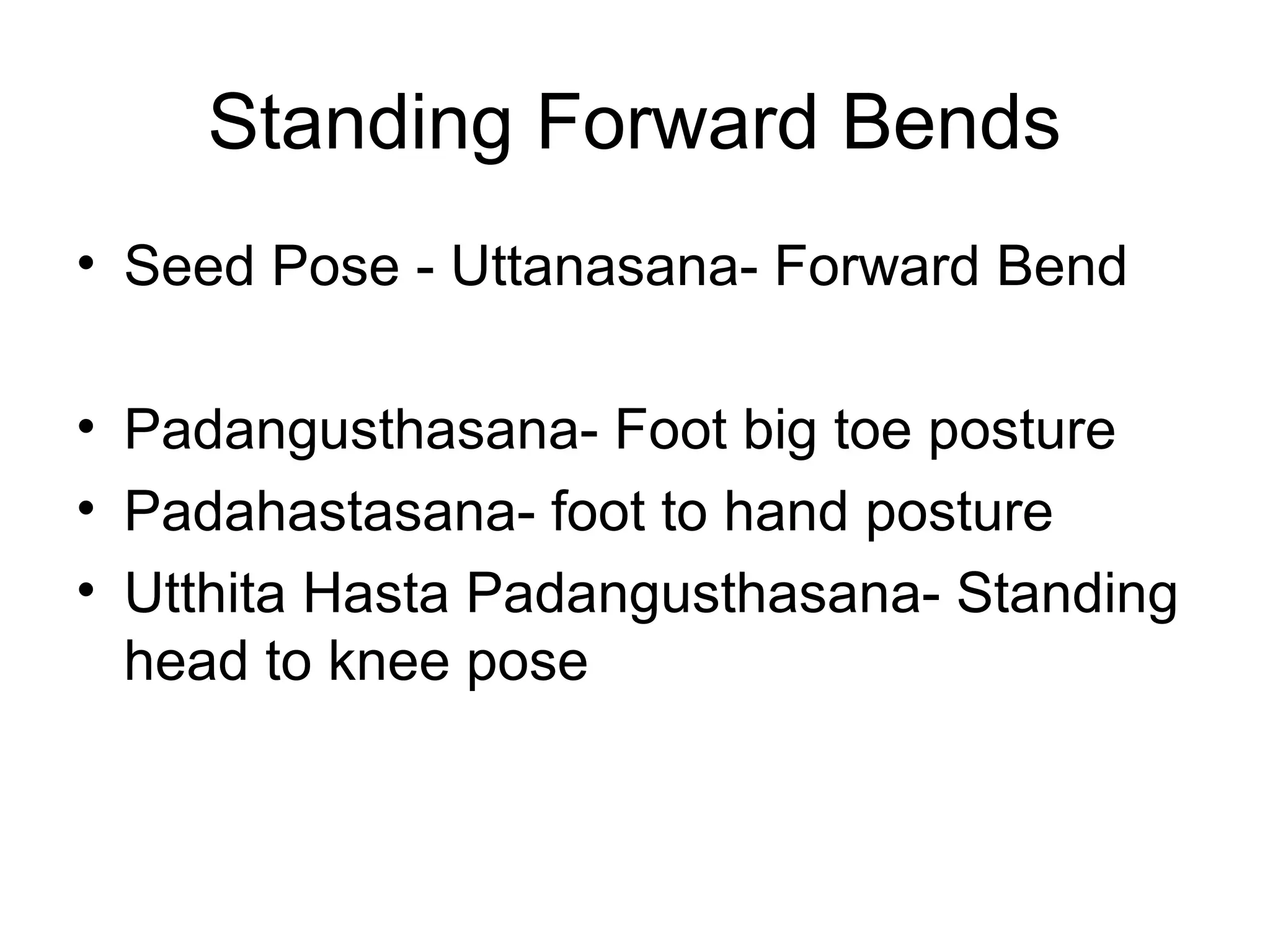
Standing Forward Bends
• Seed Pose - Uttanasana- Forward Bend
• Padangusthasana- Foot big toe posture
• Padahastasana- foot to hand posture
• Utthita Hasta Padangusthasana- Standing
head to knee pose
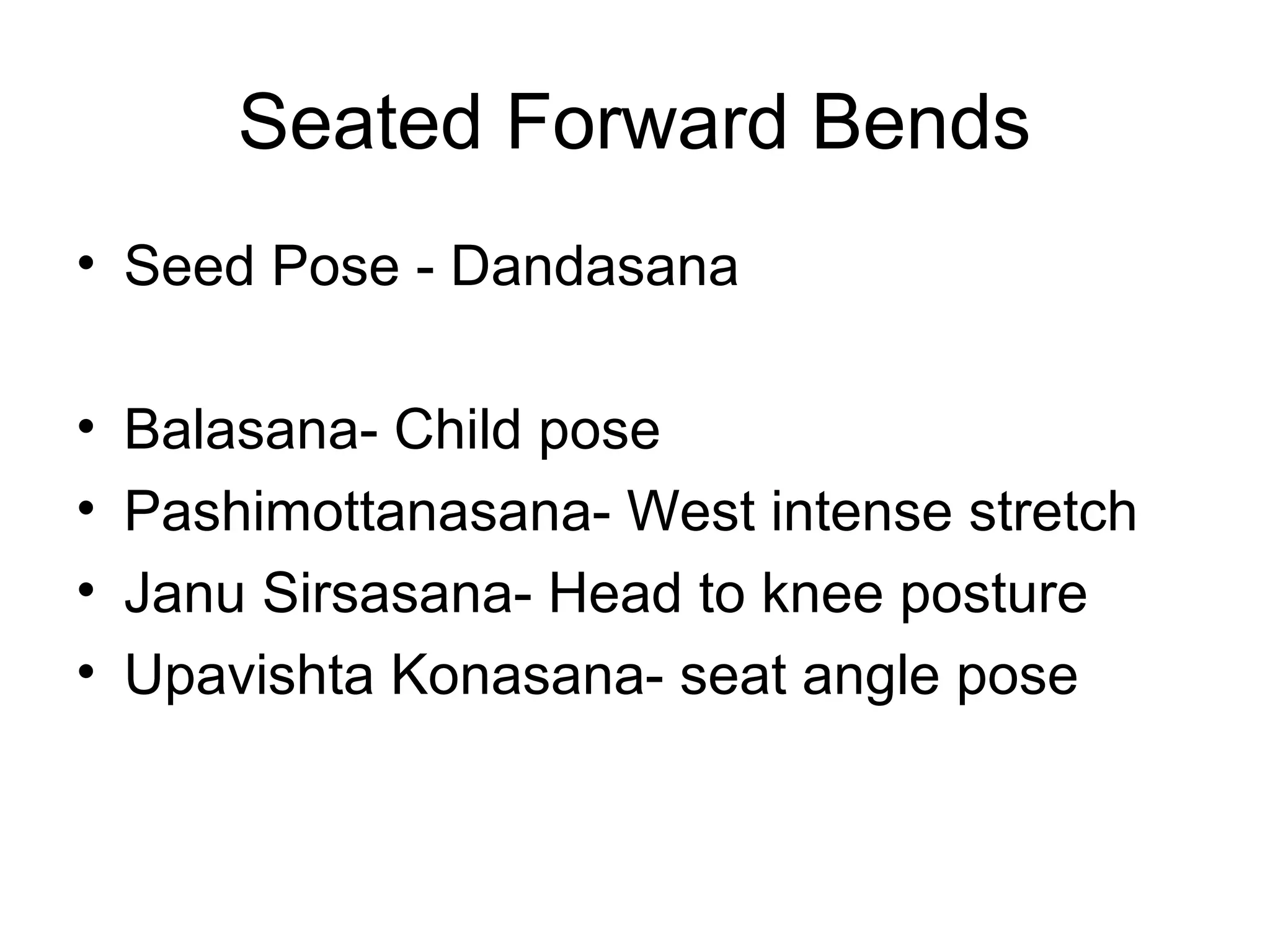
Seated Forward Bends
• Seed Pose - Dandasana
• Balasana- Child pose
• Pashimottanasana- West intense stretch
• Janu Sirsasana- Head to knee posture
• Upavishta Konasana- seat angle pose
Supine
Forward Bend
• Seed Pose - Savsana
• Supta Padangusthasana- Reclining hold
the big toe posture
Spinal Flexion vs. Hip Flexion
Hip Flexion Spinal Flexion

Forward bend

  • 1.
  • 2.
    Seed Pose A posturethat shares common principles of alignment, architecture and awareness with subsequent relative variations. Seed poses are found in a basic sun salute.
  • 3.
    Uttansana Intense Forward Bend •Seed pose for all Forward Bends • Components • Foundation – four corners of the feet • Dynamic alignment – awareness of joints and their respective placement for the practitioner’s level • Anatomic neutral posture achieved with dynamic alignment • Spinal Flexion
  • 4.
  • 5.
    Joint Placement • SecondToe (or ray) forward facing. • Ankle • Knee cap (patella) aligned with second toe • Hip Neutral over ankles • Spinal Flexion • Shoulders in flexion with hands or finger tips touching floor, middle finger in line with second toe. • Cervical spine in flexion or neutral depending on amount of spinal flexion in lumbar region.
  • 6.
    Awareness • Bandhas • SpinalFlexion vs. Hip Flexion The role of the hamstrings
  • 7.
  • 8.
  • 9.
    Functional Range ofMotion • Cervical Spine Flexion - 45 degrees • Thoracic Spine Flexion – limited • Lumbar Spine Flexion – Greatest up to 60 degrees • What does “Functional” mean?
  • 10.
  • 11.
    Total Load onLumbar Disc
  • 12.
    Intervertebral Disc Anatomy •Spongy center • Nucleus pulposus • Surrounded by a tougher outer fibrous ring • Anulus fibrosus
  • 13.
    Intervertebral Disc • Softfibro fibro-cartilaginous cushions • Between two vertebra • Allows some motion • Serve as shock absorbers • Total – 23 discs • ¼ th of the spinal column's length • Avascular • Nutrients diffuse through end plates
  • 14.
    Intervertebral Disc Functions •Movement of fluid within the nucleus • Allows vertebrae to rock back and forth • Flexibility • Act to pad and maintain the space between • the twenty twenty-four movable vertebrae • Act as shock absorbers • Allow extension and flexion
  • 15.
    Standing Forward Bends •Seed Pose - Uttanasana- Forward Bend • Padangusthasana- Foot big toe posture • Padahastasana- foot to hand posture • Utthita Hasta Padangusthasana- Standing head to knee pose
  • 16.
    Seated Forward Bends •Seed Pose - Dandasana • Balasana- Child pose • Pashimottanasana- West intense stretch • Janu Sirsasana- Head to knee posture • Upavishta Konasana- seat angle pose
  • 17.
    Supine Forward Bend • SeedPose - Savsana • Supta Padangusthasana- Reclining hold the big toe posture
  • 18.
    Spinal Flexion vs.Hip Flexion Hip Flexion Spinal Flexion