Formative Feedback – What is it?
answergarden.ch/view/189263
Formative
Feedback
Anthony Coe
@anthonycoe3116
#achpertas15
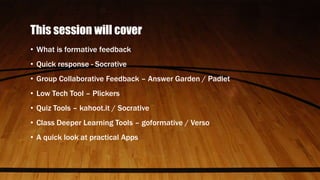
This session will cover
• What is formative feedback
• Quick response - Socrative
• Group Collaborative Feedback – Answer Garden / Padlet
• Low Tech Tool – Plickers
• Quiz Tools – kahoot.it / Socrative
• Class Deeper Learning Tools – goformative / Verso
• A quick look at practical Apps
Formative Feedback – What is it?
Dylan Wiliam – 5 Strategies for formative assessment
1. Clarifying, sharing, and understanding learning intentions and success criteria
2. Engineering effective discussions, tasks and activities that elicit evidence of
learning
3. Providing feedback that moves learning forward
4. Activating students as learning resources for one another
5. Activating students as owners of their own learning
Dylan Wiliam and Siobhan Leahy - “Embedding Formative Assessment” (2015)
Socrative
Quiz based Online Tool
Go to: -b.socrative.com
Room: achpertas
Question: Have you used Socrative Before?
Types of Quizzes
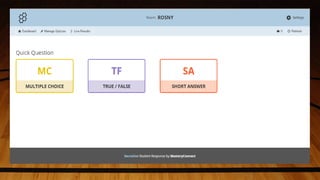
1. Quick Question
• Verbal – True or False
• Verbal – Multiple Choice
• Short Answer
2. Multiple Choice
3. True or False
4. Short Answer
5. Exit Tickets
6. Race
• Instant Teacher Feedback
• Email response
• Download to Excel
• View Chart
• Student Names
• Student or teacher paced
• Share quiz / import
• Archived Feedback
• Create your own
Giving good feedback
Learning intentions can be given at any time
Re-engage students in their learning
Moves learning forward (not feedback but feed forward)
HPE and Music Teachers do it well
Statements can be more powerful than asking questions
Never work harder than your students” – Hours marking assignments to write
comments….what happens next?
Students mark their own tests / write their own
A dot in the margin – explore why?
Have you got skin
in the game?
How do you create hang time in
the classroom?
The most downloaded App is….?
http://list25.com/25-of-the-most-downloaded-apps-of-all-time/
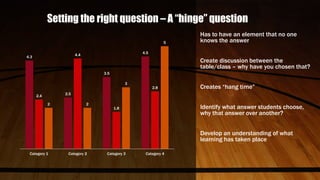
Setting the right question – A “hinge” question
4.3
2.5
3.5
4.5
2.4
4.4
1.8
2.8
2 2
3
5
Category 1 Category 2 Category 3 Category 4
Has to have an element that no one
knows the answer
Create discussion between the
table/class – why have you chosen that?
Creates “hang time”
Identify what answer students choose,
why that answer over another?
Develop an understanding of what
learning has taken place
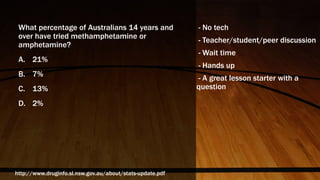
What percentage of Australians 14 years and
over have tried methamphetamine or
amphetamine?
A. 21%
B. 7%
C. 13%
D. 2%
http://www.druginfo.sl.nsw.gov.au/about/stats-update.pdf
- No tech
- Teacher/student/peer discussion
- Wait time
- Hands up
- A great lesson starter with a
question
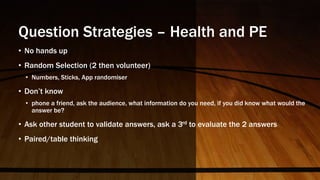
Question Strategies – Health and PE
• No hands up
• Random Selection (2 then volunteer)
• Numbers, Sticks, App randomiser
• Don’t know
• phone a friend, ask the audience, what information do you need, if you did know what would the
answer be?
• Ask other student to validate answers, ask a 3rd to evaluate the 2 answers
• Paired/table thinking
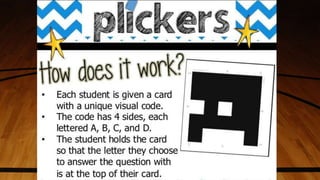
Plickers
https://www.plickers.com/
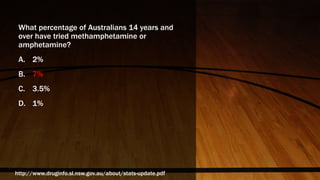
What percentage of Australians 14 years and
over have tried methamphetamine or
amphetamine?
A. 2%
B. 7%
C. 3.5%
D. 1%
http://www.druginfo.sl.nsw.gov.au/about/stats-update.pdf
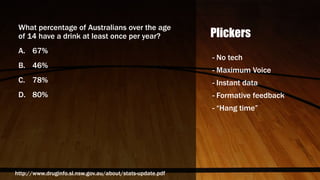
Plickers
What percentage of Australians over the age
of 14 have a drink at least once per year?
A. 67%
B. 46%
C. 78%
D. 80%
- No tech
- Maximum Voice
- Instant data
- Formative feedback
- “Hang time”
http://www.druginfo.sl.nsw.gov.au/about/stats-update.pdf
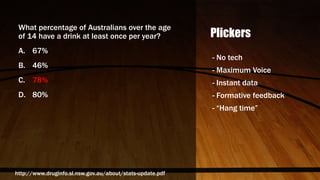
Plickers
What percentage of Australians over the age
of 14 have a drink at least once per year?
A. 67%
B. 46%
C. 78%
D. 80%
- No tech
- Maximum Voice
- Instant data
- Formative feedback
- “Hang time”
http://www.druginfo.sl.nsw.gov.au/about/stats-update.pdf
Kahoot.it
Turning learning into a Game
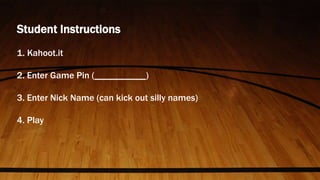
Student Instructions
1. Kahoot.it
2. Enter Game Pin (___________)
3. Enter Nick Name (can kick out silly names)
4. Play
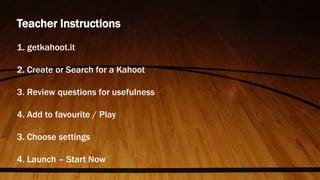
Teacher Instructions
1. getkahoot.it
2. Create or Search for a Kahoot
3. Review questions for usefulness
4. Add to favourite / Play
3. Choose settings
4. Launch – Start Now
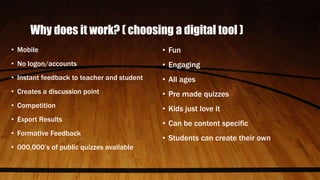
Why does it work? ( choosing a digital tool )
• Mobile
• No logon/accounts
• Instant feedback to teacher and student
• Creates a discussion point
• Competition
• Export Results
• Formative Feedback
• 000,000’s of public quizzes available
• Fun
• Engaging
• All ages
• Pre made quizzes
• Kids just love it
• Can be content specific
• Students can create their own
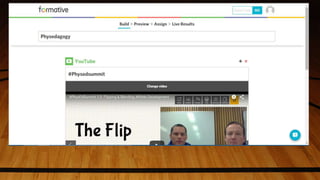
https://goformative.com
http://versoapp.com/
Verso
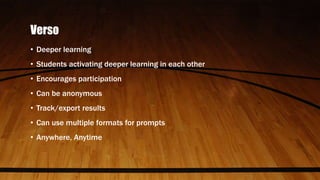
• Deeper learning
• Students activating deeper learning in each other
• Encourages participation
• Can be anonymous
• Track/export results
• Can use multiple formats for prompts
• Anywhere, Anytime
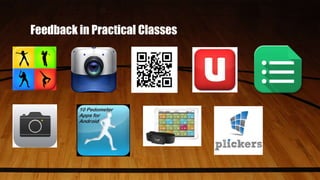
Feedback in Practical Classes
#PhysEdsummit 3.0
@PhYSEDagogy
Thank you!
Please enter this link goo.gl/L6ErIO and complete the form
Socrative Exit Ticket: b.socrative.com

Formative Feedback - Tools for the classroom

  • 1.
    Formative Feedback –What is it? answergarden.ch/view/189263
  • 2.
  • 3.
    This session willcover • What is formative feedback • Quick response - Socrative • Group Collaborative Feedback – Answer Garden / Padlet • Low Tech Tool – Plickers • Quiz Tools – kahoot.it / Socrative • Class Deeper Learning Tools – goformative / Verso • A quick look at practical Apps
  • 4.
    Formative Feedback –What is it? Dylan Wiliam – 5 Strategies for formative assessment 1. Clarifying, sharing, and understanding learning intentions and success criteria 2. Engineering effective discussions, tasks and activities that elicit evidence of learning 3. Providing feedback that moves learning forward 4. Activating students as learning resources for one another 5. Activating students as owners of their own learning Dylan Wiliam and Siobhan Leahy - “Embedding Formative Assessment” (2015)
  • 5.
    Socrative Quiz based OnlineTool Go to: -b.socrative.com Room: achpertas Question: Have you used Socrative Before?
  • 7.
    Types of Quizzes 1.Quick Question • Verbal – True or False • Verbal – Multiple Choice • Short Answer 2. Multiple Choice 3. True or False 4. Short Answer 5. Exit Tickets 6. Race • Instant Teacher Feedback • Email response • Download to Excel • View Chart • Student Names • Student or teacher paced • Share quiz / import • Archived Feedback • Create your own
  • 8.
    Giving good feedback Learningintentions can be given at any time Re-engage students in their learning Moves learning forward (not feedback but feed forward) HPE and Music Teachers do it well Statements can be more powerful than asking questions Never work harder than your students” – Hours marking assignments to write comments….what happens next? Students mark their own tests / write their own A dot in the margin – explore why?
  • 9.
    Have you gotskin in the game? How do you create hang time in the classroom? The most downloaded App is….?
  • 10.
  • 11.
    Setting the rightquestion – A “hinge” question 4.3 2.5 3.5 4.5 2.4 4.4 1.8 2.8 2 2 3 5 Category 1 Category 2 Category 3 Category 4 Has to have an element that no one knows the answer Create discussion between the table/class – why have you chosen that? Creates “hang time” Identify what answer students choose, why that answer over another? Develop an understanding of what learning has taken place
  • 12.
    What percentage ofAustralians 14 years and over have tried methamphetamine or amphetamine? A. 21% B. 7% C. 13% D. 2% http://www.druginfo.sl.nsw.gov.au/about/stats-update.pdf - No tech - Teacher/student/peer discussion - Wait time - Hands up - A great lesson starter with a question
  • 13.
    Question Strategies –Health and PE • No hands up • Random Selection (2 then volunteer) • Numbers, Sticks, App randomiser • Don’t know • phone a friend, ask the audience, what information do you need, if you did know what would the answer be? • Ask other student to validate answers, ask a 3rd to evaluate the 2 answers • Paired/table thinking
  • 14.
  • 16.
    What percentage ofAustralians 14 years and over have tried methamphetamine or amphetamine? A. 2% B. 7% C. 3.5% D. 1% http://www.druginfo.sl.nsw.gov.au/about/stats-update.pdf
  • 17.
    Plickers What percentage ofAustralians over the age of 14 have a drink at least once per year? A. 67% B. 46% C. 78% D. 80% - No tech - Maximum Voice - Instant data - Formative feedback - “Hang time” http://www.druginfo.sl.nsw.gov.au/about/stats-update.pdf
  • 18.
    Plickers What percentage ofAustralians over the age of 14 have a drink at least once per year? A. 67% B. 46% C. 78% D. 80% - No tech - Maximum Voice - Instant data - Formative feedback - “Hang time” http://www.druginfo.sl.nsw.gov.au/about/stats-update.pdf
  • 19.
  • 20.
    Student Instructions 1. Kahoot.it 2.Enter Game Pin (___________) 3. Enter Nick Name (can kick out silly names) 4. Play
  • 21.
    Teacher Instructions 1. getkahoot.it 2.Create or Search for a Kahoot 3. Review questions for usefulness 4. Add to favourite / Play 3. Choose settings 4. Launch – Start Now
  • 22.
    Why does itwork? ( choosing a digital tool ) • Mobile • No logon/accounts • Instant feedback to teacher and student • Creates a discussion point • Competition • Export Results • Formative Feedback • 000,000’s of public quizzes available • Fun • Engaging • All ages • Pre made quizzes • Kids just love it • Can be content specific • Students can create their own
  • 23.
  • 25.
  • 27.
    Verso • Deeper learning •Students activating deeper learning in each other • Encourages participation • Can be anonymous • Track/export results • Can use multiple formats for prompts • Anywhere, Anytime
  • 28.
  • 29.
    #PhysEdsummit 3.0 @PhYSEDagogy Thank you! Pleaseenter this link goo.gl/L6ErIO and complete the form Socrative Exit Ticket: b.socrative.com