English Time
with
Teacher Marlie
Watch these video
clippings from popular
movies and watch out
for the questions
uttered by the
characters in the
clippings.
What are the questions you
have noted from the movie
clippings?
Do these questions need to be
answered?
Do you have any idea how to call these
kind of questions?
Rhetorical Questions
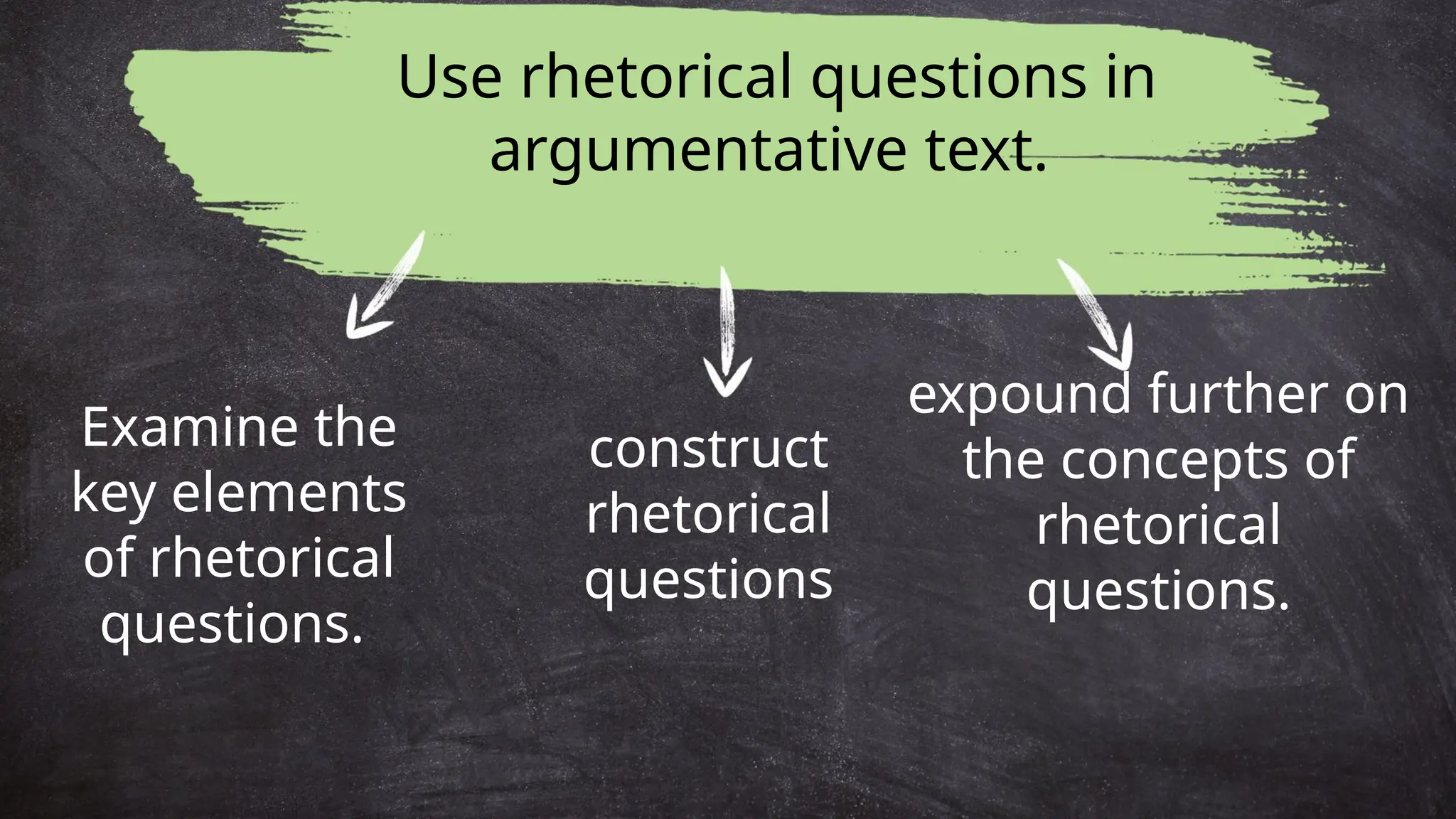
Use rhetorical questions in
argumentative text.
Examine the
key elements
of rhetorical
questions.
construct
rhetorical
questions
expound further on
the concepts of
rhetorical
questions.
We have a cabbage here, each of its leaf contains a
question. A song will be played, when the song stops
the student who's holding the cabbage will peel a leaf
and read the rhetorical question aloud and will tell if
the question is a rhetorical or genuine question. The
game continues until the last leaf =is peeled.
Analyze the key elements of these
rhetorical questions as to why they
are considered rhetorical and not
genuine.
1. Do you want to teach the class today?"
2. "Are you sure there isn't something else you
need to do?" ______
3. It sure is hot today, isn't it?
4. Who knows?
5. Did you expect me to do anything less than my
very best?
sarcastic
humorous
reflective.
They aren’t used to elicit an actual answer,
but rather to create a dramatic effect or to emphasize a
point.
Go to your usual grouping of 8. You have
five minutes to brainstorm on the concepts
given to you and 3 minutes to expound it to
the class.
: Group 1, rhetorical
question definitions
Group 2, benefits of
rhetorical questions;
Group 3, How to use rhetorical
questions 1,2 and 3 ways;
Group 4, How to use rhetorical
questions 4,5 and 6 ways;
Group 5 , How to use
rhetorical questions 7 and 8
ways;
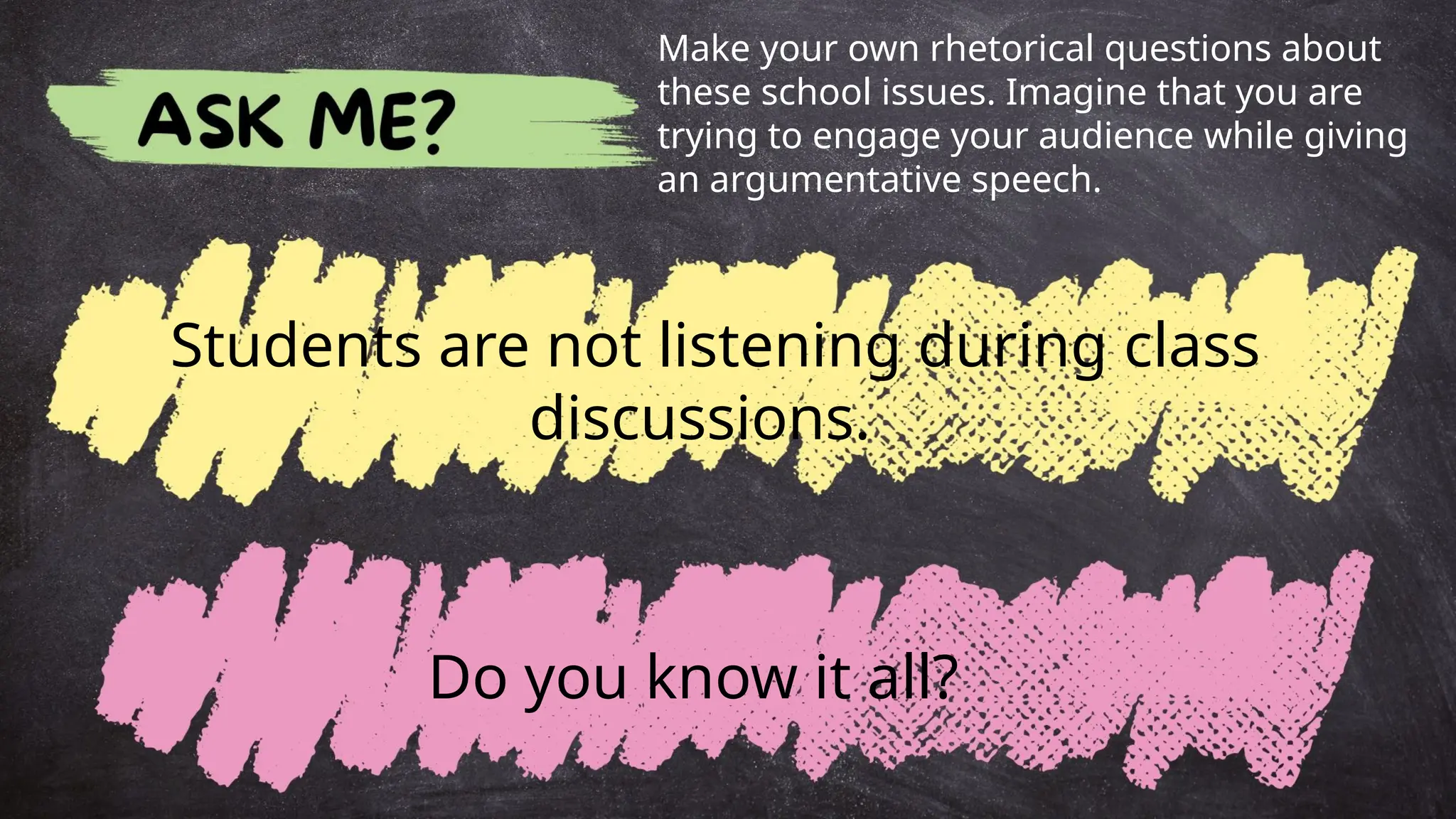
Make your own rhetorical questions about
these school issues. Imagine that you are
trying to engage your audience while giving
an argumentative speech.
The school grounds are always untidy.
Are we proud of the garbage waving hi to us
as we enter our school?
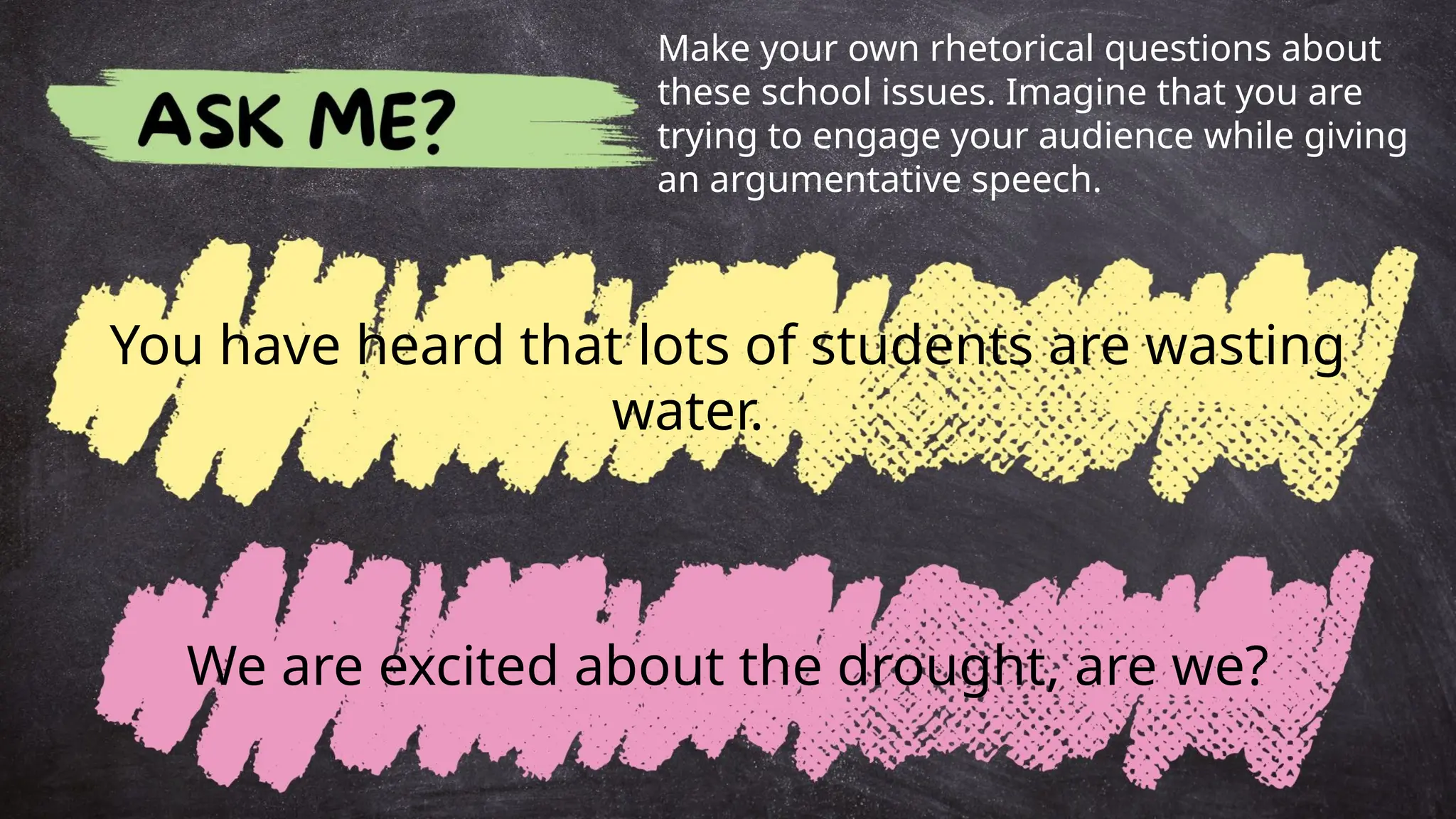
You have heard that lots of students are wasting
water.
Make your own rhetorical questions about
these school issues. Imagine that you are
trying to engage your audience while giving
an argumentative speech.
We are excited about the drought, are we?
Students are not wearing proper
school uniforms.
Make your own rhetorical questions about
these school issues. Imagine that you are
trying to engage your audience while giving
an argumentative speech.
Are you a student here or a
bystander on a visit?
Students are not listening during class
discussions.
Make your own rhetorical questions about
these school issues. Imagine that you are
trying to engage your audience while giving
an argumentative speech.
Do you know it all?
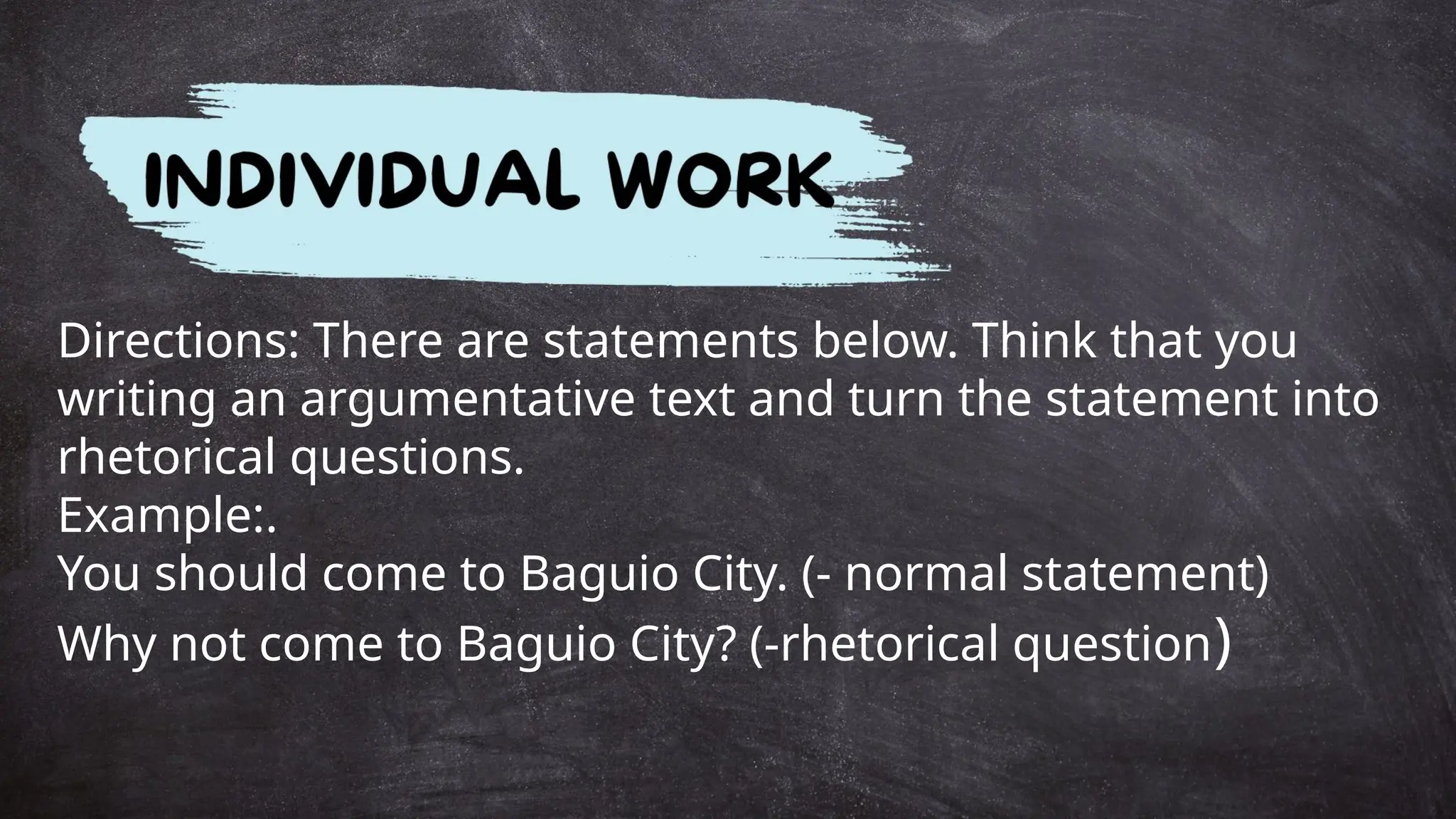
Directions: There are statements below. Think that you
writing an argumentative text and turn the statement into
rhetorical questions.
Example:.
You should come to Baguio City. (- normal statement)
Why not come to Baguio City? (-rhetorical question)
Work on the worksheet given to you
and follow the directions.
”Directions: Identify the rhetorical
question used in the speech
provided and try to give your
impression or your own
understanding.”
formalism question.pptx for grade 10 lesson

formalism question.pptx for grade 10 lesson

  • 1.
  • 2.
    Watch these video clippingsfrom popular movies and watch out for the questions uttered by the characters in the clippings.
  • 4.
    What are thequestions you have noted from the movie clippings? Do these questions need to be answered? Do you have any idea how to call these kind of questions?
  • 5.
  • 6.
    Use rhetorical questionsin argumentative text. Examine the key elements of rhetorical questions. construct rhetorical questions expound further on the concepts of rhetorical questions.
  • 7.
    We have acabbage here, each of its leaf contains a question. A song will be played, when the song stops the student who's holding the cabbage will peel a leaf and read the rhetorical question aloud and will tell if the question is a rhetorical or genuine question. The game continues until the last leaf =is peeled.
  • 8.
    Analyze the keyelements of these rhetorical questions as to why they are considered rhetorical and not genuine.
  • 9.
    1. Do youwant to teach the class today?" 2. "Are you sure there isn't something else you need to do?" ______ 3. It sure is hot today, isn't it? 4. Who knows? 5. Did you expect me to do anything less than my very best?
  • 10.
    sarcastic humorous reflective. They aren’t usedto elicit an actual answer, but rather to create a dramatic effect or to emphasize a point.
  • 11.
    Go to yourusual grouping of 8. You have five minutes to brainstorm on the concepts given to you and 3 minutes to expound it to the class.
  • 12.
    : Group 1,rhetorical question definitions
  • 13.
    Group 2, benefitsof rhetorical questions;
  • 14.
    Group 3, Howto use rhetorical questions 1,2 and 3 ways;
  • 15.
    Group 4, Howto use rhetorical questions 4,5 and 6 ways;
  • 16.
    Group 5 ,How to use rhetorical questions 7 and 8 ways;
  • 17.
    Make your ownrhetorical questions about these school issues. Imagine that you are trying to engage your audience while giving an argumentative speech. The school grounds are always untidy. Are we proud of the garbage waving hi to us as we enter our school?
  • 18.
    You have heardthat lots of students are wasting water. Make your own rhetorical questions about these school issues. Imagine that you are trying to engage your audience while giving an argumentative speech. We are excited about the drought, are we?
  • 19.
    Students are notwearing proper school uniforms. Make your own rhetorical questions about these school issues. Imagine that you are trying to engage your audience while giving an argumentative speech. Are you a student here or a bystander on a visit?
  • 20.
    Students are notlistening during class discussions. Make your own rhetorical questions about these school issues. Imagine that you are trying to engage your audience while giving an argumentative speech. Do you know it all?
  • 21.
    Directions: There arestatements below. Think that you writing an argumentative text and turn the statement into rhetorical questions. Example:. You should come to Baguio City. (- normal statement) Why not come to Baguio City? (-rhetorical question)
  • 22.
    Work on theworksheet given to you and follow the directions. ”Directions: Identify the rhetorical question used in the speech provided and try to give your impression or your own understanding.”