Formal and Informal 
Language 
Choosing the right kind 
of language for your 
purpose
The right kind of language…. 
We can choose different kinds of speech 
and writing for different situations.
The right kind of language…. 
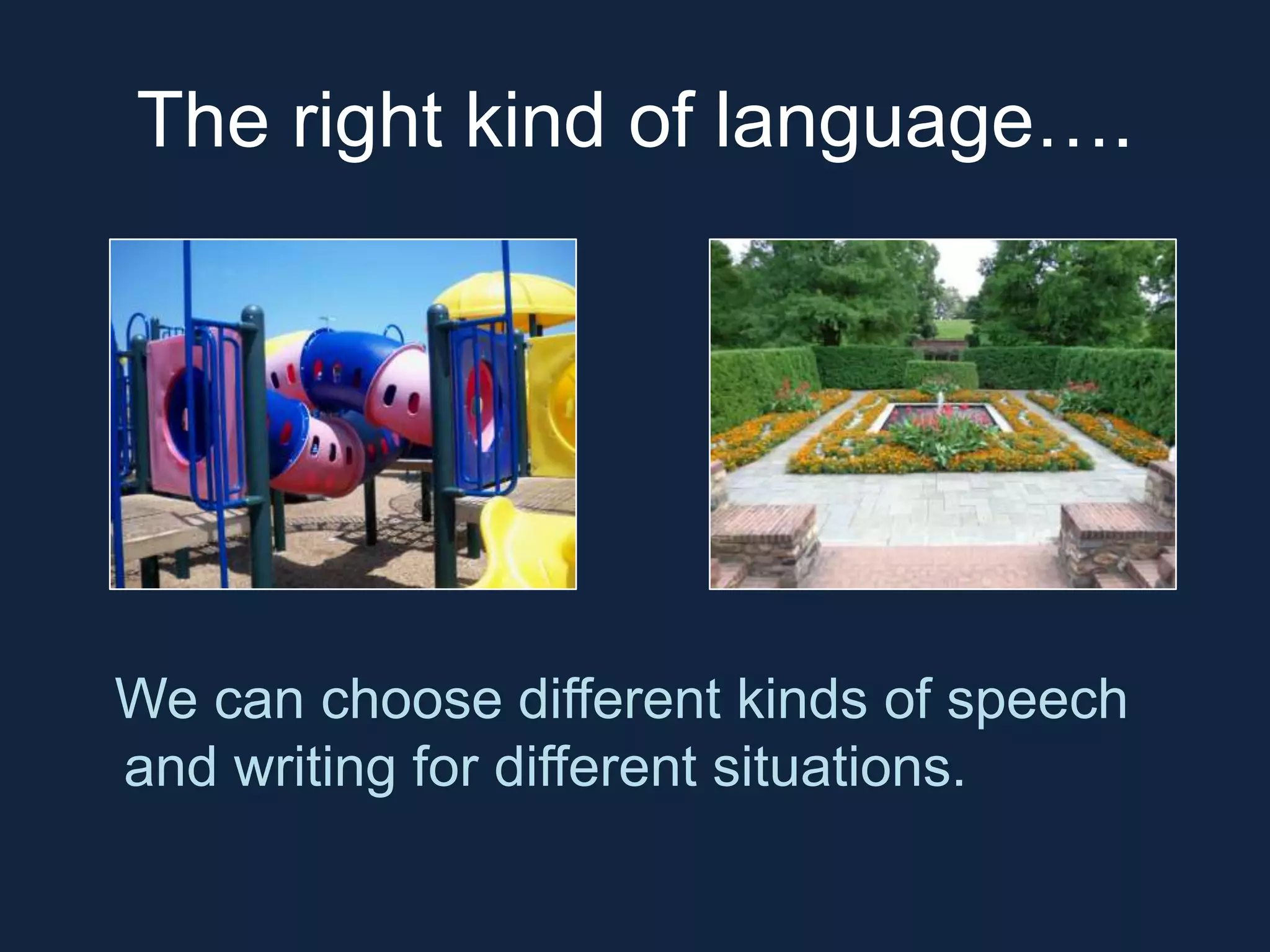
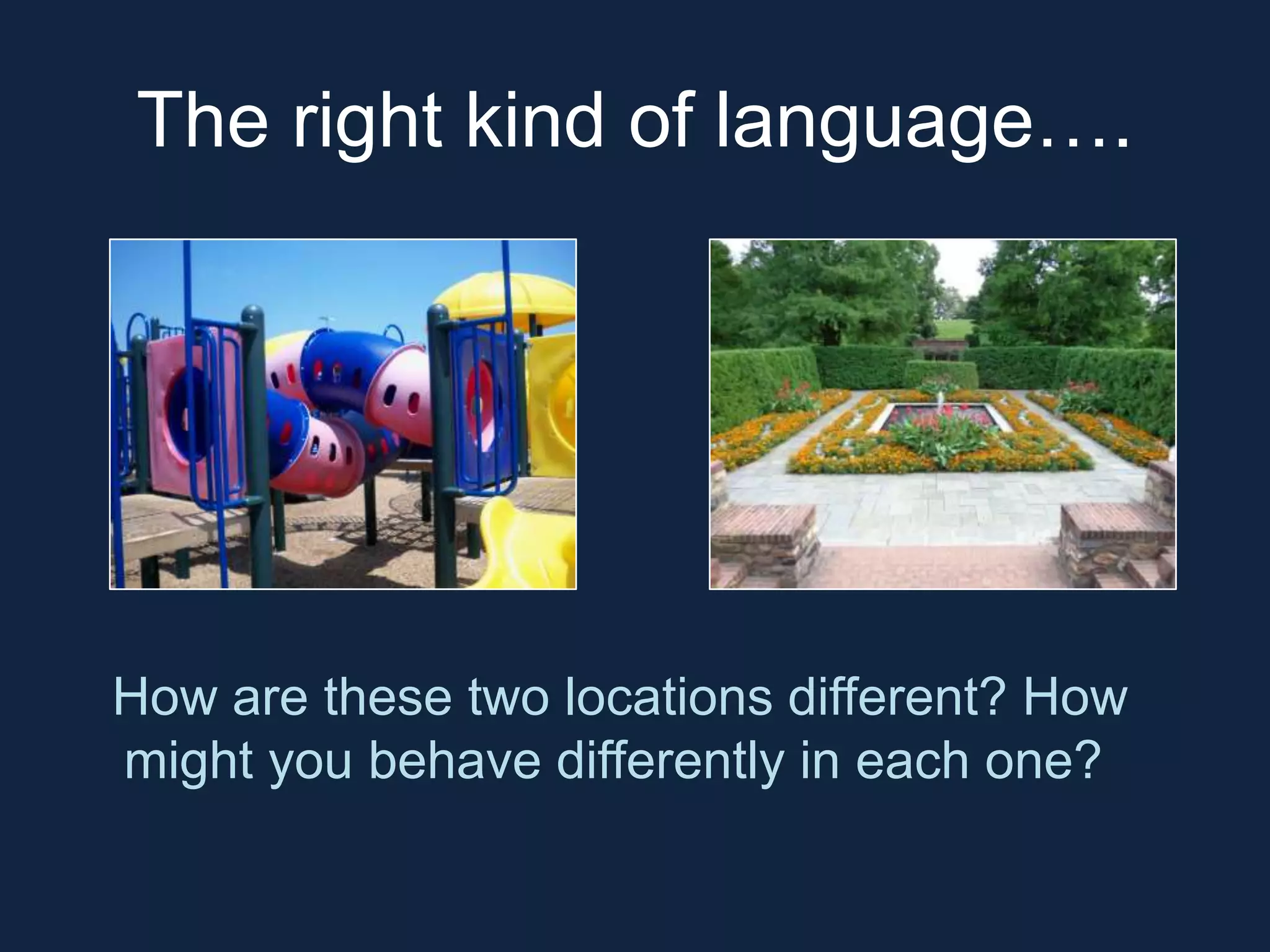
How are these two locations different? How 
might you behave differently in each one?
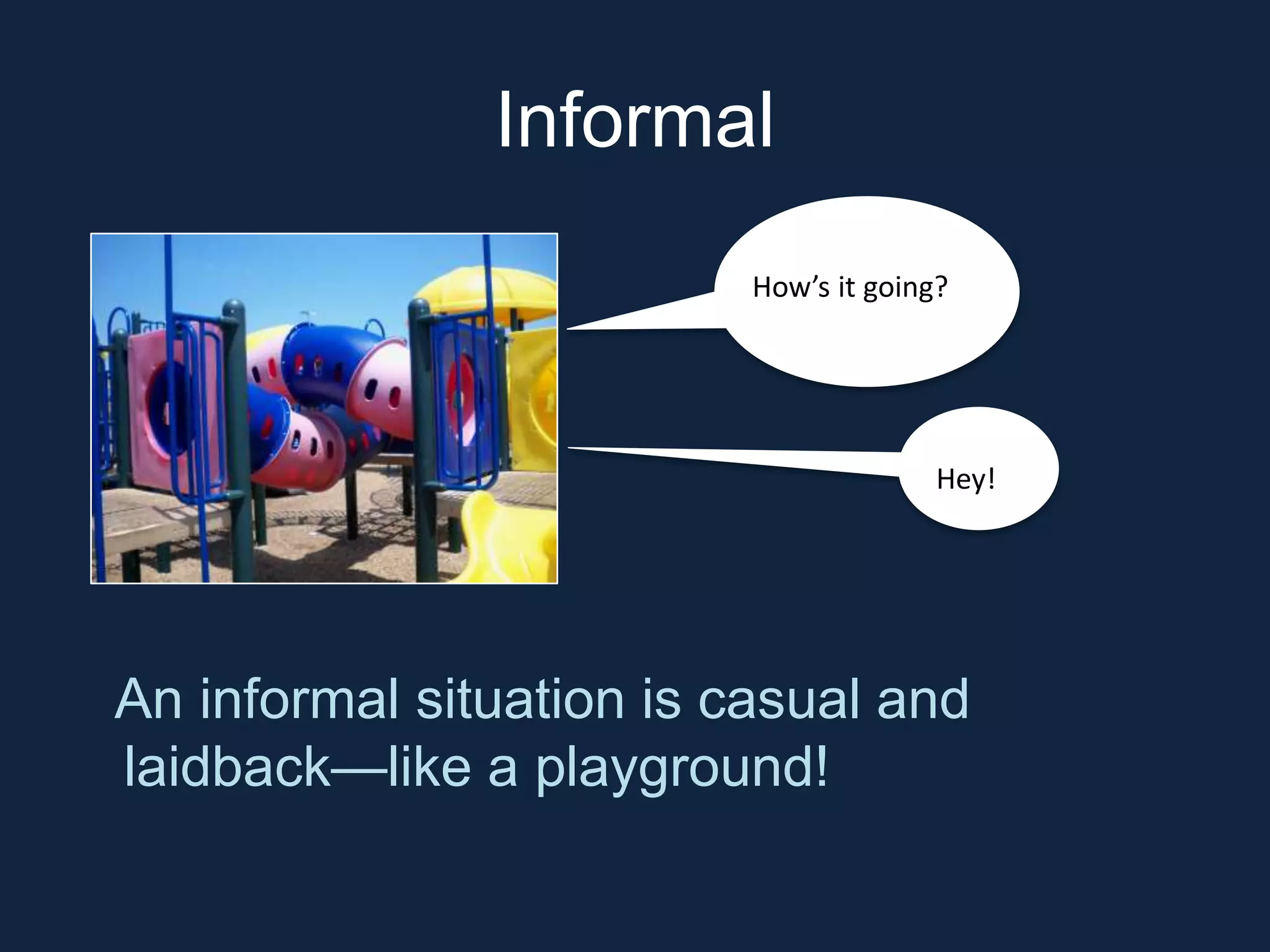
Informal 
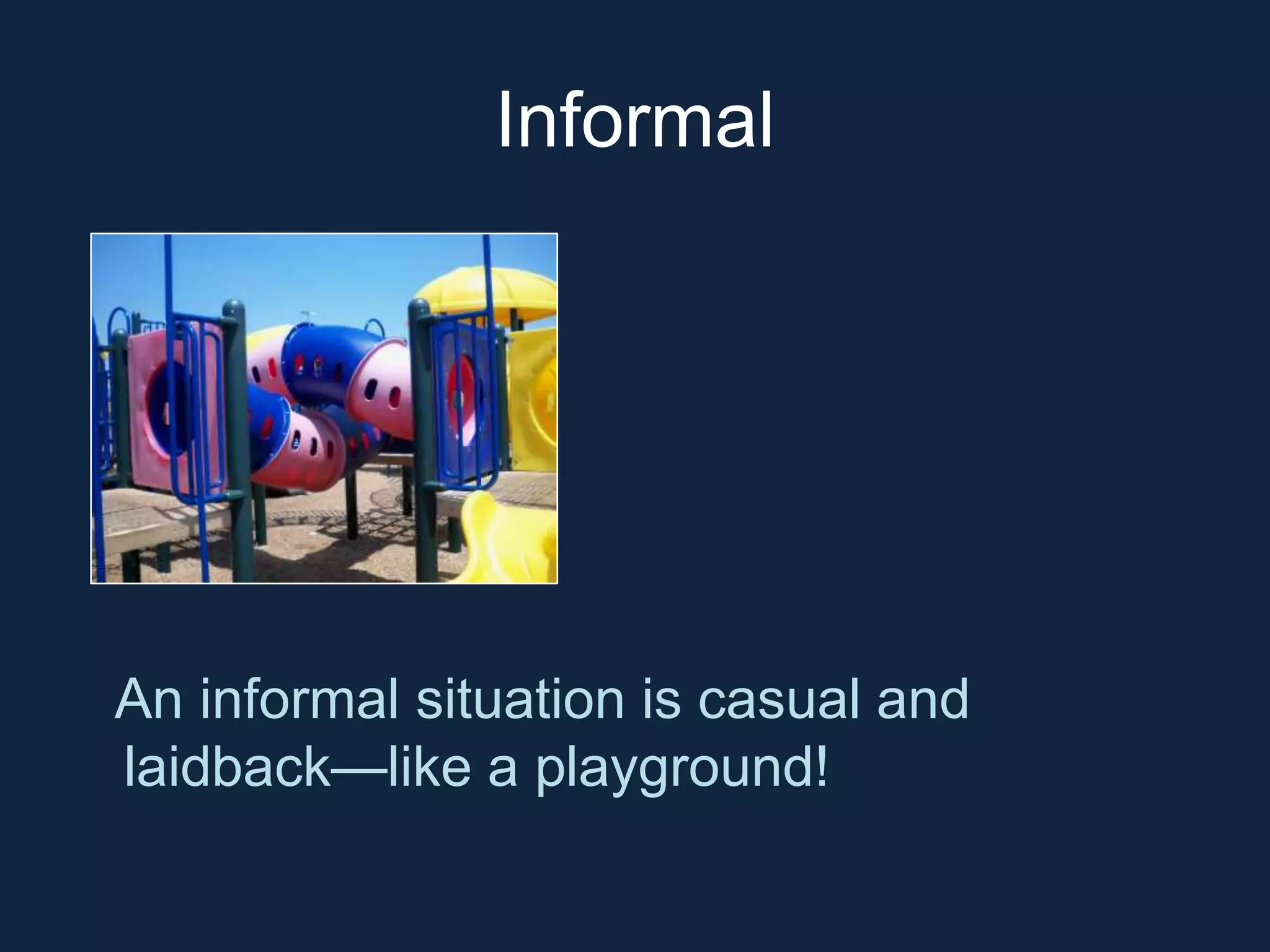
An informal situation is casual and 
laidback—like a playground!
Informal 
How’s it going? 
Hey! 
An informal situation is casual and 
laidback—like a playground!
Informal 
We use informal language when we talk to: 
-Friends 
-Family members 
-People our own age 
-People we know well 
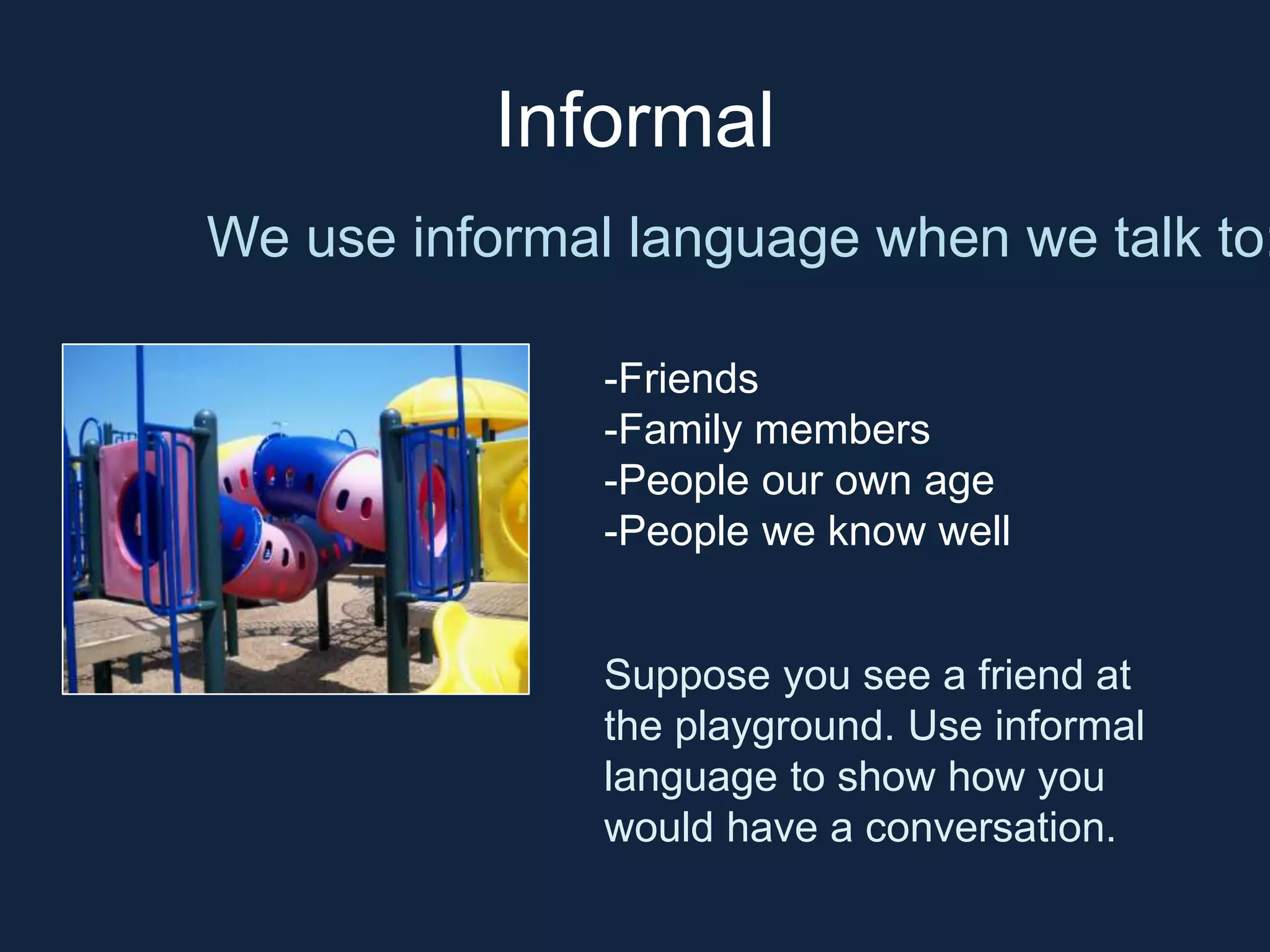
Suppose you see a friend at 
the playground. Use informal 
language to show how you 
would have a conversation.
Informal 
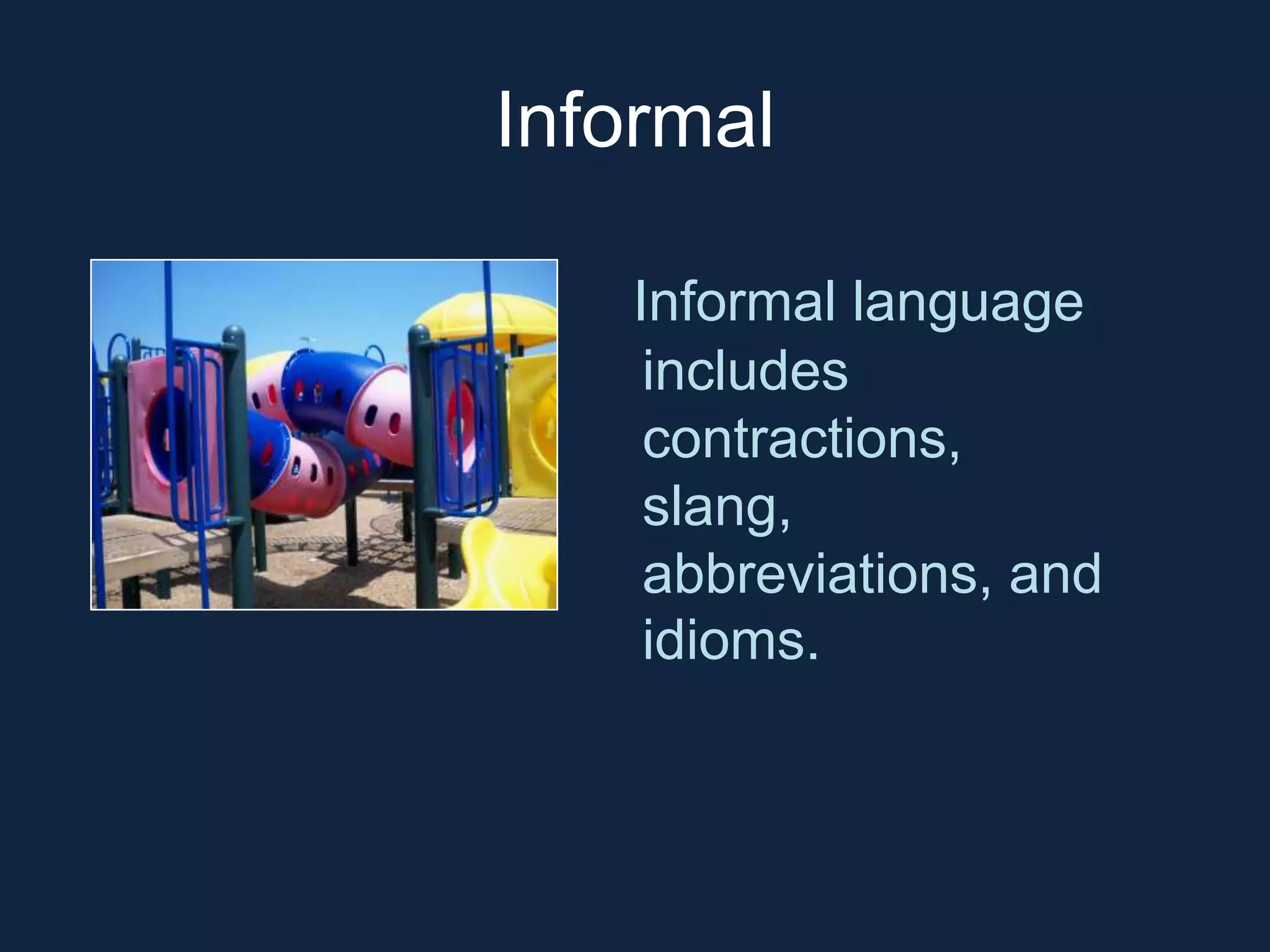
Informal language 
includes 
contractions, 
slang, 
abbreviations, and 
idioms.
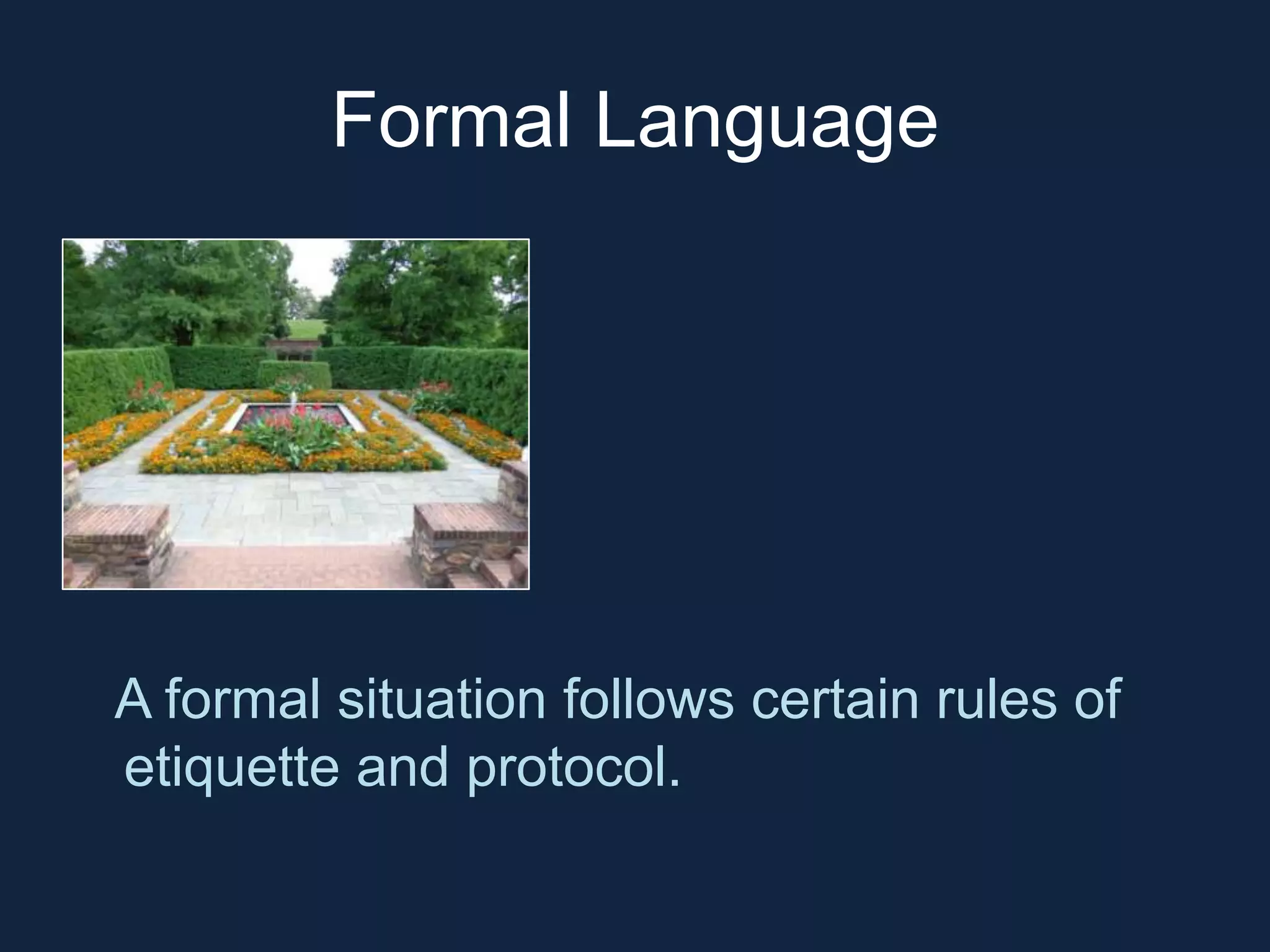
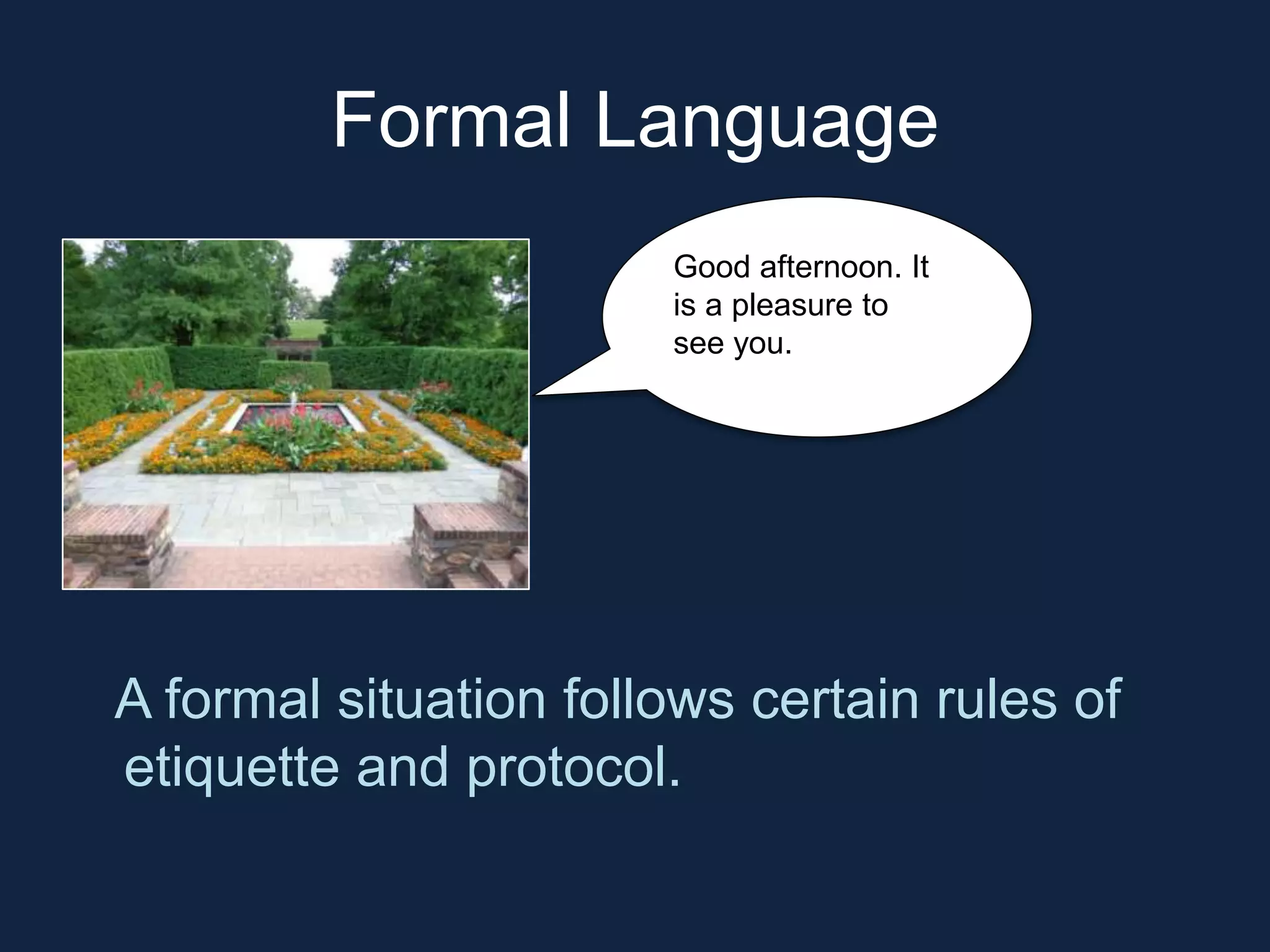
Formal Language 
A formal situation follows certain rules of 
etiquette and protocol.
Formal Language 
Good afternoon. It 
is a pleasure to 
see you. 
A formal situation follows certain rules of 
etiquette and protocol.
Formal Language 
We use formal 
language when we talk 
to: 
-People we don’t know 
-People in positions of 
authority 
-People older than we are 
-People we want to 
impress 
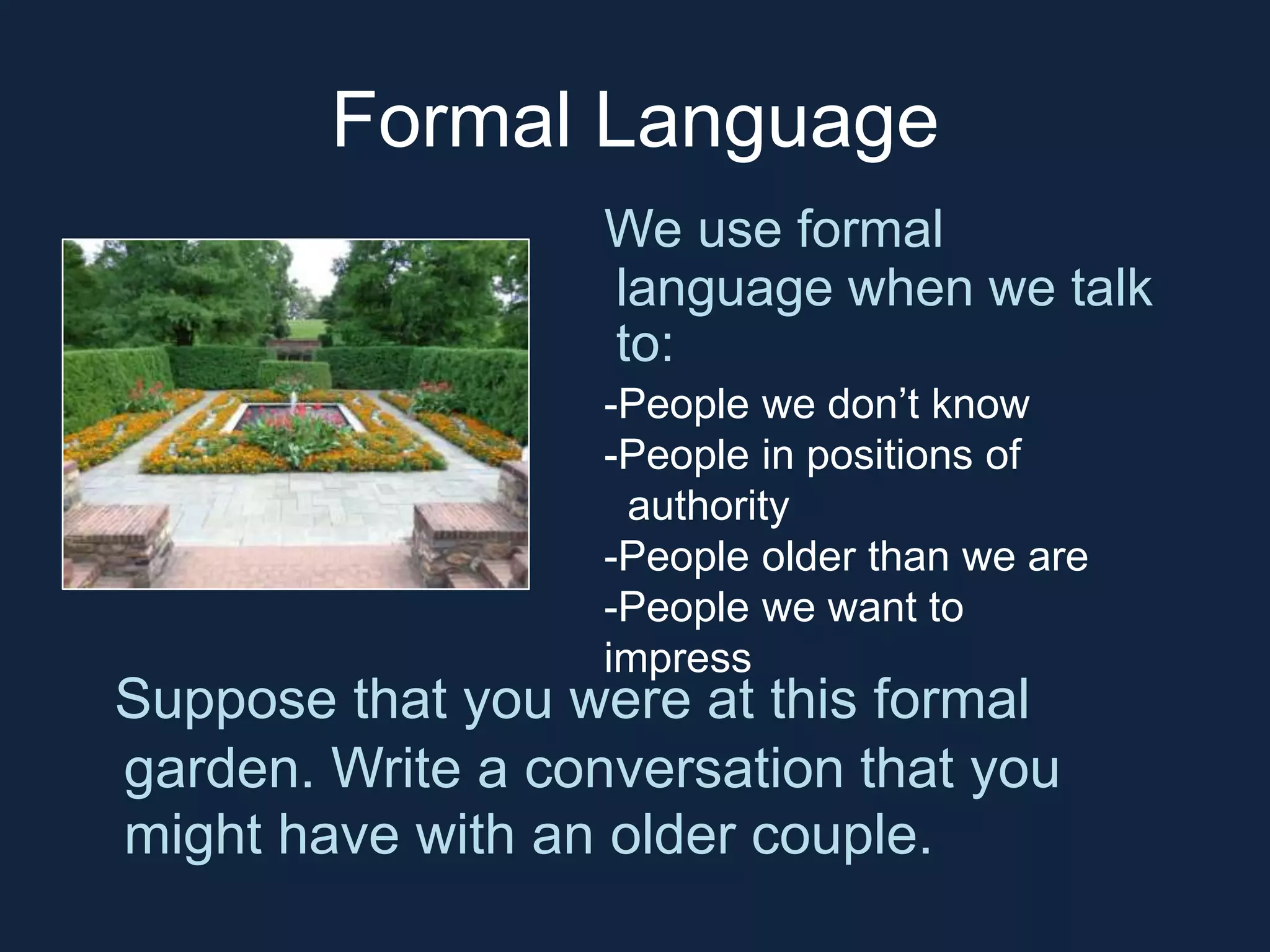
Suppose that you were at this formal 
garden. Write a conversation that you 
might have with an older couple.
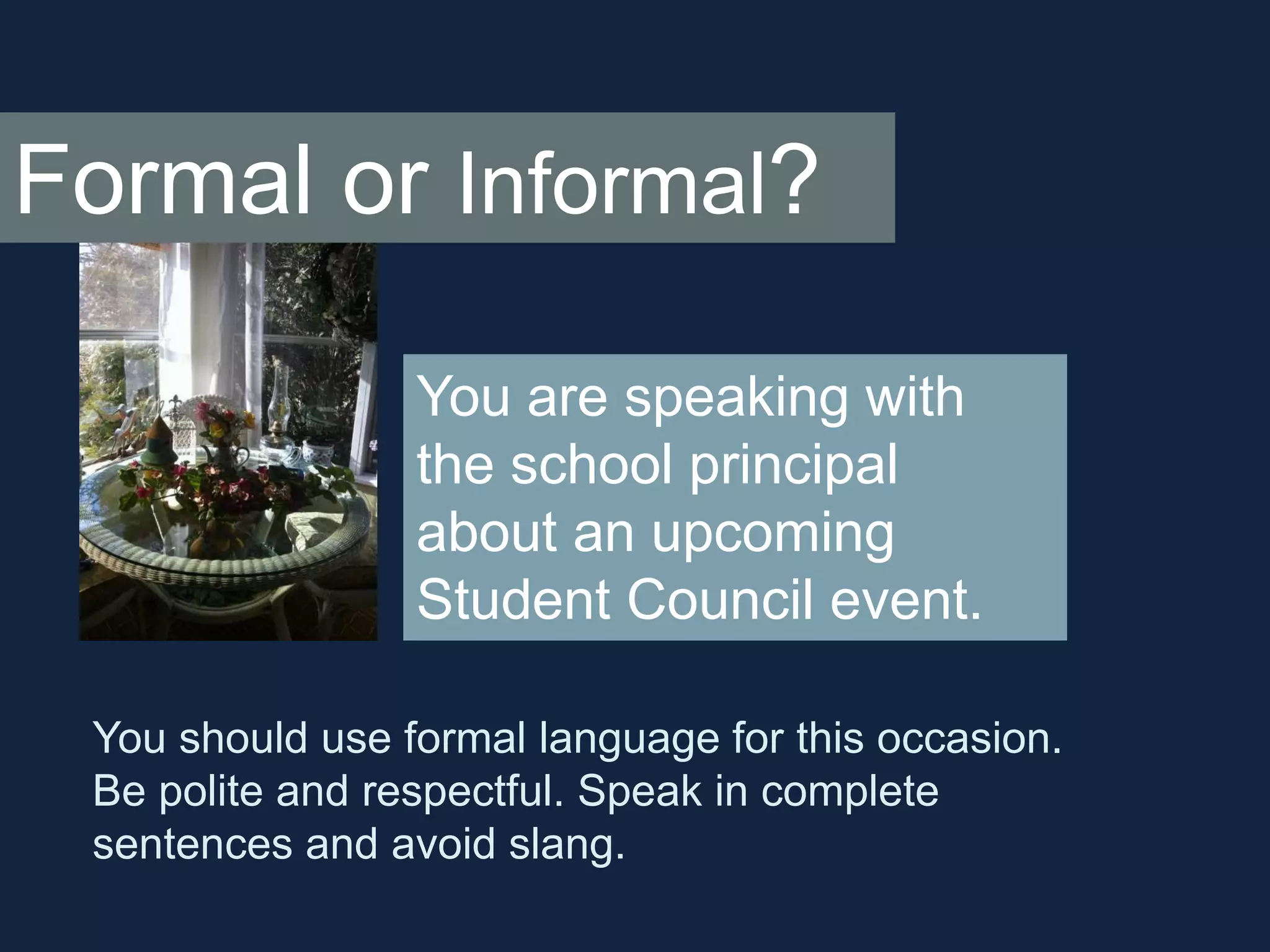
Formal or Informal? 
You are speaking with 
the school principal 
about an upcoming 
Student Council event. 
You should use formal language for this occasion. 
Be polite and respectful. Speak in complete 
sentences and avoid slang.
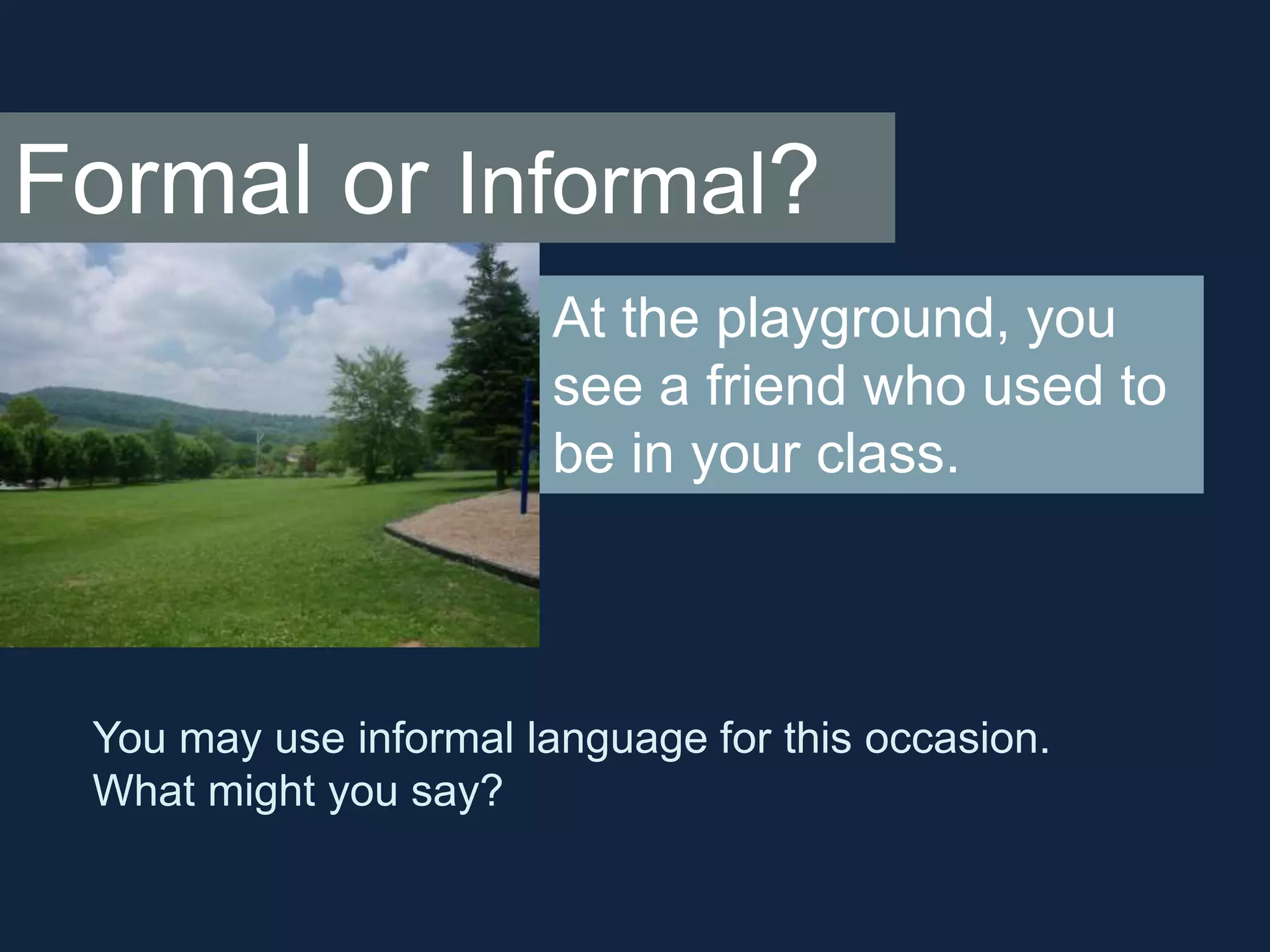
Formal or Informal? 
At the playground, you 
see a friend who used to 
be in your class. 
You may use informal language for this occasion. 
What might you say?
Formal or Informal? 
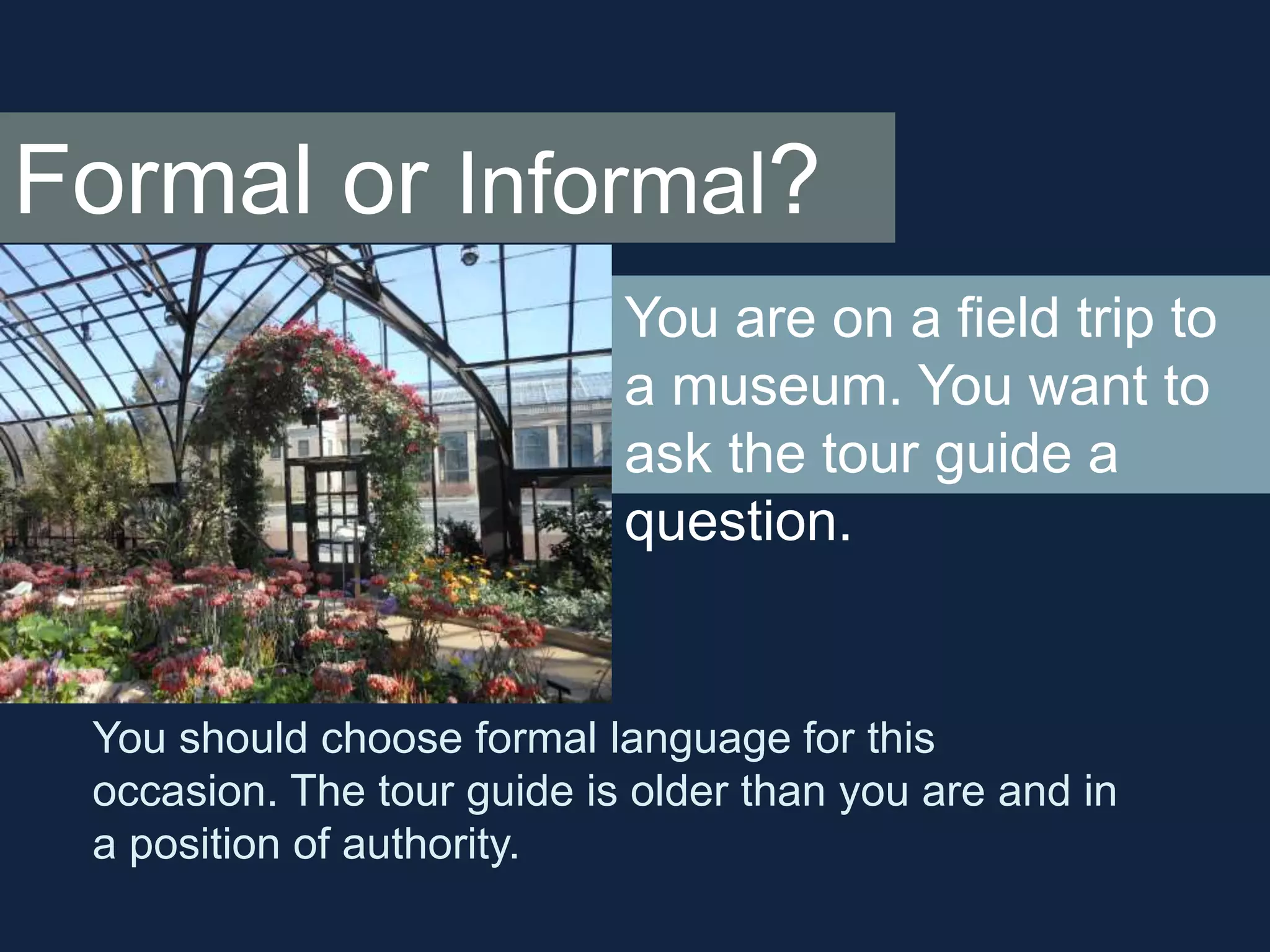
You are on a field trip to 
a museum. You want to 
ask the tour guide a 
question. 
You should choose formal language for this 
occasion. The tour guide is older than you are and in 
a position of authority.
Formal or Informal? 
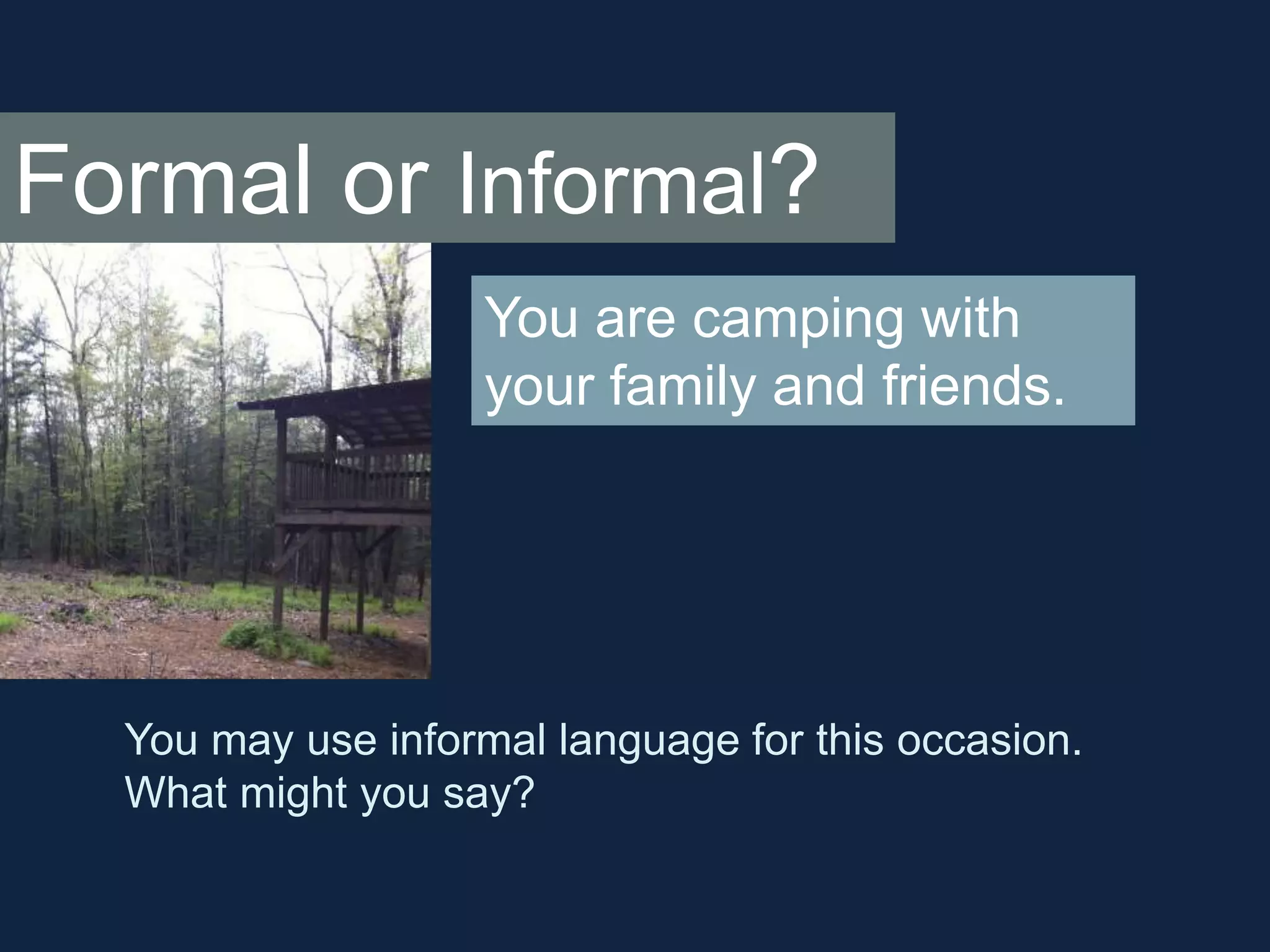
You are camping with 
your family and friends. 
You may use informal language for this occasion. 
What might you say?
Formal and Informal 
Language 
What have you learned 
about formal and 
informal language?

Formal and Informal Languages

  • 1.
    Formal and Informal Language Choosing the right kind of language for your purpose
  • 2.
    The right kindof language…. We can choose different kinds of speech and writing for different situations.
  • 3.
    The right kindof language…. How are these two locations different? How might you behave differently in each one?
  • 4.
    Informal An informalsituation is casual and laidback—like a playground!
  • 5.
    Informal How’s itgoing? Hey! An informal situation is casual and laidback—like a playground!
  • 6.
    Informal We useinformal language when we talk to: -Friends -Family members -People our own age -People we know well Suppose you see a friend at the playground. Use informal language to show how you would have a conversation.
  • 7.
    Informal Informal language includes contractions, slang, abbreviations, and idioms.
  • 8.
    Formal Language Aformal situation follows certain rules of etiquette and protocol.
  • 9.
    Formal Language Goodafternoon. It is a pleasure to see you. A formal situation follows certain rules of etiquette and protocol.
  • 10.
    Formal Language Weuse formal language when we talk to: -People we don’t know -People in positions of authority -People older than we are -People we want to impress Suppose that you were at this formal garden. Write a conversation that you might have with an older couple.
  • 11.
    Formal or Informal? You are speaking with the school principal about an upcoming Student Council event. You should use formal language for this occasion. Be polite and respectful. Speak in complete sentences and avoid slang.
  • 12.
    Formal or Informal? At the playground, you see a friend who used to be in your class. You may use informal language for this occasion. What might you say?
  • 13.
    Formal or Informal? You are on a field trip to a museum. You want to ask the tour guide a question. You should choose formal language for this occasion. The tour guide is older than you are and in a position of authority.
  • 14.
    Formal or Informal? You are camping with your family and friends. You may use informal language for this occasion. What might you say?
  • 15.
    Formal and Informal Language What have you learned about formal and informal language?

Editor's Notes