CHAPTER 1
PREPARED BY: NURULHUSNA BT MAT RADZI
SMJK CHOONG HUA BIDOR 2018
2
Content
1.0 Biodiversity
1.1 Diversity of organisms
1.2 Classification of organisms
3
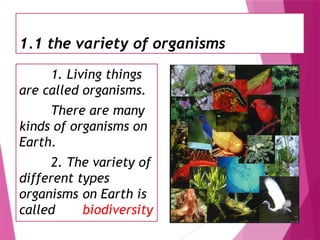
1.1 the variety of organisms
1. Living things
are called organisms.
There are many
kinds of organisms on
Earth.
2. The variety of
different types
organisms on Earth is
called biodiversity
What is biodiversity?
Biodiversity refers to wide variety of organisms on Earth
Where can we find biodiversity?
6
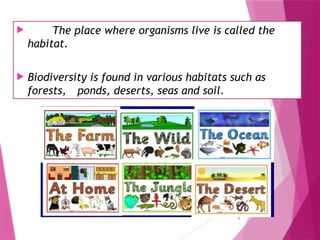
 The place where organisms live is called the
habitat.
 Biodiversity is found in various habitats such as
forests, ponds, deserts, seas and soil.
7
The importance of biodiversity
 Maintain the balance of nature
 Sources of food
 Attract tourists and so can contributes to the economy of the
country.
 Sources of medicine
 Raw material for industries
 Education
8
How to maintain biodiversity?
 Restricting Exploitation of Forest Resources
 Reducing Pollution
 Stop overharvesting
 Protect habitat
 Endangered species act
2.
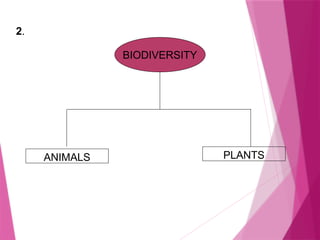
BIODIVERSITY
ANIMALS PLANTS
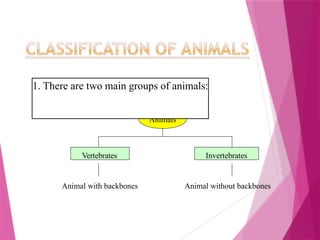
Vertebrates Invertebrates
Animals
Animal with backbones Animal without backbones
1. There are two main groups of animals:
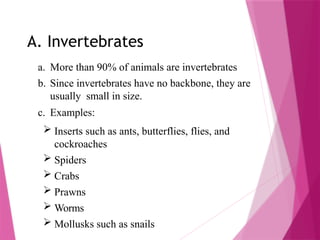
A. Invertebrates
a. More than 90% of animals are invertebrates
b. Since invertebrates have no backbone, they are
usually small in size.
c. Examples:
 Inserts such as ants, butterflies, flies, and
cockroaches
 Spiders
 Crabs
 Prawns
 Worms
 Mollusks such as snails
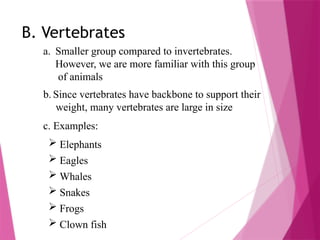
B. Vertebrates
a. Smaller group compared to invertebrates.
However, we are more familiar with this group
of animals
b. Since vertebrates have backbone to support their
weight, many vertebrates are large in size
c. Examples:
 Elephants
 Eagles
 Whales
 Snakes
 Frogs
 Clown fish
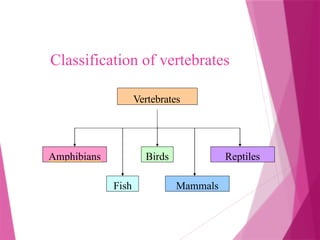
Vertebrates
Amphibians
Fish
Birds
Mammals
Reptiles
Classification of vertebrates
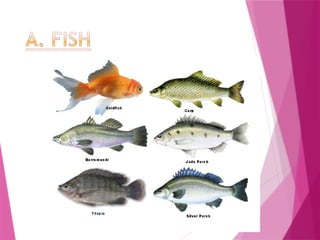
1.Common characteristics of fish
Body covered with slimy scales for protection
Have fins and tail to swim
Streamlined bodies to swim well
Breathe through gills
Poikilothermic (body temperature changes with the
 surrounding temperature)
Lay eggs
Carry out external fertilization (eggs are fertilized outside
 the female body)
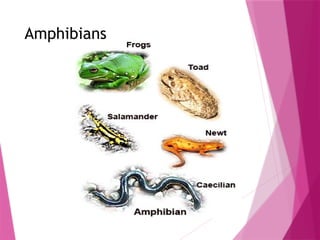
Amphibians
1. Common characteristics of amphibians
• Body covered with moist skin
• Adults can live on land and water
• Adults breathe with lung on land and
through moist skin when in water
• Poikilothermic (body temperature changes
with the
surrounding temperature)
• Lay eggs covered with jelly-like substance
• Young amphibians live in water and breathe through
gills
• Carry out external fertilization (eggs are
fertilized outside the female body)
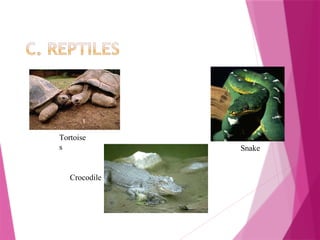
Tortoise
s Snake
Crocodile
1. Common characteristics of reptiles
•Body covered with hard and dry scales for protection
•Breathe with lungs
•Lay eggs with leathery shell
•Poikilotermic (body temperature changes with
surrounding temperature)
•Carry out internal fertilization (eggs are fertilized
inside the female body)
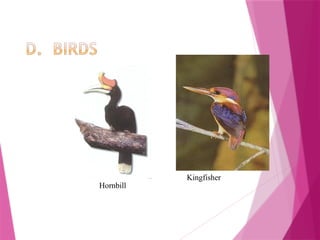
Hornbill
Kingfisher
1.Common characteristics of birds
•Body covered with feathers
•Have wings and beak
•Breathe with lungs
• Homeothermic (body temperature remains constant)
•Lay eggs with hard shells
•Carry out internal fertilization (eggs are fertilized inside
the female body)
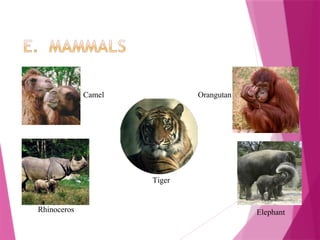
Tiger
Rhinoceros
Camel Orangutan
Elephant
1. Common characteristics of mammals
• Body covered with hair or fur
• Breathe with lungs
• Homeothermic (body temperature remains constant)
• Give birth to live young
• Carry out internal fertilization (eggs are fertilized inside
the female body)
• Young mammals feed on milk from their mother’s
mammary glands
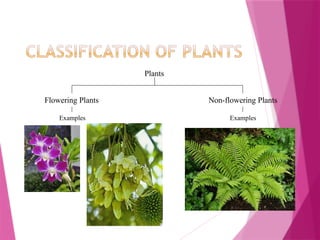
Flowering Plants Non-flowering Plants
Plants
Examples Examples
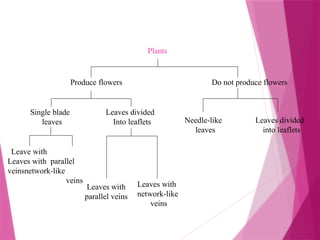
Plants
Produce flowers Do not produce flowers
Needle-like
leaves
Leaves divided
into leaflets
Leave with
Leaves with parallel
veinsnetwork-like
veins
Single blade
leaves
Leaves divided
Into leaflets
Leaves with
network-like
veins
Leaves with
parallel veins
Non-flowering plants
• Further divided to conifers, ferns, mosses, and algae
• Conifers
 Reproduce by seeds produced in cones
 Have needle-like leaves
 Example: casuarinas, pine
• Ferns
 Reproduced by spores on the underside of leaves
 Example: Bird’s nest fern, stag’s horn fern
• Mosses
 Reproduce by spores produced in capsules
 Example: White moss
• Algae
 Very simple plants
 No proper roots, stems, leaves
 Example: Seaweed
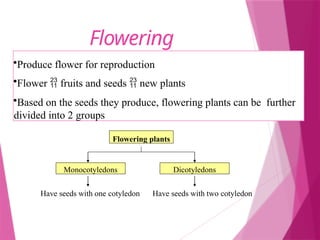
Flowering
plants
•Produce flower for reproduction
•Flower  fruits and seeds  new plants
•Based on the seeds they produce, flowering plants can be further
divided into 2 groups
Flowering plants
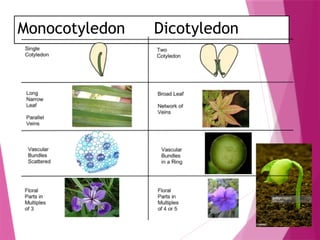
Monocotyledons Dicotyledons
Have seeds with one cotyledon Have seeds with two cotyledon
Monocotyledon Dicotyledon
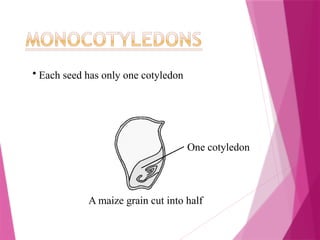
One cotyledon
A maize grain cut into half
• Each seed has only one cotyledon
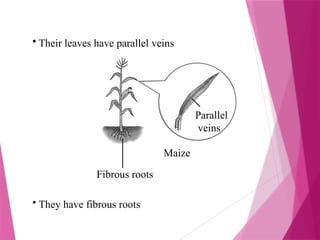
• Their leaves have parallel veins
Parallel
veins
Maize
Fibrous roots
• They have fibrous roots
•Mostly are herbaceous plant (plants with non-woody
stems)
•Examples: Grasses, sugar cane, banana, paddy, and
orchid plants
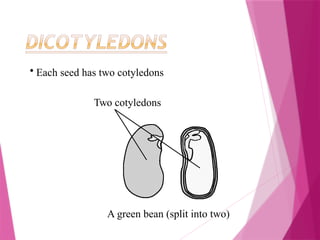
A green bean (split into two)
• Each seed has two cotyledons
Two cotyledons
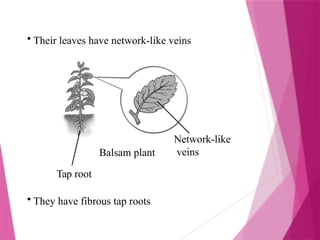
Balsam plant
Network-like
veins
• Their leaves have network-like veins
Tap root
• They have fibrous tap roots
•They may be trees, shrubs or herbaceous
•Examples: Rubber and durian trees, hibiscus, morning glory
and sunflower plants

FORM 2 CHAPTER 1 BIODIVERSITY BIOLOGY.pptx

  • 1.
    CHAPTER 1 PREPARED BY:NURULHUSNA BT MAT RADZI SMJK CHOONG HUA BIDOR 2018
  • 2.
    2 Content 1.0 Biodiversity 1.1 Diversityof organisms 1.2 Classification of organisms
  • 3.
    3 1.1 the varietyof organisms 1. Living things are called organisms. There are many kinds of organisms on Earth. 2. The variety of different types organisms on Earth is called biodiversity
  • 4.
    What is biodiversity? Biodiversityrefers to wide variety of organisms on Earth
  • 5.
    Where can wefind biodiversity?
  • 6.
    6  The placewhere organisms live is called the habitat.  Biodiversity is found in various habitats such as forests, ponds, deserts, seas and soil.
  • 7.
    7 The importance ofbiodiversity  Maintain the balance of nature  Sources of food  Attract tourists and so can contributes to the economy of the country.  Sources of medicine  Raw material for industries  Education
  • 8.
    8 How to maintainbiodiversity?  Restricting Exploitation of Forest Resources  Reducing Pollution  Stop overharvesting  Protect habitat  Endangered species act
  • 9.
  • 10.
    Vertebrates Invertebrates Animals Animal withbackbones Animal without backbones 1. There are two main groups of animals:
  • 11.
    A. Invertebrates a. Morethan 90% of animals are invertebrates b. Since invertebrates have no backbone, they are usually small in size. c. Examples:  Inserts such as ants, butterflies, flies, and cockroaches  Spiders  Crabs  Prawns  Worms  Mollusks such as snails
  • 12.
    B. Vertebrates a. Smallergroup compared to invertebrates. However, we are more familiar with this group of animals b. Since vertebrates have backbone to support their weight, many vertebrates are large in size c. Examples:  Elephants  Eagles  Whales  Snakes  Frogs  Clown fish
  • 13.
  • 15.
    1.Common characteristics offish Body covered with slimy scales for protection Have fins and tail to swim Streamlined bodies to swim well Breathe through gills Poikilothermic (body temperature changes with the  surrounding temperature) Lay eggs Carry out external fertilization (eggs are fertilized outside  the female body)
  • 16.
  • 17.
    1. Common characteristicsof amphibians • Body covered with moist skin • Adults can live on land and water • Adults breathe with lung on land and through moist skin when in water • Poikilothermic (body temperature changes with the surrounding temperature) • Lay eggs covered with jelly-like substance • Young amphibians live in water and breathe through gills • Carry out external fertilization (eggs are fertilized outside the female body)
  • 18.
  • 19.
    1. Common characteristicsof reptiles •Body covered with hard and dry scales for protection •Breathe with lungs •Lay eggs with leathery shell •Poikilotermic (body temperature changes with surrounding temperature) •Carry out internal fertilization (eggs are fertilized inside the female body)
  • 20.
  • 21.
    1.Common characteristics ofbirds •Body covered with feathers •Have wings and beak •Breathe with lungs • Homeothermic (body temperature remains constant) •Lay eggs with hard shells •Carry out internal fertilization (eggs are fertilized inside the female body)
  • 22.
  • 23.
    1. Common characteristicsof mammals • Body covered with hair or fur • Breathe with lungs • Homeothermic (body temperature remains constant) • Give birth to live young • Carry out internal fertilization (eggs are fertilized inside the female body) • Young mammals feed on milk from their mother’s mammary glands
  • 24.
    Flowering Plants Non-floweringPlants Plants Examples Examples
  • 25.
    Plants Produce flowers Donot produce flowers Needle-like leaves Leaves divided into leaflets Leave with Leaves with parallel veinsnetwork-like veins Single blade leaves Leaves divided Into leaflets Leaves with network-like veins Leaves with parallel veins
  • 26.
    Non-flowering plants • Furtherdivided to conifers, ferns, mosses, and algae • Conifers  Reproduce by seeds produced in cones  Have needle-like leaves  Example: casuarinas, pine • Ferns  Reproduced by spores on the underside of leaves  Example: Bird’s nest fern, stag’s horn fern
  • 27.
    • Mosses  Reproduceby spores produced in capsules  Example: White moss • Algae  Very simple plants  No proper roots, stems, leaves  Example: Seaweed
  • 28.
    Flowering plants •Produce flower forreproduction •Flower  fruits and seeds  new plants •Based on the seeds they produce, flowering plants can be further divided into 2 groups Flowering plants Monocotyledons Dicotyledons Have seeds with one cotyledon Have seeds with two cotyledon
  • 29.
  • 30.
    One cotyledon A maizegrain cut into half • Each seed has only one cotyledon
  • 31.
    • Their leaveshave parallel veins Parallel veins Maize Fibrous roots • They have fibrous roots
  • 32.
    •Mostly are herbaceousplant (plants with non-woody stems) •Examples: Grasses, sugar cane, banana, paddy, and orchid plants
  • 33.
    A green bean(split into two) • Each seed has two cotyledons Two cotyledons
  • 34.
    Balsam plant Network-like veins • Theirleaves have network-like veins Tap root • They have fibrous tap roots
  • 35.
    •They may betrees, shrubs or herbaceous •Examples: Rubber and durian trees, hibiscus, morning glory and sunflower plants