

prasentation by m. balakrishna
msc forensic science
INDEX
HISTORY
FORENSIC METEOROLOGY
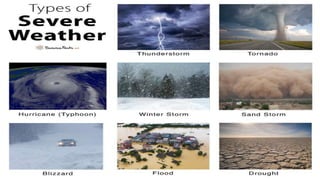
TYPES OF WEATHERS
OTHER TYPES OF WEATHER CONDITIONS
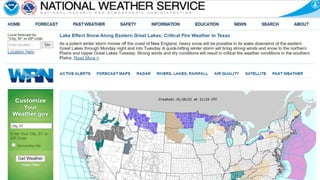
NATIONAL WEATHER SERVICE
HOW WEATHER IMPACT CRIME
TYPES OF CASES DEALS WITH METEOROLOGY
REFERANCE
HISTORY
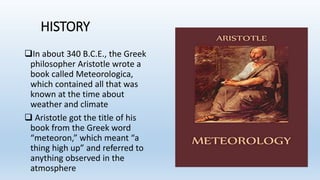
In about 340 B.C.E., the Greek
philosopher Aristotle wrote a
book called Meteorologica,
which contained all that was
known at the time about
weather and climate
 Aristotle got the title of his
book from the Greek word
“meteoron,” which meant “a
thing high up” and referred to
anything observed in the
atmosphere
FORENSIC METEOROLOGY
Forensic meteorology is meteorology, the scientific
study of weather, applied to the process of
reconstructing weather events for a certain time and
location
 This is done by acquiring and analyzing local weather
reports such as surface observations, radar and
satellite images, other data, and eyewitness accounts
Forensic meteorology is most often used in court
cases, including insurance disputes, personal injury
cases, and murder investigation
Meteorlogical services include
 meteorological analyses of weather events (Rain,
thunderstorm, winds, etc.)
 Expert witness testimony
Storm surveys
 Precipitation/temperature/wind analysis
weather means
Weather can be defined as the particular conditions
of the earth’s atmosphere in a particular area.
Climate refers to the average type of weather over a
long period of time in a specific place
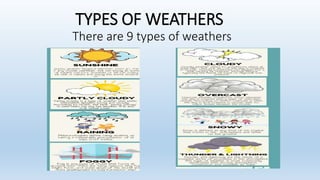
TYPES OF WEATHERS
There are 9 types of weathers
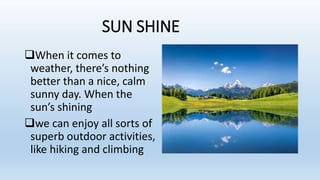
SUN SHINE
When it comes to
weather, there’s nothing
better than a nice, calm
sunny day. When the
sun’s shining
we can enjoy all sorts of
superb outdoor activities,
like hiking and climbing
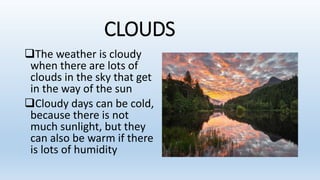
CLOUDS
The weather is cloudy
when there are lots of
clouds in the sky that get
in the way of the sun
Cloudy days can be cold,
because there is not
much sunlight, but they
can also be warm if there
is lots of humidity
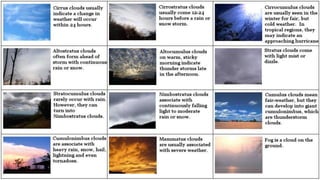
TYPES OF
CLOUDS
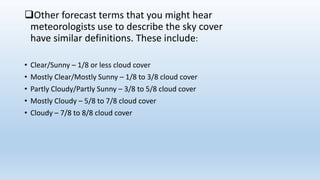
Other forecast terms that you might hear
meteorologists use to describe the sky cover
have similar definitions. These include:
• Clear/Sunny – 1/8 or less cloud cover
• Mostly Clear/Mostly Sunny – 1/8 to 3/8 cloud cover
• Partly Cloudy/Partly Sunny – 3/8 to 5/8 cloud cover
• Mostly Cloudy – 5/8 to 7/8 cloud cover
• Cloudy – 7/8 to 8/8 cloud cover
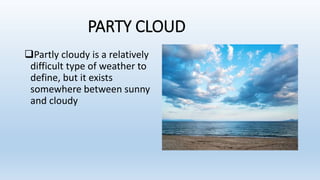
PARTY CLOUD
Partly cloudy is a relatively
difficult type of weather to
define, but it exists
somewhere between sunny
and cloudy
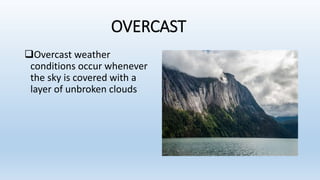
OVERCAST
Overcast weather
conditions occur whenever
the sky is covered with a
layer of unbroken clouds
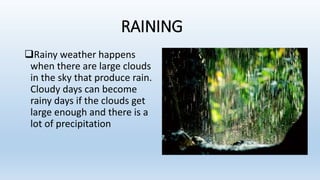
RAINING
Rainy weather happens
when there are large clouds
in the sky that produce rain.
Cloudy days can become
rainy days if the clouds get
large enough and there is a
lot of precipitation
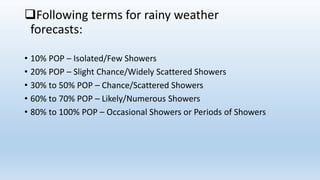
Following terms for rainy weather
forecasts:
• 10% POP – Isolated/Few Showers
• 20% POP – Slight Chance/Widely Scattered Showers
• 30% to 50% POP – Chance/Scattered Showers
• 60% to 70% POP – Likely/Numerous Showers
• 80% to 100% POP – Occasional Showers or Periods of Showers
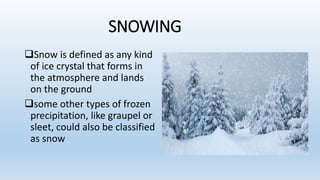
SNOWING
Snow is defined as any kind
of ice crystal that forms in
the atmosphere and lands
on the ground
some other types of frozen
precipitation, like graupel or
sleet, could also be classified
as snow
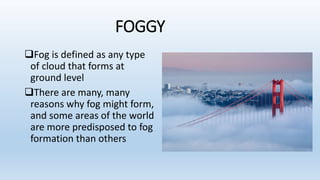
FOGGY
Fog is defined as any type
of cloud that forms at
ground level
There are many, many
reasons why fog might form,
and some areas of the world
are more predisposed to fog
formation than others
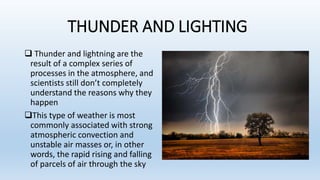
THUNDER AND LIGHTING
 Thunder and lightning are the
result of a complex series of
processes in the atmosphere, and
scientists still don’t completely
understand the reasons why they
happen
This type of weather is most
commonly associated with strong
atmospheric convection and
unstable air masses or, in other
words, the rapid rising and falling
of parcels of air through the sky
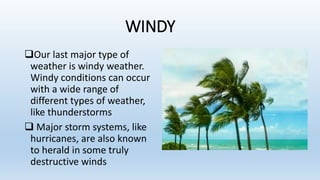
WINDY
Our last major type of
weather is windy weather.
Windy conditions can occur
with a wide range of
different types of weather,
like thunderstorms
 Major storm systems, like
hurricanes, are also known
to herald in some truly
destructive winds
OTHER TYPES OF WEATHER
CONDITIONS
WEATHER FORECASTING
The weather forecasting process for meteorologists starts
with a review of the big-picture data from multiple dynamic
models, which are computer programs that predict future
weather
Then, meteorologists take a look at a forecast tool called
MOS (Model Output Statistics), which is a software that uses
historical weather data to improve dynamic model forecasts
in smaller geographic regions
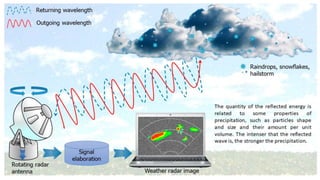
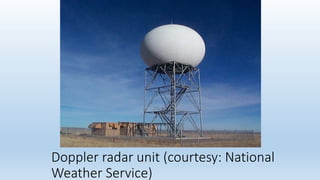
 Detect the weather by doppler radar, radiosondes,
weather satellites
Doppler radar unit (courtesy: National
Weather Service)
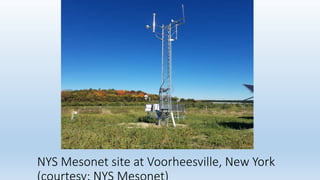
NYS Mesonet site at Voorheesville, New York
According to an interview with Dr. Elizabeth Austin, a
Forensic Meteorologist, when temperatures rise, criminal
activity increases. Austin goes on to say that the United
States sees significantly higher crime rates in cities when the
temperatures are appreciably above average
 Dr. Austin also notes that extreme rainfall leads to
increased conflict among people, and developing countries
are more susceptible to conflict and wars when agriculture is
threatened by drought conditions and hot temperatures
Validating insurance claims
Vehicle accidents
Agricultural disputes
Building collapse
People slipping and falling
Traffic accidents
Bombings
murders
Bad air craft landing and etc.......
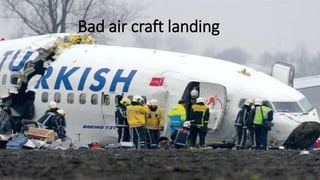
Bad air craft landing
REFERENCE
Dr. Elizabeth Austin wikipedia
FORENSIC METEOROLGY From
Wikipedia
Forensic Meteorologists Solve
Crimes You've Never Thought
About
By Mika McKinnon
Forensic meteorology.pptx

Forensic meteorology.pptx

  • 1.
    prasentation by m.balakrishna msc forensic science
  • 2.
    INDEX HISTORY FORENSIC METEOROLOGY TYPES OFWEATHERS OTHER TYPES OF WEATHER CONDITIONS NATIONAL WEATHER SERVICE HOW WEATHER IMPACT CRIME TYPES OF CASES DEALS WITH METEOROLOGY REFERANCE
  • 3.
    HISTORY In about 340B.C.E., the Greek philosopher Aristotle wrote a book called Meteorologica, which contained all that was known at the time about weather and climate  Aristotle got the title of his book from the Greek word “meteoron,” which meant “a thing high up” and referred to anything observed in the atmosphere
  • 4.
    FORENSIC METEOROLOGY Forensic meteorologyis meteorology, the scientific study of weather, applied to the process of reconstructing weather events for a certain time and location  This is done by acquiring and analyzing local weather reports such as surface observations, radar and satellite images, other data, and eyewitness accounts Forensic meteorology is most often used in court cases, including insurance disputes, personal injury cases, and murder investigation
  • 5.
    Meteorlogical services include meteorological analyses of weather events (Rain, thunderstorm, winds, etc.)  Expert witness testimony Storm surveys  Precipitation/temperature/wind analysis
  • 6.
    weather means Weather canbe defined as the particular conditions of the earth’s atmosphere in a particular area. Climate refers to the average type of weather over a long period of time in a specific place
  • 7.
    TYPES OF WEATHERS Thereare 9 types of weathers
  • 9.
    SUN SHINE When itcomes to weather, there’s nothing better than a nice, calm sunny day. When the sun’s shining we can enjoy all sorts of superb outdoor activities, like hiking and climbing
  • 10.
    CLOUDS The weather iscloudy when there are lots of clouds in the sky that get in the way of the sun Cloudy days can be cold, because there is not much sunlight, but they can also be warm if there is lots of humidity
  • 11.
  • 13.
    Other forecast termsthat you might hear meteorologists use to describe the sky cover have similar definitions. These include: • Clear/Sunny – 1/8 or less cloud cover • Mostly Clear/Mostly Sunny – 1/8 to 3/8 cloud cover • Partly Cloudy/Partly Sunny – 3/8 to 5/8 cloud cover • Mostly Cloudy – 5/8 to 7/8 cloud cover • Cloudy – 7/8 to 8/8 cloud cover
  • 14.
    PARTY CLOUD Partly cloudyis a relatively difficult type of weather to define, but it exists somewhere between sunny and cloudy
  • 15.
    OVERCAST Overcast weather conditions occurwhenever the sky is covered with a layer of unbroken clouds
  • 16.
    RAINING Rainy weather happens whenthere are large clouds in the sky that produce rain. Cloudy days can become rainy days if the clouds get large enough and there is a lot of precipitation
  • 17.
    Following terms forrainy weather forecasts: • 10% POP – Isolated/Few Showers • 20% POP – Slight Chance/Widely Scattered Showers • 30% to 50% POP – Chance/Scattered Showers • 60% to 70% POP – Likely/Numerous Showers • 80% to 100% POP – Occasional Showers or Periods of Showers
  • 18.
    SNOWING Snow is definedas any kind of ice crystal that forms in the atmosphere and lands on the ground some other types of frozen precipitation, like graupel or sleet, could also be classified as snow
  • 19.
    FOGGY Fog is definedas any type of cloud that forms at ground level There are many, many reasons why fog might form, and some areas of the world are more predisposed to fog formation than others
  • 20.
    THUNDER AND LIGHTING Thunder and lightning are the result of a complex series of processes in the atmosphere, and scientists still don’t completely understand the reasons why they happen This type of weather is most commonly associated with strong atmospheric convection and unstable air masses or, in other words, the rapid rising and falling of parcels of air through the sky
  • 21.
    WINDY Our last majortype of weather is windy weather. Windy conditions can occur with a wide range of different types of weather, like thunderstorms  Major storm systems, like hurricanes, are also known to herald in some truly destructive winds
  • 22.
    OTHER TYPES OFWEATHER CONDITIONS
  • 24.
    WEATHER FORECASTING The weatherforecasting process for meteorologists starts with a review of the big-picture data from multiple dynamic models, which are computer programs that predict future weather Then, meteorologists take a look at a forecast tool called MOS (Model Output Statistics), which is a software that uses historical weather data to improve dynamic model forecasts in smaller geographic regions  Detect the weather by doppler radar, radiosondes, weather satellites
  • 26.
    Doppler radar unit(courtesy: National Weather Service)
  • 27.
    NYS Mesonet siteat Voorheesville, New York
  • 30.
    According to aninterview with Dr. Elizabeth Austin, a Forensic Meteorologist, when temperatures rise, criminal activity increases. Austin goes on to say that the United States sees significantly higher crime rates in cities when the temperatures are appreciably above average  Dr. Austin also notes that extreme rainfall leads to increased conflict among people, and developing countries are more susceptible to conflict and wars when agriculture is threatened by drought conditions and hot temperatures
  • 31.
    Validating insurance claims Vehicleaccidents Agricultural disputes Building collapse People slipping and falling Traffic accidents Bombings murders Bad air craft landing and etc.......
  • 32.
  • 33.
    REFERENCE Dr. Elizabeth Austinwikipedia FORENSIC METEOROLGY From Wikipedia Forensic Meteorologists Solve Crimes You've Never Thought About By Mika McKinnon