Security Measures Every Entrepreneur Should
Implement in Their Flutter App
In today's digital landscape, where technology is advancing at an unprecedented pace,
ensuring the security of your Flutter app is paramount. As entrepreneurs embark on their
journey of app development, it's crucial to prioritize security measures to safeguard
sensitive data and maintain user trust. Partnering with the best Flutter development
service provider is not just about creating a visually appealing app; it's also about
integrating robust security features to protect against potential threats.
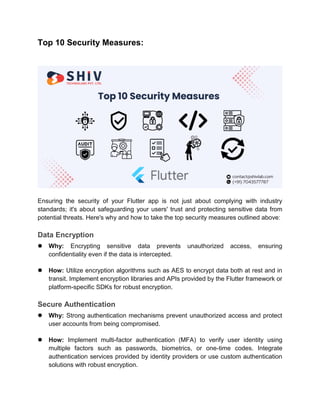
Top 10 Security Measures:
Ensuring the security of your Flutter app is not just about complying with industry
standards; it's about safeguarding your users' trust and protecting sensitive data from
potential threats. Here's why and how to take the top security measures outlined above:
Data Encryption
 Why: Encrypting sensitive data prevents unauthorized access, ensuring
confidentiality even if the data is intercepted.
 How: Utilize encryption algorithms such as AES to encrypt data both at rest and in
transit. Implement encryption libraries and APIs provided by the Flutter framework or
platform-specific SDKs for robust encryption.
Secure Authentication
 Why: Strong authentication mechanisms prevent unauthorized access and protect
user accounts from being compromised.
 How: Implement multi-factor authentication (MFA) to verify user identity using
multiple factors such as passwords, biometrics, or one-time codes. Integrate
authentication services provided by identity providers or use custom authentication
solutions with robust encryption.
Secure Network Communication
 Why: Encrypting network communication prevents data interception and protects
against man-in-the-middle attacks.
 How: Utilize HTTPS protocol to encrypt data transmitted between the app and server.
Implement certificate pinning to ensure the app only communicates with trusted
servers and validate server certificates to prevent spoofing.
Code Obfuscation
 Why: Obfuscating the code makes it harder for attackers to reverse engineer the app
and extract sensitive information.
 How: Utilize code obfuscation tools such as ProGuard or DexGuard to obfuscate the
codebase effectively. Configure obfuscation settings to rename classes, methods,
and variables, making the code less readable and harder to analyze.
Secure Storage
 Why: Storing sensitive data securely prevents unauthorized access and protects user
privacy.
 How: Utilize platform-specific encryption APIs to store sensitive data securely.
Encrypt sensitive information such as passwords and authentication tokens before
storing them in local storage or databases. Implement secure key management
practices to protect encryption keys from unauthorized access.
Regular Security Audits
 Why: Regular security audits help identify vulnerabilities and weaknesses in the app
before they can be exploited by attackers.
 How: Conduct comprehensive security audits and penetration testing to identify
potential vulnerabilities and security flaws. Utilize automated security scanning tools
and manual testing techniques to assess the app's security posture. Address any
identified vulnerabilities promptly and prioritize security updates and patches.
Proper Session Management
 Why: Secure session management prevents session hijacking and unauthorized
access to user accounts.
 How: Implement secure session management practices such as using short-lived
session tokens and enforcing session timeouts. Store session tokens securely and
validate them on every request to prevent session fixation and replay attacks.
Input Validation
 Why: Input validation prevents common vulnerabilities such as SQL injection and
cross-site scripting (XSS) by sanitizing input data and validating user input.
 How: Implement input validation routines to sanitize input data and validate user input
against expected formats and patterns. Utilize platform-specific validation libraries
and frameworks to enforce input validation rules and sanitize user input effectively.
Implementing App Transport Security (ATS)
 Why: Enforcing ATS restricts app communication with non-secure servers and
domains, reducing the risk of data interception and unauthorized access.
 How: Configure ATS settings to allow communication only with trusted sources over
secure connections. Utilize platform-specific ATS settings and configure network
security policies to enforce ATS requirements.
Regular Updates and Patch Management
 Why: Keeping the app and third-party libraries up to date with the latest security
patches and fixes helps mitigate known vulnerabilities and security risks.
 How: Monitor for security advisories and updates from platform vendors and third-
party library providers. Implement automated update mechanisms and patch
management processes to apply security patches promptly. Regularly review and
update dependencies to ensure compatibility with the latest security fixes and
updates.
By understanding the importance of each security measure and implementing them
effectively, entrepreneurs can create robust and secure Flutter apps that protect user data
and maintain trust in their brand.
Security Best Practices in Flutter
In addition to the aforementioned measures, adhering to security best practices specific to Flutter
development can further enhance the security posture of your app:
 Dependency Management: Regularly update dependencies to ensure compatibility with the
latest security patches and fixes.
 Secure WebView Integration: Implement WebView securely by restricting access to
sensitive data and validating input to prevent XSS attacks.
 Permissions Management: Limit app permissions to only essential functions and data,
reducing the attack surface and enhancing user privacy.
Final Thoughts
As entrepreneurs venture into the realm of app development, prioritizing security is non-
negotiable. By partnering with the top Flutter app development company, such as Shiv
Technolabs, businesses can leverage expertise in both Flutter development and security to create
robust and secure apps. Remember, investing in security measures not only protects your users
and data but also safeguards your reputation and brand integrity in the long run.

Flutter App Development Best Practices: 10 Essential Security Measures

  • 1.
    Security Measures EveryEntrepreneur Should Implement in Their Flutter App In today's digital landscape, where technology is advancing at an unprecedented pace, ensuring the security of your Flutter app is paramount. As entrepreneurs embark on their journey of app development, it's crucial to prioritize security measures to safeguard sensitive data and maintain user trust. Partnering with the best Flutter development service provider is not just about creating a visually appealing app; it's also about integrating robust security features to protect against potential threats.
  • 2.
    Top 10 SecurityMeasures: Ensuring the security of your Flutter app is not just about complying with industry standards; it's about safeguarding your users' trust and protecting sensitive data from potential threats. Here's why and how to take the top security measures outlined above: Data Encryption  Why: Encrypting sensitive data prevents unauthorized access, ensuring confidentiality even if the data is intercepted.  How: Utilize encryption algorithms such as AES to encrypt data both at rest and in transit. Implement encryption libraries and APIs provided by the Flutter framework or platform-specific SDKs for robust encryption. Secure Authentication  Why: Strong authentication mechanisms prevent unauthorized access and protect user accounts from being compromised.  How: Implement multi-factor authentication (MFA) to verify user identity using multiple factors such as passwords, biometrics, or one-time codes. Integrate authentication services provided by identity providers or use custom authentication solutions with robust encryption.
  • 3.
    Secure Network Communication Why: Encrypting network communication prevents data interception and protects against man-in-the-middle attacks.  How: Utilize HTTPS protocol to encrypt data transmitted between the app and server. Implement certificate pinning to ensure the app only communicates with trusted servers and validate server certificates to prevent spoofing. Code Obfuscation  Why: Obfuscating the code makes it harder for attackers to reverse engineer the app and extract sensitive information.  How: Utilize code obfuscation tools such as ProGuard or DexGuard to obfuscate the codebase effectively. Configure obfuscation settings to rename classes, methods, and variables, making the code less readable and harder to analyze. Secure Storage  Why: Storing sensitive data securely prevents unauthorized access and protects user privacy.  How: Utilize platform-specific encryption APIs to store sensitive data securely. Encrypt sensitive information such as passwords and authentication tokens before storing them in local storage or databases. Implement secure key management practices to protect encryption keys from unauthorized access. Regular Security Audits  Why: Regular security audits help identify vulnerabilities and weaknesses in the app before they can be exploited by attackers.  How: Conduct comprehensive security audits and penetration testing to identify potential vulnerabilities and security flaws. Utilize automated security scanning tools and manual testing techniques to assess the app's security posture. Address any identified vulnerabilities promptly and prioritize security updates and patches. Proper Session Management  Why: Secure session management prevents session hijacking and unauthorized access to user accounts.
  • 4.
     How: Implementsecure session management practices such as using short-lived session tokens and enforcing session timeouts. Store session tokens securely and validate them on every request to prevent session fixation and replay attacks. Input Validation  Why: Input validation prevents common vulnerabilities such as SQL injection and cross-site scripting (XSS) by sanitizing input data and validating user input.  How: Implement input validation routines to sanitize input data and validate user input against expected formats and patterns. Utilize platform-specific validation libraries and frameworks to enforce input validation rules and sanitize user input effectively. Implementing App Transport Security (ATS)  Why: Enforcing ATS restricts app communication with non-secure servers and domains, reducing the risk of data interception and unauthorized access.  How: Configure ATS settings to allow communication only with trusted sources over secure connections. Utilize platform-specific ATS settings and configure network security policies to enforce ATS requirements. Regular Updates and Patch Management  Why: Keeping the app and third-party libraries up to date with the latest security patches and fixes helps mitigate known vulnerabilities and security risks.  How: Monitor for security advisories and updates from platform vendors and third- party library providers. Implement automated update mechanisms and patch management processes to apply security patches promptly. Regularly review and update dependencies to ensure compatibility with the latest security fixes and updates. By understanding the importance of each security measure and implementing them effectively, entrepreneurs can create robust and secure Flutter apps that protect user data and maintain trust in their brand. Security Best Practices in Flutter
  • 5.
    In addition tothe aforementioned measures, adhering to security best practices specific to Flutter development can further enhance the security posture of your app:  Dependency Management: Regularly update dependencies to ensure compatibility with the latest security patches and fixes.  Secure WebView Integration: Implement WebView securely by restricting access to sensitive data and validating input to prevent XSS attacks.  Permissions Management: Limit app permissions to only essential functions and data, reducing the attack surface and enhancing user privacy. Final Thoughts As entrepreneurs venture into the realm of app development, prioritizing security is non- negotiable. By partnering with the top Flutter app development company, such as Shiv Technolabs, businesses can leverage expertise in both Flutter development and security to create robust and secure apps. Remember, investing in security measures not only protects your users and data but also safeguards your reputation and brand integrity in the long run.