PLAYING FLUTE INSTRUMENT
NORTH INDIAN BANSURI
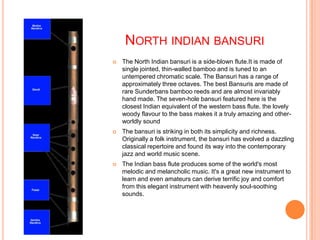
   The North Indian bansuri is a side-blown flute.It is made of
    single jointed, thin-walled bamboo and is tuned to an
    untempered chromatic scale. The Bansuri has a range of
    approximately three octaves. The best Bansuris are made of
    rare Sunderbans bamboo reeds and are almost invariably
    hand made. The seven-hole bansuri featured here is the
    closest Indian equivalent of the western bass flute. the lovely
    woody flavour to the bass makes it a truly amazing and other-
    worldly sound
   The bansuri is striking in both its simplicity and richness.
    Originally a folk instrument, the bansuri has evolved a dazzling
    classical repertoire and found its way into the contemporary
    jazz and world music scene.
   The Indian bass flute produces some of the world's most
    melodic and melancholic music. It's a great new instrument to
    learn and even amateurs can derive terrific joy and comfort
    from this elegant instrument with heavenly soul-soothing
    sounds.
CORRECT WAY OF COVERING THE
SERIES OF HOLES
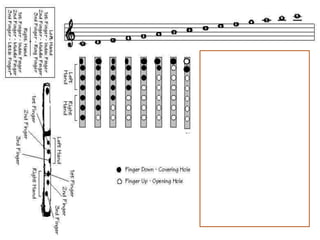
1. Cover the series of holes with the palm of your finger.
2. Your natural tendency is to cover the holes wrongly
   with the tips of your fingers, avoid this tendency, if you
   really want to play this instrument.
   *Cover the three upper holes near the mouthpiece
   with the three big fingers of your left hand, and cover
   the remaining four lower holes with the fingers of your
   right hand.
REMEMBER: to cover the series of holes airtight not very
   tight to hurt or tire your finger easily-but by covering
   the holes with the “Palm” of your fingers .
CORRECT WAY OF COVERING THE
SERIES OF HOLES
3. If you fail to close the series of holes correctly, you
  will not be able to sound the right tone of the notes
  intended to be played. Practice feeling the holes
  even when you are not blowing the instrument, to
  be acquainted with the locations of the holes on the
  instrument. Every finger is required to cover only
  one hole and no finger shall be used to cover any
  other hole other than the one assigned to it.
PROPER MOUTHING OF THE FLUTE
The mouthpiece should be place in your mouth just
  like drinking from a small glass. The flute must not
  be held horizontally instead it must be pointed
  downward.
RIGHT MODE OF BLOWING
   For practicing beginners, each note is sounded by
    each separate blow-one note one blow. One blow
    means blowing to sound one note, then inhaling to
    prepare for the next blow or note. As you become
    adapt in handling the instrument, you will be able to
    play several notes with one continuous blowing.
    The right technic in blowing is not just simply
    blowing into the flute. Do it correctly by spitting a
    very slight gasp of air into the mouthpiece, and
    silently pronouncing the word “tee or too” at the
    beginning of each blow and maintaining air
    pressure inside your cheek to produce a long note.
RIGHT MODE OF BLOWING
Blow gently to sound notes belonging to the lower of
  first octave, namely C (do), D (re), E (mi) F (fa), G
  (sol), A (la) B, (ti), C2 (do);
Blow a little bit harder as you go up the scales of the
  notes belonging to the higher scales or second
  octave namely C2, D2, E2, F2, G2, A2, B2, C3.
The lowest note needs only a very slight and long
  gasp of air.
MEMORIZING FINGER POSITIONS
Before attempting to play a song in the flute, master
 first the successive fingering positions of each note
 and lay first the simplest and shortest song that you
 know by heart.
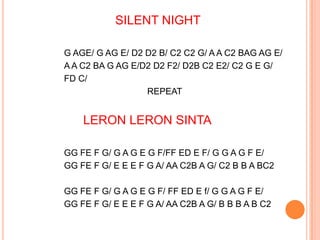
SILENT NIGHT

G AGE/ G AG E/ D2 D2 B/ C2 C2 G/ A A C2 BAG AG E/
A A C2 BA G AG E/D2 D2 F2/ D2B C2 E2/ C2 G E G/
FD C/
                  REPEAT


    LERON LERON SINTA

GG FE F G/ G A G E G F/FF ED E F/ G G A G F E/
GG FE F G/ E E E F G A/ AA C2B A G/ C2 B B A BC2

GG FE F G/ G A G E G F/ FF ED E f/ G G A G F E/
GG FE F G/ E E E F G A/ AA C2B A G/ B B B A B C2
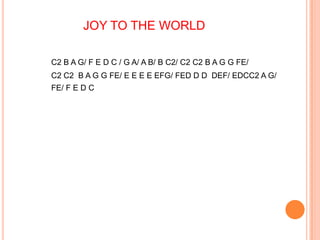
JOY TO THE WORLD

C2 B A G/ F E D C / G A/ A B/ B C2/ C2 C2 B A G G FE/
C2 C2 B A G G FE/ E E E E EFG/ FED D D DEF/ EDCC2 A G/
FE/ F E D C

Flute

  • 1.
  • 2.
    NORTH INDIAN BANSURI  The North Indian bansuri is a side-blown flute.It is made of single jointed, thin-walled bamboo and is tuned to an untempered chromatic scale. The Bansuri has a range of approximately three octaves. The best Bansuris are made of rare Sunderbans bamboo reeds and are almost invariably hand made. The seven-hole bansuri featured here is the closest Indian equivalent of the western bass flute. the lovely woody flavour to the bass makes it a truly amazing and other- worldly sound  The bansuri is striking in both its simplicity and richness. Originally a folk instrument, the bansuri has evolved a dazzling classical repertoire and found its way into the contemporary jazz and world music scene.  The Indian bass flute produces some of the world's most melodic and melancholic music. It's a great new instrument to learn and even amateurs can derive terrific joy and comfort from this elegant instrument with heavenly soul-soothing sounds.
  • 3.
    CORRECT WAY OFCOVERING THE SERIES OF HOLES 1. Cover the series of holes with the palm of your finger. 2. Your natural tendency is to cover the holes wrongly with the tips of your fingers, avoid this tendency, if you really want to play this instrument. *Cover the three upper holes near the mouthpiece with the three big fingers of your left hand, and cover the remaining four lower holes with the fingers of your right hand. REMEMBER: to cover the series of holes airtight not very tight to hurt or tire your finger easily-but by covering the holes with the “Palm” of your fingers .
  • 4.
    CORRECT WAY OFCOVERING THE SERIES OF HOLES 3. If you fail to close the series of holes correctly, you will not be able to sound the right tone of the notes intended to be played. Practice feeling the holes even when you are not blowing the instrument, to be acquainted with the locations of the holes on the instrument. Every finger is required to cover only one hole and no finger shall be used to cover any other hole other than the one assigned to it.
  • 5.
    PROPER MOUTHING OFTHE FLUTE The mouthpiece should be place in your mouth just like drinking from a small glass. The flute must not be held horizontally instead it must be pointed downward.
  • 6.
    RIGHT MODE OFBLOWING  For practicing beginners, each note is sounded by each separate blow-one note one blow. One blow means blowing to sound one note, then inhaling to prepare for the next blow or note. As you become adapt in handling the instrument, you will be able to play several notes with one continuous blowing. The right technic in blowing is not just simply blowing into the flute. Do it correctly by spitting a very slight gasp of air into the mouthpiece, and silently pronouncing the word “tee or too” at the beginning of each blow and maintaining air pressure inside your cheek to produce a long note.
  • 7.
    RIGHT MODE OFBLOWING Blow gently to sound notes belonging to the lower of first octave, namely C (do), D (re), E (mi) F (fa), G (sol), A (la) B, (ti), C2 (do); Blow a little bit harder as you go up the scales of the notes belonging to the higher scales or second octave namely C2, D2, E2, F2, G2, A2, B2, C3. The lowest note needs only a very slight and long gasp of air.
  • 8.
    MEMORIZING FINGER POSITIONS Beforeattempting to play a song in the flute, master first the successive fingering positions of each note and lay first the simplest and shortest song that you know by heart.
  • 10.
    SILENT NIGHT G AGE/G AG E/ D2 D2 B/ C2 C2 G/ A A C2 BAG AG E/ A A C2 BA G AG E/D2 D2 F2/ D2B C2 E2/ C2 G E G/ FD C/ REPEAT LERON LERON SINTA GG FE F G/ G A G E G F/FF ED E F/ G G A G F E/ GG FE F G/ E E E F G A/ AA C2B A G/ C2 B B A BC2 GG FE F G/ G A G E G F/ FF ED E f/ G G A G F E/ GG FE F G/ E E E F G A/ AA C2B A G/ B B B A B C2
  • 11.
    JOY TO THEWORLD C2 B A G/ F E D C / G A/ A B/ B C2/ C2 C2 B A G G FE/ C2 C2 B A G G FE/ E E E E EFG/ FED D D DEF/ EDCC2 A G/ FE/ F E D C