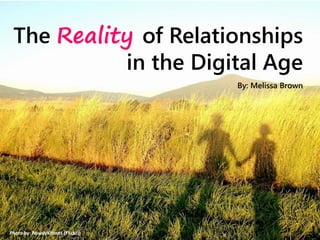
The Reality of Relationships
in the Digital Age
Photo by: RowdyKittens (Flickr))
By: Melissa Brown
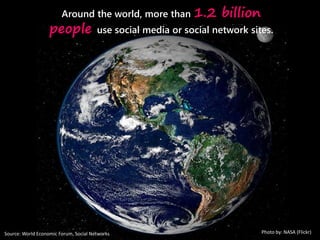
Around the world, more than 1.2 billion
people use social media or social network sites.
Photo by: NASA (Flickr))Source: World Economic Forum, Social Networks
Social media is supposed
to help foster
connections.
But just how meaningful are these connections?
Photo by: procsilas (Flickr)
And how have these “connections” changed the
way in which we interact?
Photo by: Angelo Gonzalez (Flickr)
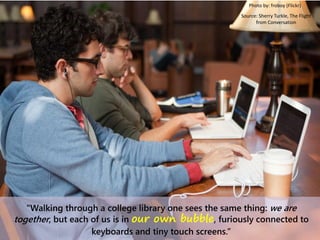
“Walking through a college library one sees the same thing: we are
together, but each of us is in our own bubble, furiously connected to
keyboards and tiny touch screens.”
Photo by: froboy (Flickr)
Source: Sherry Turkle, The Flight
from Conversation
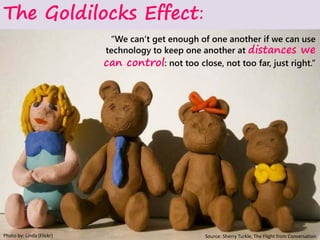
“We can’t get enough of one another if we can use
technology to keep one another at distances we
can control: not too close, not too far, just right.”
Photo by: Linda (Flickr)
The Goldilocks Effect:
Source: Sherry Turkle, The Flight from Conversation
Photo by: Presidio of Monterey (Flickr)
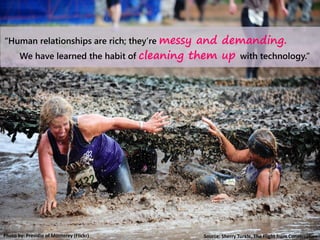
“Human relationships are rich; they’re messy and demanding.
We have learned the habit of cleaning them up with technology.”
Source: Sherry Turkle, The Flight from Conversation
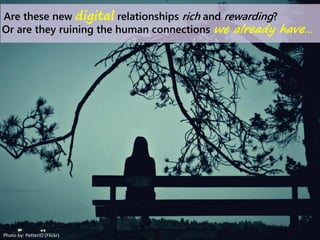
Are these new digital relationships rich and rewarding?
Or are they ruining the human connections we already have…
Photo by: PetteriO (Flickr)
Photo by: *vlad* (Flickr)
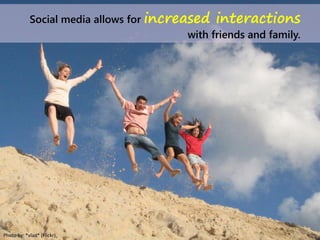
Social media allows for increased interactions
with friends and family.
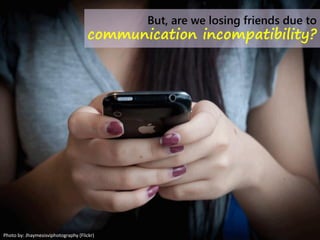
But, are we losing friends due to
communication incompatibility?
Photo by: Jhaymesisviphotography (Flickr)
Photo by: Victori A (Flickr)
“This Pandora’s box has opened…
There are too many ways to converse,
each of us has a favored method, and no one
wants to compromise.”
Source: Elizabeth Bernstein, He Texts, She Tweets – Are They E-Compatible?
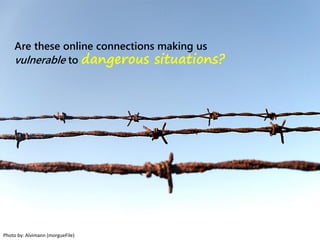
Are these online connections making us
vulnerable to dangerous situations?
Photo by: Alvimann (morgueFile)
Photo by: monkeyc.net (Flickr)
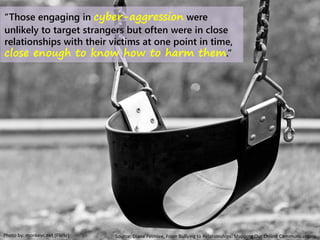
“Those engaging in cyber-aggression were
unlikely to target strangers but often were in close
relationships with their victims at one point in time,
close enough to know how to harm them.”
Source: Diane Felmlee, From Bullying to Relationships: Mapping Our Online Communications
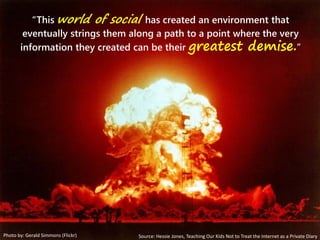
“This world of social has created an environment that
eventually strings them along a path to a point where the very
information they created can be their greatest demise.”
Photo by: Gerald Simmons (Flickr) Source: Hessie Jones, Teaching Our Kids Not to Treat the Internet as a Private Diary
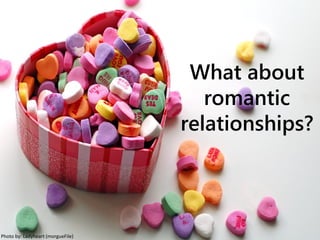
What about
romantic
relationships?
Photo by: Ladyheart (morgueFile)
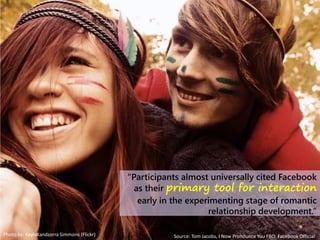
Photo by: KaylaKandzorra Simmons (Flickr)
“Participants almost universally cited Facebook
as their primary tool for interaction
early in the experimenting stage of romantic
relationship development.”
Source: Tom Jacobs, I Now Pronounce You FBO: Facebook Official
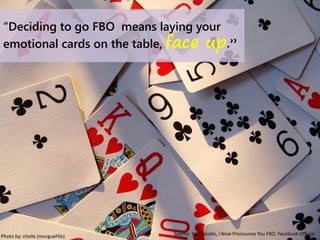
Photo by: chelle (morgueFile)
“Deciding to go FBO means laying your
emotional cards on the table, face up.”
Source: Tom Jacobs, I Now Pronounce You FBO: Facebook Official
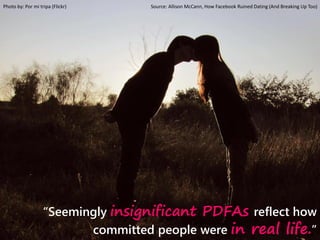
“Seemingly insignificant PDFAs reflect how
committed people were in real life.”
Photo by: Por mi tripa (Flickr) Source: Allison McCann, How Facebook Ruined Dating (And Breaking Up Too)
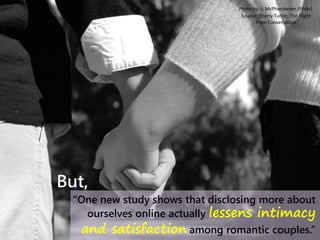
“One new study shows that disclosing more about
ourselves online actually lessens intimacy
and satisfaction among romantic couples.”
But,
Photo by: J. McPherskesen (Flickr)
Source: Sherry Turkle, The Flight
from Conversation
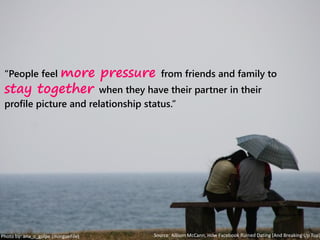
“People feel more pressure from friends and family to
stay together when they have their partner in their
profile picture and relationship status.”
Photo by: ana_c_golpe (morgueFile) Source: Allison McCann, How Facebook Ruined Dating (And Breaking Up Too)
Photo by: the apostrophe (Flickr)
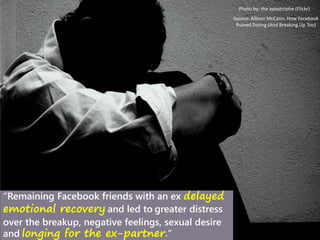
“Remaining Facebook friends with an ex delayed
emotional recovery and led to greater distress
over the breakup, negative feelings, sexual desire
and longing for the ex-partner.”
Source: Allison McCann, How Facebook
Ruined Dating (And Breaking Up Too)
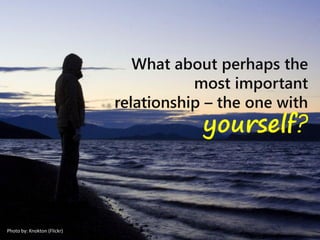
What about perhaps the
most important
relationship – the one with
yourself?
Photo by: Knokton (Flickr)
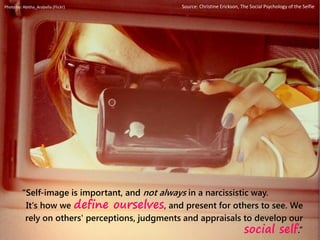
“Self-image is important, and not always in a narcissistic way.
It's how we define ourselves, and present for others to see. We
rely on others' perceptions, judgments and appraisals to develop our
social self.”
Photo by: Abitha_Arabella (Flickr) Source: Christine Erickson, The Social Psychology of the Selfie
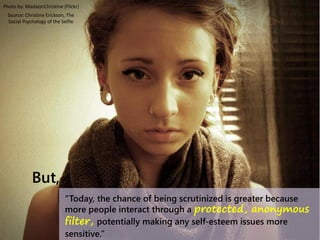
“Today, the chance of being scrutinized is greater because
more people interact through a protected, anonymous
filter, potentially making any self-esteem issues more
sensitive.”
Photo by: MadalynChristine (Flickr)
But,
Source: Christine Erickson, The
Social Psychology of the Selfie
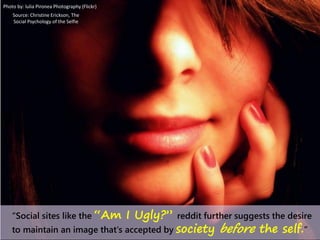
“Social sites like the “Am I Ugly?” reddit further suggests the desire
to maintain an image that's accepted by society before the self.”
Photo by: lulia Pironea Photography (Flickr)
Source: Christine Erickson, The
Social Psychology of the Selfie
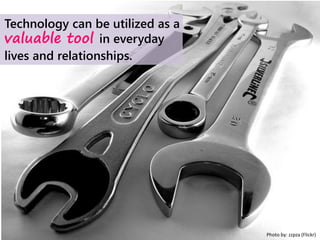
Photo by: zzpza (Flickr)
Technology can be utilized as a
valuable tool in everyday
lives and relationships.
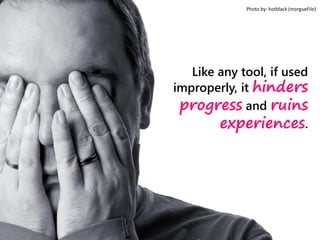
Photo by: hotblack (morgueFile)
Like any tool, if used
improperly, it hinders
progress and ruins
experiences.
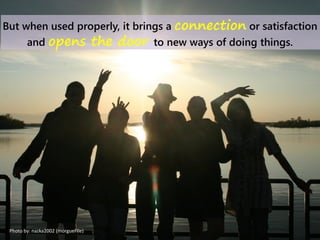
But when used properly, it brings a connection or satisfaction
and opens the door to new ways of doing things.
Photo by: nazka2002 (morgueFile)
Sources
• http://reports.weforum.org/global-agenda-council-
2012/councils/social-networks/
• http://www.nytimes.com/2012/04/22/opinion/sunday/the-flight-
from-conversation.html?pagewanted=all
• http://online.wsj.com/article/SB1000142405270230470860457750267
2286303452.html
• http://esciencenews.com/articles/2013/01/20/from.bullying.relationsh
ips.mapping.our.online.communications
• http://www.huffingtonpost.ca/hessie-jones/teens-oversharing-
internet_b_2923694.html
• http://www.psmag.com/blogs/news-blog/i-now-pronounce-you-fbo-
facebook-official-51307/
• http://www.buzzfeed.com/atmccann/how-facebook-ruined-dating-
and-breaking-up-too
• http://mashable.com/2013/02/15/social-media-and-the-selfie/
Photo by: neiv (morgueFile)
Image Credits
All sourced flickr images
are licensed under the
Creative Commons Non-
Commercial Share-Alike
3.0 agreement.
All sourced morgueFile
images fall under the
morgueFile free photo
license.

Flipbook new

  • 1.
    The Reality ofRelationships in the Digital Age Photo by: RowdyKittens (Flickr)) By: Melissa Brown
  • 2.
    Around the world,more than 1.2 billion people use social media or social network sites. Photo by: NASA (Flickr))Source: World Economic Forum, Social Networks
  • 3.
    Social media issupposed to help foster connections. But just how meaningful are these connections? Photo by: procsilas (Flickr)
  • 4.
    And how havethese “connections” changed the way in which we interact? Photo by: Angelo Gonzalez (Flickr)
  • 5.
    “Walking through acollege library one sees the same thing: we are together, but each of us is in our own bubble, furiously connected to keyboards and tiny touch screens.” Photo by: froboy (Flickr) Source: Sherry Turkle, The Flight from Conversation
  • 6.
    “We can’t getenough of one another if we can use technology to keep one another at distances we can control: not too close, not too far, just right.” Photo by: Linda (Flickr) The Goldilocks Effect: Source: Sherry Turkle, The Flight from Conversation
  • 7.
    Photo by: Presidioof Monterey (Flickr) “Human relationships are rich; they’re messy and demanding. We have learned the habit of cleaning them up with technology.” Source: Sherry Turkle, The Flight from Conversation
  • 8.
    Are these newdigital relationships rich and rewarding? Or are they ruining the human connections we already have… Photo by: PetteriO (Flickr)
  • 9.
    Photo by: *vlad*(Flickr) Social media allows for increased interactions with friends and family.
  • 10.
    But, are welosing friends due to communication incompatibility? Photo by: Jhaymesisviphotography (Flickr)
  • 11.
    Photo by: VictoriA (Flickr) “This Pandora’s box has opened… There are too many ways to converse, each of us has a favored method, and no one wants to compromise.” Source: Elizabeth Bernstein, He Texts, She Tweets – Are They E-Compatible?
  • 12.
    Are these onlineconnections making us vulnerable to dangerous situations? Photo by: Alvimann (morgueFile)
  • 13.
    Photo by: monkeyc.net(Flickr) “Those engaging in cyber-aggression were unlikely to target strangers but often were in close relationships with their victims at one point in time, close enough to know how to harm them.” Source: Diane Felmlee, From Bullying to Relationships: Mapping Our Online Communications
  • 14.
    “This world ofsocial has created an environment that eventually strings them along a path to a point where the very information they created can be their greatest demise.” Photo by: Gerald Simmons (Flickr) Source: Hessie Jones, Teaching Our Kids Not to Treat the Internet as a Private Diary
  • 15.
  • 16.
    Photo by: KaylaKandzorraSimmons (Flickr) “Participants almost universally cited Facebook as their primary tool for interaction early in the experimenting stage of romantic relationship development.” Source: Tom Jacobs, I Now Pronounce You FBO: Facebook Official
  • 17.
    Photo by: chelle(morgueFile) “Deciding to go FBO means laying your emotional cards on the table, face up.” Source: Tom Jacobs, I Now Pronounce You FBO: Facebook Official
  • 18.
    “Seemingly insignificant PDFAsreflect how committed people were in real life.” Photo by: Por mi tripa (Flickr) Source: Allison McCann, How Facebook Ruined Dating (And Breaking Up Too)
  • 19.
    “One new studyshows that disclosing more about ourselves online actually lessens intimacy and satisfaction among romantic couples.” But, Photo by: J. McPherskesen (Flickr) Source: Sherry Turkle, The Flight from Conversation
  • 20.
    “People feel morepressure from friends and family to stay together when they have their partner in their profile picture and relationship status.” Photo by: ana_c_golpe (morgueFile) Source: Allison McCann, How Facebook Ruined Dating (And Breaking Up Too)
  • 21.
    Photo by: theapostrophe (Flickr) “Remaining Facebook friends with an ex delayed emotional recovery and led to greater distress over the breakup, negative feelings, sexual desire and longing for the ex-partner.” Source: Allison McCann, How Facebook Ruined Dating (And Breaking Up Too)
  • 22.
    What about perhapsthe most important relationship – the one with yourself? Photo by: Knokton (Flickr)
  • 23.
    “Self-image is important,and not always in a narcissistic way. It's how we define ourselves, and present for others to see. We rely on others' perceptions, judgments and appraisals to develop our social self.” Photo by: Abitha_Arabella (Flickr) Source: Christine Erickson, The Social Psychology of the Selfie
  • 24.
    “Today, the chanceof being scrutinized is greater because more people interact through a protected, anonymous filter, potentially making any self-esteem issues more sensitive.” Photo by: MadalynChristine (Flickr) But, Source: Christine Erickson, The Social Psychology of the Selfie
  • 25.
    “Social sites likethe “Am I Ugly?” reddit further suggests the desire to maintain an image that's accepted by society before the self.” Photo by: lulia Pironea Photography (Flickr) Source: Christine Erickson, The Social Psychology of the Selfie
  • 26.
    Photo by: zzpza(Flickr) Technology can be utilized as a valuable tool in everyday lives and relationships.
  • 27.
    Photo by: hotblack(morgueFile) Like any tool, if used improperly, it hinders progress and ruins experiences.
  • 28.
    But when usedproperly, it brings a connection or satisfaction and opens the door to new ways of doing things. Photo by: nazka2002 (morgueFile)
  • 29.
    Sources • http://reports.weforum.org/global-agenda-council- 2012/councils/social-networks/ • http://www.nytimes.com/2012/04/22/opinion/sunday/the-flight- from-conversation.html?pagewanted=all •http://online.wsj.com/article/SB1000142405270230470860457750267 2286303452.html • http://esciencenews.com/articles/2013/01/20/from.bullying.relationsh ips.mapping.our.online.communications • http://www.huffingtonpost.ca/hessie-jones/teens-oversharing- internet_b_2923694.html • http://www.psmag.com/blogs/news-blog/i-now-pronounce-you-fbo- facebook-official-51307/ • http://www.buzzfeed.com/atmccann/how-facebook-ruined-dating- and-breaking-up-too • http://mashable.com/2013/02/15/social-media-and-the-selfie/
  • 30.
    Photo by: neiv(morgueFile) Image Credits All sourced flickr images are licensed under the Creative Commons Non- Commercial Share-Alike 3.0 agreement. All sourced morgueFile images fall under the morgueFile free photo license.