Digital Systems: Principles and Applications, 10e
By Ronald J. Tocci, Neal S. Widmer, and Gregory L. Moss
© 2007 Pearson Education, Inc.
Pearson Prentice Hall
Upper Saddle River, NJ 07458
Figure 5-1 General digital system diagram.
Digital Systems: Principles and Applications, 10e
By Ronald J. Tocci, Neal S. Widmer, and Gregory L. Moss
© 2007 Pearson Education, Inc.
Pearson Prentice Hall
Upper Saddle River, NJ 07458
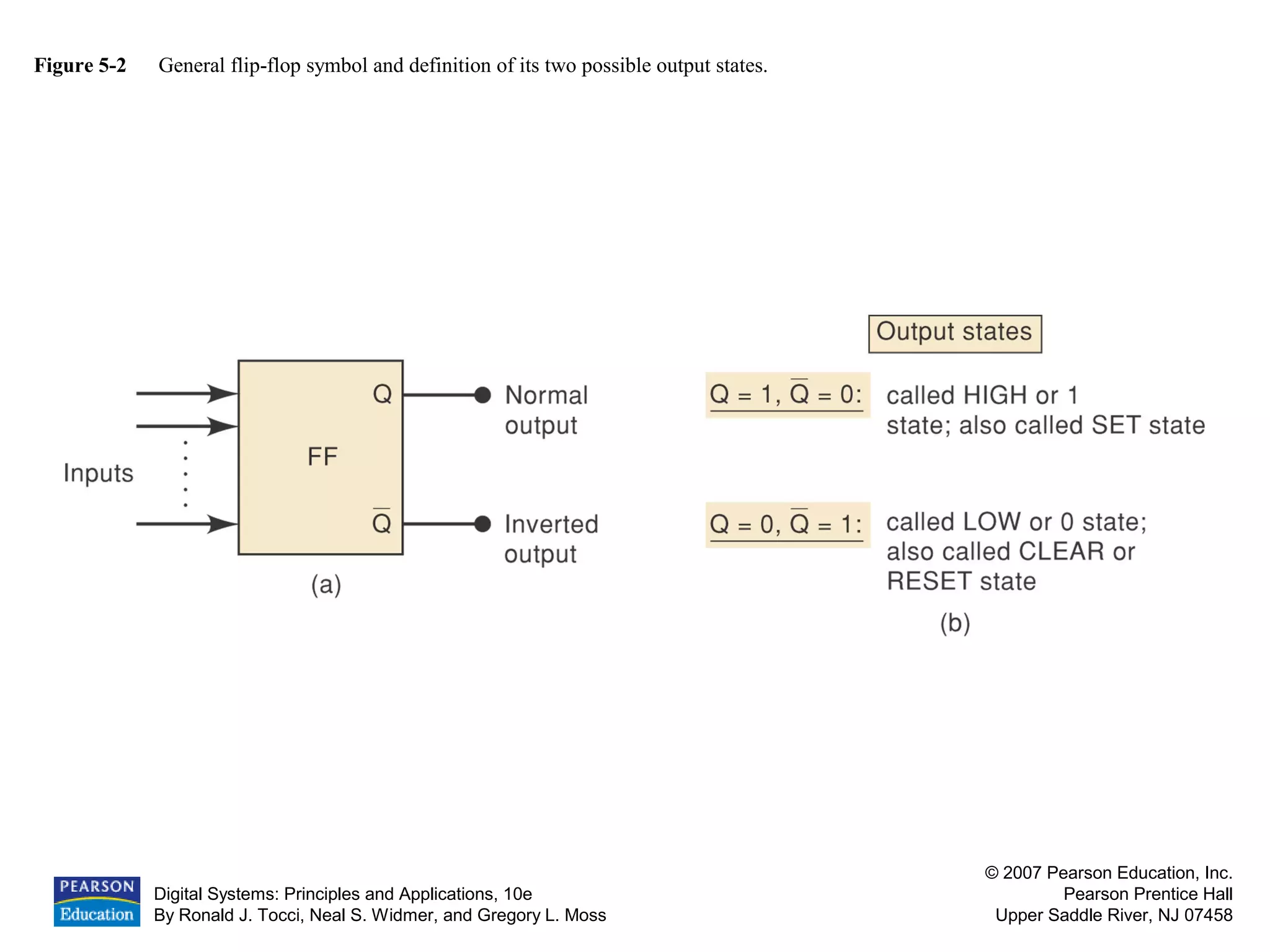
Figure 5-2 General flip-flop symbol and definition of its two possible output states.
Digital Systems: Principles and Applications, 10e
By Ronald J. Tocci, Neal S. Widmer, and Gregory L. Moss
© 2007 Pearson Education, Inc.
Pearson Prentice Hall
Upper Saddle River, NJ 07458
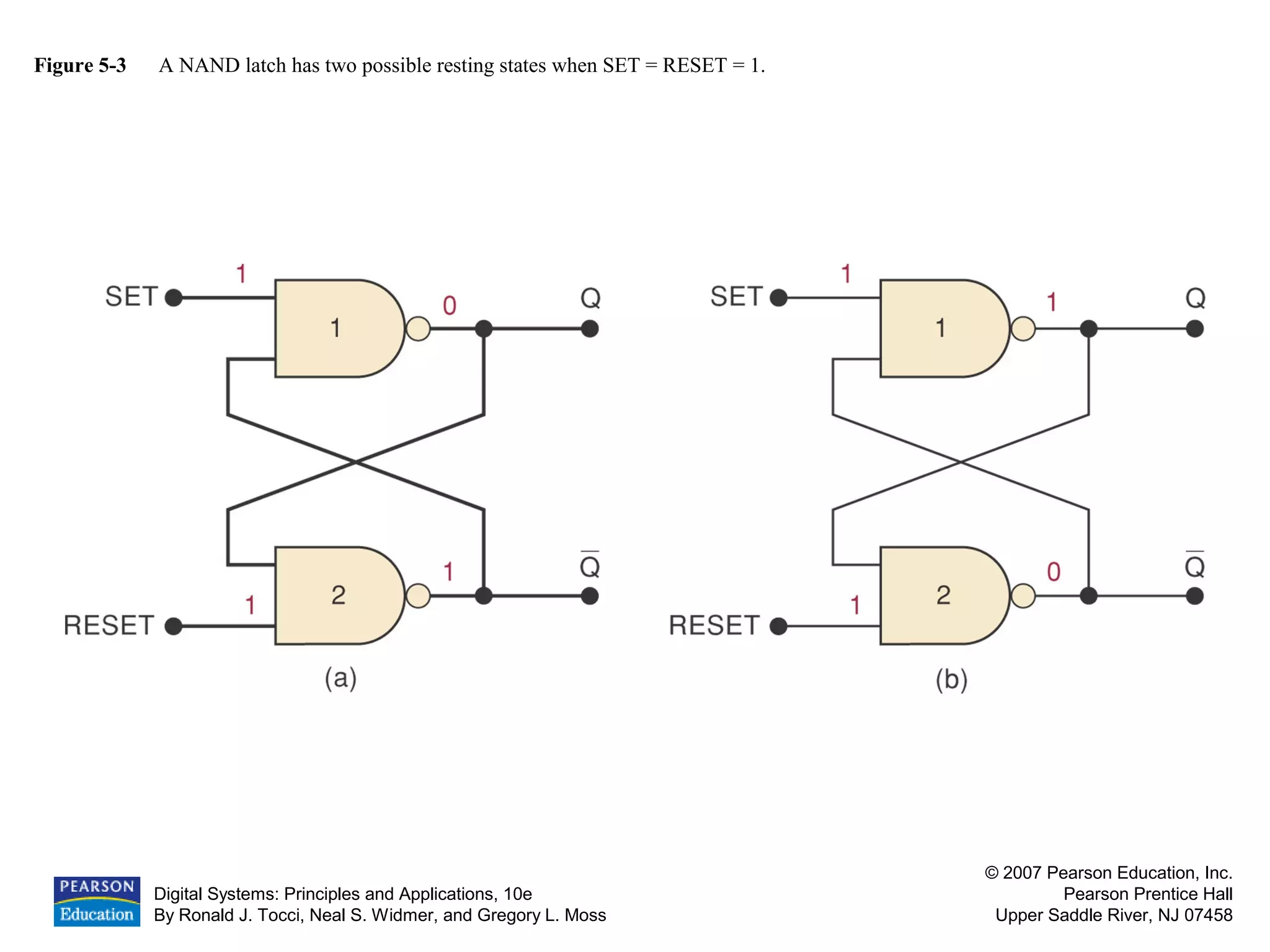
Figure 5-3 A NAND latch has two possible resting states when SET = RESET = 1.
Digital Systems: Principles and Applications, 10e
By Ronald J. Tocci, Neal S. Widmer, and Gregory L. Moss
© 2007 Pearson Education, Inc.
Pearson Prentice Hall
Upper Saddle River, NJ 07458
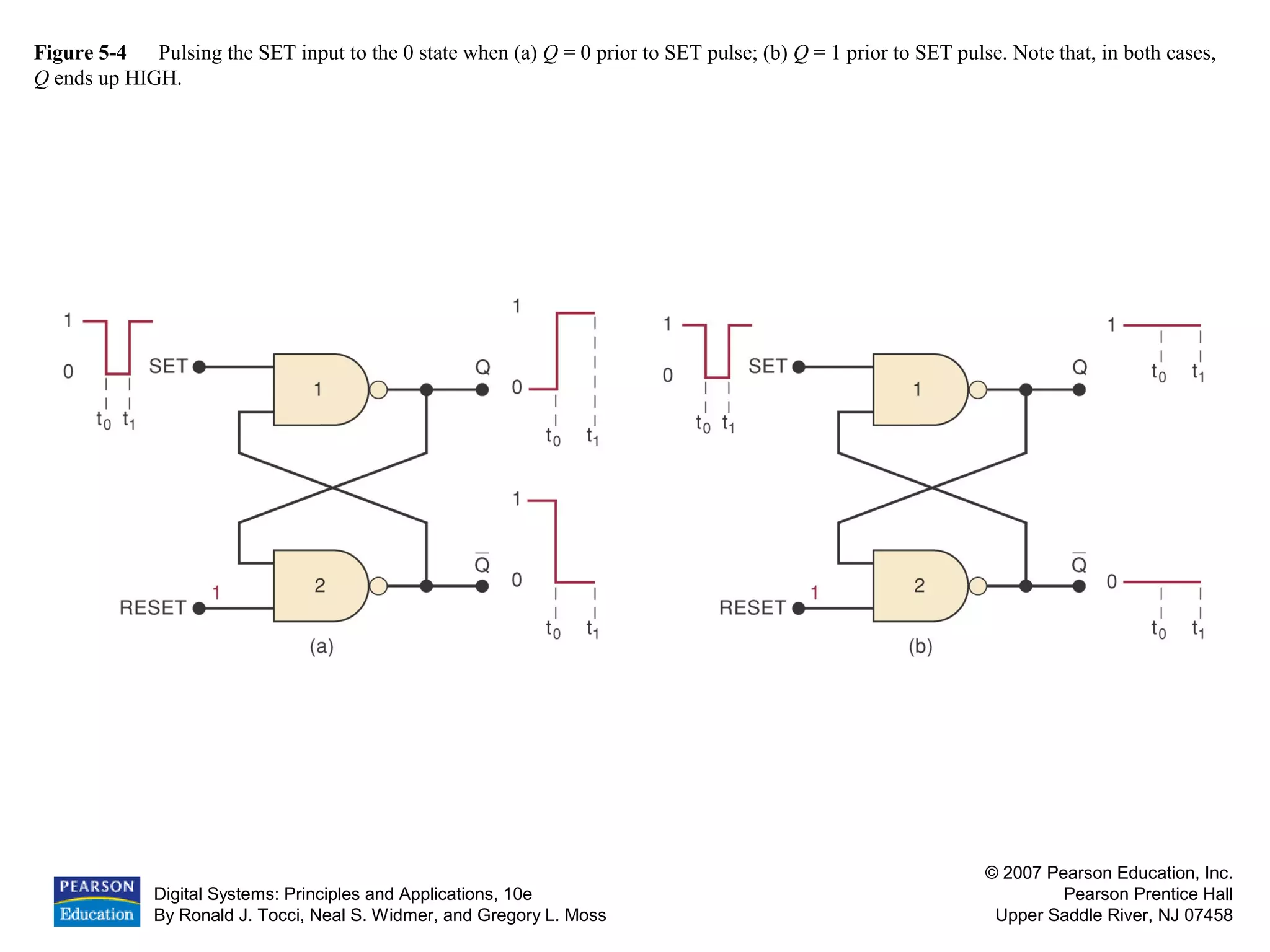
Figure 5-4 Pulsing the SET input to the 0 state when (a) Q = 0 prior to SET pulse; (b) Q = 1 prior to SET pulse. Note that, in both cases,
Q ends up HIGH.
Digital Systems: Principles and Applications, 10e
By Ronald J. Tocci, Neal S. Widmer, and Gregory L. Moss
© 2007 Pearson Education, Inc.
Pearson Prentice Hall
Upper Saddle River, NJ 07458
Figure 5-5 Pulsing the RESET input to the LOW state when (a) Q = 0 prior to RESET pulse; (b) Q = 1 prior to RESET pulse. In each
case, Q ends up LOW.
Digital Systems: Principles and Applications, 10e
By Ronald J. Tocci, Neal S. Widmer, and Gregory L. Moss
© 2007 Pearson Education, Inc.
Pearson Prentice Hall
Upper Saddle River, NJ 07458
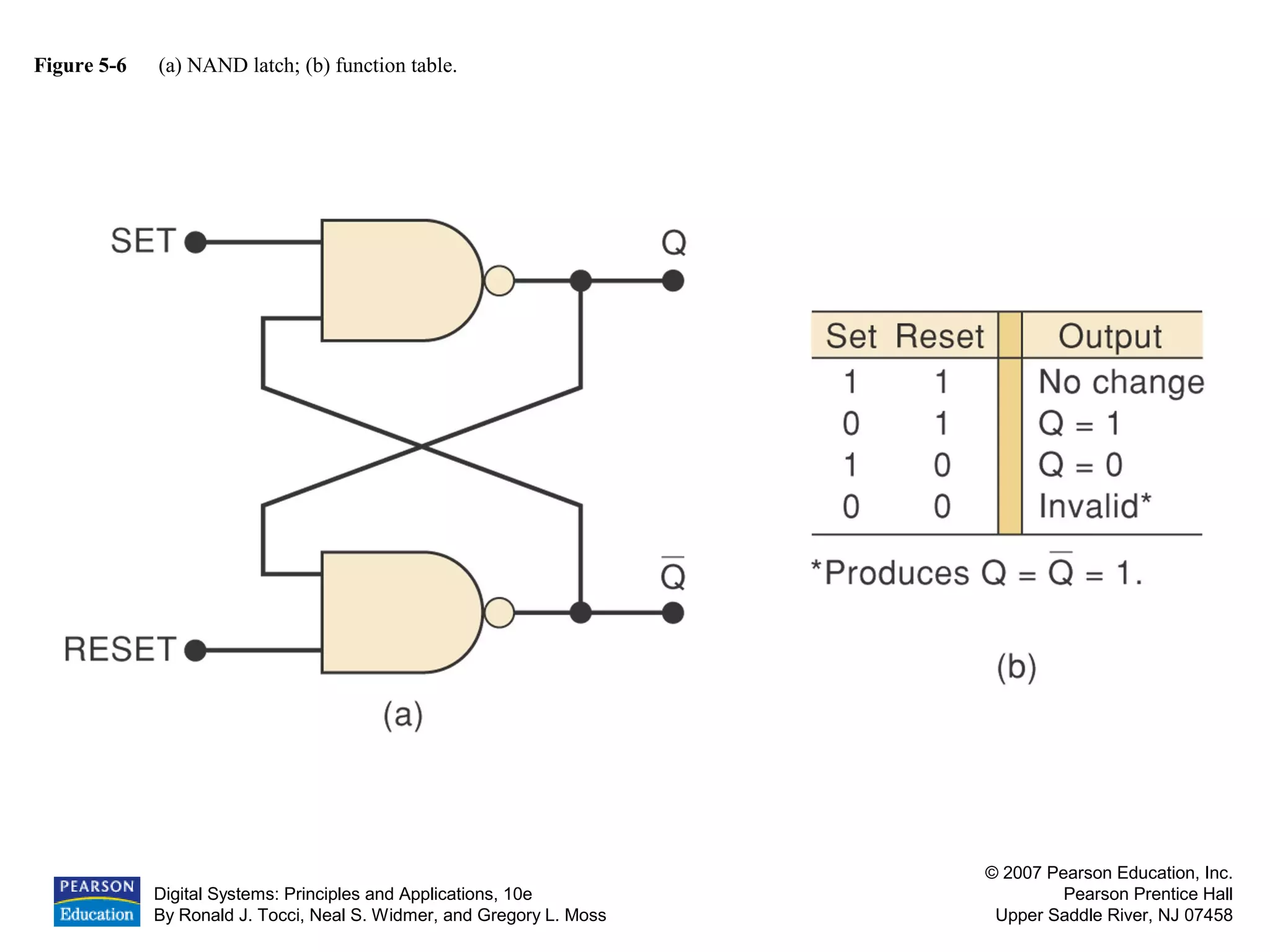
Figure 5-6 (a) NAND latch; (b) function table.
Digital Systems: Principles and Applications, 10e
By Ronald J. Tocci, Neal S. Widmer, and Gregory L. Moss
© 2007 Pearson Education, Inc.
Pearson Prentice Hall
Upper Saddle River, NJ 07458
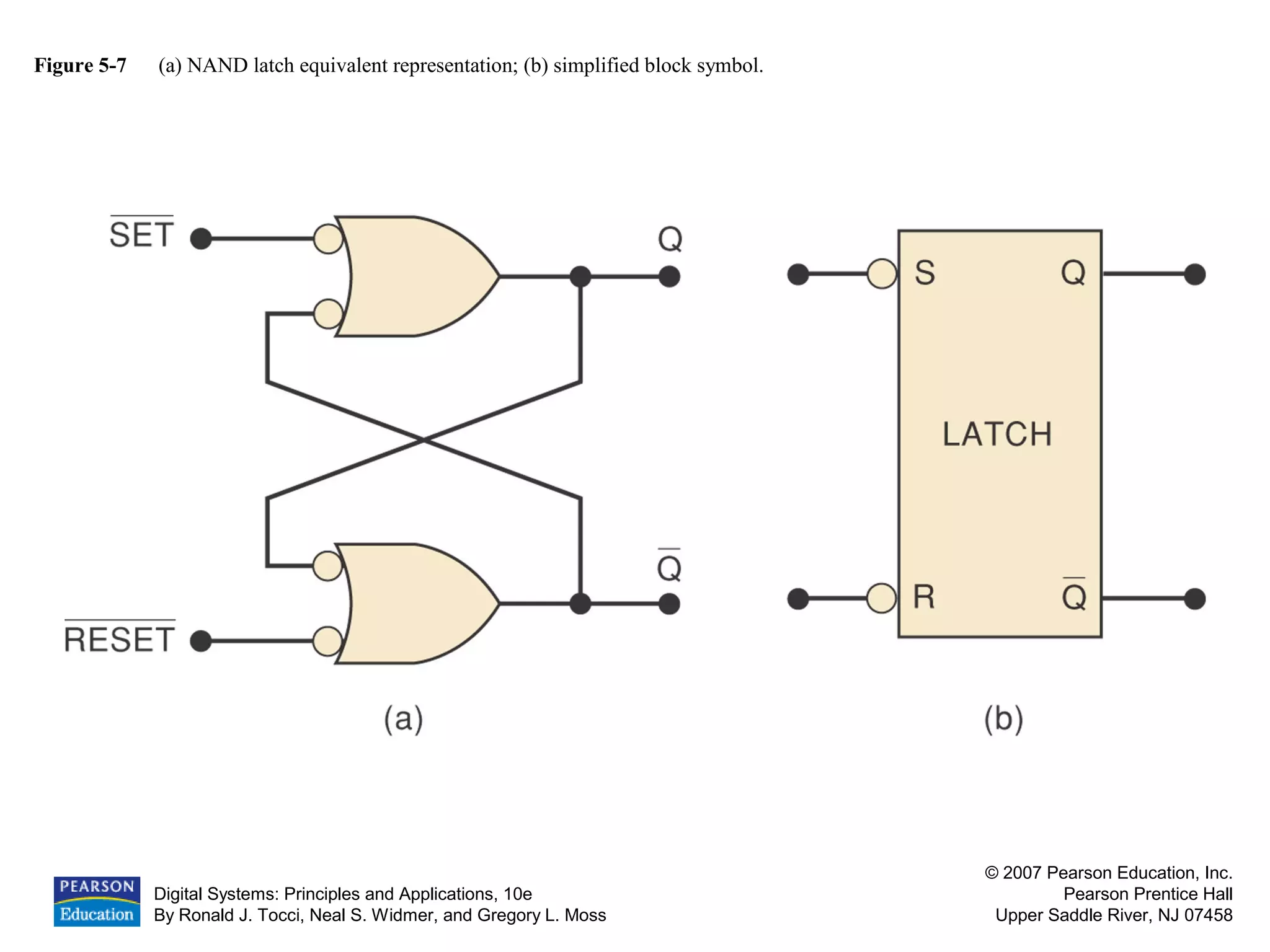
Figure 5-7 (a) NAND latch equivalent representation; (b) simplified block symbol.
Digital Systems: Principles and Applications, 10e
By Ronald J. Tocci, Neal S. Widmer, and Gregory L. Moss
© 2007 Pearson Education, Inc.
Pearson Prentice Hall
Upper Saddle River, NJ 07458
Figure 5-8 Example 5-1.
Digital Systems: Principles and Applications, 10e
By Ronald J. Tocci, Neal S. Widmer, and Gregory L. Moss
© 2007 Pearson Education, Inc.
Pearson Prentice Hall
Upper Saddle River, NJ 07458
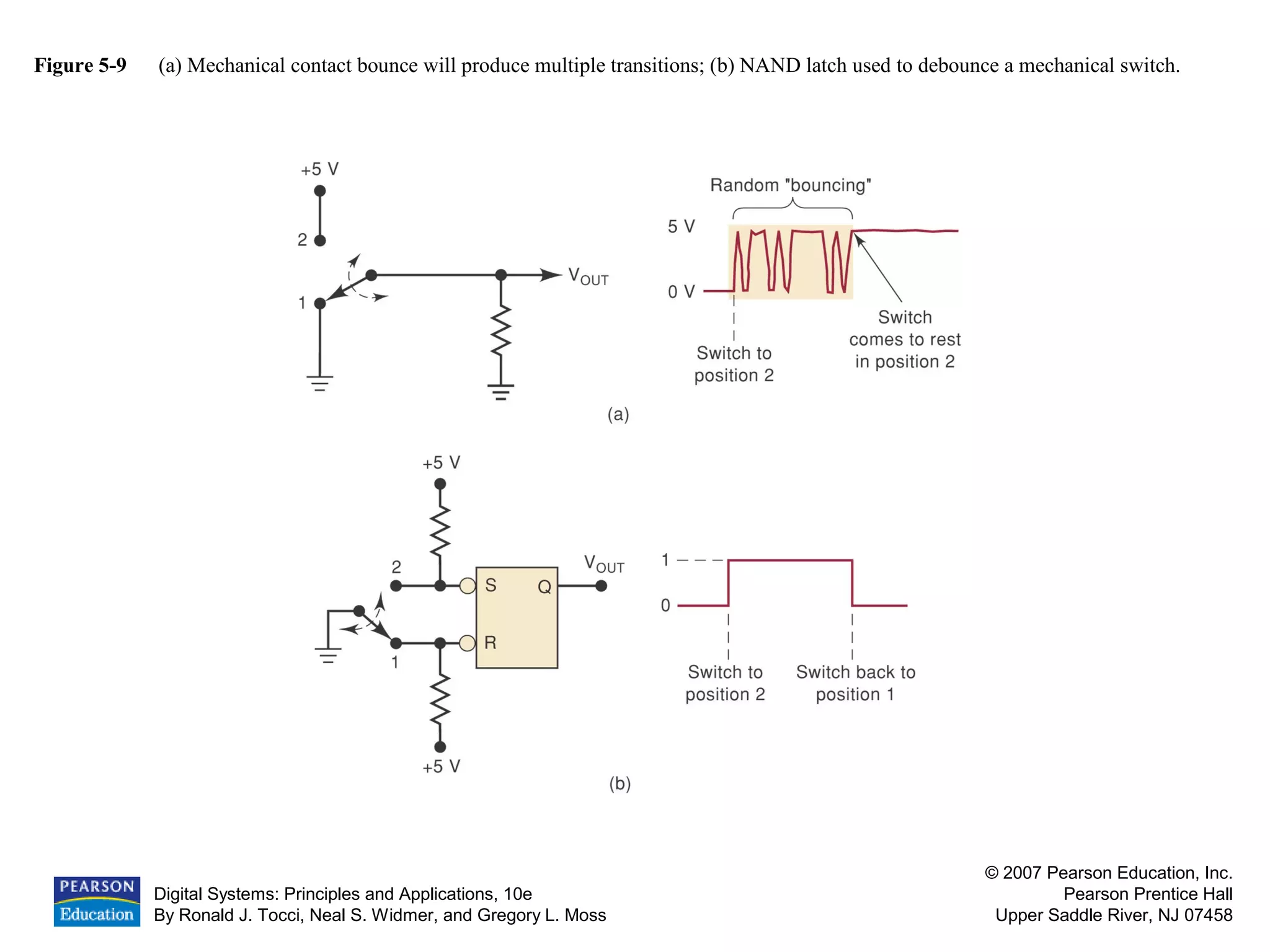
Figure 5-9 (a) Mechanical contact bounce will produce multiple transitions; (b) NAND latch used to debounce a mechanical switch.
Digital Systems: Principles and Applications, 10e
By Ronald J. Tocci, Neal S. Widmer, and Gregory L. Moss
© 2007 Pearson Education, Inc.
Pearson Prentice Hall
Upper Saddle River, NJ 07458
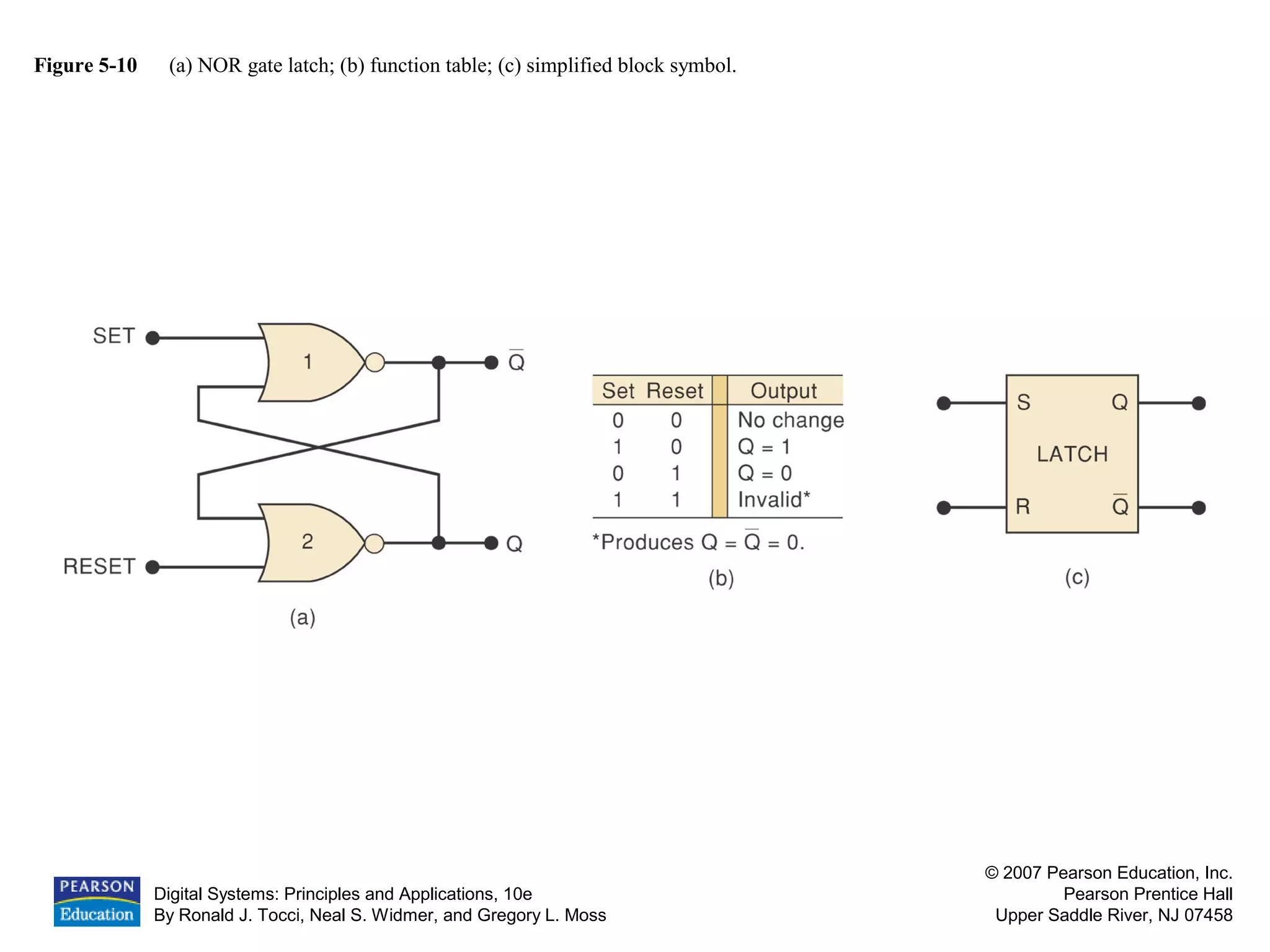
Figure 5-10 (a) NOR gate latch; (b) function table; (c) simplified block symbol.
Digital Systems: Principles and Applications, 10e
By Ronald J. Tocci, Neal S. Widmer, and Gregory L. Moss
© 2007 Pearson Education, Inc.
Pearson Prentice Hall
Upper Saddle River, NJ 07458
Figure 5-11 Example 5-3.
Digital Systems: Principles and Applications, 10e
By Ronald J. Tocci, Neal S. Widmer, and Gregory L. Moss
© 2007 Pearson Education, Inc.
Pearson Prentice Hall
Upper Saddle River, NJ 07458
Figure 5-12 Example 5-4.
Digital Systems: Principles and Applications, 10e
By Ronald J. Tocci, Neal S. Widmer, and Gregory L. Moss
© 2007 Pearson Education, Inc.
Pearson Prentice Hall
Upper Saddle River, NJ 07458
Figure 5-13 Examples 5-5 and 5-6.
Digital Systems: Principles and Applications, 10e
By Ronald J. Tocci, Neal S. Widmer, and Gregory L. Moss
© 2007 Pearson Education, Inc.
Pearson Prentice Hall
Upper Saddle River, NJ 07458
Figure 5-14 (a) A positive pulse and (b) a negative pulse.
Digital Systems: Principles and Applications, 10e
By Ronald J. Tocci, Neal S. Widmer, and Gregory L. Moss
© 2007 Pearson Education, Inc.
Pearson Prentice Hall
Upper Saddle River, NJ 07458
Figure 5-15 Example 5-7.
Digital Systems: Principles and Applications, 10e
By Ronald J. Tocci, Neal S. Widmer, and Gregory L. Moss
© 2007 Pearson Education, Inc.
Pearson Prentice Hall
Upper Saddle River, NJ 07458
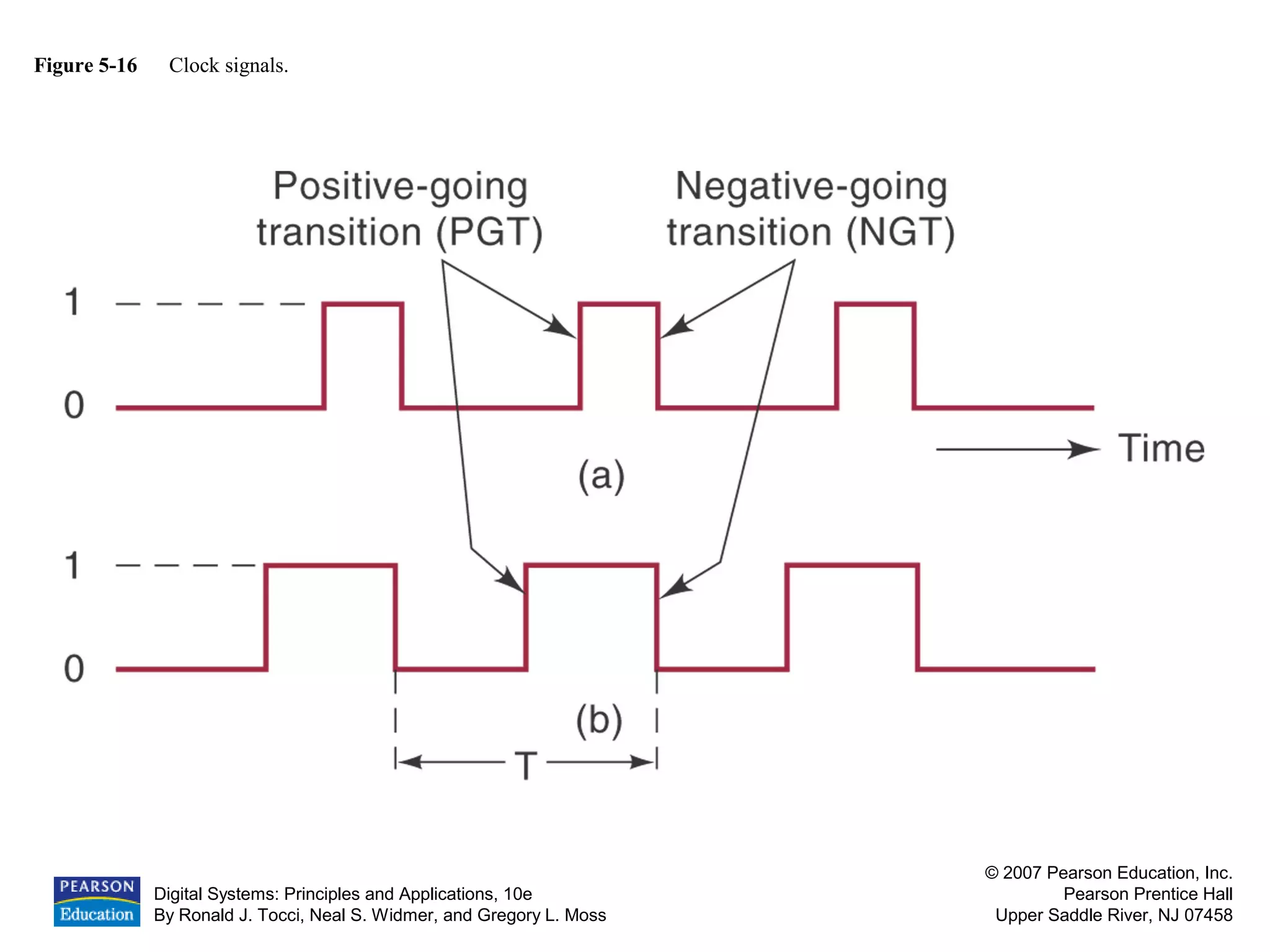
Figure 5-16 Clock signals.
Digital Systems: Principles and Applications, 10e
By Ronald J. Tocci, Neal S. Widmer, and Gregory L. Moss
© 2007 Pearson Education, Inc.
Pearson Prentice Hall
Upper Saddle River, NJ 07458
Figure 5-17 Clocked FFs have a clock input (CLK) that is active on either (a) the PGT or (b) the NGT. The control inputs determine the
effect of the active clock transition.
Digital Systems: Principles and Applications, 10e
By Ronald J. Tocci, Neal S. Widmer, and Gregory L. Moss
© 2007 Pearson Education, Inc.
Pearson Prentice Hall
Upper Saddle River, NJ 07458
Figure 5-18 Control inputs must be held stable for (a) a time tS prior to active clock transition and for (b) a time tH after the active block
transition.
Digital Systems: Principles and Applications, 10e
By Ronald J. Tocci, Neal S. Widmer, and Gregory L. Moss
© 2007 Pearson Education, Inc.
Pearson Prentice Hall
Upper Saddle River, NJ 07458
Figure 5-19 (a) Clocked S-R flip-flop that responds only to the positive-going edge of a clock pulse; (b) function table; (c) typical
waveforms.
Digital Systems: Principles and Applications, 10e
By Ronald J. Tocci, Neal S. Widmer, and Gregory L. Moss
© 2007 Pearson Education, Inc.
Pearson Prentice Hall
Upper Saddle River, NJ 07458
Figure 5-20 Clocked S-R flip-flop that triggers only on negative-going transitions.
Digital Systems: Principles and Applications, 10e
By Ronald J. Tocci, Neal S. Widmer, and Gregory L. Moss
© 2007 Pearson Education, Inc.
Pearson Prentice Hall
Upper Saddle River, NJ 07458
Figure 5-21 Simplified version of the internal circuitry for an edge-triggered S-R flip-flop.
Digital Systems: Principles and Applications, 10e
By Ronald J. Tocci, Neal S. Widmer, and Gregory L. Moss
© 2007 Pearson Education, Inc.
Pearson Prentice Hall
Upper Saddle River, NJ 07458
Figure 5-22 Implementation of edge-detector circuits used in edge-triggered flip-flops: (a) PGT; (b) NGT. The duration of the CLK*
pulses is typically 2–5 ns.
Digital Systems: Principles and Applications, 10e
By Ronald J. Tocci, Neal S. Widmer, and Gregory L. Moss
© 2007 Pearson Education, Inc.
Pearson Prentice Hall
Upper Saddle River, NJ 07458
Figure 5-23 (a) Clocked J-K flip-flop that responds only to the positive edge of the clock; (b) waveforms.
Digital Systems: Principles and Applications, 10e
By Ronald J. Tocci, Neal S. Widmer, and Gregory L. Moss
© 2007 Pearson Education, Inc.
Pearson Prentice Hall
Upper Saddle River, NJ 07458
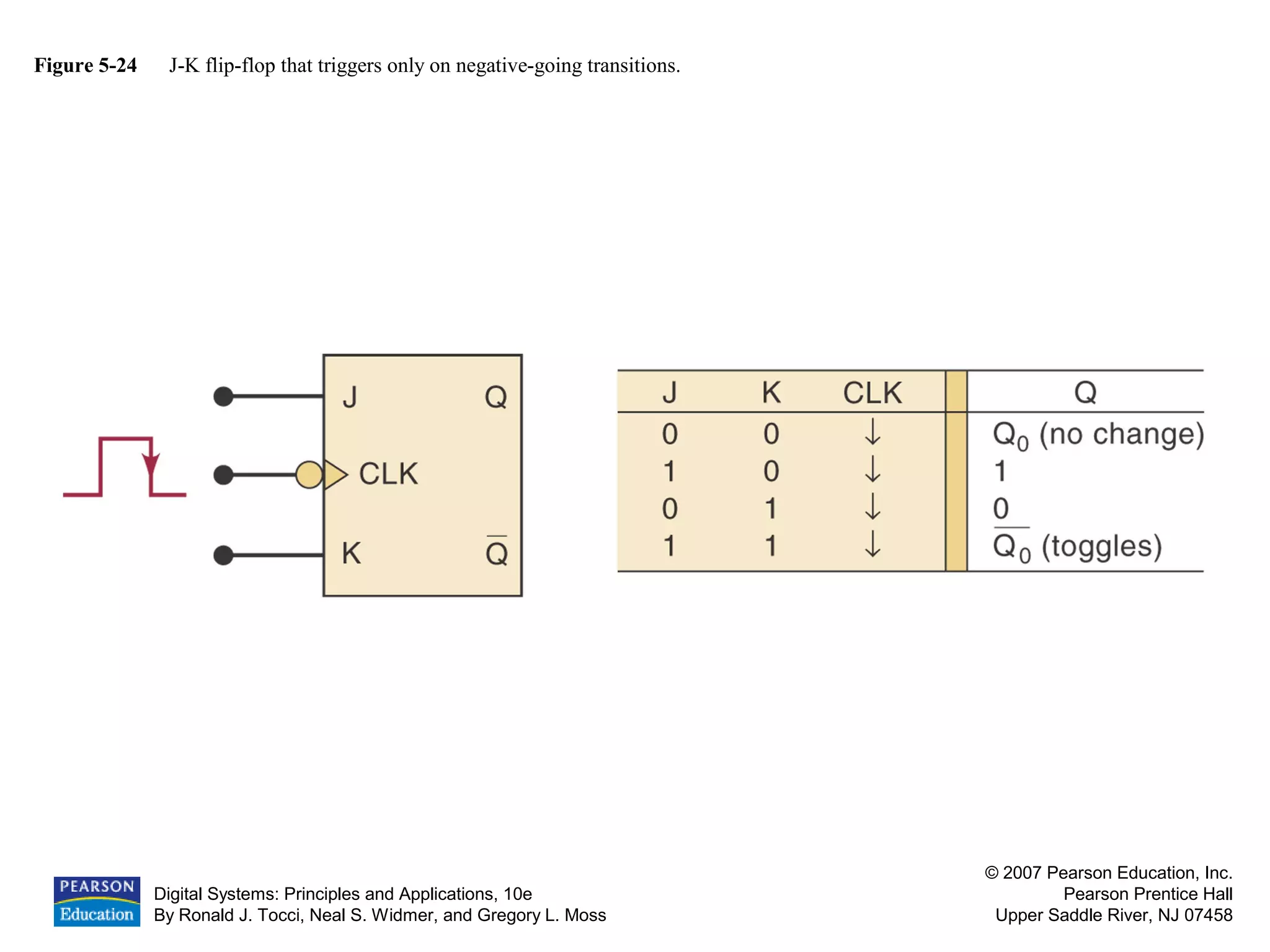
Figure 5-24 J-K flip-flop that triggers only on negative-going transitions.
Digital Systems: Principles and Applications, 10e
By Ronald J. Tocci, Neal S. Widmer, and Gregory L. Moss
© 2007 Pearson Education, Inc.
Pearson Prentice Hall
Upper Saddle River, NJ 07458
Figure 5-25 Internal circuit of the edge-triggered J-K flip-flop.
Digital Systems: Principles and Applications, 10e
By Ronald J. Tocci, Neal S. Widmer, and Gregory L. Moss
© 2007 Pearson Education, Inc.
Pearson Prentice Hall
Upper Saddle River, NJ 07458
Figure 5-26 (a) D flip-flop that triggers only on positive-going transitions; (b) waveforms.
Digital Systems: Principles and Applications, 10e
By Ronald J. Tocci, Neal S. Widmer, and Gregory L. Moss
© 2007 Pearson Education, Inc.
Pearson Prentice Hall
Upper Saddle River, NJ 07458
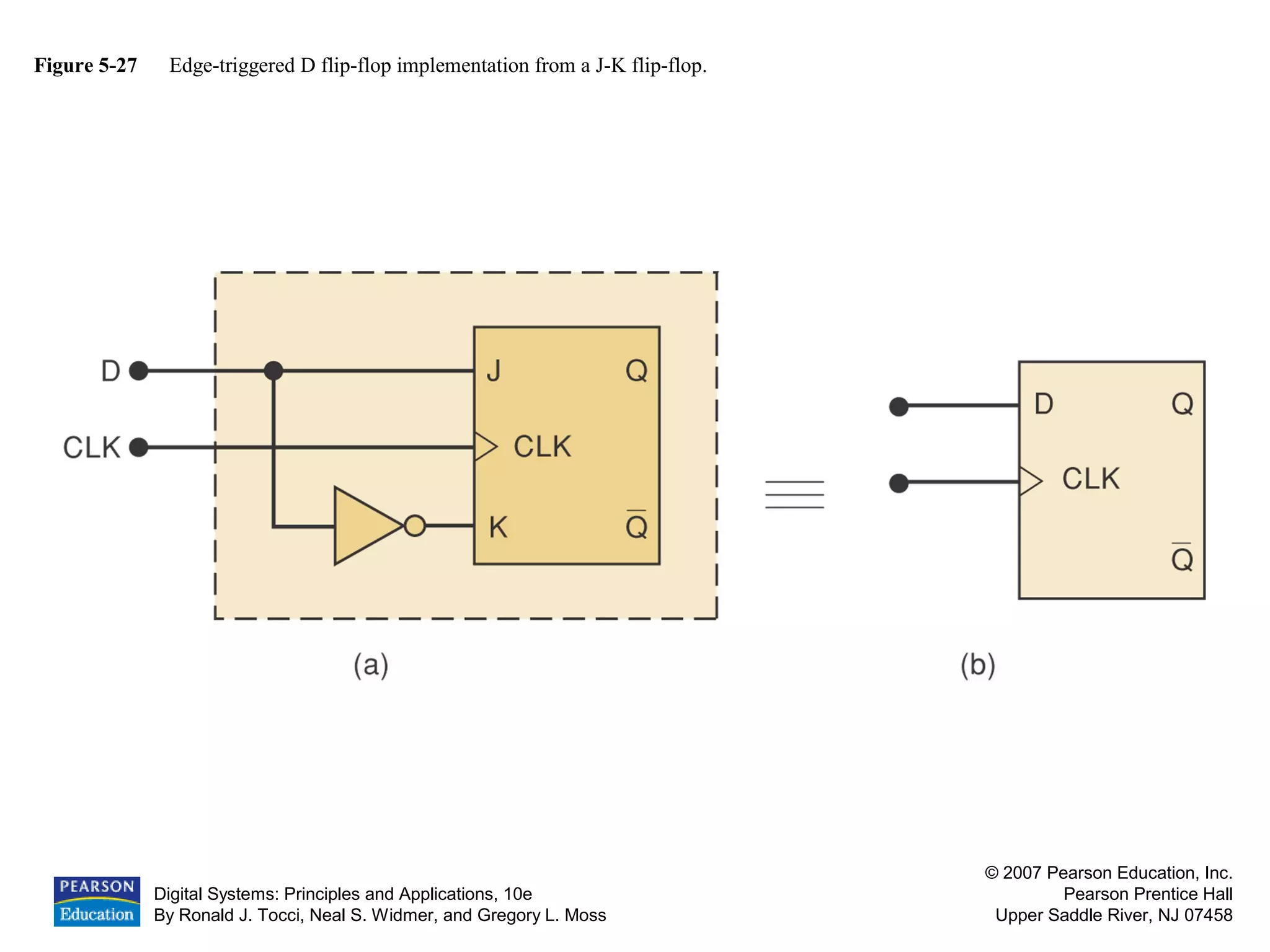
Figure 5-27 Edge-triggered D flip-flop implementation from a J-K flip-flop.
Digital Systems: Principles and Applications, 10e
By Ronald J. Tocci, Neal S. Widmer, and Gregory L. Moss
© 2007 Pearson Education, Inc.
Pearson Prentice Hall
Upper Saddle River, NJ 07458
Figure 5-28 Parallel transfer of binary data using D flip-flops.
Digital Systems: Principles and Applications, 10e
By Ronald J. Tocci, Neal S. Widmer, and Gregory L. Moss
© 2007 Pearson Education, Inc.
Pearson Prentice Hall
Upper Saddle River, NJ 07458
Figure 5-29 D latch: (a) structure; (b) function table; (c) logic symbol.
Digital Systems: Principles and Applications, 10e
By Ronald J. Tocci, Neal S. Widmer, and Gregory L. Moss
© 2007 Pearson Education, Inc.
Pearson Prentice Hall
Upper Saddle River, NJ 07458
Figure 5-30 Waveforms for Example 5-8 showing the two modes of operation of the transparent D latch.
Digital Systems: Principles and Applications, 10e
By Ronald J. Tocci, Neal S. Widmer, and Gregory L. Moss
© 2007 Pearson Education, Inc.
Pearson Prentice Hall
Upper Saddle River, NJ 07458
Figure 5-31 Clocked J-K flip-flop with asynchronous inputs.
Digital Systems: Principles and Applications, 10e
By Ronald J. Tocci, Neal S. Widmer, and Gregory L. Moss
© 2007 Pearson Education, Inc.
Pearson Prentice Hall
Upper Saddle River, NJ 07458
Figure 5-32 Waveforms for Example 5-9 showing how a clocked flip-flop responds to asynchronous inputs.
Digital Systems: Principles and Applications, 10e
By Ronald J. Tocci, Neal S. Widmer, and Gregory L. Moss
© 2007 Pearson Education, Inc.
Pearson Prentice Hall
Upper Saddle River, NJ 07458
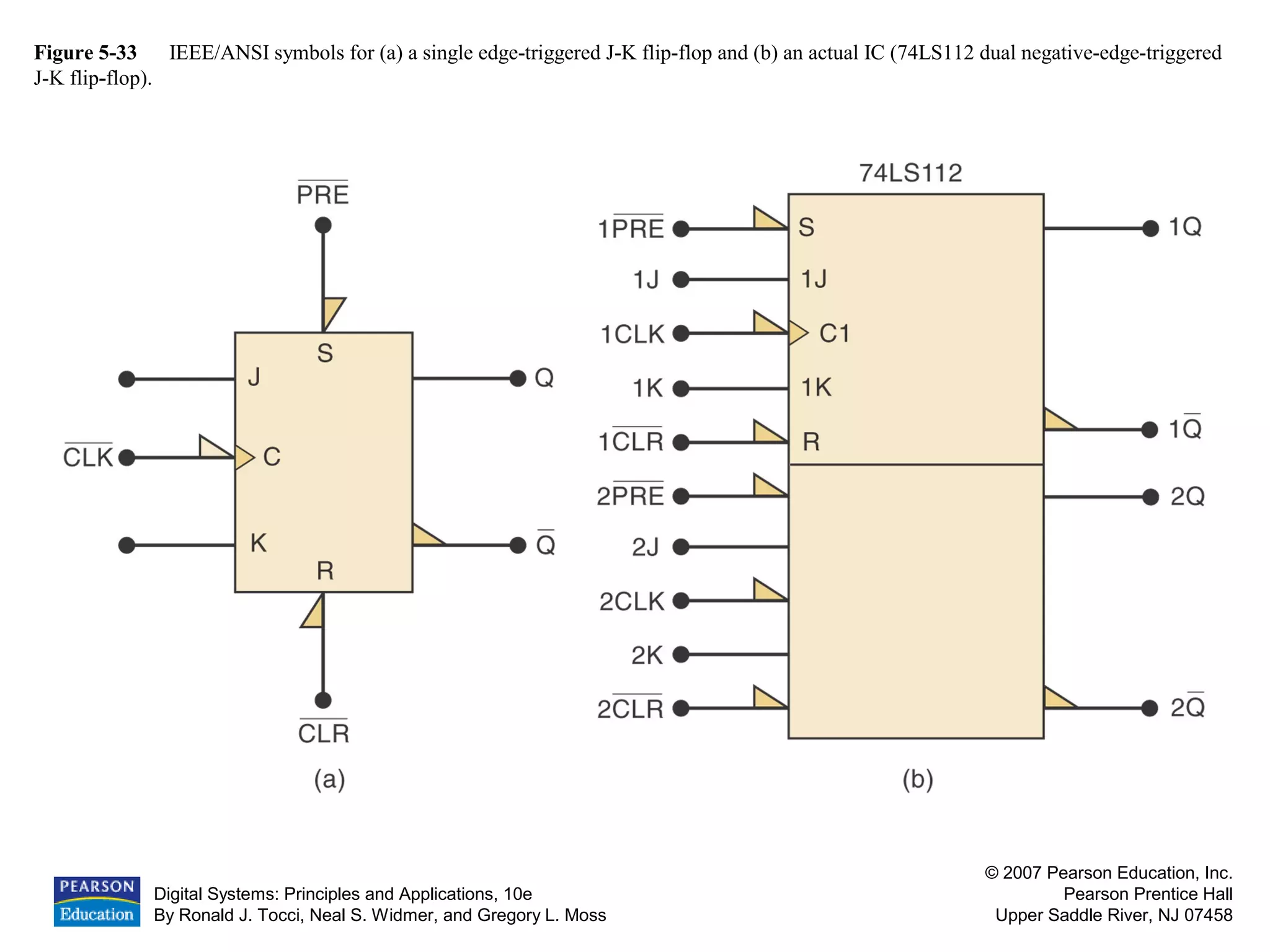
Figure 5-33 IEEE/ANSI symbols for (a) a single edge-triggered J-K flip-flop and (b) an actual IC (74LS112 dual negative-edge-triggered
J-K flip-flop).
Digital Systems: Principles and Applications, 10e
By Ronald J. Tocci, Neal S. Widmer, and Gregory L. Moss
© 2007 Pearson Education, Inc.
Pearson Prentice Hall
Upper Saddle River, NJ 07458
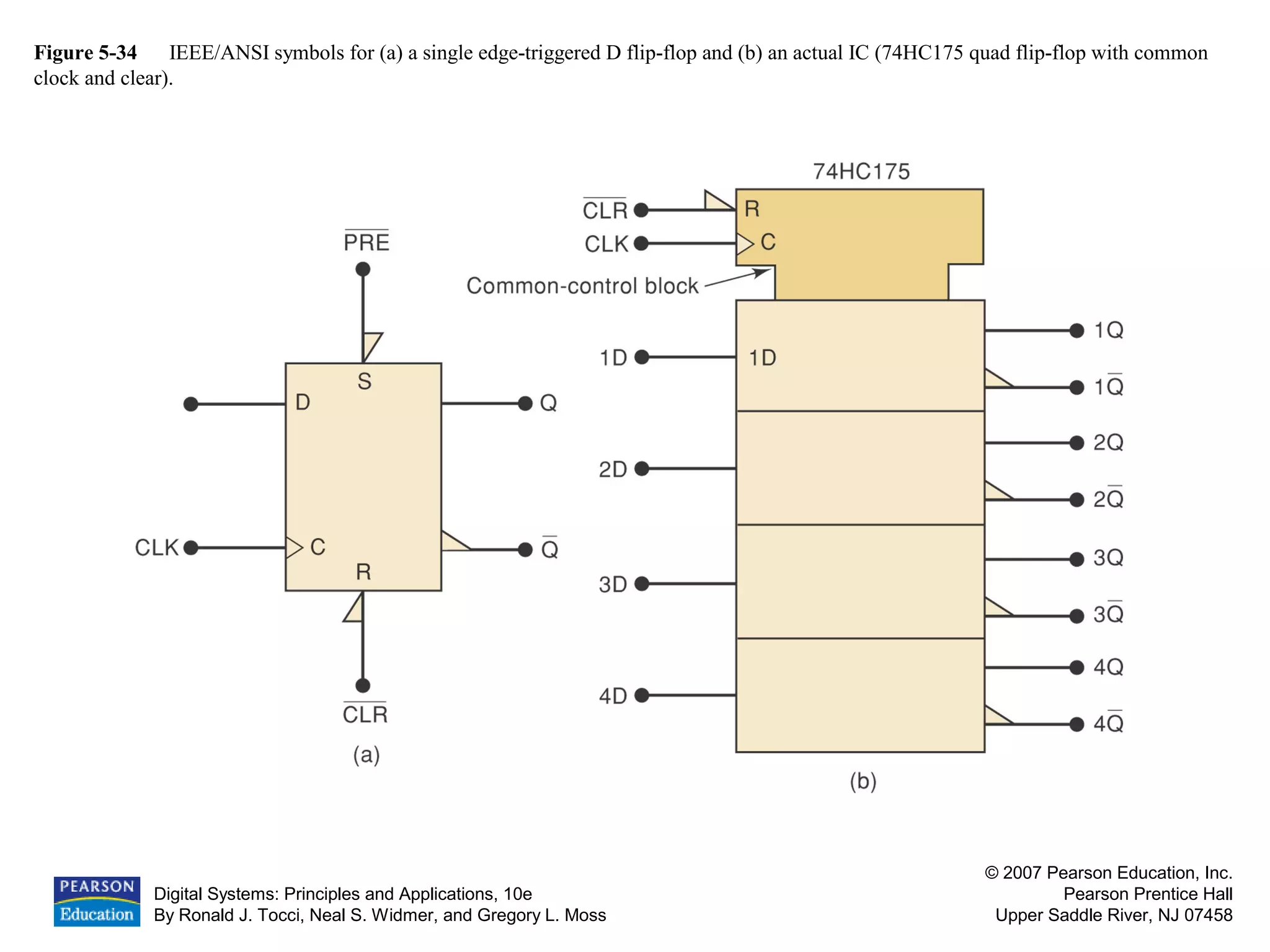
Figure 5-34 IEEE/ANSI symbols for (a) a single edge-triggered D flip-flop and (b) an actual IC (74HC175 quad flip-flop with common
clock and clear).
Digital Systems: Principles and Applications, 10e
By Ronald J. Tocci, Neal S. Widmer, and Gregory L. Moss
© 2007 Pearson Education, Inc.
Pearson Prentice Hall
Upper Saddle River, NJ 07458
Figure 5-35 FF propagation delays.
Digital Systems: Principles and Applications, 10e
By Ronald J. Tocci, Neal S. Widmer, and Gregory L. Moss
© 2007 Pearson Education, Inc.
Pearson Prentice Hall
Upper Saddle River, NJ 07458
Figure 5-36 (a) Clock LOW and HIGH times; (b) asynchronous pulse width.
Digital Systems: Principles and Applications, 10e
By Ronald J. Tocci, Neal S. Widmer, and Gregory L. Moss
© 2007 Pearson Education, Inc.
Pearson Prentice Hall
Upper Saddle River, NJ 07458
Figure 5-37 Q2 will respond properly to the level at Q1 prior to the NGT of CLK, provided that Q2’s hold time requirement, tH, is less than
Q1’s propagation delay.
Digital Systems: Principles and Applications, 10e
By Ronald J. Tocci, Neal S. Widmer, and Gregory L. Moss
© 2007 Pearson Education, Inc.
Pearson Prentice Hall
Upper Saddle River, NJ 07458
Figure 5-38 Example 5-11.
Digital Systems: Principles and Applications, 10e
By Ronald J. Tocci, Neal S. Widmer, and Gregory L. Moss
© 2007 Pearson Education, Inc.
Pearson Prentice Hall
Upper Saddle River, NJ 07458
Figure 5-39 Asynchronous signal A can produce partial pulses at X.
Digital Systems: Principles and Applications, 10e
By Ronald J. Tocci, Neal S. Widmer, and Gregory L. Moss
© 2007 Pearson Education, Inc.
Pearson Prentice Hall
Upper Saddle River, NJ 07458
Figure 5-40 An edge-triggered D flip-flop is used to synchronize the enabling of the AND gate to the NGTs of the clock.
Digital Systems: Principles and Applications, 10e
By Ronald J. Tocci, Neal S. Widmer, and Gregory L. Moss
© 2007 Pearson Education, Inc.
Pearson Prentice Hall
Upper Saddle River, NJ 07458
Figure 5-41 Clocked D flip-flop used to respond to a particular sequence of inputs.
Digital Systems: Principles and Applications, 10e
By Ronald J. Tocci, Neal S. Widmer, and Gregory L. Moss
© 2007 Pearson Education, Inc.
Pearson Prentice Hall
Upper Saddle River, NJ 07458
Figure 5-42 Synchronous data transfer operation performed by various types of clocked FFs.
Digital Systems: Principles and Applications, 10e
By Ronald J. Tocci, Neal S. Widmer, and Gregory L. Moss
© 2007 Pearson Education, Inc.
Pearson Prentice Hall
Upper Saddle River, NJ 07458
Figure 5-43 Asynchronous data transfer operation.
Digital Systems: Principles and Applications, 10e
By Ronald J. Tocci, Neal S. Widmer, and Gregory L. Moss
© 2007 Pearson Education, Inc.
Pearson Prentice Hall
Upper Saddle River, NJ 07458
Figure 5-44 Parallel transfer of contents of register X into register Y.
Digital Systems: Principles and Applications, 10e
By Ronald J. Tocci, Neal S. Widmer, and Gregory L. Moss
© 2007 Pearson Education, Inc.
Pearson Prentice Hall
Upper Saddle River, NJ 07458
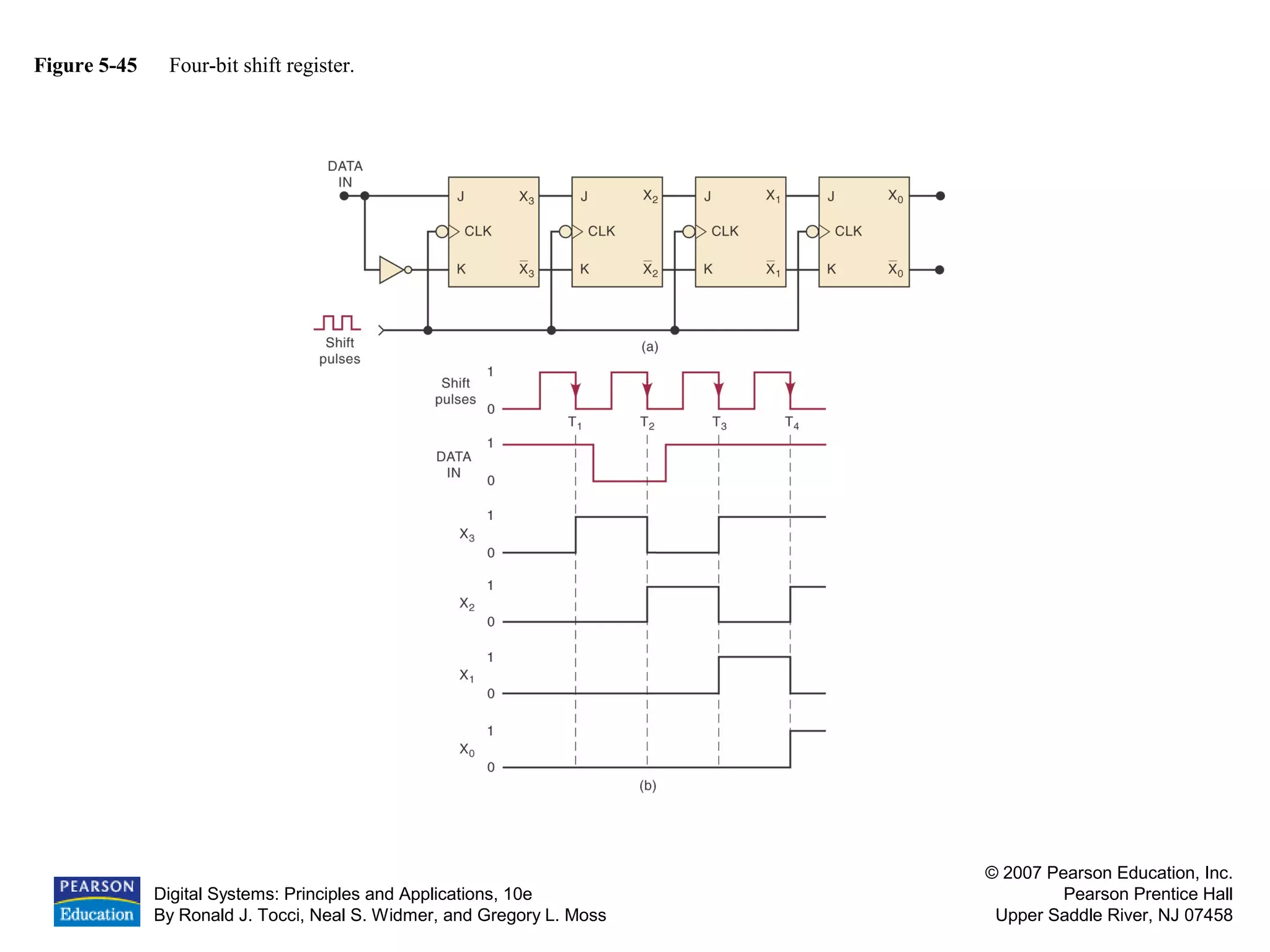
Figure 5-45 Four-bit shift register.
Digital Systems: Principles and Applications, 10e
By Ronald J. Tocci, Neal S. Widmer, and Gregory L. Moss
© 2007 Pearson Education, Inc.
Pearson Prentice Hall
Upper Saddle River, NJ 07458
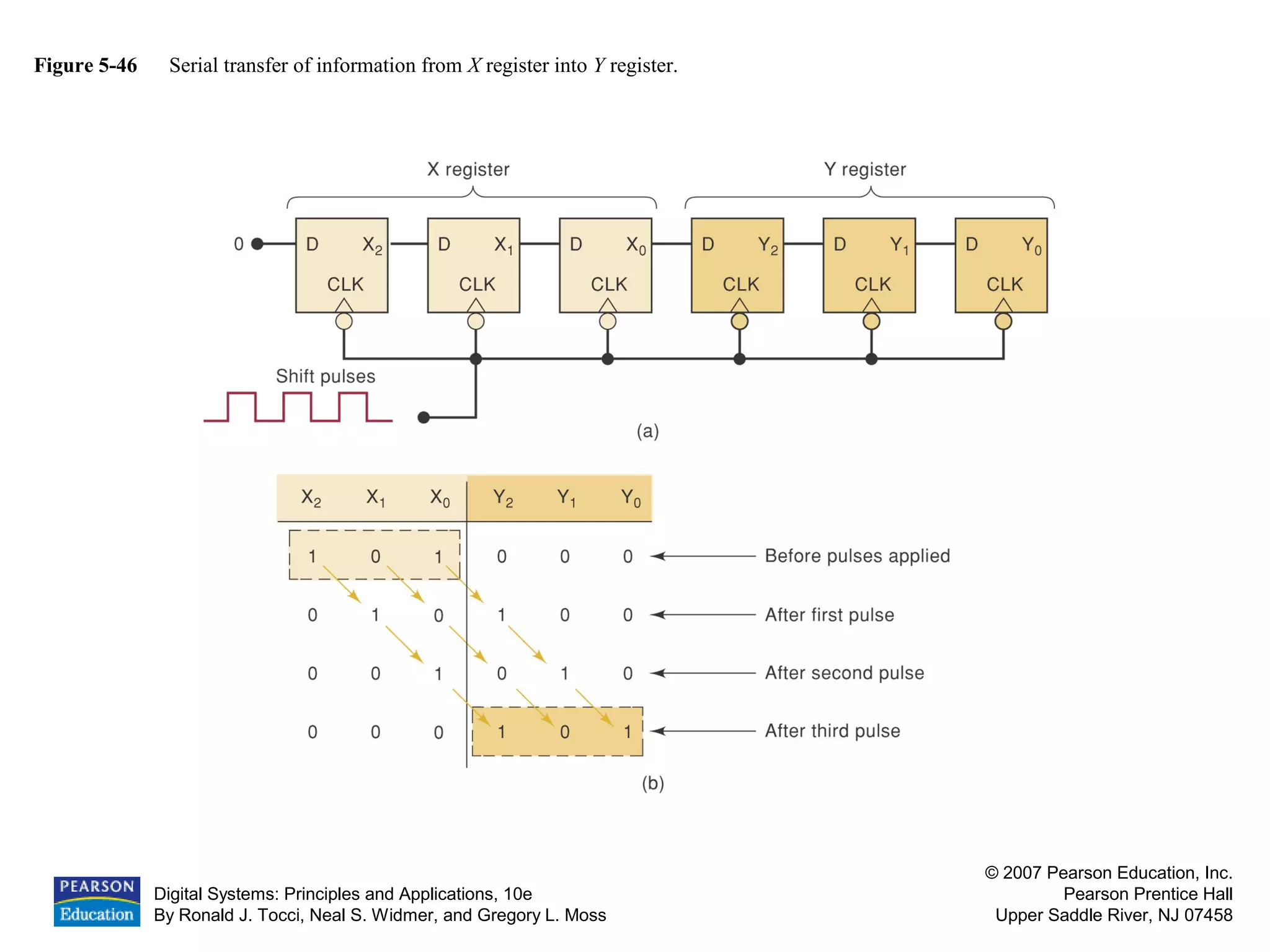
Figure 5-46 Serial transfer of information from X register into Y register.
Digital Systems: Principles and Applications, 10e
By Ronald J. Tocci, Neal S. Widmer, and Gregory L. Moss
© 2007 Pearson Education, Inc.
Pearson Prentice Hall
Upper Saddle River, NJ 07458
Figure 5-47 J-K flip-flops wired as a three-bit binary counter (MOD-8).
Digital Systems: Principles and Applications, 10e
By Ronald J. Tocci, Neal S. Widmer, and Gregory L. Moss
© 2007 Pearson Education, Inc.
Pearson Prentice Hall
Upper Saddle River, NJ 07458
Figure 5-48 Table of flip-flop states shows binary counting sequence.
Digital Systems: Principles and Applications, 10e
By Ronald J. Tocci, Neal S. Widmer, and Gregory L. Moss
© 2007 Pearson Education, Inc.
Pearson Prentice Hall
Upper Saddle River, NJ 07458
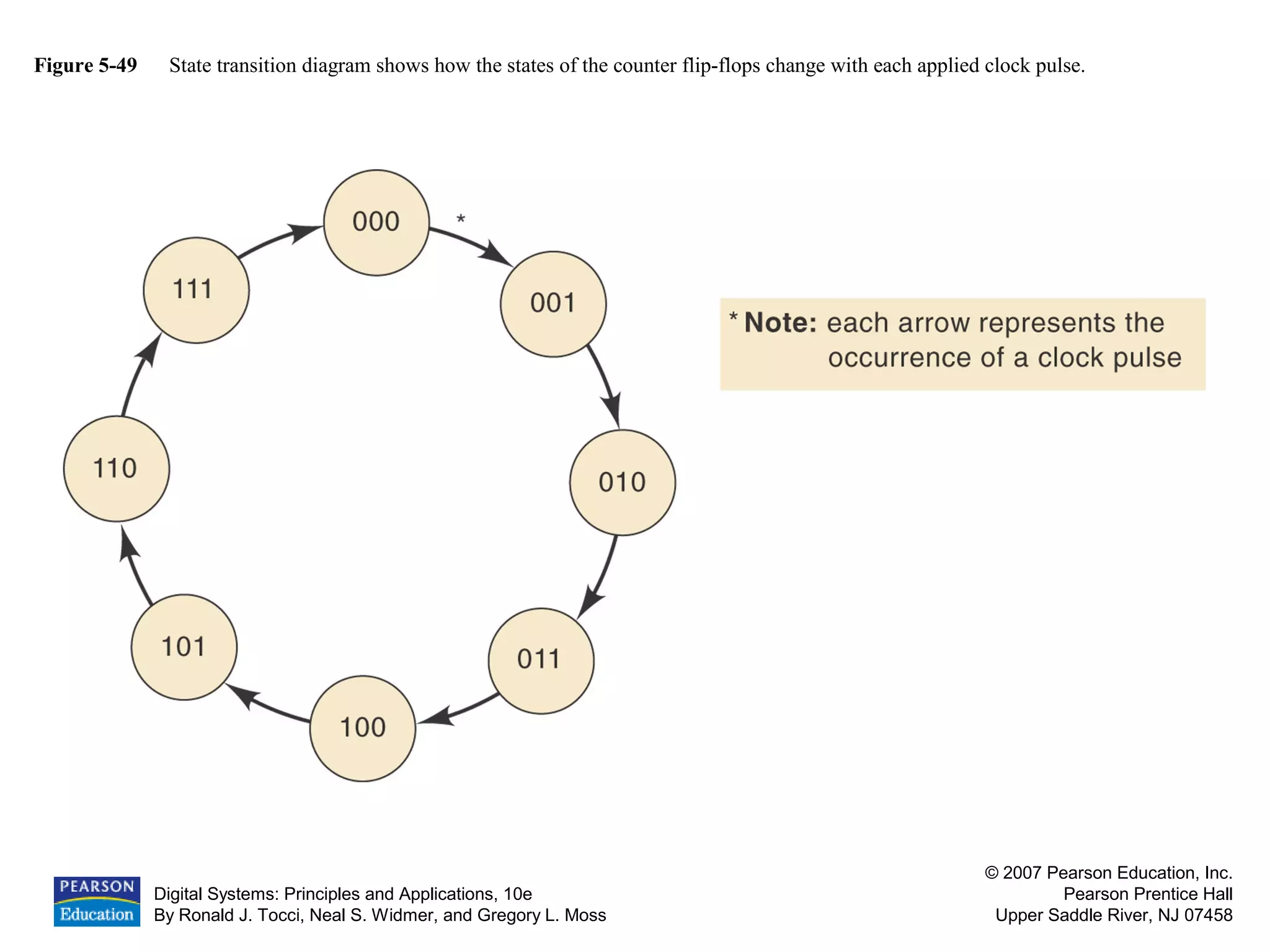
Figure 5-49 State transition diagram shows how the states of the counter flip-flops change with each applied clock pulse.
Digital Systems: Principles and Applications, 10e
By Ronald J. Tocci, Neal S. Widmer, and Gregory L. Moss
© 2007 Pearson Education, Inc.
Pearson Prentice Hall
Upper Saddle River, NJ 07458
Figure 5-50 Example of a microprocessor transferring binary data to an external register.
Digital Systems: Principles and Applications, 10e
By Ronald J. Tocci, Neal S. Widmer, and Gregory L. Moss
© 2007 Pearson Education, Inc.
Pearson Prentice Hall
Upper Saddle River, NJ 07458
Figure 5-51 (a) Standard inverter response to slow noisy input, and (b) Schmitt-trigger response to slow noisy input.
Digital Systems: Principles and Applications, 10e
By Ronald J. Tocci, Neal S. Widmer, and Gregory L. Moss
© 2007 Pearson Education, Inc.
Pearson Prentice Hall
Upper Saddle River, NJ 07458
Figure 5-52 OS symbol and typical waveforms for nonretriggerable operation.
Digital Systems: Principles and Applications, 10e
By Ronald J. Tocci, Neal S. Widmer, and Gregory L. Moss
© 2007 Pearson Education, Inc.
Pearson Prentice Hall
Upper Saddle River, NJ 07458
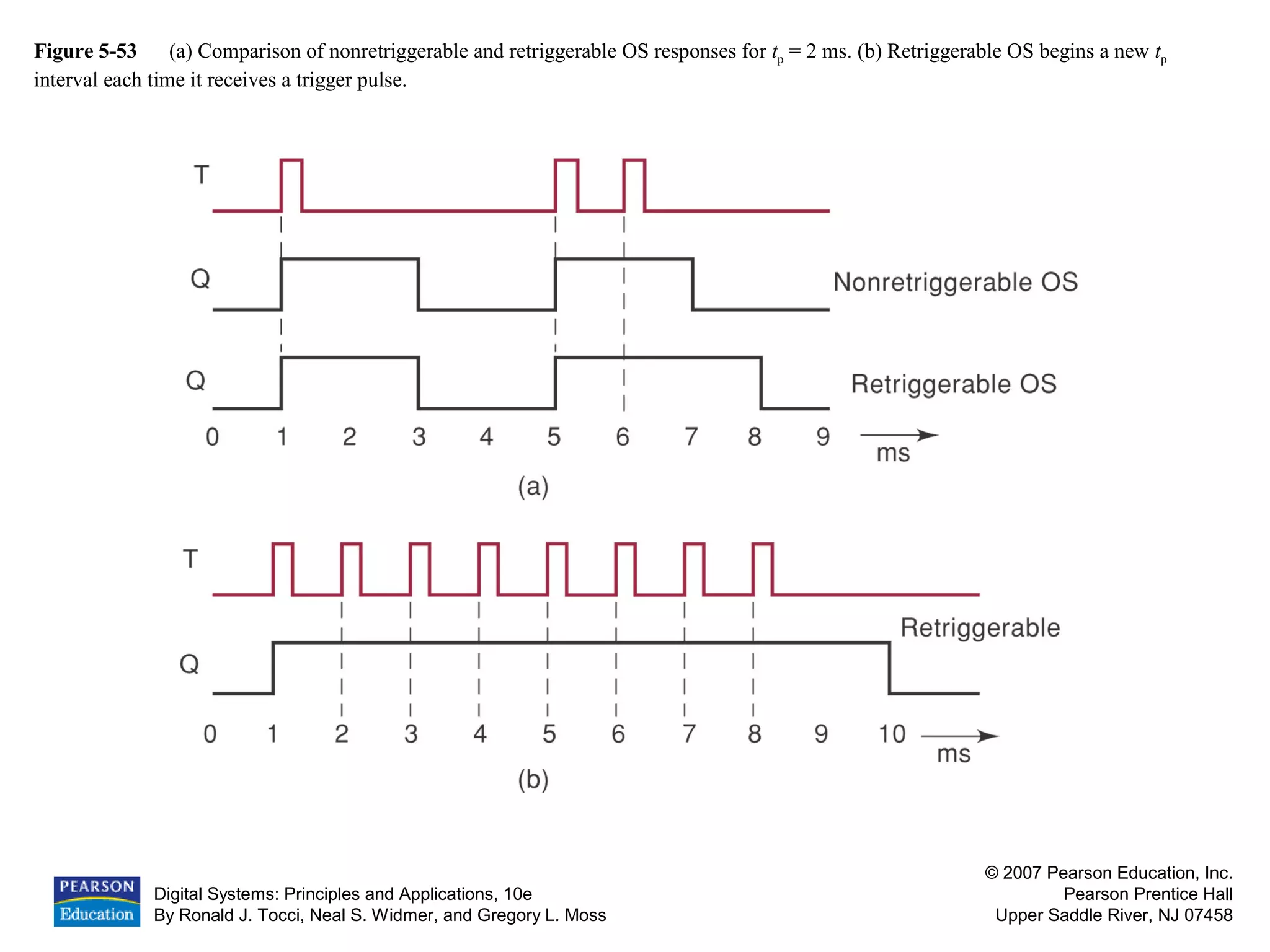
Figure 5-53 (a) Comparison of nonretriggerable and retriggerable OS responses for tp = 2 ms. (b) Retriggerable OS begins a new tp
interval each time it receives a trigger pulse.
Digital Systems: Principles and Applications, 10e
By Ronald J. Tocci, Neal S. Widmer, and Gregory L. Moss
© 2007 Pearson Education, Inc.
Pearson Prentice Hall
Upper Saddle River, NJ 07458
Figure 5-54 Logic symbols for the 74121 nonretriggerable one-shot: (a) traditional; (b) IEEE/ANSI.
Digital Systems: Principles and Applications, 10e
By Ronald J. Tocci, Neal S. Widmer, and Gregory L. Moss
© 2007 Pearson Education, Inc.
Pearson Prentice Hall
Upper Saddle River, NJ 07458
Figure 5-55 Schmitt-trigger oscillator using a 7414 INVERTER. A 7413 Schmitt-trigger NAND may also be used.
Digital Systems: Principles and Applications, 10e
By Ronald J. Tocci, Neal S. Widmer, and Gregory L. Moss
© 2007 Pearson Education, Inc.
Pearson Prentice Hall
Upper Saddle River, NJ 07458
Figure 5-56 555 timer IC used as an astable multivibrator.
Digital Systems: Principles and Applications, 10e
By Ronald J. Tocci, Neal S. Widmer, and Gregory L. Moss
© 2007 Pearson Education, Inc.
Pearson Prentice Hall
Upper Saddle River, NJ 07458
Figure 5-57 Example 5-19.
Digital Systems: Principles and Applications, 10e
By Ronald J. Tocci, Neal S. Widmer, and Gregory L. Moss
© 2007 Pearson Education, Inc.
Pearson Prentice Hall
Upper Saddle River, NJ 07458
Figure 5-58 Example 5-20.
Digital Systems: Principles and Applications, 10e
By Ronald J. Tocci, Neal S. Widmer, and Gregory L. Moss
© 2007 Pearson Education, Inc.
Pearson Prentice Hall
Upper Saddle River, NJ 07458
Figure 5-59 Clock skew occurs when two flip-flops that are supposed to be clocked simultaneously are clocked at slightly different times
due to a delay in the arrival of the clock signal at the second flip-flop. (a) Extra gating circuits that can can cause clock skew; (b) timing
showing the later arrival of CLOCK 2.
Digital Systems: Principles and Applications, 10e
By Ronald J. Tocci, Neal S. Widmer, and Gregory L. Moss
© 2007 Pearson Education, Inc.
Pearson Prentice Hall
Upper Saddle River, NJ 07458
Figure 5-60 Three input/output modes.
Digital Systems: Principles and Applications, 10e
By Ronald J. Tocci, Neal S. Widmer, and Gregory L. Moss
© 2007 Pearson Education, Inc.
Pearson Prentice Hall
Upper Saddle River, NJ 07458
Figure 5-61 The logic of a behavioral description of an SR latch.
Digital Systems: Principles and Applications, 10e
By Ronald J. Tocci, Neal S. Widmer, and Gregory L. Moss
© 2007 Pearson Education, Inc.
Pearson Prentice Hall
Upper Saddle River, NJ 07458
Figure 5-62 A NAND latch using AHDL.
Digital Systems: Principles and Applications, 10e
By Ronald J. Tocci, Neal S. Widmer, and Gregory L. Moss
© 2007 Pearson Education, Inc.
Pearson Prentice Hall
Upper Saddle River, NJ 07458
Figure 5-63 A NAND latch using VHDL.
Digital Systems: Principles and Applications, 10e
By Ronald J. Tocci, Neal S. Widmer, and Gregory L. Moss
© 2007 Pearson Education, Inc.
Pearson Prentice Hall
Upper Saddle River, NJ 07458
Figure 5-64 JK flip-flop logic primitive.
Digital Systems: Principles and Applications, 10e
By Ronald J. Tocci, Neal S. Widmer, and Gregory L. Moss
© 2007 Pearson Education, Inc.
Pearson Prentice Hall
Upper Saddle River, NJ 07458
Figure 5-65 Single JK flip-flop using AHDL.
Digital Systems: Principles and Applications, 10e
By Ronald J. Tocci, Neal S. Widmer, and Gregory L. Moss
© 2007 Pearson Education, Inc.
Pearson Prentice Hall
Upper Saddle River, NJ 07458
Figure 5-66 (a) Graphic representation using a component. (b) VHDL component declaration.
Digital Systems: Principles and Applications, 10e
By Ronald J. Tocci, Neal S. Widmer, and Gregory L. Moss
© 2007 Pearson Education, Inc.
Pearson Prentice Hall
Upper Saddle River, NJ 07458
Figure 5-67 A JK flip-flop using VHDL.
Digital Systems: Principles and Applications, 10e
By Ronald J. Tocci, Neal S. Widmer, and Gregory L. Moss
© 2007 Pearson Education, Inc.
Pearson Prentice Hall
Upper Saddle River, NJ 07458
Figure 5-68 Single JK flip-flop using VHDL.
Digital Systems: Principles and Applications, 10e
By Ronald J. Tocci, Neal S. Widmer, and Gregory L. Moss
© 2007 Pearson Education, Inc.
Pearson Prentice Hall
Upper Saddle River, NJ 07458
Figure 5-69 Simulation of the JK flip-flop.
Digital Systems: Principles and Applications, 10e
By Ronald J. Tocci, Neal S. Widmer, and Gregory L. Moss
© 2007 Pearson Education, Inc.
Pearson Prentice Hall
Upper Saddle River, NJ 07458
Figure 5-70 A three-bit binary counter.
Digital Systems: Principles and Applications, 10e
By Ronald J. Tocci, Neal S. Widmer, and Gregory L. Moss
© 2007 Pearson Education, Inc.
Pearson Prentice Hall
Upper Saddle River, NJ 07458
Figure 5-71 MOD-8 ripple counter in AHDL.
Digital Systems: Principles and Applications, 10e
By Ronald J. Tocci, Neal S. Widmer, and Gregory L. Moss
© 2007 Pearson Education, Inc.
Pearson Prentice Hall
Upper Saddle River, NJ 07458
Figure 5-72 MOD-8 ripple counter in VHDL.
Digital Systems: Principles and Applications, 10e
By Ronald J. Tocci, Neal S. Widmer, and Gregory L. Moss
© 2007 Pearson Education, Inc.
Pearson Prentice Hall
Upper Saddle River, NJ 07458
Figure 5-73 Problems 5-1 to 5-3.
Digital Systems: Principles and Applications, 10e
By Ronald J. Tocci, Neal S. Widmer, and Gregory L. Moss
© 2007 Pearson Education, Inc.
Pearson Prentice Hall
Upper Saddle River, NJ 07458
Figure 5-74 Problem 5-3.
Digital Systems: Principles and Applications, 10e
By Ronald J. Tocci, Neal S. Widmer, and Gregory L. Moss
© 2007 Pearson Education, Inc.
Pearson Prentice Hall
Upper Saddle River, NJ 07458
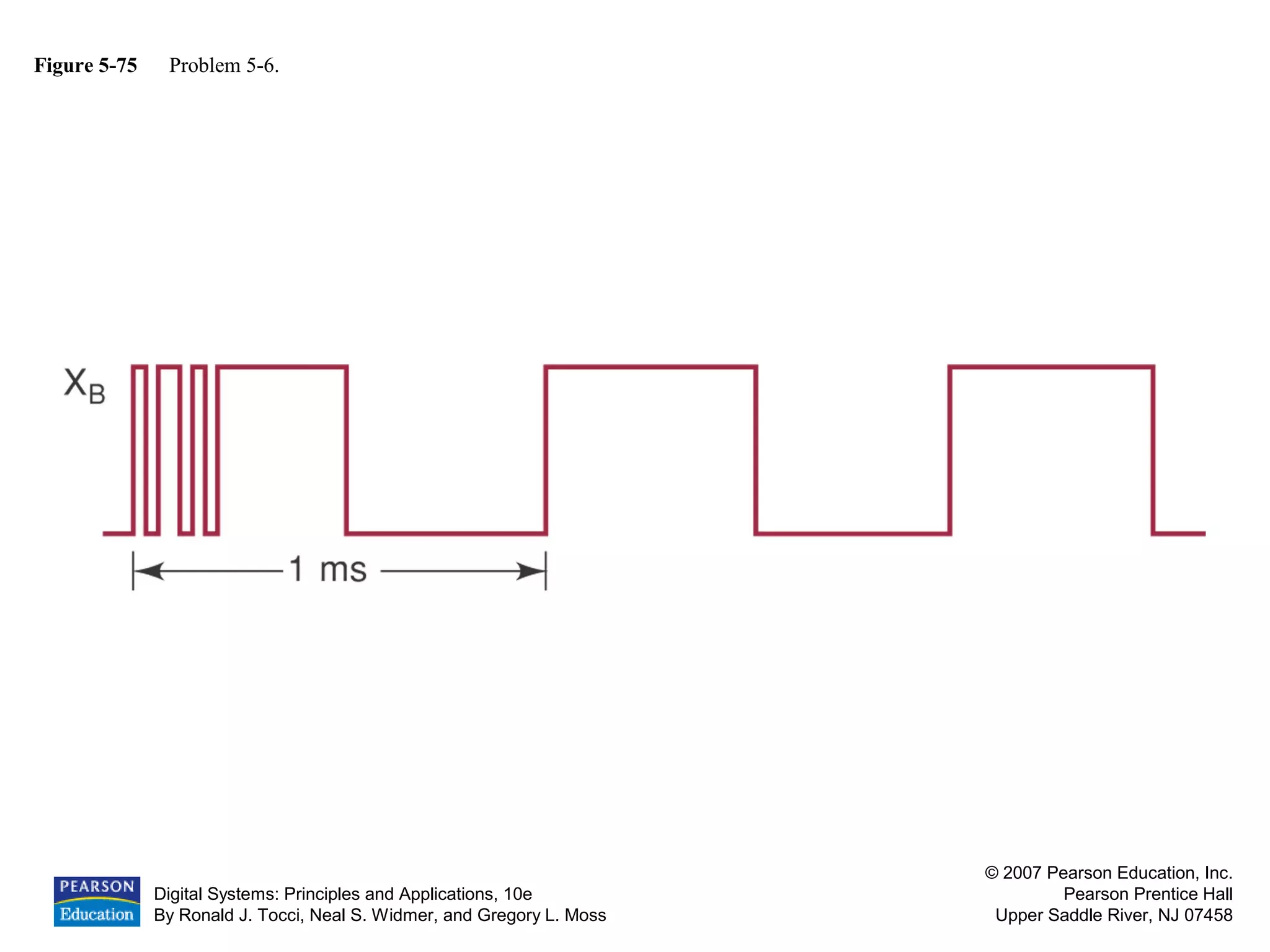
Figure 5-75 Problem 5-6.
Digital Systems: Principles and Applications, 10e
By Ronald J. Tocci, Neal S. Widmer, and Gregory L. Moss
© 2007 Pearson Education, Inc.
Pearson Prentice Hall
Upper Saddle River, NJ 07458
Figure 5-76 Problem 5-9.
Digital Systems: Principles and Applications, 10e
By Ronald J. Tocci, Neal S. Widmer, and Gregory L. Moss
© 2007 Pearson Education, Inc.
Pearson Prentice Hall
Upper Saddle River, NJ 07458
Figure 5-77 Problem 5-13.
Digital Systems: Principles and Applications, 10e
By Ronald J. Tocci, Neal S. Widmer, and Gregory L. Moss
© 2007 Pearson Education, Inc.
Pearson Prentice Hall
Upper Saddle River, NJ 07458
Figure 5-78 Problem 5-14.
Digital Systems: Principles and Applications, 10e
By Ronald J. Tocci, Neal S. Widmer, and Gregory L. Moss
© 2007 Pearson Education, Inc.
Pearson Prentice Hall
Upper Saddle River, NJ 07458
Figure 5-79 D flip-flop connected to toggle (Problem 5-16).
Digital Systems: Principles and Applications, 10e
By Ronald J. Tocci, Neal S. Widmer, and Gregory L. Moss
© 2007 Pearson Education, Inc.
Pearson Prentice Hall
Upper Saddle River, NJ 07458
Figure 5-80 Problem 5-18.
Digital Systems: Principles and Applications, 10e
By Ronald J. Tocci, Neal S. Widmer, and Gregory L. Moss
© 2007 Pearson Education, Inc.
Pearson Prentice Hall
Upper Saddle River, NJ 07458
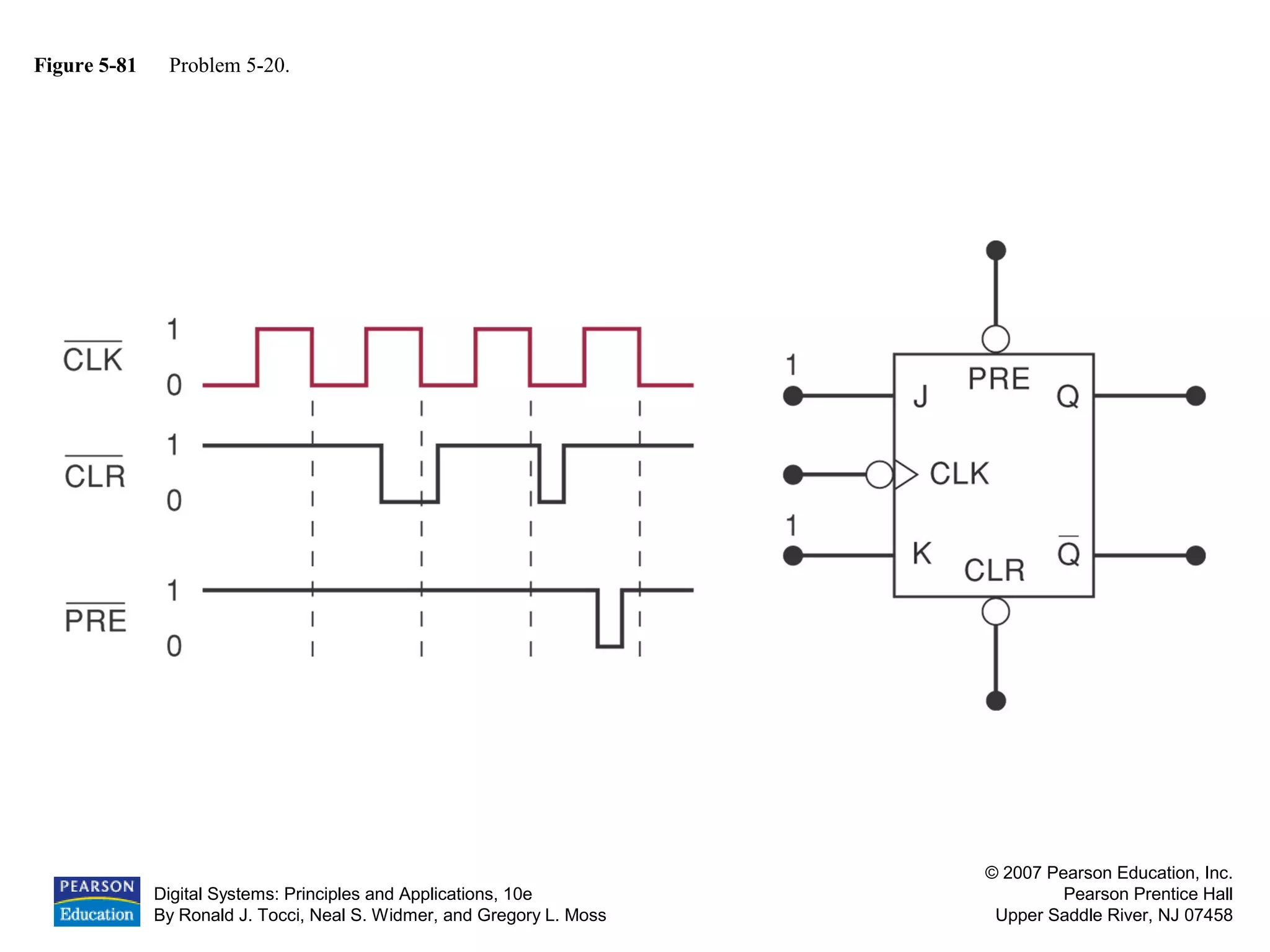
Figure 5-81 Problem 5-20.
Digital Systems: Principles and Applications, 10e
By Ronald J. Tocci, Neal S. Widmer, and Gregory L. Moss
© 2007 Pearson Education, Inc.
Pearson Prentice Hall
Upper Saddle River, NJ 07458
Figure 5-82 Problem 5-26.
Digital Systems: Principles and Applications, 10e
By Ronald J. Tocci, Neal S. Widmer, and Gregory L. Moss
© 2007 Pearson Education, Inc.
Pearson Prentice Hall
Upper Saddle River, NJ 07458
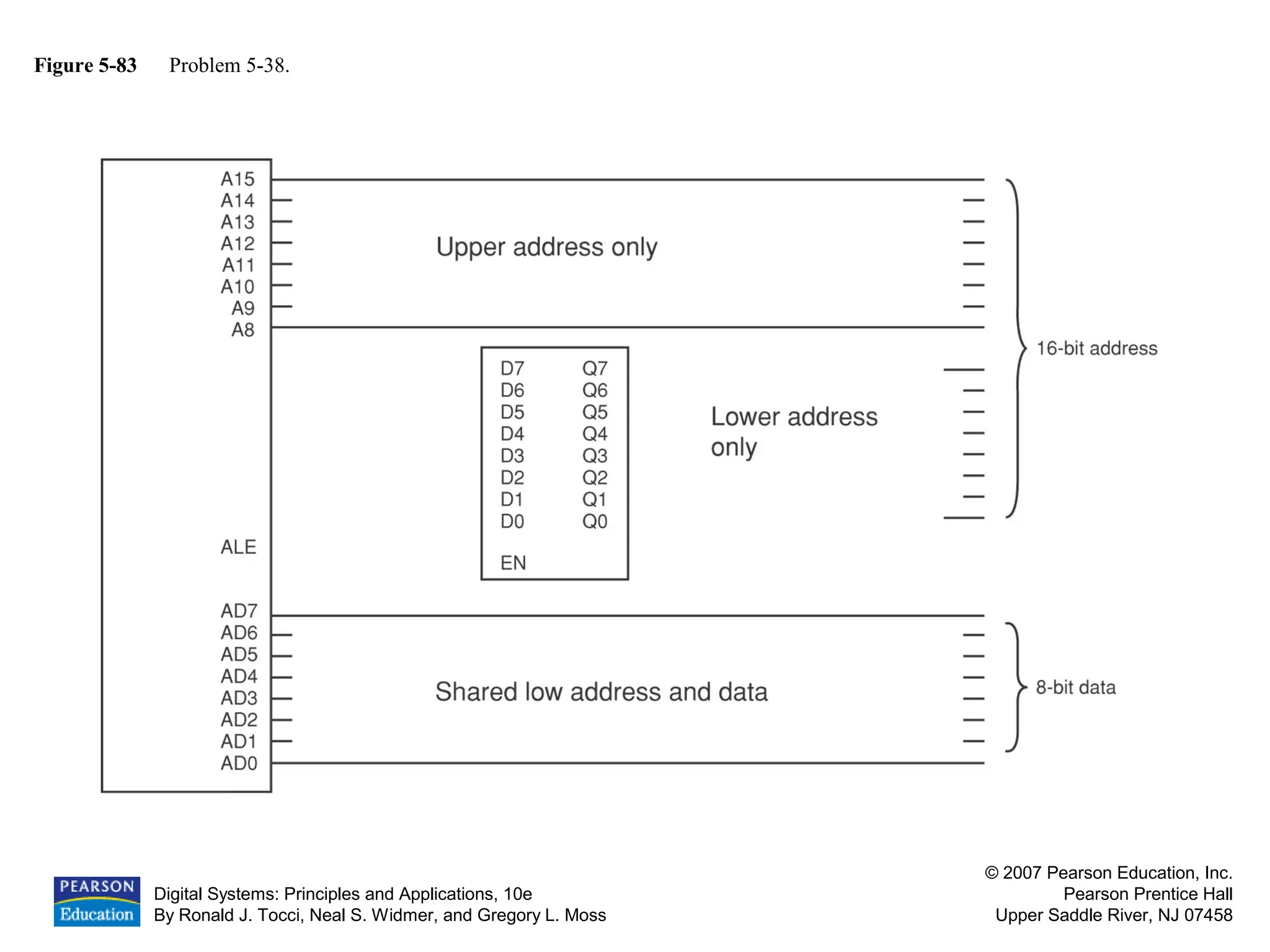
Figure 5-83 Problem 5-38.
Digital Systems: Principles and Applications, 10e
By Ronald J. Tocci, Neal S. Widmer, and Gregory L. Moss
© 2007 Pearson Education, Inc.
Pearson Prentice Hall
Upper Saddle River, NJ 07458
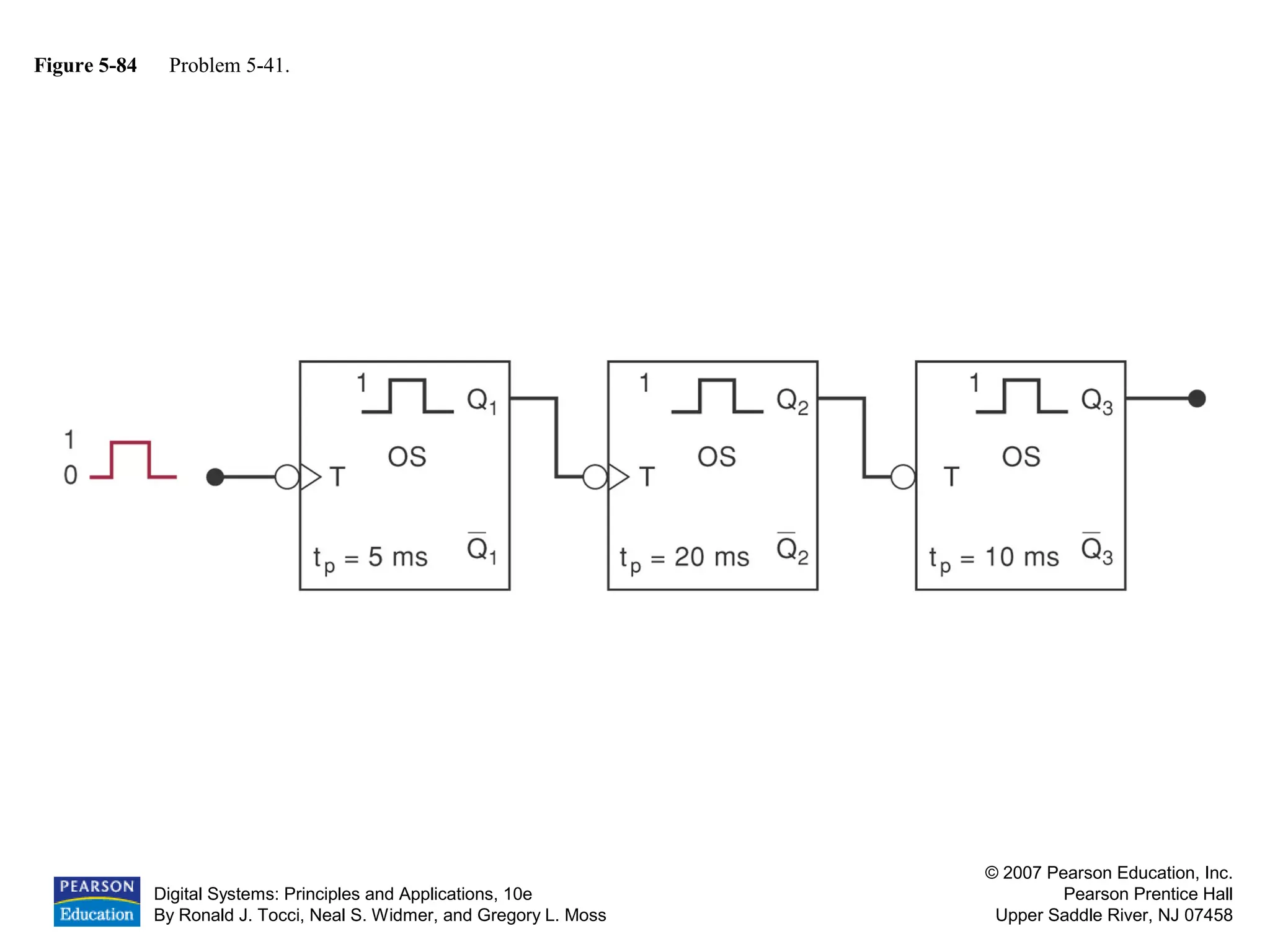
Figure 5-84 Problem 5-41.
Digital Systems: Principles and Applications, 10e
By Ronald J. Tocci, Neal S. Widmer, and Gregory L. Moss
© 2007 Pearson Education, Inc.
Pearson Prentice Hall
Upper Saddle River, NJ 07458
Figure 5-85 Problem 5-42.
Digital Systems: Principles and Applications, 10e
By Ronald J. Tocci, Neal S. Widmer, and Gregory L. Moss
© 2007 Pearson Education, Inc.
Pearson Prentice Hall
Upper Saddle River, NJ 07458
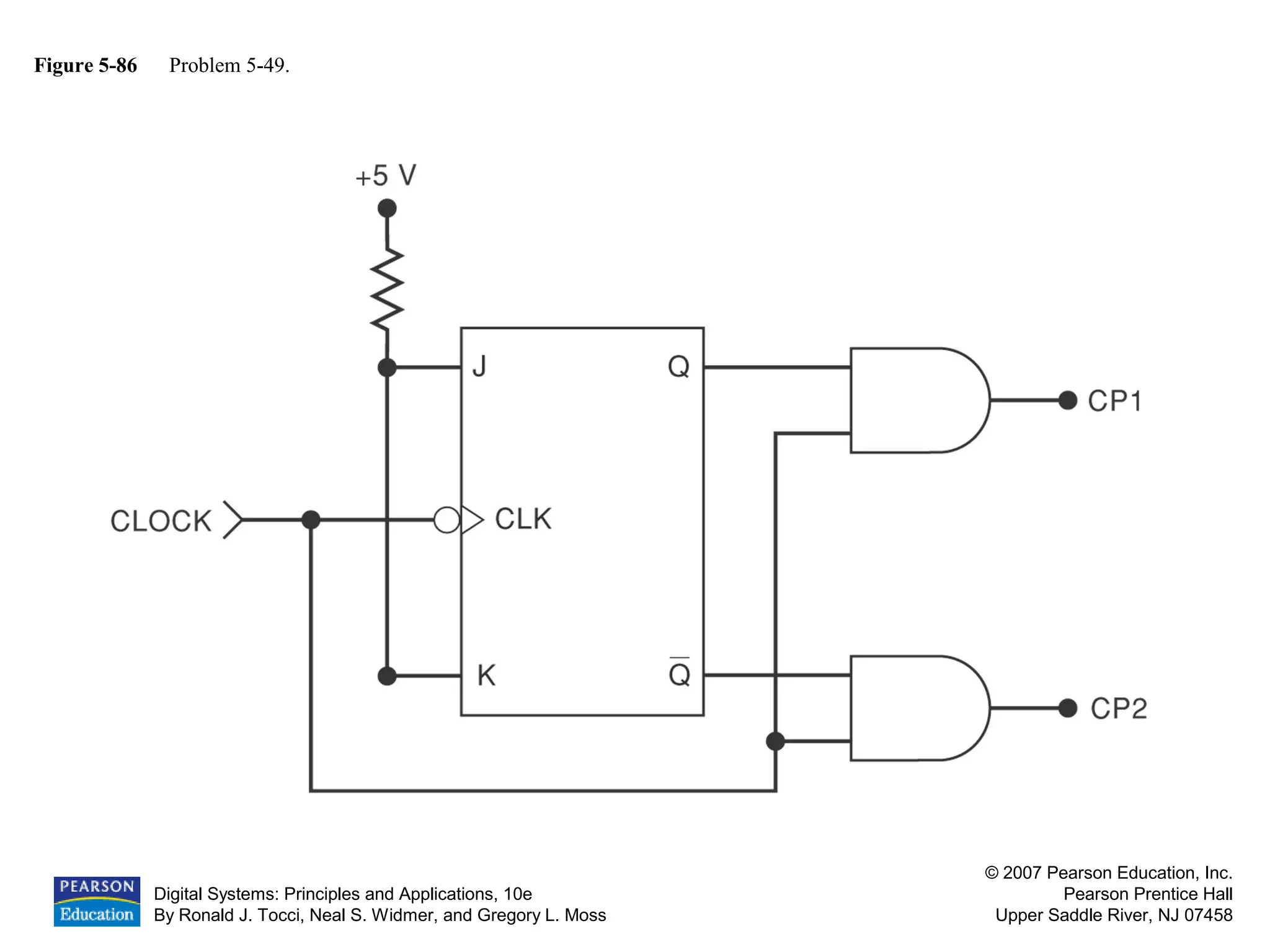
Figure 5-86 Problem 5-49.
Digital Systems: Principles and Applications, 10e
By Ronald J. Tocci, Neal S. Widmer, and Gregory L. Moss
© 2007 Pearson Education, Inc.
Pearson Prentice Hall
Upper Saddle River, NJ 07458
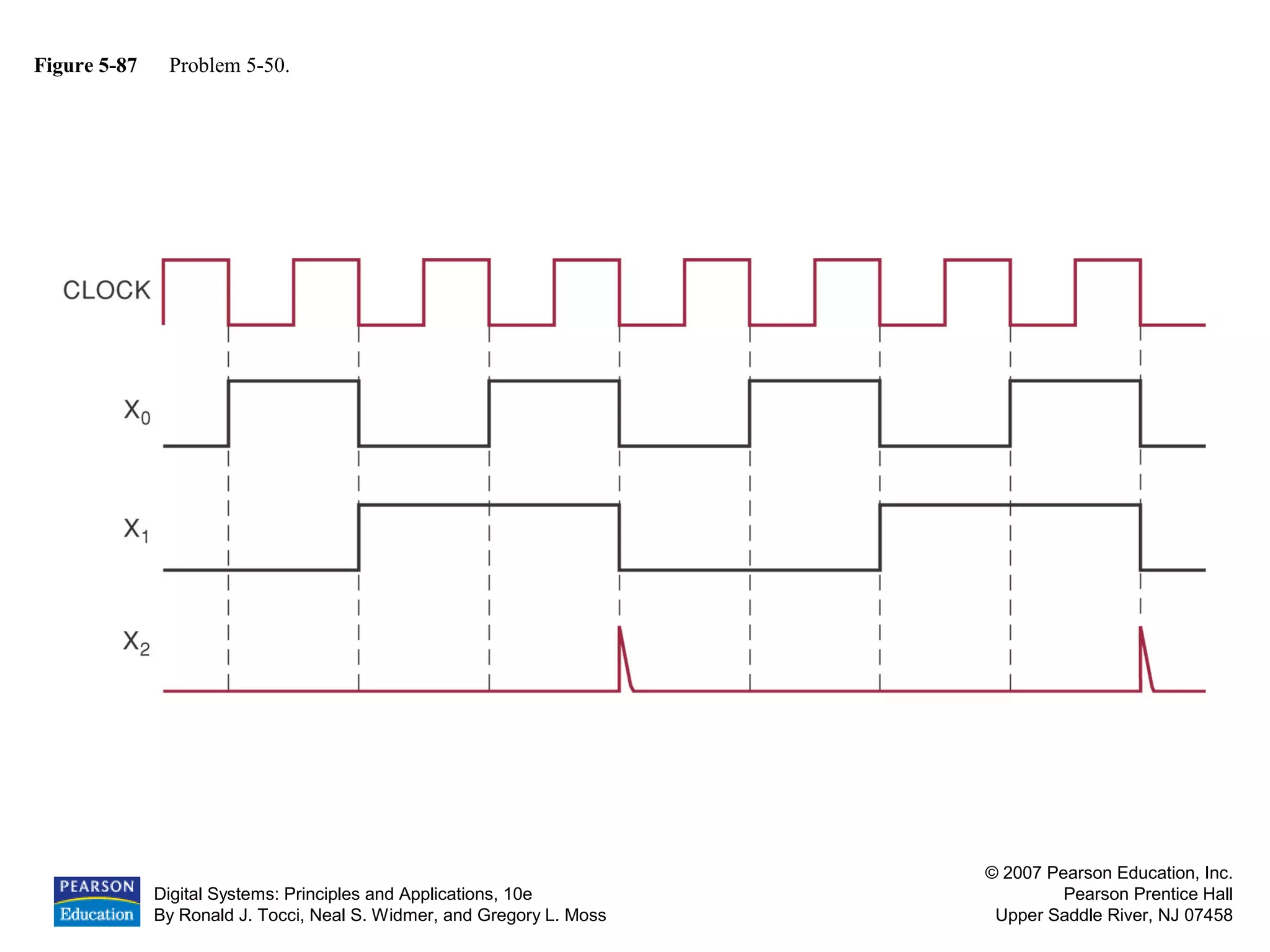
Figure 5-87 Problem 5-50.
Digital Systems: Principles and Applications, 10e
By Ronald J. Tocci, Neal S. Widmer, and Gregory L. Moss
© 2007 Pearson Education, Inc.
Pearson Prentice Hall
Upper Saddle River, NJ 07458
Figure 5-88 Problem 5-53.
Digital Systems: Principles and Applications, 10e
By Ronald J. Tocci, Neal S. Widmer, and Gregory L. Moss
© 2007 Pearson Education, Inc.
Pearson Prentice Hall
Upper Saddle River, NJ 07458
Figure 5-89 Problems 5-54 and 5-55.

flip flop y memorias pp05

  • 1.
    Digital Systems: Principlesand Applications, 10e By Ronald J. Tocci, Neal S. Widmer, and Gregory L. Moss © 2007 Pearson Education, Inc. Pearson Prentice Hall Upper Saddle River, NJ 07458 Figure 5-1 General digital system diagram.
  • 2.
    Digital Systems: Principlesand Applications, 10e By Ronald J. Tocci, Neal S. Widmer, and Gregory L. Moss © 2007 Pearson Education, Inc. Pearson Prentice Hall Upper Saddle River, NJ 07458 Figure 5-2 General flip-flop symbol and definition of its two possible output states.
  • 3.
    Digital Systems: Principlesand Applications, 10e By Ronald J. Tocci, Neal S. Widmer, and Gregory L. Moss © 2007 Pearson Education, Inc. Pearson Prentice Hall Upper Saddle River, NJ 07458 Figure 5-3 A NAND latch has two possible resting states when SET = RESET = 1.
  • 4.
    Digital Systems: Principlesand Applications, 10e By Ronald J. Tocci, Neal S. Widmer, and Gregory L. Moss © 2007 Pearson Education, Inc. Pearson Prentice Hall Upper Saddle River, NJ 07458 Figure 5-4 Pulsing the SET input to the 0 state when (a) Q = 0 prior to SET pulse; (b) Q = 1 prior to SET pulse. Note that, in both cases, Q ends up HIGH.
  • 5.
    Digital Systems: Principlesand Applications, 10e By Ronald J. Tocci, Neal S. Widmer, and Gregory L. Moss © 2007 Pearson Education, Inc. Pearson Prentice Hall Upper Saddle River, NJ 07458 Figure 5-5 Pulsing the RESET input to the LOW state when (a) Q = 0 prior to RESET pulse; (b) Q = 1 prior to RESET pulse. In each case, Q ends up LOW.
  • 6.
    Digital Systems: Principlesand Applications, 10e By Ronald J. Tocci, Neal S. Widmer, and Gregory L. Moss © 2007 Pearson Education, Inc. Pearson Prentice Hall Upper Saddle River, NJ 07458 Figure 5-6 (a) NAND latch; (b) function table.
  • 7.
    Digital Systems: Principlesand Applications, 10e By Ronald J. Tocci, Neal S. Widmer, and Gregory L. Moss © 2007 Pearson Education, Inc. Pearson Prentice Hall Upper Saddle River, NJ 07458 Figure 5-7 (a) NAND latch equivalent representation; (b) simplified block symbol.
  • 8.
    Digital Systems: Principlesand Applications, 10e By Ronald J. Tocci, Neal S. Widmer, and Gregory L. Moss © 2007 Pearson Education, Inc. Pearson Prentice Hall Upper Saddle River, NJ 07458 Figure 5-8 Example 5-1.
  • 9.
    Digital Systems: Principlesand Applications, 10e By Ronald J. Tocci, Neal S. Widmer, and Gregory L. Moss © 2007 Pearson Education, Inc. Pearson Prentice Hall Upper Saddle River, NJ 07458 Figure 5-9 (a) Mechanical contact bounce will produce multiple transitions; (b) NAND latch used to debounce a mechanical switch.
  • 10.
    Digital Systems: Principlesand Applications, 10e By Ronald J. Tocci, Neal S. Widmer, and Gregory L. Moss © 2007 Pearson Education, Inc. Pearson Prentice Hall Upper Saddle River, NJ 07458 Figure 5-10 (a) NOR gate latch; (b) function table; (c) simplified block symbol.
  • 11.
    Digital Systems: Principlesand Applications, 10e By Ronald J. Tocci, Neal S. Widmer, and Gregory L. Moss © 2007 Pearson Education, Inc. Pearson Prentice Hall Upper Saddle River, NJ 07458 Figure 5-11 Example 5-3.
  • 12.
    Digital Systems: Principlesand Applications, 10e By Ronald J. Tocci, Neal S. Widmer, and Gregory L. Moss © 2007 Pearson Education, Inc. Pearson Prentice Hall Upper Saddle River, NJ 07458 Figure 5-12 Example 5-4.
  • 13.
    Digital Systems: Principlesand Applications, 10e By Ronald J. Tocci, Neal S. Widmer, and Gregory L. Moss © 2007 Pearson Education, Inc. Pearson Prentice Hall Upper Saddle River, NJ 07458 Figure 5-13 Examples 5-5 and 5-6.
  • 14.
    Digital Systems: Principlesand Applications, 10e By Ronald J. Tocci, Neal S. Widmer, and Gregory L. Moss © 2007 Pearson Education, Inc. Pearson Prentice Hall Upper Saddle River, NJ 07458 Figure 5-14 (a) A positive pulse and (b) a negative pulse.
  • 15.
    Digital Systems: Principlesand Applications, 10e By Ronald J. Tocci, Neal S. Widmer, and Gregory L. Moss © 2007 Pearson Education, Inc. Pearson Prentice Hall Upper Saddle River, NJ 07458 Figure 5-15 Example 5-7.
  • 16.
    Digital Systems: Principlesand Applications, 10e By Ronald J. Tocci, Neal S. Widmer, and Gregory L. Moss © 2007 Pearson Education, Inc. Pearson Prentice Hall Upper Saddle River, NJ 07458 Figure 5-16 Clock signals.
  • 17.
    Digital Systems: Principlesand Applications, 10e By Ronald J. Tocci, Neal S. Widmer, and Gregory L. Moss © 2007 Pearson Education, Inc. Pearson Prentice Hall Upper Saddle River, NJ 07458 Figure 5-17 Clocked FFs have a clock input (CLK) that is active on either (a) the PGT or (b) the NGT. The control inputs determine the effect of the active clock transition.
  • 18.
    Digital Systems: Principlesand Applications, 10e By Ronald J. Tocci, Neal S. Widmer, and Gregory L. Moss © 2007 Pearson Education, Inc. Pearson Prentice Hall Upper Saddle River, NJ 07458 Figure 5-18 Control inputs must be held stable for (a) a time tS prior to active clock transition and for (b) a time tH after the active block transition.
  • 19.
    Digital Systems: Principlesand Applications, 10e By Ronald J. Tocci, Neal S. Widmer, and Gregory L. Moss © 2007 Pearson Education, Inc. Pearson Prentice Hall Upper Saddle River, NJ 07458 Figure 5-19 (a) Clocked S-R flip-flop that responds only to the positive-going edge of a clock pulse; (b) function table; (c) typical waveforms.
  • 20.
    Digital Systems: Principlesand Applications, 10e By Ronald J. Tocci, Neal S. Widmer, and Gregory L. Moss © 2007 Pearson Education, Inc. Pearson Prentice Hall Upper Saddle River, NJ 07458 Figure 5-20 Clocked S-R flip-flop that triggers only on negative-going transitions.
  • 21.
    Digital Systems: Principlesand Applications, 10e By Ronald J. Tocci, Neal S. Widmer, and Gregory L. Moss © 2007 Pearson Education, Inc. Pearson Prentice Hall Upper Saddle River, NJ 07458 Figure 5-21 Simplified version of the internal circuitry for an edge-triggered S-R flip-flop.
  • 22.
    Digital Systems: Principlesand Applications, 10e By Ronald J. Tocci, Neal S. Widmer, and Gregory L. Moss © 2007 Pearson Education, Inc. Pearson Prentice Hall Upper Saddle River, NJ 07458 Figure 5-22 Implementation of edge-detector circuits used in edge-triggered flip-flops: (a) PGT; (b) NGT. The duration of the CLK* pulses is typically 2–5 ns.
  • 23.
    Digital Systems: Principlesand Applications, 10e By Ronald J. Tocci, Neal S. Widmer, and Gregory L. Moss © 2007 Pearson Education, Inc. Pearson Prentice Hall Upper Saddle River, NJ 07458 Figure 5-23 (a) Clocked J-K flip-flop that responds only to the positive edge of the clock; (b) waveforms.
  • 24.
    Digital Systems: Principlesand Applications, 10e By Ronald J. Tocci, Neal S. Widmer, and Gregory L. Moss © 2007 Pearson Education, Inc. Pearson Prentice Hall Upper Saddle River, NJ 07458 Figure 5-24 J-K flip-flop that triggers only on negative-going transitions.
  • 25.
    Digital Systems: Principlesand Applications, 10e By Ronald J. Tocci, Neal S. Widmer, and Gregory L. Moss © 2007 Pearson Education, Inc. Pearson Prentice Hall Upper Saddle River, NJ 07458 Figure 5-25 Internal circuit of the edge-triggered J-K flip-flop.
  • 26.
    Digital Systems: Principlesand Applications, 10e By Ronald J. Tocci, Neal S. Widmer, and Gregory L. Moss © 2007 Pearson Education, Inc. Pearson Prentice Hall Upper Saddle River, NJ 07458 Figure 5-26 (a) D flip-flop that triggers only on positive-going transitions; (b) waveforms.
  • 27.
    Digital Systems: Principlesand Applications, 10e By Ronald J. Tocci, Neal S. Widmer, and Gregory L. Moss © 2007 Pearson Education, Inc. Pearson Prentice Hall Upper Saddle River, NJ 07458 Figure 5-27 Edge-triggered D flip-flop implementation from a J-K flip-flop.
  • 28.
    Digital Systems: Principlesand Applications, 10e By Ronald J. Tocci, Neal S. Widmer, and Gregory L. Moss © 2007 Pearson Education, Inc. Pearson Prentice Hall Upper Saddle River, NJ 07458 Figure 5-28 Parallel transfer of binary data using D flip-flops.
  • 29.
    Digital Systems: Principlesand Applications, 10e By Ronald J. Tocci, Neal S. Widmer, and Gregory L. Moss © 2007 Pearson Education, Inc. Pearson Prentice Hall Upper Saddle River, NJ 07458 Figure 5-29 D latch: (a) structure; (b) function table; (c) logic symbol.
  • 30.
    Digital Systems: Principlesand Applications, 10e By Ronald J. Tocci, Neal S. Widmer, and Gregory L. Moss © 2007 Pearson Education, Inc. Pearson Prentice Hall Upper Saddle River, NJ 07458 Figure 5-30 Waveforms for Example 5-8 showing the two modes of operation of the transparent D latch.
  • 31.
    Digital Systems: Principlesand Applications, 10e By Ronald J. Tocci, Neal S. Widmer, and Gregory L. Moss © 2007 Pearson Education, Inc. Pearson Prentice Hall Upper Saddle River, NJ 07458 Figure 5-31 Clocked J-K flip-flop with asynchronous inputs.
  • 32.
    Digital Systems: Principlesand Applications, 10e By Ronald J. Tocci, Neal S. Widmer, and Gregory L. Moss © 2007 Pearson Education, Inc. Pearson Prentice Hall Upper Saddle River, NJ 07458 Figure 5-32 Waveforms for Example 5-9 showing how a clocked flip-flop responds to asynchronous inputs.
  • 33.
    Digital Systems: Principlesand Applications, 10e By Ronald J. Tocci, Neal S. Widmer, and Gregory L. Moss © 2007 Pearson Education, Inc. Pearson Prentice Hall Upper Saddle River, NJ 07458 Figure 5-33 IEEE/ANSI symbols for (a) a single edge-triggered J-K flip-flop and (b) an actual IC (74LS112 dual negative-edge-triggered J-K flip-flop).
  • 34.
    Digital Systems: Principlesand Applications, 10e By Ronald J. Tocci, Neal S. Widmer, and Gregory L. Moss © 2007 Pearson Education, Inc. Pearson Prentice Hall Upper Saddle River, NJ 07458 Figure 5-34 IEEE/ANSI symbols for (a) a single edge-triggered D flip-flop and (b) an actual IC (74HC175 quad flip-flop with common clock and clear).
  • 35.
    Digital Systems: Principlesand Applications, 10e By Ronald J. Tocci, Neal S. Widmer, and Gregory L. Moss © 2007 Pearson Education, Inc. Pearson Prentice Hall Upper Saddle River, NJ 07458 Figure 5-35 FF propagation delays.
  • 36.
    Digital Systems: Principlesand Applications, 10e By Ronald J. Tocci, Neal S. Widmer, and Gregory L. Moss © 2007 Pearson Education, Inc. Pearson Prentice Hall Upper Saddle River, NJ 07458 Figure 5-36 (a) Clock LOW and HIGH times; (b) asynchronous pulse width.
  • 37.
    Digital Systems: Principlesand Applications, 10e By Ronald J. Tocci, Neal S. Widmer, and Gregory L. Moss © 2007 Pearson Education, Inc. Pearson Prentice Hall Upper Saddle River, NJ 07458 Figure 5-37 Q2 will respond properly to the level at Q1 prior to the NGT of CLK, provided that Q2’s hold time requirement, tH, is less than Q1’s propagation delay.
  • 38.
    Digital Systems: Principlesand Applications, 10e By Ronald J. Tocci, Neal S. Widmer, and Gregory L. Moss © 2007 Pearson Education, Inc. Pearson Prentice Hall Upper Saddle River, NJ 07458 Figure 5-38 Example 5-11.
  • 39.
    Digital Systems: Principlesand Applications, 10e By Ronald J. Tocci, Neal S. Widmer, and Gregory L. Moss © 2007 Pearson Education, Inc. Pearson Prentice Hall Upper Saddle River, NJ 07458 Figure 5-39 Asynchronous signal A can produce partial pulses at X.
  • 40.
    Digital Systems: Principlesand Applications, 10e By Ronald J. Tocci, Neal S. Widmer, and Gregory L. Moss © 2007 Pearson Education, Inc. Pearson Prentice Hall Upper Saddle River, NJ 07458 Figure 5-40 An edge-triggered D flip-flop is used to synchronize the enabling of the AND gate to the NGTs of the clock.
  • 41.
    Digital Systems: Principlesand Applications, 10e By Ronald J. Tocci, Neal S. Widmer, and Gregory L. Moss © 2007 Pearson Education, Inc. Pearson Prentice Hall Upper Saddle River, NJ 07458 Figure 5-41 Clocked D flip-flop used to respond to a particular sequence of inputs.
  • 42.
    Digital Systems: Principlesand Applications, 10e By Ronald J. Tocci, Neal S. Widmer, and Gregory L. Moss © 2007 Pearson Education, Inc. Pearson Prentice Hall Upper Saddle River, NJ 07458 Figure 5-42 Synchronous data transfer operation performed by various types of clocked FFs.
  • 43.
    Digital Systems: Principlesand Applications, 10e By Ronald J. Tocci, Neal S. Widmer, and Gregory L. Moss © 2007 Pearson Education, Inc. Pearson Prentice Hall Upper Saddle River, NJ 07458 Figure 5-43 Asynchronous data transfer operation.
  • 44.
    Digital Systems: Principlesand Applications, 10e By Ronald J. Tocci, Neal S. Widmer, and Gregory L. Moss © 2007 Pearson Education, Inc. Pearson Prentice Hall Upper Saddle River, NJ 07458 Figure 5-44 Parallel transfer of contents of register X into register Y.
  • 45.
    Digital Systems: Principlesand Applications, 10e By Ronald J. Tocci, Neal S. Widmer, and Gregory L. Moss © 2007 Pearson Education, Inc. Pearson Prentice Hall Upper Saddle River, NJ 07458 Figure 5-45 Four-bit shift register.
  • 46.
    Digital Systems: Principlesand Applications, 10e By Ronald J. Tocci, Neal S. Widmer, and Gregory L. Moss © 2007 Pearson Education, Inc. Pearson Prentice Hall Upper Saddle River, NJ 07458 Figure 5-46 Serial transfer of information from X register into Y register.
  • 47.
    Digital Systems: Principlesand Applications, 10e By Ronald J. Tocci, Neal S. Widmer, and Gregory L. Moss © 2007 Pearson Education, Inc. Pearson Prentice Hall Upper Saddle River, NJ 07458 Figure 5-47 J-K flip-flops wired as a three-bit binary counter (MOD-8).
  • 48.
    Digital Systems: Principlesand Applications, 10e By Ronald J. Tocci, Neal S. Widmer, and Gregory L. Moss © 2007 Pearson Education, Inc. Pearson Prentice Hall Upper Saddle River, NJ 07458 Figure 5-48 Table of flip-flop states shows binary counting sequence.
  • 49.
    Digital Systems: Principlesand Applications, 10e By Ronald J. Tocci, Neal S. Widmer, and Gregory L. Moss © 2007 Pearson Education, Inc. Pearson Prentice Hall Upper Saddle River, NJ 07458 Figure 5-49 State transition diagram shows how the states of the counter flip-flops change with each applied clock pulse.
  • 50.
    Digital Systems: Principlesand Applications, 10e By Ronald J. Tocci, Neal S. Widmer, and Gregory L. Moss © 2007 Pearson Education, Inc. Pearson Prentice Hall Upper Saddle River, NJ 07458 Figure 5-50 Example of a microprocessor transferring binary data to an external register.
  • 51.
    Digital Systems: Principlesand Applications, 10e By Ronald J. Tocci, Neal S. Widmer, and Gregory L. Moss © 2007 Pearson Education, Inc. Pearson Prentice Hall Upper Saddle River, NJ 07458 Figure 5-51 (a) Standard inverter response to slow noisy input, and (b) Schmitt-trigger response to slow noisy input.
  • 52.
    Digital Systems: Principlesand Applications, 10e By Ronald J. Tocci, Neal S. Widmer, and Gregory L. Moss © 2007 Pearson Education, Inc. Pearson Prentice Hall Upper Saddle River, NJ 07458 Figure 5-52 OS symbol and typical waveforms for nonretriggerable operation.
  • 53.
    Digital Systems: Principlesand Applications, 10e By Ronald J. Tocci, Neal S. Widmer, and Gregory L. Moss © 2007 Pearson Education, Inc. Pearson Prentice Hall Upper Saddle River, NJ 07458 Figure 5-53 (a) Comparison of nonretriggerable and retriggerable OS responses for tp = 2 ms. (b) Retriggerable OS begins a new tp interval each time it receives a trigger pulse.
  • 54.
    Digital Systems: Principlesand Applications, 10e By Ronald J. Tocci, Neal S. Widmer, and Gregory L. Moss © 2007 Pearson Education, Inc. Pearson Prentice Hall Upper Saddle River, NJ 07458 Figure 5-54 Logic symbols for the 74121 nonretriggerable one-shot: (a) traditional; (b) IEEE/ANSI.
  • 55.
    Digital Systems: Principlesand Applications, 10e By Ronald J. Tocci, Neal S. Widmer, and Gregory L. Moss © 2007 Pearson Education, Inc. Pearson Prentice Hall Upper Saddle River, NJ 07458 Figure 5-55 Schmitt-trigger oscillator using a 7414 INVERTER. A 7413 Schmitt-trigger NAND may also be used.
  • 56.
    Digital Systems: Principlesand Applications, 10e By Ronald J. Tocci, Neal S. Widmer, and Gregory L. Moss © 2007 Pearson Education, Inc. Pearson Prentice Hall Upper Saddle River, NJ 07458 Figure 5-56 555 timer IC used as an astable multivibrator.
  • 57.
    Digital Systems: Principlesand Applications, 10e By Ronald J. Tocci, Neal S. Widmer, and Gregory L. Moss © 2007 Pearson Education, Inc. Pearson Prentice Hall Upper Saddle River, NJ 07458 Figure 5-57 Example 5-19.
  • 58.
    Digital Systems: Principlesand Applications, 10e By Ronald J. Tocci, Neal S. Widmer, and Gregory L. Moss © 2007 Pearson Education, Inc. Pearson Prentice Hall Upper Saddle River, NJ 07458 Figure 5-58 Example 5-20.
  • 59.
    Digital Systems: Principlesand Applications, 10e By Ronald J. Tocci, Neal S. Widmer, and Gregory L. Moss © 2007 Pearson Education, Inc. Pearson Prentice Hall Upper Saddle River, NJ 07458 Figure 5-59 Clock skew occurs when two flip-flops that are supposed to be clocked simultaneously are clocked at slightly different times due to a delay in the arrival of the clock signal at the second flip-flop. (a) Extra gating circuits that can can cause clock skew; (b) timing showing the later arrival of CLOCK 2.
  • 60.
    Digital Systems: Principlesand Applications, 10e By Ronald J. Tocci, Neal S. Widmer, and Gregory L. Moss © 2007 Pearson Education, Inc. Pearson Prentice Hall Upper Saddle River, NJ 07458 Figure 5-60 Three input/output modes.
  • 61.
    Digital Systems: Principlesand Applications, 10e By Ronald J. Tocci, Neal S. Widmer, and Gregory L. Moss © 2007 Pearson Education, Inc. Pearson Prentice Hall Upper Saddle River, NJ 07458 Figure 5-61 The logic of a behavioral description of an SR latch.
  • 62.
    Digital Systems: Principlesand Applications, 10e By Ronald J. Tocci, Neal S. Widmer, and Gregory L. Moss © 2007 Pearson Education, Inc. Pearson Prentice Hall Upper Saddle River, NJ 07458 Figure 5-62 A NAND latch using AHDL.
  • 63.
    Digital Systems: Principlesand Applications, 10e By Ronald J. Tocci, Neal S. Widmer, and Gregory L. Moss © 2007 Pearson Education, Inc. Pearson Prentice Hall Upper Saddle River, NJ 07458 Figure 5-63 A NAND latch using VHDL.
  • 64.
    Digital Systems: Principlesand Applications, 10e By Ronald J. Tocci, Neal S. Widmer, and Gregory L. Moss © 2007 Pearson Education, Inc. Pearson Prentice Hall Upper Saddle River, NJ 07458 Figure 5-64 JK flip-flop logic primitive.
  • 65.
    Digital Systems: Principlesand Applications, 10e By Ronald J. Tocci, Neal S. Widmer, and Gregory L. Moss © 2007 Pearson Education, Inc. Pearson Prentice Hall Upper Saddle River, NJ 07458 Figure 5-65 Single JK flip-flop using AHDL.
  • 66.
    Digital Systems: Principlesand Applications, 10e By Ronald J. Tocci, Neal S. Widmer, and Gregory L. Moss © 2007 Pearson Education, Inc. Pearson Prentice Hall Upper Saddle River, NJ 07458 Figure 5-66 (a) Graphic representation using a component. (b) VHDL component declaration.
  • 67.
    Digital Systems: Principlesand Applications, 10e By Ronald J. Tocci, Neal S. Widmer, and Gregory L. Moss © 2007 Pearson Education, Inc. Pearson Prentice Hall Upper Saddle River, NJ 07458 Figure 5-67 A JK flip-flop using VHDL.
  • 68.
    Digital Systems: Principlesand Applications, 10e By Ronald J. Tocci, Neal S. Widmer, and Gregory L. Moss © 2007 Pearson Education, Inc. Pearson Prentice Hall Upper Saddle River, NJ 07458 Figure 5-68 Single JK flip-flop using VHDL.
  • 69.
    Digital Systems: Principlesand Applications, 10e By Ronald J. Tocci, Neal S. Widmer, and Gregory L. Moss © 2007 Pearson Education, Inc. Pearson Prentice Hall Upper Saddle River, NJ 07458 Figure 5-69 Simulation of the JK flip-flop.
  • 70.
    Digital Systems: Principlesand Applications, 10e By Ronald J. Tocci, Neal S. Widmer, and Gregory L. Moss © 2007 Pearson Education, Inc. Pearson Prentice Hall Upper Saddle River, NJ 07458 Figure 5-70 A three-bit binary counter.
  • 71.
    Digital Systems: Principlesand Applications, 10e By Ronald J. Tocci, Neal S. Widmer, and Gregory L. Moss © 2007 Pearson Education, Inc. Pearson Prentice Hall Upper Saddle River, NJ 07458 Figure 5-71 MOD-8 ripple counter in AHDL.
  • 72.
    Digital Systems: Principlesand Applications, 10e By Ronald J. Tocci, Neal S. Widmer, and Gregory L. Moss © 2007 Pearson Education, Inc. Pearson Prentice Hall Upper Saddle River, NJ 07458 Figure 5-72 MOD-8 ripple counter in VHDL.
  • 73.
    Digital Systems: Principlesand Applications, 10e By Ronald J. Tocci, Neal S. Widmer, and Gregory L. Moss © 2007 Pearson Education, Inc. Pearson Prentice Hall Upper Saddle River, NJ 07458 Figure 5-73 Problems 5-1 to 5-3.
  • 74.
    Digital Systems: Principlesand Applications, 10e By Ronald J. Tocci, Neal S. Widmer, and Gregory L. Moss © 2007 Pearson Education, Inc. Pearson Prentice Hall Upper Saddle River, NJ 07458 Figure 5-74 Problem 5-3.
  • 75.
    Digital Systems: Principlesand Applications, 10e By Ronald J. Tocci, Neal S. Widmer, and Gregory L. Moss © 2007 Pearson Education, Inc. Pearson Prentice Hall Upper Saddle River, NJ 07458 Figure 5-75 Problem 5-6.
  • 76.
    Digital Systems: Principlesand Applications, 10e By Ronald J. Tocci, Neal S. Widmer, and Gregory L. Moss © 2007 Pearson Education, Inc. Pearson Prentice Hall Upper Saddle River, NJ 07458 Figure 5-76 Problem 5-9.
  • 77.
    Digital Systems: Principlesand Applications, 10e By Ronald J. Tocci, Neal S. Widmer, and Gregory L. Moss © 2007 Pearson Education, Inc. Pearson Prentice Hall Upper Saddle River, NJ 07458 Figure 5-77 Problem 5-13.
  • 78.
    Digital Systems: Principlesand Applications, 10e By Ronald J. Tocci, Neal S. Widmer, and Gregory L. Moss © 2007 Pearson Education, Inc. Pearson Prentice Hall Upper Saddle River, NJ 07458 Figure 5-78 Problem 5-14.
  • 79.
    Digital Systems: Principlesand Applications, 10e By Ronald J. Tocci, Neal S. Widmer, and Gregory L. Moss © 2007 Pearson Education, Inc. Pearson Prentice Hall Upper Saddle River, NJ 07458 Figure 5-79 D flip-flop connected to toggle (Problem 5-16).
  • 80.
    Digital Systems: Principlesand Applications, 10e By Ronald J. Tocci, Neal S. Widmer, and Gregory L. Moss © 2007 Pearson Education, Inc. Pearson Prentice Hall Upper Saddle River, NJ 07458 Figure 5-80 Problem 5-18.
  • 81.
    Digital Systems: Principlesand Applications, 10e By Ronald J. Tocci, Neal S. Widmer, and Gregory L. Moss © 2007 Pearson Education, Inc. Pearson Prentice Hall Upper Saddle River, NJ 07458 Figure 5-81 Problem 5-20.
  • 82.
    Digital Systems: Principlesand Applications, 10e By Ronald J. Tocci, Neal S. Widmer, and Gregory L. Moss © 2007 Pearson Education, Inc. Pearson Prentice Hall Upper Saddle River, NJ 07458 Figure 5-82 Problem 5-26.
  • 83.
    Digital Systems: Principlesand Applications, 10e By Ronald J. Tocci, Neal S. Widmer, and Gregory L. Moss © 2007 Pearson Education, Inc. Pearson Prentice Hall Upper Saddle River, NJ 07458 Figure 5-83 Problem 5-38.
  • 84.
    Digital Systems: Principlesand Applications, 10e By Ronald J. Tocci, Neal S. Widmer, and Gregory L. Moss © 2007 Pearson Education, Inc. Pearson Prentice Hall Upper Saddle River, NJ 07458 Figure 5-84 Problem 5-41.
  • 85.
    Digital Systems: Principlesand Applications, 10e By Ronald J. Tocci, Neal S. Widmer, and Gregory L. Moss © 2007 Pearson Education, Inc. Pearson Prentice Hall Upper Saddle River, NJ 07458 Figure 5-85 Problem 5-42.
  • 86.
    Digital Systems: Principlesand Applications, 10e By Ronald J. Tocci, Neal S. Widmer, and Gregory L. Moss © 2007 Pearson Education, Inc. Pearson Prentice Hall Upper Saddle River, NJ 07458 Figure 5-86 Problem 5-49.
  • 87.
    Digital Systems: Principlesand Applications, 10e By Ronald J. Tocci, Neal S. Widmer, and Gregory L. Moss © 2007 Pearson Education, Inc. Pearson Prentice Hall Upper Saddle River, NJ 07458 Figure 5-87 Problem 5-50.
  • 88.
    Digital Systems: Principlesand Applications, 10e By Ronald J. Tocci, Neal S. Widmer, and Gregory L. Moss © 2007 Pearson Education, Inc. Pearson Prentice Hall Upper Saddle River, NJ 07458 Figure 5-88 Problem 5-53.
  • 89.
    Digital Systems: Principlesand Applications, 10e By Ronald J. Tocci, Neal S. Widmer, and Gregory L. Moss © 2007 Pearson Education, Inc. Pearson Prentice Hall Upper Saddle River, NJ 07458 Figure 5-89 Problems 5-54 and 5-55.