Five Misconceptions That Don't Help Make Good Investment Decisions
- Edward Hugh, December 2012
Printing Money Always And Everywhere Leads To Inflation
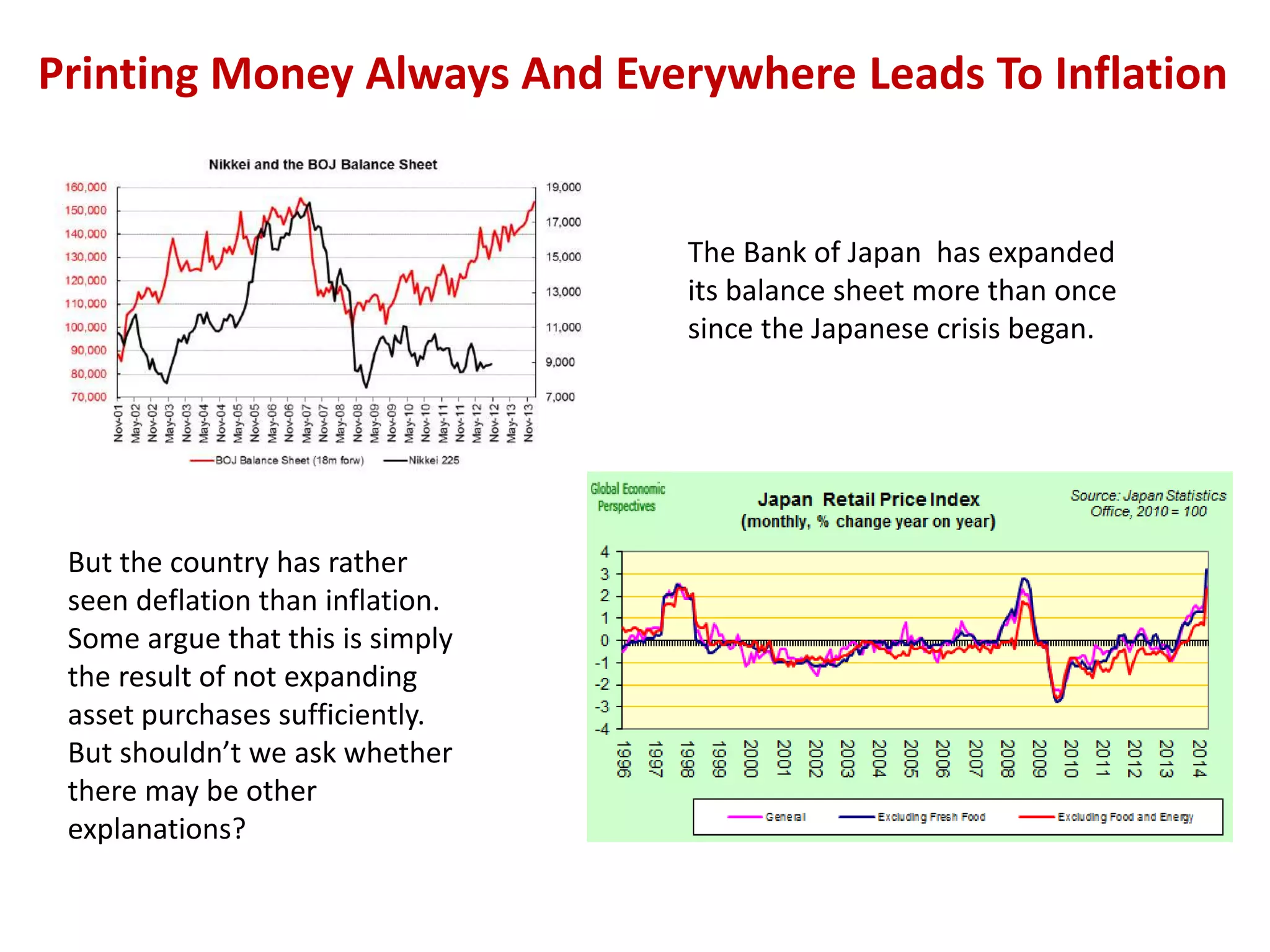
The Bank of Japan has expanded
its balance sheet more than once
since the Japanese crisis began.
But the country has rather
seen deflation than inflation.
Some argue that this is simply
the result of not expanding
asset purchases sufficiently.
But shouldn’t we ask whether
there may be other
explanations?
Printing Money Always And Everywhere Leads To Inflation
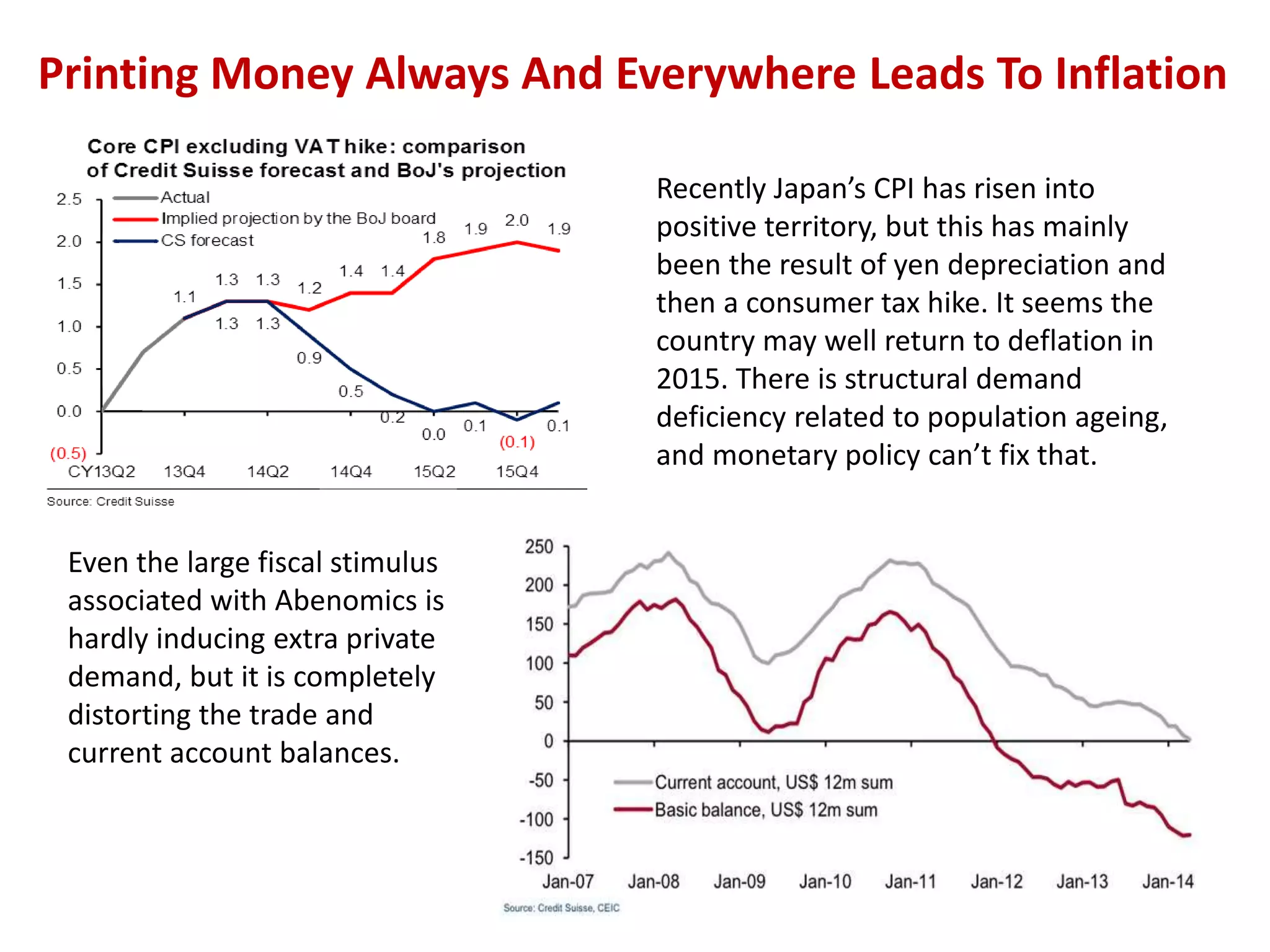
Recently Japan’s CPI has risen into
positive territory, but this has mainly
been the result of yen depreciation and
then a consumer tax hike. It seems the
country may well return to deflation in
2015. There is structural demand
deficiency related to population ageing,
and monetary policy can’t fix that.
Even the large fiscal stimulus
associated with Abenomics is
hardly inducing extra private
demand, but it is completely
distorting the trade and
current account balances.
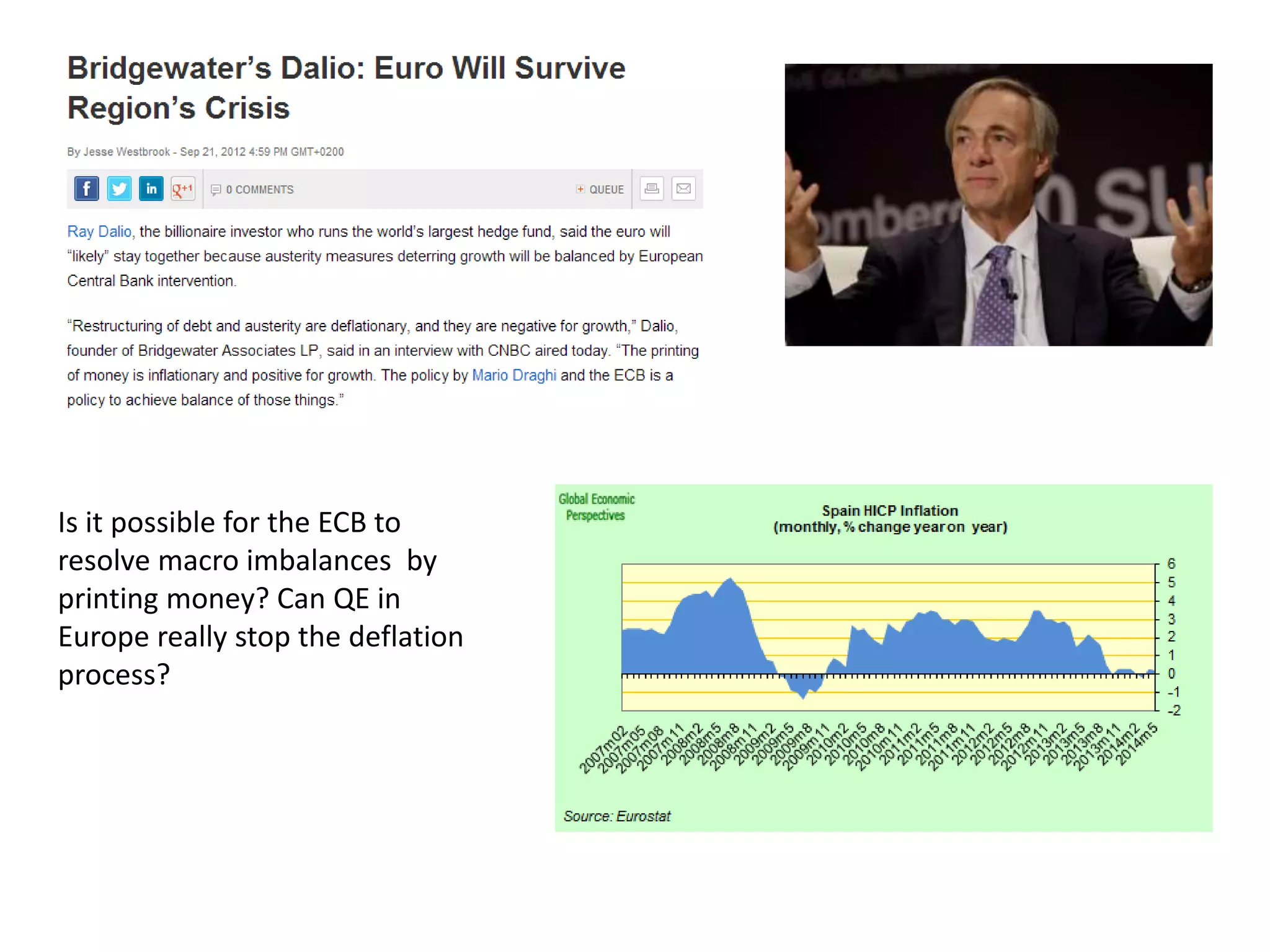
Is it possible for the ECB to
resolve macro imbalances by
printing money? Can QE in
Europe really stop the deflation
process?
Having Your Own Currency and The Ability To Print Money
Means You Can Devalue to Get Out of Trouble
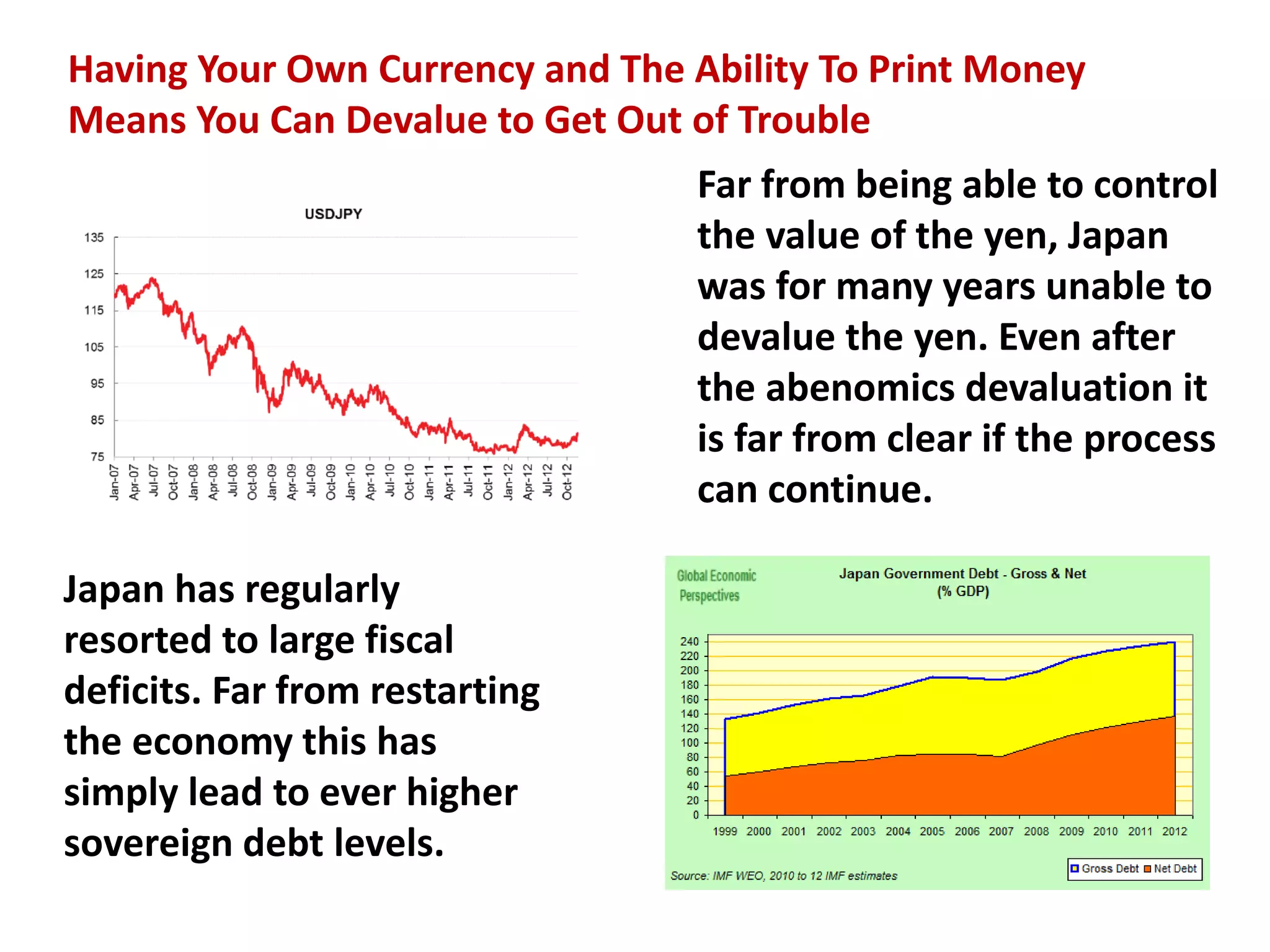
Far from being able to control
the value of the yen, Japan
was for many years unable to
devalue the yen. Even after
the abenomics devaluation it
is far from clear if the process
can continue.
Japan has regularly
resorted to large fiscal
deficits. Far from restarting
the economy this has
simply lead to ever higher
sovereign debt levels.
Mario Dragi Has The Power To Save The Euro
The Euro Is Essentially A Political Project
– Ergo It Will Sink Or Swim Politically
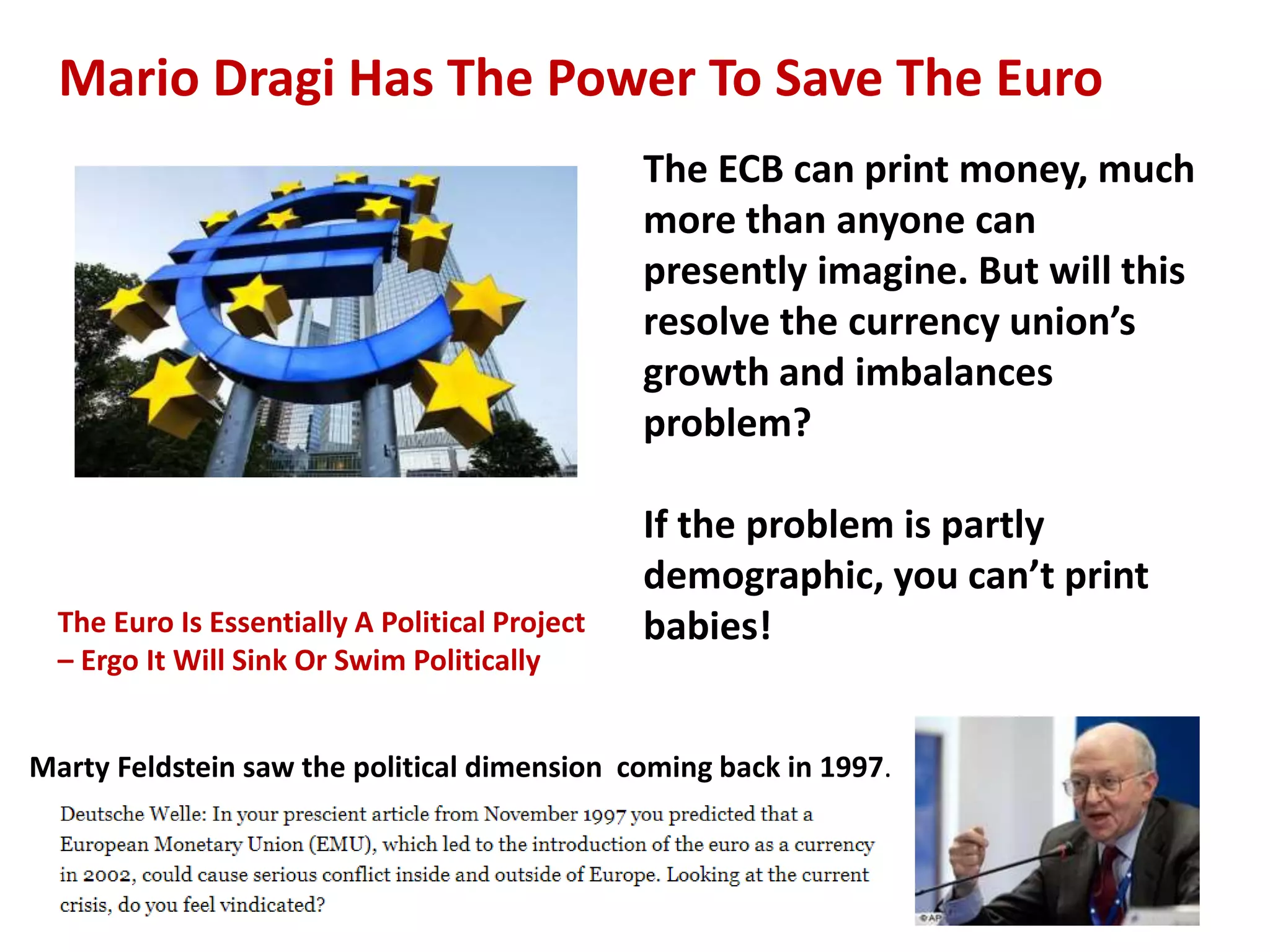
Marty Feldstein saw the political dimension coming back in 1997.
The ECB can print money, much
more than anyone can
presently imagine. But will this
resolve the currency union’s
growth and imbalances
problem?
If the problem is partly
demographic, you can’t print
babies!
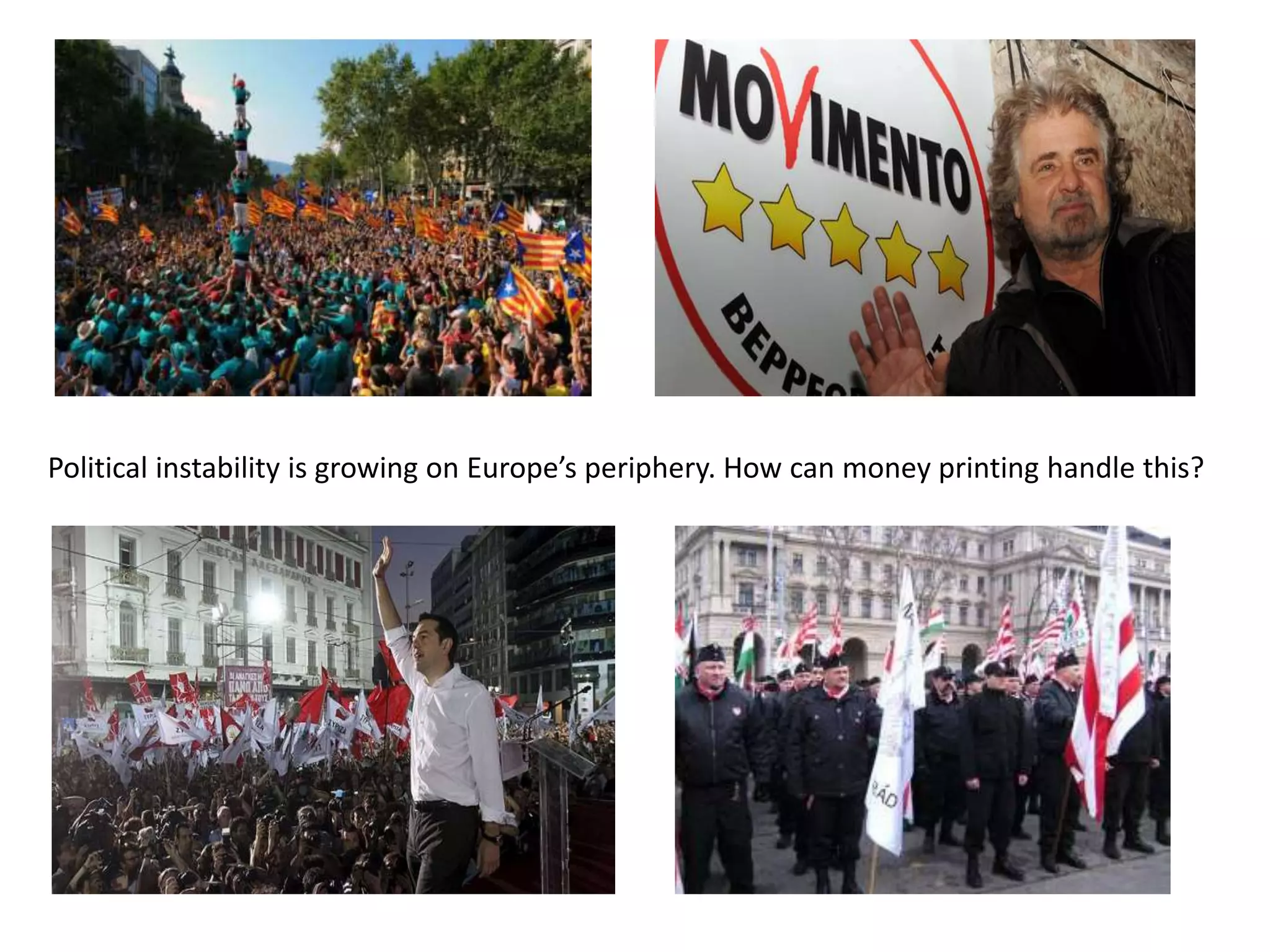
Political instability is growing on Europe’s periphery. How can money printing handle this?
Economies Always Recover
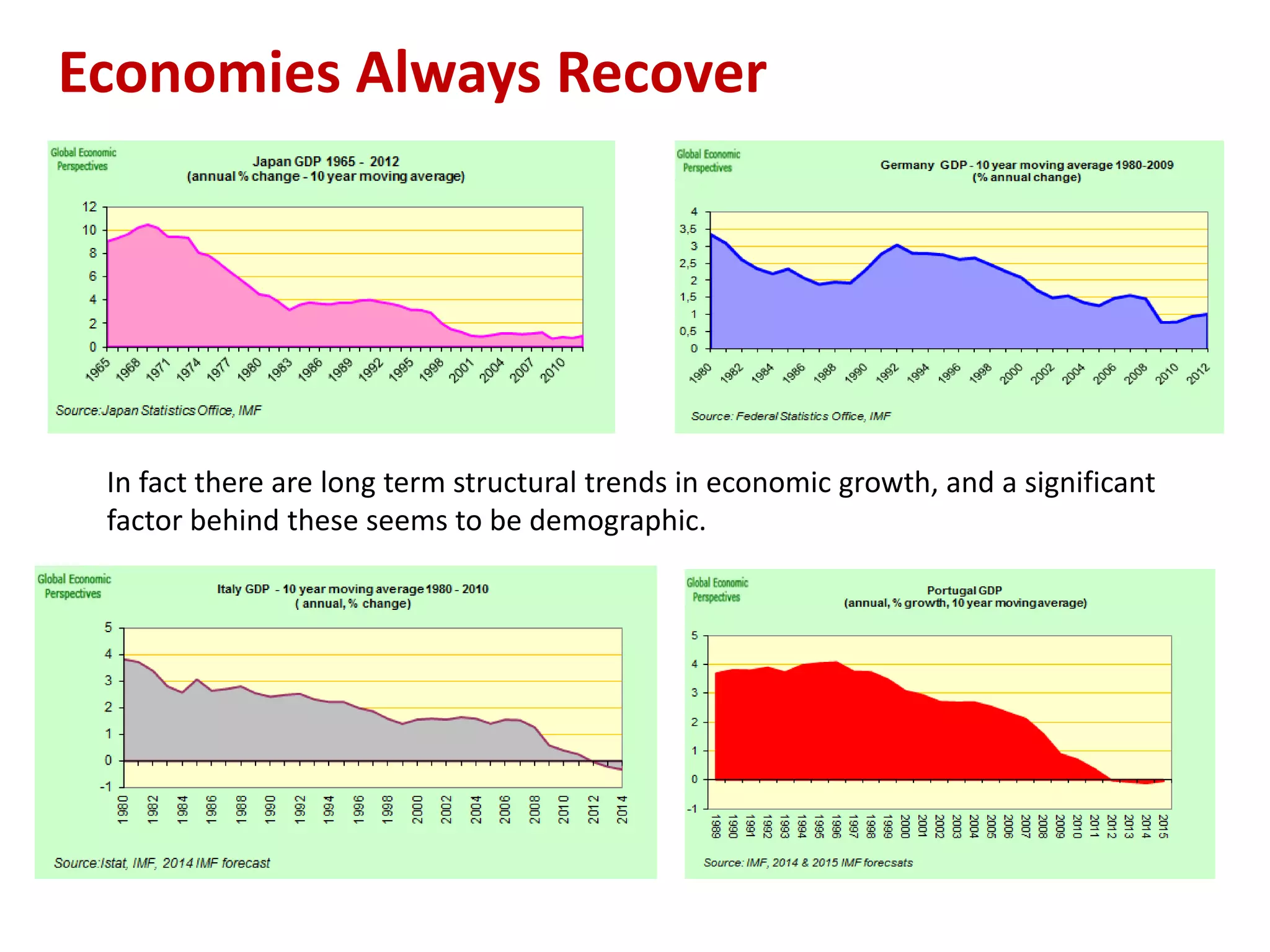
In fact there are long term structural trends in economic growth, and a significant
factor behind these seems to be demographic.
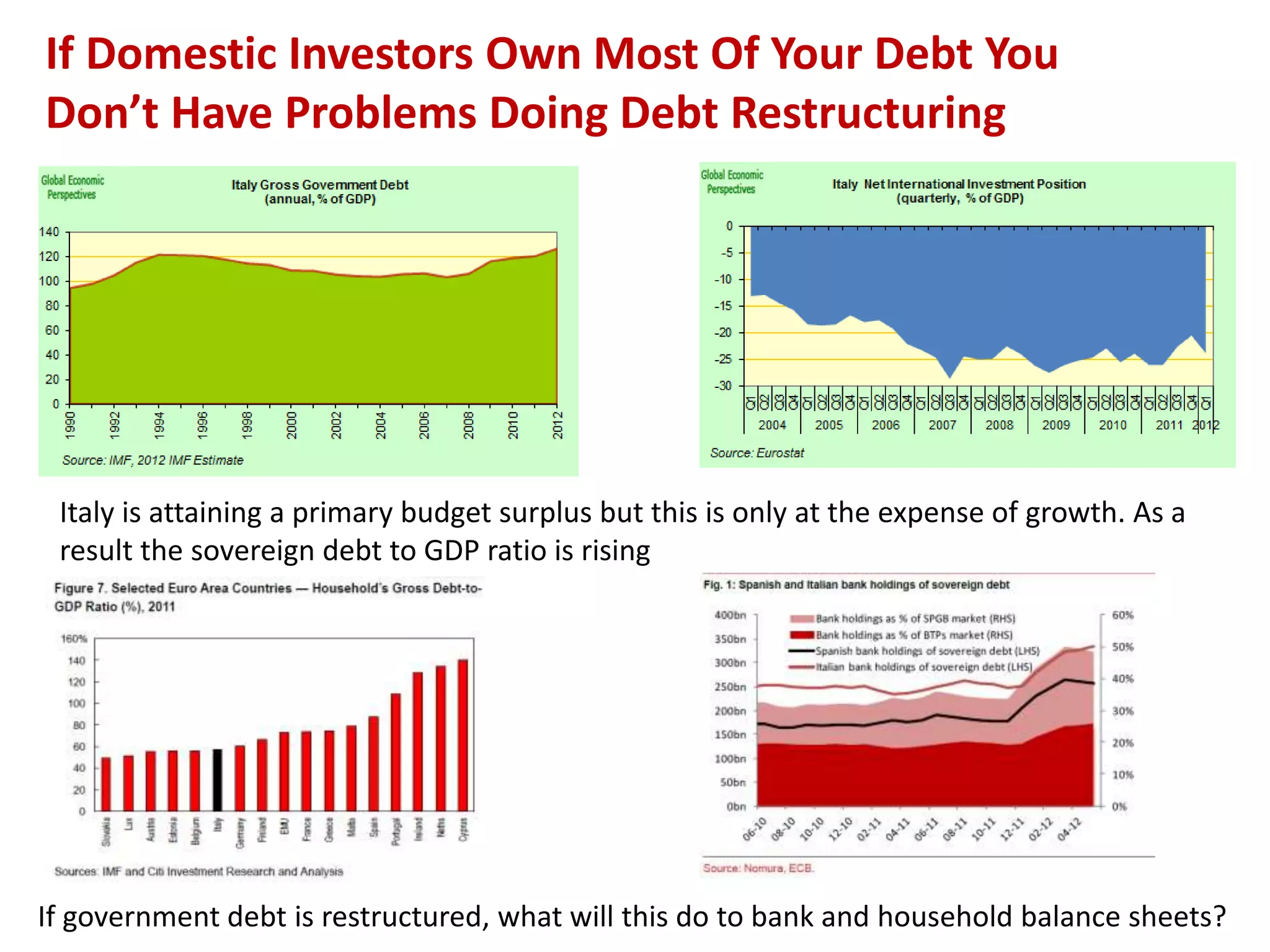
If Domestic Investors Own Most Of Your Debt You
Don’t Have Problems Doing Debt Restructuring
Italy is attaining a primary budget surplus but this is only at the expense of growth. As a
result the sovereign debt to GDP ratio is rising
If government debt is restructured, what will this do to bank and household balance sheets?
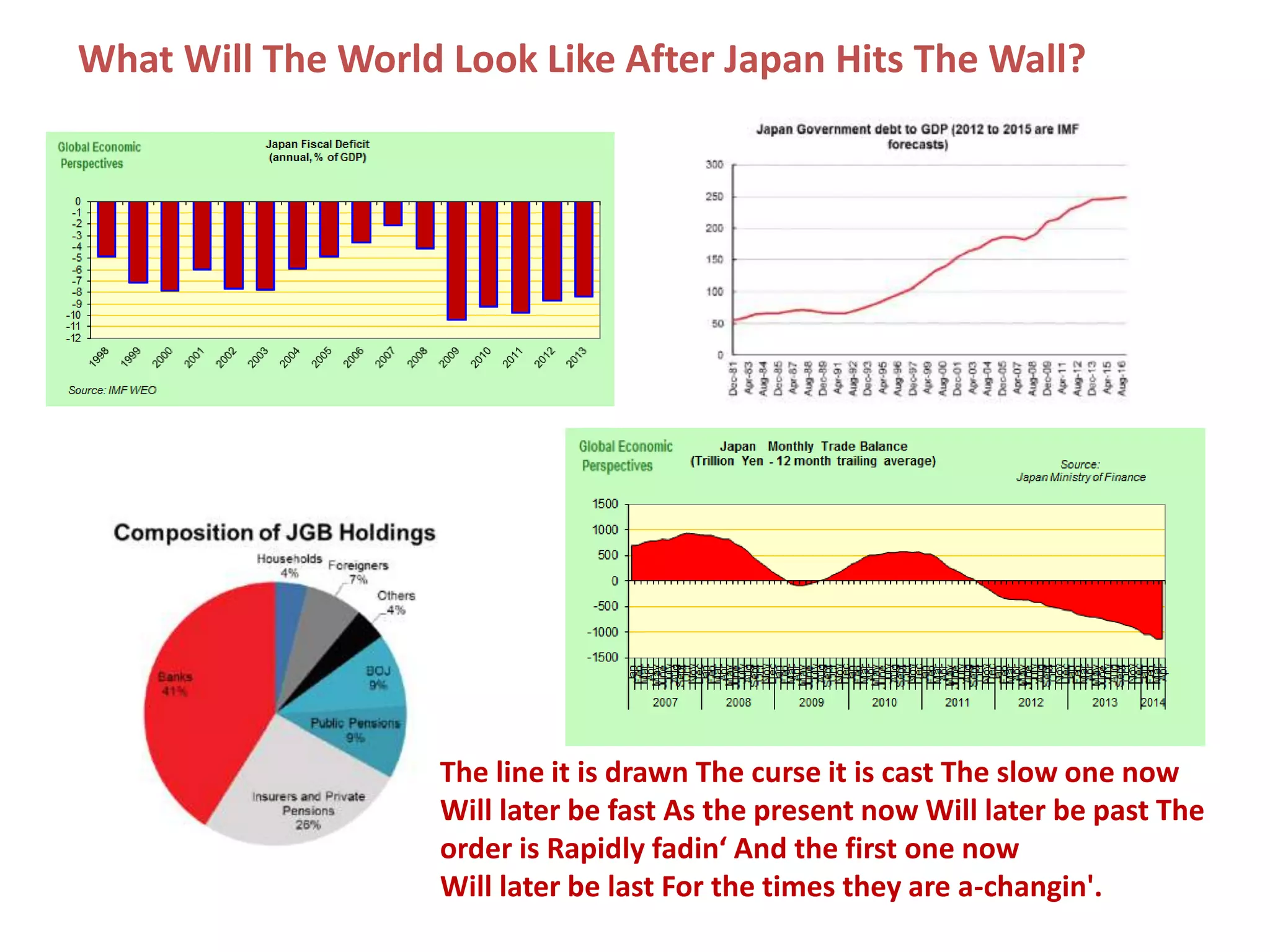
What Will The World Look Like After Japan Hits The Wall?
The line it is drawn The curse it is cast The slow one now
Will later be fast As the present now Will later be past The
order is Rapidly fadin‘ And the first one now
Will later be last For the times they are a-changin'.

Five Misconceptions That Don't Make For Good Investment Decisions

  • 1.
    Five Misconceptions ThatDon't Help Make Good Investment Decisions - Edward Hugh, December 2012
  • 2.
    Printing Money AlwaysAnd Everywhere Leads To Inflation The Bank of Japan has expanded its balance sheet more than once since the Japanese crisis began. But the country has rather seen deflation than inflation. Some argue that this is simply the result of not expanding asset purchases sufficiently. But shouldn’t we ask whether there may be other explanations?
  • 3.
    Printing Money AlwaysAnd Everywhere Leads To Inflation Recently Japan’s CPI has risen into positive territory, but this has mainly been the result of yen depreciation and then a consumer tax hike. It seems the country may well return to deflation in 2015. There is structural demand deficiency related to population ageing, and monetary policy can’t fix that. Even the large fiscal stimulus associated with Abenomics is hardly inducing extra private demand, but it is completely distorting the trade and current account balances.
  • 4.
    Is it possiblefor the ECB to resolve macro imbalances by printing money? Can QE in Europe really stop the deflation process?
  • 5.
    Having Your OwnCurrency and The Ability To Print Money Means You Can Devalue to Get Out of Trouble Far from being able to control the value of the yen, Japan was for many years unable to devalue the yen. Even after the abenomics devaluation it is far from clear if the process can continue. Japan has regularly resorted to large fiscal deficits. Far from restarting the economy this has simply lead to ever higher sovereign debt levels.
  • 6.
    Mario Dragi HasThe Power To Save The Euro The Euro Is Essentially A Political Project – Ergo It Will Sink Or Swim Politically Marty Feldstein saw the political dimension coming back in 1997. The ECB can print money, much more than anyone can presently imagine. But will this resolve the currency union’s growth and imbalances problem? If the problem is partly demographic, you can’t print babies!
  • 7.
    Political instability isgrowing on Europe’s periphery. How can money printing handle this?
  • 8.
    Economies Always Recover Infact there are long term structural trends in economic growth, and a significant factor behind these seems to be demographic.
  • 9.
    If Domestic InvestorsOwn Most Of Your Debt You Don’t Have Problems Doing Debt Restructuring Italy is attaining a primary budget surplus but this is only at the expense of growth. As a result the sovereign debt to GDP ratio is rising If government debt is restructured, what will this do to bank and household balance sheets?
  • 10.
    What Will TheWorld Look Like After Japan Hits The Wall? The line it is drawn The curse it is cast The slow one now Will later be fast As the present now Will later be past The order is Rapidly fadin‘ And the first one now Will later be last For the times they are a-changin'.